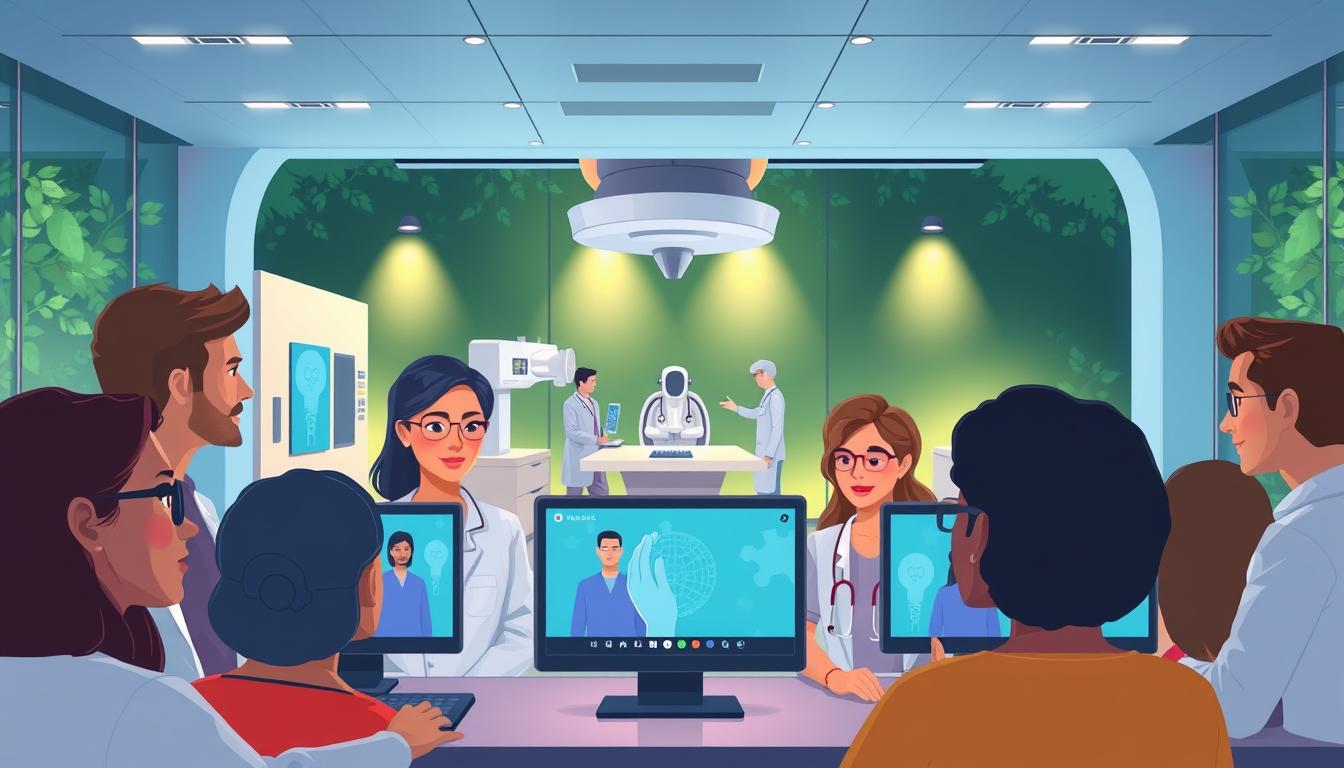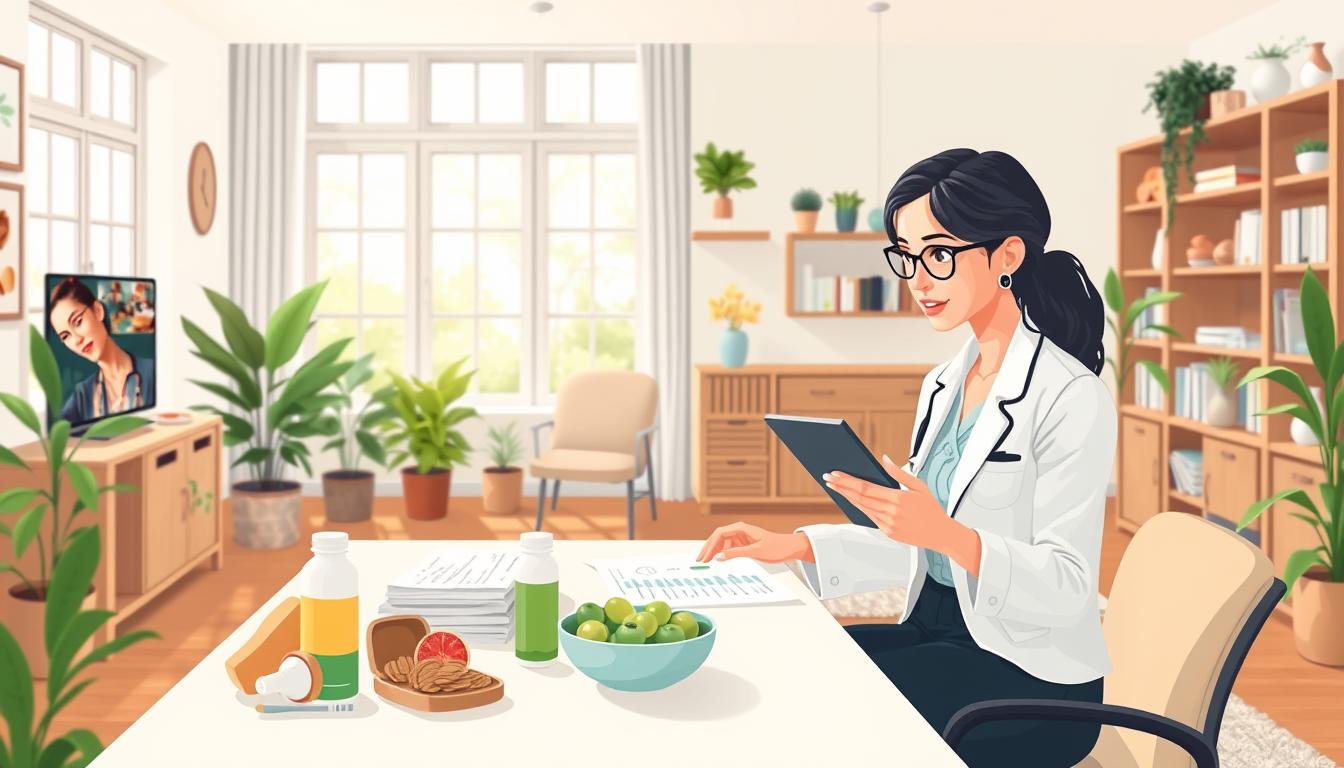
Ever wonder how to eat for more energy? Or how to enjoy meals while managing health issues? Many people face these questions. Telehealth virtual nutrition consultations offer answers without the hassle of travel or long waits.
This guide shows how telehealth helps experts like Registered Dietitian Nutritionists. They use technology to give personalized care. It’s become a big part of health care, even after the pandemic.
It talks about what you need for tech, keeping patient info safe, and how to get paid. It aims to help people and groups use telehealth well. This way, they can keep care high quality while making it easier to get.
Key Takeaways
- Telehealth virtual nutrition consultations provide accessible, personalized care via two-way technology.
- Online dietitian services and virtual nutrition counseling grew sharply in 2020 and are now widely used.
- Successful telemedicine nutritional appointments require attention to tech, privacy, and licensure.
- Resources from the Academy of Nutrition and Dietetics help clinicians transition to virtual practice.
- This guide focuses on balancing clinical efficacy, legal compliance, and patient experience.
What Are Telehealth Virtual Nutrition Consultations?
Telehealth virtual nutrition consultations change how we get diet advice. They use video or phone calls to talk to doctors from home. Doctors can see your health history and make plans just for you.
These sessions have the same parts as in-person visits. They start with talking about your health, then making a plan just for you. You also get to follow up and learn more about your diet.
Defining Telehealth and Nutrition Consultations
Telehealth means using technology to talk to doctors. It’s like video calls or phone chats. It helps people get health advice from anywhere.
A virtual diet consultation starts with a call. Doctors talk about your health and what you eat. Then, they make a plan just for you.
Benefits of Virtual Consultations
Virtual consultations help people in remote areas get help. They also help those with special needs. It’s easy to schedule and miss fewer appointments.
Doctors can save money and keep quality high. Patients feel comfortable talking from home. More dietitians are using telehealth, showing it’s popular.
Telehealth does most of what in-person visits do. But, sometimes, seeing a doctor face-to-face is better. Doctors choose the best way to help you.
Overview of Telehealth Services
Telehealth now offers many nutrition services. It includes medical nutrition therapy, diabetes training, and obesity therapy. It also covers PCOS counseling, eating disorder support, and more.
Types of Telehealth Services Offered
Clinics and private practices offer remote programs. They have one-on-one MNT visits and group programs for diabetes or weight management. They also offer special counseling for complex conditions.
Many people use online dietitian services for personalized plans. Schools and employers use remote nutrition consultations for health checks. Studies show people like telemedicine and want to use it again from published data.
Delivery Methods in Telehealth Nutrition
Video visits are the main way for assessment and coaching. They allow for visual cues and sharing meal plans. Phone calls are used when video isn’t possible.
Patients can send messages and upload food logs for feedback. Remote monitoring tracks things like weight and glucose. This data helps in health record analysis.
Group sessions offer education and community support. Some programs mix in-person visits with virtual coaching. This keeps the momentum going and allows for hands-on checks.
It’s important to have good technology for video calls and data sharing. The platform must be secure and follow health laws. Tools like Practice Better help with scheduling and billing.
It’s key to follow the rules for telemedicine. Programs need to meet certain standards for credentialing. Hospitals may have special rules for dietitians.
- Synchronous — live video visits for exams and counseling
- Asynchronous — messaging, secure portals, and chart reviews
- Remote monitoring — uploads of weight, glucose, and other metrics
- Group — education or support cohorts
- Hybrid — combined in-person and virtual care
Telehealth is growing, making it easier to get nutrition help online. Clinicians can help more people while keeping care quality high. Patients get ongoing support through virtual coaching.
Benefits of Telehealth for Nutrition
Telehealth has changed how we talk about food and health. It makes it easier to get help, learn, and save time. This is good for people who are busy, live far from cities, or need special care.
Accessibility and Convenience
Virtual visits mean you don’t have to travel. You can talk to experts from anywhere. For example, someone in Montana can talk to a dietitian in Los Angeles.
It’s great for people with tight schedules or those who need special care. Telehealth helps people find the right help without moving.
Improved Nutritional Education
Digital sessions make learning easy. You can see what your dietitian is showing on your screen. They can send you lists and tips to help you remember.
Regular check-ins help you stay on track. Your dietitian can see how you’re doing and change your plan if needed. This helps you make better choices over time.
Cost-Effectiveness
Telehealth saves money for both you and your dietitian. It doesn’t need a big office. You save on travel and time.
Insurance coverage can vary. But, many people show up more often for virtual visits. This helps your dietitian’s business and saves you money.
Limitations and Practical Notes
Not everyone has good internet or knows how to use it. Bad connection can make it hard to talk. Your dietitian should have a plan B, like phone calls, and help you with tech.
How to Prepare for a Virtual Nutrition Consultation
Getting ready well makes virtual nutrition talks smooth and helpful. A simple checklist before your appointment helps everyone. It builds trust and lets doctors give good advice.
Choosing the right tech is key. Pick a platform that keeps your health info safe. It should support video and encryption.
Registered dietitians often use Practice Better, SimplePractice, Healthie, Kalix, and Nutrium. Make sure your internet is strong. Avoid public Wi-Fi to keep your data safe.
Get your health info ready before the meeting. Collect your meds, medical history, and recent lab results. Also, have your weight, height, blood glucose logs, and blood pressure ready.
Bring your food logs or a 3–7 day diet record. Doctors like structured forms and signed privacy notices. These help meet HIPAA rules.
Set clear goals for yourself. Talk about what you want to achieve in the short and long term. Share these goals at the start of your session.
Make sure the doctor knows what they can do. Use the Scope of Practice Decision Algorithm. This keeps advice safe and right.
Plan the tech details: test the platform and confirm the link. Have a backup plan, like a phone call, if video doesn’t work.
Check if your insurance covers it and what you’ll pay. Knowing this helps avoid no-shows. It makes the appointment smoother for everyone.
| Preparation Area | What to Do | Why It Matters |
|---|---|---|
| Technology | Choose HIPAA-compliant platform; test connection; use wired or private Wi‑Fi | Secure, stable video reduces interruptions and protects health data |
| Health Records | Gather meds, history, lab values, food logs, weight/height, device readings | Accurate data enables precise recommendations during virtual dietitian services |
| Goals | Define short-term and long-term objectives; prioritize outcomes | Clear goals focus the session and guide follow-up for telehealth virtual nutrition consultations |
| Consent & Intake | Complete intake forms and privacy notices prior to visit | Ensures legal compliance and efficient use of appointment time |
| Logistics | Provide joining instructions and a backup contact method | Prevents missed care when technical issues arise during telemedicine nutritional appointments |
| Billing & Insurance | Verify coverage, copays, and cancellation policies | Sets expectations and reduces financial surprises for clients and clinicians |
What to Expect During Your First Consultation
The first virtual diet consultation is clear and structured. Clinicians listen and gather facts to understand clients. This first step helps clients start making progress.
Initial Assessment and Evaluation
At the start, the clinician asks for your medical history. They want to know about your medications, health issues, lab results, and height and weight. They also look at your recent food diary to find patterns and missing nutrients.
They might also watch a video of you. This helps them see how you eat and what your kitchen looks like. They can also use data from devices like glucose monitors or fitness trackers if you have them.
Discussion of Dietary Preferences
Dietitians talk about your favorite foods, any diet restrictions, and your budget. They also ask about your cooking skills and daily routine. This helps them create a plan that fits your life.
Season Health focuses on what you like when planning your meals. For more details, check out their intake process at virtual dietitian health.
Developing a Customized Nutrition Plan
The clinician works with you to set goals. These might be about losing weight, managing diabetes, or improving strength. They make sure your goals are specific and measurable.
They then give you steps to follow. This might include a meal plan, tips for changing your habits, and resources to learn more. They also plan how often to check in with you and what to do if you face challenges.
| Stage | Focus | Typical Deliverable |
|---|---|---|
| Intake | Medical history, medications, labs | Summarized health profile and risk flags |
| Assessment | Diet recall, anthropometrics, environment | Identified gaps and priority targets |
| Preference Mapping | Cultural foods, budget, cooking skills | Personalized meal pattern and swaps |
| Plan Development | Goal setting and monitoring strategy | Actionable plan with follow-up schedule |
| Consent & Documentation | Privacy notice, telehealth consent, records access | Signed consent and portal access details |
Choosing online dietitian services means you’ll get a clear, focused process. Virtual diet consultations are efficient and tailored to your life. Starting with a thoughtful session, you’ll have a clear path to follow.
Selecting a Qualified Nutrition Professional
Choosing the right clinician is key for telehealth nutrition counseling. Check their training, licensure, and platform affiliations. This helps avoid risks and boosts chances of lasting change.
Credentials to Look For
Look for Registered Dietitian Nutritionists (RDNs) and licensed dietitians. RDNs have a special certification and meet high standards.
For complex care, look for special certifications. For example, CDCES for diabetes or sports dietitian certification for athletes. Make sure they are licensed in your state if they work across state lines.
Choose clinicians linked to trusted platforms like the Academy of Nutrition and Dietetics. Platforms that check credentials and cover malpractice make things easier for patients.
Questions to Ask During the Consultation
Ask about their experience with your condition. Ask for examples of care plans and how long it takes to see progress.
Make sure they have experience with telehealth and a plan for technical issues. Ask about the apps or tools they use and if they support sharing data.
Check their privacy practices and if they follow HIPAA. Make sure they have malpractice coverage that includes telehealth. Ask if they need extra insurance for cross-state care.
Talk about the practical stuff. How often will you meet, what you’ll measure, costs, and insurance. Clear answers help set expectations and compare services.
| Vetting Step | What to Ask | Why It Matters |
|---|---|---|
| Credentials | Are you an RDN or state-licensed dietitian? What certifications do you hold? | Confirms standardized training and professional accountability for telehealth nutrition counseling. |
| Specialty Experience | Do you work with my condition (PCOS, diabetes, eating disorders)? How many similar cases have you handled? | Ensures clinician has relevant clinical experience and treatment familiarity. |
| Telehealth Logistics | Which platform do you use? What is your backup plan for dropped calls? | Reduces technical barriers and maintains continuity of care for virtual dietitian services. |
| Privacy & Liability | Is our session HIPAA-compliant? Do you have malpractice coverage that covers telehealth? | Protects patient privacy and limits legal risk for cross-state or remote care. |
| Tools & Follow-up | What tracking apps do you recommend? How often will we follow up? | Clarifies monitoring, accountability, and the rhythm of care for online dietitian services. |
| Costs & Insurance | What are session fees? Do you bill insurance or provide superbills? | Helps patients budget and assess affordability of telehealth nutrition counseling. |
Common Conditions Addressed by Nutritionists
Nutrition experts help with many health issues through online services. They offer care and advice without needing to see you in person. This makes it easy to get help from anywhere.
Weight Management
Online dietitians help with weight issues. They use special plans and goals to help you reach your target weight. These plans fit your lifestyle.
They check in with you online and help you keep track of your food. This helps you stay on track. They also teach you how to build good habits.
Diabetes Management
Registered dietitians help manage diabetes. They create special diets to control blood sugar. They work with other teams to make sure you’re doing well.
They help with counting carbs and taking medicine. They also make sure you’re getting the right care. Some services are covered by Medicare.
Digestive Health
Online nutritionists help with digestive issues. They guide you through finding what makes you sick. They suggest diets like low-FODMAP and watch how you feel.
They can see how you look and talk about your symptoms. They help you learn about fiber and probiotics. They also help with meal timing.
They also help with heart health, food allergies, and eating disorders. They make sure you get the right care. Sometimes, you need to see someone in person.
| Condition | Common Remote Interventions | Key Benefits |
|---|---|---|
| Weight Management | Behavioral coaching, calorie or pattern plans, digital food logs | Ongoing accountability, flexible scheduling, measurable progress |
| Diabetes Management | Medical Nutrition Therapy, carb counting, coordination with CDCES | Improved glucose control, coordinated care, Medicare-covered options |
| Digestive Health | Elimination/reintroduction protocols, low-FODMAP guidance, symptom tracking | Targeted symptom reduction, personalized diet adjustments, remote monitoring |
| Cardiometabolic Risk | Cholesterol and BP-focused diets, sodium and fat modifications | Heart health support, lifestyle risk reduction, sustained follow-up |
| Food Allergies & Intolerances | Allergen identification, safe substitution plans, label-reading education | Reduced accidental exposure, improved nutrition balance, safer meals |
| Eating Disorder Support | Specialized telehealth programs, meal support, multidisciplinary referral | Access to specialized care, continuity during transitions, coordinated therapy |
Telehealth Nutrition Tools and Resources
Telehealth nutrition works best with good tools and clear resources. Clinicians and clients need platforms for video, forms, billing, and messaging. Systems that link to health records and allow follow-up help a lot.
Apps and Platforms for Video Calls
Use HIPAA-compliant apps like Practice Better, Healthie, and SimplePractice. They have secure video, forms, and charts.
Screen-sharing and document sharing make sessions interactive. Use built-in scheduling and billing to save time. For more video, use Zoom for Healthcare.
Nutrition Tracking Tools
Use apps for food logs, weight tracking, and glucose monitors. Tools in Practice Better, Healthie, and Nutrium let dietitians see client data live.
Tracking helps clients stay on track. Choose tools that let dietitians see data and make reports.
Educational Materials and Handouts
Make digital handouts and plans easy to read on screens. Use PDFs, links, and mobile-friendly designs.
Share plans during sessions. Send messages and handouts later to help clients remember.
| Resource Type | Examples | Key Features |
|---|---|---|
| Practice Management Platforms | Practice Better, Healthie, SimplePractice | Secure video, intake forms, billing, messaging, EHR export |
| Tracking Tools | Integrated trackers within Healthie, Practice Better, Nutrium | Food logs, weight and glucose monitoring, clinician dashboards |
| Video Options | Zoom for Healthcare, platform-native video | HIPAA-compliant connections, screen-share, session recording controls |
| Educational Materials | PDF handouts, meal plans, behavior-change worksheets | Mobile-friendly layout, printable formats, evidence citations |
| Policy & Accreditation | CMS manuals, American Telemedicine Association, The Joint Commission | Reimbursement guidance, quality standards, state policy references |
Privacy and Security in Telehealth
Privacy and security are key in telehealth. Providers must follow laws, train staff, and share policies with patients. Patients should get clear notices and access to their records.
Understanding HIPAA Compliance
Those handling health info must follow HIPAA. They need to give privacy notices and train staff. They also need to make sure platforms are secure.
Doctors should not share health info without consent. They should have clear policies for data and breaches. Staying updated with HHS and professional groups is important.
Protecting Your Personal Health Information
Steps can help keep your health info safe. Use secure video platforms and strong passwords. Always post privacy notices and get consent for visits.
When seeing doctors across states, check laws and insurance. Make sure your insurance covers telehealth. This helps protect you during online visits.
| Area | Best Practice | Why It Matters |
|---|---|---|
| Platform Security | Use encrypted, HIPAA-ready video tools and sign BAAs | Protects PHI during telehealth virtual nutrition consultations |
| Patient Consent | Obtain documented informed consent and share privacy notices | Sets expectations and supports legal compliance |
| Staff Training | Regular privacy and incident response drills | Reduces human-error breaches and improves response |
| Record Access | Provide patient access to records and clear retention policies | Meets HIPAA rights and builds trust in telehealth nutrition counseling |
| Insurance & Licensing | Verify telehealth coverage and cross-state licensure | Mitigates liability for telemedicine nutritional appointments |
For more on keeping data safe, check out biometric authentication and security. Using many layers of protection helps keep patient info safe.
Insurance Coverage for Telehealth Nutrition
Insurance rules for telehealth change by payer, plan, and state. Private insurers have their own rules for remote care. Medicare covers some remote nutrition services if certain rules are followed.
Overview of Insurance Policies
Private payers cover Medical Nutrition Therapy (MNT) and telehealth differently. Some plans pay fully for telemedicine visits. Others might need you to see a doctor in person first.
States have their own rules for telehealth. There’s no one rule for all private payers.
Medicare covers MNT, Diabetes Self-Management Training (DSMT), and Intensive Behavioral Therapy for Obesity via telehealth. Check the Medicare Benefit Policy Manual and CMS guidance for details.
How to Verify Coverage
Check benefits before a visit. Look at the member plan documents for telehealth benefits and CPT codes. Call the payer to confirm they accept telemedicine visits.
Use a billing checklist in your practice management system. Check patient eligibility, ask for preauthorization if needed, and record accepted CPT codes. Note any patient costs for co-pays or coinsurance.
Give patients clear steps to contact their insurer. Explain possible costs and what happens if you cancel or need a refund. Share resources from the Academy of Nutrition and Dietetics and state telehealth pages to stay updated.
Future Trends in Telehealth Nutrition
Telehealth nutrition care is getting better with smart devices and AI. Clinicians will use AI for meal planning and tracking food. This will help patients stick to their plans better.
Smart devices like glucose monitors and activity trackers will help too. This makes nutrition advice more personal and accurate.
Integration with Technology and AI
AI will make routine tasks faster, like sorting patients and suggesting meals. It will also link EHR, billing, and analytics. This helps dietitians focus more on helping patients.
AI will also spot patients at risk early. This lets dietitians help sooner. It makes virtual coaching work better for everyone.
Expansion of Services and Specialists
Telehealth breaks down barriers, letting specialists reach more people. Expect more services like PCOS nutrition and care for older adults. There will also be more help for eating disorders.
Changes in rules and payments will affect how fast these services grow. Dietitians need to keep up with these changes. They should also show how their work saves money.
Training for dietitians will change too. Schools and groups like the Academy of Nutrition and Dietetics will teach more about telehealth. This will help dietitians work better online.
Those who want to lead in telehealth should learn about platforms and tracking results. This will help them offer great online nutrition services.
Read the full industry overview
Conclusion: Embracing Telehealth for Nutrition
Telehealth for nutrition is a great way to get personal care. It works well because of safe technology and clear plans. It also helps more people get the care they need.
It’s important to be ready for a virtual diet talk. Make sure the doctor is real and your insurance covers it. Try out the tech before you use it for real.
Starting a virtual diet service is exciting. Make sure you’re ready with the right tech and laws. Try it out first to see how it works.
First, check if the dietitian is certified. Look at what insurance covers. The Academy of Nutrition and Dietetics has lots of help.
Booking a first virtual diet talk is easy. It shows how convenient and personal telehealth can be.
FAQ
What are telehealth virtual nutrition consultations?
Telehealth virtual nutrition consultations are services given by dietitians online. They use video or phone calls. You get a care plan and can follow up online.
How do telehealth and telemedicine differ in nutrition care?
Telehealth and telemedicine are often used the same way. But, telehealth is broader. It includes education and monitoring, while telemedicine is mainly for clinical services.
What types of services can be provided virtually?
Dietitians offer many services online. This includes help with diabetes, obesity, and heart health. They also help with allergies and digestive issues.
What delivery methods are used for virtual nutrition care?
There are many ways to get nutrition care online. This includes video calls, phone calls, and messaging. You can also get care through apps and devices.
What are the main benefits of telehealth for nutrition?
Telehealth makes it easier to get care. It’s convenient and can reach more people. It also helps with education and behavior change.
Is telehealth cost-effective for patients and practitioners?
Telehealth can save money for both patients and practitioners. But, it depends on how it’s billed. Some insurance covers it, but not all.
What technical requirements ensure a successful virtual visit?
You need a secure video platform and good internet. Test your equipment before the visit. Have a phone ready for any issues.
Which platforms do dietitians commonly use?
Dietitians use platforms like Practice Better and Healthie. These help with scheduling, billing, and messaging. They also track progress.
How should patients prepare for their first virtual consultation?
Gather your medical history and recent tests. Bring food logs and any other important information. Test the platform before your visit.
What happens during the initial assessment?
The dietitian will ask about your health and diet. They will also set goals for your care plan. This includes tracking your progress.
How is a customized nutrition plan developed virtually?
The dietitian works with you to set goals. They create a meal plan and steps to change your behavior. They also provide resources and follow-up plans.
What credentials should I look for when selecting a nutrition professional?
Look for a Registered Dietitian Nutritionist (RDN) or a licensed dietitian. Check for any special training or certifications. Make sure they have experience with telehealth.
What questions should I ask a clinician during a consultation?
Ask about their experience and how they handle technology issues. Find out about their approach to your condition. Also, ask about their billing practices and any tools they use.
Can telehealth nutrition care address weight management effectively?
Yes, telehealth can help with weight management. Dietitians use strategies and plans to help you reach your goals. They also check in with you regularly.
How does telehealth support diabetes management?
Telehealth helps with diabetes care by reviewing glucose levels and providing education. It’s covered by Medicare and some insurance plans. Check your coverage first.
What privacy and security measures protect my health information?
Clinicians must follow HIPAA rules to protect your information. They use secure platforms and get your consent. They also train staff on security.
Do clinicians need special licensure to provide telehealth across state lines?
Licensing rules vary by state. Clinicians need to be licensed in the state where you live. Check with your state for specific rules.
Will my insurance cover a virtual nutrition visit?
Insurance coverage varies. Medicare covers some services, but check your plan. Verify coverage before your visit.
What are common limitations of telehealth nutrition care?
Some people may not have the right technology. Others may need in-person care. Clinicians should consider this when planning your care.
How can clinicians measure outcomes in virtual nutrition programs?
Use tracking tools and remote monitoring. Set clear goals and measure progress. This helps show the program’s value.
What resources support clinicians transitioning to telehealth?
The Academy of Nutrition and Dietetics offers guides and resources. They also provide information on policy and advocacy. Check out their website for more help.
How will AI and technology shape telehealth nutrition in the future?
AI will help with meal planning and tracking. It will also improve workflows. Expect more integration with devices and apps.
What practical steps should a patient take before booking a telehealth nutrition consult?
Check the dietitian’s credentials and insurance coverage. Prepare your medical history and food logs. Test the platform and confirm policies.
How do practitioners manage liability and malpractice for telehealth?
Make sure your malpractice insurance covers telehealth. Follow HIPAA and keep accurate records. This helps protect you and your patients.
What makes a telehealth nutrition program successful?
Success comes from using secure technology and clear workflows. Clinicians need to be skilled in telehealth. Focus on measurable goals and continuous improvement.