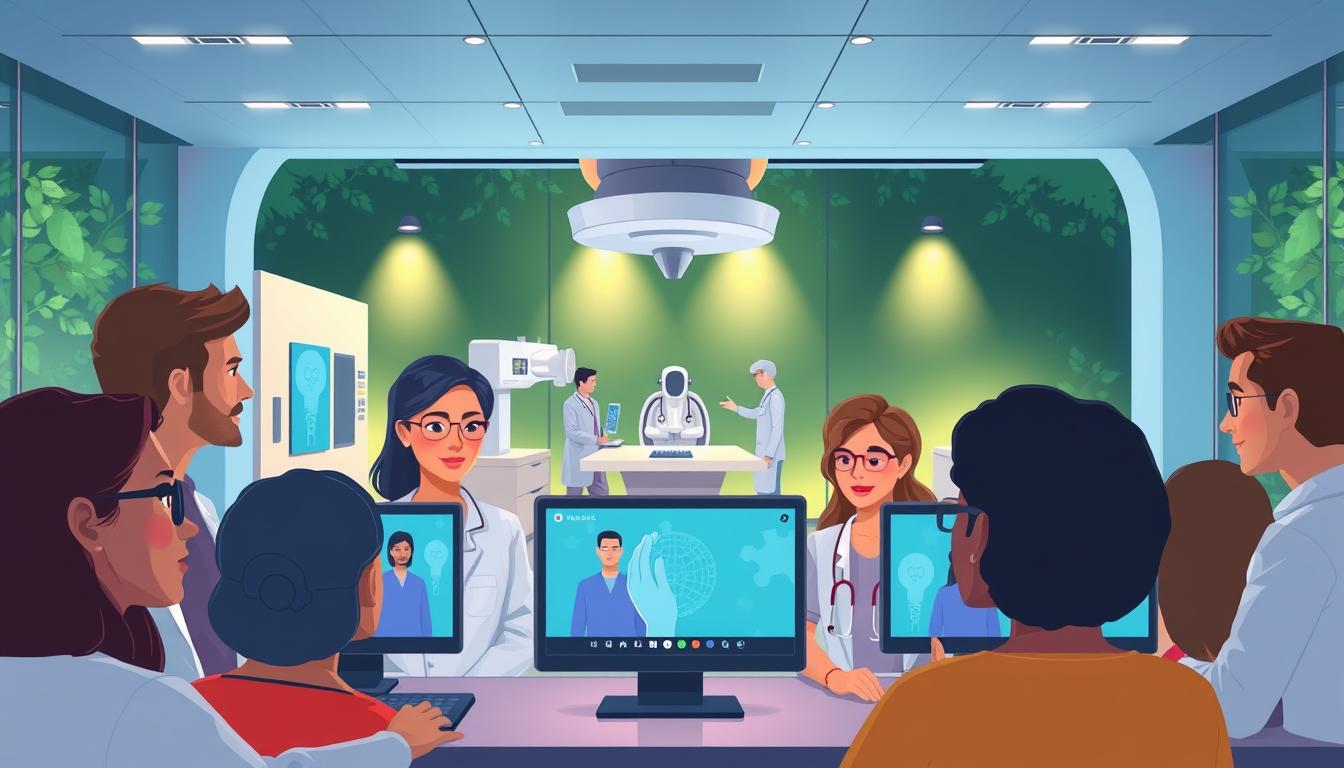
There are times when a doctor’s advice feels far away. It might be a muffled voice on the phone or a paused video. These moments show why telehealth education is important. It helps turn scattered care into steady, confident practice.
This guide is for leaders, educators, and clinicians in the U.S. It helps them find online courses and digital classes for remote care. It sees telehealth education as a way to train teams and meet standards.
It talks about clear goals: learning tech, designing courses, following rules, using RPM, and tracking progress. It also follows current policies and CMS rules on billing.
It promises real results: learning to do virtual exams, using RPM, getting consent, and billing right. This way, telehealth can reach more people without losing quality or following rules. Whether you need small pieces or big digital classes, this guide shows the way to safe, reliable virtual care.
Key Takeaways
- Telehealth virtual health education programs bridge clinical skills and technology for effective remote care.
- Online healthcare courses should include RPM workflows, documentation, and CPT/HCPCS billing guidance.
- Accreditation increasingly requires ongoing technology proficiency and cybersecurity training.
- Program design must align with Medicare and CMS guidance to ensure reimbursement readiness.
- Digital health classes and remote health education resources should focus on measurable clinical and operational outcomes.
Introduction to Telehealth and Virtual Health Education
Telehealth changes how doctors and patients meet. It uses technology for many visits, like video calls and messaging. The Centers for Medicare & Medicaid Services say most telehealth is video, but audio-only is okay for some mental health talks.
How we learn and work in telehealth matters. During the COVID-19 crisis, rules changed to help more people. But soon, old rules will come back, making things more complicated.
Definition and scope
Telehealth means video calls, messages, and data sharing. It’s important to learn how to use the camera and audio well. This helps doctors make better diagnoses and patients feel more comfortable.
Overview of program types
There are many kinds of telehealth education. You can find short workshops or full courses. Topics include how to use devices, billing, and keeping patient information safe.
Good programs mix learning about technology, how to use it, and rules. This way, doctors and staff can work well together. They can also make sure they’re doing things right and getting paid correctly.
Good programs let you practice what you learn. Workshops might have fake visits to practice. Online courses offer lessons anytime, which is great for busy people.
| Program Type | Typical Duration | Core Focus | Example Outcomes |
|---|---|---|---|
| Short workshop | 2–8 hours | Camera technique, troubleshooting, basic documentation | Faster tele-visit setup; fewer technical interruptions |
| Certificate program | 4–12 weeks | Clinical telemedicine skills, RPM workflows, billing | Competency in compliant telehealth delivery; billing accuracy |
| e-learning course | Self-paced, days to months | Policy updates, cybersecurity, consent, remote assessment | Scalable staff training; updated knowledge on regulations |
| Comprehensive training bundle | Ongoing | Clinical, technical, administrative integration | End-to-end readiness for program launch and scale |
Combining different types of telehealth education is key. It prepares teams to meet patient needs and keep up with changes. This way, they can provide top-notch care everywhere.
Benefits of Telehealth Virtual Health Education Programs
Telehealth education changes how doctors teach and patients learn. It prepares staff for virtual visits and remote monitoring. This helps patients in rural areas and those who can’t move easily.
Accessibility and Convenience
Virtual programs bring care to patients’ homes. Doctors can do behavioral health and follow-ups without travel. CMS lets many telehealth services be done from home until Sept. 30, 2025.
Short digital health classes teach doctors to use platforms and devices. This practice reduces missed sessions and improves care.
Cost-Effectiveness for Patients and Providers
Online courses save on travel and time away from work. Training on billing codes helps capture the right reimbursement. This shows the program’s value.
Learning about CPT and RTM/RPM codes helps bill correctly. This supports funding and financial planning.
Improved Patient Engagement and Outcomes
Education that includes coaching and remote monitoring improves chronic disease control. Courses teach using digital tools for better follow-up and adherence.
Programs show real gains: fewer ER visits and better medication use. For more evidence, see virtual health assistant outcomes.
| Benefit Area | What Training Teaches | Operational Result |
|---|---|---|
| Access & Convenience | Conducting visits from home; RPM enrollment | Reduced travel; higher appointment completion |
| Billing & Reimbursement | Using POS codes and HCPCS Q3014; CPT/RTM/RPM codes | Clearer revenue pathways; improved ROI |
| Engagement & Outcomes | Caregiver coaching; remote adherence strategies | Better medication adherence; fewer readmissions |
| Operations & Trust | Tech troubleshooting; cybersecurity basics | Fewer visit interruptions; higher patient trust |
| Learning Formats | Short modules, simulations, digital health classes | Faster skill uptake; scalable staff proficiency |
Teams that use online courses and digital skill checks learn faster. A mix of short modules and practice builds strong habits.
Tip: Use accredited training with remote health resources to build trust and quality in virtual programs.
Key Components of Effective Virtual Health Education
Good virtual health education needs a clear plan, hands-on skills, and solid content. It should teach specific skills and be easy for doctors and patients to use. The goal is to make learners confident in giving care from a distance.
Interactive Learning Modules
Interactive parts should mimic real telehealth visits with practice in giving consent and talking. Show videos on how to do digital exams and use cameras right.
Tests based on real-life scenarios are great for learning about remote patient care. Make sure learners can do virtual physical exams and handle audio-only visits well.
Access to Medical Resources and Information
Course libraries should have guides on coding and CMS materials. Include info on managing chronic diseases and using RPM devices.
Guidelines based on solid research help doctors give the same care everywhere. Linking to trusted sources, like this review on telehealth evidence, builds trust and better care.
Incorporation of Telecommunication Tools
Training should teach how to use video calls, health apps, and messaging tools. Show how to set up and pair wearable devices.
Guides for fixing tech problems and pairing devices help avoid delays. Teach how to document and code telehealth visits correctly.
- Assessment and credentialing: Teach about documentation, billing, and HCPCS codes (like G0320–G0322).
- Practical drills: Practice real visits with feedback to check skills.
- Resource integration: Have a library of clinical guides and device manuals for learning.
When these parts work together, e-learning in telemedicine improves care everywhere. Programs that focus on skills and reliable info help doctors reach more people.
Technologies Powering Telehealth Education
Telehealth uses many tools to teach health care outside of clinics. It mixes platforms, apps, and devices. This way, everyone learns to use tools safely and well.
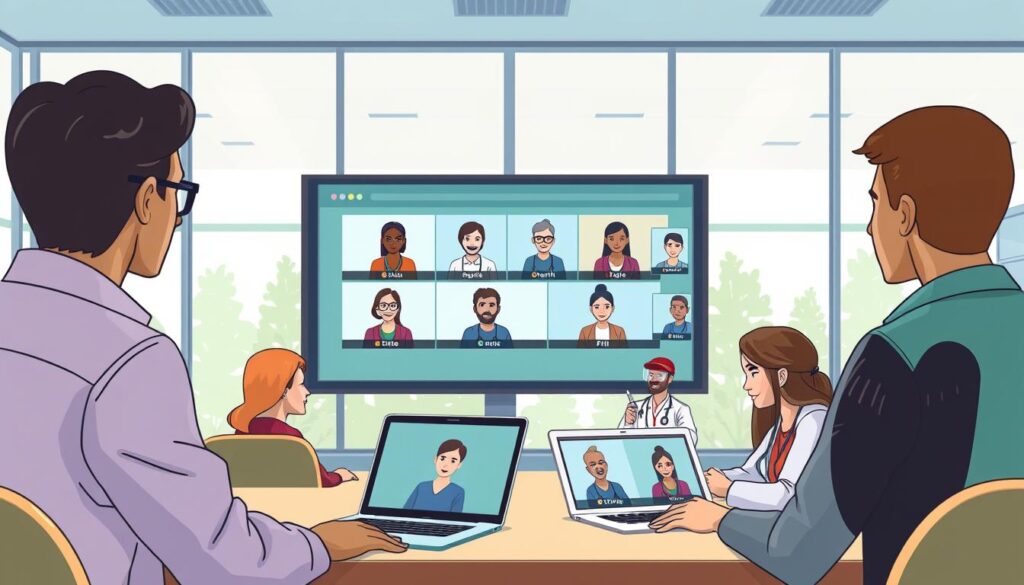
Video calls are key for live lessons and checking cases. People learn how to set up Zoom for health, Microsoft Teams for health, and Doxy.me for meetings. They learn about audio and video settings and how to add people to meetings safely.
Video Conferencing Platforms
Telehealth workshops teach how to manage who can see what. They also show how to record sessions and put them in health records. It’s all about keeping health info safe.
Mobile Health Applications
Training on apps teaches teams to help patients with reminders and tracking. They learn how to send data to health records. This meets the needs of remote monitoring.
They practice teaching patients to use apps. They learn to fix app problems and check data for accuracy.
Wearable Health Monitoring Devices
Devices like blood pressure cuffs and glucose monitors are used. Training covers how to set them up and use them. It also teaches how to bill for services.
They learn about the rules for remote monitoring. They must document data for 16 days in 30 days to qualify. They learn to keep data safe and handle alerts.
They also learn about technical issues. They learn to fix problems and use data in health dashboards. This helps providers make good decisions.
More info on remote care during the pandemic is at this review. It shows why telehealth is important for care and learning.
Target Audiences for Telehealth Education
Telehealth programs help many groups. Each group needs special content and ways to learn. This helps improve care and confidence everywhere.
Patients and Caregivers
Patients learn how to use devices and take their own tests. They also learn about giving consent and joining remote monitoring. Practical demos and practice sessions help them remember.
Caregivers get special training on safety and how to fix problems. They also learn about billing and documenting services. This is important for 2025.
Healthcare Providers and Professionals
Doctors and nurses learn about telehealth skills and how to do exams remotely. They also learn about using codes and keeping data safe. This meets Medicare rules.
Staff learn about keeping data safe and following privacy rules. Short exercises and role-plays help them feel more confident. This also lowers risks.
Educational Institutions
Schools and nursing programs add telehealth to their lessons. Teachers learn how to supervise students in telehealth. This is allowed until Dec. 31, 2025.
Universities use online courses to teach telehealth skills. This helps students learn from basic to advanced. It prepares them for the job market and helps schools meet standards.
Organizational Stakeholders
Administrators and policy teams learn about getting accredited and planning resources. They understand how accreditation shows quality. This builds trust with patients and payers.
Workshops for leaders cover changes and how to plan. They help leaders plan for the future and manage daily tasks.
Designing an Effective Virtual Health Education Program
Starting a telehealth program needs clear goals and ways to measure success. It should teach both technical skills and how to work with patients. The lessons should cover real-world tasks like billing and getting consent.
Curriculum Development and Best Practices
Use a skill-based approach to create your curriculum. Include topics like tele-exams and how to get consent. Mix online learning with live sessions to help learners practice.
Make sure your tests match your learning goals. Keep track of who finishes the program and how well they do. This helps with quality checks and getting accredited.
Incorporating Patient Feedback
Ask patients about their experience after a telehealth visit. Use simple surveys to find out about camera use and how easy it was to set up devices. Use this feedback to improve your tutorials and guides for patients.
Look at feedback from different places and people. This helps you make your education better for everyone. Share what you’ve changed to keep learners interested and trusting your program.
Ensuring Compliance with Regulations
Make sure your program follows CMS rules and HIPAA standards. Keep up with changes in Medicare billing rules. This helps learners stay ready for new rules.
Keep records of who has finished the program and how well they did. This helps with accreditation and meeting audit requirements. It also shows you’re serious about following rules for telehealth.
For programs wanting to show they’re making a difference, look at examples. This article on implementation and reach is a good start. Use these ideas to grow your program while keeping quality high and following rules.
Case Studies of Successful Telehealth Education Programs
This section looks at three examples of how telehealth education programs made a big difference. Each story shows how the program was set up, who was trained, and how it worked. It also shows the results, like fewer missed appointments and happier patients.
Children’s Health Initiative
A pediatric system started digital health classes for caregivers. They learned how to use devices at home and how to do virtual exams. Doctors got training on how to guide caregivers and bill for visits.
When Medicare said they could train caregivers in 2025, the program grew. They saw better training rates, fewer missed visits, and very happy patients. This success is part of a bigger trend: more telehealth visits during the pandemic to keep care going.
See more about telehealth growth during the pandemic here: key telehealth metrics.
Chronic Disease Management Program
A chronic care network used RPM devices for monitoring blood pressure and glucose. They set up ways to upload data that met billing rules. Patients were told to send 16 days of data every 30 days.
Doctors learned how to read trends, document for treatment, and follow billing rules. They watched how blood pressure changed, how often medication was adjusted, and how well they billed. This showed better health control and more money when training and rules matched.
Mental Health Support Systems
Behavioral health programs grew their audio-only and audio-video care. They set up ways for remote therapy, crisis planning, and care coordination. They could do these visits from anywhere until September 30, 2025, and some keep doing them at home.
They added stories of success in training to teach staff. They learned about calming down patients, making safety plans, and billing for crisis services. They saw shorter wait times, fewer missed visits, and happier patients. They used classes to teach how to document and bill for virtual visits.
| Program | Primary Training Focus | Key Metrics | Billing Considerations |
|---|---|---|---|
| Children’s Health Initiative | Caregiver RPM setup; pediatric tele-exam coaching | 28% fewer missed visits; high caregiver competency; patient satisfaction ≥95% | Caregiver training added to Medicare lists for CY 2025; documentation templates provided |
| Chronic Disease Management | RPM device use; trend interpretation; data upload protocols | Improved BP and glucose control; increased medication optimization; billing capture >90% | 16 days/30-day RPM expectation; one practitioner billing limit; RPM vs RTM exclusions |
| Mental Health Support Systems | Remote therapy workflows; crisis safety planning; audio-only best practices | Reduced wait times; lower no-shows; higher access scores | Behavioral telehealth flexibilities through 9/30/2025; permanent HCPCS G0560 for crisis planning |
Challenges Facing Telehealth Virtual Education Programs
Telehealth programs aim to reach more people and save money. But, they face many challenges. Here are the main issues and how to tackle them.
Digital Divide and Technology Accessibility
Not everyone can join online health classes. People in rural areas and those who can’t afford it often lack good internet or devices. Programs need to provide devices, offline content, and reach out to those who need it most.
Rules from CMS that allow audio-only visits help. Training doctors to use audio-only visits makes things fairer. Working with the community and libraries can help more people join. It’s also important to know who is using the technology to make it better.
Patient Privacy and Data Security
Keeping health information safe is very important. Doctors and staff must learn about keeping data secure. They need to know how to protect data when sending it online.
Choosing safe platforms and having clear data policies are key. Regular checks and plans for when something goes wrong help keep everyone’s trust.
Engagement and Retention of Learners
People might stop participating if the content is boring or not relevant. Using interactive tools and short tests keeps them interested. Giving feedback and small rewards helps too.
Offering rewards for finishing classes and tracking who completes them helps keep people going. This way, more people can benefit from online health education.
Operational Constraints and Sustainability
Starting a program is hard because of rules, money limits, and needing to work together. Leaders must get support from top officials and make sure they have the right team.
Starting small and showing results helps get more support. Having a clear plan and growing slowly makes things easier.
| Challenge | Core Issue | Practical Response |
|---|---|---|
| Access | Limited broadband and devices | Device lending, offline modules, partnerships with community centers |
| Privacy | Risk to patient data and RPM streams | Cybersecurity training, HIPAA-compliant platforms, MFA, retention policies |
| Engagement | Low completion and motivation | Interactive simulations, micro-certifications, link to reimbursement |
| Operations | Complex accreditation and funding needs | Pilot programs, cross-functional teams, phased scaling |
Future Trends in Telehealth and Virtual Learning
The next big thing in telehealth will mix tech, policy, and teaching. Teachers and leaders will focus on big solutions. These will help doctors and other health workers do their jobs better.
Growth of Artificial Intelligence in Health Education
AI will make learning more real. It will use virtual patients and give feedback on how well you do. This helps you learn and get better.
AI will also help with tracking patients. It will teach you to spot problems early. This way, you can help patients faster.
Increased Personalization in Learning Experiences
Learning will be more tailored to you. It will match your job, experience, and how well you do things. This makes learning faster and more effective.
There will be special badges and new ways to get certified. Working with device makers will add hands-on practice. This makes sure you can do your job well.
Policy, Reimbursement, and Curriculum Agility
Changes in rules and how you get paid will shape what you learn. Training teams need to keep up with these changes. This makes sure you’re learning what you need to know.
Practical Steps for Program Leaders
- Map competencies to reimbursement and coding changes to keep curricula aligned with practice needs.
- Integrate AI simulations into assessment plans to standardize evaluation across cohorts.
- Offer modular personalized e-learning telemedicine training that awards micro-credentials tied to specific skills.
Policies Impacting Telehealth Virtual Education
Policy changes affect how telehealth education works. Providers need to follow federal and state rules. This keeps their programs up-to-date and helps them make money.
State and Federal Regulations
The CMS has rules for telehealth. They explain what sites can do and what tech is okay. Training should cover allowed tech and rules for audio-only calls until Sept. 30, 2025.
State rules differ on who can practice where. Programs must teach about these rules. After Oct. 1, 2025, some services might have new limits. Educators should get learners ready for these changes.
Reimbursements and Funding Opportunities
Teaching coding and billing is key. Courses should cover important codes and how to submit claims. Knowing Medicare’s rules is also important.
Programs that teach about money tend to last longer. Teachers should use examples to help students understand.
There are ways to get money for telehealth training. Grants, programs, and partnerships can help. Getting accredited can also open doors to more money. Having a plan for money helps programs stay strong.
Conclusion: The Future of Health Education through Telehealth
Telehealth is changing how we learn about health. It makes us better at using technology. We learn about digital exams, fixing problems, and keeping data safe.
It also teaches us about money and following rules. This way, we can give care that is safe and paid for.
Good programs mix fun learning with device training and coding. They also teach about keeping data safe. Getting certified shows we are good at it.
Programs need to change with new rules. This keeps them strong and ready for the future.
Everyone should start learning now. Doctors, managers, teachers, and inventors need to get trained. They should use Medicare rules and test new training.
They should also listen to what patients say. This helps make programs better. Getting certified helps make services reliable.
Good telehealth education can help more people. It makes care better and lasts longer. By focusing on what works, teams can lead in a changing world.
FAQ
What is telehealth and how does it differ from telemedicine?
Telehealth uses technology to give health services from far away. It includes virtual visits, monitoring patients, and messaging. CMS says telehealth is mostly live video calls, but sometimes audio calls are okay.
Training teaches how to use these ways to care for people.
What should a comprehensive virtual health education program include?
A good program teaches about exams, tech, and how to bill. It covers how to use cameras, fix tech problems, and set up devices. It also teaches about billing, keeping patient info safe, and how to get patients ready for care.
It uses fun ways like games and role-plays to check if people can do the skills.
Who are the target audiences for telehealth training?
People who need training include doctors, nurses, and staff. Also, patients, caregivers, and schools. Programs can be made for different jobs, like doctors or staff.
How do virtual health education programs support accreditation and compliance?
Programs help meet rules by teaching skills and keeping records. They follow CMS rules and keep patient info safe. This shows they are ready for checks.
How should programs teach billing and reimbursement for telehealth and RPM?
Programs should teach how to bill for services. They should cover codes, how to bill, and what to document. This helps with getting paid for care.
What instructional technologies should be integrated into telehealth education?
Programs should teach about video platforms and apps. They should also cover devices like blood pressure cuffs. This helps with learning how to use them.
How can programs measure clinical and operational outcomes?
Programs can track things like how well patients do and how often they show up. They can also check how well staff do their jobs. This helps make the program better.
What are best practices for teaching RPM workflows and device management?
Programs should teach how to use devices and manage data. They should cover how to set up devices, take readings, and send data. This helps with keeping patients safe and healthy.
How should programs adapt to changing federal and state policies?
Programs should keep up with new rules. They should update what they teach and make sure it’s right. This helps everyone stay on the same page.
Are audio-only visits and behavioral health telehealth covered under current rules?
Yes, some visits can be done by phone. Programs should teach how to do these visits right. They should also cover how to keep patient info safe.
How can education programs address the digital divide and accessibility?
Programs should make sure everyone can get the care they need. They should teach about using technology in different ways. This helps make sure everyone can get the care they need.
What cybersecurity topics are essential for telehealth training?
Programs should teach about keeping patient info safe. They should cover things like using secure platforms and keeping data safe. This helps protect patient info.
How can programs sustain learner engagement in virtual education?
Programs can use different ways to keep people interested. They can use videos, games, and tests. This makes learning fun and keeps people coming back.
What role does AI play in telehealth education now and in the near future?
AI helps make learning better by making simulations more real. It also helps with checking how well people do. Programs should teach how to use AI safely.
How should educational institutions integrate telehealth into clinical training?
Schools should teach about telehealth in a way that makes sense. They should use real-life examples and make sure teachers know how to teach online. This helps students learn how to care for patients remotely.
What funding sources and incentives exist to develop telehealth education programs?
There are grants and partnerships that can help pay for programs. Showing how programs help patients and save money can get more funding. This helps make sure everyone can get the care they need.
How can programs ensure accurate billing when multiple remote services overlap (e.g., RPM and RTM)?
Programs should teach the difference between services. They should cover how to bill for each service. This helps make sure patients get the care they need without wasting money.
How should organizations document training to support accreditation and payer audits?
Keeping records is important. Programs should keep track of who has done what training. This helps show that everyone is ready for checks.
What practical steps can a health system take to launch a telehealth education program?
First, figure out what’s needed. Then, make a plan that follows rules. Start small and make sure everyone is on board. This helps make sure the program works well.
How do programs train clinicians to perform effective virtual physical exams?
Programs should use videos and practice to teach skills. They should cover how to use cameras and talk to patients. This helps doctors and nurses learn how to care for patients from far away.
What are best practices for patient and caregiver onboarding to RPM?
Programs should teach patients and caregivers how to use devices. They should cover how to set up devices and take readings. This helps keep patients safe and healthy.
How can programs show return on investment (ROI)?
Programs can track how well patients do and how much money is saved. They can also ask patients how they feel. This shows that the program is worth it.