Travel moments stick with us. Like a concierge who knows what we like. Or a quick mobile check-in. Or a trip plan that makes memories.
These moments mix human touch with tech. Now, ai in tourism and hospitality is making them more common.
This guide shows how AI is becoming key in travel. Forbes says AI will be worth $15.7 trillion by 2030. And by 2024, investments will hit nearly $500 billion.
Hotels, airlines, and tour operators need to act. They must embrace AI to stay ahead.
MIT research shows a big win for those who mix AI with staff skills. They can outdo others by 650%. This mix is the secret to success for brands aiming high.
Soon, we’ll see AI making trips better. From personalized plans to automated services. And from smart pricing to energy-saving tech.
This article will dive into each of these. It will show how AI boosts guest happiness, saves time, and increases profits.
The guide is clear and helpful. It offers a roadmap for using AI to gain an edge. It covers the benefits, risks, and future of AI in travel.
Key Takeaways
- AI Revolutionizing Tourism & Hospitality Sector is now strategic, not experimental.
- Artificial intelligence in travel industry drives personalized guest experiences and operational efficiency.
- Machine learning in hospitality sector paired with human talent yields significant performance gains.
- Smart technology in travel includes chatbots, dynamic pricing, predictive maintenance, and AR guides.
- Market scale and investment trends make AI engagement essential for competitive brands.
Introduction to AI in Tourism and Hospitality
The travel and lodging industry is changing fast. New tech lets companies work better and make guests happier. Big names like Marriott, Hilton, and IHG see AI as key to improving services.
Definition of AI
AI is like a smart brain that learns and makes choices. It uses big data to understand patterns and make decisions. It includes things like machine learning and natural language processing.
Today, AI helps with things like sorting reviews and planning trips. It makes tasks easier for managers and helps them make smart choices.
Overview of the Industry’s Current Landscape
Airlines, hotels, and travel sites are all using AI now. Marriott, Choice Hotels, and Radisson are using AI to help guests and improve work. This shows AI is being used in many ways.
More people are okay with using AI for travel plans. AI tools and chatbots are helping more people book trips. This has led to more options for travelers.
AI can help companies work better and make guests happier. Starting with AI can lead to more money and better control over costs.
Benefits of AI Implementation
AI changes how guests and staff work in tourism and hospitality. It makes experiences better and work easier. Here are the good parts and what to do next.
Enhanced Customer Experience
AI makes experiences special by knowing what guests like. It makes plans just for them. This makes guests happy and loyal.
AI chatbots help 24/7, so guests don’t wait long. This lets staff do more important things. Guests are happier because of this.
Tools like AR guides make visits more fun. They make guests want to share their good times. This helps places get more guests.
Streamlined Operations
AI does boring tasks like checking in and out. This makes things faster and less wrong. Places like VASS show how AI can help.
AI also knows when things might break. This means less time waiting for fixes. It makes work more efficient.
AI helps save energy by adjusting lights and heat. This is good for the planet and saves money. Guests stay comfortable too.
Increased Revenue
AI changes prices based on what others charge and how busy it is. This can make more money. Places like Atomize show how to do this well.
AI also suggests things to sell to guests. This makes more money and gets more direct bookings. This is better for the business.
AI helps with marketing too. It makes ads that fit each guest better. This brings in more guests and saves money.
| Benefit | Practical Use | Business Impact |
|---|---|---|
| Guest Personalization | Tailored itineraries, room preferences | Higher loyalty and repeat bookings |
| 24/7 Support | Chatbots, virtual concierges | Faster responses; fewer staffing bottlenecks |
| Operational Automation | Automated check-in/out, passport parsing | Reduced errors; faster throughput |
| Predictive Maintenance | Equipment monitoring, scheduled repairs | Lower downtime and repair costs |
| Energy Optimization | Occupancy-based HVAC and lighting | Lower utility bills; sustainability gains |
| Dynamic Pricing | Real-time rate adjustments | Increased RevPAR and revenue mix |
| Marketing Efficiency | AI-generated content, targeted ads | Higher conversion and ROI |
| Insight Generation | Customer segmentation and forecasting | Better decision-making using data analytics in hospitality |
AI Applications in Travel Booking
The travel booking process now combines human insight with machine precision. Providers use data from past trips and search patterns to make offers that feel personal. This makes booking more engaging and boosts conversion rates.
Personalized Travel Recommendations
Recommendation engines look at past bookings and browsing history to suggest itineraries. They use generative models and collaborative filtering to create packages that match what travelers want. Airlines, Expedia, and Booking.com use these systems to offer relevant options at the right time.
These tools get better as users interact with them. They learn and improve suggestions across devices and channels. This continuous learning helps turn interest into bookings more often than static offers.
Chatbots for Customer Support
Conversational agents handle FAQs and simple troubleshooting 24/7. They understand what users mean and respond naturally. When things get too complex, they pass on requests to human agents for a smoother handoff.
Using ai chatbots for hotels and travel sites cuts down on response time. It also reduces the workload for staff. Many properties see an increase in direct bookings after adding chat interfaces on websites and messaging platforms.
Dynamic Pricing Models
Machine learning updates prices in real time based on demand signals and competitor rates. These dynamic pricing tools help revenue managers adjust prices without manual effort. They capture fleeting demand opportunities.
Forecasting helps match inventory and staffing with expected bookings. This leads to better occupancy control and timely promotions. It also matches traveler willingness to pay.
For a concise overview and projections on AI’s role in tourism, check out this analysis from VASS: AI in tourism insights.
AI in Hotel Management
Hotels are using smart systems to make guest stays better. They work on comfort, prices, and how guests move from start to end. This mix of tech and practical work boosts guest happiness and saves money.
Smart Room Technology
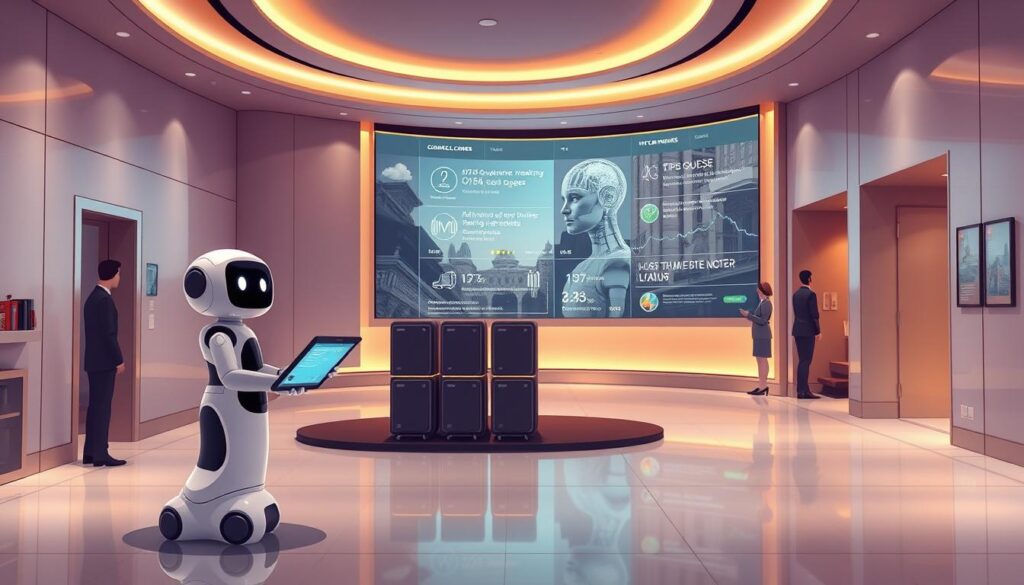
Amazon Alexa and Google Assistant make rooms smart. Guests can change lights, temperature, and entertainment with voice commands. These systems also suggest places to eat and offers based on what guests like.
IoT sensors and smart thermostats make rooms cozy for each guest. They save energy by adjusting settings when rooms are empty.
Predictive Analytics for Pricing
AI looks at past data and events to guess demand. This helps hotels change prices quickly to keep guests coming.
Tools like Atomize and Duetto help hotels adjust prices fast. They watch what competitors do and guest booking habits. This makes hotels more money and keeps guests coming back.
Automated Check-in and Check-out
Tools scan IDs fast to check guests in. Biometric checks make checking in safe and quick.
Self-service kiosks and apps let guests check in without waiting. They help hotels meet safety and privacy rules.
Role of AI in Marketing Strategies
The tourism and hospitality sector gets ahead with AI in marketing. AI turns big data into actions that boost engagement and bookings. Brands like Marriott and Expedia use AI to send the right message to the right traveler.
Targeted Advertising
AI sorts people into groups for ads that feel just right. It changes ads on the fly to get better results. Agencies use AI to guess which ads will work best for each group.
Social Media Analysis
AI watches what people say and what’s trending online. It looks at pictures and sounds for deeper insights. This helps marketers run ads that match local events and weather.
Email Campaign Optimization
AI tries different email ideas to get more opens and sales. It suggests the best offers and when to send them. AI also helps make content fast while keeping it relevant.
These AI tools help make marketing better and more efficient. They help see how well ads work and where to spend more.
Agencies that use AI with other marketing tools get better insights fast. This makes their campaigns stronger and more flexible.
AI-Powered Travel Assistants
AI has become a big help for travelers and hotel staff. It plans routes, books rooms, and gives tips in real time. This lets people focus on helping guests more.
Virtual Travel Agents
AI makes virtual travel agents. They plan trips, book things, and change plans if needed. KLM shows how AI can help with check-ins and booking changes.
These agents help with simple tasks. But, they keep human experts for harder things. They also suggest upgrades and promotions, making guests happier.
For more info, check out AI in travel and hospitality.
Mobile Apps and User Interaction
Mobile apps use voice search and chat. They also recognize images. This makes using them smooth and easy.
Apps send timely messages and offers. This makes people want to book again. Designers use AI to make apps work better with voice and images.
Virtual assistants in apps help guests. They get updates and special offers. This makes guests happy and keeps them coming back.
Data Analytics for Decision-Making
Data helps hotels and tour operators make better choices. Leaders use data from different sources to decide on staff, prices, and marketing. This section talks about how data turns into actions.
Customer Behavior Insights
AI looks at booking patterns and online reviews to understand guests. Tools like Mews Smart Tips help staff give better service. This makes guests happier and more likely to come back.
Guest reviews and social posts help find what guests like and dislike. Hotels use this info to improve. This way, guests get what they expect.
Market Trend Analysis
AI predicts changes in demand based on events and weather. This helps hotels set prices and plan for busy times. It spots trends that humans might miss.
AI combines data from different places into one view. This helps target marketing better and plan operations. It makes decisions easier and more accurate.
| Decision Area | Data Inputs | AI Output | Business Impact |
|---|---|---|---|
| Pricing & Revenue | Booking pace, competitor rates, event calendars | Dynamic price recommendations and forecasted ADR | Higher RevPAR and reduced vacancy |
| Guest Experience | Stay history, survey responses, behavioral sensors | Personalized offers and staff prompts | Improved NPS and loyalty enrollments |
| Operations & Staffing | Occupancy forecasts, housekeeping logs, maintenance tickets | Shift plans and maintenance schedules | Lower labor costs and fewer service disruptions |
| Marketing & Distribution | Channel performance, campaign metrics, CRM segmentation | Channel mix optimization and campaign prioritization | Better ROI on ad spend and higher conversion |
Tools help leaders make decisions based on data. This leads to better results. When teams trust data, they make smarter choices.
Using AI and data together helps improve continuously. Leaders who use machine learning make faster, better choices. They stay ahead of changes.
Challenges of Integrating AI
Using AI in tourism and hospitality has its ups and downs. Leaders must think about money, rules, and people when starting new projects.
High Initial Costs
Starting with AI costs more than you think. You need to pay for software, servers, and training. Small places might find it hard, but there are ways to start small.
Getting back what you spend is not always easy. Some see quick wins with chatbots and ads. But big changes take time and money.
Privacy and Data Security Issues
AI uses your data, which makes people worry. You must follow rules and keep data safe. This means having clear rules and checking data often.
Being careful with data helps. Use ways to hide data and test for bias. You can learn from others by reading about AI in hospitality.
It’s important to talk about what matters. Like how people feel about their data and what happens if it’s lost. Being open helps keep customers and builds trust.
Resistance to Change
People might worry about losing their jobs. The best way is to use AI to help people, not replace them. This way, everyone can focus on what they do best.
Start small and train your team. This makes everyone feel more comfortable. It shows that AI can make things better without taking away jobs.
| Challenge | Key Risks | Mitigation Steps |
|---|---|---|
| High Initial Costs | Capital strain; long payback periods | Modular vendors; staged investments; ROI pilots |
| Privacy and Data Security Issues | Regulatory fines; reputational loss | Data governance; anonymization; regular audits; refer to studies like privacy best practices |
| Resistance to Change | Low adoption; staff turnover | Reskilling programs; pilot phases; clear role design |
Future Trends of AI in Tourism and Hospitality
The next decade will change how we plan and enjoy trips. Machine learning will make travel planning smarter and quicker. Systems will guess what we want and offer it right away.
Advancements in Machine Learning
New models will make talking to brands feel more natural. They will create special plans and content for each guest. This makes travel feel more personal.
Using IoT and edge computing will make things faster. It helps hotels and cars make quick decisions. This means better service and lower costs.
Big companies are making their search and chat tools better. Travel brands that update their content will get more visitors. For more on how to use AI, check out Deloitte’s guide: embracing the future.
The Rise of Autonomous Travel Solutions
Autonomous tech will become more common. Robots will do boring jobs, so people can focus on guests. This makes travel better.
AI will help with getting from one place to another. It will make traveling easier and more efficient. This is thanks to robotics and AI working together.
AI will also make checking in and staying safe easier. But, we need to make sure our data is safe. This builds trust and makes things run smoother.
| Trend | Short-term Impact (1–3 years) | Long-term Impact (4–10 years) |
|---|---|---|
| Generative AI for content | Improved marketing personalization and dynamic content | Automated immersive previews and localized messaging |
| Edge computing + IoT | Faster in-property responses and reduced latency | Real-time optimization of energy, pricing, and service |
| Autonomous service robots | Task automation in housekeeping and logistics | Wider deployment across hotels, airports, and attractions |
| AI-managed transport | Pilot shuttles and route optimization | Integrated multimodal trip orchestration |
| Biometric security | Smoother passenger flows at checkpoints | Privacy-first identity systems with stronger governance |
Brands that use AI wisely will do well. They will offer personalized service, automate tasks, and be more green. Using AI in tourism and hospitality means better travel for everyone.
Conclusion: Embracing AI for Growth
The tourism and hospitality sector is at a key moment. AI is making things better by personalizing experiences and making things more efficient. Big names like Marriott and Hilton are seeing big wins.
But, there are challenges like high costs and privacy worries. It’s important to handle these issues carefully. Start small with AI to see how it works.
It’s also key to train staff well. This way, they can work better with AI. Working with experts in both hospitality and AI can help a lot.
Seeing AI as a must-do is smart. With the right steps, businesses can change how they serve guests. They can also find new ways to make money and stay strong.
FAQ
What does “AI” mean in the context of tourism and hospitality?
AI in travel means systems that think like humans. They learn, reason, and make decisions using big data. This includes tools like machine learning and chatbots that help guests and make tasks easier.
Why is AI essential for competitive hospitality brands now?
AI is now a must-have for hotels and travel companies. It makes guests happy, makes work easier, and helps make more money. It’s all about making things better for everyone.
Which guest-facing AI features deliver the fastest ROI?
Fast wins include AI chatbots and virtual assistants. They help 24/7 and make booking easier. They also make personalized plans and offers.
How does AI improve operational efficiency in hotels?
AI makes hotels run smoother. It handles check-in, keeps rooms clean, and fixes things before they break. It also saves energy and helps the planet.
What is dynamic pricing and how does it work in hospitality?
Dynamic pricing changes room rates based on demand. It looks at what others charge and when people book. This way, hotels can make more money without overcharging.
Are chatbots reliable for handling complex guest requests?
Yes, modern chatbots can handle many things. They answer questions, book changes, and even help with problems. They learn from guests and can ask for help when needed.
Which AI tools enhance marketing for travel brands?
AI helps with ads, social media, and emails. It makes messages better and reaches the right people. This way, travel companies can talk to more guests and get more attention.
How does AI enable personalized travel recommendations?
AI looks at what guests like and plan trips for them. It suggests places to go and things to do. This makes travel more fun and personal.
What role do virtual travel agents and intelligent assistants play?
Virtual travel agents help plan trips and give advice. They work on their own or with humans. They make booking easier and help guests find the best places.
How can hotels integrate smart-room technology responsibly?
Hotels can use smart tech to make rooms better. It controls lights, temperature, and shows local tips. But, they must ask guests first and keep their info safe.
What are the main data and privacy risks when deploying AI?
AI uses personal data, which can be a problem. Hotels must protect this data and follow rules. They need to be open about how they use it and let guests choose what to share.
How should smaller properties with limited budgets approach AI adoption?
Small hotels can start with simple AI tools. Try chatbots and smart pricing first. Use what they already have and focus on making things better for guests.
What workforce changes should hospitality leaders expect with AI?
AI will change jobs in hotels. People will focus on helping guests more. Hotels need to train staff and make sure they work well with AI.
Can AI reduce a hotel’s dependency on OTAs?
Yes, AI can help hotels not rely so much on OTAs. It makes booking easier and more personal. This can help hotels make more money and keep guests coming back.
How do predictive analytics and market trend analysis work together?
Predictive analytics look at past data to guess what will happen next. Market trend analysis finds new trends. Together, they help hotels plan better and make more money.
Which vendors and technologies are referenced in real-world examples?
Many hotels use AI in different ways. Marriott, Choice Hotels, and Hilton are just a few examples. Companies like Atomize and Mews help make these systems work.
What are realistic timelines to see ROI from AI projects?
How long it takes to see money back from AI depends on the project. Small things like chatbots can show results in months. Bigger projects might take longer, but they can make a big difference.
How should organizations govern AI to minimize bias and ethical risks?
Hotels need to watch how AI works to avoid problems. They should check data, make sure AI is fair, and keep an eye on it. Being open with guests and letting them choose what to share is also important.
What future trends will most affect tourism and hospitality?
AI will get better and change travel in big ways. It will make planning trips easier and more personal. Hotels will also use new tech like robots and smart systems.
What first steps should industry stakeholders take to begin?
Start with small AI projects. Try chatbots, smart pricing, and better data handling. Work with experts and focus on making things better for guests.