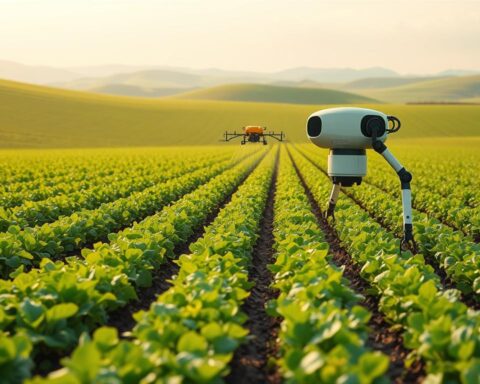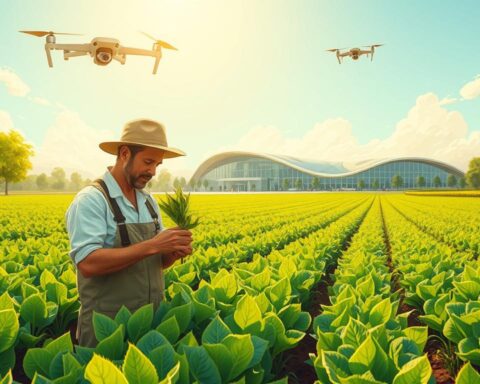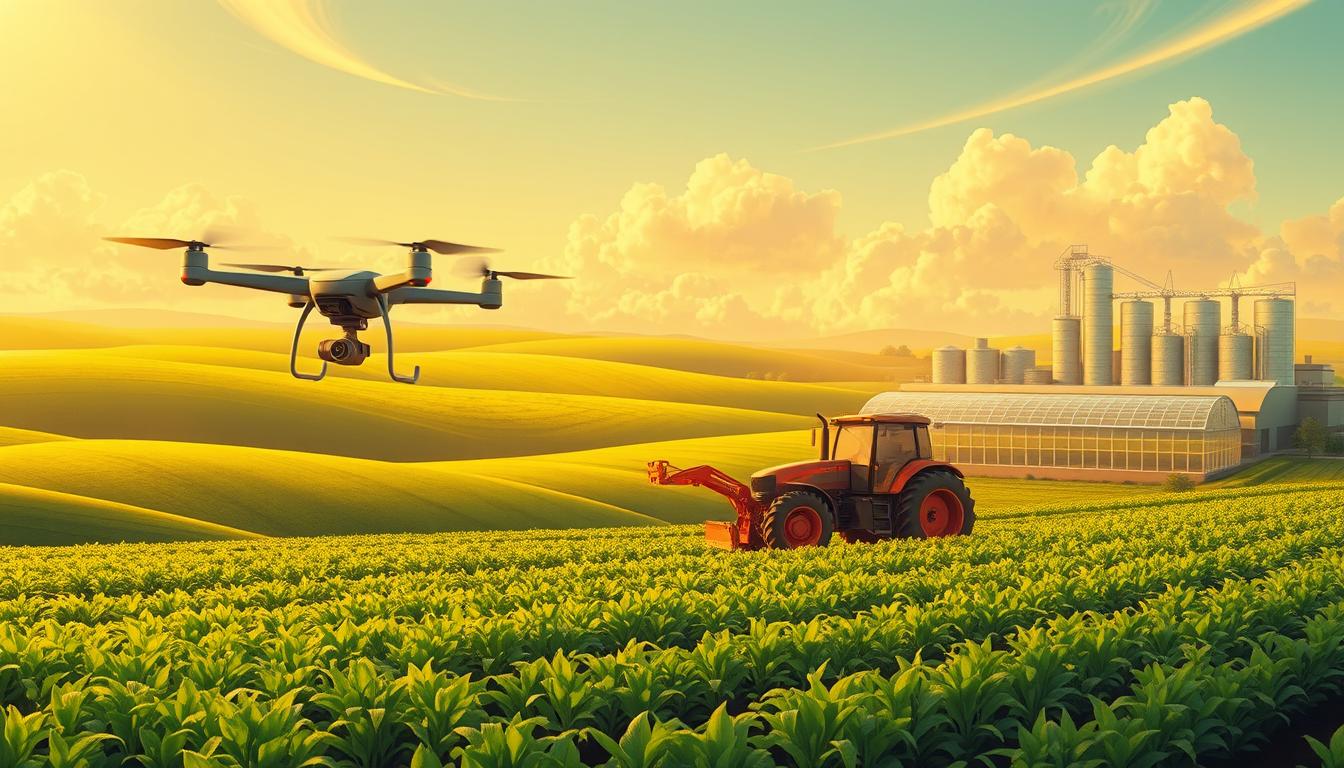
Some mornings, a farmer remembers when seasons ruled every choice. Now, data guides many decisions. For farmers in Iowa or startups in California, AI in agriculture is real and useful.
Fields now offer insights. Smart farming tech predicts yields, saves water, and targets treatments precisely. It can boost yield prediction by 15%, cut water use by 25%, and lower pesticide use by 20%.
Platforms like IBM Watson and John Deere show how AI works in farming. They use robotics, sensors, and analytics. These tools help farms deal with climate changes and meet food demand.
This article is a guide for those in the field. It talks about AI in agriculture, its benefits, and how to use it. It shows how AI can change farming for the better.
Key Takeaways
- AI in agriculture sector turns farms into data-driven operations that boost productivity.
- Artificial intelligence agriculture tools improve yield forecasts and reduce resource use.
- Agtech AI solutions from companies like IBM, John Deere, and Climate FieldView show real-world impact.
- Smart farming technologies lower costs and increase resilience against climate stress.
- The article offers a step-by-step guide for professionals looking to adopt AI on the farm.
Understanding AI: Definition and Technologies
Artificial intelligence changes how we manage crops and make farm decisions. It brings new tools for better productivity and care for the earth. We’ll explore how these tools work, from sensors to smart models, in modern farming.
What is Artificial Intelligence?
AI in farming uses smart systems to do tasks and help with big decisions. It uses cameras to check crops, robots for work, and smart talk for advice. It also predicts what will happen next.
The goal is to make farming faster and more efficient. This helps farmers work better over large areas.
Key Technologies in AI for Agriculture
Many technologies are key in AI farming. Sensors in the ground collect important data. Drones and satellites take pictures of crops from above.
These pictures are used in cloud systems to make plans for farmers. This helps farmers make the best choices for their land.
The Role of Machine Learning
Machine learning helps predict and find problems in farming. It uses special algorithms to guess yields and spot diseases. It also helps plan when to water crops.
Studies show these tools work well when they have good data. This leads to better crops and less waste.
Importance of Data Analytics
Data analytics turns raw data into useful information. It helps farmers make better choices by looking at small areas of land. This leads to better use of water and fertilizer.
AI and data together help farmers plan for the future. They can see how to save resources and keep yields high. For more, check out AI in Agriculture: The Future of Farming in Canada.
Benefits of AI in Agriculture
AI in farming brings big wins in how much we grow, how healthy our crops are, and what we spend. Farms using smart data and new tech make better choices and act fast. This part talks about the real benefits and numbers to help decide on using AI.
Increased Productivity and Efficiency
AI helps farms grow more, often by 10–30%. Companies like Arable and CropX show this. It makes planting and picking better, so we get more from each acre.
AI also cuts down on pollution by about 25%. It does this by using less stuff and planning better. This means farms can make more money and be kinder to the planet.
Enhanced Crop Management
AI tools give us maps of soil and crops, predict the weather, and warn us about pests. Microsoft FarmVibes.AI mixes sensor data to make plans for the field.
AI can spot diseases like apple scab or yellow rust really well. It’s about 95% accurate in studies. This means farmers can fix problems fast and use less chemicals.
Reduced Labor Costs
Robots and AI cut down on the need for people. Tractors and harvesters that work alone save a lot of work. Some farms see a 40% drop in labor costs.
These machines also use less fuel and work better. This saves money and makes things more efficient. AI helps plan the best routes and times for tasks.
| Benefit | Typical Impact | Representative Technologies |
|---|---|---|
| Yield Increase | 7–30% depending on crop and system | Precision agriculture AI, predictive analytics, variable-rate application |
| Water Savings | 20–30% commonly; up to 50% in specific trials | Smart irrigation controllers, soil moisture sensors, AI scheduling |
| Fertilizer Reduction | 15–25% through targeted application | Soil nutrient mapping, AI-driven recommendations, variable-rate spreaders |
| Pesticide/Herbicide Reduction | Large margins; automated weed control trials show up to 90% herbicide cut | Computer vision, targeted spraying robots, disease detection models |
| Cost Reduction | 8–15% operational cost declines reported | AI scheduling, fleet optimization, autonomous machinery |
When thinking about AI in farming, look at the numbers. AI can change how farms work and make them stronger against bad weather and pests.
Precision Agriculture: A Game Changer
Precision farming changes how we farm. Farmers use data to apply water, fertilizer, and pesticides where needed. This method increases yield and saves resources, lowering costs.
Definition and Importance
Site-specific management matches inputs to crop needs. This lowers waste and boosts productivity. It helps meet the growing demand for food.
Tools and Technologies Used
Tools like variable rate irrigation and GPS-guided tractors are key. Drones and satellite images give insights. Edge AI and cloud analytics help make decisions.
Case Studies: Success in Precision Farming
Studies show big benefits. CropX and Arable saw yield increases of up to 30%. Blue River Technology cut chemical use, saving money and reducing harm.
Smart irrigation saved water and energy. Decision support systems also help, reducing pesticide use. Deep learning models improve predictions for crops.
| Technology | Primary Benefit | Representative Metric |
|---|---|---|
| Variable Rate Irrigation (VRI) | Optimizes water delivery per zone | Up to 85% irrigation efficiency (MESA example) |
| Drones & Multispectral Imagery | Early stress detection and mapping | Yield increases up to ~30% in precision trials |
| Edge AI & Machine Vision | Real-time action on pests and weeds | Reduced pesticide area and volume; targeted sprays |
| Neural-Network Irrigation Control | Adaptive scheduling to save water and energy | ~27% water savings; ~57% energy savings |
| Decision Support Systems | Data-driven crop protection and planning | Lowered treatments in fruit fly management trials |
Adopting smart farming depends on farm size and data access. Early adopters see big benefits. Agtech AI solutions help farms be more resilient.
AI-Driven Crop Monitoring Solutions
AI systems are changing how we watch over fields and make choices. They use remote sensing, edge devices, and predictive models. This helps spot stress, predict yields, and guide actions.
Drones and Aerial Imagery
Drones take high-resolution images of fields. These images show how healthy the plants are and where they need help. This way, farmers can act fast and make better choices.
IoT Sensors and Smart Farming
IoT sensors send data to the cloud about soil and weather. This data helps with watering, fertilizing, and adapting to weather. But, getting internet in rural areas and training farmers is hard.
Analyzing Soil Health and Conditions
AI uses sensor data and satellite images to understand soil. It predicts moisture and nutrient levels. This helps farmers use the right amount of fertilizer and improve soil health.
It’s important to check how well these systems work. They are tested with metrics like RMSE and R2. Projects like DeepYield show they can predict yields and stress well.
Using AI tools can help farmers find problems early. They can also make better choices. For more info, check out AI-driven crop monitoring.
Optimizing Supply Chain Management
Digital agriculture is changing how farms get products to market. Smart systems connect field sensors, storage, and market data. This reduces waste and improves timing.
AI in Inventory Management
AI tools track inventory levels in real time. They predict spoilage risk. Farm management platforms from John Deere and Trimble use sensors and storage systems.
Operators see less spoilage, faster cash flow, and fewer tasks. Tasks drop by 15–20%.
Forecasting Crop Yields
Machine learning and deep learning forecast yields. They use field sensors and satellite data. This gives tight predictions.
Strong results help plan storage and sales. It’s all about better planning.
Logistics and Transportation Enhancements
Predictive analytics plan harvests and routes. This cuts loss for perishables by 20–40%. Fleet routing saves time and money.
These gains boost efficiency by 10–25%. Supply chains get stronger.
Choosing agtech AI solutions brings big wins. Waste goes down, cash flow improves, and demand signals are clear. Forecasting, inventory control, and smart transport make supply chains better.
Pest and Disease Management with AI
Growers face a big challenge with pests and diseases. Artificial intelligence in farming offers new tools. These tools help prevent problems instead of just fixing them.
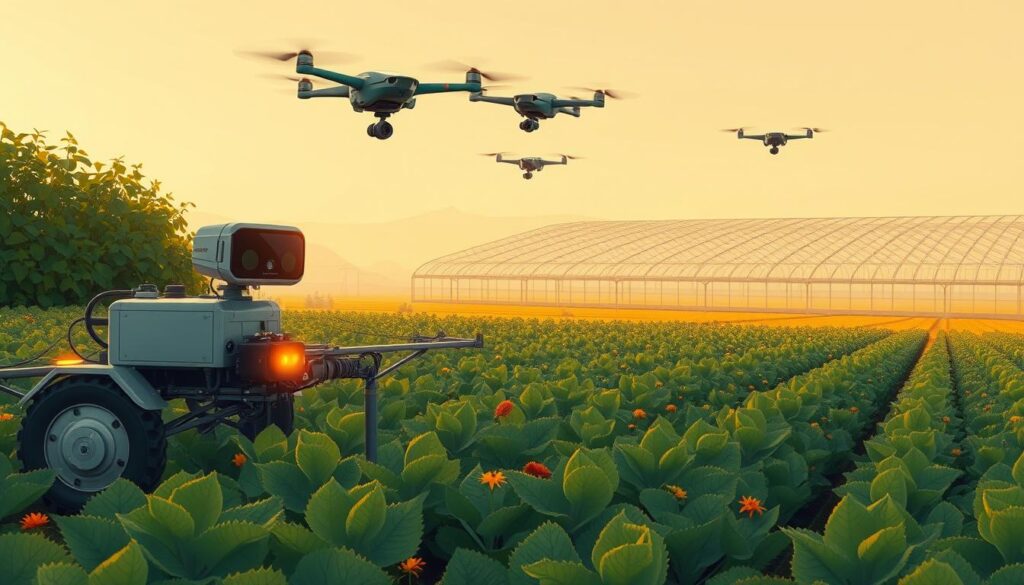
Predictive Analytics for Early Detection
AI uses weather, soil, and past data to predict risks. Farmers get warnings early. This lets them act fast and target problems.
These systems help avoid broad spraying. They let teams focus on the most urgent areas. The models get better with each season.
AI-Powered Pest Control Solutions
AI uses cameras and robots to find and treat pests. Some systems can spot plants and weeds with over 90 percent accuracy.
Robots and precision tools apply treatments where needed. This cuts down chemical use by 20 percent or more. AI tools make quick decisions on the spot.
Example Use Cases in the Field
Apps like Plantix help growers spot diseases from photos. Sciarretta’s systems cut down on treated areas for pests. Drones with AI find early signs of problems in big fields.
These examples show how AI can cut crop loss by 20–40 percent. It also helps the environment. Learn more about AI in pest detection here.
| Application | Technology | Typical Impact |
|---|---|---|
| Early-warning forecasting | Time-series ML, weather and soil data | Reduces surprise outbreaks; enables preventive scouting |
| Field-scale detection | Drones + CNN image analysis | Detects symptoms early; targets treatment zones |
| Mobile diagnostics | Smartphone apps with image classification | Makes diagnostics accessible to smallholders |
| Automated weeding | Robotics + computer vision | High-accuracy weeding; lowers herbicide use |
| Precision spraying | Edge AI + targeted applicators | Reduces chemical volume; focuses resources |
Sustainable Farming Practices Enhanced by AI
Farming in a way that saves resources and protects nature is key. Smart systems help farmers use less and waste less. They also track how their actions affect the planet.
Reducing Water Usage
Using less water is easier with smart irrigation and sensors. These tools make sure water matches what crops need. Studies show using AI can save 25–30% of water.
Some farms have saved even more, up to 50%. This is because AI uses weather and soil data to make smart choices.
AI also helps with energy use. One study found it saved 27% water and 57% energy. This means farmers save money and help the planet.
Minimizing Chemical Inputs
AI helps farmers use fewer chemicals by spraying only where needed. This can cut down on pesticides and fertilizers. Some tests show a huge drop in herbicide use, up to 90%.
Using AI for nutrients can also save 15–25% of fertilizers. This means less harm to the environment and lower costs for farmers.
Promoting Biodiversity
Using AI for farming helps protect good bugs and soil. It lets farmers apply chemicals only where needed. This keeps habitats safe for pollinators.
By using AI for land use, farms can grow biodiversity. This boosts services like pest control and soil health.
| Practice | Typical Impact | Enabling Technology |
|---|---|---|
| Sensor-driven irrigation | 25–50% water savings; energy reduction | Soil moisture probes, ML controllers |
| Targeted spraying | Up to 90% herbicide reduction in trials | Computer vision rigs, autonomous sprayers |
| AI nutrient management | 15–25% fertilizer reduction | Satellite imagery, soil analytics |
| Biodiversity-friendly zoning | Improved pollinator and soil health | Field-scale mapping, decision platforms |
Using smart farming tools leads to big wins for the planet. Studies show these tools can cut greenhouse gases by 15–25%. As AI gets better, farms can make even more sustainable choices.
Challenges and Limitations of AI in Agriculture
Smart farms face big hurdles. Farmers, business leaders, and tech companies struggle with money, data, skills, and reliability. Fixing these issues can unlock AI’s full power in farming.
Initial Investment Costs
Starting with sensors, drones, and cloud services costs a lot. Prices vary from $50,000 to $250,000. Many farms use plans from John Deere and Trimble to save money.
They spend on hardware, software, and setup. Farms often spend 30–40% on making old machines work with new tech.
Data Privacy Concerns
Farm data is very private. Farmers fear data leaks and unclear who owns the data. They need strong security and clear rules to trust AI.
Data formats and gaps make things harder. Clear rules and contracts help keep data safe and build trust in AI.
Skills Gap and Training Needs
Teams need to know about IoT, analytics, and AI. But many lack this knowledge. Training and hiring experts are key.
Training programs and partnerships help. They let teams learn and grow with AI.
System Integration and Reliability
Old equipment and software make integration hard. AI’s mixed results can make farmers doubt. Mixing AI with human input helps.
Other Practical Limits
Bad internet and poor data quality slow down AI use. Complex AI can be hard to understand. Farmers want clear, easy-to-use advice.
AI raises questions about jobs. Reskilling and support are needed. Fixing these issues will help AI grow in farming.
Future Trends in AI for Agriculture
The next decade will change farming a lot. New hardware and software will bring in autonomous machines and smarter algorithms. These changes will make farms more efficient and open up new ways to use AI.
Autonomous farming tech will become more common. Expect to see more autonomous tractors and robots in fields. These will use GPS and computer vision to help farmers work better.
AI algorithms will get better at making predictions. This will help farmers grow more food and predict diseases. Edge AI will also help farmers make quick decisions in the field.
Blockchain will make it easier to track where food comes from. It will link data from satellites and sensors to prove food quality. This will help farmers and buyers trust the food they get.
To make these changes happen, we need a few things. We need standards for using these new tools, affordable ways to use them, and help from both the public and private sectors. Research has already shown that AI can help farmers a lot. But, we need to make sure it works for farmers on the ground.
Farms that do well will use a mix of tools. They will use AI, sensors, and secure ledgers together. This will make farming more efficient and help keep the food market fair.
Conclusion: The Future of Farming with AI
AI is changing farming in the United States. Tools from John Deere and Blue River help a lot. They make farming better and more efficient.
Platforms like Climate FieldView and IBM Watson also help. They save water and use less chemicals. This makes farming better for the planet.
Stakeholders should adopt AI in steps. Farmers can start small and grow. Technology providers and policymakers need to help.
They should make training and data sharing easy. This helps everyone. It also makes farming more efficient.
The future of farming looks bright. AI will help farmers make better choices. It will save resources and help with climate change.
Working together is key. Partnerships and good policies are needed. This will help farming in the United States grow.
Miloriano.com wants to help farmers and the industry. We believe in using knowledge and planning to make farming better. This way, we can feed more people and protect the environment.
FAQ
What is artificial intelligence in agriculture and how does it transform farming?
Artificial intelligence in farming uses smart algorithms to make decisions. It helps with tasks like soil analysis and harvesting. This makes farms more efficient and sustainable.
What key technologies power AI in agriculture?
Important technologies include machine learning and deep learning. Also, drones, satellite images, and sensors are used. These tools help farmers make better decisions.
How does machine learning contribute to farm decision-making?
Machine learning helps predict yields and detect diseases. It uses data from sensors and images. This way, farmers can make informed decisions.
Why is data analytics essential for precision agriculture?
Data analytics helps farmers understand their fields better. It uses big data to make precise decisions. This leads to better farming practices.
What measurable benefits can farms expect from AI adoption?
AI can improve crop yields and save water. It also reduces chemical use and labor costs. Farms can see real gains in productivity and savings.
How does AI improve crop management day to day?
AI helps farmers manage their crops better. It uses computer vision and predictive models. This leads to better decision-making and reduced waste.
What reductions in labor and operational costs are realistic with automation?
Automation can cut labor costs by up to 40%. It also saves fuel and improves efficiency. Farms can see big savings with the right technology.
What is precision agriculture and why does it matter?
Precision agriculture uses technology to manage farms better. It helps farmers use resources wisely. This leads to better yields and less waste.
Which tools and technologies are used in precision farming?
Precision farming uses tools like GPS and drones. It also uses satellite images and sensors. These tools help farmers make better decisions.
Are there real-world precision farming success stories?
Yes, there are many success stories. Farms have seen big improvements in yields and savings. These stories show the power of precision farming.
How do drones and aerial imagery support crop monitoring?
Drones and aerial images help farmers monitor crops. They use deep learning to analyze images. This helps farmers make better decisions.
What role do IoT sensors play in smart farming?
IoT sensors measure soil and weather conditions. They help farmers make better decisions. This leads to better crop management.
How can AI analyze soil health and conditions?
AI uses sensors and satellite images to analyze soil. It predicts moisture and nutrient levels. This helps farmers make better decisions.
How does AI optimize inventory and supply chains on the farm?
AI helps farmers manage inventory and supply chains. It uses data to predict demand. This leads to better planning and lower waste.
How accurate are AI-based yield forecasts?
AI-based forecasts are very accurate. They use machine learning and satellite images. This helps farmers plan better.
How does AI help predict and manage pests and diseases?
AI uses data to predict pest and disease outbreaks. It helps farmers take preventive measures. This reduces chemical use and saves money.
What practical use cases demonstrate AI-powered pest control?
AI-powered tools like Plantix help diagnose diseases. They also use targeted spraying to control pests. This reduces chemical use and saves money.
Can AI reduce water usage on farms?
Yes, AI can save a lot of water. It uses smart irrigation systems. This leads to big water savings and lower energy costs.
How much can AI reduce chemical inputs like fertilizers and pesticides?
AI can cut chemical use by 15–25%. It uses targeted spraying and automation. This reduces waste and saves money.
Does AI support biodiversity and sustainability on farms?
Yes, AI helps protect the environment. It uses precision farming to reduce chemical use. This leads to healthier ecosystems and more sustainable farming.
What are the major challenges and limitations of adopting AI in agriculture?
Adopting AI can be expensive and complex. It requires data governance and training. But, the benefits are worth it for sustainable farming.
How serious are data privacy and security concerns for farms using AI?
Data privacy is a big concern. Farms need to protect their data. Strong governance and encryption are key to keeping data safe.
What training and skills are needed for effective AI use on farms?
Farmers need to understand AI basics. They should learn about data and algorithms. Training and partnerships are important for success.
What are the upfront and ongoing costs of implementing agricultural AI?
Implementing AI can be expensive. But, there are affordable options. Farms should plan carefully and budget for ongoing costs.
How will autonomous farming technologies evolve in the near future?
Autonomous farming will get better. It will use advanced technology for precision. This will save time and money.
What algorithmic advances will improve agricultural AI performance?
New algorithms will make AI better. They will improve predictions and decision-making. This will help farmers make better choices.
What role can blockchain play in agricultural AI ecosystems?
Blockchain can secure data and improve trust. It helps with data sharing and transparency. This is important for AI in farming.
How should farmers and stakeholders begin adopting AI responsibly?
Start with small pilots to test AI. Choose trusted partners and invest in training. This will help farmers adopt AI wisely.
What measurable outcomes can stakeholders expect from AI adoption?
AI adoption will lead to better yields and savings. It will also improve resource use and reduce waste. This will benefit farmers and the environment.
Which platforms and brands lead in agtech AI solutions today?
Leading brands include IBM Watson and John Deere. They offer AI tools for farming. These tools help farmers make better decisions.
How does AI-driven forecasting affect logistics and market readiness?
AI forecasting helps plan harvests and deliveries. It reduces waste and saves money. This improves farm efficiency and profitability.
What policy or market supports accelerate scalable, responsible AI adoption?
Support comes from public-private partnerships and funding. Training and data governance are also important. These help farmers trust and use AI.
How does AI enable more sustainable and climate-resilient farming?
AI helps farmers use resources wisely. It predicts weather and pests. This leads to better farming and a healthier environment.
What is the strategic next step for an agribusiness or farm leader exploring AI?
Start with a clear plan and partnerships. Invest in training and data governance. Monitor results and scale what works.
How does Miloriano.com position itself in the transition to AI-powered agriculture?
Miloriano.com helps professionals and businesses adopt AI. It offers knowledge and insights. It aims to make farming more sustainable and profitable.