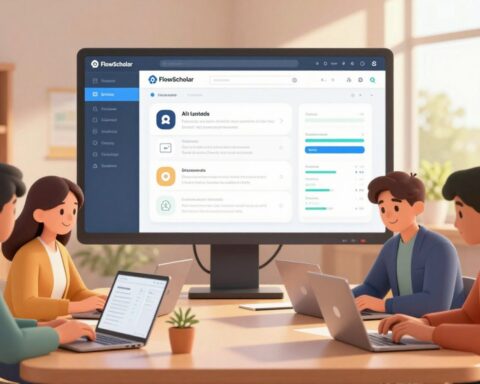
Imagine a manager looking at a spreadsheet and feeling stuck. They see missed shifts and slow reports. They make decisions based on guesses.
Pattern recognition software can change this. It makes complex data easy to understand. This way, teams can make quick and smart decisions.
This article talks about how to make work better with pattern recognition software. It uses smart tech to analyze data fast. This saves money and time.
Studies show big benefits. Labor costs can drop by 5–20%. Managers can save 40–60% of their time.
But it’s not just about numbers. It makes work faster and happier. It helps make decisions with images and text. Miloriano.com wants to help people grow with technology.
Key Takeaways
- Pattern recognition software uses artificial intelligence to reveal hidden trends in large datasets.
- Machine learning algorithms improve efficiency by automating repetitive analysis tasks.
- Adoption can yield measurable ROI: reduced labor costs and faster, more accurate scheduling.
- The technology supports both structured and unstructured data for real-time decision-making.
- Image processing and text mining expand use cases across industries like healthcare and retail.
What is Pattern Recognition Software?
Pattern recognition software helps machines find patterns in images, sounds, text, and more. It gives teams quick and sure answers. It uses artificial intelligence to understand data.
Definition and Overview
This software finds similarities in data to make sense of it. It uses rules and learning to spot oddities and group things. It also digs deep into text to understand feelings and classify documents.
Historical Context
At first, finding patterns was done with simple methods. But, as computers got better, so did the software. Now, it can handle big tasks thanks to new technology.
Today, we have smarter ways to find patterns. This means we can do things we couldn’t before. It’s all thanks to better computers and new ideas.
Applications Across Industries
In healthcare, it helps doctors see problems in images and plan treatments. It’s faster than looking at each image by hand.
Finance uses it to catch fraud and watch transactions. Stores use it to guess how much stuff to stock. This helps avoid running out of things.
Factories use it to find problems and plan when to fix things. Call centers guess how many calls they’ll get. This helps them get ready. Trucks and ships use it to find the best routes and schedules.
Benefits of Using Pattern Recognition Software
Pattern recognition software does more than just show off. It helps groups see things clearly by analyzing data. It mixes different kinds of data to find patterns humans might miss.
It makes routine tasks faster. Things like checking resumes and making schedules get done quicker. This means people can focus on more important tasks.
Enhanced Data Analysis
This software finds hidden signals in data. It connects staffing levels to how well things are doing. It also finds trends in things like medical images.
Time Efficiency
It makes work faster by automating tasks. This lets teams react quickly to problems. Stores and hospitals see better service because of this.
Cost Reduction
It helps save money by using people better. It plans for demand and makes schedules better. This cuts down on overtime and other costs.
It also makes schedules more stable. People are happier with their work hours. It catches problems before they start. For more on how it works, check out this guide: pattern recognition guide.
Key Features to Look for in Pattern Recognition Software
Choosing the right platform starts with knowing what you need. Teams should think about how a tool lets them change detection rules. They should also consider how it grows with them and shows results easily.
These points help make machine learning and computer vision useful.
Customizability
Customizability means making the tool fit your specific needs. For example, a retail team can adjust rules for seasonal sales. A hospital can change how images are processed for different cases.
Look for tools that use a mix of methods. This mix makes the tool more accurate and lets experts fine-tune without starting over.
Scalability
Scalability means the tool can handle more data as your business grows. It should work with cloud computing, distributed systems, and GPUs for big datasets. This makes it easier to manage both old and new data.
Edge deployments help with fast processing for urgent tasks. This keeps your system running smoothly, even as you grow.
User-Friendly Interface
A good interface makes complex data easy for everyone to understand. Dashboards should have visuals, alerts, and summaries. This helps teams trust the data.
Tools that work well with other systems and offer training help everyone get on board faster. This means you can start seeing benefits sooner.
| Feature | What to Expect | Business Benefit |
|---|---|---|
| Customizability | Adjustable thresholds, hybrid pipelines, domain templates | Faster domain fit; higher detection precision |
| Scalability | Cloud scaling, GPU support, edge deployment options | Consistent performance during growth and spikes |
| User-Friendly Interface | Interactive dashboards, explainability, integration APIs | Broader adoption; clearer operational decisions |
| Technical Controls | On-premise/hybrid deployments, model explainability tools | Stronger compliance and trust |
| Implementation Support | Vendor training, phased rollout templates, demo environments | Smoother deployments and faster ROI |
Popular Pattern Recognition Software Solutions
Choosing the right pattern recognition software is key. It affects project scope, timelines, and results. Options range from open-source tools for research to big platforms for business use.
TensorFlow
TensorFlow is an open-source tool from Google for deep learning. It’s great for computer vision and image processing. It helps find defects or analyze medical scans.
It’s very customizable and strong for research models. But, it needs a lot of data science knowledge. The community and model hubs help with quick prototyping.
IBM Watson
IBM Watson is for big companies needing NLP, computer vision, and explainability. It’s good at text mining and analyzing feelings. It’s used in healthcare and customer support.
Watson focuses on making models easy to understand. It works well with big company systems for planning and real-time insights.
Microsoft Azure Machine Learning
Microsoft Azure Machine Learning is cloud-based. It has managed ML services and automated ML. It connects to Azure Cognitive Services for vision and speech.
It’s great for companies wanting managed services and strong security. It helps deploy models fast and follow company rules.
When choosing, think about what you need. TensorFlow is best for custom deep learning and images. IBM Watson offers domain knowledge and explainability. Microsoft Azure Machine Learning is for managed scale and Microsoft integration.
For a quick guide on pattern recognition systems, check out this article. It talks about how these systems improve accuracy, save money, and find new insights in big data. It covers facial recognition, voice processing, object detection, and fraud detection.
Industries Leveraging Pattern Recognition Software
Pattern recognition software changes many sectors. It turns big data into clear actions. It finds trends, oddities, and patterns in data.
Systems work from the edge for quick responses to the cloud for big data analysis.
Healthcare
In healthcare, it speeds up finding diseases in medical images. Algorithms look at X-rays and more. They find signs of disease early.
Hospitals also use it to guess when patients will come. This helps staff plan better. It makes workloads fair and cuts overtime.
Finance
In finance, it watches transactions in real time. It spots fraud with models. It uses learning to score risks fast.
It helps find fraud quickly, follow rules better, and save money. It points out odd activity fast.
Retail
Retailers use it for sales forecasts and finding sales patterns. It looks at foot traffic and sales. It helps plan stock and staff.
It also reads reviews to tailor ads. Studies show it cuts labor costs and improves service. It makes forecasts more accurate.
All three areas use outside data like weather. This makes predictions better and operations more flexible.
| Industry | Primary Use Cases | Key Benefits |
|---|---|---|
| Healthcare | Medical imaging analysis; predictive scheduling; admission trend analysis | Faster diagnostics; balanced staffing; reduced overtime |
| Finance | Real-time transaction monitoring; fraud detection; risk scoring | Quicker fraud response; compliance support; reduced financial losses |
| Retail | Demand forecasting; sales-pattern detection; inventory and staffing optimization | Lower labor costs; improved service levels; optimized stock |
How Pattern Recognition Software Works
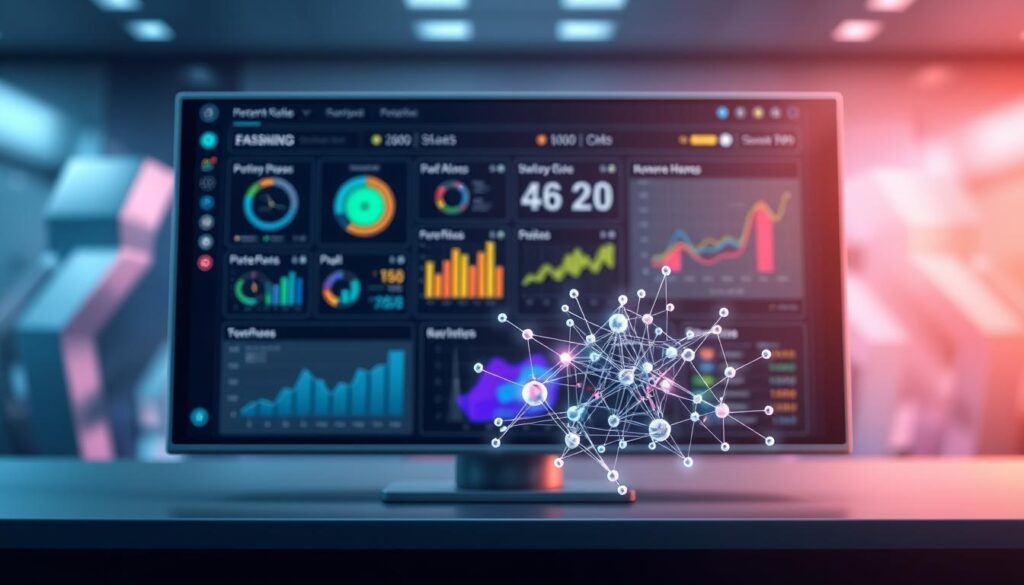
Pattern recognition software turns raw data into useful signals. It starts with collecting and cleaning data. Then, it picks the right algorithms and trains the models.
Data Collection and Preprocessing
Good data is key. Teams collect many types of data. They check if the data is right and where it comes from.
Next, they get the data ready for learning. This includes cleaning and making sure everything is the same. They also add labels and pull out important features.
Algorithm Selection
Choosing the right method is important. There are many options, like supervised and unsupervised learning. Deep learning is great for complex data.
Some common algorithms are logistic regression and support vector machines. Others are good for specific tasks. Mixing methods can help with tough problems.
Model Training and Evaluation
Training uses labeled data for certain tasks. For other tasks, it finds patterns. The goal is to make models that work well outside the training data.
Checking how well a model does is key. Metrics like accuracy and F1 score are used. Business goals are also important.
Putting models to work is the final step. They can be used in many ways. Tools that explain how models work help build trust.
| Stage | Primary Activities | Key Outputs |
|---|---|---|
| Data collection and preprocessing | Gather multimodal data; cleaning; labeling; feature extraction | Cleaned datasets; feature sets; labeled examples |
| Algorithm selection | Assess problem type; pick supervised, unsupervised, or deep methods | Selected machine learning algorithms and model designs |
| Model training and evaluation | Train models; cross-validate; measure accuracy and business KPIs | Validated models; performance reports; rollout plan |
| Deployment and monitoring | Deploy to cloud or edge; integrate with apps; monitor drift | APIs/endpoints; alerting; retraining schedule |
For more details, check out a guide on pattern recognition techniques. Teams that keep learning and updating their models stay accurate.
Integrating Pattern Recognition Software into Your Business
Getting pattern recognition software needs a good plan. It should link tech changes to business goals. Start with small wins and build up.
Good data rules and teamwork help avoid problems. This makes adopting the software faster.
Steps for Successful Implementation
First, check your data quality and how much you have. Set up KPIs like labor costs and schedule accuracy. This helps you know what to aim for.
Find important patterns to focus on. Look for things like busy times, odd attendance, and what customers like. Pick patterns that matter to your KPIs.
Choose the right tech and vendor for your needs. Look at TensorFlow, IBM Watson, or Microsoft Azure Machine Learning. Also, think about scheduling tools if needed.
Start with a small test to see quick wins. Check how it’s doing, see if it’s worth it, and make it better before using it everywhere.
Plan how it will work with other tools like HR and BI. Make sure it works on phones and add new features that help.
Teach your team and manage changes well. Good training and clear steps help everyone feel okay with new tech.
Challenges to Expect
Bad data can slow things down and make mistakes. Clean up your data before you start.
You might need special computers or cloud services. Make sure you have enough money for this.
Some people might not trust the tech because it’s hard to understand. Make sure it’s clear and shows what it’s doing.
Some people might feel like the tech is taking over. Make sure humans can make choices too.
Rules and keeping data safe are very important. This is true for places like healthcare and finance.
Best Practices for Integration
Start small and grow. Start with a few patterns and then add more. Success early on helps.
Make sure your data is clean and well-managed. This helps your tech work better and gives the same results every time.
Use tech that explains itself and make things easy to understand. This builds trust and makes people more willing to use it.
Work with vendors that help you set it up and train your team. This makes it easier and faster to get started.
Keep track of how it’s doing. Look at things like saving money, keeping schedules on track, and how happy your employees are. Use this info to make things better.
Case Studies: Success Stories with Pattern Recognition Software
Real-world examples show how pattern recognition software makes a big difference. It helps in scheduling, quality control, and keeping assets running smoothly. Teams get better results when they use data and their own knowledge together.
Example from Healthcare
Hospitals used pattern recognition software for medical images and scheduling nurses. This helped match staff to busy times. Radiology units got better at finding small problems in images thanks to AI.
Smart scheduling also helped. It cut down on overtime and conflicts. A project showed better manager scheduling and happier staff. See more about scheduling success in this case study.
Example from Retail
Retail chains used pattern recognition to link foot traffic, sales, and staff. They adjusted schedules for busy times and sales events.
This led to lower labor costs and better coverage. There were fewer last-minute changes and happier staff. These changes helped customers and kept staff longer.
Example from Manufacturing
Manufacturers used visual systems for checking products and predictive maintenance. AI found tiny defects that humans missed.
AI also predicted when machines needed repairs. This cut down on bad products, downtime, and inspection costs. It worked better than old methods when things changed.
In all these areas, savings and better results were common. There were cost savings, fewer problems with staff, and better schedules. The best results came from gradual and careful use in daily work.
Future Trends in Pattern Recognition Technology
Pattern recognition software is getting better fast. It can now learn from many things at once. Google and NVIDIA are making models that change quickly.
This means we’ll see products and services that work better.
Evolving Algorithms
Deep learning is key, but new models are being mixed with old ones. Researchers are combining different types of networks. This helps systems understand images and text better.
Large language models are also helping. They make systems talk like humans. This makes systems explain things in a way we can understand.
Systems will keep learning and updating themselves. This makes them work better over time. Companies will use a mix of cloud and local training.
Increased Automation
Automation is growing. Systems will soon make decisions on their own. This is good for stores and delivery services.
They can adjust to changes quickly. Edge computing is important for fast tasks. Putting models on devices keeps things quick.
Cloud and edge together offer the best of both worlds.
Ethical Considerations
Keeping data safe is very important. Companies in certain fields must follow strict rules. Explainable AI helps make sure systems are fair and clear.
It’s also important to watch for bias. Companies need to check their systems regularly. They should also think about how much energy their models use.
Below is a concise comparison of emerging trends and practical impacts for organizations evaluating next-generation pattern recognition deployments.
| Trend | Technical Focus | Business Impact |
|---|---|---|
| Evolving Algorithms | Hybrid deep models, multimodal integration, continuous learning | Better accuracy across data types; faster adaptation to change |
| Increased Automation | Autonomous workflows, cloud-edge orchestration, real-time inference | Lower operational costs; faster decision cycles; reduced manual load |
| Explainability | Model introspection tools, LLM-driven explanations, provenance tracking | Improved trust; smoother audits; easier regulatory compliance |
| Edge Computing | On-device inference, lightweight architectures, hybrid deployments | Reduced latency; enhanced privacy; lower bandwidth needs |
| Ethical Considerations | Bias monitoring, privacy controls, energy-efficient model design | Stronger public trust; mitigated legal risk; sustainable operations |
Choosing the Right Pattern Recognition Software for Your Needs
Choosing pattern recognition software starts with knowing what you need. First, look at your data sources like images and logs. Then, decide on your goals like saving money and improving schedules.
Think about rules like HIPAA and where the software will live. Also, consider if you need help from the vendor or if you can do it yourself.
Assessing Your Requirements
Look at different software options against your needs. For tasks like image recognition, TensorFlow or PyTorch might be good. IBM Watson is great for understanding text, and Azure Machine Learning is good for big projects.
Check if the software can grow with you and if it works well with other systems. Also, look at the cost and what the vendor promises.
Comparing Options
Try a small test to see how software works in real life. Pick something simple like improving staffing or finding defects. Use real data to see how well the software explains its decisions.
Start small and then grow if it works. This way, you avoid big surprises later.
Getting Started with a Trial or Demo
Start by tracking how well the software works. Look at things like saving money and making schedules better. Use what you learn to make the software better.
Choose software that fits your needs and is easy to use. Start small and show big wins to get everyone on board.
FAQ
What is the core purpose of pattern recognition software for organizations?
Pattern recognition software finds regular patterns in data like images and text. It uses AI to help teams make decisions faster. This way, teams can work smarter and make better plans.
How has pattern recognition evolved over time?
It started with simple methods and grew to deep learning. Now, it uses big data and computers to work fast. This makes it better at finding patterns in many areas.
In which industries does pattern recognition deliver the greatest value?
It helps a lot in healthcare, finance, retail, and more. It finds patterns in data to help teams make better choices. This makes work easier and more efficient.
How does pattern recognition improve data analysis?
It finds complex patterns that humans might miss. It uses different types of data to give deeper insights. This helps teams make better decisions.
What time savings can organizations expect?
It saves a lot of time by automating tasks. Studies show managers can save 40-60% of their time. This makes work more efficient.
What measurable cost reductions are typical with implementation?
It can cut labor costs by 5-20%. This is because it helps teams work better and saves money. It also reduces overtime and improves schedules.
What customizability features should buyers look for?
Look for features that let you adjust settings. This includes options for different types of data and models. It helps tailor the software to your needs.
How scalable are modern pattern recognition platforms?
They can grow with your business. They use cloud computing and big data to handle more data. This keeps performance high as your business grows.
Why is a user-friendly interface important?
A good interface makes it easy for everyone to use. It shows complex data in simple ways. This helps teams work together better.
How do TensorFlow, IBM Watson, and Azure Machine Learning differ?
TensorFlow is great for custom deep learning. IBM Watson is strong in NLP and text mining. Azure Machine Learning offers managed services and scalability. Choose based on your needs and skills.
How does pattern recognition work end-to-end?
It starts with collecting and cleaning data. Then, it uses algorithms to find patterns. The system is trained and deployed to make predictions. It keeps improving over time.
What practical steps ensure successful implementation?
Start by checking your data and goals. Choose the right technology and test it. Make sure it works well with your systems and train your team.
What common challenges should organizations prepare for?
Be ready for data issues, big computing needs, and privacy rules. Use tools that explain their decisions and get support from vendors.
What best practices improve integration success?
Start small and scale up. Clean your data and choose tools that explain their work. Make sure your team understands it and keep measuring results.
Can you share concrete case outcomes from different sectors?
In healthcare, it helped diagnose faster and saved overtime. Retail saw 12-20% cost cuts and better service. Manufacturing found defects early, saving time and money.
What future trends will shape pattern recognition?
Expect more use of different data types and models. Look for more automation and edge computing for fast data use. Generative models will help explain complex data.
What ethical and regulatory considerations matter most?
Protecting data and following rules is key. Make sure models are clear and fair. Consider the environmental impact of training big models.
How should an organization assess readiness and choose a solution?
Look at your data and goals first. Check if you meet rules and have the right skills. Compare options based on what you need and what they offer.
What is the recommended approach to piloting pattern recognition?
Start with a small test. Pick a key area to improve. Use real data and check if it works. Then, grow it based on success.
How does Miloriano.com frame the business case for adoption?
Miloriano.com says it boosts productivity and decision-making. It offers clear benefits like cost savings and better schedules. It suggests a careful approach to testing and using it.