At times, a campaign’s final report feels like a mirror. It shows what worked, what didn’t, and what was never tried. Marketers often feel a big relief when they turn a messy spreadsheet into a clear plan. This relief comes from using data analysis the right way.
In the last ten years, data analytics has changed how teams plan and spend. McKinsey and Deloitte data show a big difference. Companies that use data well have higher ROI and profits.
These numbers are real. They mean faster changes, smarter spending, and better connections with people.
But many groups face too much data. Without clear systems, numbers just get lost. Good marketing analysis means asking the right questions. It ensures data is clean and focuses on what really matters.
When done right, marketing becomes a strong, repeatable advantage.
Key Takeaways
- Use marketing data analysis to turn raw information into actionable strategy.
- Center data-driven marketing decisions to improve ROI and profitability.
- Collect diverse data types: customer, social, web, email, ad, and sales data.
- Prevent data overload by prioritizing outcome-focused questions.
- Treat marketing metrics analysis as an operational system, not a one-off task.
Understanding the Importance of Data Analytics in Marketing
Data is key in today’s marketing. Teams make better choices with data. This helps them grow.
They plan smarter, understand customers better, and measure results well.
The Role of Data in Decision-Making
Big brands like Nike and Starbucks use data to decide. They find out which marketing works and what doesn’t. They ask important questions about their data.
They look at website visits, sales, and how engaged people are. This helps them make choices that lead to more money.
Enhancing Customer Insights
By studying customer actions, marketers learn a lot. They use data to send messages that fit what customers want. This makes messages more effective.
By knowing more about customers, brands can make better ads. This leads to more sales and happy customers over time.
Measuring Marketing Effectiveness
It’s important to measure what really matters. Look at how much money you make from your marketing. Don’t just look at how many likes you get.
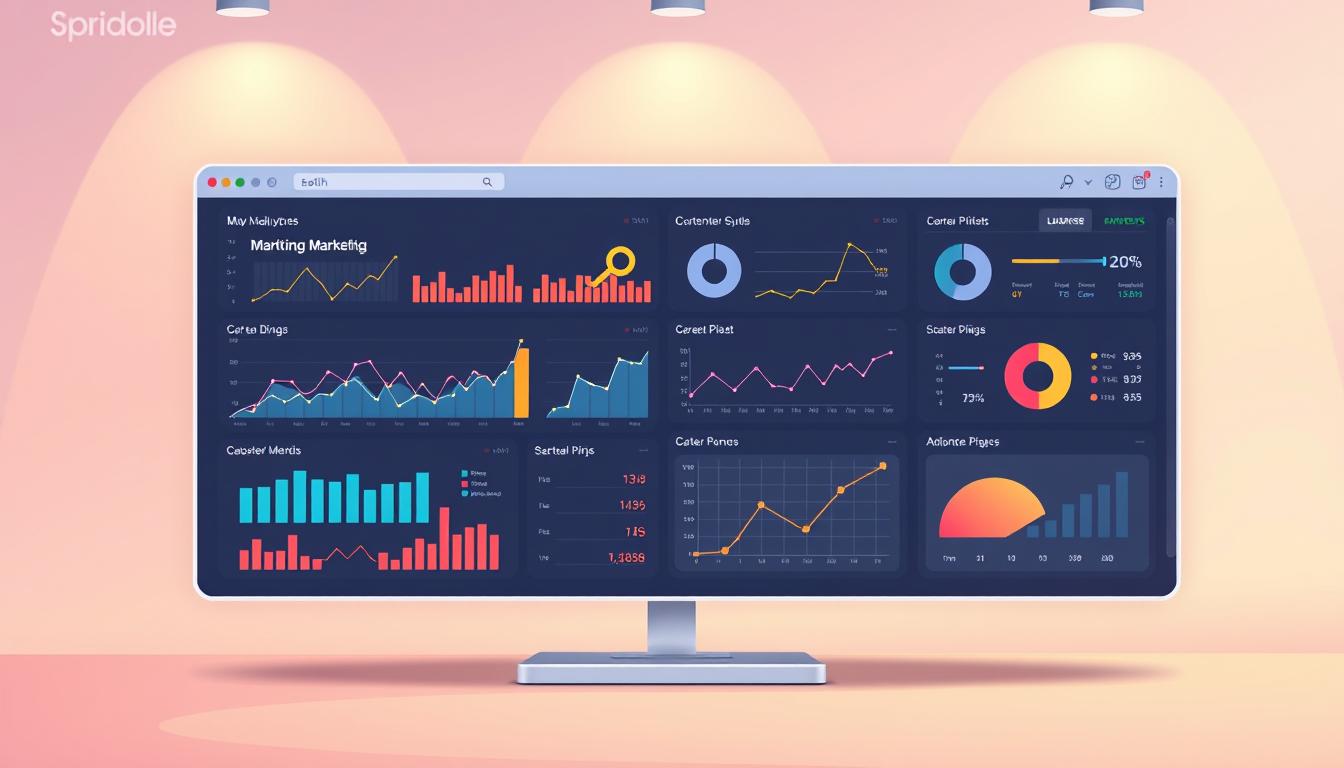
Teams that check their data often can change fast. They use dashboards and clear goals to make quick decisions.
| Goal | Key Metrics | Actionable Insight |
|---|---|---|
| Improve acquisition | Cost per acquisition, conversion rate | Shift budget to channels with lower CPA and higher conversion |
| Increase retention | Churn rate, repeat purchase rate | Deploy personalized offers for high-value segments |
| Boost engagement | Click-through rate, session duration | Optimize creative and timing based on audience behavior |
| Validate strategy | Attribution accuracy, incremental revenue | Invest in unified analytics and experiment frameworks |
To learn more about why analytics is important, check out this article. Using these methods helps teams make better choices. They rely on good data and understanding customers.
Key Components of Data Analytics for Marketing
Good marketing starts with solid processes and tools. Teams that get data right move quicker. This part talks about what helps in making smart marketing choices.
Data Collection and Management
Start with the right sources. Use Google Analytics for website data and Salesforce for customer info. Add in social media data from Sprout Social or Hootsuite.
Combine website stats with email and ad results. Also, include sales numbers and customer feedback. A multi-hub system helps avoid silos and improves tracking.
Use Python or R for advanced data work. This helps in forecasting and making things personal for customers. Having consistent IDs and timestamps helps link data across channels.
Data Cleaning and Preparation
Cleaning removes errors and makes data reliable. Small mistakes can lead to big problems. A good clean-up step is key.
Use checks to find and fix errors. Document changes so everyone can follow along. This makes sure data is accurate and reliable.
Data Visualization Tools
Visuals make complex data easy to understand. Tools like Tableau and Google Data Studio create dashboards. These show important trends and customer behavior.
Choose the right charts for your questions. Use line charts for trends and heatmaps for engagement. Sankey diagrams are great for showing how customers move through your site.
For more on using data to predict and make money, check out this guide: predictive analytics in marketing.
| Component | Primary Tools | Key Outcome |
|---|---|---|
| Data Collection | Google Analytics, Salesforce, HubSpot, Sprout Social | Comprehensive event and transaction records for segmentation |
| Data Management | Cloud warehouses, ETL (Python, R), CDPs | Unified customer views that reduce silos |
| Data Cleaning | OpenRefine, custom scripts, validation frameworks | Accurate inputs that prevent flawed modeling |
| Data Preparation | Feature engineering libraries, sampling tools | Reusable datasets for testing and ML training |
| Visualization | Tableau, Power BI, Google Data Studio | Clear dashboards that drive stakeholder decisions |
| Metrics Analysis | Statistical packages, A/B platforms | Actionable marketing metrics analysis to guide campaigns |
Types of Data Analytics Techniques
This section talks about how to use data to make marketing choices. Each method has its own job: looking at past data, guessing the future, or suggesting how to do better. By using these methods well, marketers can make better decisions.
Descriptive Analytics
Descriptive analytics looks at past data like website visits and how people interact with content. Teams use tools like Google Analytics to see what happened. They look at averages and how things are spread out to find out what worked.
At this level, data analysis gives a solid starting point. It shows trends, what content does well, and what doesn’t. Analysts make reports that help plan for the next week or month.
Predictive Analytics
Predictive analytics guesses what will happen next by mixing past data with machine learning. Tools like Adobe Sensei predict how likely someone is to buy. This helps plan better.
Good predictive models look at more than just one person. They consider groups and how they buy things. This makes predictions more accurate and helps plan campaigns better.
Prescriptive Analytics
Prescriptive analytics suggests specific actions to improve things. It tells you what changes to make to get better results. This comes from special tools and models.
Prescriptive analytics makes testing more focused. It helps design tests to see if suggestions work. With good data analysis, teams can do more of what works and stop what doesn’t.
Choosing the right KPIs depends on what you want to achieve. Mix numbers with what people say in interviews. For more on analytics, check out this guide.
| Technique | Primary Goal | Common Tools |
|---|---|---|
| Descriptive | Summarize past performance | Google Analytics, Adobe Analytics, Looker |
| Predictive | Forecast behavior and score audiences | Adobe Sensei, Salesforce Einstein, Python ML |
| Prescriptive | Recommend actions and optimize outcomes | Optimization engines, simulation platforms, A/B tools |
When teams use all three types together, they make a loop. This loop makes marketing strategies stronger. It helps teams make confident decisions based on data.
How to Implement Data Analytics into Marketing Strategies
Starting with data analytics means linking it to business goals. Teams should focus on metrics that show ROI, customer value, and how to keep them. Use tools like CRM and Google Analytics to find important data.
Defining Your Goals and Objectives
First, set clear goals and KPIs. Choose things you can measure like more sales, better conversion rates, or less customer loss. Connect each goal to the data you can collect, like sales, website visits, email opens, and support tickets.
Choosing the Right Analytics Tools
Pick tools that fit your needs. Google Analytics shows web behavior, Adobe Analytics handles complex data, and HubSpot manages CRM. Use different tools together to get a full picture.
Integrating Data into Marketing Campaigns
Make sure data flows well by mapping sources and using central hubs. Track how customers interact with your brand to solve attribution problems. Use data to make offers more personal and test them to see what works best.
Getting data right means having a plan. Define who’s in charge, check data quality, and review often. With good data, you can target better, mix channels smarter, and improve your marketing. This keeps your marketing strong and effective.
Best Practices for Data-Driven Marketing
Data-driven marketing works best when teams have clear goals and follow strict methods. This part talks about how to segment audiences, use data for personalization, and keep marketing fresh through testing and optimization.
Focus on Customer Segmentation
Begin by dividing customers based on demographics, behavior, and what they buy. Companies like Netflix and Amazon use behavior to send the right offers. They mix their own data with event signals to create segments that show real interest.
Set clear goals for each group. For example, focus on getting new buyers to buy, keeping current customers coming back, and making VIPs happy. Watch how each group does to see what works best.
Personalization through Data Insights
Personalizing messages boosts engagement on email, social media, and websites. Using dynamic content and ads that match what people want leads to more clicks and sales. Try different subject lines, pictures, and offers for each group to see what works best.
Use special metrics for each segment to see if personalization is working. It should lead to more sales and happier customers.
Continuous Testing and Optimization
Keep trying new things and learning from them to avoid getting stuck. Start small, compare results, and then spend more on what works. Make sure your data is clean to avoid mistakes.
Ask important questions like which groups bring in the most money, which messages sell more, and which channels are cheapest. Use these answers to improve your strategies and marketing plans in real time.
| Practice | Action | Metric |
|---|---|---|
| Segmentation | Combine demographics, behavior, and purchase history to form target groups | Segment conversion rate |
| Personalization | Deliver dynamic content and tailored creative by segment | Lift in transactions per segment |
| Testing | Run iterative A/B and multivariate tests with attribution-aware tracking | Incremental ROI; cost per acquisition |
| Data Quality | Implement validation, deduplication, and governance routines | Error rates; time to insight |
| Optimization | Reallocate budgets based on performance and experiment results | Spend efficiency; marketing campaign optimization |
Case Studies of Successful Data-Driven Marketing
Real-world examples show how marketing data analysis makes a big impact. Spotify Wrapped, Coca-Cola, Amazon, and LinkedIn use data in different ways. They shape campaigns, make product choices, and target better. These examples show how teams can do better.

Spotify Wrapped uses listening patterns to make personalized summaries. This makes users share and boosts loyalty. It shows how analyzing customer behavior can keep people engaged.
Coca-Cola uses AI and sentiment monitoring to spot trends. Marketing teams use this to make product changes and plan campaigns. This keeps brands relevant and responsive.
Amazon’s recommendation engine uses purchase history and browsing signals. This makes each interaction more relevant. It shows how data can improve the product experience.
LinkedIn uses profile and behavioral data for precise targeting. This helps advertisers reach the right people with the right offers. It shows how data can support personalization.
Brands Transforming Their Strategies
These organizations use social sentiment, CRM records, and website analytics. They define KPIs first and then segment audiences. This depends on good data pipelines and clear attribution models.
Lessons Learned from Data-Focused Campaigns
Common lessons include designing analytics for complex buying groups in B2B. They also fill gaps to improve attribution and avoid vanity metrics. The winning teams focus on actionable insights and connect analytics to sales and marketing.
Practical next steps include setting measurable goals and investing in data systems. Creating feedback loops between analytics and campaign teams is also key. These steps help organizations make consistent, data-driven marketing decisions.
Challenges in Data Analytics for Marketing
Marketing teams struggle to make sense of raw data. They need to protect customer privacy and get consent. This makes it hard to design and report on marketing metrics.
Rules like GDPR and CCPA guide how to handle personal data. Marketers must track data, limit how long it’s kept, and keep records. Ignoring these rules can lead to fines and lost trust.
Data Privacy and Compliance Issues
Getting consent for data collection is key. Teams need clear policies, trained staff, and good contracts with vendors. This keeps customer data safe and helps in making smart marketing decisions.
When consent and data protection are not consistent, it’s hard to know what’s working. Brands should use privacy-first methods and invest in good governance. This helps keep data reports accurate over time.
Technology and Resource Limitations
Many teams lack the skills and tools for good insights. Hiring experts and building strong systems takes time and money. This slows down marketing analysis and makes results less reliable.
It’s hard to connect data from different sources. Teams should standardize how they collect data, link CRMs, and track customer journeys. This helps make data-driven decisions easier.
Gartner suggests a future where systems work well together. Leaders need to plan how to integrate systems and choose scalable platforms. This avoids creating new barriers.
Teams often face issues like missing data, bias, and wanting perfection. By improving data quality and aligning goals, teams can move faster from insight to action.
For more on common problems and solutions, check out this resource on creating a marketing analytics strategy.
| Challenge | Impact | Recommended Action |
|---|---|---|
| Siloed Reporting | Inconsistent metrics and lost attribution | Centralize data model and standardize event naming |
| Data Overload | Paralysis and unclear priorities | Define key marketing metrics analysis and focus on high-impact KPIs |
| Privacy Constraints | Limited access to user-level signals | Adopt privacy-first measurement and consent management |
| Resource Shortages | Slow implementation and technical debt | Invest in data talent and reusable tooling |
| Fragmented Tech Stack | Integration gaps and duplicated effort | Prioritize interoperable platforms and clear APIs |
| Poor Data Quality | Misleading insights and bad decisions | Implement validation, monitoring, and governance |
The Future of Data Analytics in Marketing
Marketing teams are changing fast. Data moves quicker, and tools get smarter. Adobe and IBM are leading the way with real-time optimization and personalization.
In 2024, we’ll see more data hubs and cross-channel measurement. Marketers need to link data from different sources to outcomes. This makes predictive analytics a planning tool, not just a forecast.
Predictive models should guide actions, not just report past events. Teams that use these models will have an advantage. AI tools like Adobe Sensei and IBM Watson will help make better decisions.
More companies will use data analytics in their marketing plans. Those that invest in good data governance will see better results. They should map buyer behaviors and standardize data.
It’s time to see analytics as a way to make decisions. This approach will help teams learn faster and use their budgets wisely.
Short-term wins come from using machine learning and automating tasks. Long-term success goes to those who mix technical skills with storytelling.
Conclusion: Maximizing Marketing Success with Data Analytics
Data analytics is key for marketing growth. Companies that use customer analytics get better results. They do this by segmenting, personalizing, and always improving their campaigns.
Studies show the power of combining different data types. This includes web analytics, CRM data, social media, and sales figures. It helps drive real results.
Important lessons include setting clear goals and choosing the right KPIs. Teams must focus on quality data and fix any gaps. They should also work together to understand real buying habits.
Tools and methods should help with segmenting, testing, and improving campaigns. This makes marketing decisions based on solid data.
Creating a data-driven culture needs good leadership and teamwork. Companies like Microsoft and HubSpot show how to use analytics for success. They turn insights into actions that grow their business.
FAQ
What does “Leverage Data Analytics for Marketing Success” mean in practice?
It means using data to make smart marketing choices. This includes looking at customer, website, and sales data. Tools like Google Analytics help measure and improve marketing efforts.
Why is data analytics essential for marketing decision-making?
Data helps avoid making guesses. Top companies use data to make better choices. This leads to higher profits and success.
How does analytics enhance customer insights?
Analytics combines different data types to understand customers. It helps predict who will buy or leave. This information leads to better marketing.
Which metrics best measure marketing effectiveness?
Look at metrics like conversion rates and customer value. These show how well marketing is doing. Avoid useless metrics.
What are the key components of marketing data collection and management?
Good data systems include web analytics and CRM. They also need tools for managing and analyzing data. This ensures data is reliable and useful.
Why is data cleaning and preparation important?
Clean data prevents bad decisions. It removes errors and makes data useful. Without it, analytics won’t work well.
Which data visualization tools work best for marketing teams?
Tools like Tableau and Power BI are great. They make complex data easy to understand. This helps teams make quick decisions.
What is descriptive analytics and when should marketers use it?
Descriptive analytics looks at past data. It answers “what happened.” It’s useful for reporting and finding trends.
How does predictive analytics improve marketing outcomes?
Predictive analytics uses past data to forecast future actions. It helps target the right customers. This leads to better marketing.
What are prescriptive analytics and their role in campaigns?
Prescriptive analytics suggests actions based on data. It helps improve marketing campaigns. It’s about making things better.
How should a business define goals and objectives for analytics?
Start with goals like increasing revenue or customer value. Choose KPIs that match these goals. This helps measure success.
How do teams choose the right analytics tools?
Look at tools’ features and how well they work together. Choose tools that fit your needs and goals. This ensures success.
What does integrating data into marketing campaigns involve?
It means using data to improve campaigns. This includes segmenting audiences and personalizing messages. It’s about making things better.
How should companies approach customer segmentation?
Use data to segment customers. This helps tailor messages and offers. Test different approaches to see what works best.
How can personalization be achieved through data insights?
Use data to create personalized messages. This includes emails and ads. It’s about making things more relevant.
Why is continuous testing and optimization necessary?
Markets and customer preferences change. Ongoing testing and optimization keep strategies fresh. It’s about staying ahead.
Which brands offer useful case study lessons for data-driven marketing?
Brands like Spotify and Amazon show how to use data well. They use data to improve marketing. It’s about learning from others.
What lessons do successful data-focused campaigns share?
Successful campaigns align analytics with goals. They focus on actionable metrics. It’s about making data work for you.
What are the main data privacy and compliance challenges?
Handling personal data is a big challenge. Companies must follow laws like GDPR. It’s about keeping data safe and respecting privacy.
How do technology and resource limitations hinder analytics adoption?
Limited resources can slow down analytics adoption. This includes lack of skills and tools. It’s about finding solutions.
What trends should marketers watch in 2024 and beyond?
Expect more real-time optimization and AI in marketing. These trends will change how we work. It’s about staying ahead.
How will AI and machine learning change marketing analytics?
AI will make analytics faster and more accurate. It will help make better marketing decisions. It’s about using data to its fullest.
What are the key takeaways for maximizing marketing success with data?
Use data to make smart choices. Focus on quality and attribution. Choose the right tools and keep improving. It’s about making data work for you.
How can an organization encourage a data-driven culture?
Leadership should set clear goals and invest in training. Establish governance and celebrate learning. It’s about making data a part of everyday work.