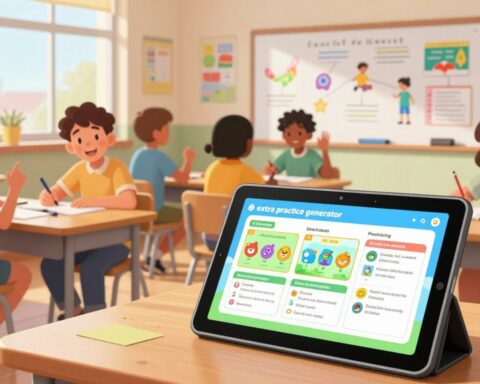
There are moments when a classroom hum changes. A student lights up, a teacher pauses, and the conversation shifts. This shift is quiet but signals something big.
Artificial Intelligence Education is now a key part of teaching and work in the United States. It helps make lessons better, understand data clearer, and get better results for students.
Generative AI and tools like ChatGPT have sparked curiosity. A 2023 survey showed a big gap between how students and teachers use AI. This gap needs to be filled with good AI education.
Good AI education should teach three things. It should teach how to use AI, how to apply it in lessons, and how to use it wisely. These skills are key for using AI well in schools.
This guide helps professionals learn about AI. It offers paths, tools, and resources for using AI wisely. For example, Google and MIT RAISE offer a course here.
Key Takeaways
- Artificial Intelligence Education prepares learners to design, apply, and evaluate AI systems.
- Generative AI has widened the gap between student use and instructor familiarity.
- AI curriculum development should balance technical skills, applied practice, and ethical literacy.
- Practical AI education resources make classroom adoption feasible and efficient.
- Miloriano.com focuses on actionable guidance for professionals seeking AI learning pathways.
The Importance of Artificial Intelligence in Today’s World
Artificial intelligence touches many areas like healthcare, finance, and education. The 2022 release of ChatGPT showed off its language skills. This led to a big push for new training in many fields.
Understanding AI’s Impact on Various Sectors
In healthcare, AI helps with diagnosis and treatment plans. Banks use AI to spot fraud. Factories use it to predict when they need repairs.
These examples show how important it is to learn about AI. Workers who learn about AI can do their jobs better.
The Role of AI in Economic Growth
AI makes businesses more efficient and opens up new ways to make money. It helps companies save money and offer more services. Governments see AI as a way to grow the economy and stay competitive.
They invest in research and programs to help workers learn about AI. This makes local economies stronger.
AI and Job Creation: A Double-Edged Sword
AI takes over simple jobs but also creates new ones. Jobs like data scientists and AI ethicists are now available. To keep up, workers need to learn new skills.
By focusing on what employers need, education can help workers adapt. This way, they can find new jobs and grow in their careers.
The story of AI started at Dartmouth College in 1956. It has seen ups and downs over the years. But now, with big advances in AI, it’s clear: education must change to help workers keep up.
Overview of Artificial Intelligence Education
Artificial intelligence education is a path for learning. It starts with basic ideas and moves to real-world use. It covers many fields like healthcare and finance.
Places like schools and companies are making clear paths for learning AI. This is to meet the need for people who know AI well.
What is Artificial Intelligence Education?
AI education teaches math like probability and statistics. It also covers algorithms for learning machines. Students learn to work with data and design systems.
They use tools like Python and TensorFlow. They work on projects that solve real problems.
Learning is hands-on. Students practice with labs in areas like language and vision. They learn to check models and avoid mistakes.
This training helps them use AI wisely. It also teaches them to think about AI’s impact.
Key Components of AI Curriculum
A good AI curriculum has theory and practice. It starts with math and then moves to coding. Students work on big projects at the end.
It also talks about ethics and making sure AI is fair. Courses cover how to avoid bias and protect privacy. Teachers use tools to check work and give feedback.
Learning is tailored to each student. Tools adjust to help everyone learn at their own pace. This makes sure everyone can follow the path to AI skills.
| Curriculum Component | Core Topics | Typical Tools | Outcome |
|---|---|---|---|
| Theoretical Foundations | Probability, Linear Algebra, Optimization, Statistics | Mathematical libraries, Jupyter Notebooks | Strong conceptual base for model building |
| Practical Labs | NLP, Computer Vision, Time Series, Reinforcement Learning | Python, TensorFlow, PyTorch | Hands-on experience with real datasets |
| System Design & Data Engineering | Data pipelines, Cloud deployment, Scalability | AWS, Google Cloud, Docker | Production-ready system skills |
| Ethics & Accessibility | Bias mitigation, Privacy, Assistive tech | Audit frameworks, Accessibility tools | Responsible, inclusive model development |
| Assessment & Capstone | Automated grading, Peer review, Project defense | Learning management systems, CI pipelines | Verified competence and portfolio artifacts |
| Instructional Support | Adaptive tutoring, Analytics for instructors | Intelligent tutoring systems, Dashboard tools | Personalized progress tracking and intervention |
Different Learning Pathways in AI Education
AI learners pick from many paths. They choose based on what they want to learn, how much time they have, and what they can afford. Some go for formal degrees for deep learning. Others pick online courses for quick skills.
Formal Academic Programs
Universities offer degrees in AI. These include BS, MS, and PhD. They teach algorithms, statistics, and ethics.
Certificate programs at schools like Ontario Tech University offer flexible learning. They include hands-on projects and courses on AI and ethics.
These programs give you a recognized degree. When choosing, look at the cost, how long it takes, and what you’ll do at the end.
Online Courses and MOOCs
Coursera, edX, and Udacity make learning easy. They offer machine learning classes with peer review and grading. You can build a portfolio for employers.
These platforms have certification tracks. They mix video lessons with coding labs. They’re great for those who need to learn fast and affordably.
Boot Camps and Workshops
Boot camps teach fast through short, focused training. They’re for those who want to change careers or improve skills quickly. Workshops add leadership and communication skills.
They focus on projects and portfolios. This path is good for those who don’t have a lot of time.
Comparing Trade-offs
- Depth: Formal programs offer theory and academic credentials.
- Flexibility: MOOCs and online machine learning classes provide low-cost entry and modular learning.
- Speed: Boot camps and workshops deliver focused skill gains rapidly.
Choose based on budget, credential recognition, and desired outcome. Mixing university courses, AI training courses, and boot camps is often the best choice.
| Pathway | Typical Duration | Strengths | Considerations |
|---|---|---|---|
| Formal Degree / Certificate | 6 months to 5+ years | Depth, research opportunities, recognized credential | Higher cost, longer time commitment |
| Online Courses / MOOCs | Weeks to months | Affordable, flexible, scalable; many machine learning classes available | Requires self-discipline; credential value varies |
| Boot Camps & Workshops | Days to months | Rapid, practical skill building; strong portfolio focus | Intense pace; may lack theoretical depth |
Consider a modular certificate. It lets you pay per course and focus on specific skills. Ontario Tech’s certificate shows how it works for busy professionals. It’s about finding the right mix of cost, time, and recognition for your career goals.
Educational Institutions Leading in AI
Top research universities and specialized programs lead in Artificial Intelligence Education. They mix lab work, ethics, and coursework for real-world skills.
Many programs focus on hands-on projects and learning from experts. This way, students can apply what they learn.
Top Universities Offer AI Programs
Carnegie Mellon University, Stanford University, Massachusetts Institute of Technology, and the University of Toronto are leaders. They have strong research centers and degree programs. Each is known for something special: CMU for robotics, Stanford for labs, MIT for systems, and Toronto for deep learning.
Smaller places like Ontario Tech and Columbia University offer special courses. These programs mix AI with other subjects like data science.
Industry Partnerships in AI Education
Universities work with big names like Amazon, Microsoft, and Google. They give real data and places to practice. EdTech companies and research labs help with mentorship and internships.
These partnerships add value to courses. They bring in real-world data and tools. Students get to work on projects that matter.
Universities also teach about ethics and privacy. They make sure instructors know how to use AI tools right.
| Institution | Program Type | Industry Partners | Key Strength |
|---|---|---|---|
| Carnegie Mellon University | Undergraduate, Graduate, Research | Amazon, Bosch, NVIDIA | Robotics and applied systems |
| Stanford University | Graduate, Research | Google, Apple, Cisco | Interdisciplinary labs and entrepreneurship |
| Massachusetts Institute of Technology | Undergraduate, Graduate, Labs | Microsoft, IBM, Intel | Systems research and scalable AI |
| University of Toronto | Graduate, Research | Google Brain, Element AI, Shopify | Deep learning foundations and theory |
| Ontario Tech University | Certificates, Applied Programs | Local hospitals, Tech firms | Project-based, ethical instruction |
| Columbia University | Professional Tracks, Certificates | IBM, Amazon, Facebook AI | Industry-aligned professional education |
AI Education for Professionals
Companies moving tasks to AI need clear paths for their teams. They use special programs to help teams learn new tools. This makes the change real and useful.
Upskilling and Reskilling for the Workforce
Training programs focus on real projects and learning tools. They teach skills like Python and machine learning. This helps professionals solve real problems.
Good programs include final projects and tests that match the industry. Employers like training that shows clear results. This keeps skills up-to-date as technology changes.
AI Certifications: Are They Worth It?
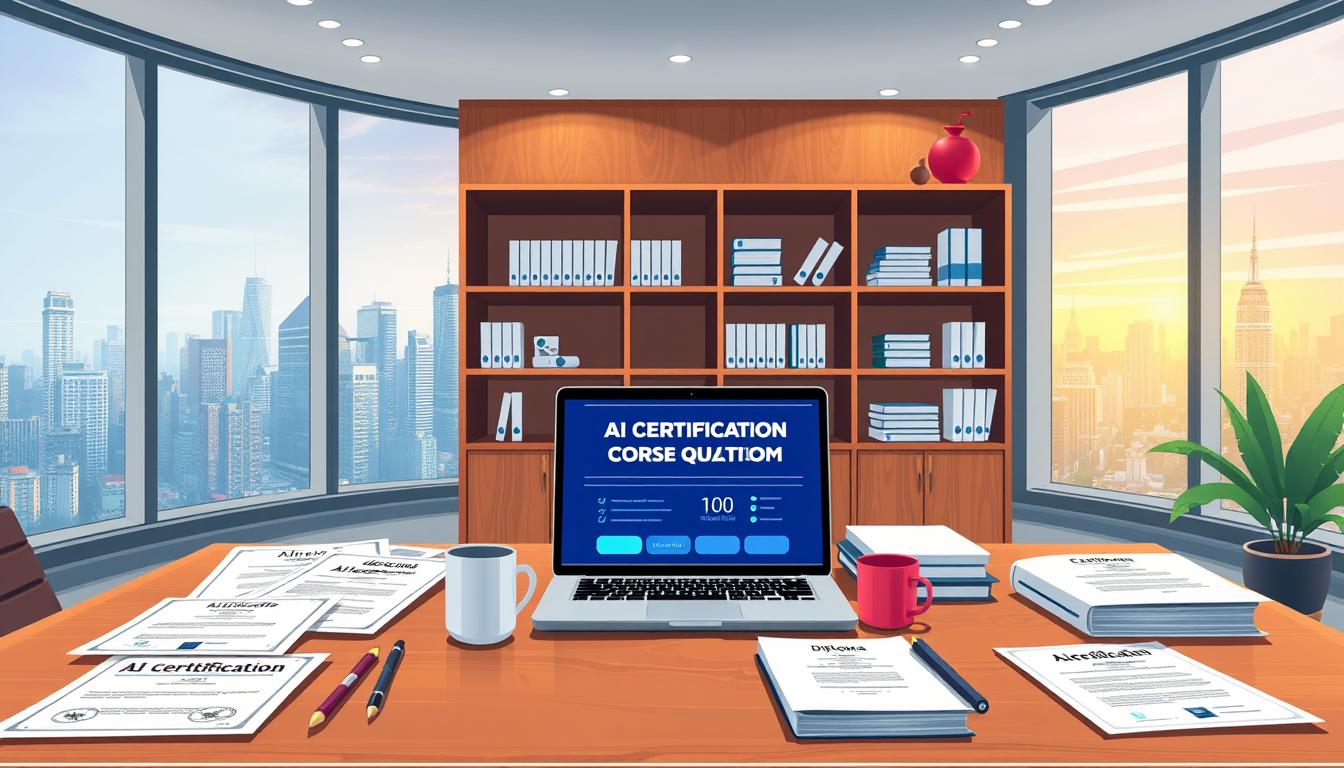
Certifications show skills to employers, but quality varies. The best ones have tests, projects, and checks from others. This makes them more trustworthy.
Cost and how long it takes matter for value. Learners should think about what they get for their money. A Deep learning certification with projects is often a better deal.
Choosing AI courses needs careful thought. Look at what’s taught, who teaches it, and if it fits industry needs. Also, make sure training includes how to change and ethics.
| Format | Typical Duration | Core Outcome | Cost Range |
|---|---|---|---|
| Corporate Workshop | 1–4 weeks | Tool proficiency and team pilots | Variable, employer-funded |
| Micro-Credential | 4–12 weeks | Targeted skills and short capstone | $200–$800 |
| Certificate Program | 3–6 months | Comprehensive projects and assessments | $349–$1,199 |
| Deep learning certification | 2–6 months | Advanced neural network projects | $500–$2,000 |
When choosing, focus on what you’ll learn. Look at who offers it, the projects, and if employers like it. A good plan is to start with small AI courses and then move to bigger ones.
Places like Ontario Tech University offer learning paths that include ethics and real projects. You can learn more at AI in Teaching and Learning Certificate.
Challenges in AI Education

There’s a big need for people skilled in AI. Companies want experts in data science and machine learning. But, there’s a lack of skills in practical engineering and deployment.
Cost and setup issues stop many from using AI. Big companies need a lot of money and cloud space for AI. But, small schools and startups can’t afford it, making AI hard to learn for them.
Addressing the Skills Gap in the Industry
Programs need to mix theory with practice. They should use real data and projects. Working with big companies helps teach these skills faster.
More resources and training are needed. Internships and open-source tools can help. Short courses let people learn quickly without a big commitment.
It’s important to assess students fairly. Tools can sometimes get it wrong. Schools should use both tools and human checks to be fair.
Ethical Considerations in AI Training
AI courses must teach about privacy and fairness. Students should learn about bias and the limits of AI. Real-life examples from healthcare and finance help show the importance.
Teaching data protection and clear policies is key. Teachers need training and clear rules for using AI. This helps everyone trust AI more.
AI should not replace human interaction. It’s important to keep teacher-student talks and emotional learning. Used right, AI can help teachers more.
For more on AI in schools, see this guide: AI in education.
The Role of AI in K-12 Education
Introducing AI early sparks curiosity and skill. Schools teach basic AI concepts like supervised learning. This helps students learn to solve problems and think critically.
Hands-on work with robots makes AI ideas real. It gets students excited about tech careers.
AI needs to be part of school plans in a clear way. Lessons should mix coding with real-world questions. This helps students see the value of AI.
Teachers use tools to help students learn better. These tools make math and reading fun. They also help teachers focus on helping students more.
It’s important to make sure everyone can use AI. Tools like text-to-speech help students with disabilities. Schools need to make sure everyone has what they need to learn.
Teachers need help to use AI well. AI can help with planning and making lessons. This lets teachers spend more time with students.
Getting ready for AI careers is key. Schools should teach robotics and ethics. They should also offer chances to learn from real-world examples.
Teachers need support to use AI right. AI can help with tasks like scheduling. This lets teachers focus on teaching and helping students.
- Robotics training programs provide hands-on learning that strengthens computational thinking.
- AI education resources offer lesson plans, tools, and training for teachers.
- AI learning pathways link classroom learning to internships and college programs.
The Future of AI Education
AI education is changing fast. New tools make learning more personal and practical. Schools and employers will look for skills that are proven.
Emerging Trends in AI Learning
Generative AI helps make learning materials quickly. Schools use it to create lessons that fit each learner’s pace.
AI simulations let students practice in safe environments. They learn by doing, just like in real life.
AI tools that explain themselves are becoming more popular. Teachers use them to teach how things work, not just the answers.
Grading is getting faster with AI’s help. It points out common mistakes quickly. This makes learning more efficient.
The Importance of Lifelong Learning in AI
With AI changing fast, one-time learning isn’t enough. Micro-credentials and stackable certificates help professionals keep up without taking long breaks.
Learning is becoming more focused on what you can do. Machine learning classes are designed to help you improve in specific areas.
Certification programs are changing too. They now include real-world projects and checks from employers. This makes it easier to show you’re ready for a job.
Investing in infrastructure and teacher training is key. It helps everyone learn AI, not just some. Broadband access and training for teachers are important for this.
Learning AI will be a cycle of learning, applying, and checking again. This keeps your skills sharp and makes sure you’re ready for work.
Community and Networking in AI Education
Building a network around AI learning helps you grow faster. It opens doors to work together. People share code, datasets, and feedback. This helps a lot.
Join groups on GitHub and Kaggle for notebooks and datasets. LinkedIn groups and meetups help find mentors and partners. Sites like Edutopia share teaching strategies for the classroom.
Joining focused communities
Start with a goal like building a portfolio or finding mentors. Take AI courses with forums or projects. Join hackathons and teams to show what you can do.
Look into local initiatives like the Mississippi AI network. It links schools and industry. Check out MAIN for free AI content and credits.
Resources for collaboration and support
Use open repositories and models for quick tests. Share projects and get feedback. Career centers offer badges to show your skills.
- Practitioner hubs: GitHub, Kaggle, Stack Overflow — code sharing and competitions.
- Educational platforms: Edutopia and professional development networks — lesson templates and case studies.
- Institutional partnerships: universities and manufacturers — internships and hiring pipelines.
Use community groups and formal courses together. Mix short courses with groups and open-source work. This builds your skills and shows your work.
| Community Type | Primary Benefit | How to Start |
|---|---|---|
| Open-source hubs | Collaborative code, reusable models, peer review | Fork projects, submit issues, contribute pull requests |
| Education networks | Curriculum support, teacher case studies, PD credits | Subscribe to networks, download lesson plans, join webinars |
| Industry consortia | Internships, real-world projects, hiring pathways | Attend industry events, apply for sponsored programs |
| Local meetups and hackathons | Hands-on practice, rapid prototyping, networking | Sign up for events, form teams, present demos |
Be active in your community. This improves your learning, expands your network, and makes education more practical.
Government Initiatives Supporting AI Education
Public programs help schools use Artificial Intelligence Education. They fund projects and set rules for ethics and privacy. This helps protect students and opens new learning doors.
Grants and funding help schools buy new tech and train teachers. Foundations give money for AI learning and professional growth. This helps teachers feel more confident.
Rules are made for data use and fairness. Schools must choose vendors wisely. States set standards for AI learning.
Working together, schools and companies improve training. Microsoft, Google, and nonprofits help with materials and mentorship. This prepares students for jobs.
Rules guide how schools buy and use AI tools. This ensures fairness and avoids unfair choices for students.
Advice for school leaders:
- Use grants for pilots to test new ideas.
- Train teachers before using new tech.
- Make clear rules for data use and ask parents for consent.
- Work with universities to improve AI learning.
| Initiative Type | Primary Goal | Typical Partners | Expected Outcome |
|---|---|---|---|
| Seed Grants | Fund pilots for classroom tech and lesson modules | School districts, foundations, edtech vendors | Evidence-based scaling and reduced implementation risk |
| Professional Development Programs | Train teachers in AI concepts and pedagogy | Universities, nonprofits, private companies | Improved instructional quality and teacher confidence |
| Policy Frameworks | Set standards for privacy, ethics, and AI literacy | State education agencies, legal experts, community groups | Clear rules for safe and equitable adoption |
| Public-Private Partnerships | Align curricula with labor market needs | Industry leaders, colleges, K–12 systems | Pathways to internships, credentials, and jobs |
Case Studies of Successful AI Education Programs
This collection looks at real examples where schools moved from theory to action. It talks about how programs were made, what they achieved, and the challenges faced. You’ll see examples that mix learning technical skills with teaching ethics and doing hands-on work.
Highlighting Innovative Educational Models
Ontario Tech University has a special certificate for teachers. It’s all about learning AI skills in a real way. The program includes courses like AI-based Learning Technologies and AI and Simulation Learning.
Teachers use AI to make learning fun. They make pictures for vocabulary and math games. This makes learning more exciting and helps students do better.
Lessons Learned from AI Implementation
Good programs mix learning AI with ethics and support for teachers. They have projects that help students learn to solve problems. Working with companies and doing research helps make sure the program works well.
- Measurable benefits: adaptive platforms and AI-supported tutoring showed gains in individualized learning and time savings for teachers.
- Risks observed: misuse such as cheating, privacy issues, infrastructure costs, and assessment bias created real barriers.
- Operational note: GPT detectors can misclassify non-native English writers, which highlights the need for human review and transparent policies.
Good programs are clear about how they use data. They make sure students know how their data is used. Teachers learn about AI and ethics so they can teach it right.
Programs that work well use a mix of things. They have modular courses, try things out in classrooms, and work together. Schools that focus on AI and train teachers well see better results.
When scaling programs, add robotics if it fits. Robotics labs with online learning make learning fun and real. This helps students understand abstract ideas better.
These examples show a way to do it right. Mix AI training, resources, and work with companies. This way, you build skills while keeping things fair and useful.
Conclusion: The Path Ahead for AI Education
Artificial Intelligence Education needs to mix technical skills with being a good citizen. It should teach machine learning and data engineering. But it also needs to focus on ethics, fairness, and thinking critically.
This way, students can use tools like TensorFlow or PyTorch. They will also learn about bias, privacy, and how AI affects society.
Ensuring Accessibility in AI Learning
Getting everyone to learn AI is key. We need to make sure everyone has the right devices and internet. Schools should help those who can’t afford it.
Teachers need training too. And we should use AI in a way that doesn’t leave some people behind. This means sharing resources and funding wisely.
The Role of AI in Shaping Future Educational Landscapes
AI learning paths should be flexible and include real-world projects. They should also work with businesses and schools. This keeps learning relevant to the job market.
AI can make learning personal and open up new career paths. But we must be careful. We need to use AI wisely and keep learning to create a fair future.
FAQ
What is Artificial Intelligence Education?
Artificial Intelligence Education teaches people how to use AI. It covers the basics and how to apply AI in real life. You’ll learn about algorithms, programming, and how to use AI tools.
Why is AI education important in today’s world?
AI is everywhere, from healthcare to education. It’s important to learn about AI to keep up. AI education helps you understand and use AI responsibly.
How does AI impact different sectors?
AI changes many areas, like healthcare and finance. It helps with better diagnostics and fraud detection. In education, AI makes learning more personalized.
Does AI create or destroy jobs?
AI does both. It automates some jobs but also creates new ones. Training and upskilling are key to adapting to AI changes.
What are the main components of a strong AI curriculum?
A good AI curriculum includes the basics and practical skills. You’ll learn programming, work on projects, and study ethics. It’s all about hands-on learning.
What formal academic pathways exist for AI learning?
You can get degrees or certificates in AI. These programs offer a solid foundation and hands-on experience. Look for ones that include capstones and real-world projects.
How do online courses and MOOCs compare to formal degrees?
Online courses offer flexibility and affordability. They’re great for learning new skills. Degrees provide more depth and academic recognition.
Are boot camps and workshops effective for professionals?
Yes, they are. Boot camps focus on practical skills. They’re perfect for quick learning and applying new knowledge.
Which institutions lead in AI education?
Top universities and programs lead in AI education. They offer hands-on learning and industry connections. Look for programs with capstones and industry partnerships.
How do industry partnerships benefit AI education?
Partnerships bring real-world experience and tools. They help align education with industry needs. This creates job opportunities for graduates.
How should professionals approach upskilling in AI?
Professionals should take modular courses and work on projects. Micro-credentials and certifications are valuable. Stay updated through continuous learning.
Are AI certifications worth pursuing?
Certifications show you know AI. But, not all are equal. Look for ones that require projects and real-world applications.
What skills are most in demand for AI roles?
Employers want skills in data engineering and model development. Soft skills like teamwork and ethics are also important. The gap between theory and practice is a challenge.
How should institutions address the AI skills gap?
Institutions should focus on practical skills and ethics. Partnerships and capstones help bridge the gap. Governments can support with funding and policy.
What ethical considerations must AI training include?
AI training must cover data privacy and bias. Students should learn to evaluate AI outputs critically. Assessments should avoid biased tools.
How is AI being integrated into K-12 education?
AI is being used to improve learning in schools. It helps with personalized education and hands-on activities. Early exposure builds skills for future studies.
What accessibility concerns arise with AI in education?
AI can widen the digital divide if not accessible. Schools need to ensure equal access to devices and internet. Inclusive practices and training are essential.
What classroom tools help teachers adopt AI responsibly?
Tools like adaptive tutoring and AI-assisted lesson planners are helpful. They should be used with human oversight and clear data policies. This ensures fairness and maintains pedagogical goals.
How should districts pilot AI solutions?
Districts should start small with AI pilots. They should invest in teacher training and monitor outcomes. Clear policies on data and AI tool use are necessary.
What are evidence-based practices in AI education?
Effective practices include adaptive platforms and project-based learning. They should combine automated and instructor review. This approach improves learning outcomes.
Where can learners find collaboration and community resources?
Learners can find resources on GitHub, Kaggle, and LinkedIn. These platforms offer code sharing, mentorship, and project collaboration. They help build portfolios and learn from others.
What funding and policy supports exist for AI education?
Governments and foundations provide grants for AI education. Policy frameworks address data privacy and ethical AI use. Public-private collaborations help scale training and meet labor market needs.
Can you share examples of successful AI education models?
Successful models combine technical training, ethics, and hands-on projects. They require applied projects and industry partnerships. This ensures measurable outcomes and employer relevance.
What measurable benefits does AI bring to learning?
AI improves learning by making it more personalized. It helps close achievement gaps and frees up teacher time. When used responsibly, AI enhances education.
What risks should educators watch for with AI assessments?
Automated grading can unfairly penalize students, like non-native speakers. Educators should use human review and multiple evidence sources. This ensures fairness in assessments.
How can under-resourced schools access AI education?
Schools can seek grants and partnerships for AI education. They can use low-cost tools and prioritize teacher training. This helps make AI education accessible to all.
What is the recommended balance between technical and ethical instruction?
AI education should integrate technical skills with ethics. Every technical module should include ethics discussions. This prepares learners for responsible AI use.
How should organizations redesign roles for an AI-augmented workforce?
Organizations should train staff and redesign roles. They should identify tasks for automation and retrain staff. This ensures a smooth transition to an AI-augmented workforce.
What immediate steps can an educator take to begin integrating AI tools?
Educators should start with small pilots and professional development. They should establish clear data policies and gather feedback. This helps scale AI education responsibly.
How can stakeholders ensure AI education remains equitable and inclusive?
Stakeholders should prioritize access to devices and internet. They should adopt inclusive assessment practices and focus on accessibility. This ensures equal opportunities in AI education.