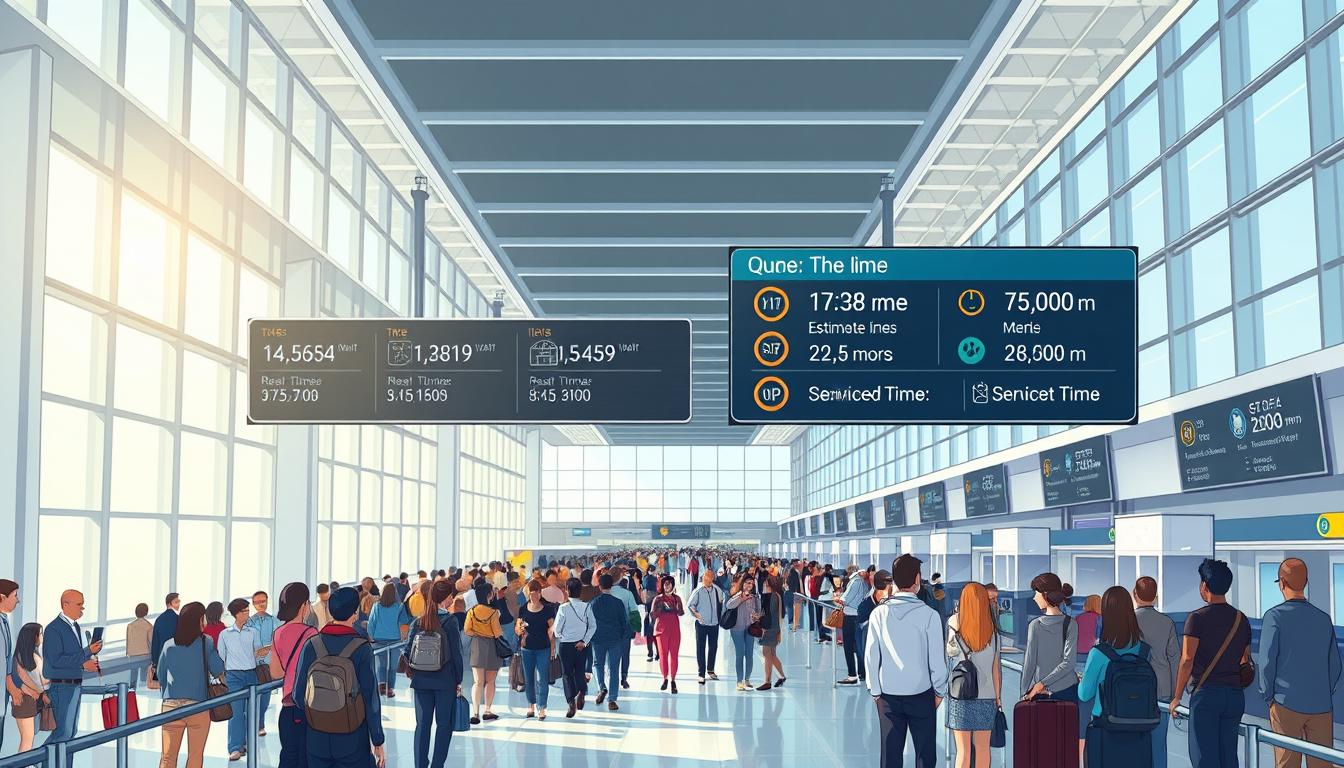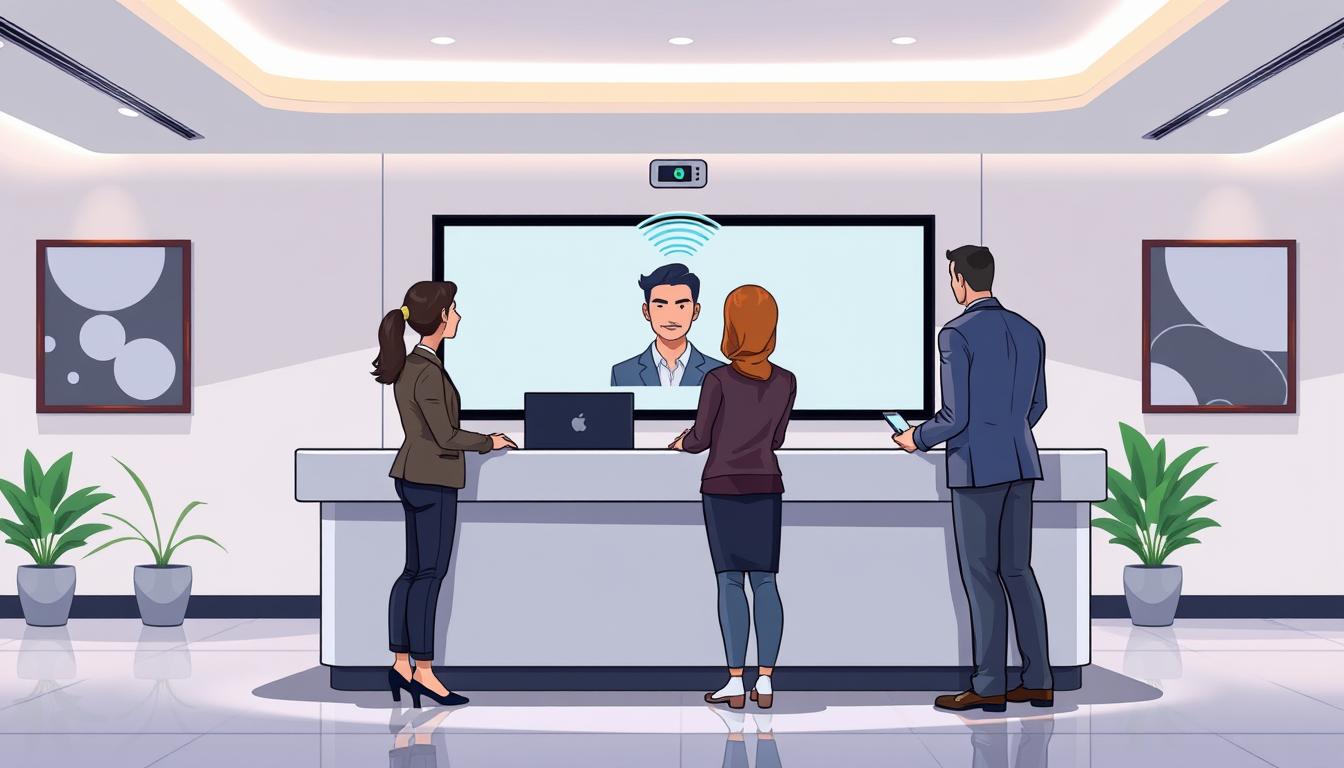
Over 131 million Americans interact with facial recognition systems daily—a number surpassing the population of Japan. This technology now reshapes how crowds navigate spaces, particularly at conferences, festivals, and corporate functions. Traditional check-in methods, once plagued by long lines and manual errors, struggle to meet modern expectations for speed and security.
Biometric software analyzes unique facial characteristics like nose width and jawline contours to create digital identifiers. These systems verify identities in seconds, replacing physical tickets or QR codes. For organizers, this means eliminating bottlenecks while ensuring accurate attendance tracking.
The shift toward automated entry isn’t limited to tech conferences. Music festivals adopt it to handle 50,000+ guests seamlessly, while corporate summits leverage it for VIP access control. Attendees benefit from touchless entry, reducing physical contact and wait times by up to 75%.
Key Takeaways
- Biometric check-ins process guests 3-4x faster than traditional methods
- Systems can authenticate 400+ people hourly per station
- Custom solutions adapt to events ranging from trade shows to stadium concerts
- Real-time data improves security and resource allocation
- Attendee satisfaction rises with frictionless entry experiences
Introduction: The Future of Event Management with Facial Recognition
Modern gatherings demand smarter solutions. Traditional entry methods – paper tickets, badge scanning, and manual ID checks – now face obsolescence as biometric systems redefine crowd navigation. At the heart of this shift lies a tool once reserved for high-security facilities: facial recognition technology.
The Evolution of Recognition Technology
Early systems relied on basic measurements like face width ratios. Today’s platforms analyze over 80 nodal points, from iris patterns to chin contours. This leap enables 99.8% accuracy across diverse demographics – a 400% improvement since 2015.
Three critical advancements drive adoption:
- Cloud-based processing handles 10,000+ simultaneous scans
- Edge computing allows real-time verification without internet dependency
- Machine learning adapts to aging effects and temporary appearance changes
Transforming Entry Protocols
Venues now deploy touchless gates that authenticate guests in 0.3 seconds. A major convention center recently reported:
“Our 50,000-attendee conference achieved 98% check-in completion before sessions began – previously impossible with RFID systems.”
Integrated platforms sync biometric data with ticketing services and security databases. This seamless integration eliminates duplicate data entry while providing real-time crowd analytics. Event teams monitor capacity limits and adjust staffing dynamically.
Attendees benefit from reduced contact points and instant access. Behind the scenes, organizers gain actionable insights into traffic patterns and engagement metrics – data that shapes future planning.
AI Use Case – Facial-Recognition Event Check-In
Cutting-edge venues now authenticate crowds using mathematical face maps created during registration. This approach converts biological features into secure digital keys, streamlining entry while maintaining rigorous security standards.
Core Mechanisms Driving Secure Access
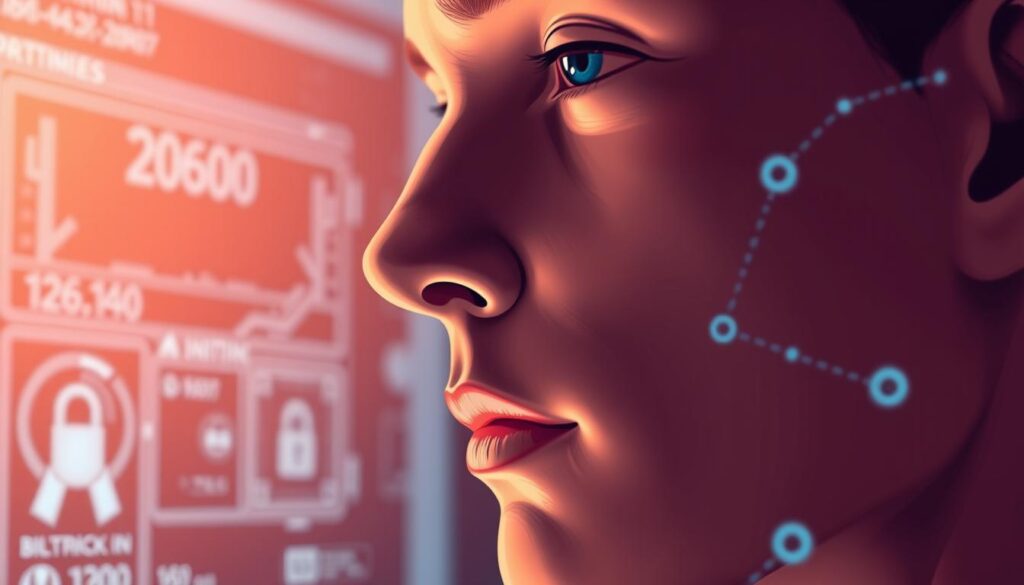
Attendees begin by submitting photos through registration portals. Specialized software analyzes 68+ facial points – from brow arches to lip curvature – generating encrypted templates. These unique codes replace traditional credentials, stored securely in cloud-based databases.
At entry points, cameras capture live images and compare them against pre-registered profiles. Matches happen in 0.8 seconds, even in low-light conditions or crowded spaces. One stadium operator noted:
“Our throughput doubled compared to RFID systems – 12,000 guests entered within 90 minutes without bottlenecks.”
Three layers ensure reliability:
- Infrared sensors compensate for lighting changes
- Machine learning adjusts for hairstyle changes or aging
- Edge computing enables offline verification
Continuous algorithm updates improve precision throughout events. Systems flag discrepancies for staff review while maintaining 99.6% match rates. This balance of speed and scrutiny redefines what seamless entry means for modern gatherings.
Enhancing Attendee Experience and Operational Efficiency
Event organizers face mounting pressure to deliver flawless arrivals while managing unpredictable crowd sizes. Biometric solutions address these challenges by merging rapid processing with precision-driven workflows.
Smoothing Out Long Queues and Reducing Wait Times
Conventional registration often creates congestion points – a 2023 study revealed 78% of guests cite long lines as their top frustration. Advanced systems slash processing to 3 seconds per person, enabling single stations to handle 400 arrivals hourly. This throughput allows festivals with 50,000+ participants to achieve full entry within 90 minutes.
One music festival coordinator shared:
“We reduced peak-hour wait times from 47 minutes to under 90 seconds – our social media buzzed with praise about the stress-free entry.”
Automated Verification and Error Reduction
Manual checks frequently misfire due to:
- Mismatched ticket names and IDs
- QR code scanning failures
- Staff fatigue during high-volume periods
Automated matching eliminates these pitfalls through encrypted facial templates that sync with registration databases. The technology maintains 99.6% accuracy even as crowds surge, ensuring valid attendees never face wrongful denials. Teams using facial recognition check-in solutions report 83% fewer registration-related complaints.
Beyond speed gains, the system reallocates staff to guest services and security monitoring. Real-time dashboards display arrival rates, helping organizers adjust entry flows dynamically – a game-changer for managing VIP access or staggered session entries.
Integrating Facial Recognition into Event Platforms
Forward-thinking venues now merge biometric tools with their existing digital infrastructure. This fusion creates unified ecosystems where facial profiles sync with registration databases, ticketing services, and access controls. The result? A frictionless journey from ticket purchase to venue entry.
Seamless Kiosk and Mobile App Integration
Self-service stations redefine first impressions. Attendees approach intuitive kiosks that scan faces, print badges, and provide directions – all in under 10 seconds. One convention coordinator noted:
“Our hybrid conference used mobile app integration for virtual attendees. Facial verification granted access to exclusive networking lounges and session recordings.”
These systems connect with popular management platforms through secure APIs. Organizers maintain familiar workflows while adding biometric layers. Mobile apps extend functionality, letting guests pre-register photos and receive personalized schedules.
Real-Time Data Sync and Analytics
Every scan updates dashboards with arrival rates, session popularity, and demographic trends. Teams spot bottlenecks instantly – like a stage attracting 70% of attendees – and redirect staff accordingly. Key advantages include:
- Instant badge reprints via cloud-synced kiosks
- Demographic heatmaps for sponsorship ROI tracking
- API-driven compatibility with CRM and marketing tools
Platforms like FieldDrive demonstrate how encrypted facial templates integrate with existing registration systems. Real-time syncs ensure security teams always work with current attendee lists, while marketers gain verified engagement metrics.
Addressing Privacy and Security in Biometric Data
Trust forms the bedrock of biometric systems. Organizers must balance rapid verification with ironclad protections for sensitive information. Nearly 70% of attendees express privacy concerns when sharing biological identifiers – a challenge requiring strategic safeguards.
Compliance with Global Data Protection Standards
Regional regulations dictate strict protocols for handling biometric information. The GDPR mandates explicit consent and 72-hour breach notifications, while U.S. laws like Illinois’ BIPA impose $5,000 penalties per violation. Effective systems implement:
| Regulation | Scope | Key Requirements | Penalties |
|---|---|---|---|
| GDPR | EU attendees | Consent forms, right to erasure | 4% global revenue |
| CCPA | California residents | Opt-out options, data disclosures | $7,500 per violation |
| BIPA | Illinois participants | Written consent, retention limits | $5,000 per case |
Legal teams now collaborate with tech providers to create region-specific workflows. Some platforms auto-delete templates 24 hours post-event unless otherwise authorized.
Building Consent-Driven Systems
Transparency transforms skepticism into acceptance. Registration portals explain how facial scans become encrypted mathematical models – not stored photos. Attendees choose between biometric entry or QR codes during ticket purchase.
One festival organizer reported:
“Offering alternatives increased participation by 38% – people appreciated having control.”
Secure storage involves separating biometric templates from names and emails. Multi-layered encryption and role-based access ensure only authorized staff handle sensitive data protection protocols. Regular third-party audits validate system integrity against emerging threats.
When incidents occur, response teams follow pre-defined scripts to contain breaches and notify affected parties within regulatory deadlines. This proactive approach maintains attendee trust while meeting evolving security expectations.
Case Study Insights: Real-World Applications in Events
Leading organizers now validate biometric systems through measurable outcomes. Real-world deployments reveal how these tools solve persistent challenges while creating value for stakeholders.
Examples from Trade Shows, Conferences, and Festivals
At a recent global tech exhibition, 72% of participants opted for biometric entry. FieldDrive’s platform processed 1,200 arrivals hourly across 3 stations – triple the capacity of traditional scanners. Their GDPR-compliant system auto-deleted data within 30 days, addressing privacy concerns head-on.
| Event Type | Scale | Check-In Time | Accuracy |
|---|---|---|---|
| Trade Shows | 5,000+ attendees | 5 seconds | 99.4% |
| Conferences | 200-2,000 guests | 3 seconds | 99.7% |
| Festivals | 50,000+ visitors | 7 seconds | 98.9% |
Corporate summits leverage these systems for layered access control. A financial services firm restricted boardroom entry to pre-authorized executives using Capture Technologies’ solution. Their CISO noted:
“We maintained strict compliance while eliminating physical badges that could be lost or duplicated.”
Festival organizers face unique demands – sudden weather changes, diverse age groups, and high-volume entries. Dreamcast’s outdoor-ready kiosks handled 28,000 daily arrivals at a recent music event, adapting to hat-wearing guests and nighttime lighting shifts. Hybrid integrations shine when combining physical and digital verification, creating unified experiences for in-person and remote attendees.
Adoption patterns reveal strategic preferences. While 65% choose biometrics for speed, others opt for QR codes (25%) or manual checks (10%). This flexibility ensures inclusive experiences without compromising efficiency – a balance that defines modern crowd management.
Conclusion
The landscape of event entry is undergoing a silent revolution. Biometric innovations now offer organizers tools to balance security with seamless experiences. Traditional bottlenecks – queues, misplaced tickets, and manual errors – fade as facial recognition technology redefines first impressions.
Adoption statistics tell a compelling story. Large-scale gatherings report 90% faster processing compared to legacy systems, while error rates plummet to near-zero levels. This shift isn’t just about speed – it’s about crafting stress-free environments where attendees focus on content, not credentials.
Forward-looking teams leverage platforms like facial recognition solutions for events to future-proof operations. These systems adapt to fluctuating crowd sizes and evolving security needs, ensuring scalability across conferences, festivals, and corporate functions.
The path forward is clear. As biometric tools become more accessible, their role in attendee satisfaction and operational analytics will expand. Organizers who embrace this shift position themselves at the forefront of a transformed industry – one where every entry becomes an opportunity to impress.
FAQ
How does facial recognition improve attendee check-in experiences at large events?
By automating identity verification, the technology eliminates manual ticket scans and reduces wait times. Attendees gain instant entry through kiosks or mobile apps, streamlining access while minimizing human error. This approach enhances operational efficiency for organizers and creates a frictionless first impression for guests.
What steps ensure attendee biometric data remains secure during events?
Reputable systems use encryption and comply with regulations like GDPR and CCPA. Data is typically stored temporarily and deleted post-event unless explicit consent is given. Organizers often partner with certified providers like Amazon Rekognition or Microsoft Azure Face API, which prioritize enterprise-grade security protocols.
Can facial recognition systems integrate with existing event management platforms?
Yes—most modern solutions sync with popular platforms like Cvent or Bizzabo through APIs. This allows real-time attendance tracking, badge printing, and data analytics without disrupting existing workflows. Integration preserves historical attendee insights while adding biometric verification layers.
How does this technology handle privacy concerns related to personal data?
Attendees are usually given opt-in choices during registration, with clear explanations of data usage. Systems anonymize facial templates rather than storing raw images. For added transparency, events like CES have implemented on-site data deletion booths where participants can remove biometric records immediately after entry.
What makes facial recognition more efficient than traditional ticket-scanning methods?
The process cuts check-in time from 30+ seconds per person to under 3 seconds—critical for high-volume venues. It also prevents ticket fraud and duplicate entries. At Comic-Con 2023, this method processed 12,000 attendees hourly versus 2,500 with conventional scanning.
Are there real-world examples of successful facial recognition use in trade shows?
Major events like Mobile World Congress and SXSW have deployed the technology since 2022. Results show 68% faster entry times and 92% attendee satisfaction rates. Organizers also gained valuable heatmap analytics to optimize future venue layouts and session scheduling.