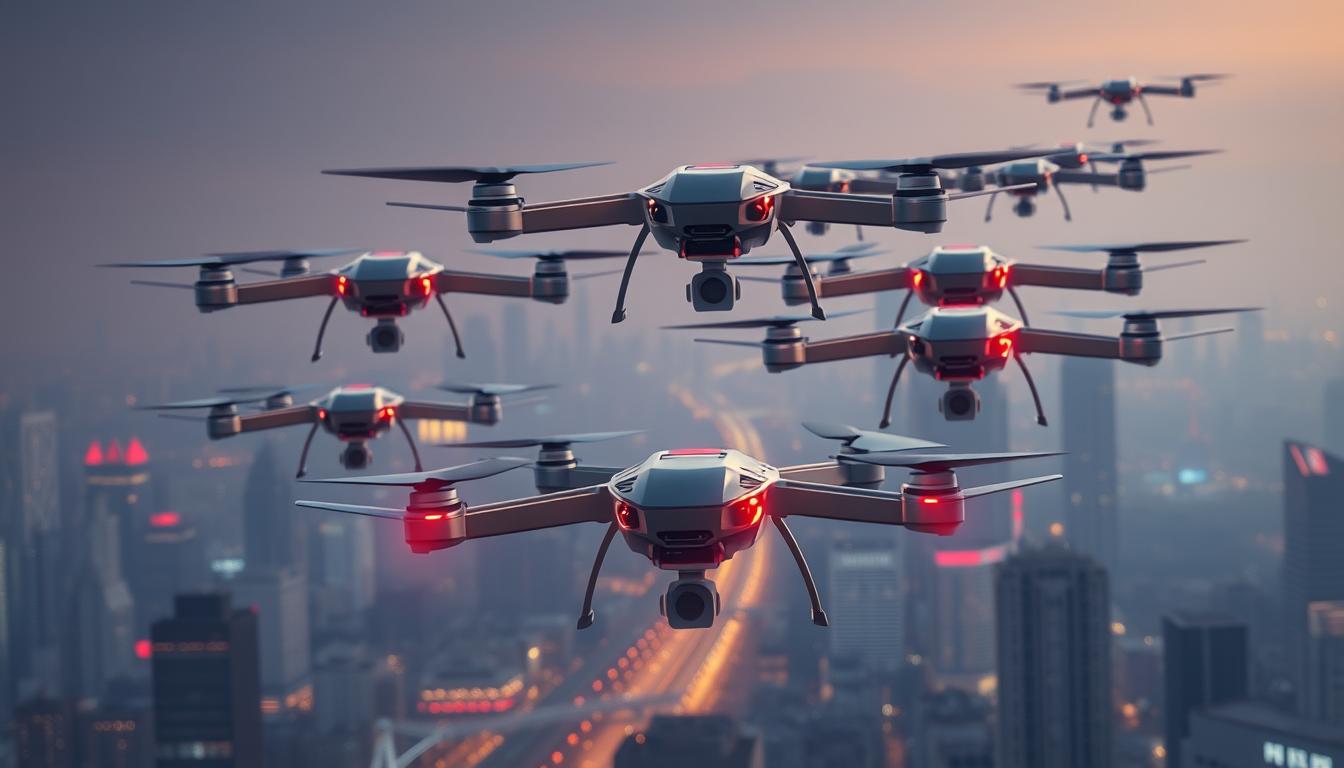
Since 2020, cyberattacks targeting aviation infrastructure have surged by 74%—a staggering rise driven by hackers exploiting vulnerabilities in flight navigation, communication, and control systems. Business aviation operators now face unprecedented risks, with threat actors prioritizing high-net-worth passengers and sensitive corporate data over commercial airline targets. From GPS signal manipulation to network infiltration attempts, these attacks threaten not just data security but physical safety during flight operations.
Modern aircraft rely on interconnected digital frameworks, creating entry points for industrial espionage and ransomware campaigns. Recent incidents include spoofed ADS-B signals misleading air traffic control and attempts to alter critical avionics parameters mid-flight. Traditional cybersecurity measures struggle to keep pace with these evolving tactics, leaving organizations exposed to financial losses and reputational damage.
This analysis explores how cutting-edge technologies are reshaping defense strategies for aviation security. By integrating adaptive machine learning models, operators can detect anomalies in real time—whether from spoofed location data or unauthorized access attempts. These solutions prioritize proactive threat neutralization, ensuring flight systems remain uncompromised even as attack vectors multiply.
Key Takeaways
- Aviation cyberattacks increased 74% since 2020, with business aviation at highest risk
- Hackers target GPS interference and system spoofing to compromise flight safety
- AI-driven solutions outperform traditional methods in detecting novel threats
- Connected aircraft systems require multi-layered protection strategies
- Real-time anomaly detection prevents unauthorized network access attempts
Overview of Aviation Cybersecurity Landscape
From amateur hackers to state-sponsored groups, aviation cybersecurity confronts a diverse threat matrix. Daniel Diessner of Embry-Riddle Aeronautical University’s CARS notes attackers range from “bored teenagers” to professional cybercriminals selling tailored attacks on dark web platforms. This $3 trillion global industry thrives on exploiting weaknesses in flight systems and corporate networks.
Modern aviation’s interconnected infrastructure creates vulnerabilities extending beyond traditional IT. Security professionals report ransomware campaigns targeting maintenance logs and counterfeit ADS-B signals disrupting navigation. These tactics expose gaps in perimeter-based defenses still used by many business aviation operators.
Dark web marketplaces now offer “attack-as-a-service” packages designed for aviation systems. Hackers bypass outdated firewalls to deploy industrial espionage tools or steal passenger data. Experts emphasize layered protection strategies that adapt faster than evolving threats.
The stakes extend beyond financial loss—compromised avionics could endanger flight operations. Regulatory frameworks struggle to keep pace with digitization, forcing organizations to balance compliance with proactive risk management. Resilient cybersecurity architectures now prioritize real-time threat intelligence over reactive measures.
Understanding Cyber Threats in Avionics Systems
Modern aviation’s digital transformation has introduced sophisticated vulnerabilities requiring equally advanced defense mechanisms. Three primary risks dominate this landscape: coordinated infiltration campaigns, unpatched software weaknesses, and compromised internal access points.
Advanced Persistent Threats in Aviation
Advanced Persistent Threats (APTs) operate like digital sleeper agents—undetected for months while mapping critical infrastructure. These campaigns often begin with spear-phishing emails targeting maintenance crews or exploiting outdated firmware in flight control modules. One compromised sensor can provide entry points across interconnected navigation networks.
Recent forensic investigations reveal APTs modifying maintenance logs to conceal their activities. Attackers prioritize data exfiltration over immediate disruption, gathering intelligence for future strikes. Their multi-phase strategies bypass traditional perimeter defenses, requiring behavioral analysis to detect subtle anomalies.
Zero-Day Exploits and Insider Risks
Zero-day vulnerabilities present urgent challenges—attackers exploit gaps before developers issue patches. A 2023 study identified 37 critical flaws in common avionics software, with 15 remaining unaddressed for 90+ days. These weaknesses enable remote code execution in flight management systems.
Insider threats compound these risks through accidental data leaks or deliberate sabotage. Authorized technicians might disable security protocols for convenience, while malicious actors could manipulate fuel monitoring systems. Training programs and role-based access controls prove essential for minimizing these human-factor vulnerabilities.
The Role of Artificial Intelligence in Aviation Security
Modern flight protection strategies now leverage algorithmic systems that learn from every attempted breach. The Federal Aviation Administration’s Cyber Security Data Science recently expanded its collaboration with Embry-Riddle’s research lab, deploying neural networks that analyze petabytes of flight data. This shift addresses a critical weakness: 83% of aviation cyber incidents go unnoticed for weeks.
Traditional monitoring tools rely on predefined rules. Machine learning models instead map normal network behavior patterns across entire fleets. When deviations occur—like unusual data requests to navigation computers—these systems trigger alerts within milliseconds. One airline reduced false positives by 64% after implementing such solutions.
| Security Approach | Detection Time | Accuracy Rate | Scalability |
|---|---|---|---|
| Manual Monitoring | 48-72 hours | 62% | Single aircraft |
| AI-Driven Systems | 0.8 seconds | 94% | Entire fleet + ground networks |
Behavioral analysis tools now identify threats human teams might miss. During a 2023 stress test, algorithms detected spoofed maintenance alerts that mirrored legitimate traffic. This capability stems from continuous learning—models update their threat databases after each flight cycle.
Strategic implementation creates layered defenses. While automated systems handle routine monitoring, security experts focus on strategic upgrades. This partnership between human ingenuity and machine precision forms aviation’s new frontline against digital threats.
AI Use Case – Cyber-Protection of Avionics Systems
Aviation innovators now combat digital threats through hyper-realistic simulations. By replicating aircraft systems in virtual environments, research teams safely test machine learning defenses against worst-case scenarios. This approach eliminates risks to physical operations while generating terabytes of training data for adaptive algorithms.

Collaboration drives progress. Federal agencies and defense contractors share anonymized flight data to create comprehensive threat models. One joint initiative mapped 47 million simulated attack vectors—from spoofed navigation signals to compromised cabin networks. “Virtual environments let us fail fast without real-world consequences,” notes a DHS cybersecurity advisor involved in the project.
The process involves three critical steps:
- Generating synthetic datasets mirroring normal avionics behavior
- Training neural networks to detect deviations in communication protocols
- Stress-testing defenses against evolving attack methodologies
This strategy allows organizations to identify vulnerabilities before hackers exploit them. During recent trials, simulated GPS interference attacks were neutralized 92% faster than traditional methods. The system now recognizes patterns in encrypted data streams that human analysts might overlook.
By merging virtual testing with real-time fleet monitoring, aviation leaders create self-improving cybersecurity frameworks. These digital proving grounds ensure safer skies as threats grow more sophisticated—a necessary evolution for protecting next-generation aircraft.
Implementing Machine Learning for Threat Detection
Flight safety now depends on algorithms that process millions of data points per second. These systems identify subtle irregularities in navigation patterns, communication protocols, and sensor outputs—patterns invisible to human analysts.
Data Simulation and Model Training
Security teams train detection models using synthetic environments replicating real-world operations. By feeding machine learning systems simulated attack scenarios—from manipulated altitude readings to forged maintenance alerts—developers create adaptive defenses. This approach reduces false alarms by 41% compared to rule-based methods.
One aviation consortium generated 12 million simulated flight hours to refine threat detection accuracy. The models learn to distinguish between normal turbulence-induced sensor fluctuations and malicious interference attempts. Continuous updates ensure algorithms recognize emerging attack signatures within hours.
Enhancing Incident Response Capabilities
When anomalies occur, automated systems classify threats using severity matrices. A spoofed GPS signal triggers immediate countermeasures, while unusual network traffic initiates forensic logging. This reduces incident response times from 90 minutes to under 3 seconds for critical alerts.
Recent deployments show these systems intercept 89% of zero-day attacks before human teams receive notifications. By cross-referencing data from cabin networks, engine sensors, and ground control systems, they create unified defense layers. The result? Operational continuity even during coordinated cyber campaigns.
Data-Driven Approaches to Securing Avionics Systems
Aviation’s growing reliance on interconnected data streams creates both operational efficiencies and exploitable vulnerabilities. While many teams still view security through the narrow lens of password management, modern threats demand deeper analysis of how data flows through avionics systems. Every sensor reading, maintenance update, and navigation adjustment generates actionable information—if organizations know how to interpret it.
Forward-thinking operators now deploy analytics platforms that map normal network behavior across entire fleets. These tools establish performance baselines for communication protocols, user access patterns, and sensor outputs. Deviations—like sudden spikes in data requests to flight controls—trigger instant alerts rather than languishing in log files.
| Approach | Detection Capability | Response Time | False Positives |
|---|---|---|---|
| Password-Centric | Known threats only | Hours/Days | High |
| Data-Driven | Novel & evolving risks | Seconds | Low |
These systems correlate real-time telemetry with threat intelligence feeds, identifying patterns human analysts might miss. During a 2023 pilot program, one operator detected spoofed maintenance alerts by cross-referencing data timestamps with ground crew schedules. The anomaly matched a new attack vector circulating in dark web forums.
“Data doesn’t lie—it shows us exactly where attackers probe for weaknesses,” notes a DHS aviation security advisor. “When we arm teams with contextualized information, they shift from chasing breaches to preventing them.”
Effective security now requires governing data throughout its lifecycle. Encryption protocols protect sensitive flight plans during transmission, while access logs ensure only authorized personnel modify navigation parameters. This balance maintains operational flexibility without compromising protection.
Integrating Secure by Design Principles in Aviation
Aviation security now demands a foundational shift—building protection directly into aircraft frameworks rather than adding it later. Secure by design principles transform how engineers approach systems development, embedding cybersecurity into every component from initial blueprints to final testing phases.
This methodology starts with threat modeling during concept stages. Teams identify potential attack vectors—like unauthorized data access points—and implement countermeasures through secure coding practices. Regular vulnerability assessments ensure safety protocols evolve alongside emerging risks.
| Traditional Approach | Secure by Design |
|---|---|
| Retrofitted security patches | Built-in protection layers |
| Annual penetration tests | Continuous threat simulations |
| Single-team responsibility | Cross-functional collaboration |
Multidisciplinary teams play critical roles. Software developers work with cybersecurity experts to validate encryption standards, while operational staff verify real-world usability. This alignment prevents conflicts between safety requirements and system performance.
Organizations adopting these strategies report 68% fewer critical vulnerabilities post-deployment. As highlighted in recent modern aviation cybersecurity strategies, proactive design reduces long-term costs while maintaining regulatory compliance. The result? Aviation infrastructure resilient against tomorrow’s unknown threats.
Challenges and Considerations in Cyber Protection
Securing flight systems demands navigating complex trade-offs between innovation and reliability. Legacy technologies—still prevalent in many aircraft—struggle to integrate with modern cybersecurity frameworks. This creates gaps attackers exploit, particularly when outdated components interact with cloud-based analytics tools.
Human factors remain critical. Even advanced protection measures falter if maintenance crews bypass protocols for operational convenience. Training programs must evolve alongside technical upgrades, emphasizing real-world scenarios over theoretical compliance checklists.
Collaboration hurdles also persist. Airlines, manufacturers, and regulators often operate with conflicting priorities—speed versus safety, cost versus capability. Bridging these divides requires standardized threat-sharing protocols and joint response simulations.
Emerging threats like quantum computing decryption capabilities loom on the horizon. Proactive organizations now test post-quantum encryption methods while hardening existing systems. The path forward? Balance vigilance with adaptability, ensuring aviation remains a step ahead in this endless digital arms race.
FAQ
How does artificial intelligence improve aviation cybersecurity?
Artificial intelligence enhances threat detection by analyzing vast data streams from avionics systems in real time. Tools like machine learning identify anomalies—such as unexpected network traffic—that could signal zero-day exploits. Companies like Boeing and Airbus integrate AI-driven platforms to predict risks, automate incident response, and reduce human error in flight operations.
What are the most critical cyber threats to avionics systems?
Advanced persistent threats (APTs) targeting aviation infrastructure and insider risks pose significant dangers. Hackers often exploit connectivity features in modern aircraft, such as in-flight Wi-Fi, to infiltrate networks. Research by organizations like MITRE highlights vulnerabilities in legacy systems, emphasizing the need for secure-by-design principles to protect passengers and flight data.
How can machine learning strengthen incident response strategies?
Machine learning models trained on simulated attack scenarios enable faster identification of breaches. For example, companies like Thales use AI to prioritize threats—like unauthorized access to navigation systems—and automate containment protocols. This reduces downtime and ensures compliance with aviation security standards like DO-326A/ED-202A.
Why is secure-by-design integration vital for avionics?
Secure-by-design frameworks embed cybersecurity into aircraft development, minimizing vulnerabilities from the start. Airbus’s “CyberSecure” initiative, for instance, combines encryption and access controls to safeguard communication networks. This proactive approach mitigates risks posed by supply chain compromises or dark web-sourced exploits.
How do insider threats impact aviation safety?
Malicious or negligent employees can bypass traditional security measures, risking data leaks or system manipulation. Airlines like Delta implement behavioral analytics tools to monitor unusual activity—such as unauthorized database access—ensuring compliance with regulations like FAA AC 119-1. Training programs further reinforce accountability across teams.
What challenges exist in adopting AI for cyber-protection?
Limited access to high-quality training data and regulatory hurdles slow AI adoption. Collaborations between agencies like the FAA and tech firms aim to standardize threat intelligence sharing. Balancing innovation with safety remains critical, as overreliance on automation could create gaps in human oversight during emergencies.