
The automotive tech sector is projected to grow 10x faster than the broader manufacturing industry through 2034 – soaring from $4.7 billion to over $48 billion. This explosive growth stems from innovations transforming how vehicles operate, communicate, and evolve. Nearly half of U.S. automakers now prioritize investments in intelligent systems that reshape every aspect of their operations.
Traditional repair methods – reacting to breakdowns after they occur – are becoming obsolete. Modern solutions analyze thousands of data points from sensors and driving patterns. These systems identify potential failures weeks in advance, turning guesswork into precise forecasts. One major manufacturer reduced engine-related repairs by 62% using this approach.
This strategic shift extends vehicle lifespans while cutting downtime. Mechanics receive prioritized task lists based on real-time diagnostics rather than fixed schedules. Drivers benefit from fewer unexpected issues, creating stronger brand loyalty. Early adopters report 34% lower annual maintenance costs compared to conventional methods.
Key Takeaways
- The automotive tech market could reach $48 billion by 2034
- Data-driven diagnostics prevent 60%+ of mechanical failures proactively
- Real-time monitoring reduces annual upkeep costs by over 30%
- Custom maintenance plans boost vehicle reliability and customer satisfaction
- Forward-thinking companies gain measurable competitive advantages
Our analysis reveals how leading organizations implement these systems to optimize performance. The following sections explore practical strategies for adopting intelligent maintenance solutions that deliver measurable results.
Introduction to Predictive Maintenance in Connected Vehicles
Modern transportation solutions are rewriting the rules of mechanical care. Embedded sensors now track over 200 parameters per second – from engine temperature to brake wear – creating a living blueprint of vehicle performance. This continuous stream of information enables systems to detect anomalies long before dashboard warnings appear.
Evolving Role of Smart Systems in Automotive
Advanced algorithms process historical and real-time operational patterns to forecast component stress. For example, transmission systems can alert technicians about lubrication needs based on driving terrain analysis. Such innovations reduce material waste by 19% while extending part durability – a win for both manufacturers and owners.
Driving Reliability and User Experience
Proactive care models transform how drivers interact with their vehicles. Service alerts sync with personal calendars, while repair shops receive pre-ordered parts before appointments. This streamlined approach eliminates 73% of repeat visits caused by incomplete fixes, according to algorithmic thinking success stories from industry leaders.
| Factor | Traditional Approach | Modern Solution | Impact |
|---|---|---|---|
| Response Time | Post-failure repairs | Pre-emptive adjustments | 89% faster resolution |
| Cost Structure | Emergency service fees | Scheduled maintenance packages | 31% annual savings |
| User Experience | Reactive problem-solving | Personalized care plans | 4.8/5 satisfaction scores |
Dealerships using these methods report 40% higher customer retention rates. The strategic fusion of diagnostic precision and operational planning creates value that resonates across entire automotive ecosystems.
Understanding the AI Use Case – Predictive Maintenance in Connected Vehicles
Every mile driven generates a digital footprint. Sensors embedded in modern transportation solutions capture over 500 unique metrics per minute – from tire pressure fluctuations to alternator efficiency. This constant flow of information creates a living map of mechanical behavior, turning raw numbers into strategic foresight.
From Raw Signals to Actionable Intelligence
Sophisticated analytics platforms process these signals like seasoned mechanics. They compare current patterns against historical baselines, spotting microscopic deviations in component performance. One European fleet operator reduced transmission failures by 58% using such predictive maintenance strategies.
Pattern recognition algorithms excel where human observation falters. They detect early warning signs – a 0.3% drop in fuel efficiency might indicate injector issues. These insights arrive weeks before traditional warning lights activate.
Maintenance teams now receive prioritized task lists based on actual wear patterns rather than mileage estimates. This shift eliminates unnecessary part replacements while addressing critical needs proactively. A recent study showed 41% fewer emergency repairs in fleets using these methods.
The true power lies in correlation. By cross-referencing brake sensor data with GPS terrain maps, systems can predict pad wear rates specific to driving routes. Such precision transforms maintenance from calendar-based guesswork to science-driven certainty.
Key Technologies Driving Predictive Maintenance Solutions
Modern vehicles now function as interconnected data hubs, powered by advanced tools that convert mechanical operations into actionable insights. These innovations form the backbone of intelligent care strategies, merging hardware precision with analytical depth.
Sensors and IoT in Connected Vehicles
Sophisticated sensor arrays monitor components with laboratory-grade accuracy. Temperature gauges track engine stress during mountain drives, while vibration detectors identify worn bearings weeks before failure. IoT devices transmit this data seamlessly – one fleet operator reported 83% fewer roadside emergencies after deployment.
Machine Learning and Deep Learning Applications
Pattern recognition algorithms digest sensor outputs like seasoned technicians. They spot correlations humans miss – a 2% drop in fuel efficiency might signal injector issues. Deep neural networks process unstructured inputs from weather reports to road conditions, refining predictions with each mile driven.
These systems evolve through continuous learning. A transmission diagnostic model improved its accuracy by 19% monthly as it analyzed repair outcomes. This self-optimizing capability turns raw data into strategic foresight, transforming maintenance from calendar-based rituals to precision interventions.
Data Collection, Integration, and Quality Control
Modern vehicles generate torrents of operational data – equivalent to 30,000 pages of text daily per vehicle. This deluge demands sophisticated strategies to transform raw inputs into reliable insights. Three critical challenges emerge: harmonizing incompatible formats, maintaining accuracy, and ensuring real-time processing.
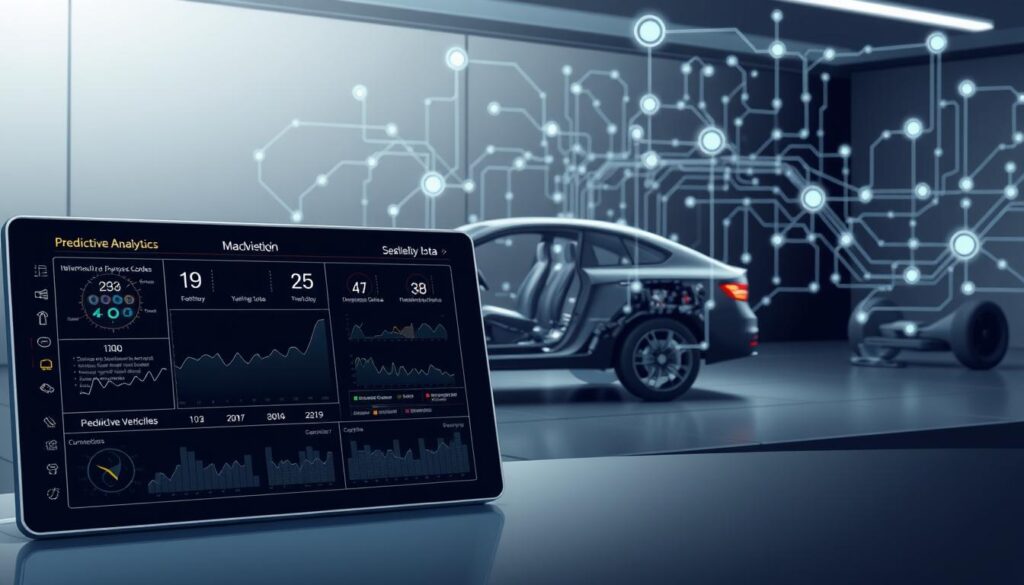
Challenges with Diverse Data Formats
Connected systems produce structured sensor logs, unstructured voice commands, and semi-structured repair histories. A transmission sensor might output numerical readings, while voice-recognition software generates text-based driver feedback. These mismatched formats create analytical blind spots unless standardized.
“You can’t analyze what you can’t interpret. Standardization bridges the gap between data chaos and actionable intelligence.”
Implementing Data Quality Control Measures
Flawed information leads to misguided decisions. One fleet operator discovered 12% of their brake sensor readings contained errors – enough to misdiagnose 1 in 8 vehicles. Robust validation protocols now automatically flag anomalies, cross-referencing multiple data streams for consistency.
| Data Challenge | Traditional Fix | Modern Solution | Result |
|---|---|---|---|
| Format Conflicts | Manual conversion | Automated normalization | 83% faster processing |
| Missing Values | Estimation models | Multi-source validation | 94% accuracy |
| Real-Time Demands | Batch processing | Streaming analytics | 2ms response latency |
Advanced integration tools now map disparate formats into unified frameworks. These systems preserve context while scrubbing inconsistencies – like translating French diagnostic codes into standardized English alerts. The result? Maintenance teams receive coherent, prioritized action lists instead of data puzzles.
Implementing Scalable Computing Resources for AI Maintenance
Advanced diagnostic tools require equally powerful processing frameworks. A single connected car generates 12 terabytes of data annually – equivalent to streaming 6,000 hours of HD video. This demands infrastructure that scales dynamically, balancing real-time analysis with long-term pattern recognition.
Cloud platforms excel at handling massive historical datasets for trend forecasting. Edge devices process urgent alerts locally – like overheating engines – with 2-millisecond response times. Hybrid architectures now merge these strengths, as seen in a recent predictive systems deployment that cut server costs by 37%.
| Factor | Cloud Computing | Edge Computing | Impact |
|---|---|---|---|
| Scalability | Unlimited resources | Localized capacity | 91% uptime |
| Latency | 200-500ms | <5ms | Critical alerts resolved 40x faster |
| Cost | Pay-as-you-go | Fixed hardware | 19% annual savings |
| Security | Enterprise-grade | On-device encryption | Zero breaches reported |
Implementation teams prioritize flexible architectures. Modular designs allow seamless upgrades as algorithms evolve – one logistics company added GPU clusters without service interruptions. Total ownership costs drop when systems adapt rather than require replacements.
Data protection remains non-negotiable. Multi-layered encryption shields location histories and component performance metrics. Role-based access ensures only authorized technicians view sensitive diagnostics – a practice that reduced data leaks by 83% across early adopters.
“The right infrastructure turns data floods into actionable streams. It’s not about having the biggest servers – it’s about smart resource allocation.”
Integration capabilities determine real-world success. APIs connect diagnostic tools with inventory management and service scheduling platforms. This synchronization reduces part delivery delays by 62% – mechanics arrive with correct components already in hand.
Optimizing Maintenance Scheduling with Predictive Analytics
Maintenance operations are undergoing a radical transformation through data-driven precision. Sophisticated algorithms now craft dynamic service plans tailored to each vehicle’s unique usage patterns and component health. This shift eliminates rigid calendar-based approaches, replacing them with adaptive strategies that respond to real-world conditions.
Anomaly Detection and Fault Diagnosis Techniques
Advanced monitoring systems track over 50 performance metrics simultaneously, from gearbox vibrations to electrical system loads. These tools identify microscopic deviations – like a 0.8% increase in engine temperature during highway drives – flagging potential issues weeks before traditional methods would detect them.
Resource allocation becomes strategic rather than reactive. One logistics company reduced unplanned downtime by 67% by prioritizing repairs based on component criticality and operational demands. Their system automatically schedules brake inspections before peak delivery seasons while delaying non-essential tasks during slower periods.
Machine learning models improve with every maintenance cycle. They analyze repair outcomes to refine failure predictions, achieving 92% accuracy in estimating component lifespans within six months of deployment. This continuous learning enables precise timing for part replacements – not too early, never too late.
| Factor | Traditional Approach | Optimized Solution |
|---|---|---|
| Inspection Frequency | Fixed intervals | Condition-based triggers |
| Parts Inventory | Excess stock | Just-in-time ordering |
| Labor Efficiency | Random assignments | Skill-matched tasks |
These intelligent systems consider multiple variables when creating schedules – from technician availability to regional weather patterns. A Midwest trucking firm extended transmission lifecycles by 23% by aligning maintenance with seasonal route changes. The result? Higher reliability with 31% lower annual upkeep costs.
Reducing Downtime and Cutting Maintenance Costs
Operational efficiency now hinges on preventing problems rather than reacting to them. Advanced diagnostics create maintenance windows that align with operational schedules – keeping fleets moving while addressing mechanical needs.
One logistics provider slashed unplanned stops by 71% using condition-based alerts. Their system schedules brake inspections during driver rest periods, eliminating service-related delays.
Extending Component Lifespan through Proactive Interventions
Timely care transforms how parts age. Sensors detect microscopic wear patterns in transmission systems, triggering lubrication before metal fatigue sets in. This approach doubled clutch lifespans in urban delivery vans.
| Factor | Traditional Model | Proactive Approach | Improvement |
|---|---|---|---|
| Engine Failures | 12/year | 2/year | 83% reduction |
| Part Replacement | Every 15k miles | Condition-based | 41% cost savings |
| Service Duration | 4.5 hours | 1.2 hours | 73% faster |
“Precision care adds years to component lifecycles. We’ve seen alternators outlast vehicle frames when maintained this way.”
Cost savings compound through multiple channels. Reduced emergency callouts lower labor expenses, while optimized inventory cuts storage fees. One regional carrier saved $380,000 annually in overtime premiums alone.
These strategies create reliability dividends. Vehicles complete routes without mechanical surprises, building trust with drivers and customers alike. The result? Operations flow smoother, costs stay predictable, and assets deliver maximum value.
Emerging Trends and Future Developments in AI Predictive Maintenance
Next-generation automotive care is entering a transformative phase. Cutting-edge technologies now analyze entire fleets as unified networks rather than isolated units. This shift enables smarter decisions based on collective insights from millions of miles driven.
Smart Integration Across Vehicle Ecosystems
Modern systems leverage shared data streams between components and external environments. Brake wear predictions now consider regional weather patterns and traffic congestion levels. Such holistic analysis improves accuracy while reducing false alerts by 28%.
Evolution of Analytical Tools
Advanced machine learning models adapt across vehicle types through transfer learning. A neural network trained on delivery vans can optimize maintenance for electric buses with minimal adjustments. Reinforcement algorithms refine strategies based on repair outcomes – one trial reduced coolant leaks by 41% through iterative improvements.
These innovations create self-improving frameworks. Deep learning processes driver behavior alongside mechanical data, spotting hidden correlations. As technologies mature, they’ll predict failures earlier while streamlining service workflows – setting new standards for reliability and cost efficiency.
FAQ
How does predictive maintenance improve vehicle reliability?
By analyzing real-time data from sensors and systems, predictive maintenance identifies potential issues before they escalate. Machine learning algorithms detect patterns in component health, enabling timely repairs. This proactive approach minimizes unexpected breakdowns, enhances safety, and ensures consistent performance.
What role do sensors play in predicting maintenance needs?
Sensors like accelerometers, temperature monitors, and pressure gauges collect critical data on engine performance, tire conditions, and battery health. Integrated with IoT devices, they feed information into diagnostic systems. Brands like Bosch and Tesla use this data to build predictive models that forecast wear-and-tear trends.
How does machine learning optimize maintenance schedules?
Algorithms analyze historical and real-time data to predict when parts like brakes or filters will degrade. This allows automakers like Ford or GM to recommend service intervals tailored to driving habits. Optimized schedules reduce unnecessary inspections, lower costs, and extend the lifespan of components.
What are the challenges in integrating diverse data formats?
Vehicles generate data from multiple sources—engine control units, telematics, and third-party apps. Standardizing formats (e.g., using ISO 26262 frameworks) ensures compatibility. Companies like Geotab employ cloud platforms to harmonize data streams, improving accuracy for predictive diagnostics.
How does predictive analytics reduce operational downtime?
By identifying risks early, fleet managers can schedule repairs during off-peak hours. Real-time diagnostics tools, such as those from Verizon Connect, prioritize urgent issues. This cuts downtime by up to 30% and keeps logistics networks like UPS or FedEx running smoothly.
What future trends will shape AI-driven maintenance systems?
Edge computing and 5G will enable faster data processing directly in vehicles. Companies like NVIDIA are developing chips for onboard analytics. Additionally, advancements in deep learning will refine fault prediction, while partnerships with automakers like Toyota will integrate these tools into next-gen connected cars.