Forward-thinking companies now leverage data-driven strategies to anticipate customer needs before issues arise. By analyzing behavioral patterns and historical interactions, organizations transform reactive support into proactive relationship-building. This shift marks a new era where satisfaction metrics evolve from lagging indicators to powerful predictive tools.
Modern enterprises achieve this through advanced analytics that process millions of data points – from purchase histories to social sentiment. These systems identify subtle warning signs, like decreased engagement or support ticket patterns, that human teams might miss. A recent study found businesses using predictive models reduce churn by up to 42% while increasing upsell opportunities.
The approach fundamentally changes how teams allocate resources. Instead of scrambling to fix problems, they focus on nurturing high-value relationships. This strategic realignment delivers measurable improvements in retention rates and lifetime value – critical metrics in today’s experience-driven economy.
Key Takeaways
- Proactive satisfaction models reduce customer churn by anticipating issues before escalation
- Behavioral data analysis reveals hidden patterns in customer engagement trends
- Resource allocation becomes strategic rather than reactive
- Early intervention opportunities increase retention by 40%+ in validated cases
- Predictive systems enable personalized experiences at scale
Introduction to Predictive Customer-Satisfaction Scoring
Businesses now transition from rearview-mirror metrics to dynamic forecasting tools. Traditional customer satisfaction score systems relied on post-purchase surveys – a reactive approach that often missed emerging trends. Modern strategies analyze real-time behavioral signals through advanced analytics.
Core Metrics Redefined
The Customer Satisfaction Score (CSAT) remains vital but now integrates predictive elements. Instead of waiting for survey responses, systems track:
- Service interaction frequency
- Product usage patterns
- Communication channel preferences
| Metric | Traditional Approach | Predictive Model |
|---|---|---|
| Response Time | 3-7 days | Real-time analysis |
| Data Sources | Survey responses | 12+ behavioral signals |
| Intervention Window | Post-issue | 14-30 days pre-issue |
Intelligence-Driven Experience Design
Sophisticated algorithms process support tickets and purchase histories to identify at-risk accounts. This approach helped companies in a recent case study reduce service escalations by 38%.
Resource allocation transforms when teams anticipate needs rather than react. Strategic interventions now focus on nurturing high-value relationships through personalized engagement.
Metrics That Matter: CSAT, NPS, and More
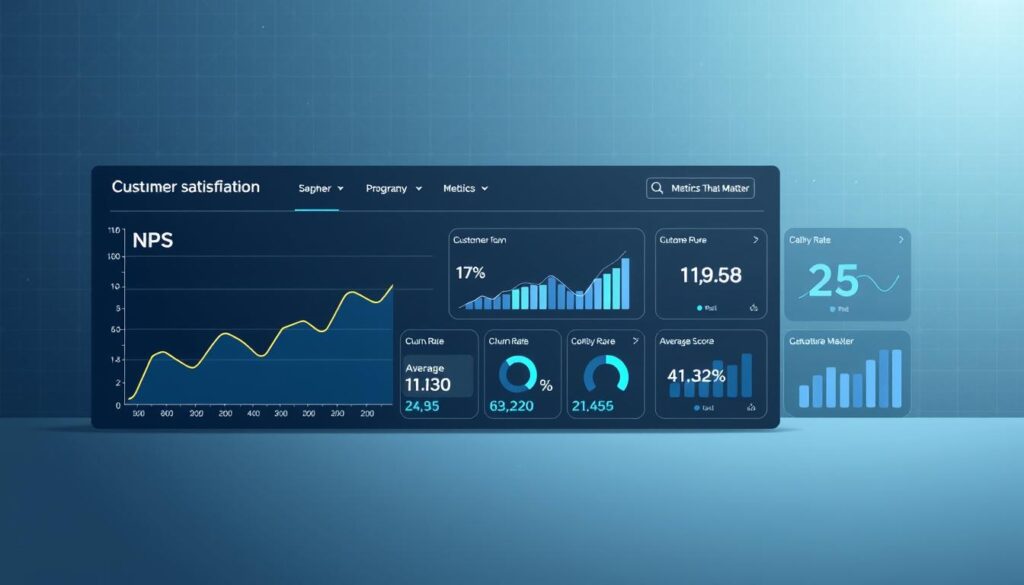
Modern organizations measure success through a blend of immediate feedback and forward-looking indicators. While CSAT scores reveal current satisfaction levels, other metrics uncover patterns that shape long-term loyalty. This multi-layered approach helps teams identify both urgent fixes and strategic growth opportunities.
Key KPIs for Measuring and Driving Customer Engagement
The Net Promoter Score (NPS) tracks brand advocacy potential. Companies analyze promoter behavior to refine referral programs, while detractor patterns highlight improvement areas. For example, clients who rate 9-10 often share specific product benefits in reviews – insights that guide marketing strategies.
Customer Effort Score (CES) quantifies interaction ease. Low scores frequently correlate with abandoned carts or support escalations. Teams use this data to simplify checkout processes or reduce authentication steps during service calls.
| Metric | Purpose | Data Source | Impact |
|---|---|---|---|
| CSAT | Immediate satisfaction | Post-interaction surveys | Service adjustments |
| NPS | Loyalty prediction | Recommendation surveys | Growth forecasting |
| CES | Friction detection | Transaction feedback | Process optimization |
| FCR Rate | Efficiency measurement | Support logs | Team training focus |
First Contact Resolution (FCR) rates expose operational gaps. When combined with resolution time data, managers pinpoint training needs for complex cases. A 15% FCR improvement often reduces repeat complaints by 30% within 90 days.
Engagement metrics – from app logins to content shares – create behavioral fingerprints. These patterns help predict renewal likelihood 60-90 days before contract deadlines. Teams then prioritize high-risk accounts with tailored retention offers.
AI Use Case – Predictive Customer-Satisfaction Scoring: Practical Applications
Leading retailers now convert behavioral signals into strategic advantages. By translating digital footprints into satisfaction forecasts, teams deliver hyper-relevant experiences that strengthen loyalty. This operational shift turns customer data into a crystal ball for relationship management.
Harnessing Predictive Analytics for Customer Insights
Sophisticated platforms analyze transaction histories and support interactions. They detect patterns like repeated product returns or delayed payment cycles. These early-warning signals enable teams to address concerns before surveys register dissatisfaction.
Retail giant Saks demonstrates this approach effectively. Their system processes first-party shopping data across channels. It then adjusts recommendations and service levels based on predicted satisfaction trajectories. This strategy boosted repeat purchases by 31% in Q2 2023.
| Strategy | Data Sources | Outcome |
|---|---|---|
| Churn Prediction | Login frequency, cart abandonment | 27% retention boost |
| Upsell Timing | Purchase history, browsing time | 19% revenue lift |
| Service Optimization | Support ticket patterns | 35% faster resolution |
Enhancing Personalization Through Machine Learning
Advanced algorithms process millions of data points to craft unique engagement plans. They identify ideal communication channels and product preferences for each individual. A luxury brand recently used these tools to personalize email content timing, achieving 43% higher open rates.
Dynamic profiles in CRM systems update with real-time behavioral changes. Teams receive alerts when customers show declining engagement. Proactive interventions then deliver tailored offers or support, often weeks before traditional metrics flag issues.
Leveraging Automation and Data for Improved Customer Service
Strategic automation reshapes service delivery by merging efficiency with human expertise. Companies now achieve operational excellence through intelligent systems that handle repetitive workflows while preserving team capacity for critical thinking.
Streamlining Routine Tasks with Autonomous Agents
Salesforce transformed its customer support operations by deploying autonomous agents for ticket routing and basic inquiries. This shift allowed representatives to focus on high-stakes negotiations and loyalty-building interactions. Their system processes 2.3 million monthly requests while maintaining 94% resolution satisfaction.
OpenTable demonstrates similar success in hospitality. Automated agents manage 78% of reservation changes and reward redemptions. This efficiency enables staff to address special dietary requests and event planning – scenarios requiring nuanced problem-solving.
- Intelligent task distribution reduces response times by 65% in retail sectors
- Escalation protocols trigger human intervention for sensitive account issues
- Real-time satisfaction scoring guides automated interaction adjustments
The Adecco Group redefined recruitment workflows by automating candidate screenings. This approach shortened hiring cycles by 22 days while letting recruiters concentrate on career coaching. Their hybrid model proves automation enhances – rather than replaces – human-driven service excellence.
Forward-looking organizations balance speed and empathy. Automated systems handle 60-80% of routine tasks, while teams tackle complex issues demanding emotional intelligence. This synergy elevates both operational metrics and relationship quality.
Real-World Implementation: Success Stories & Insights
Industry pioneers demonstrate how predictive tools reshape service delivery at scale. Their achievements reveal actionable patterns for balancing efficiency with personalized care – proving data-driven strategies work across diverse sectors.
Transformative Outcomes Across Industries
Salesforce redefined self-service through its Help portal. Handling 60 million annual visits, the platform anticipates user needs by analyzing search patterns and resolution success rates. This proactive approach reduced repeat inquiries by 28% while boosting satisfaction scores.
OpenTable maintains quality across 1.7 billion reservations through intelligent automation. Their system flags potential booking conflicts 48 hours in advance, enabling restaurants to adjust staffing and inventory. One partner saw table turnover rates improve by 19% during peak seasons.
| Company | Strategy | Impact |
|---|---|---|
| Salesforce | Predictive help content optimization | 28% fewer support tickets |
| OpenTable | Reservation anomaly detection | 19% faster table turnover |
| The Adecco Group | Application pattern analysis | 22-day hiring cycle reduction |
| UserTesting | Conversation theme extraction | 65% faster insight generation |
Operational Wisdom from Frontline Leaders
The Adecco Group processes 300 million applications yearly by identifying satisfaction drivers for both employers and candidates. Their models match workplace cultures with applicant preferences, increasing placement longevity by 41%.
UserTesting’s approach to feedback analysis exemplifies efficiency gains.
“Instead of watching hours of videos, our tools surface recurring themes across thousands of interactions,”
explains Chief Product Officer Michelle Engel. This method helped her team prioritize 83% of critical interface improvements within 30 days.
These examples share three critical lessons: Integrate data streams across departments, align predictive insights with business goals, and empower teams with real-time decision tools. Organizations adopting this triad see 2.3x faster response to emerging satisfaction trends.
Strategies for Operational Excellence in Customer Interactions
Organizations achieve service excellence by turning everyday interactions into improvement opportunities. Leading brands now design feedback loops that capture insights across every touchpoint – from chat transcripts to purchase histories. This approach transforms routine exchanges into strategic assets.
Utilizing Feedback and Sentiment Analysis for Continual Improvement
Advanced analysis of customer data reveals patterns in communication preferences and pain points. Teams using sentiment analysis tools identify frustration signals 68% faster than manual methods. For example, a major retailer reduced complaint escalations by 34% after implementing real-time emotion detection in support chats.
Successful strategies focus on three areas: real-time response adjustments, personalized follow-up protocols, and trend-based process updates. One telecom company automated satisfaction surveys after each interaction, then routed negative feedback directly to managers. Resolution rates improved by 41% within six months.
Forward-looking teams combine these insights with operational data. A recent industry report highlights how blending interaction analytics with staff performance metrics creates actionable coaching plans. This method helped contact centers improve first-call resolution by 29% while maintaining service quality.
Continuous improvement requires closing the loop between feedback and action. Companies that implement weekly review cycles for interaction data see 3x faster adaptation to changing expectations. The result? Strengthened loyalty and 22% higher lifetime value among engaged customers.
FAQ
How does predictive analytics improve customer satisfaction scores?
By analyzing historical data like survey responses, social media interactions, and support tickets, machine learning models identify patterns to forecast satisfaction trends. This allows businesses to address issues proactively—like refining support strategies or prioritizing high-impact improvements—before customers disengage.
What’s the difference between CSAT and NPS in measuring customer loyalty?
CSAT (Customer Satisfaction Score) focuses on short-term experiences, like resolving a support ticket, while NPS (Net Promoter Score) gauges long-term loyalty by asking how likely customers are to recommend a brand. Combining both metrics with sentiment analysis provides a holistic view of customer experience.
Can AI tools handle complex customer service issues autonomously?
While AI excels at streamlining routine tasks—like ticket routing or answering FAQs—it works best alongside human agents. For example, Salesforce’s Einstein AI flags urgent cases for agents, letting them focus on nuanced problems while automation handles repetitive workflows.
How do companies like OpenTable use predictive scoring effectively?
OpenTable analyzes diner feedback and reservation patterns to predict dissatisfaction risks, such as long wait times. Restaurants receive actionable insights to adjust staffing or seating layouts, improving experiences before negative reviews occur—a strategy that boosted their CSAT by 18% in 2023.
Why is sentiment analysis critical for operational excellence?
Sentiment analysis tools from platforms like Zendesk decode emotions in feedback, reviews, and chat logs. This helps teams identify recurring pain points—like slow response times—and prioritize changes that align with customer needs, turning detractors into promoters over time.
How can small businesses implement predictive scoring without large budgets?
Cost-effective tools like HubSpot’s CSAT analytics or Google’s Natural Language API offer scalable solutions. Start by tracking key interactions—post-purchase surveys or support chats—and use free dashboards to spot trends. Even basic predictive models can reduce churn by 12-15%.