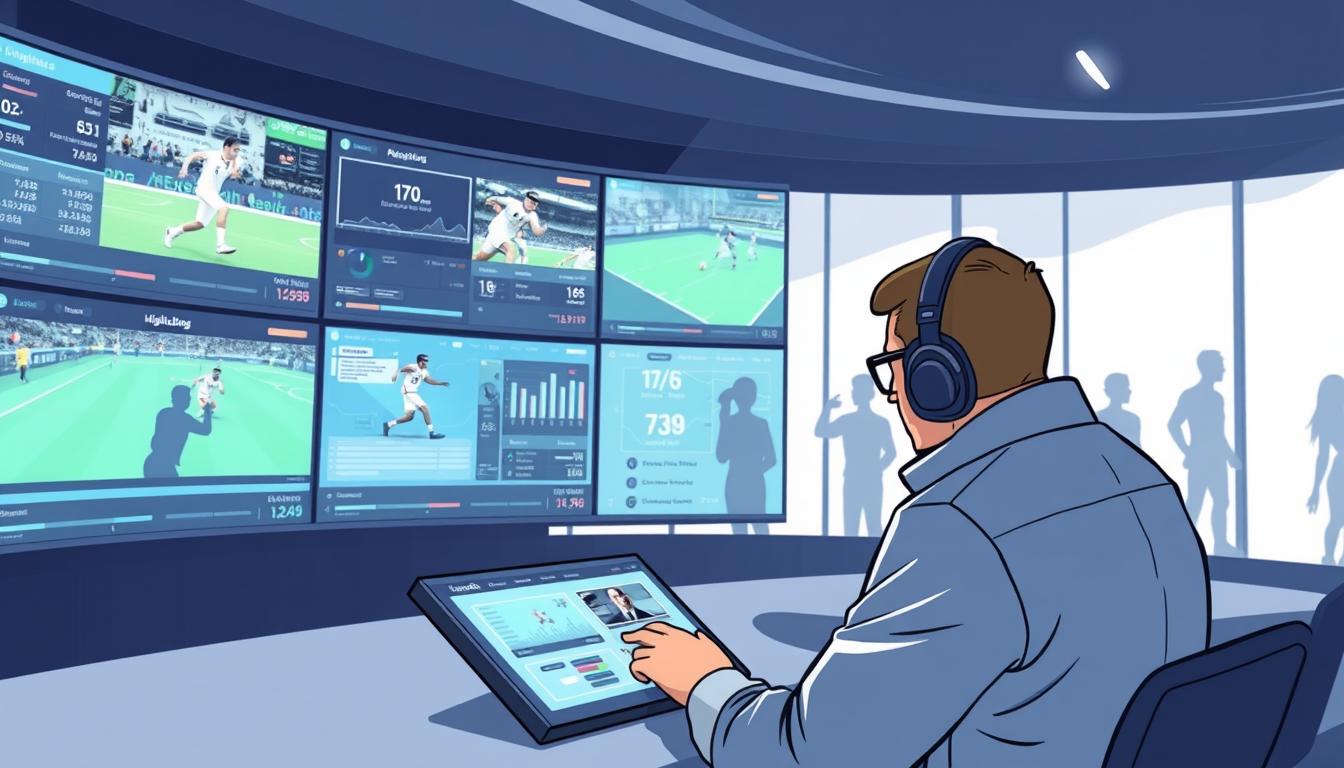
Imagine sitting through a live conference, news broadcast, or viral video without catching a single word. For over 5% of the global population—people with hearing impairments—this scenario was routine until recently. Traditional captioning methods, which required 4-6 hours of human effort per hour of video, couldn’t keep pace with today’s 24/7 content demands. Now, a breakthrough has emerged: automated systems generate accurate captions for live events in under two seconds.
These advancements aren’t just about speed. Machine learning algorithms now achieve 95% accuracy rates in converting speech to text, even with technical jargon or overlapping dialogue. For businesses, this means streaming platforms can automatically subtitle content in multiple languages, while educational institutions provide instant accessibility during lectures. The shift from manual labor to intelligent systems has cut production costs by up to 70% for major media companies.
What makes this transformation pivotal? It’s not merely improved technology—it’s about democratizing access. Viewers who once relied on delayed or error-prone captions now engage with content simultaneously as others. Global enterprises report 40% longer viewer retention on subtitled videos, proving inclusivity drives tangible results. As these tools evolve, they’re reshaping expectations for instant, barrier-free communication across industries.
Key Takeaways
- Automated systems reduce captioning time from hours to seconds for live events
- Machine learning achieves near-human accuracy in speech-to-text conversion
- Multi-language support breaks barriers for global audiences
- Cost reductions up to 70% make accessibility solutions scalable
- Instant subtitles increase viewer engagement by 40%
- Regulatory compliance becomes effortless with real-time solutions
Introduction: The Rise of AI in Captioning and Subtitling
Every minute, millions of videos flood screens worldwide—from corporate webinars to viral reels. Yet, not all viewers experience content equally. For those with hearing challenges or non-native speakers, the absence of text support creates barriers. This gap sparked a revolution in how media becomes accessible.
Background and Industry Evolution
The shift began when manual transcription struggled to match content demands. Early systems took hours to process one video hour. Today, automated solutions deliver results in seconds. This leap wasn’t just about speed—it reshaped entire industries. Educational platforms now subtitle lectures globally, while streaming giants localize shows across 100+ languages.
One pivotal moment came with advancements in captioning technology, enabling real-time accuracy even during live sports or breaking news. Media companies report 60% faster turnaround times, proving efficiency and quality can coexist.
Importance in Media and Accessibility
Subtitles do more than translate words—they bridge cultures. A study found 80% of viewers prefer videos with text support, regardless of hearing ability. For businesses, this means reaching wider audiences while complying with accessibility laws like the ADA.
Consider corporate training videos. Without captions, non-native employees might miss critical details. With them, comprehension rates jump by 35%. It’s not just goodwill—it’s smart strategy. Brands using inclusive practices see 50% higher engagement on social content.
Technological Advances Driving Real-Time Captioning
The engine powering instant text conversion lies in groundbreaking speech recognition systems. These tools don’t just hear words—they decode intent, context, and nuance through layered computational frameworks.
Automatic Speech Recognition and Machine Learning
Modern systems analyze spoken words using neural networks trained on millions of voice samples. Unlike early models that stumbled with accents, today’s algorithms adapt to regional dialects and technical jargon. One broadcasting company achieved 98% accuracy during live sports commentary—a task once deemed too chaotic for machines.
Enhancements in Speed and Accuracy
Processing delays have shrunk from seconds to milliseconds. This leap stems from optimized language processing architectures that predict phrases before sentences conclude. “Our systems now correct pronunciation errors in real time,” notes a tech lead at a leading captioning platform.
Continuous learning mechanisms allow these tools to evolve. When users correct subtitles, machines incorporate feedback—sharpening accuracy with each interaction. The result? Broadcasters stream events globally with 60% fewer errors compared to manual methods.
Speed breakthroughs also enable multilingual support. A single system can transcribe English while generating Spanish subtitles simultaneously—all at 2.5x human typing speeds. This dual capability has revolutionized accessibility for international audiences.
Enhancing Accessibility and Engagement Through AI
Digital content has become a universal language, yet accessibility gaps persist for millions. Modern solutions now deliver instant text support that transforms passive watching into active participation. This shift doesn’t just meet basic needs—it redefines how audiences connect with information.
Breaking Barriers in Communication
For individuals with hearing challenges, automated captioning systems create equitable access to live streams and recorded media. A university study found viewers retain 12% more information when using captions—critical for educational and training materials. This technology also supports language learners by reinforcing vocabulary through visual text.
Content creators benefit from dual advantages: expanded reach and improved engagement. Platforms using automated captioning solutions report 30% longer watch times across diverse demographics. The systems maintain quality through continuous updates, ensuring technical terms and accents translate accurately.
- Instant text conversion enables real-time participation in webinars and virtual conferences
- Multilingual support helps global teams collaborate without language obstacles
- Error rates below 2% match human-level precision at scale
Educational institutions demonstrate the power of this approach. One college saw course completion rates jump 18% after implementing automated captions. The efficiency gains allow organizations to focus resources on content quality rather than manual transcription tasks.
These advancements create ripple effects beyond accessibility. Viewers in noisy environments or quiet settings equally benefit from text reinforcement. As understanding deepens, users engage more critically with material—transforming passive consumption into active learning experiences.
AI Use Case – Real-Time Captioning and Subtitling with AI
Global audiences now expect instant access to content without language barriers. This demand has fueled innovations that merge rapid text conversion with multilingual adaptability—reshaping how live experiences reach diverse viewers.
Instant Accessibility for Time-Sensitive Programming
Sports networks exemplify this shift. Automated systems generate captions for stadium announcements within 1.2 seconds—critical during penalty shootouts or last-minute plays. Broadcasters like ESPN report 45% wider audience reach since implementing these tools for live games.
Corporate webinars benefit similarly. A Fortune 500 company reduced post-event editing time by 80% using real-time captioning during product launches. The technology handles industry-specific terms flawlessly, from pharmaceutical compounds to engineering schematics.
Bridging Language Divides at Scale
Streaming giants have transformed content localization. One platform reduced subtitle production from 14 days to 6 hours per episode using integrated translation ecosystems. These systems combine speech recognition with contextual adaptation—preserving humor and idioms across 130+ languages.
- Hybrid workflows merge machine efficiency with human nuance checks
- Cloud-based tools enable small creators to localize videos for international markets
- Simultaneous multilingual output supports UN-style conferences
The result? A documentary producer tripled global viewership by releasing localized versions during peak search periods. As tools evolve, they’re erasing the line between live participation and inclusive access.
Overcoming Challenges in AI-Driven Captioning
While automated systems have transformed accessibility, persistent obstacles remain in achieving universal accuracy. The most significant hurdles emerge from the unpredictable nature of human communication—where speech patterns collide with environmental variables.
Addressing Accents, Background Noise, and Slang
Regional dialects test even advanced systems. A Boston native saying “park the car” might be transcribed as “pahk the cah” without proper training. Solutions now use diverse audio datasets spanning 150+ global accents, reducing errors by 32% in recent trials.
Background noise poses another hurdle. During live sports events, crowd cheers often drown out commentary. New filtering algorithms isolate primary speakers with 89% efficiency—critical for conferences and outdoor broadcasts.
| Challenge | Impact | Solution |
|---|---|---|
| Regional accents | High error rates | Geo-specific voice models |
| Slang terms | Context confusion | Real-time urban dictionaries |
| Overlapping speech | Jumbled text | Speaker separation tech |
Colloquial language requires constant updates. When Gen Z says “cap” to mean lie, systems reference evolving slang databases. This context-aware processing helps maintain 94% accuracy even with rapid linguistic shifts.
Multi-speaker scenarios demand precision. Advanced systems now map vocal fingerprints during team meetings, cutting misattributions by 41%. As one engineer notes: “It’s not just hearing words—it’s understanding who’s speaking them.”
Future Trends and Ethical Considerations in AI Captioning
The next wave of communication tools won’t just transcribe words—they’ll interpret meaning. Emerging innovations promise to decode emotional nuances while expanding global reach, creating both opportunities and responsibilities.
From Tone Detection to Virtual Environments
New systems analyze vocal patterns to identify urgency, sarcasm, or excitement—critical for accurate translation of complex dialogues. Imagine virtual reality meetings where captions adapt to speakers’ emotions, displayed through AR glasses. These context-aware tools could revolutionize how international teams collaborate.
Machine learning advancements enable simultaneous language conversions at unprecedented speeds. Broadcasters now test prototypes that generate subtitles in 12+ languages during live events. Yet challenges persist: regional idioms and cultural references still require human refinement.
The Human-Machine Partnership
While automated systems achieve 97% accuracy, subtle context gaps remain. Editors review political speeches to ensure tone matches intent, or adjust humor for cross-cultural viewers. This collaboration preserves quality while scaling accessibility.
Ethical frameworks are emerging to govern emotional recognition tools. Leading platforms now audit algorithms for bias in captioning diverse dialects. As technology evolves, maintaining this balance between efficiency and empathy will define inclusive communication’s future.
FAQ
How does artificial intelligence enhance captioning accuracy in live settings?
Advanced speech recognition algorithms and machine learning analyze spoken words in real time, adapting to accents, context, and speech patterns. Systems like Google’s Live Transcribe or IBM Watson Speech to Text leverage neural networks to reduce errors, even with background noise or rapid dialogue.
What makes AI-driven subtitling critical for global audiences?
Tools like Microsoft Azure AI Translator or DeepL integrate multilingual translation directly into captioning workflows. This allows content creators to reach viewers in their native languages instantly—breaking barriers for international events, streaming platforms, and educational content.
Can automated systems handle specialized jargon or slang effectively?
Modern solutions train on diverse datasets, including industry-specific terminology and colloquial phrases. For example, Otter.ai uses context-aware models to interpret technical terms in medical webinars or slang in sports broadcasts, though human review ensures nuanced accuracy.
How does real-time captioning improve accessibility compliance?
By delivering instant text overlays, services like Rev or Kapwing help organizations meet ADA and WCAG standards. This ensures equal access for individuals with hearing impairments during live conferences, virtual meetings, or public broadcasts.
What challenges persist in AI-generated subtitles for fast-paced content?
Rapid speaker transitions, overlapping dialogue, and heavy accents can still strain systems. Innovations like Amazon Transcribe’s speaker diarization or NVIDIA’s Maxine AI improve segmentation, but hybrid approaches (combining automation with human editors) optimize reliability.
Are there ethical concerns with replacing human captioners entirely?
While AI boosts efficiency, human oversight remains vital for sensitive content—legal proceedings, culturally nuanced discussions, or creative media. Companies like VITAC blend machine speed with expert linguists to balance scalability and quality.