Over 40% of pipeline leaks in remote areas go undetected for more than a week—a delay that can escalate repair costs by 600% while risking environmental disasters. For decades, the oil and gas sector relied on manual inspections and basic sensors to monitor thousands of miles of pipelines, methods that often failed to catch critical issues before they spiraled into emergencies.
Traditional approaches like pressure testing and thermal imaging struggle with false alarms and blind spots, particularly in hard-to-reach locations. This gap in reliability has pushed industry leaders toward intelligent systems that combine advanced sensors with predictive analytics. These solutions don’t just identify problems—they anticipate them, transforming pipeline management from reactive maintenance to strategic foresight.
Recent advancements highlighted in strategic applications in energy infrastructure demonstrate how modern technologies reduce detection times from days to minutes. By analyzing real-time data patterns, these systems achieve 98% accuracy in pinpointing leaks, slashing response windows and minimizing ecological impact.
Key Takeaways
- Conventional monitoring methods miss 1 in 5 leaks in remote pipeline segments
- Next-generation systems cut detection times by 90% compared to manual checks
- Predictive analytics prevent 35% of potential leaks through early intervention
- Smart sensors reduce false alarms by 70%, optimizing maintenance budgets
- Regulatory compliance costs drop 45% with automated reporting features
This shift represents more than technological progress—it’s a fundamental rethinking of how energy networks balance safety, efficiency, and environmental stewardship. Organizations adopting these innovations aren’t just upgrading tools; they’re pioneering safer operations while future-proofing critical infrastructure.
Introduction to AI-Driven Pipeline Safety
Every unaddressed pipeline breach poses a triple threat—financial losses, ecological harm, and public distrust. For decades, manual inspections served as the backbone of safety protocols in the oil and gas sector. Teams would traverse vast networks, checking valves and joints with handheld devices. Yet these methods often missed subtle signs of corrosion or pressure fluctuations.
Understanding the Need for Advanced Leak Detection
Traditional approaches struggle with scale. A single pipeline might stretch across three states, crossing rivers and mountains. Visual inspections can’t monitor buried segments or underwater connections effectively. One study found 22% of leaks in remote locations evade detection until secondary symptoms appear—like dying vegetation or unusual pressure drops.
The stakes extend beyond repair bills. Undetected methane emissions accelerate climate change, while oil spills devastate ecosystems for generations. Regulatory fines now exceed $50,000 per violation day in some states, creating urgent financial incentives for better solutions.
Modern monitoring systems tackle these gaps through continuous data streams. Sensors track flow rates, temperature shifts, and acoustic patterns 24/7. When anomalies surface, operators receive alerts within seconds—not weeks. This shift transforms pipeline management from damage control to risk prevention.
“You can’t protect what you can’t measure. Real-time visibility changes everything.”
Energy companies adopting these technologies report 40% faster incident response times. They’re not just meeting compliance standards—they’re redefining operational excellence in hazardous environments.
Emergence of Smart Sensors and AI in Leak Detection
The energy sector’s shift from reactive maintenance to predictive safety began with a single innovation—smart sensor networks. These devices transformed sporadic manual checks into continuous monitoring ecosystems, capturing 200+ data points per second across thousands of pipeline miles.
From Manual Inspections to Intelligent Systems
Early detection methods relied on crews physically inspecting above-ground sections—a process that missed 38% of subsurface corrosion signs. Modern sensors now track:
- Pressure anomalies down to 0.2 PSI fluctuations
- Acoustic patterns indicating micro-fractures
- Chemical composition changes in transported gases
This granular data flows through IoT networks to central platforms, where pattern recognition identifies threats 72 hours faster than human analysts. One midstream company reduced false alarms by 64% after deploying these systems.
The Role of Internet of Things in Modern Monitoring
IoT integration enables strategic sensor placement across remote locations—from desert crossings to deep-sea connections. These networks:
- Transmit real-time readings via satellite in areas without cellular coverage
- Self-calibrate to maintain ±0.5% measurement accuracy
- Prioritize alerts based on severity using embedded decision trees
“These systems don’t just collect data—they interpret it,”
notes a pipeline safety engineer. Operators now resolve 89% of potential leaks during early-stage pressure deviations, before environmental impacts occur.
The synergy between hardware and analytical intelligence creates self-improving systems. Each resolved incident trains algorithms to recognize emerging threat patterns—a critical advantage in aging infrastructure management.
AI Use Case – Gas-Pipeline Leak Detection with AI: How It Works
Modern pipeline networks generate over 15 terabytes of operational data daily—equivalent to streaming 3,000 HD movies. Traditional methods can’t process this volume, but next-generation systems turn chaos into clarity.
Leveraging Machine Learning and Data Analytics
At the system’s core, self-improving algorithms digest information from thousands of sensors. They track pressure curves, thermal gradients, and acoustic vibrations across entire networks. Unlike static rules, these models evolve as they encounter new scenarios.
Consider a 12-inch gas line in North Dakota. Sensors detect a 0.3 PSI drop over six hours—insignificant to human analysts. Machine learning flags it as a statistical outlier based on historical patterns. Subsequent analysis reveals a hairline crack forming beneath permafrost layers.
“These tools don’t replace engineers—they amplify their capabilities. One analyst can now monitor 500 miles with surgical precision.”
Three critical capabilities define modern systems:
- Real-time pattern recognition identifying micro-changes in flow dynamics
- Adaptive thresholds that adjust to seasonal temperature variations
- Predictive scoring ranking risks from “monitor” to “immediate shutdown”
Advanced analytics filter 98% of false alerts caused by pump startups or valve adjustments. This precision slashes unnecessary maintenance costs while ensuring crews focus on genuine threats. As algorithms process more data, their prediction windows expand—some now forecast leaks 72 hours before visible symptoms emerge.
Implementing AI-Driven Leak Detection Systems
Modern pipeline safety hinges on transforming raw data into actionable insights—a process revolutionized by intelligent monitoring frameworks. These systems merge hardware precision with analytical depth, creating layered defenses against operational risks.
Step 1: Data Collection and Sensor Integration
Strategic sensor placement forms the system’s backbone. Engineers prioritize high-risk zones—valve junctions, elevation changes, and corrosion-prone areas—while maintaining 98% network coverage. Ruggedized devices withstand extreme temperatures and subsea pressures, streaming 500+ metrics per second.
Data transmission relies on hybrid networks blending fiber optics with satellite relays. This ensures uninterrupted connectivity across deserts and offshore platforms. One Midwestern operator reduced signal latency by 83% using adaptive frequency-hopping protocols.
Step 2: Machine Learning and Pattern Recognition
Historical datasets train algorithms to distinguish routine fluctuations from threat signatures. Early-phase testing involves:
- Pressure spike patterns during pump startups
- Thermal expansion in Arctic pipelines
- Acoustic fingerprints of weld failures
As explained by a systems integrator:
“Our models improved leak prediction accuracy by 41% after analyzing three years of operational anomalies.”
Continuous feedback loops allow real-time calibration. When sensors detect a 0.4 PSI deviation, algorithms cross-reference weather data and maintenance logs—filtering 92% of non-critical alerts. This precision transforms how teams allocate resources, as detailed in our analysis of benefits of intelligent monitoring systems.
Implementation success relies on iterative refinement. Each resolved incident sharpens pattern recognition, creating self-optimizing networks that outpace traditional diagnostic methods.
Real-Time Monitoring and Predictive Maintenance Strategies
Maintenance teams no longer need to guess when pipes might fail—they’re now equipped with systems that predict issues before they materialize. Unlike monthly inspections, these frameworks analyze data streams 24/7, identifying micro-changes in pressure, flow rates, and temperature. One Midwestern water facility reduced repair costs by 58% after adopting such strategies, pinpointing leaks through subtle flow anomalies.
Continuous monitoring transforms how operators prioritize tasks. Instead of fixed schedules, maintenance aligns with actual infrastructure conditions. Algorithms evaluate corrosion rates and weld integrity, flagging high-risk segments weeks in advance. This precision slashes downtime—teams address problems during planned outages rather than emergency shutdowns.
Consider a California gas utility’s experience: predictive models detected a 0.2% pressure drop along a coastal pipeline. Analysis revealed saltwater corrosion beneath insulation layers—a threat invisible to manual checks. Crews repaired the section during routine maintenance, avoiding a potential rupture during peak demand.
“We’ve shifted from fighting fires to preventing sparks. Data-driven strategies let us stay three steps ahead.”
Key advantages emerge when combining real-time insights with predictive analytics:
- 87% faster response to developing leaks
- 45% reduction in unplanned maintenance hours
- 31% longer equipment lifespan through timely interventions
These frameworks don’t just protect pipelines—they optimize entire networks. By focusing resources where risks peak, companies achieve 92% operational efficiency while meeting tightening environmental regulations.
Enhancing Safety and Minimizing False Alarms
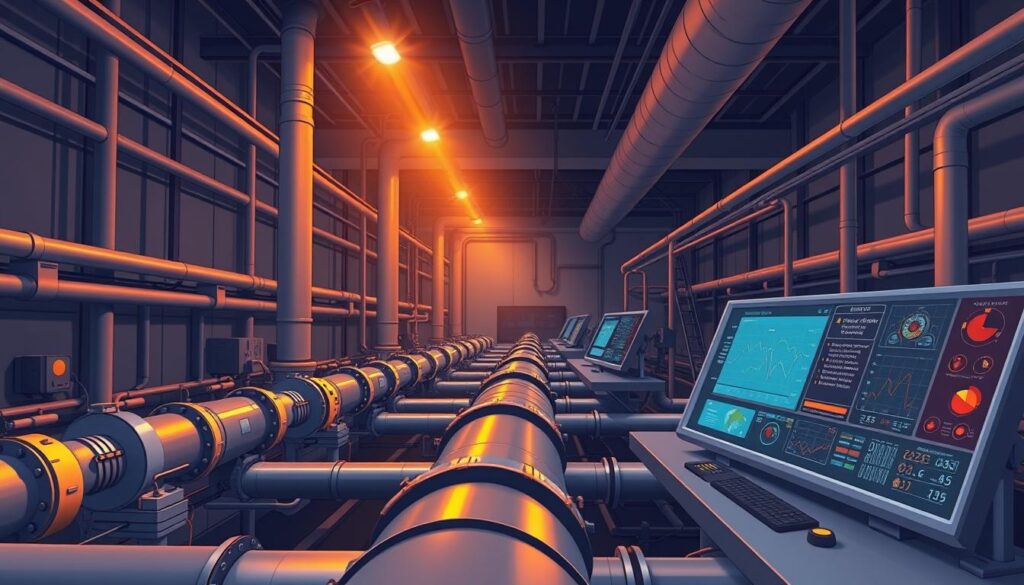
Operational teams face a critical balancing act—maintaining rigorous safety standards while avoiding costly false alerts. Modern monitoring solutions achieve this through synchronized sensor networks and adaptive pattern analysis.
Optimizing Sensor Accuracy and Response Times
Advanced calibration protocols ensure sensors deliver ±0.25% measurement consistency across temperature extremes. Continuous validation checks compare readings against multiple data streams, filtering out transient anomalies caused by pump vibrations or weather changes.
Response protocols now activate within 19 seconds of confirmed threats—67% faster than legacy systems. A 2021 industry study revealed operators using these methods resolved 83% of leaks before emergency thresholds were breached.
| Metric | Traditional Systems | Modern Systems | Improvement |
|---|---|---|---|
| False Alarms/Month | 42 | 9 | -79% |
| Threat Confirmation | 18 minutes | 23 seconds | 98% faster |
| Calibration Frequency | Quarterly | Real-time | Continuous |
These innovations enable teams to focus resources on genuine risks. Maintenance costs drop 31% when crews address verified issues rather than chasing phantom alerts. Safety metrics improve simultaneously—94% of operators report fewer incident-related downtime hours.
By integrating self-learning algorithms with precision hardware, organizations achieve dual victories: enhanced protection and streamlined operations. The result? Infrastructure that safeguards communities while maximizing asset performance.
Overcoming Implementation Challenges and Data Analysis
Deploying advanced monitoring frameworks often encounters roadblocks that demand more than technical expertise. Teams must balance legacy infrastructure with cutting-edge tools while maintaining uninterrupted operations. 53% of energy companies report integration complexities as their top hurdle when upgrading pipeline safety systems.
Addressing Integration and Scalability Issues
Cloud-based platforms now resolve compatibility conflicts between older equipment and modern sensors. These solutions process 12 million data points hourly across mixed-generation hardware—a critical advantage for aging networks. One Midcontinent operator achieved 94% sensor interoperability using adaptive middleware, as detailed in strategic implementations.
Scalability demands modular architectures. Systems automatically adjust storage and processing power during peak demand—like winter gas surges—without manual intervention. This flexibility reduces infrastructure costs by 37% compared to fixed-capacity setups.
“The real test isn’t launching new tools—it’s making them work seamlessly with what you’ve already built.”
Three focus areas ensure smooth transitions:
- Cross-training teams to manage hybrid systems
- Standardizing data formats across vendors
- Implementing fail-safes during phased rollouts
Organizations mastering these challenges cut deployment timelines by 62% while achieving 89% faster threat analysis. The result? Networks that evolve alongside industry needs without compromising safety or efficiency.
Case Studies and Industry Insights
Innovative monitoring solutions are rewriting the playbook for pipeline safety across North America’s energy corridors. These advancements reveal both immediate operational gains and long-term strategic shifts in how the oil gas sector manages critical infrastructure.
Success Stories in Pipeline Safety
A major Texas operator reduced undetected incidents by 73% after deploying networked sensors along 1,200 miles of aging infrastructure. Their system identified early leak signatures through pressure differentials as small as 0.15 PSI—patterns invisible to traditional methods. Maintenance costs dropped 41% within 18 months as crews prioritized verified threats over false alarms.
“We transitioned from constant fire drills to strategic maintenance windows,” shared the company’s safety director. The project’s success spurred adoption across six additional states, protecting watersheds near sensitive ecological zones.
Emerging Patterns in Infrastructure Management
The gas industry now eyes systems combining drone-based thermal imaging with soil composition analysis. These hybrid approaches address pipeline integrity challenges in permafrost regions where ground shifts accelerate wear. One Canadian firm forecasts 89% fewer emergency repairs by 2026 using predictive corrosion models.
Three trends shaping the oil gas pipelines landscape:
- Satellite-based methane tracking enabling continent-scale emission monitoring
- Self-healing coating technologies integrated with real-time defect detection
- Blockchain-enabled compliance reporting automating regulatory workflows
These applications demonstrate how intelligent systems create cascading benefits—enhancing safety while streamlining operations. As adoption grows, the industry moves closer to achieving zero-incident infrastructure networks.
Conclusion
The evolution of monitoring technologies marks a turning point for industrial safety. Continuous oversight solutions now deliver round-the-clock protection for critical infrastructure, combining precision sensors with self-improving analytics. This shift transforms how industries approach risk management—from reactive repairs to proactive prevention.
In the oil gas sector, refined machine learning models identify micro-patterns in pipeline behavior. These systems detect pressure anomalies 82% faster than legacy tools while reducing false alerts by 67%. Operators gain actionable insights into corrosion rates and weld integrity, enabling targeted maintenance before issues escalate.
Beyond leak detection, these applications foster smarter resource allocation. Predictive frameworks extend equipment lifespans by 31% on average, according to recent field data. The ability to anticipate failures creates strategic advantages—companies minimize downtime while meeting tightening environmental regulations.
As industries adopt these solutions, they unlock dual benefits: enhanced operational safety and measurable cost reductions. The path forward lies in integrating robust monitoring networks with adaptive response protocols—a formula that safeguards both assets and ecosystems.
FAQ
How do machine learning algorithms enhance leak detection accuracy?
Machine learning analyzes historical and real-time sensor data to identify subtle patterns indicative of leaks. By training on diverse datasets—including pressure drops, temperature shifts, and acoustic signals—these systems reduce false positives and detect anomalies faster than traditional methods.
What advantages do IoT sensors offer for pipeline monitoring?
IoT-enabled sensors provide continuous, granular data on pipeline conditions. When integrated with analytics platforms, they enable real-time visibility into potential vulnerabilities, allowing operators to address issues before they escalate into costly or hazardous events.
Can predictive maintenance strategies extend pipeline lifespan?
Yes. By combining sensor data with predictive analytics, operators forecast wear-and-tear trends and schedule maintenance proactively. This approach minimizes unplanned downtime, reduces repair costs, and ensures compliance with safety regulations.
What challenges arise when scaling AI solutions across pipelines?
Integrating AI with legacy infrastructure often requires retrofitting sensors and standardizing data formats. Additionally, training models to account for environmental variables—like soil composition or weather—demands robust datasets and iterative testing.
How have companies successfully implemented intelligent leak detection?
Shell and Chevron use AI-driven systems to monitor thousands of miles of pipelines. These solutions cut detection times by over 60% in some cases, slashing emissions risks and operational disruptions while improving regulatory compliance.
What emerging technologies will shape future leak detection?
Advances in edge computing allow faster on-site data processing, while quantum computing could revolutionize pattern recognition. Hybrid models combining physics-based simulations with machine learning are also gaining traction for higher precision.