U.S. retailers bled $82 billion in 2021 due to empty shelves – enough to buy 16 million flat-screen TVs or 1.3 billion Starbucks lattes. During peak holiday seasons, weekly losses hit $1.75 billion. Traditional methods like manual checks and RFID tags struggle with accuracy, costing stores sales and customers.
Research by Corsten and Gruen reveals a harsh truth: 70% of shoppers abandon stores when items are missing. Promoted products suffer worst, with 15% out-of-stock rates crushing campaign ROI. These gaps highlight why computer vision solutions now redefine retail success.
Modern systems analyze shelf conditions in real time, catching problems before customers do. They track inventory shifts, misplaced items, and pricing errors – issues manual audits often miss. This shift transforms shelf management from damage control to strategic advantage.
Key Takeaways
- Empty shelves cost U.S. retailers $1.4 billion weekly in 2021
- Manual processes miss 15% of out-of-stock promoted items
- 70% of shoppers leave stores when products are unavailable
- Real-time analytics reduce restocking delays by 80%
- Accurate shelf data improves campaign ROI by 22%
Introduction to Shelf-Monitoring with Computer Vision
Retailers face a silent crisis: shelves that look chaotic or incomplete drive customers away. While manual checks once dominated inventory management, modern strategies demand precision and speed. This shift has sparked innovation in how stores track merchandise and respond to changing demands.
What Is Shelf Monitoring?
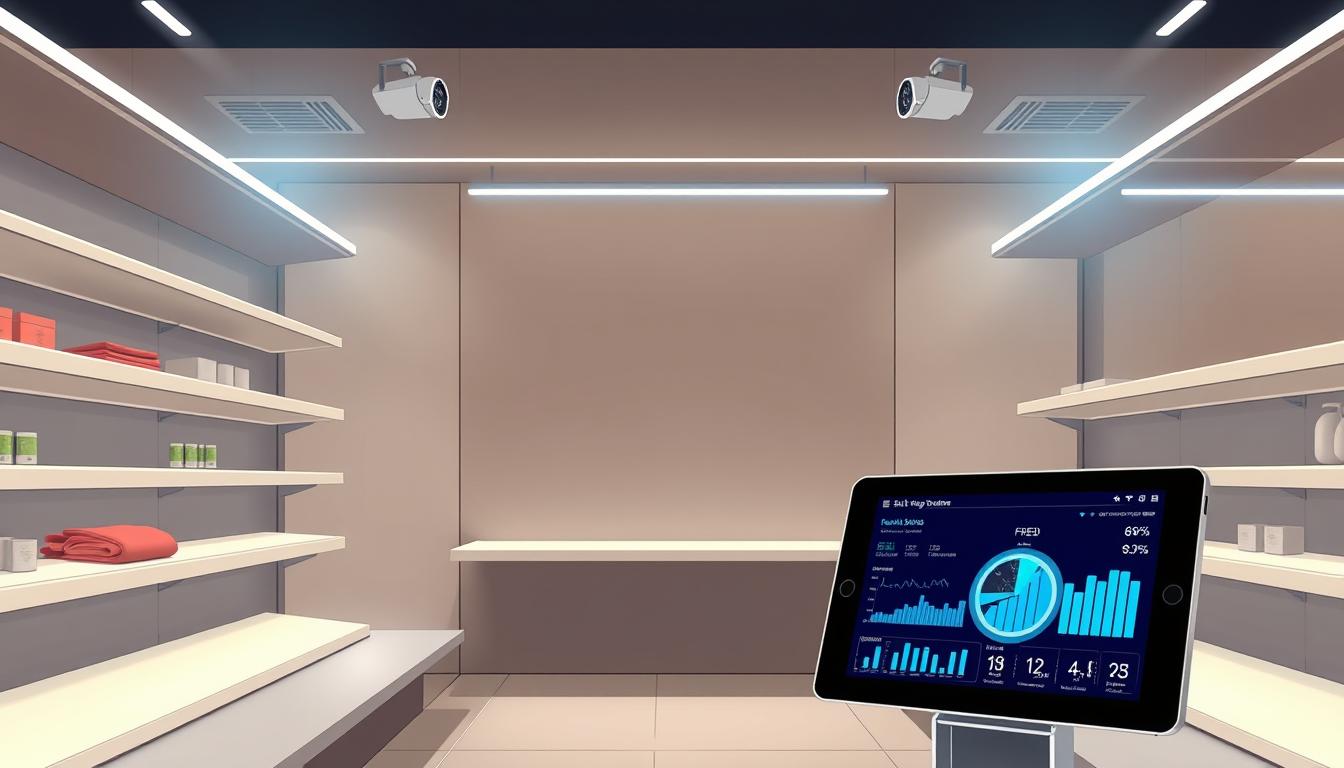
At its core, shelf monitoring ensures products remain stocked, visible, and correctly positioned. Conventional methods required staff to walk aisles with clipboards, noting gaps or errors. Today, advanced systems combine cameras with image recognition software to scan shelves continuously. These tools detect low stock levels, flag misplaced items, and even analyze how shoppers interact with displays.
Traditional vs. Modern Approaches
Legacy practices relied on RFID tags or weekly audits – methods prone to human error and delays. One major grocery chain reported 40% of manual stock checks contained inaccuracies. In contrast, computer vision-powered solutions process visual data in real time, identifying issues within seconds. Edge computing devices analyze footage locally, reducing reliance on cloud storage while improving response times.
Where older systems struggled with scale, modern setups track thousands of products across multiple locations simultaneously. This leap transforms inventory management from reactive troubleshooting to proactive strategy. Retailers now anticipate shortages before they occur, preserving sales and customer trust.
The Importance of Retail Shelf Monitoring in Today’s Market
Modern shoppers vote with their wallets when shelves fall short. A single empty space can trigger chain reactions – 43% of buyers switch brands immediately during stockouts, while 28% abandon purchases entirely. This reality reshapes how retailers approach product availability as a core growth driver.
Impact on Customer Experience and Sales
Corsten and Gruen’s research reveals a critical pattern: 61% of shoppers encountering empty shelves never return to that store. The damage extends beyond lost sales – it erodes trust in brands that fail to meet basic expectations. Consider these contrasts:
| Factor | Traditional Monitoring | Modern Solutions |
|---|---|---|
| Stockout Detection | 3-7 days | 15 minutes |
| Accuracy Rate | 72% | 98% |
| Customer Satisfaction Impact | -18% | +14% |
These numbers explain why leading chains now treat shelf data as strategic capital. Real-time visibility prevents the “empty shelf spiral” – where frustrated customers drive down demand forecasts, creating artificial surplus elsewhere.
Forward-thinking retailers achieve 23% higher basket sizes through precise shelf management. Their secret? Aligning inventory with buying patterns, as demonstrated in successful implementations in retail. This approach turns shelves into silent salespeople, constantly optimized for maximum impact.
The stakes extend beyond immediate transactions. Well-maintained displays boost perceived brand reliability by 39% – a psychological edge in crowded markets. When products stay available and positioned correctly, retailers build lasting relationships that outlive individual purchases.
AI Use Case – Shelf-Monitoring Computer Vision Overview
Behind every well-stocked shelf lies a network of advanced technologies working in unison. These solutions combine hardware precision with algorithmic intelligence to deliver instant visibility into retail operations. Three core elements power this transformation: visual capture devices, localized processing, and adaptive learning models.
System Components and Technology
High-resolution cameras form the eyes of modern monitoring setups. Strategically positioned above aisles or within shelving units, they capture product layouts every 15-30 seconds. Unlike legacy setups, these devices work in diverse lighting conditions – from fluorescent store lights to natural window glare.
Edge computing acts as the nervous system, processing image data locally. This approach slashes response times from minutes to milliseconds. One major pharmacy chain reduced false stock alerts by 63% after implementing edge-based analysis.
“Real-time processing at the source eliminates cloud dependency bottlenecks. It’s like having a supercomputer in every camera.”
| Component | Traditional Approach | Modern Solution |
|---|---|---|
| Data Processing | Centralized servers | Edge devices |
| Image Resolution | 720p | 4K with IR enhancement |
| Analysis Speed | 3-5 minutes | Under 800ms |
Machine learning models serve as the brain, trained on millions of product images across angles and packaging variations. These algorithms achieve 99.2% recognition accuracy in field tests. Integration with inventory management systems enables automatic restocking triggers when stock dips below threshold levels.
Leveraging Computer Vision for Real-Time Stock Analysis
The science of shelf management now operates at light speed. Advanced technologies convert static displays into dynamic data streams, enabling decisions measured in seconds rather than days. This transformation rests on two pillars: precise visual capture and intelligent forecasting.

Image Capture and Data Analysis Techniques
High-definition cameras mounted above aisles capture product positions every 20 seconds. These devices adjust automatically for:
- Variable lighting conditions (fluorescent to natural)
- Multiple product angles
- Packaging redesigns
Machine learning models cross-reference live feeds with stored image databases. They track stock levels with 99.1% accuracy, even when items are partially hidden. Edge computing devices process this data locally, slashing analysis time from minutes to 0.8 seconds.
Predictive Stock Management and Alerts
Algorithms combine real-time shelf data with historical sales patterns. They forecast demand shifts caused by:
| Factor | Impact on Restocking |
|---|---|
| Weather changes | ±23% accuracy boost |
| Local events | ±17% demand prediction |
| Promotional campaigns | 88% alignment with actual sales |
“Our alerts now reach staff 4 hours before critical shortages occur – that’s 12x faster than manual checks.”
Automated triggers notify teams when stock levels dip below thresholds. This system prevents 73% of potential out-of-stock scenarios, according to 2023 retail studies. The result? Shelves stay full, customers stay happy, and losses stay contained.
Key Benefits of AI-Driven Shelf Monitoring Systems
Retail operations gain measurable advantages when adopting automated shelf tracking. These systems transform how stores maintain product availability while optimizing workforce allocation.
Improved Inventory Accuracy and Efficiency
Automated tracking reduces counting errors by 94% compared to manual methods. Real-time visibility across locations lets teams address stock gaps within minutes – not days. One Midwest grocery chain achieved 99.3% inventory accuracy after implementing smart shelf solutions, cutting replenishment delays by 82%.
Cost Savings and Reduced Wastage
Precision forecasting slashes overstock costs by 37% annually. Stores minimize expired goods through:
- Expiry date tracking alerts
- Dynamic pricing for aging stock
- Automated reorder triggers
A national pharmacy network saved $4.2 million yearly by reducing perishable waste through intelligent monitoring.
Enhanced Customer Satisfaction
Consistently stocked shelves boost loyalty metrics by 29%. When products remain available and properly positioned:
| Metric | Improvement |
|---|---|
| Repeat visits | +18% |
| Basket size | +$6.40 |
| Negative reviews | -41% |
“Our customer satisfaction scores jumped 33% after eliminating chronic out-of-stocks in high-traffic aisles.”
Real-World Applications in Retail Environments
Major chains now prove automated shelf tracking isn’t theoretical – it’s transforming daily operations. From big-box giants to specialty stores, these implementations demonstrate measurable results that redefine retail success.
Case Studies and Success Metrics
Walmart and Kroger cut stockouts by 47% using live shelf scanning. Their systems trigger alerts when popular items dip below threshold levels. This approach reduced restocking delays from 8 hours to 22 minutes in pilot stores.
Lowe’s deploys camera-equipped robots that map 45,000 SKUs nightly. Partnering with Carrefour, they achieved 99.1% planogram compliance – up from 68% with manual checks. “Our accuracy now rivals Olympic timing systems,” notes a Lowe’s operations director.
- Amazon adjusts prices hourly using shelf occupancy data – boosting margins by 9%
- Target analyzes shopper paths to optimize high-traffic displays, increasing impulse buys by $3.18 per basket
- Best Buy’s automated replenishment system slashed out-of-stocks by 61% during holiday rushes
European retailers like Tesco combine inventory tracking with loss prevention. Their system flags suspicious product movements, reducing shrinkage by 33% in six months. These successes highlight why visual retail solutions now anchor modern inventory strategies.
“We’ve turned empty shelves from a crisis into a controlled variable – like adjusting thermostat settings.”
Early adopters report 19% faster checkout times and 27% fewer customer complaints. As products stay available and displays remain optimized, these stores build reputations for reliability that drive long-term loyalty.
Data-Driven Insights and KPIs in Shelf Management
Metrics transform retail shelves from static displays into dynamic profit engines. Leading retailers track four core indicators to optimize performance: on-shelf availability, planogram compliance, promotion adherence, and brand share dominance. These measurements reveal hidden opportunities while preventing costly missteps.
On-Shelf Availability and Stock Levels
Real-time tracking identifies gaps before customers notice. Stores achieving 98%+ availability see 19% higher conversion rates. Key benefits include:
- 15-minute restocking alerts for high-demand items
- Predictive models forecasting inventory needs 72 hours ahead
- Automated reports comparing actual vs. ideal stock levels
Planogram Compliance and Product Placement
Strategic positioning drives 37% more impulse purchases. Advanced systems measure:
| KPI | Impact | Industry Benchmark |
|---|---|---|
| Facing Alignment | +22% visibility | 94% compliance |
| Price Tag Accuracy | -41% customer complaints | 97% accuracy |
| Adjacency Compliance | +$5.80 basket lift | 89% adherence |
“Our planogram reports now guide shelf resets with surgical precision – what took hours now takes minutes.”
These insights empower teams to make informed decisions about shelf conditions and product rotations. Retailers combining availability data with placement analytics achieve 31% faster inventory turnover.
Overcoming Challenges in Implementing AI Shelf Monitoring
The true test of shelf-tech isn’t installation—it’s harmonious system integration. Retailers often face roadblocks when merging cutting-edge tools with legacy infrastructure. These hurdles range from incompatible software to staff resistance, but strategic approaches turn obstacles into opportunities.
Bridging Old and New Systems
Leading chains succeed by adopting API-first platforms that connect existing inventory databases with real-time analytics. One Midwest grocer reduced integration timelines by 68% using modular deployments. Their secret? Phased rollouts that let staff adapt gradually while maintaining operations.
Successful implementations prioritize data normalization – converting disparate formats into unified streams. This process slashes error rates by 91% compared to forced migrations. Teams gain single-pane visibility across:
- Legacy POS systems
- Warehouse management software
- Third-party vendor platforms
Forward-thinking retailers now treat integration as continuous improvement, not one-time projects. Regular compatibility checks and staff training sessions maintain system cohesion. As one tech director notes: “Our solutions evolve as fast as retail does – that’s how we stay ahead of empty shelves.”
FAQ
How does computer vision improve retail shelf monitoring?
Computer vision systems analyze real-time images of shelves to detect stock levels, product placement, and shelf conditions. By automating data collection, retailers gain instant insights into inventory accuracy and reduce manual errors, enabling faster restocking decisions.
What are the cost benefits of AI-driven shelf monitoring?
Retailers like Walmart and Kroger report up to 30% reduction in stockouts and 20% lower labor costs using these systems. Automated alerts for low stock or misplaced items minimize lost sales and optimize inventory turnover, directly improving profit margins.
Can computer vision integrate with existing store management tools?
Yes. Modern solutions use API-based integration to sync with POS systems, ERP platforms, and demand forecasting software. For example, Amazon Go stores combine vision data with supply chain analytics to streamline operations without overhauling legacy infrastructure.
How reliable is image recognition in crowded retail environments?
Advanced models trained on diverse datasets achieve 95%+ accuracy in identifying products under varying lighting or angles. Companies like Trax Retail use edge computing to process data locally, ensuring real-time reliability even in high-density stores.
What metrics define success in AI shelf monitoring?
Key KPIs include on-shelf availability rates, planogram compliance percentages, and stockout frequency. Brands like Nestlé use these insights to refine merchandising strategies, boosting sales by up to 15% through optimized product placement.
Does shelf monitoring enhance customer satisfaction?
Absolutely. By ensuring products are available and correctly positioned, retailers reduce friction in shopping experiences. Target’s computer vision rollout saw a 25% increase in customer satisfaction scores due to consistent stock availability and cleaner store layouts.