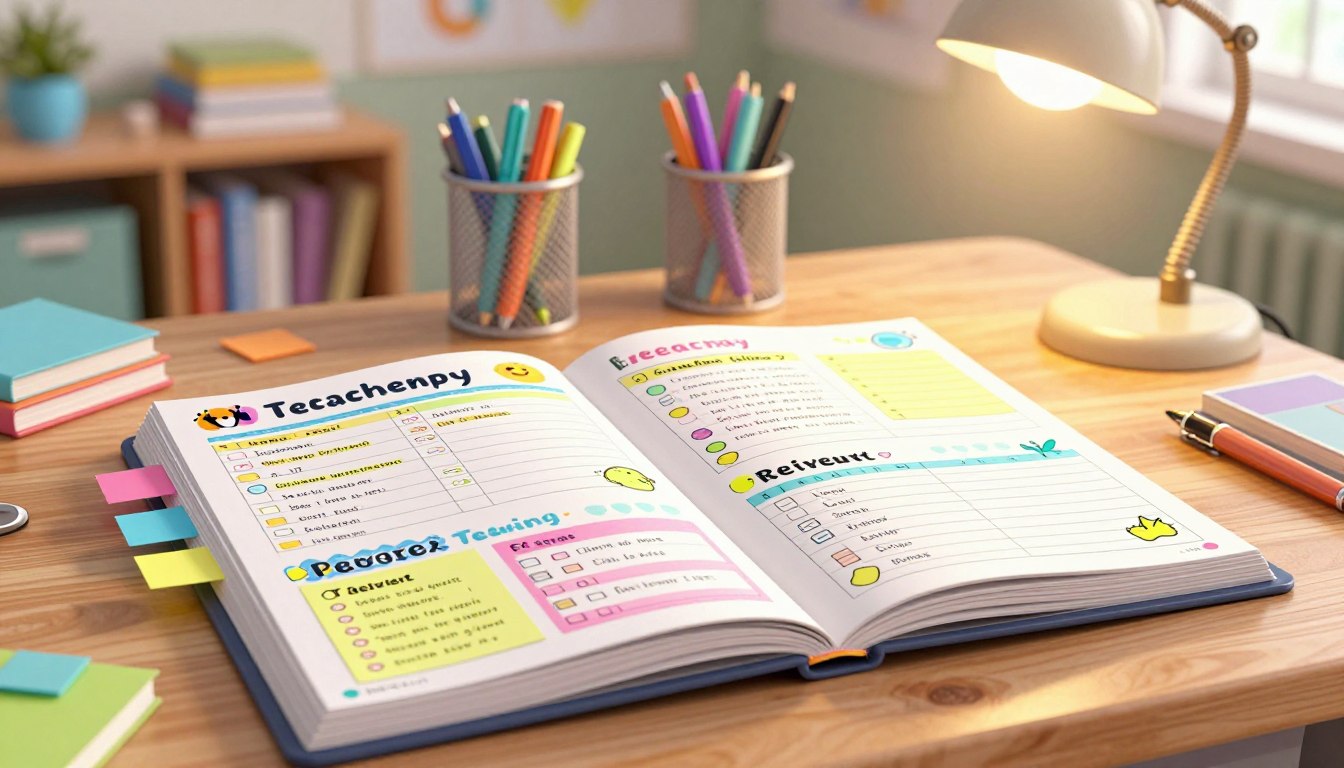
“Education is not preparation for life; education is life itself.” — John Dewey
FlowScholar.com offers a modern academic planning tool for teachers that helps educators shape each school day with clarity.
Every dedicated teacher gains time and focus when lessons are structured. The platform combines a digital planner and grade tracking to keep class routines consistent and students on task.
We design features to match real classroom needs: schedule management, lesson planning support, and progress monitoring. This saves time and reduces friction across the school year.
Adopting a single, reliable system transforms the way an educator plans units, tracks students, and adapts plans as the year unfolds. FlowScholar streamlines workflow so teachers can focus on teaching.
Key Takeaways
- Centralized planning: One platform for lessons, grades, and schedules.
- Time savings: Reduce admin work and reclaim classroom time.
- Student tracking: Monitor progress across the school year with clarity.
- Flexible features: Adapt plans to meet diverse classroom needs.
- Classroom impact: Better organization supports higher student engagement.
The Evolution of Classroom Management
Classroom management has shifted from stacked binders to cloud-based schedules that move at the pace of modern schools.
Historically, many teachers relied on paper planners to track upcoming lessons and daily duties. That system worked—but it kept a teacher tethered to desks and cabinets.
“Moving records into secure, accessible systems frees educators to focus on learning, not logistics.”
Today, the change is practical: a digital planner centralizes schedules, reduces manual filing, and makes lesson materials available across devices. Schools benefit from consistent records and faster prep time.
| Area | Paper | Digital |
|---|---|---|
| Accessibility | Locked in file rooms | Available anytime, anywhere |
| Time Use | High admin hours | More time with students |
| Record Security | Vulnerable to loss | Encrypted and backed up |
Result: Teachers gain clarity and speed. We see planners become catalysts for better instruction, not extra work.
- Faster prep
- Reliable records
- Focused instruction
Why Educators Need an Academic Planning Tool for Teachers
When a teacher can reach lesson notes from any device, small disruptions stop becoming big problems. A reliable planner keeps the whole day on course and gives teachers more time to teach.
The Shift to Cloud-Based Solutions
Cloud-based solutions let teachers open lesson pages, update assignments, and join meetings from anywhere. This reduces lost time and keeps the class moving during unexpected changes.
Note: Jotform offers a 50% discount to educators, making cloud options more affordable and easier to adopt.
Managing Daily Schedules
Daily schedule tools help a teacher adjust lessons and assignments quickly. Students see clear expectations. Meetings and class duties stay synchronized across devices.
| Feature | Local Planner | Cloud Planner |
|---|---|---|
| Access | Single device | Any device, anytime |
| Edits | Manual updates | Instant sync |
| Collaboration | Limited | Shared calendars & meetings |
| Recovery | At risk | Backed up and secure |
Every teacher needs reliable systems to coordinate meetings, assignments, and lesson plans across the school year. For more options and tools, see academic planning options and explore GPT-powered educational ideas.
Key Features to Look for in Digital Planners
A digital planner should fit the rhythm of a school day, not force teachers to change theirs.
Core features include custom layouts, clear space for notes, and subject tracking that spans grades and classes.
Look for platforms that support file attachments like Common Curriculum does with Dropbox and Google Drive. Planbook’s tutorials and support help a teacher sharpen workflow and save time.
Usability matters: drag‑and‑drop scheduling, color‑coded calendars, and seating charts reduce friction during busy transitions.
Extras that improve daily teaching: stickers, writing tools, and easy ways to track lesson plans across a section or the full school year. Plum Paper is popular for flexible layouts and personalized teacher planners.
- Manage multiple classes and calendars in one place.
- Use templates to save prep time for recurring lessons.
- Choose a layout that fits middle high school or elementary needs.
Result: A well‑chosen planner helps students stay organized and gives teachers more minutes to focus on instruction.
Streamlining Curriculum Alignment and Standards
Clear alignment turns scattered lessons into a coherent journey for students across the school year.
Ensuring coherence across subjects requires regular review of lesson maps and standards. Planboard lets a teacher track lesson progression and verify that content meets district grade expectations.
OnCourse supports alignment with Common Core and provides centralized feedback. That feedback helps teachers spot gaps quickly and close them before they widen.

Practical steps to stay aligned
- Map standards: Link each lesson to a specific standard and check coverage across subjects.
- Track progress: Use Planboard-style tracking to monitor student growth over time.
- Review often: Weekly scans reveal missing skills before they affect end-of-year results.
“Streamlining curriculum alignment saves time and raises instruction quality.”
Integrating systems like Plum Paper into daily routines keeps plans consistent across class pages. For district-wide resources and local school options see school resources.
Enhancing Collaboration Between Educators and Students
When teachers and students edit the same document, classroom work becomes a living conversation. Google Classroom lets a teacher and a student co-edit, comment, and revise in real time.
Effective communication increases the chance that daily class assignments are completed on time. Shared docs and Google Meet create a quick way to clarify questions during the school day.
A shared planner that supports access for all classes helps a teacher publish upcoming lessons and assignments clearly. This reduces back-and-forth messages and frees up time for richer lesson design.
- Real-time edits: Students contribute while a teacher guides the work.
- Visible plans: Everyone sees tasks and due dates for the year.
- Better engagement: Collaboration turns passive tasks into interactive activities.
“When teachers and students collaborate, instruction becomes more engaging and efficient.”
We recommend exploring practical training like teaching AI workshops to build skills that support stronger classroom communication and smoother lesson delivery.
The Role of AI in Modern Lesson Planning
Smart assistants help a teacher tailor each lesson to clear learning goals. AI shortens prep and keeps a day on track. It adapts prompts to student needs and year-long objectives.
Customization for Diverse Learning Goals
MagicSchool AI generates lessons that match specific objectives and rubrics. A teacher can set grade targets, then refine plans quickly. This supports differentiated instruction and varied student pathways.
Automating Routine Tasks
AI automates repeats: grading suggestions, resource lists, and reminders. That saves time and frees teachers to focus on teaching strategies and classroom feedback.
Supporting New Teachers
New educators gain confidence with templates and modeled lessons. Apps like iDoceo combine a gradebook, attendance, and seating features to streamline classroom management.
“Integrating AI into lesson planning expands communication options and ensures consistent, high-quality instruction.”
| Capability | Benefit | Example |
|---|---|---|
| Custom lessons | Meets diverse goals | MagicSchool AI |
| Gradebook & seating | Saves admin time | iDoceo |
| Automated reminders | Improves follow-through | Email/calendar sync |
Explore how AI reshapes lesson planning in this short guide on AI-driven lesson design. It points to practical options and resources for any educator seeking better classroom workflow.
Transitioning from Paper to Digital Planning Systems
A deliberate step from notebooks to digital layouts changes how a teacher manages a full school year.
Start small: move a week of lessons into a cloud planner and test routines. PlanbookEdu lets a teacher embed a planbook on a site. Evernote captures web pages and adds margin notes—ideal for saving resources and personal notes.
Many who loved paper find digital layouts offer more space for notes, stickers, and detailed class schedules. Plum Paper users often report smoother coordination of classes and centralized plans.
Keep the goal clear: save time and create a system that supports daily instruction rather than slows it.
| Feature | Paper | Digital |
|---|---|---|
| Access | One physical binder | Any device, instant lookup |
| Notes & Stickers | Handwritten, tactile | Tagged, searchable, visual labels |
| Class Management | Separate notebooks per class | Centralized view of all classes |
- Pilot the change during a quiet week.
- Keep favorite paper layouts as backups.
- Gradually move the most-used pages first.
Improving Time Efficiency for Busy Teachers
A small shift in daily workflow can free hours each week and change how a teacher spends classroom time.
Digital systems let teachers track assignments, meetings, and calendar items in one place. That means fewer late-night edits and clearer expectations for students.
Organizing classes and syllabus content in Teachers.io reduces repetitive work. A teacher can publish a syllabus, send announcements, and share assignments without hunting through emails.
Consistent layouts give the space needed to manage multiple classes and keep lessons on schedule during busy times of the school year.
Many educators combine Plum Paper or similar teacher planner options with digital calendars. The result: smoother transitions, fewer missed tasks, and more time spent on instruction.
“Efficient lesson planning lets a teacher focus on student growth rather than administrative burdens.”
- Track assignments and meetings in one calendar.
- Organize class pages and syllabi to cut repetitive work.
- Use clear digital layouts to save time during peak moments.
| Action | Benefit | Example |
|---|---|---|
| Centralize assignments | Faster grading and follow-up | Teachers.io assignment pages |
| Sync calendar & meetings | Fewer scheduling conflicts | Shared school calendar |
| Use consistent layouts | Less prep time each day | Plum Paper templates |
For a list of practical options, see productivity tools more teachers should know. We find small, steady changes deliver the best results across a full school year.
Evaluating Your Specific Classroom Needs
Start by mapping a typical class day—this reveals the planner layout that will save time.
List subjects, grade levels, and how many classes meet each day. Note where you need space for notes and stickers to flag urgent items.
Consider layouts that suit middle high school or elementary levels. A teacher who runs back-to-back classes needs quick-access boxes; one with longer lessons may prefer wider daily columns.
Use data: analytics from Core Learning Exchange help with self-assessments and with communicating needs to school administrators. This insight guides the choice of teacher planners like Plum Paper.
| Need | Best Layout | Why it helps |
|---|---|---|
| Many short periods | Compact hourly columns | Speeds transitions and saves time |
| Long lessons | Wide daily blocks | Space for notes and student work |
| Multiple subjects | Tabbed sections | Keeps classes and subjects organized |
Takeaway: match the planner to your teaching way and the school year rhythm. Small fits yield big gains.
Introducing FlowScholar for Academic Planning
FlowScholar brings a single, modern dashboard that turns daily lesson work into a clear, measurable routine.
FlowScholar.com is built to help educators organize lessons, practice, and review more efficiently. Its features simplify workflows and reduce repetitive tasks so a teacher can focus on instruction.

Compare FlowScholar with options like Plum Paper and see how a cloud-first approach improves access and updates. The platform’s teacher planner supports curriculum maps, grade tracking, and quick edits that speed lesson planning.
- Streamline prep: central calendars and templates save time.
- Stay precise: link lessons to objectives and track coverage.
- Focus on students: fewer admin tasks mean more classroom impact.
Visit https://www.flowscholar.com to get started with the ultimate academic planning solution. We invite teachers to explore how FlowScholar can change a school year—one clear plan at a time.
Conclusion
Moving routine tasks into a unified dashboard frees focus for instruction and connection. FlowScholar shows how one system can reduce admin work and sharpen daily goals.
Adopting a digital academic planning approach is transformative: it saves time, improves alignment, and supports smoother collaboration across the school. Small, steady changes deliver the biggest gains over a year.
Evaluate needs, match features to your workflow, and choose a platform that fits your style. We invite readers to explore FlowScholar.com to see how a single, modern solution can simplify daily work and amplify classroom impact.
FAQ
What is FlowScholar and how does it help with lesson and year planning?
FlowScholar is a digital planner built to organize lessons, class schedules, and student progress. It centralizes calendars, assignments, seating charts, and notes so educators can design units, track standards alignment, and adjust instruction quickly. The platform reduces time spent on administrative tasks and improves continuity across the school year.
Can FlowScholar replace paper teacher planners like Plum Paper?
Yes. FlowScholar mirrors familiar planner layouts—daily, weekly, and yearly views—while adding cloud syncing, searchable resources, and customizable stickers. Educators who switch from paper find it speeds up lesson writing, lets them reuse templates, and simplifies communication with students and parents.
Does FlowScholar support multiple class types and grade levels?
Absolutely. The system supports middle and high school schedules, multiple subjects, and differentiated lesson versions. Teachers can create class-specific templates, store rubrics, and set distinct assignment workflows for each grade or level.
How does FlowScholar handle curriculum alignment and standards tracking?
FlowScholar includes standards-mapping features so teachers tag lessons and assessments to state or district standards. This ensures coherence across subjects and provides reports that show coverage gaps, helping with pacing and curriculum audits.
What collaboration features are available for teams and departments?
FlowScholar enables shared calendars, resource libraries, and editable lesson templates. Departments can co-author units, comment on plans, and sync meeting notes—promoting consistent instruction and smoother handoffs between educators.
Is there AI support for writing lesson plans and automating routine tasks?
Yes. FlowScholar offers AI-assisted drafting to generate lesson outlines, create differentiated activities, and suggest assessment ideas. It also automates repetitive tasks like grading templates, assignment posting, and calendar reminders to free up planning time.
Can new teachers use FlowScholar to get up to speed quickly?
FlowScholar includes onboarding templates, exemplar lesson plans, and step-by-step guides tailored to novice educators. Mentors can share classroom-ready materials, seating charts, and communication scripts to accelerate acclimation.
How does FlowScholar improve time management during a busy school day?
The platform combines scheduling, task lists, and quick-access resources so teachers spend less time switching apps. Features like block scheduling, timed activities, and integrated meeting slots help teachers optimize instructional minutes and after-school workload.
What layout and customization options are available for planners?
Teachers can choose from multiple layouts—daily, weekly, period-based, or block—and add sections for notes, objectives, and materials. Custom stickers, color coding, and subject-specific fields let users tailor the interface to their classroom needs.
Does FlowScholar integrate with existing school systems and calendars?
FlowScholar syncs with common calendar services and can integrate with learning management systems and gradebooks via secure APIs. That keeps assignments, meetings, and student data aligned across platforms without duplicate entry.
How does FlowScholar support parent and student communication?
The platform offers shareable calendars, assignment summaries, and announcement tools. Teachers can push weekly plans, post resources, and send reminders—improving transparency and enabling students and families to follow progress.
Is student data secure and compliant with privacy standards?
FlowScholar implements encryption, role-based access, and compliance with education privacy regulations. Administrators control permissions, and data sharing follows district policies to protect student information.
Can FlowScholar help with seating charts and classroom organization?
Yes. The seating section lets teachers map rooms, assign students, and note accommodations. It supports quick changes for group activities and stores behavior or intervention notes tied to seating arrangements.
What reporting and assessment tracking does FlowScholar provide?
FlowScholar offers assignment tracking, grade summaries, and progress dashboards. Teachers can pull reports by student, class, or standard to identify trends and plan interventions efficiently.
How easy is it to transition from paper planners to FlowScholar?
FlowScholar includes import tools and migration guides to convert paper schedules and templates into digital formats. Training modules and customer support help teams adopt the system while preserving familiar workflows.