
“The single biggest problem in communication is the illusion that it has taken place.” — George Bernard Shaw.
This practical guide frames a clear approach for drafting an email that protects relationships and drives outcomes. A complaint is written correspondence that explains a problem and states the desired resolution. Clear, concise, and levelheaded language speeds a helpful response.
Readers will follow a simple structure: confirm the problem, gather facts, state impact, propose a resolution, attach proof, and follow up. This method fits everyday customer scenarios—orders, shipping, billing—and formal workplace concerns.
Why tone matters: customer service teams sort high volumes of messages. A professional tone makes the sender stand out as credible and reasonable. An Education AI tool can help polish drafts when emotions run high and clarity matters.
Key Takeaways
- Use facts and receipts to explain the issue and the desired outcome.
- Keep sentences short and the tone professional—it improves response odds.
- Follow a clear structure so recipients can act without guesswork.
- See sample formats for wording and details at the FTC sample customer complaint letter.
- Leverage AI insights for clarity; read about feedback automation here.
When a Complaint Email Is the Right Move for Customers and Businesses
Choosing the written route gives customers control: an email lets the sender gather facts, pick a calm tone, and create a clear record. That combination helps the recipient understand the problem and act decisively.
Common situations
Typical complaints include damaged product arrivals, incorrect order fulfillment, delayed shipping alerts, billing errors, and poor service interactions. Workplace issues also belong here—professional notes to a manager or HR preserve records after informal attempts fail.
Why email works
An email creates a reliable paper trail: dates, prior messages, and promises are easy to reference when multiple agents handle a case. Attachments—receipts, tracking screenshots, photos—shrink back-and-forth and speed resolution.
Business benefits and decision rule
For business leaders, well-handled complaints reveal process gaps and reduce churn. Use email when the goal is an actionable fix—refund, replacement, or policy correction—because it routes the issue and documents outcomes without escalation drama.
Before You Write: Confirm the Problem, Gather Details, and Set a Fair Goal
Pause and collect the key details before you explain the issue to customer service. Start with a quick reality check: confirm the problem is genuine and not a misunderstanding of specs, policy, or delivery timing.
Define the issue in one sentence. That keeps the message focused and helps customer support act faster.
Gather essential information early: date and time of the incident, order number, tracking number, location, the name of any representative, and links to prior emails. Specifics speed validation and reduce back-and-forth.
Decide a fair resolution before writing: refund, replacement, compensation, apology, expedited shipping, or a policy change. Match the ask to the severity of the issue—reasonable requests get results.
- Choose the right contact: customer service for routine faults, tech support for technical failures, a manager for repeated complaints, or a known account contact for ongoing issues.
- Mention you can let know if more documentation is required—this signals cooperation without losing leverage.
For examples of handling customer complaints efficiently, see this customer complaints response guide.
How to Write a Respectful Complaint Email (That Gets Results)
Start with a professional salutation and the recipient’s real name. Prioritize a named contact; use “To Whom It May Concern” only if a company provides no direct contact.
State the issue fast: one sentence listing what happened, when, and where. Include order or account numbers so support can verify details immediately.
Summarize the experience with facts, not a rant. Note observable events—what arrived, what was charged, or what was said—and avoid speculation about intent.
Explain impact clearly: time lost, business disruption, inconvenience, or extra costs. Quantify the effect when possible; numbers make the problem actionable.
- Ask for a specific resolution and a reasonable time frame for action.
- Attach proof: receipts, screenshots, photos, videos, and tracking numbers.
- Close with next steps, best contact info, and a professional sign-off like “Sincerely.”
“Present facts, offer a fair ask, and invite a prompt response.”
| Element | What to include | Why it matters | Example |
|---|---|---|---|
| Salutation | Named contact or generic if unknown | Builds accountability | Dear Ms. Johnson |
| Opening | Issue summary + date | Speeds verification | Order #1234; item damaged on arrival |
| Proof | Receipts, photos, tracking | Reduces back-and-forth | Attached: photo and receipt.pdf |
| Close | Specific ask + timeframe | Enables a clear response | Please refund within 7 business days |

Tone That Gets a Response: Polite, Calm, and Firm Without Threats
A calm, measured voice increases the odds of a helpful response. Customers who write as a disappointed, loyal customer create a path for a fix while preserving goodwill.
Use phrasing that opens dialogue:
- “I’ve been a loyal customer and I feel let down by this incident.”
- “Can you restore my faith in your service?”
- “Please let know the next steps so we can resolve the issue.”
Why this tone works: When a complaint sounds credible and calm, customer service teams escalate faster. Respectful language helps managers read feedback as actionable, not emotional. That drives a quicker response and a clearer path for the company to fix service failures.
What to avoid: generalizations like “you always,” sarcasm, ALL-CAPS, and empty legal threats. These reduce credibility and often earn silence instead of an apology or reply.
| Focus | Write This | Avoid |
|---|---|---|
| Posture | Disappointed, loyal customer | Hostile rant |
| Language | Specific facts + solution | Vague accusations |
| Close | Invite next steps | Ultimatums you won’t follow |
“Pair empathy with clear asks: quantify the problem, request a fix, and invite an apology when due.”
Complaint Email Templates for Real-World Customer Support Scenarios
Below are four ready-to-send templates designed for common customer support scenarios. Each is short, factual, and built so a customer can copy, fill, and send within minutes.
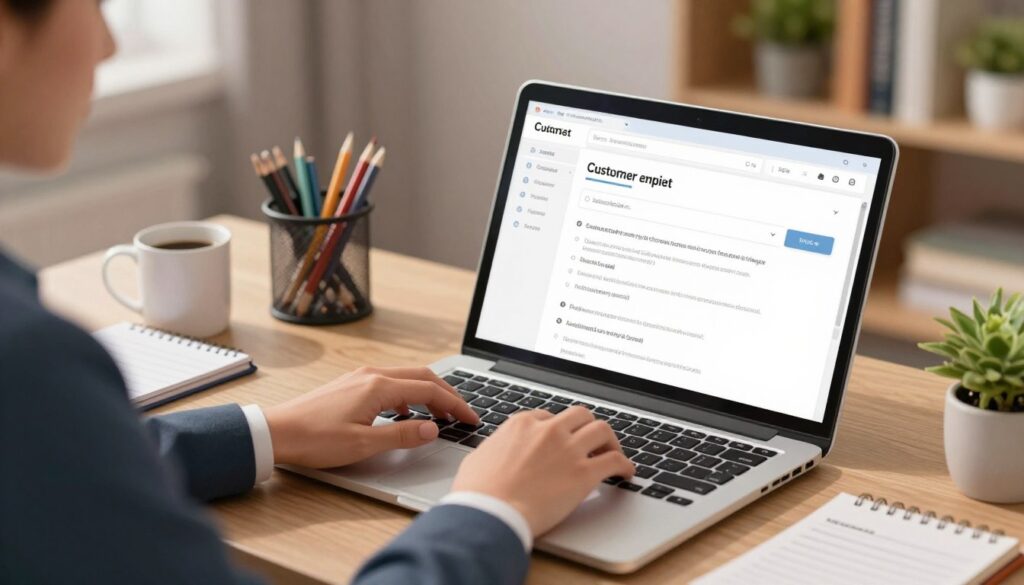
Damaged or incorrect order
Subject: Order #12345 — Item damaged on arrival
Briefly state the problem, include the order number, attach photos, and request a replacement or refund. Ask for return steps and a prepaid return label. Please confirm the next steps within 5 business days.
Micro-note: Attach photos and receipts; avoid speculation about intent.
Delayed shipping
Subject: Order #12345 — Shipping delayed
Request an updated delivery date and ask whether expedited shipping is available at no cost. Request confirmation once the package moves and a timeline for resolution.
Micro-note: Include tracking number and last delivery update.
No response from support
Subject: Follow-up on case #6789 — Please escalate
Reference prior emails and the case number, state the outstanding issue, and ask for escalation with a reply within next 3 business days. Offer phone details for quicker contact.
Micro-note: Keep copies of prior messages and avoid angry language.
Poor customer service
Subject: Report — Interaction on [date] with [agent name]
Document the agent’s name, date/time, and what was said. State the service standard expected and request corrective action or coaching. Ask the company how it will address the problem and what steps they will take.
Micro-note: Attach call notes or screenshots; omit insults and speculation.
“Please advise the timeline and confirm the next steps.”
For more template examples and formatting tips, see this customer service emails guide.
After You Hit Send: Follow-Up, Documentation, and Escalation the Right Way
A short, timed follow-up keeps momentum and signals you expect a response. Wait a practical window—often 1–3 business days—before sending a concise follow-up email. This period balances patience with urgency for most customer-facing teams.
Follow-up structure: reference the prior message, repeat the case number or order number, and ask for next steps with a clear deadline. Include the contact phone number and a preferred time range for callbacks.
Keep a single folder with receipts, screenshots, tracking updates, and all related emails. Log every contact attempt: date, time, channel, and the name of any agent. That record speeds verification and prevents repeating the story when a new agent joins the thread.
Escalate when the company gives repeated non-responses, conflicting answers, or when time-sensitive shipping or business-impacting issues need faster action. Request manager review, contact a communications officer, or route the case to billing or tech support when specialized resolution is required.
- State the escalation trigger; be factual and offer the resolution you seek.
- Remain concise: outline the sequence, include the case number, and list the next steps you expect.
- Use lightweight software or even a notes app to track deadlines, promised callbacks, and actions taken.
“Document dates, attach proof, and ask for a clear response deadline.”
Write Faster and More Clearly With FlowScholar for Polished Complaint Emails
FlowScholar is an Education AI Tool that helps ambitious professionals draft effective complaint messages faster without losing clarity.
Use the software to tighten sentence structure, correct grammar, and smooth a professional tone so the message reads credible and calm.
- Draft the note with core facts: dates, order numbers, names.
- Tighten details and confirm the requested resolution and timeline.
- Proofread for tone and clarity before sending.
| Step | FlowScholar action | Result for customer |
|---|---|---|
| Draft | Suggest concise phrasing and clear subject lines | Faster review by support |
| Tighten details | Highlight missing information and numeric data | Fewer follow-up questions |
| Proofread | Adjust tone to professional and firm | Higher chance of positive response |
Final checklist inside the tool: confirm contact info, verify attachments, and ensure the subject line matches the core issue.
“Create your complaint draft with FlowScholar at https://www.flowscholar.com.”
Conclusion
Summarize the core strategy: a respectful complaint pairs facts, clear proof, and one specific resolution so a recipient can act with confidence and give a timely response. This structure makes feedback practical and outcome-focused.
Readers confirmed the issue, gathered information, wrote calmly, attached proof, and asked for defined next steps. Keep contact details handy and set a reasonable time for action; that reduces friction and speeds verification.
Reframe complaints as disciplined feedback: when customers present clear facts, the company can fix service problems faster and prevent repeats. Treat each message as a reusable playbook—one problem, one desired result, one timeline.
Before sending, revisit the draft, strip emotional filler, verify attachments, and refine the steps. Use each outcome as feedback and refine the approach for stronger, smarter future messages.
FAQ
When should a customer send an email instead of calling or using live chat?
Email is best when the issue needs a clear paper trail, when documents or photos must be attached, or when the sender needs time to craft a calm, factual message. Use email for billing disputes, damaged goods, or requests that require documented timelines and evidence.
What key details should be gathered before composing the message?
Collect the order number, tracking number, purchase date, delivery date, names of any staff involved, prior message timestamps, and supporting files such as receipts, screenshots, and photos. These facts speed resolution and reduce back-and-forth.
How direct should the subject line and opening sentence be?
Be concise and specific: include the order number and the problem (for example, “Order #12345 — Damaged item received”). Open by naming the recipient if possible and summarize the issue in one clear sentence to set context immediately.
What tone gets the best response from customer service teams?
Use a polite, calm, and firm tone. Describe the experience as a disappointed customer rather than an angry one. Request a resolution and a reasonable deadline; avoid threats or aggressive language that can stall cooperation.
How should a customer explain the impact of the problem without sounding emotional?
State measurable effects: time lost, business disruption, extra costs, missed deadlines, or safety concerns. Keep sentences short and factual; link impact directly to the requested remedy to justify the ask.
What types of resolutions should be requested in the email?
Ask for a concrete outcome: refund, replacement, expedited shipping, repair, account credit, or policy change. Propose a reasonable timeframe for action and ask for confirmation of next steps, including any return instructions or shipping labels.
How much supporting evidence should be attached?
Attach only relevant files: photos of damage, receipts, tracking screenshots, and prior correspondence. Label files clearly and reference them in the body of the message so the reviewer can verify the claim quickly.
What is an appropriate follow-up timeline if there is no reply?
Wait two to five business days for standard customer support; allow longer for weekends or holidays. Send a brief, polite follow-up referencing the original email and asking for an update or escalation if necessary.
When should a customer escalate beyond frontline support?
Escalate if there’s no satisfactory response after one follow-up, if deadlines are missed, or if the issue involves safety, legal exposure, or significant financial loss. Request a manager, communications officer, or a specific department and include your case number for continuity.
Are there phrases that increase the chance of a helpful reply?
Use constructive phrases such as “I’ve been a loyal customer,” “Please let me know the next steps,” and “Can you restore my confidence in your service?” These encourage collaborative problem-solving rather than confrontation.
What should be avoided in complaint messages?
Avoid sarcasm, all-caps, broad generalizations, unverified accusations, and legal threats you won’t pursue. These undermine credibility and often delay resolution.
How can an AI writing tool help before sending the message?
An education AI like FlowScholar can refine clarity, correct grammar, tighten tone, and ensure the ask is specific and reasonable. Use it to create a repeatable draft process: gather facts, draft, edit, and attach evidence.
What information should be included in the closing of the email?
Close with a clear statement of the expected outcome, a requested deadline, preferred contact method, and full contact details. Offer availability for follow-up and thank the recipient for their attention to keep the tone professional.