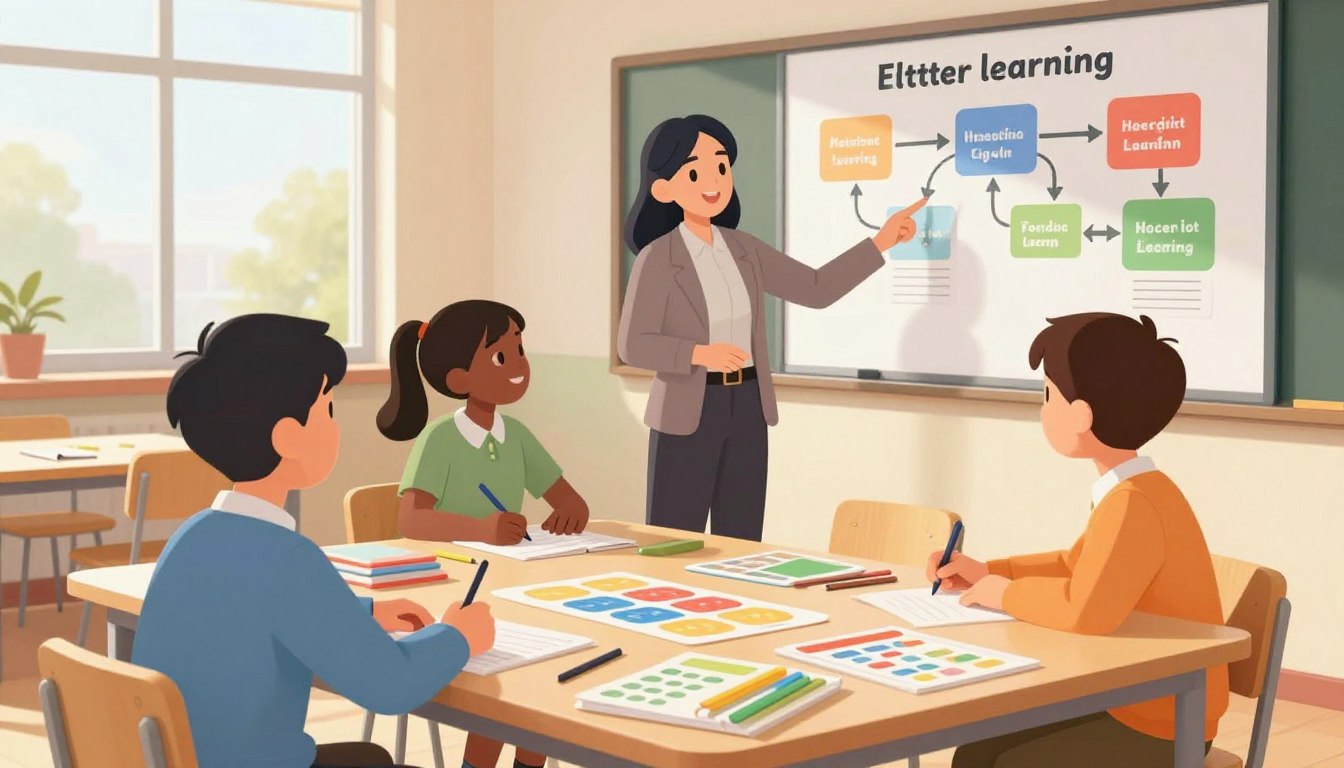
“Tell me and I forget. Teach me and I remember. Involve me and I learn.” — Benjamin Franklin.
The guide opens with a simple promise: learning becomes less scattered when content follows a deliberate progression rather than arriving as disconnected information. Sequencing acts as a hidden lever for ambitious professionals and educators—reducing friction, improving understanding, and speeding application.
A clear sequence manages cognitive load and strengthens retention. Readers will find practical strategies, classroom-and-home activities, and cross-subject examples that can be used immediately. This piece also shows how sequencing transfers beyond reading: it shapes problem-solving, communication, and decision-making over time.
Education AI tools can support sequence design by generating step-by-step explanations, scaffolds, and practice pathways; discover more at FlowScholar. For applied spacing and order tactics, see research and examples in the instructional design field via this resource: spacing and sequencing insights.
Expect seven focused sections: each delivers actionable takeaways and a clear progression so working memory works less, focus lasts longer, and skill transfer becomes predictable.
Key Takeaways
- Deliberate order reduces overload and aids retention.
- Sequencing is a transferable skill for problem solving.
- AI tools can scaffold stepwise pathways for learners.
- Practical strategies support classroom and workplace use.
- The guide is structured into seven actionable sections.
What Sequencing Is and Why It Makes Learning Stick
Sequencing is the deliberate arrangement of events or ideas so the brain builds meaning without gap-filling. It places a clear beginning, a logical middle, and a decisive end that support deeper comprehension and reliable understanding.
Sequencing as “beginning, middle, end” for stronger comprehension
When students can reconstruct a sequence of events, text comprehension improves. Rebuilding order helps learners connect causes and effects and recall key details.
How logical order lowers cognitive load and reduces overwhelm
Skipping prerequisites forces students to spend mental energy on navigation rather than mastery. A simple analogy: teach algebra before calculus; missing steps breaks progression and raises frustration.
Why well-sequenced information improves retention and real-world application
Information presented step-by-step attaches to existing mental frameworks and reinforces over time. Professionals reproduce processes or checklists more reliably when they can follow a clear sequence.
Practical tip: use FlowScholar to reorganize content into progressive explanations that match learner readiness and the importance of ordered learning.
How to Make Learning Feel Easier With Better Sequencing
Effective progression begins by checking what learners already know and building from that base. This approach reduces wasted time and prevents frustration. It creates a clear path from basic skills toward complex performance.
Start with prerequisite skills and move from simple to complex
Begin by mapping the end goal and listing prerequisites. Verify those skills early; this planning prevents re-teaching and keeps momentum.
Quick method: identify the end goal → map prerequisites → order concepts simple → complex.
Chunk instruction into manageable steps and reinforce foundations
Chunking breaks tasks into small steps that students can practice and master fast. Small wins create reliable feedback loops and steady progression.
Use this reusable template for any topic:
- What students need first
- Guided example
- Independent attempt
- Reflection questions
- Extension
| Phase | Focus | Teacher action | Learner result |
|---|---|---|---|
| Prerequisite check | Readiness | Quick diagnostic | Less remediation |
| Chunked practice | Fluency | Short tasks & feedback | Faster mastery |
| Scaffold removal | Independence | Fade supports | Transfer skill |
Common mistakes include teaching vocabulary before meaning or assigning complex tasks without foundation. Differentiate by adjusting pace, number of steps, and supports rather than rewriting the whole sequence.

Education AI tools like FlowScholar can generate scaffolded explanations, progressive practice sets, and clearer sequences that save planning time and support diverse learners.
Use Sequencing to Strengthen Reading Comprehension and Language
Teaching order words equips children with the language needed to describe events precisely. Clear sequence supports stronger comprehension and faster gains in vocabulary.
Signal words and oral retell
Group transition words by function: beginning (first, initially), middle (next, then), and end (finally, last). These words give students a shared toolkit for describing order.
“Retell the story in three parts: beginning, key middle events, and end.”
Retell protocol and story mapping
Use a simple retell protocol: ask for the beginning, two middle events, then the end. Finish by asking which detail could be removed without changing the story.
- Pictures — show sequence with images.
- Keywords — label each picture with one word.
- Sentences — write brief lines that connect events.
Practice with high-clarity books: Rosie’s Walk; How A House Is Built; The Very Hungry Caterpillar. ELL and struggling readers gain from visuals, gestures, and sentence frames (“First…, Next…, Then…, Last…”).
Optional support: FlowScholar can generate leveled story maps and prompts. For broader AI resources, see AI education resources.
Classroom and At-Home Sequencing Activities Students Actually Enjoy
Low‑prep routines build order skills while saving teacher time and keeping students engaged. The suggestions below fit busy classrooms, tutoring sessions, and family routines.
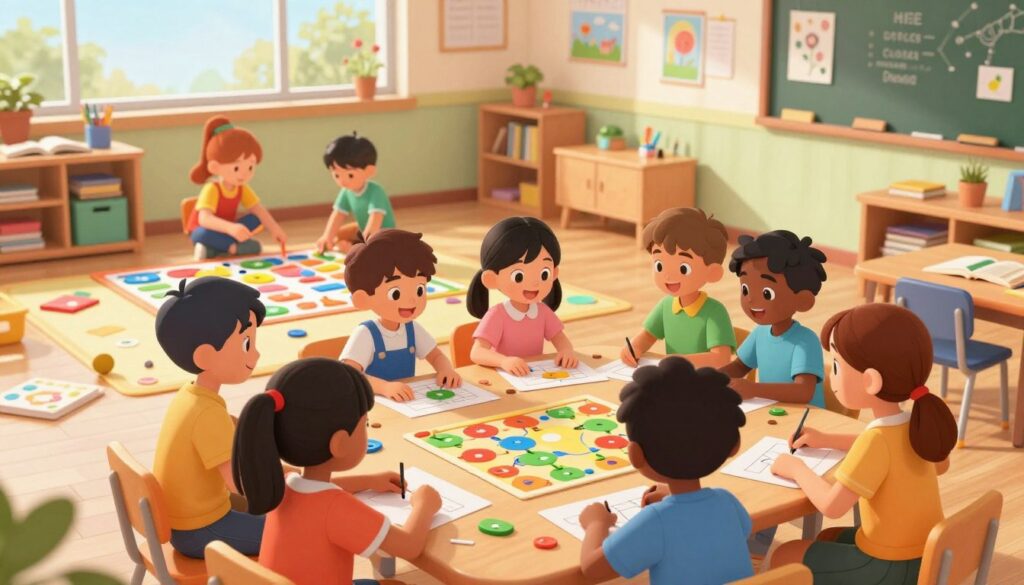
The One Word At a Time story game
Students create a short story by adding one word each turn. Humor keeps attention and forces logical next‑step thinking.
Example: “First a giant cat ____” — students supply words that keep the plot clear, so order matters even when the tale is silly.
The Robot Game
One student is the “robot” and follows literal instructions. Writers must add missing steps or the robot will fail.
This trains precise phrasing and reveals gaps in written sequences.
Read-and-follow tasks, pictures, and daily routine talk
Use simple recipes, LEGO pictorial builds, or quick experiments for scalable practice. Younger children arrange pictures, then add keywords, then full sentences.
Narrate routines each day using transition words: “First…, then…, last…” This daily practice builds automatic sequencing vocabulary and supports independent task completion.
Quick note: FlowScholar can generate leveled versions of these activities—fewer steps, new picture prompts, or simpler language—to support diverse learners fast.
Apply Sequencing Across Subjects for Better Problem-Solving
A deliberate sequence gives learners a repeatable map for tackling new problems. When educators teach order as a transferable skill, students use the same approach across topics. That reduces guesswork and speeds mastery.
Math word problems: identify what comes first
Use a simple repeatable sequence: read, underline quantities, find the question, pick an operation, compute, check. This list of steps helps students spot what comes first and lowers careless errors.
Science processes: document procedures in order
Frame lab work as lab literacy. Students write steps, note variables, and timestamp observations. Clear order lets another class reproduce the experiment and confirms valid results.
History and social studies: timelines and cause-effect chains
Timelines build chronological thinking: students track when events start, how long changes take, and why one event leads to another. Narrative frames help learners compare events across time and see relationships.
Quick classroom moves:
- Sequence scramble — reorder mixed steps and explain each choice.
- “Because” questions — link events to causes in short answers.
| Subject | Practice | Outcome |
|---|---|---|
| Math | Step checklist for problems | Fewer errors, stronger reasoning |
| Science | Procedure log with variables | Reproducible results |
| History | Timelines and cause maps | Improved chronological understanding |
Align units so prerequisite concepts appear before complex tasks. For practical resources on classroom design and sequencing strategies, consult the linked guide. FlowScholar can also generate stepwise solutions and timeline prompts that match a chosen curriculum scope and progression.
Conclusion
Clear order turns scattered facts into usable plans that learners apply again and again.
Sequencing is the simplest high‑impact change: it organizes information into a clear beginning, middle, and end so comprehension rises and confidence follows. When students can name key events in order, reading and language tasks become less guesswork and more strategy.
The same approach strengthens math problem solving, lab procedures, and history timelines—a curriculum-wide advantage that grows over time with short, daily practice. Quick retells, story maps, and signal words build durable skills without heavy prep.
Explore FlowScholar as an Education AI Tool that sequences instruction, generates scaffolded practice, and streamlines lesson planning: FlowScholar Education AI Tool. For extra classroom examples, see this sequencing guide that helps students practice retell and story mapping.
FAQ
What is sequencing and why does it help students understand concepts better?
Sequencing is arranging information or events in a clear order—beginning, middle, end. This structure reduces cognitive load, clarifies relationships between ideas, and supports comprehension. When learners see a logical progression, they remember steps and apply knowledge more reliably in real situations.
How should instructors start planning a sequence for a new skill?
Begin with prerequisite skills, then move from simple tasks to complex ones. Identify the core steps learners must master first, break those into small, manageable chunks, and add practice that reinforces foundations before introducing higher-level challenges.
What classroom routines strengthen sequencing without extra prep?
Short daily routines work well: retell the day’s events, explain a morning task in order, or summarize a brief reading using first/next/last language. Consistent, low-stakes practice builds automaticity and boosts confidence over time.
Which activities make sequencing engaging for young children?
Use picture and photo sequencing, the One Word At a Time story game, and the Robot Game for writing clear steps. Hands-on tasks like recipes, LEGO builds, and simple science experiments also teach order while keeping students motivated.
How can teachers scaffold sequencing for emerging readers and writers?
Offer story maps with pictures, keywords, and sentence frames. Teach signal words (first, next, then, last) and model oral retells. Start with high-clarity texts and gradually remove supports as students show mastery.
Can sequencing improve performance in subjects beyond reading?
Yes. In math, sequencing clarifies multi-step word problems. In science, it guides experimental procedures and reporting. In history, timelines and cause-and-effect sequences deepen understanding of events and context.
How often should sequencing practice occur for measurable gains?
Frequent, brief practice is most effective—daily or several times a week. Short tasks that reinforce ordering skills and build vocabulary create cumulative gains without overwhelming learners.
What assessment strategies reveal whether sequencing instruction works?
Use quick retell checks, picture-ordering tasks, and written step sequences tied to real tasks. Compare accuracy and fluency over time; look for reduced prompting and increased independence as key indicators of progress.
How can parents support sequencing at home without formal lessons?
Integrate order into routines: cook together using a recipe, describe steps for packing a backpack, or narrate a bedtime story in sequence. Ask simple questions—What happened first? What comes next?—to build everyday practice.
Which materials best support sequencing instruction in mixed-ability groups?
Choose clear, high-clarity texts and manipulatives like picture cards, timers, and checklists. Tier tasks by complexity—short models for some students, extended mapping or written sequences for others—so every learner works at an appropriate level.