“Education is the most powerful weapon which you can use to change the world.” Nelson Mandela’s timeless words remind us of the profound impact of learning. Yet, for many learners today, the path to that power is obstructed not by a lack of potential, but by outdated institutional frameworks.
Higher education teams operate with stretched resources. Advisors navigate higher caseloads and more complex challenges. Many institutional systems were not designed for contemporary learners, creating situations where individuals can fall through the cracks. This often happens not because people don’t care, but because the very systems get in the way of meaningful support.
This reality underscores an urgent need for intentional, systematic solutions. True academic achievement depends not merely on individual effort but on the structural frameworks that either enable or hinder progress. A modern approach must integrate academic, financial, wellness, and career guidance into a cohesive, empowering experience.
Enter a transformative Education AI Tool designed to meet this moment. It creates clarity, reduces barriers, and fosters environments where learners can thrive. This approach is research-backed and values-centered, focusing on holistic development. It empowers both the individuals learning and the educators serving them, creating sustainable models that enhance outcomes for everyone involved.
Similar to how innovative educational platforms use advanced AI to personalize learning, this solution transforms support delivery. The result is measurable gains in confidence, improved persistence rates, and a more successful educational journey.
Key Takeaways
- Modern higher education requires support systems specifically designed for today’s complex learning landscape.
- Outdated institutional frameworks can create barriers to student success, despite the best efforts of staff.
- Effective support integrates academic, financial, wellness, and career guidance into a single, cohesive experience.
- Intentional system design is crucial for enabling progress and building learner confidence.
- Transformative AI tools can create clarity, reduce barriers, and foster thriving academic environments.
- Empowering support structures benefit both learners and the educators who guide them.
- A structured approach leads to measurable improvements in confidence and persistence rates.
Introduction to a Confident Student Support Structure
A truly effective educational framework operates not as a safety net but as a launchpad for potential. This integrated approach provides predictable, accessible assistance across all dimensions of the learning experience. It establishes a clear way forward for individuals navigating their academic paths.
Confident support frameworks are characterized by clarity of purpose and transparent pathways. They anticipate needs rather than reacting to crises after they emerge. This proactive stance helps learners address challenges before they become overwhelming.
These systems differ significantly from fragmented, reactive approaches. They establish clear expectations and consistent communication channels. The entire learning experience becomes more predictable and manageable.
When individuals understand how to navigate resources and trust the framework’s responsiveness, confidence naturally develops. This structured approach reduces anxiety and increases academic engagement. Both faculty and learners benefit from efficient workflows and reduced cognitive load.
The psychological foundation here is crucial: predictable support builds self-efficacy. This comprehensive framework creates environments where everyone can thrive through coordinated, values-driven assistance.
Understanding Student Challenges in Higher Education
Contemporary higher education institutions face a critical juncture between legacy systems and evolving student realities. The pressure on college teams has never been greater, with advisors managing complex caseloads across fragmented departments.
Overcoming System Overload and Complex Policies
Many institutional frameworks create unnecessary friction through outdated procedures. Complex registration systems and financial aid processes often reflect administrative convenience rather than learner needs.
First-generation college attendees and working learners face particular disadvantages in these environments. The bureaucratic maze diverts precious time and energy from actual learning.
Research from educational psychology studies confirms that structural barriers significantly impact academic persistence. Even well-resourced institutions like Arizona State University encounter these systemic challenges.
Navigating Rising Student Needs
Today’s campus populations bring diverse life experiences that demand comprehensive support. Mental health concerns, financial pressures, and family obligations create complex balancing acts.
The college experience now extends far beyond classroom learning. People juggle multiple responsibilities while pursuing academic excellence.
We see that these challenges require coordinated institutional responses rather than individual solutions. Modern frameworks must acknowledge the full spectrum of contemporary learner realities.
Key Components of Effective Student Support
Effective educational frameworks understand that academic achievement is deeply intertwined with personal well-being. A holistic approach recognizes how different life domains influence each other.
Academic, Financial, and Wellness Counseling
Integrated counseling addresses the complete learner experience. Academic guidance extends beyond course selection to include learning strategies and time management.
Financial assistance incorporates literacy education and emergency aid. Wellness resources focus on stress management and resilience building.
This comprehensive model creates a supportive environment for sustainable growth. Each component reinforces the others.
Coordinated Care and Team-Based Advising
Arizona State University demonstrates this approach effectively. They transitioned from individual caseloads to collaborative team-based advising.
Specialists across departments work together seamlessly. This coordination prevents individuals from falling through administrative gaps.
The team-based model distributes expertise while maintaining personal connection. It represents a modern solution for complex educational needs.
This collaborative work enhances the overall learning experience and promotes lasting success.
FlowScholar Student Support System: Structure That Builds Confidence
What distinguishes transformative educational tools from mere technological solutions is their capacity to anticipate needs rather than react to crises. This forward-thinking approach forms the foundation of effective academic assistance frameworks.
Features and Benefits of the System
The platform employs intelligent early-alert mechanisms that identify potential challenges before they escalate. These predictive analytics enable timely interventions, creating a safety net for academic progress.
Integrated communication channels connect learners with appropriate resources seamlessly. This eliminates the confusion that often derails help-seeking behavior.
Data-driven insights reveal patterns invisible to individual advisors. This comprehensive view enhances the overall educational experience for everyone involved.
Building Confidence Through Structured Support
Predictable assistance frameworks reduce anxiety and empower academic ownership. When individuals understand what to expect, they engage more confidently with their learning journey.
Transparent pathways clarify expectations and available resources. This clarity transforms the educational experience from overwhelming to manageable.
Educators and institutions can explore these transformative tools at flowscholar.com. The platform maintains human relationships while enhancing coordination for better outcomes.
Innovative Approaches in Principled Innovation®
When institutions embrace principled approaches to change, they transform not just processes but entire organizational cultures. Principled Innovation® asserts that meaningful innovation requires character and ethical grounding.
This framework shifts from reactive problem-solving to values-driven systemic improvement. It emphasizes that innovation without integrity remains incomplete.
“True transformation occurs when our methods reflect our deepest values, not just immediate efficiencies.”
Values-Centered Decision Making
Values-centered decision making prioritizes integrity, compassion, and long-term thinking. This approach challenges teams to examine underlying beliefs shaping their choices.
Instead of quick fixes, it produces sustainable solutions aligned with institutional missions. Decision makers consider what authentically serves learners’ experiences.
Collaborative Redesign of Workflows
Collaborative redesign engages stakeholders across departments in collective problem-solving. This participatory process respects front-line expertise and distributes ownership.
Arizona State University applied this approach to transform fragmented units into coordinated networks. The result shifted both culture and operational structure.
| Aspect | Traditional Innovation | Principled Innovation® |
|---|---|---|
| Decision Focus | Efficiency metrics | Values alignment |
| Stakeholder Involvement | Top-down mandates | Collaborative engagement |
| Change Approach | Reactive problem-solving | Proactive system design |
| Success Measurement | Immediate outcomes | Sustainable impact |
This innovative way of working improves daily experiences for all involved. It creates environments characterized by clarity, purpose, and mutual respect.
The Role of Technology and AI in Education
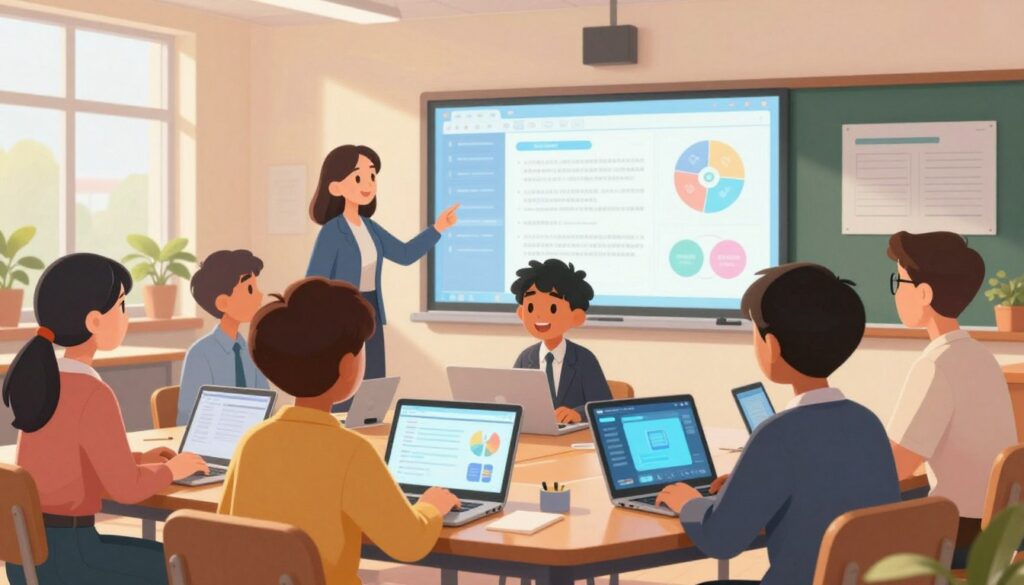
Artificial intelligence is reshaping educational landscapes by amplifying human capabilities rather than replacing them. This thoughtful integration handles coordination complexities that exceed human cognitive capacity.
Utilizing Educative AI Tools
Educative AI tools go beyond administrative efficiency to provide pedagogical enhancement. These systems offer personalized learning support and democratize access to expert guidance.
Effective educational AI serves as amplification technology. It extends advisors’ capabilities by handling routine queries and identifying patterns across large populations.
Platforms like FlowScholar exemplify this approach. They provide intelligent support that frees human advisors for nuanced, relationship-based work.
Streamlining Student Services
Technology eliminates redundant data entry and automates appointment scheduling. It creates unified records accessible to authorized personnel.
Streamlining reduces friction in the student experience. What required multiple office visits becomes seamless processes respecting learners’ time.
Implementation must prioritize agency over surveillance. Data should empower rather than monitor or restrict.
| Service Aspect | Traditional Approach | AI-Enhanced Approach |
|---|---|---|
| Query Handling | Manual responses | Automated with human escalation |
| Scheduling | Phone/email coordination | Intelligent self-service |
| Data Management | Fragmented systems | Unified intelligent platform |
| Personalization | Generic support | Research-driven customization |
This approach makes sophisticated support scalable for institutions facing resource constraints. It represents sustainable innovation in educational technology.
Creating Coordinated Care Models for Student Success
Breaking down departmental silos represents one of the most significant opportunities for improving educational outcomes. Arizona State University’s pioneering coordinated care model demonstrates how integrated approaches transform the learner experience.
This approach recognizes that challenges rarely fit neat categories. Financial stress impacts academic performance, while personal issues affect both. The model creates flexible response systems where expertise from multiple domains mobilizes rapidly.
Implementation requires establishing shared communication protocols and cross-functional teams. Each member maintains clearly defined roles while collaborating on complex situations. This systematic integration has produced remarkable results.
ASU achieves persistence rates above 90% for full-time first-year students. This substantially exceeds national averages. The coordinated care framework transforms crisis response into comprehensive assistance.
Cultural shift accompanies structural change. Departments move from territorial boundaries to collaborative networks. Success becomes shared responsibility rather than isolated accountability.
Initial implementation faces barriers like resistance to change and role clarity concerns. However, established coordination protocols eventually save time through efficiency gains. Research confirms this approach creates sustainable improvement.
When institutions commit to systematic redesign with proper technology infrastructure, coordinated care becomes achievable reality. It represents the future of effective educational support.
Enhancing Mentorship and Teaching-Learning Dynamics
Personal connections between experienced guides and emerging learners create transformative educational environments. These relationships extend beyond academic instruction to encompass holistic development.
Mentor Testimonials and Personal Stories
Authentic voices reveal diverse mentoring philosophies. Alex Llamas emphasizes being “reliable, empathetic, and understanding” while helping first-year individuals find “balance, community, and growth.”
Alexis Beard focuses on “organization, perseverance, and strong relationships” as foundations for success. These approaches address both academic and personal dimensions of the college experience.
Integrating Peer Mentoring Programs
Structured peer programs connect newcomers with successful upperclassmen. This creates accessible guidance and normalizes help-seeking behaviors throughout the educational journey.
Peer mentors offer recent experience with common challenges. Their proximity reduces power dynamics that sometimes inhibit honest disclosure.
| Mentoring Approach | Key Focus Areas | Primary Benefits |
|---|---|---|
| Faculty Mentoring | Academic excellence, career guidance | Professional network development |
| Peer Mentoring | Social integration, daily navigation | Relational comfort, recent experience |
| Professional Advisor Mentoring | System navigation, resource access | Institutional knowledge, policy guidance |
Integrating Research and Psychology Insights in Support Models
Flow state research reveals the precise conditions under which learners achieve optimal engagement and performance. Mihály Csíkszentmihályi’s pioneering work identifies flow as complete absorption in an activity—characterized by energized focus and intrinsic enjoyment.
This psychological research demonstrates that flow occurs when challenge level appropriately matches skill level. The result is an experience that’s neither overwhelming nor underwhelming, but optimally stimulating.
Studies show that individuals reporting flow during academic tasks exhibit higher engagement and concentration. This suggests educational frameworks should create conditions conducive to these optimal experiences.
Beyond flow theory, multiple psychological insights offer actionable principles. Self-determination theory, growth mindset research, and cognitive load theory all contribute to effective support design.
| Psychological Theory | Core Principle | Educational Application |
|---|---|---|
| Flow State Theory | Challenge-skill balance | Assignment difficulty calibration |
| Self-Determination Theory | Autonomy, competence, relatedness | Choice in learning pathways |
| Growth Mindset Research | Belief in developable abilities | Feedback emphasizing progress |
| Cognitive Load Theory | Working memory limitations | Information chunking strategies |
Integrating these research insights represents professional responsibility rather than academic luxury. Evidence-based design maximizes effectiveness while respecting limited institutional resources.
Building a Comprehensive Support System: Best Practices
Modern academic institutions achieve lasting success through integrated approaches that connect reflection with actionable improvement. This systematic process transforms individual efforts into coordinated frameworks that benefit everyone involved.
The reflective course “Reflective Practice for Student Success in Higher Education” demonstrates this way of working. Teams learn to identify barriers and build holistic models. This creates smoother workflows and consistent assistance.
Team-Based Advising Techniques
Collaborative approaches distribute expertise while maintaining comprehensive awareness of learner needs. Specialists contribute domain knowledge without creating fragmentation.
Effective team-based models require clear role definitions and communication protocols. This prevents both service gaps and redundant efforts. The impact is more reliable support from the learner perspective.
| Aspect | Traditional Advising | Team-Based Approach |
|---|---|---|
| Expertise Distribution | Individual generalists | Specialized collaborators |
| Continuity | Single-point dependency | Distributed responsibility |
| Response Time | Limited by availability | Multiple access points |
| Comprehensive Care | Fragmented assistance | Integrated support |
Implementing Systematic Feedback Loops
Continuous assessment mechanisms identify emerging challenges and adapt interventions. These systems capture input from multiple stakeholders for balanced perspectives.
Different viewpoints reveal various strengths and weaknesses within support systems. This evidence-based approach replaces assumptions with data-driven improvements.
Best practices require contextual application rather than rigid prescriptions. Honest assessment of institutional culture and capacity determines successful implementation.
Student Success Strategies and Personal Growth
True educational advancement occurs when individuals cultivate the inner resources to navigate inevitable academic and personal challenges. This journey transforms obstacles into opportunities for development.
Overcoming Academic and Personal Setbacks
Setbacks affect virtually all learners at some point. Course difficulties, major changes, or personal crises test resilience. Brandon Freeman’s perspective proves valuable: seeing “struggles as a test to become better.”
Effective frameworks normalize these experiences. They provide clear recovery pathways and maintain belief in potential during difficult periods.
Developing Resilience and Time Management Skills
Resilience encompasses emotional regulation and help-seeking behaviors. These skills benefit from practice and supportive feedback. Time management extends beyond scheduling to priority-setting aligned with values.
Maya’s evolution illustrates this well. She shifted from prioritizing work to emphasizing personal growth, kindness, and patience. This represents finding balance in the educational experience.
The psychological state of flow occurs when challenge matches skill level. This optimal engagement state supports sustainable growth.
| Aspect | Traditional Approach | Growth-Oriented Approach |
|---|---|---|
| View of Setbacks | Failures to avoid | Learning opportunities |
| Time Management Focus | Rigid scheduling | Values-aligned priorities |
| Success Definition | External metrics | Personal development |
| Skill Development | Innate ability focus | Learnable competencies |
Nayela Vilton’s experience demonstrates the importance of growth, balance, and self-confidence. Personal development and academic achievement become complementary goals in this framework.
Mentorship Impact: Before and After Case Examples
The journey from uncertainty to confidence becomes visible when examining the before-and-after experiences of first-year students. These narratives demonstrate how structured guidance transforms academic trajectories.
Mentor relationships create measurable changes in personal development. We see clear patterns emerge across different college environments.

First-Year Transformation Stories
Many people enter college feeling overwhelmed by new challenges. Initial isolation often gives way to community connection through consistent support.
Academic confusion clarifies when students receive reliable guidance. Imposter syndrome diminishes as competencies develop with validation.
These changes occur gradually through accumulated small interactions. Consistent availability proves more impactful than dramatic single interventions.
Effective Peer Mentoring Insights
Ciara Bond’s approach exemplifies holistic mentorship. She states, “I want you to know that I’m here no matter what, whether it’s school related or otherwise.”
Genevieve demonstrates how supported first-generation students often become passionate helpers. Her leadership creates virtuous cycles of assistance for others.
Lauretta Martin’s perspective as a non-traditional student brings credibility. She understands the challenge of “finding your footing in college.”
Nicole Prudchenko captures a fundamental insight: “Fear of messing up is your only real boundary to said success.” Encouragement unlocks hidden potential.
| Mentoring Quality | Before Support | After Effective Guidance |
|---|---|---|
| Confidence Level | Uncertain and hesitant | Assured and proactive |
| Academic Engagement | Reactive participation | Strategic involvement |
| Help-Seeking Behavior | Reluctant to ask | Comfortable reaching out |
| Community Connection | Isolated experience | Integrated network |
These case examples reveal the powerful growth that mentoring facilitates. The right help guide can transform entire educational experiences.
FlowScholar AI Tool: Empowering Educators and Students
Modern educational technology goes beyond simple automation to fundamentally reshape the teaching and learning dynamic. This platform operationalizes the principles discussed throughout this article into practical, intelligent assistance.
The tool empowers educators by handling routine administrative work and surfacing actionable insights from data. This allows professionals to focus on nuanced, relationship-based guidance rather than paperwork.
For learners, the platform provides personalized pathways tailored to individual needs. It creates transparent navigation systems that reduce institutional complexity.
The design reflects flow state research, creating educational experiences with appropriate challenge levels. This approach supports sustainable engagement and growth.
By facilitating coordinated care models, the technology makes collaboration efficient across departments. It represents an investment in both outcomes and educator sustainability.
Discover how this intelligent platform can transform your institution’s approach at flowscholar.com. Explore capabilities that address specific challenges while enhancing the overall learning journey.
Engaging Campus Communities and Cultivating Balance
Campus communities offer rich environments where academic learning meets real-world application and social development. This dimension of the college experience often determines whether individuals feel connected to their educational journey.
Finding balance becomes essential for sustainable growth. The right mix of academic rigor and social engagement creates optimal conditions for personal development.
Encouraging Extracurricular Involvement
Extracurricular activities provide valuable contexts for applying classroom knowledge. Christi Filarski’s diverse experiences—internships, leading organizations, and studying abroad—demonstrate how varied engagement builds well-rounded capabilities.
Geovanni Cuevas serves as President of ColorStack while participating in multiple professional groups. This deep involvement shows how campus activities develop leadership skills and professional networks.
Research confirms that moderate extracurricular participation correlates with higher academic achievement. Engagement enhances rather than detracts from focus when properly balanced.
Fostering Collaborative Campus Life
Collaborative environments encourage interaction across diverse backgrounds. Douglas Tanyanyiwa’s favorite memory at KSU—attending the African Students Association’s Taste of Africa night—illustrates how cultural events create belonging.
Ethan stays active across campuses through cooking demos, bike rides, and spontaneous events. This organic participation reflects how campuses can foster natural community formation.
Support systems should actively connect people to engagement opportunities matched to their interests. Discovering community requires awareness of options and sometimes encouragement to overcome initial hesitation.
Leveraging College Resources for Student Empowerment
Many learners navigate their academic journeys unaware of the comprehensive support networks surrounding them. Institutions offer rich ecosystems spanning academic assistance, wellness services, career development, and financial aid. Yet these resources often remain underutilized due to navigation challenges.
Arizona State University exemplifies this approach through its “Reflective Practice for Success in Higher Education” course. This professional development program helps teams identify where systems create unintended barriers. Educators learn to strengthen collaboration across departments and build structures that reduce confusion.
The college environment becomes truly empowering when individuals can effectively access available services. This requires simplifying access points and conducting proactive outreach. Integrated experiences replace fragmented coordination across multiple offices.
Resource empowerment extends beyond awareness to capacity-building. People develop the self-advocacy skills necessary to identify needs throughout their academic careers. Institutions achieve optimal outcomes by investing equally in resource development and navigation systems.
Conclusion
Measurable outcomes and human stories alike confirm that structured academic environments transform educational journeys. Arizona State University’s implementation demonstrates this powerfully, with persistence rates exceeding 90% for full-time first-year students.
This systematic approach ensures temporary setbacks don’t become permanent barriers. When challenges arise—like car breakdowns or financial emergencies—coordinated teams provide immediate assistance.
The impact extends beyond statistics to changed lives and sustained success. Institutions can implement these proven systems through accessible platforms designed for today’s complex educational landscape.
Discover how to transform your institution’s approach at flowscholar.com. Begin building environments where every learner thrives.
FAQ
How does the support system address the unique challenges faced by first-year students?
The framework is designed to tackle common hurdles like system overload and complex policies head-on. It provides clear pathways and a help guide for navigating college life, building essential skills from day one. This early intervention fosters personal growth and helps students find balance.
What role does technology play in enhancing the student experience?
Technology, including educative AI tools, is leveraged to streamline services and create more efficient workflows. This innovation allows for personalized support, freeing up educators to focus on high-impact coaching and mentorship. The goal is to use tech to augment, not replace, human connection.
Can this model be adapted for different types of institutions, like a large state university?
A> Absolutely. The core principles of coordinated care and team-based advising are scalable. The system focuses on values-centered decision-making, allowing any institution to adapt the model to its specific culture and student body’s needs for a powerful impact on success.
How does the system help students develop crucial life skills like time management?
A> Through structured coaching and integrated peer mentoring programs, students learn to manage their time effectively. The process emphasizes finding balance between academic work, personal growth, and campus activities. This holistic approach builds resilience and confidence for long-term achievement.
What is the psychological foundation of this support model?
A> The model integrates key insights from research and psychology to understand student motivation and behavior. It creates a supportive environment that encourages positive change and reduces anxiety. This foundation ensures the support provided aligns with how people actually learn and grow.