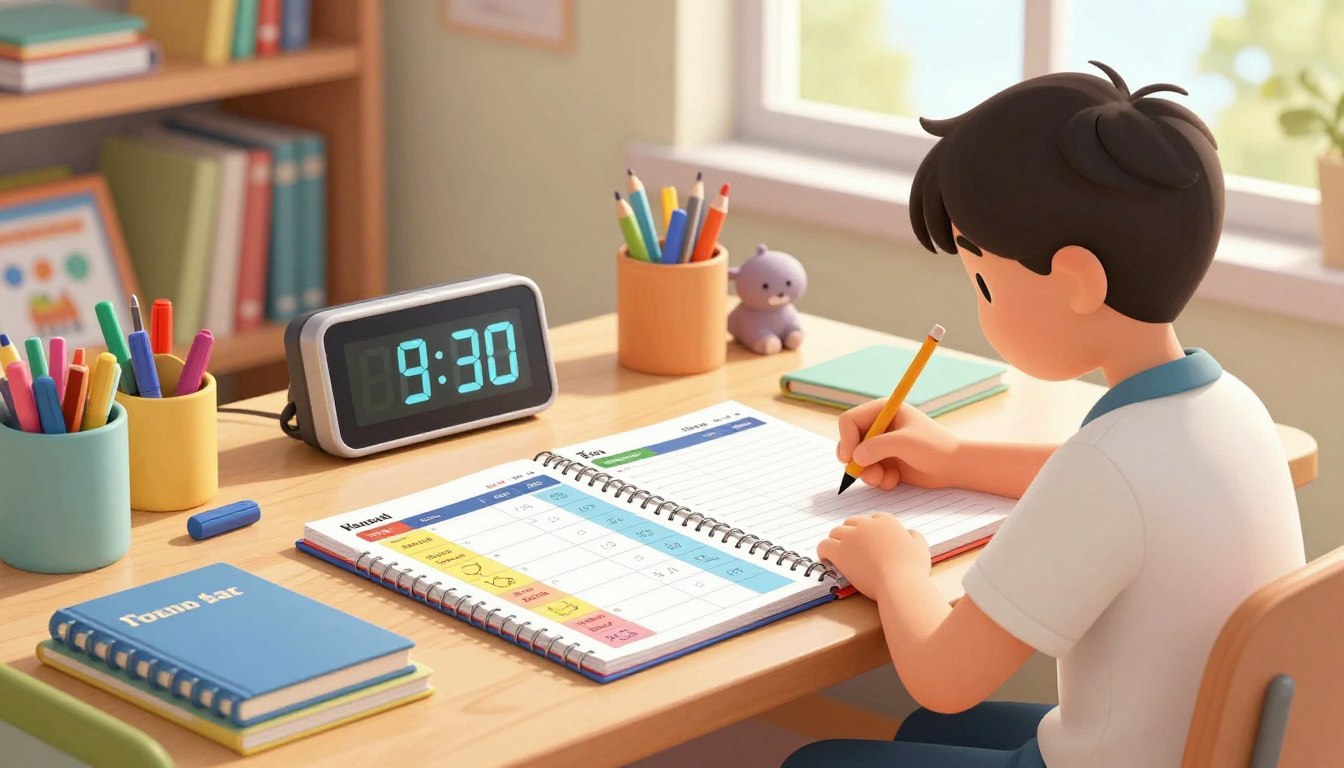
“The key is not to prioritize what’s on your schedule, but to schedule your priorities.” This powerful insight from Stephen Covey captures the essence of effective time management. For young students navigating the whirlwind of middle school, learning this distinction is a game-changer.
Today’s adolescents face a complex balancing act. Academic demands, extracurricular activities, and social lives create a packed schedule that can lead to stress. The developing teenage brain often struggles with planning and estimating task duration, making traditional planning methods less effective.
This guide offers a strategic approach. Time blocking transforms abstract time into manageable segments. It empowers a child to visualize their day and make intentional choices. This isn’t just about creating a schedule; it’s about building foundational skills for life. These skills foster independence and confidence, serving them well into high school and beyond.
We will explore practical strategies, drawing from educational psychology and real-world experience. Implementing these techniques requires patience and collaboration. The investment, however, yields significant returns in reduced stress and improved outcomes. This methodology provides the necessary scaffolding for a child‘s developing executive functions, offering tangible help for families. As noted by Scholastic, most kids need support to organize their schedules independently until middle school.
Key Takeaways
- Time blocking helps students visualize and manage their busy schedules effectively.
- Middle school is a critical developmental stage for learning executive function skills.
- This approach reduces family stress and improves academic performance.
- Successful implementation requires patience and collaboration between parents and students.
- Building these skills early fosters long-term confidence and independence.
Understanding the Concept of Time Blocking
Moving beyond simple checklists, this strategic approach adds temporal dimension to task management. It transforms how young learners perceive and utilize their daily hours.
What is Time Blocking?
Time blocking divides the day into dedicated segments. Each block focuses on specific activities or responsibilities. This creates a visual roadmap for the entire day.
Rather than listing “math homework” and “soccer practice” randomly, students see “4:00-5:00 PM: Math homework” clearly mapped out. This method addresses poor time estimation common in middle school.
Benefits for Middle Schoolers
This methodology offers significant advantages for developing organizational skills. It provides the structure young minds need during this critical learning phase.
| Traditional Approach | Time Blocking Benefits |
|---|---|
| Overwhelming to-do lists | Clear time structure reduces anxiety |
| Poor time estimation | Visual schedule improves planning |
| Decision fatigue | Predetermined blocks enhance focus |
| Reactive time management | Intentional approach builds confidence |
The table illustrates how this system creates a better way to manage daily responsibilities. Students gain control over their schedule through this structured approach.
Why Time Management Matters for Your Child
During the middle school years, young learners face a unique convergence of developmental changes and academic demands. The prefrontal cortex—responsible for planning and organization—is still developing until the mid-twenties. This neurological reality explains why many students struggle with time estimation and forward thinking.
Recognizing Daily Challenges
Middle school brings multiple classes with different expectations. Students juggle homework across subjects while balancing extracurricular activities. They also navigate social connections and family responsibilities.
Digital distractions create additional pressure. Many young people feel overwhelmed by competing demands. The anxiety stems from uncertainty about completing everything on time.
Research shows that poor time management leads to negative effects. Academic performance may decline while stress levels increase. Sleep quality often suffers, affecting overall well-being.
Reducing Stress and Overwhelm
Effective time management creates predictability in a child‘s schedule. It breaks large responsibilities into manageable chunks. This approach helps reduce stress and prevent last-minute panic.
When students manage their time well, they experience multiple benefits. They have energy for friends and hobbies while completing homework efficiently. Family conflicts decrease as responsibilities are met consistently.
| Common Challenges | Time Management Solutions |
|---|---|
| Multiple homework assignments | Scheduled blocks for each subject |
| Social pressure and FOMO | Designated time for friends and activities |
| Digital distractions | Focused work periods without devices |
| Feeling overwhelmed | Breakdown of large tasks into steps |
These skills represent an investment in your child‘s future success. The confidence gained through effective management extends beyond school years. It builds resilience for handling life’s competing demands.
A Parent’s Guide to Time Blocking for Middle Schoolers
Time blocking serves as the foundational framework that supports the development of crucial organizational capabilities in young learners. This approach provides the mental scaffolding needed for effective daily planning.
The Executive Function Foundation
Executive function skills are learned abilities that strengthen with consistent practice. These mental processes include planning, focus, and task management. They are not innate talents but develop through guided support.
Parents play a critical mentoring role in this learning process. Effective guidance means teaching the system while allowing increasing independence. This approach encourages students to take ownership of their schedule.
The developmental progression typically begins with initial resistance. With consistent practice, young people gradually adopt the system. They eventually internalize time blocking as a natural habit.
This methodology specifically builds critical skills like task initiation and sustained attention. Middle school represents the ideal window for introducing these structured approaches. The process requires patience but yields long-term benefits in time management capabilities.
Essential Strategies for a Balanced Schedule
Creating a truly effective schedule requires more than just filling time slots—it demands strategic prioritization. Not all activities hold equal weight, and learning to distinguish between urgent responsibilities and discretionary fun is a critical skill.
Identifying Priorities: School, Homework, and Activities
The process begins collaboratively. Sit down with your young learner and list every recurring commitment. This includes school hours, team practices, music lessons, and essential family time.
Next, add variable responsibilities like daily homework and upcoming projects. Finally, incorporate desired activities: socializing, hobbies, and vital relaxation. This comprehensive list forms the raw material for a balanced plan.
A modified priority matrix helps categorize these tasks. Non-negotiable items are fixed. High-priority work, like studying for tests, comes next. Valuable enrichment follows. Discretionary fun is scheduled last.
Many young people overcommit. Signs include persistent exhaustion and abandoned homework. Recognizing these red flags early is crucial. It allows for adjustment before stress overwhelms them.
A balanced schedule honors the whole child. It allocates time for academics, health, creativity, and rest. This holistic way of thinking ensures sustainability. For more detailed tips for effective time management, exploring additional resources can provide further support.
Realistic homework estimation is key. Encourage tracking how long assignments actually take over a week or two. Use this data—not wishful thinking—to build the schedule. This empirical approach builds accuracy and confidence.
Implementing Time Blocks: A Step-by-Step Process
Practical application of time management principles begins with a collaborative planning process. This approach transforms abstract concepts into daily practice through clear, manageable steps.
Mapping Out the Daily Routine
The first step involves creating a weekly framework together. Start with fixed commitments like school hours and extracurricular activities. These form the foundation of the schedule.
Next, add predictable routines such as meal times and bedtime. This creates a structured skeleton for the day. Color-coding different activity types enhances visual organization.
Allocating Breaks and Free Time
Strategic break allocation prevents cognitive fatigue. The Pomodoro Technique offers an effective model: 25 minutes of focused work followed by 5-minute breaks.
After four cycles, schedule a longer 15-30 minute rest period. This pattern maintains productivity throughout the day. Free time blocks should follow demanding academic work.
| Time Block | Activity | Break Period |
|---|---|---|
| 3:00-3:30 PM | Arrival & Snack | Transition time |
| 3:30-4:00 PM | Free choice activity | Decompression break |
| 4:00-4:25 PM | Homework block one | 5 minutes |
| 4:30-4:55 PM | Homework block two | 5 minutes |
| 5:00-6:00 PM | Extracurricular activity | Natural transition |
This structured approach builds consistency through regular practice. Each step moves young learners toward independent time management skills.
Integrating Homework, Extra-Curriculars, and Family Time
Successful integration of homework, extracurriculars, and family life transforms what could be competing demands into complementary components of a balanced week. This approach requires viewing each commitment as a building block that fits together strategically.
Creating a Visual Schedule
Young students benefit greatly from seeing their time mapped visually. Color-coding different activities helps them understand how academic work, personal passions, and family connections coexist throughout the week.
Peak focus time should be reserved for challenging homework subjects. Less demanding tasks can fill lower-energy periods. Breaking large assignments across multiple days prevents last-minute rushing.
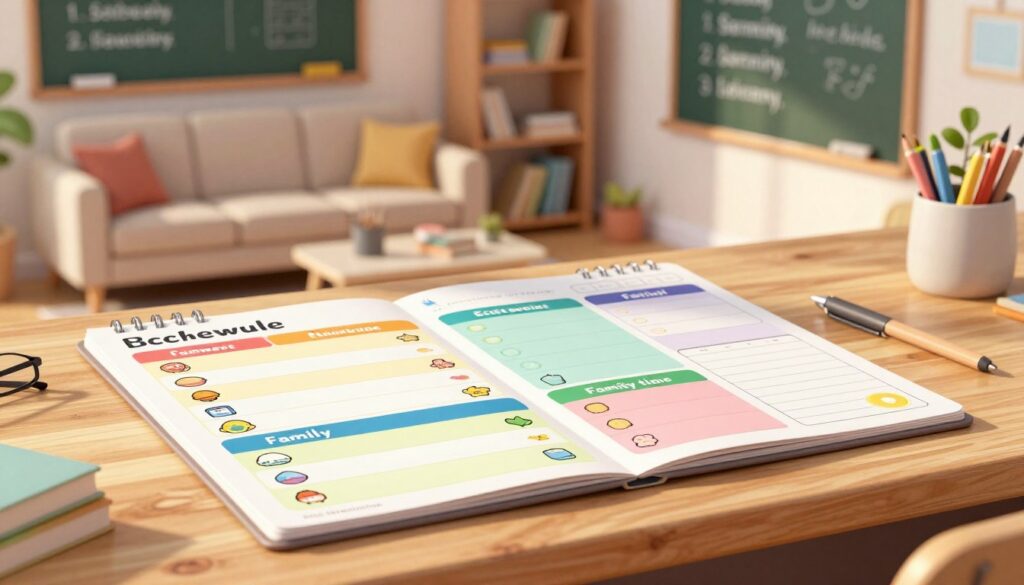
Extracurricular activities provide valuable enrichment but require careful balance. Families should regularly evaluate whether current commitments remain sustainable. Protected family time—like shared meals—should be treated as non-negotiable.
Using a paper planner or digital calendar helps students track their commitments effectively. The format matters less than consistent daily use. A weekly planning session establishes this valuable habit.
This collaborative approach to building a back-to-school routine ensures all components receive appropriate time. The visual schedule becomes a roadmap for successful weekly management.
Designing Effective Morning and Evening Routines
Strategic routines at day’s start and finish provide the predictability developing minds need. These bookend practices create a framework that reduces decision fatigue and establishes productive patterns.
Nighttime Preparations for a Stress-Free Morning
Evening preparation transforms chaotic mornings into smooth transitions. Young people should pack backpacks, select outfits, and prepare lunch items the night before.
This eliminates morning rushing and last-minute searches. Establishing a consistent bedtime is equally crucial for cognitive function.
Most adolescents require 8-10 hours of sleep nightly. Families should calculate backwards from wake-up time to set firm targets.
A structured wind-down protocol enhances sleep quality. Begin by ending screens and homework 60 minutes before bed.
End-of-Day Wind Down Strategies
The final hour before sleep should follow a gradual relaxation sequence. Complete hygiene routines, then engage in calming activities like reading.
Practice deep breathing during the last 15 minutes. This signals the brain to transition from active to restful states.
Morning routines benefit from similar consistency. Wake at the same time daily, even weekends. This stabilizes the body’s internal clock.
These practices require 3-4 weeks to become automatic habits. Initial resistance is normal during this adjustment period.
The investment yields significant returns in reduced stress and improved daily performance. Consistent routines create the foundation for effective time management throughout life.
Digital Tools and Resources for Time Management
Modern students naturally gravitate toward technology, making digital planning tools an ideal complement to traditional scheduling methods. These resources offer automated reminders and visual dashboards that appeal to tech-savvy young learners.
Leveraging the Education AI Tool at FlowScholar
FlowScholar’s Education AI Tool represents a cutting-edge approach to time management. This innovative platform provides personalized help by analyzing individual work patterns and suggesting optimal study time allocations.
The AI adapts to each student’s unique learning style, breaking complex assignments into manageable steps. It offers strategic tips and progress tracking to keep young people motivated. This intelligent system complements manual scheduling with data-driven insights.
Utilizing Planner Apps and Online Calendars
Popular applications like Google Calendar and Todoist provide excellent support for daily scheduling. These tools allow students to color-code activities and set recurring reminders for regular commitments.
Families can use shared calendars to coordinate schedules across the entire team. Digital planner apps sync across devices, ensuring schedules are accessible everywhere. This cross-platform functionality enhances consistency.
Effective implementation requires establishing clear device usage norms during study time. The best tool is one that students will use consistently to track their progress and receive timely help.
Supporting Students with ADHD, Anxiety, and Learning Differences
For young learners with ADHD, anxiety, or learning differences, traditional scheduling often creates more frustration than solutions. These students face unique neurological challenges that require tailored strategies.
Executive function deficits affect working memory and planning abilities. Time blocking provides the structured predictability these young people need to build essential skills.
Tailoring Time Blocks for Unique Challenges
Adapted approaches transform time management into an accessible tool. For students with adhd, shorter blocks with movement breaks maintain engagement.
Anxious learners benefit from buffer periods between activities. Visual schedules reduce uncertainty, building confidence through clear expectations.
| Traditional Approach | Adapted Strategy | Key Benefit |
|---|---|---|
| Long work periods | 15-20 minute blocks | Sustained attention |
| Text-heavy planners | Visual symbols and colors | Reduced cognitive load |
| Rigid scheduling | Flexible within structure | Personalized support |
| Independent planning | Parent check-ins | Accountability and help |
Professional guidance offers valuable support for developing customized strategies. Occupational therapists and educational specialists provide targeted help based on each child‘s needs.
When adapted effectively, time blocking becomes a powerful tool for building lifelong skills. Success in managing their schedule gives neurodiverse students the confidence to tackle broader challenges.
Adapting Time Blocking for a Changing Schedule
Flexibility represents the next level of mastery in time management, transforming rigid plans into living systems. Even the most organized students face weeks when everything seems to happen at once.
Adjusting Strategies for Busy Weeks and Special Events
Proactive planning begins with identifying predictable busy periods. Exam week, sports tournaments, and project deadlines require special strategies. Building “flex blocks” into weekly schedules creates essential breathing room.
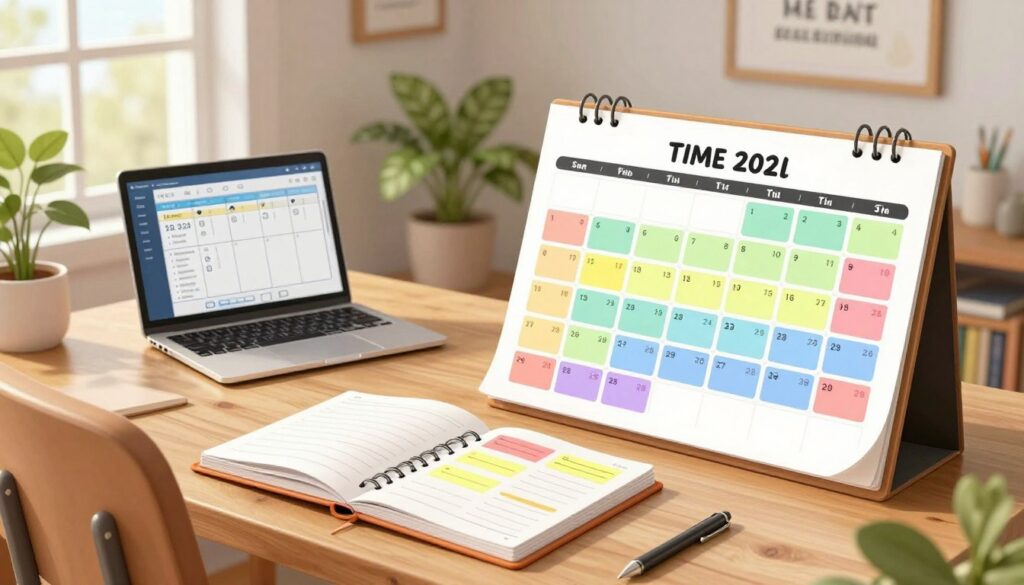
These buffer periods handle unexpected assignments or activities that run long. They prevent the domino effect when one disruption ruins an entire day’s plan.
The weekly review practice becomes crucial for adaptation. Each Sunday, sit with your child to assess what worked and what didn’t. Adjust the upcoming week based on these insights.
Seasonal changes also impact scheduling. Fall sports differ from spring activities, requiring different time allocations. Holiday months need special consideration for family commitments.
Learning to adapt schedules builds resilience and problem-solving skills. This practice teaches young people that effective time management includes knowing when to adjust the plan.
Conclusion
Mastering time management is a journey that builds lifelong confidence and capability in young learners. This approach empowers students to take ownership, reduce stress, and create space for what truly matters.
Remember, this is a skill that requires consistent practice. The goal is progress, not perfection. Your role as a parent is to offer support and guidance, celebrating small wins along the way.
The core principles—visual schedules, balanced routines, and flexibility—provide a solid foundation. This investment pays dividends well beyond middle school, fostering independence.
For additional personalized help, explore the innovative tools at FlowScholar. Their platform offers tailored tips to manage time effectively.
Ultimately, this framework is liberating. It gives your child the confidence to navigate their schedule successfully, creating more time for learning, connection, and joy.
FAQ
How does time blocking help reduce stress for middle school students?
Time blocking reduces stress by providing a clear structure for the day. It breaks down large tasks, like homework, into manageable chunks. This visual schedule helps students feel in control, minimizing the anxiety that comes from feeling overwhelmed by schoolwork and activities.
What is the first step in teaching my child to manage their time effectively?
The foundational step is to sit down together and map out a typical week. Identify all fixed commitments like school, team practices, and family time. Then, list homework and other tasks. This collaborative process builds essential skills and gives your child ownership over their schedule from the start.
Can time blocking strategies support a student with ADHD?
Absolutely. Time blocking is highly effective for students with ADHD because it externalizes structure. Using a planner with clear time blocks for focus work, followed by scheduled breaks, can improve concentration. Tailoring the length of these blocks to match your child’s attention span is a key strategy for success.
How much free time and rest should be included in a daily schedule?
Balancing work with breaks is critical. A good rule is to schedule a 5 to 15-minute break after every 25-30 minutes of focused work, like homework. Ensure there is also dedicated, unscheduled free time each day for friends and hobbies, as well as a consistent sleep schedule to support overall well-being.
What digital tools can help my middle schooler track their schedule?
A> Many families find success with simple planner apps like Google Calendar or Apple Calendar, which offer visual reminders. For a more tailored approach, the Education AI tool at FlowScholar can help students break down projects and manage deadlines, building their confidence in handling school tasks independently.
How can we adapt the time blocking system during a particularly busy week?
Flexibility is key. During busy weeks with special events or exams, sit down as a team to reassess priorities. Some less critical tasks can be temporarily shortened or postponed. The goal is to maintain the structure of time blocking while adjusting the content to reduce stress and keep the schedule realistic.