As the renowned psychologist B.F. Skinner observed, “The way positive reinforcement is carried out is more important than the amount.” This insight cuts to the heart of a challenge many parents face. They want to encourage positive behavior in their children but worry that offering incentives is simply bribery.
For kids, especially those with executive functioning challenges, motivation doesn’t always come naturally. Tasks like homework or cleaning can feel overwhelming. A well-designed system of rewards is not a bribe. It’s a strategic teaching tool.
It helps children experience the value of follow-through. They build momentum and connect effort with positive outcomes. This approach builds lasting habits rather than creating dependency.
This guide explores how to structure these incentives effectively. The goal is to foster internal motivation over time. Think of it as using training wheels—a temporary support that builds confidence and consistency.
Key Takeaways
- Properly designed incentives are educational tools, not manipulative bribes.
- Children with executive function challenges benefit greatly from structured external motivation.
- The ultimate goal is to fade the system as intrinsic motivation develops.
- Rewards help kids connect effort with positive outcomes, building essential life skills.
- A strategic approach addresses common parental concerns about creating reward-dependent behavior.
Understanding the Difference Between Rewards and Bribes
Many well-intentioned parents find themselves walking a fine line between encouragement and manipulation. The distinction often comes down to timing and purpose rather than the incentive itself.
Defining Rewards and Their Role in Motivation
A constructive reward system operates on proactive principles. It establishes clear expectations before the behavior occurs. This approach reinforces positive patterns through predictable outcomes.
For a child, this creates a healthy cause-and-effect relationship. They learn that effort leads to recognition. The reinforcement builds internal motivation over time.
Why Timing and Intent Matter
Bribes typically emerge reactively during challenging moments. A common example might involve offering treats to stop immediate misbehavior. This way of responding teaches the wrong lesson.
Research shows that children with ADHD have unique neurological responses to incentives. Their brains respond strongly to immediate feedback. Understanding this helps remove moral judgment from the equation.
Effective rewards focus on building skills rather than controlling behavior. They create patterns that support long-term development. This strategic approach to using incentives fosters genuine growth.
Key Principles for Constructive Incentive Systems
Successful habit formation relies on two critical components: unambiguous guidelines and systematic reinforcement reduction. These principles transform temporary incentives into lasting behavioral patterns.
Setting Clear, Consistent Expectations
Children thrive when they understand exactly what is expected. Vague statements like “be good” create confusion. Instead, use specific language that links actions to outcomes.
“After you complete your reading assignment, you can have 15 minutes of YouTube.” This clarity reduces arguments and power struggles. Consistent application builds trust and reliability in the system.
Establishing a Fading Plan for External Rewards
The ultimate goal is self-motivation. External rewards serve as temporary scaffolding. A strategic fading plan gradually reduces their frequency over time.
This approach helps children internalize behaviors. They transition from external validation to intrinsic satisfaction. The table below illustrates a sample progression:
| Week | Reward Frequency | Target Behavior | Transition Goal |
|---|---|---|---|
| 1 | After each session | Homework completion | Immediate reinforcement |
| 2 | Daily consistency | All daily tasks | Delayed gratification |
| 3 | End of week | Sustained habits | Internal motivation |
This systematic approach ensures the reward system builds independence rather than dependency. It’s essential to follow through consistently during each phase of the process.
Strategies for Building a Positive Reward System for Kids
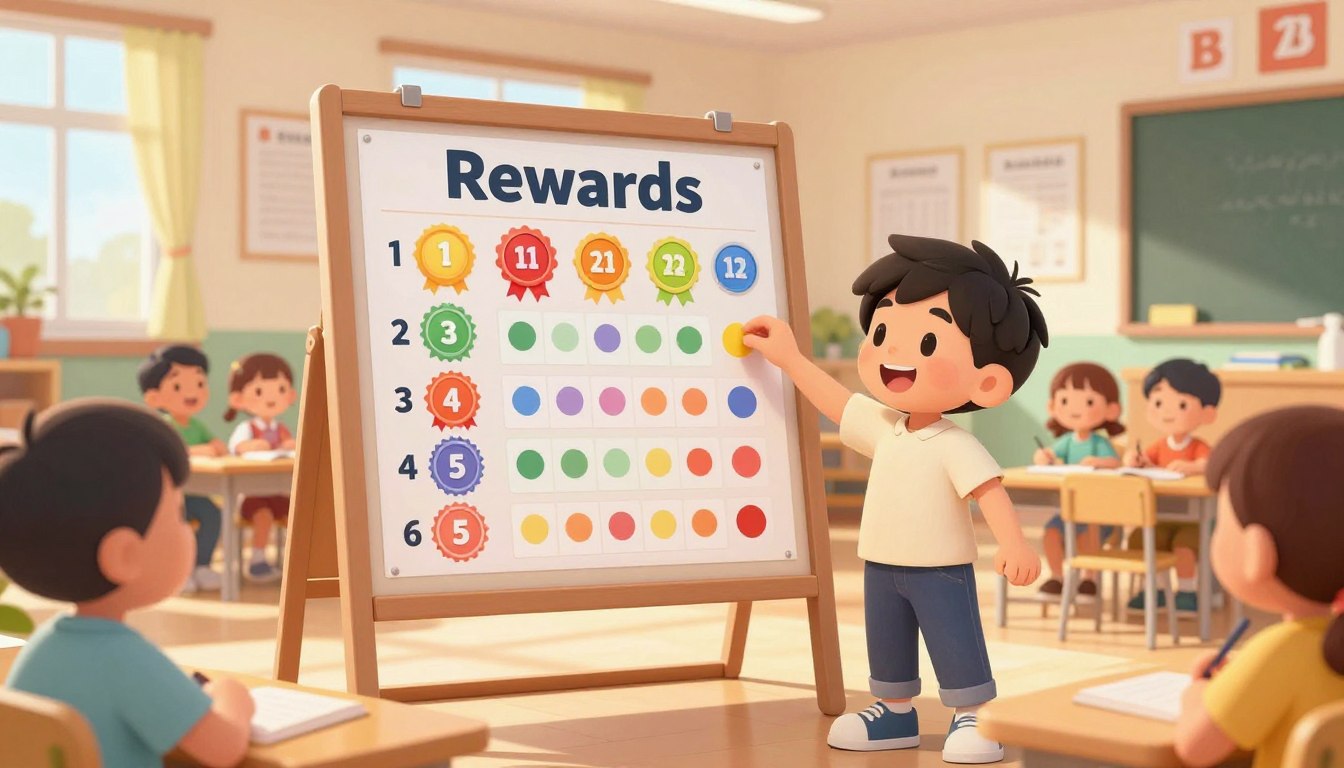
Visual tools transform abstract goals into concrete achievements for children. They provide immediate feedback, making progress feel real and motivating.
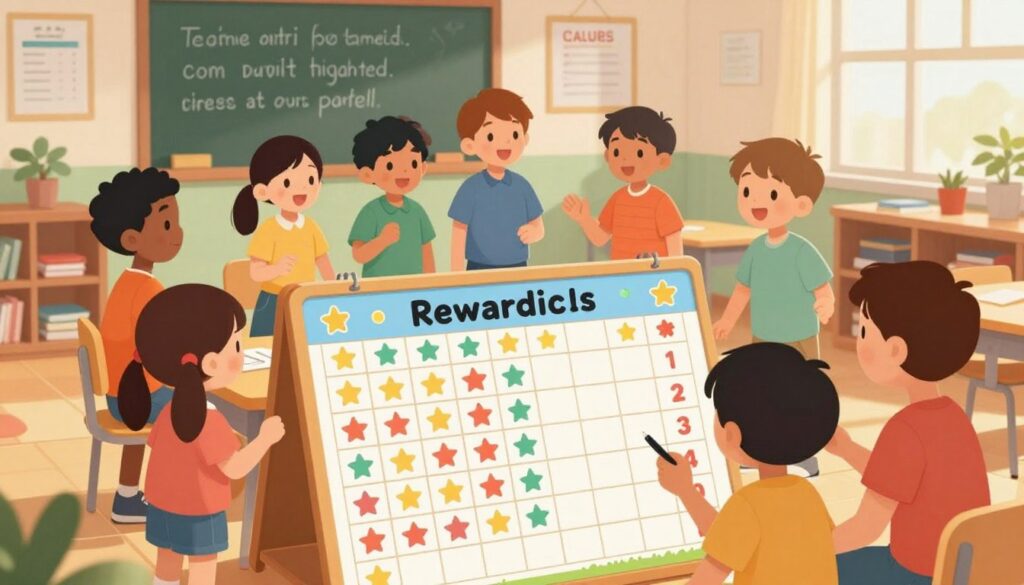
For young children, a simple sticker chart works wonders. Earning a star for completed chores offers a clear, visual win. Older kids often respond better to a points system tracked on a whiteboard or app.
This predictability creates security. Children understand expectations, and adults maintain consistency.
Incorporating Visual Trackers and Checklists
The most powerful reward systems connect effort to natural outcomes. Explain that finishing homework early leads to a relaxed evening. Packing a lunch the night before means extra sleep.
These connections help kids see the inherent value of positive behavior. Involve them in creating their own “reward menu” for greater buy-in.
Effective incentives are often simple and meaningful. Consider this table of ideas for an example of a balanced approach.
| Reward Type | Example Tasks | Potential Incentive |
|---|---|---|
| Daily Effort | Complete all chores | 30 minutes of screen time |
| Weekly Consistency | Finish all homework on time | Choose the family movie |
| Long-Term Goal | Earn 50 points | Special outing with a parent |
Personalizing the system ensures it resonates. For more guidance on structuring these incentives, explore this resource on building an effective reward system.
Leveraging Token Economies and Gamification
For children who thrive on immediate feedback, a structured token system provides the necessary bridge to long-term goals. This approach is one of the most research-validated methods for supporting kids with attention challenges.
Implementing Token-Based Approaches
A token economy is simple yet powerful. Children earn immediate tokens—like stickers or points—for specific actions. Completing homework or finishing chores earns a token. These tokens accumulate and are later exchanged for a predetermined reward.
This method delivers instant positive feedback. It also teaches delayed gratification. The brain learns to connect small, consistent efforts with meaningful outcomes.
Gamifying Chores and Homework Tasks
Gamification adds game elements to everyday tasks. It transforms mundane activities into engaging challenges. This strategy can significantly boost motivation and focus.
For example, turn cleaning a room into a “boss fight” against a timer. Math practice can become a trivia game with scores and sound effects. The process itself becomes rewarding.
The table below illustrates how to combine these strategies effectively.
| Task | Gamification Element | Token Reward |
|---|---|---|
| Complete Math Homework | Beat the clock challenge | 2 points |
| Put Away Toys (Chores) | Speed cleanup level | 1 sticker |
| Read for 20 Minutes | Adventure story quest | 3 points |
This example shows how a blended approach keeps kids engaged. The immediate token and the fun of the game work together to build positive habits.
Tailoring Reward Systems for Children with ADHD and Learning Differences
Children with executive function challenges often face invisible hurdles in daily tasks. Executive functioning encompasses the mental skills needed to plan, focus, and manage time. For neurodivergent children, these cognitive processes develop differently.
These children frequently struggle with task initiation and persistence. They may forget multi-step directions or become easily discouraged. This isn’t willful disobedience—it’s a genuine difference in neurological processing.
Understanding Executive Function Challenges
External reward structures provide essential scaffolding for developing brains. They compensate for underdeveloped internal regulation systems. Think of them as training wheels during skill acquisition.
The right approach addresses specific deficits: difficulty starting work, poor frustration tolerance, and trouble with multi-step processing. Effective reinforcement builds confidence until behaviors become automatic.
Immediate Feedback and Token Adjustments
Immediate feedback is crucial for children with executive function challenges. Delayed consequences have minimal impact on their behavior. The brain needs instant connection between effort and outcome.
Token systems should be adjusted based on individual needs. More significant challenges require more frequent reinforcement. This table illustrates how timing affects effectiveness:
| Executive Function Level | Recommended Feedback Timing | Token Frequency |
|---|---|---|
| Significant Challenges | Immediate (during task) | After each step |
| Moderate Challenges | Short delay (end of task) | Daily accumulation |
| Mild Challenges | Longer delay (end of day) | Weekly rewards |
Research shows measurable improvements when systems are properly calibrated. For children with ADHD, specific strategies can transform frustrating behavior into consistent progress.
Integrating Educational AI Tools for Enhanced Rewards
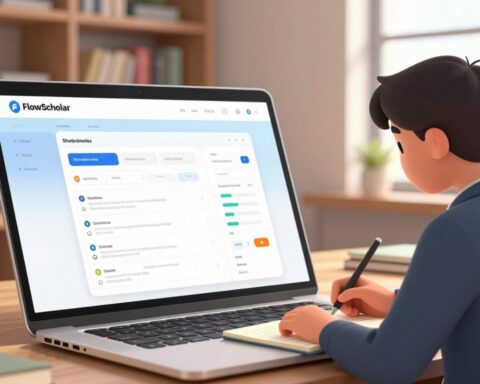
FlowScholar represents the next evolution in combining technology with proven behavioral principles. This educational AI platform transforms routine learning into dynamic experiences that maintain children’s engagement.
Overview of FlowScholar as an Education AI Tool
The platform uses intelligent algorithms to create personalized challenges. It adapts to each child’s learning pace and preferences. This personalized approach keeps kids motivated through appropriate difficulty levels.
FlowScholar turns homework into interactive quests with immediate feedback. Children see their progress in real-time through visual trackers. This transparency reinforces the connection between effort and achievement.
Using AI to Monitor and Motivate Habit Formation
Artificial intelligence provides the consistent monitoring that traditional systems often lack. The platform tracks multiple habits simultaneously across different subjects. Parents receive data-driven insights to refine their reward systems.
Research shows that effective gamification significantly boosts engagement. FlowScholar incorporates game elements like level-ups and story progression. These features transform learning into an exciting journey rather than a chore.
The ultimate goal remains building intrinsic motivation. This tool complements family-based rewards by adding digital reinforcement. Together, they create a comprehensive system for lasting habit development.
Sustaining Long-Term Motivation and Habit Formation
When external incentives fade but positive behaviors persist, the true success of a reward system becomes evident. This transition represents the ultimate goal of any strategic approach to behavior development.
The neuroscience behind this process reveals how repeated actions create neural pathways. These pathways eventually make behaviors feel automatic rather than requiring conscious effort.
Transitioning to Intrinsic Motivation
Effective systems recognize when children are ready to move beyond external validation. Signs include consistent performance without reminders and expressions of personal pride in accomplishments.
The psychological principle here is crucial: external rewards build intrinsic motivation when they help children achieve competence. For tasks initially seen as difficult, incentives provide a necessary bridge.
Gradual reduction of reward frequency maintains behavioral consistency during this transition. The focus shifts from external incentives to the internal value of newly developed skills.
This approach celebrates the emerging sense of capability and pride. Children discover that their own effort brings meaningful results, creating self-sustaining habits.
Parental Guidance: Teaching Value Through Consistent Rewards
The most powerful teaching tool parents possess isn’t found in any curriculum or program—it’s their own daily behavior. Children absorb attitudes about work and achievement primarily through observation rather than instruction.
Modeling Diligence and Goal Setting
When parents visibly set personal goals and reward their own efforts, they demonstrate that self-motivation is a lifelong skill. This way of approaching challenges creates a living blueprint for children.
Simple modeling exercises include tracking how often you practice patience or ask questions instead of giving directions. When you reach a goal, celebrate with meaningful rewards that refuel your spirit.
Collaborative Reward Planning with Your Child
Positioning yourself as a collaborative partner rather than a taskmaster transforms the dynamic. Involve your child in designing their own incentive system to dramatically increase buy-in.
Research shows that kids who plan their time and evaluate their own work develop stronger prefrontal cortex function. This enhances their cognitive control and strategic thinking skills.
Family conversations about goals and rewards create shared understanding. They teach children to think strategically about motivation while building mutual respect within the family unit.
Conclusion
The journey from external motivation to internal drive represents one of parenting’s most rewarding transitions. A well-structured approach to rewards provides the essential scaffolding children need to develop crucial life skills.
Parents should view these systems as legitimate educational tools rather than shortcuts. The training wheels analogy holds true—temporary support enables independent capability. Clear expectations, consistent application, and strategic fading create lasting habits.
The ultimate value extends beyond immediate behavior changes. It cultivates self-motivated kids who take pride in their accomplishments. This approach builds executive function while maintaining family harmony.
For parents ready to implement these principles, FlowScholar offers AI-enhanced support. This platform transforms routine tasks into engaging experiences that maintain children’s motivation. Discover how technology can enhance your reward strategy at FlowScholar.com.
FAQ
What is the main difference between a reward and a bribe?
The core difference lies in timing and intent. A reward is given after a desired behavior is completed to reinforce it. A bribe is offered beforehand to stop a negative behavior or ensure compliance. Rewards build habits; bribes often create a cycle of negotiation.
How can I make sure my child’s reward system doesn’t lose its effectiveness over time?
Implement a fading plan. Gradually reduce the frequency or size of tangible rewards as the new habit becomes ingrained. Shift the focus from external incentives, like treats, to internal praise and the natural satisfaction of completing a task.
Are visual charts and checklists effective for all children?
Visual trackers are highly effective for most kids, especially younger children or those with ADHD. They provide clear expectations, make progress tangible, and offer a sense of accomplishment. The key is to tailor the chart’s design to your child’s interests and age.
What is a token economy system, and how does it work?
A token economy is a behavior modification system where children earn tokens, points, or stars for completing tasks. They later exchange these tokens for a larger reward. This approach teaches delayed gratification and connects effort directly to a meaningful goal.
How should a reward system be adjusted for a child with executive function challenges?
For children with ADHD or learning differences, systems need more immediacy and clarity. Offer feedback and small rewards right after the task. Break large chores into smaller, manageable steps, and be flexible with point values to maintain motivation.
Can technology like educational AI tools be part of a reward system?
Absolutely. Tools like FlowScholar can gamify learning and habit formation. They provide immediate feedback, track progress automatically, and offer personalized incentives, making the process engaging and data-driven for the child.
How do we transition from external rewards to intrinsic motivation?
The goal is for the behavior itself to become the reward. Consistently pair tangible rewards with verbal praise about the child’s effort and growth. Over time, emphasize the positive feelings and outcomes that come from the habit, like pride in a clean room or better grades.
What role should parents play in the reward system?
Parents act as guides and models. They should collaborate with the child to set realistic goals and choose meaningful incentives. By modeling diligence and celebrating effort, not just outcomes, parents teach the underlying value of hard work.