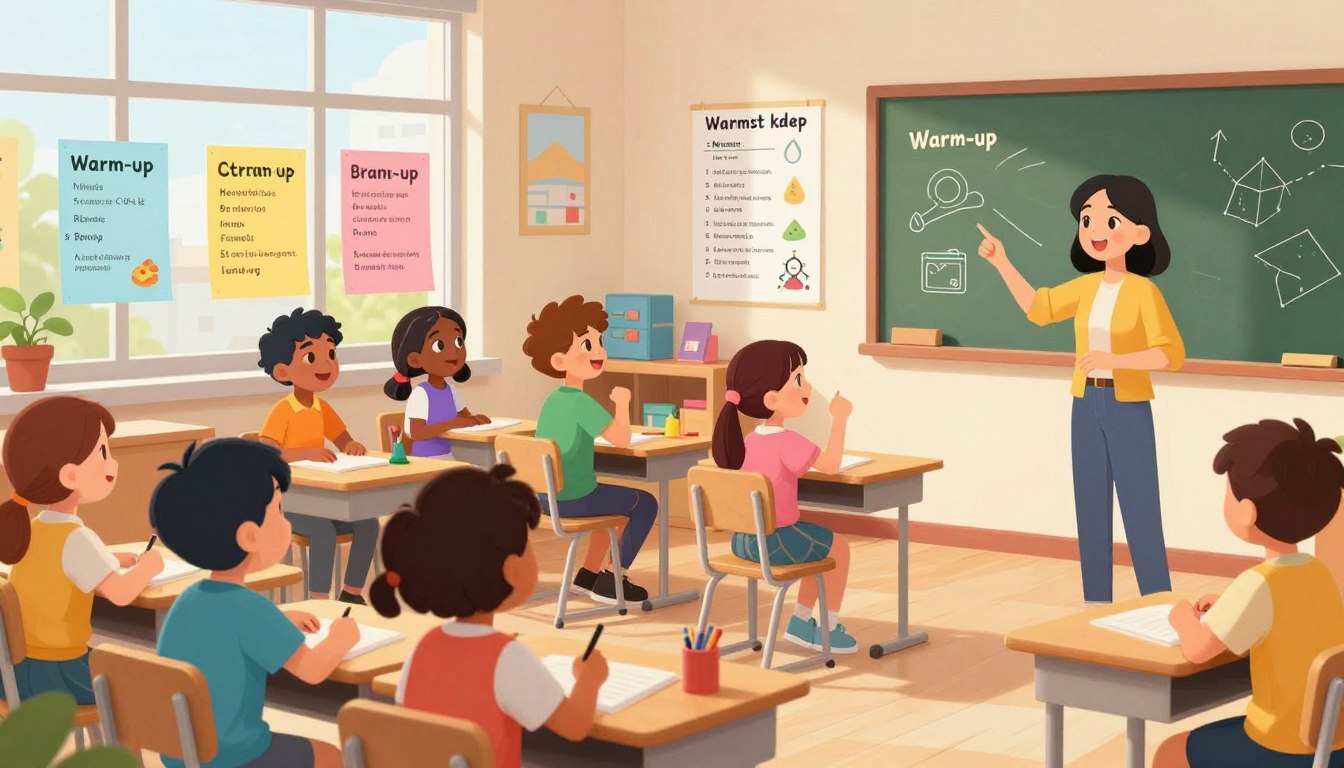
“Education is not the filling of a pail, but the lighting of a fire.” – William Butler Yeats. This powerful idea captures the essence of a great classroom start. It is not about pouring information into passive students. It is about igniting their curiosity and engagement from the very first minute.
Research from the Stanford Teaching Commons confirms this. Intentional opening activities significantly boost student focus and participation. In fact, a well-chosen task can transition a class from distracted to engaged in just 3-5 minutes. These activities are strategic tools, not mere time-fillers.
They work by activating cognitive processes, building social connections, and establishing psychological readiness for learning. With 63% of K-12 learners using online tools daily, capturing attention is crucial. Tools like Flow Scholar’s Education AI Tool offer innovative solutions for educators seeking dynamic engagement strategies.
This guide provides actionable, immediately implementable strategies. It is organized by grade level and activity type to respect educators’ limited time. The following key takeaways highlight the core principles of effective warm-ups.
Key Takeaways
- Opening activities are strategic tools that transform classroom dynamics.
- Brief, intentional warm-ups create measurable improvements in student focus.
- Effective tasks activate brains, build connections, and set a positive tone.
- Versatile applications include daily routines, topic introductions, and pre-assessment.
- These strategies offer solutions for transitioning learners to focused engagement.
- Minimal preparation can yield maximum impact on participation.
- Resources like Flow Scholar provide innovative support for classroom engagement.
Understanding the Value of Warm-Up Activities
A student’s journey from distraction to focus is a neurological process that can be strategically supported. These opening tasks prime young minds for the work ahead.
Benefits for Student Engagement
Effective activities address a fundamental cognitive challenge. Brains need activation before deep engagement becomes possible.
This approach creates a dual benefit structure. It serves both student and teacher needs simultaneously.
Shared classroom experiences bond people as a community. They generate collective memories that attach positive emotions to learning.
“When students feel safe and connected, their capacity for learning expands exponentially.”
The Responsive Classroom framework emphasizes safety, belonging, and fun as non-negotiable needs. Meeting these psychological prerequisites is essential for development.
Setting a Positive Tone for Learning
These strategies function as disguised formative assessment. Educators can gauge readiness and energy levels without pressure.
There is a powerful teacher retention dimension too. Joyful moments combat burnout by reconnecting educators with their profession’s intrinsic rewards.
This table illustrates the mutual benefits of implementing consistent warm-up routines:
| Student Benefits | Teacher Benefits | Classroom Impact |
|---|---|---|
| Smoother cognitive transition | Quick energy assessment | Positive atmosphere creation |
| Enhanced social connection | Reduced burnout risk | Stronger community bonds |
| Psychological safety | Professional satisfaction | Increased participation |
| Emotional readiness | Cultural influence | Long-term motivation |
Ultimately, these activities represent controllable elements within an educator’s sphere of influence. They empower teachers to shape their classroom culture strategically, creating positive impact regardless of external challenges. The goal is meaningful engagement through intentional design.
Energizing Virtual Classrooms with Warm-Up Strategies
Virtual learning environments present unique engagement challenges that require innovative approaches to capture student attention. Physical distance, screen fatigue, and home distractions create barriers that traditional classroom management cannot fully address.
These opening activities become particularly critical in digital spaces. The absence of physical presence and environmental cues makes intentional engagement strategies essential for maintaining learning momentum.
Virtual warm-ups help students create psychological boundaries between home spaces and learning spaces. They establish mental transitions that physical classroom arrival naturally provides but remote learning eliminates.
Technical considerations include camera-on/camera-off flexibility and chat participation alternatives. Strategies must accommodate varying bandwidth and technology access without excluding any learners.
| Virtual Classroom Challenge | Traditional Classroom Solution | Virtual Adaptation Strategy |
|---|---|---|
| Physical distance barriers | Proximity and eye contact | Interactive polls and chat features |
| Screen fatigue | Physical movement breaks | Quick digital games and rotations |
| Home distractions | Controlled environment | Psychological transition activities |
| Social isolation | Face-to-face interaction | Breakout room discussions |
These approaches combat isolation by creating social connection opportunities. They build classroom community despite physical separation through shared digital experiences.
Virtual warm-ups offer efficiency advantages by leveraging digital tools. Polls, breakout rooms, and shared whiteboards create interactive experiences that might be logistically complex in physical classrooms.
The Role of Games and Interactive Activities in Learning
Integrating play into academic work leverages a fundamental neurological principle: emotion enhances memory. When learning feels like a fun activity, students form stronger, more accessible memories.
https://www.youtube.com/watch?v=3M1TDW_XNgE
This approach is grounded in cognitive science. Retrieval practice—the act of recalling information—strengthens neural pathways more effectively than passive review. Well-designed games make this practice engaging rather than tedious.
Building Connections Through Play
Inclusive group games create shared experiences that bond a class. They build a community where people feel safe to participate. This collaborative environment establishes positive norms for learning.
These activity structures prioritize urgency through time limits, not competition that creates winners and losers. This fosters a supportive atmosphere where all students can engage without anxiety.
Promoting Retrieval Practice
Games function as stealth assessments. Educators observe student responses during play to identify knowledge gaps. This happens without the pressure of formal testing.
The playful context triggers positive emotions. These emotions become neurologically linked to the academic content. This creates a powerful, fun foundation for long-term retention that benefits all people involved.
A Curated Collection of Engagement Strategies
The transition from casual conversation to focused learning represents a critical juncture that determines lesson effectiveness. Our collection presents evidence-based approaches that respect educators’ limited preparation time while delivering maximum impact on student engagement.
These frameworks adapt seamlessly across different subjects and grade levels. The strategic 3-5 minute timeframe creates meaningful cognitive activation without consuming excessive instructional time. This approach demonstrates respect for curriculum pacing while prioritizing student readiness.
Variety addresses multiple engagement dimensions. Movement-based activities energize physical learners. Verbal interactions support social connection. Creative expression and critical thinking tasks cater to diverse learning styles. Educators can select strategies aligned with specific lesson goals.
Implementation prioritizes consistent routines over constant novelty. Familiar structures executed with varied content create security while maintaining freshness. This systematic way saves planning time while ensuring reliable results.
These ideas solve common instructional challenges like low energy and difficult transitions. The subsequent sections provide a comprehensive toolkit for building personalized warm-up repertoires. Educators can navigate practical examples tailored to their unique teaching contexts.
Grade-Specific Warm-Up Ideas
Grade-specific warm-up activities mirror the natural progression of student development and learning capabilities. Effective selection honors how cognitive needs evolve from elementary through high school years.
Developmental appropriateness guides this approach. Elementary tasks prioritize movement and concrete experiences, while middle school strategies leverage social interaction. High school approaches emphasize abstract reasoning.
Elementary-Level Activities
Young learners thrive with brief, physically engaging tasks. “Find and Show” scavenger hunts combine kinesthetic movement with low-pressure sharing. These activities respect short attention spans while building confidence.
Movement and counting games integrate academic practice with energy release. Quick draw challenges tap into creativity without demanding advanced skills. Such approaches work well for kids needing concrete visual elements.
Strategies for Middle and High School Students
Middle school activities channel adolescents’ natural social tendencies. Two-minute debates and rapid-fire categories transform opinion-sharing into academic practice. These methods navigate complex social dynamics productively.
High school warm-ups honor teenagers’ growing analytical abilities. Current events connections and assumption challenges link curriculum to real-world contexts. Students engage with sophisticated concepts through perspective-taking exercises.
The cognitive demand progression moves from simple recall to evaluation. Educators can find additional online K12 classrooms strategies that adapt across grade levels. These designations serve as flexible starting points rather than rigid boundaries.
Incorporating Movement and Creativity
When bodies move, minds awaken—this fundamental connection between physical activity and mental readiness forms the foundation of effective movement-based warm-ups. Neuroscience reveals how motor activity increases blood flow and oxygen delivery to the brain.
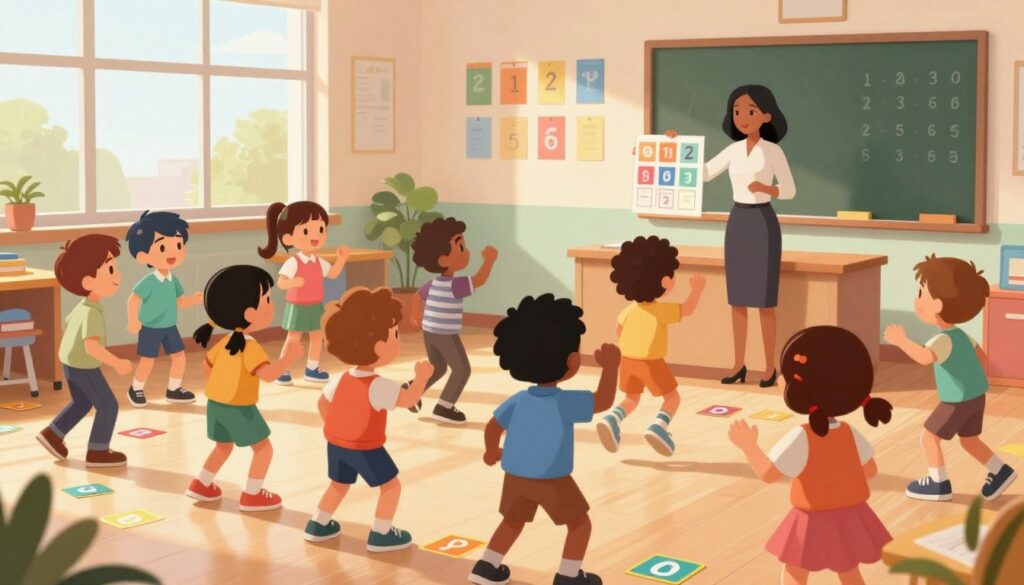
These strategies prove particularly essential for elementary students whose developmental stage requires frequent physical activity for optimal cognitive function. Young kids need to engage their bodies to activate their brains for learning.
Movement and Counting Activities
Implementation follows a strategic way that integrates academic content with physical exercises. Simple movements like jumping jacks paired with counting create a dual-purpose activity.
Accessibility considerations ensure all students can participate regardless of physical limitations. Seated alternatives work well for small space constraints, serving as one example of thoughtful adaptation.
Creative variations maintain the movement principle across different subjects. Acting out vocabulary words or forming letters with bodies transforms limited space into an interactive activity zone.
Virtual applications combat screen fatigue by giving students legitimate reasons to stand and stretch. This evidence-based approach validates educators who prioritize movement during instructional time.
Question-Based Warm-Ups for Instant Engagement
Simple questions possess a remarkable power to unlock student voices and build classroom community almost instantly. These low-stakes prompts create a safe space where every person has something valuable to contribute.
Psychologically, playful questions reduce performance anxiety by removing academic pressure. They offer safe entry points for reluctant speakers. This approach is particularly valuable for students experiencing social anxiety.
Silly Questions to Spark Conversation
Community building happens naturally through shared revelations. Silly questions help people discover commonalities and appreciate differences. They develop empathy by understanding peers’ perspectives.
Effective question categories balance accessibility with interest. “Would you rather” choices and imagination prompts work well. Favorites with unexpected twists and hypothetical scenarios invite creative thinking.
“The art of teaching is the art of assisting discovery. A well-placed question can open a mind faster than any lecture.”
Implementation strategies maximize participation while respecting comfort levels. Offer both verbal and written response options. Celebrate diverse answers without judgment. Model enthusiastic engagement with all contributions.
These activities function as powerful equity tools. Everyone has opinions regardless of academic background. This creates genuine opportunities for all voices to be heard in conversation.
| Question Type | Student Engagement Level | Transition Potential |
|---|---|---|
| Personal Preference | High (Low Risk) | Basic Social Connection |
| Imaginative Scenario | Creative Engagement | Abstract Thinking |
| “Would You Rather” | Interactive Decision-Making | Critical Reasoning |
| Content-Bridged | Academic Preparation | Direct Lesson Link |
Educators can gradually shift from social to academic inquiry. Start with “What’s your favorite color?” then progress to “What natural processes create that color?” This method builds upon the foundational work of a man with a thousand questions who understood the power of inquiry.
We position these questions as legitimate pedagogical tools supported by social-emotional learning research. They are not frivolous time-fillers but validated components of comprehensive education that prepare students for deeper learning.
Integrating Digital Tools and AI in Warm-Up Routines
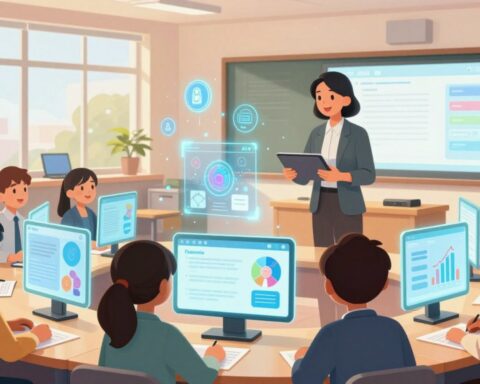
Artificial intelligence platforms are emerging as strategic partners in classroom engagement design. These sophisticated systems analyze patterns to suggest optimal activity types and difficulty levels.
Educators can leverage technology to create personalized warm-ups that adapt to individual student needs. This approach represents a significant advancement in classroom work efficiency.
Leveraging Education AI Tools at Flow Scholar
Flow Scholar’s Education AI Tool exemplifies this innovation. The platform offers intelligent suggestions for activity customization based on learning objectives.
Digital tools provide immediate feedback through interactive polls and collaborative whiteboards. They facilitate small-group work in virtual breakout rooms.
Accessibility features ensure all students can participate meaningfully. Text-to-speech and translation options support diverse learners.
The primary goal is amplifying educator effectiveness, not replacing pedagogical expertise. These tools extend teacher reach through data-driven insights.
| Traditional Approach | AI-Enhanced Solution | Impact on Learning |
|---|---|---|
| Manual activity creation | Automated suggestion engine | Reduced preparation time |
| Static difficulty levels | Adaptive challenge adjustment | Personalized engagement |
| Limited participation data | Real-time analytics tracking | Informed instructional decisions |
| One-size-fits-all design | Customized activity libraries | Enhanced student motivation |
This professional development opportunity helps educators refine their practice. AI analysis of response patterns reveals optimal engagement strategies.
Platforms like Flow Scholar transform routine starters into dynamic learning catalysts. They empower teachers to focus on facilitation rather than preparation.
Creative Drawing and Storytelling Warm-Up Techniques
Drawing and storytelling activities offer students unique opportunities to express complex thoughts without linguistic barriers. These approaches serve visual learners, shy students, and those processing ideas through non-verbal channels.
Quick Draw Challenges
The thirty-second time constraint eliminates perfectionism pressure. Students focus on ideation rather than artistic execution. This approach values creative thinking over technical skill.
Implementation uses visible timers and emphasizes description over identification. Asking “What does your drawing show?” avoids potential embarrassment. This method builds confidence in visual expression.
Emoji Story Starters
This technique leverages digital communication familiarity. Presenting three or four emojis sparks imaginative narrative construction. Students create connections between seemingly unrelated symbols.
The activity naturally differentiates by ability level. Each person can craft simple or complex story lines. This builds creative confidence while practicing narrative skills.
These methods reveal emotional states and comprehension levels. They engage different neural networks than analytical tasks. For deeper exploration of visual preparation techniques, consider warm-up sketches that ignite creative fire.
Facilitating Debates and Group Discussions
Channeling adolescent opinion-sharing into academic exercises creates powerful critical thinking development. These structured formats transform natural student disagreements into valuable learning moments.
Debate activities help young people practice constructing logical arguments while considering multiple viewpoints. This approach builds essential reasoning skills in an engaging format.
Two-Minute Debates
Lighthearted topics like “Pizza versus tacos” or “Summer versus winter” create low-stakes environments. Students choose sides and spend two minutes sharing arguments in small groups.
This structure teaches debate mechanics without requiring extensive content knowledge. Middle schoolers particularly enjoy these friendly argument sessions.
Implementation involves presenting topics through polls, then splitting students into table groups based on their positions. Clear time limits maintain energy and focus.
Devil’s Advocate Activities
These exercises deliberately separate personal beliefs from intellectual argumentation. Students argue positions they may not personally hold, such as debating whether social media harms society.
This builds perspective-taking skills and helps young people understand complex issues have multiple valid viewpoints. It reduces polarized thinking while strengthening analytical abilities.
Differentiation options include whole-class debates, small-group discussions, and written position statements. This ensures all students can participate meaningfully regardless of comfort level with verbal expression.
Scavenger Hunts and Interactive Material Searches
Scavenger hunts transform routine classroom preparation into dynamic learning experiences. These activities serve dual purposes by energizing students through movement while accomplishing practical material organization.
They effectively reduce transition time between lessons. Students engage in friendly competition that builds anticipation for upcoming instruction.
Organizing Learning Material Hunts
The classic material hunt structure begins with teachers calling out needed items. Students race to find pencils, books, or water bottles within a set time limit.
Implementation involves clear announcements and countdowns from ten. This activity gets students moving during natural transition periods.
Virtual adaptations work particularly well. Students can search their entire home space, creating movement away from screens.
Ending with open-ended prompts like “something that makes you smile” ensures all participants can succeed. This maintains high energy while being inclusive.
| Scavenger Hunt Type | Primary Benefit | Ideal Setting |
|---|---|---|
| Material Preparation | Practical organization | Physical classrooms |
| Concept-Based Search | Content review integration | Virtual environments |
| Creative Item Hunt | Imaginative expression | |
| Speed Challenge | Energy management | Transition periods |
These searches accommodate diverse participation styles. Competitive students enjoy speed challenges while creative thinkers appreciate open-ended prompts.
Implementation strategies maintain inclusivity. Teachers celebrate all successful finds regardless of speed. They offer alternatives for students lacking specific items.
Scavenger hunts function as effective classroom management tools. They channel excess energy productively while establishing smooth transitions between activities.
Fast-Paced Trivia and Rapid-Fire Categories
Cognitive science reveals that retrieval practice disguised as entertainment creates powerful learning pathways. These activities transform passive recall into active participation through strategic game mechanics.
Engaging Trivia Questions
Quick trivia serves as stealth assessment. Teachers prepare 3-4 poll questions mixing academic content with accessible general knowledge.
Students have ten seconds to answer through chat or polling features. The rapid pace prevents overthinking while activating prior knowledge.
Implementation emphasizes participation over perfection. Educators reveal answers enthusiastically, celebrating all attempts equally.
Rapid-Fire Category Challenges
Category exercises stimulate divergent thinking. Teachers name a broad topic like “things that are round” or “words that rhyme with cat.”
Students quickly share examples in chat or verbally. This values quantity and speed over accuracy, encouraging spontaneous responses.
The activity reveals associative thinking patterns. It shows what concepts students readily connect to curriculum content.
| Activity Type | Primary Cognitive Benefit | Ideal Implementation |
|---|---|---|
| Quick Trivia | Retrieval practice reinforcement | Poll features with 10-second timers |
| Rapid-Fire Categories | Divergent thinking development | Verbal or chat-based responses |
| Both Approaches | Low-pressure participation | Emphasis on fun over competition |
These frameworks work across subjects by simply changing question content. They create inclusive engagement opportunities regardless of mastery levels.
Incorporating Current Events to Connect Learning with Life
Today’s headlines offer immediate relevance to academic subjects, answering the perennial student question about practical application. This approach demonstrates how classroom content connects to real-world situations happening right now.
Current Events Connections present age-appropriate news items and ask students to find links to their studies. High school learners particularly benefit as they develop awareness of the world around them. The activity builds critical thinking while showing learning relevance.
Implementation focuses on intellectual connections rather than political debates. Teachers display headlines, allow two minutes for reflection, then facilitate group discussion. Writing student ideas on shared documents validates their thinking.
This strategy serves multiple objectives simultaneously. It activates prior knowledge, develops media literacy, and fosters civic engagement. Students practice analytical thinking about complex contemporary issues.
Differentiation accommodates varying news awareness levels. Teachers provide context for unfamiliar events and value both simple and sophisticated linkages. This prepares students for lifelong learning beyond school contexts.
For educators seeking practical approaches to incorporating current events into lessons, this method offers structured yet flexible implementation. It transforms abstract concepts into tangible understanding of how education applies to daily life.
Cross-Grade Strategies: Inclusive Warm-Ups for Every Learner
Educators facing diverse classrooms need flexible approaches that work across different developmental stages. These universal strategies save preparation time while engaging all learners effectively.
Adapting Activities for Diverse Classrooms
Three versatile activities demonstrate cross-grade adaptability. “This or That” polls present simple choices that work for young children through teenagers.
Quick Trivia maintains engagement by adjusting question complexity. One-Word Check-Ins allow emotional expression at any age level.
The same activity structure serves different purposes through strategic adaptation. Elementary students might choose between favorite animals, while high schoolers debate historical perspectives.
| Activity Type | Elementary Adaptation | Middle School Adaptation | High School Adaptation |
|---|---|---|---|
| This or That Polls | Concrete choices (colors, animals) | Social preferences (music, hobbies) | Academic debates (theories, perspectives) |
| Quick Trivia | Basic recall questions | Subject-specific facts | Critical thinking challenges |
| One-Word Check-In | Emotion vocabulary building | Energy level assessment | Learning readiness evaluation |
These approaches support mixed-ability groups naturally. Each person can participate at their comfort level without obvious differentiation.
Educators benefit from mastering adaptable frameworks. They provide reliable engagement tools for changing teaching assignments or mixed-age groups.
Tips for Seamless Integration and Classroom Management
Consistent implementation transforms isolated activities into predictable classroom rituals. This evolution reduces cognitive load as students internalize procedures through repetition.
Educators benefit from establishing clear frameworks that support smooth transitions. These structures create psychological safety while maintaining instructional momentum.
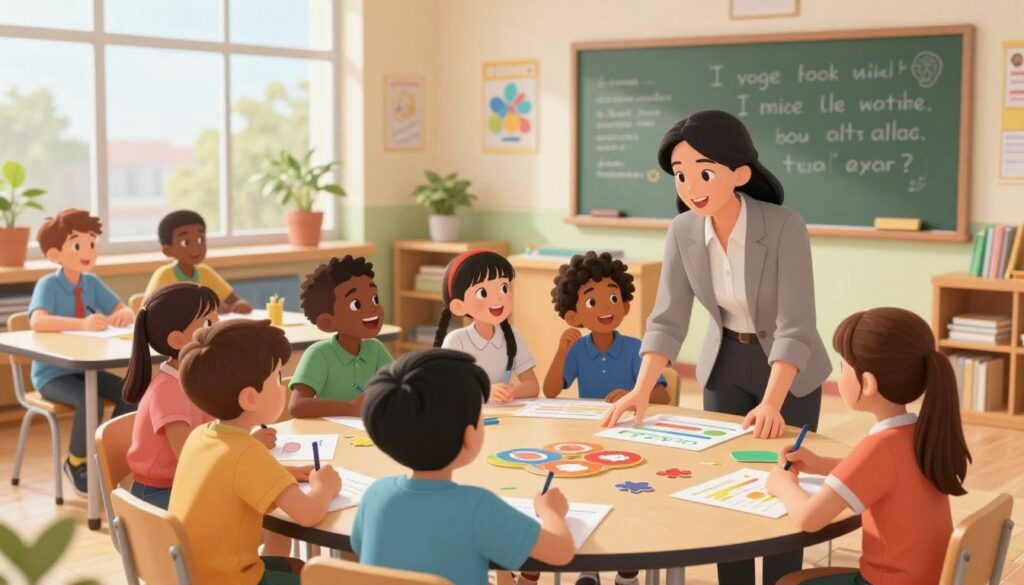
Transitioning Smoothly Between Tasks
Visible timers create transparent time boundaries that respect both curriculum pacing and student engagement. This approach prevents warm-ups from consuming excessive instructional minutes.
Attention signals should be practiced until they become automatic responses. Consistent cues help students shift mental gears efficiently.
Material distribution systems streamline logistical challenges. Preparing resources in advance minimizes disruptions during critical transition periods.
Ensuring Active Participation
Multiple response modalities accommodate different learning styles and comfort levels. Offering written, verbal, and digital options ensures inclusive engagement.
Minimum participation standards establish accountability without creating anxiety. The goal is creating conditions where all learners feel safe to contribute.
Reflection prompts help educators evaluate effectiveness. Monitoring energy shifts and participation patterns informs continuous improvement.
| Management Challenge | Preventive Strategy | Responsive Approach |
|---|---|---|
| Dominating participants | Structured turn-taking systems | Private redirection conversations |
| Reluctant engagement | Low-risk response options | Scaffolded participation prompts |
| Technical difficulties | Backup activity plans | Flexible adaptation protocols |
| Time management | Pre-set time limits | Brisk facilitation language |
These management techniques position educators as architects of learning environments rather than behavior controllers. When implemented consistently, they create conditions where engagement activities thrive naturally.
Conclusion
Educators possess a remarkable opportunity to transform classroom culture through brief, strategic openings. These activities activate cognitive processes while building essential community connections.
Evidence confirms that intentional starts create measurable improvements in student focus and participation. Despite curriculum pressures, this approach represents a high-impact investment.
The implementation goal should begin with manageable steps. Select 2-3 activities that resonate with your teaching style. Practice with familiar content first.
This work represents ongoing professional development. Refine your approach through student feedback and reflection. Each classroom responds differently.
For innovative support, explore Flow Scholar’s AI tools at flowscholar.com. Their platform offers personalized activity suggestions to enhance engagement.
Your capacity to create transformative learning experiences begins with these strategic openings. They honor both academic goals and human needs for connection.
FAQ
Why are warm-up activities so important for student engagement?
Warm-up activities are crucial because they immediately capture student attention and shift focus to the learning space. These quick tasks set a positive tone, making students feel involved from the moment the session begins. This initial engagement boosts participation throughout the entire lesson.
How can teachers effectively use warm-ups in a virtual classroom?
In a virtual setting, effective warm-ups often leverage digital tools. Quick polls, interactive word clouds, or a simple “one-word check-in” in the chat can bridge the physical gap. The goal is to create a sense of community and readiness for learning, even when participants are remote.
What are some simple question-based warm-ups for any grade level?
“Would You Rather” questions or “This or That” prompts work universally. For example, “Would you rather be able to fly or be invisible?” These silly questions require no preparation, spark instant conversation, and can be easily tied to a lesson’s theme to make them more relevant.
How can movement be incorporated into a warm-up activity?
Simple movement breaks are highly effective. Ask students to stand up and perform an action based on their answer to a question, like “Show with your hands how you feel about today’s topic.” This combines physical activity with quick emotional or intellectual reflection, waking up both body and mind.
Can warm-up activities be used for professional development sessions?
Absolutely. The principles of engagement apply to any group. For adult learners, a warm-up might involve a “think-pair-share” on a key question or a rapid-fire brainstorming session. These activities break the ice and encourage collaborative thinking from the start.
What is a quick drawing warm-up that encourages creativity?
A “Quick Draw Challenge” is excellent. Give the group 60 seconds to draw a concept related to the day’s topic—like “innovation” or “teamwork.” This activity bypasses the need for verbal answers and allows for a different, often more creative, mode of expression.
How do timed debates work as a warm-up strategy?
Two-minute debates present a low-stakes, high-energy scenario. Pose a simple, provocative statement related to your subject. One person argues for it, another against it, each for just one minute. This sharpens critical thinking and public speaking skills in a fun, fast-paced way.
What is the ideal length for a warm-up activity?
Most effective warm-ups are brief, typically lasting between three and five minutes. The primary goal is to energize the group and prime their brains for learning without consuming significant lesson time. Keeping it short ensures it remains a snappy transition into the main content.