As the renowned educator Maria Montessori once observed, “The greatest sign of success for a teacher… is to be able to say, ‘The children are now working as if I did not exist.'” This vision of empowered, self-directed learning is the ultimate goal for many in the field of education.
Today’s teachers navigate immense complexity. They balance diverse student needs, packed curricula, and the demand for personalized learning. Traditional methods often leave educators reacting to problems after they’ve grown. A new approach is needed.
This is where the power of data and technology transforms the art of teaching. A specialized field, known as teaching analytics, has emerged. It shifts the focus from just student performance to the instructional process itself.
Innovative platforms now equip educators with deep insights. They help identify learning challenges long before final exams. This allows for proactive support, ensuring all students stay on track. It’s about moving from remediation to prevention.
This article explores how modern tools blend human expertise with artificial intelligence. We will guide you through the practical application of these powerful analytics. The goal is to help you refine your strategies and achieve that Montessori ideal in your classroom.
Key Takeaways
- Modern education demands proactive, data-informed teaching strategies to meet diverse student needs.
- Teaching analytics focuses on improving instructional methods, not just tracking student outcomes.
- Identifying learning challenges early is crucial for effective intervention and student success.
- Technology and data can amplify a teacher’s expertise, providing clarity amidst classroom complexity.
- Advanced platforms transform complex information into actionable, visual insights for educators.
- Adopting these tools enables a shift from reactive problem-solving to proactive educational design.
Overview of FlowScholar Teacher Analytics
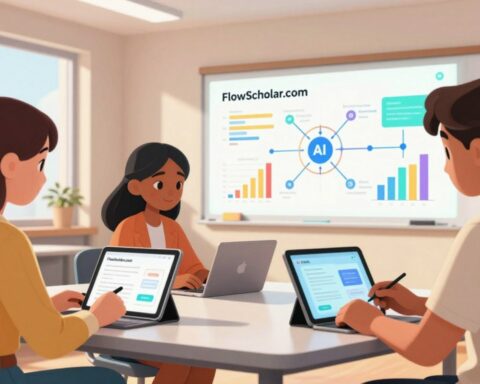
A revolutionary approach to educational data analysis focuses specifically on enhancing teaching methodologies. This innovative platform bridges research and practice, transforming complex patterns into actionable insights.
Unlike traditional learning management systems that track student activities, this solution prioritizes instructional quality. It recognizes that effective teaching directly determines learning outcomes.
The system’s core capabilities include real-time monitoring of teaching practices. It identifies curriculum gaps and provides personalized development recommendations. Collaborative tools support team reflection among educators.
| Feature | Traditional LMS | Teaching Analytics Platform | Impact on Education |
|---|---|---|---|
| Primary Focus | Student activity tracking | Instructional quality improvement | Direct teaching enhancement |
| Data Sources | Login frequency, assignment completion | Formative assessments, pacing, engagement | Comprehensive teaching profile |
| User Experience | Complex data reports | Intuitive visual dashboards | Reduced cognitive burden |
| Professional Development | Generic training modules | Personalized recommendations | Targeted skill building |
Powered by artificial intelligence, the platform processes multiple data streams simultaneously. It generates holistic effectiveness profiles that guide instructional decisions.
Designed for educators at all technology levels, the system amplifies pedagogical expertise. It incorporates research-based frameworks while maintaining user-friendly accessibility.
For detailed information about this transformative approach, visit the official platform website. Discover how data-driven insights can elevate your teaching practice.
The Role of AI in Teacher Education and Analytics
Sophisticated pattern recognition capabilities of modern AI systems are transforming traditional approaches to teacher education. These technologies move beyond simple automation to identify instructional gaps that human observation alone might miss.
Leveraging Data-Driven Insights in the Classroom
When educators receive timely, specific feedback on instructional effectiveness, classroom practice fundamentally changes. Adjustments can happen within units rather than waiting for end-of-semester assessments.
This represents an evolution from reactive to proactive teaching. AI analytics forecast potential learning obstacles based on pacing and content sequencing.
Enhancing Pedagogical Practices with Analytics
The TPACK framework emphasizes that effective technology integration requires simultaneous development of technological, pedagogical, and content knowledge. AI should enhance rather than replace educator expertise.
Concrete examples include adjusting questioning strategies based on student response patterns. Modifying content presentation when comprehension data reveals confusion points also improves learning outcomes.
We must address AI transparency and bias mitigation in educational applications. Ethical responsibility requires critical evaluation of algorithmic recommendations to prevent perpetuating educational inequities.
Understanding Teaching Analytics and Its Impact
Educational technology evolved beyond student tracking to embrace a more comprehensive approach to instructional improvement. This shift gave rise to teaching analytics—a specialized field focusing on instructor behaviors and pedagogical choices.
Unlike learning analytics that primarily monitor student activities, this approach examines the teaching process itself. It provides educators with diagnostic tools to enhance instructional quality.
The field emerged as a distinct research domain between 2012 and 2019. Researchers recognized that student-centered data alone provided incomplete pictures of educational effectiveness.
Studies demonstrate measurable improvements when educators receive regular access to practice analytics. These include better instructional alignment, improved pacing, and more effective assessment integration.
The Teaching Outcome Model (TOM) guides this process through a systematic lifecycle. It moves from data collection to analysis, visualization, insight generation, and action implementation.
This approach cultivates teacher data literacy—the ability to interpret educational information accurately. Educators learn to recognize meaningful patterns and translate findings into concrete adjustments.
Teaching analytics represents a cultural shift toward evidence-informed decision-making. It respects the artistry of education while providing data-driven clarity for continuous improvement.
Key Features of “FlowScholar Teacher Analytics: Spot Gaps Early, Teach Smarter”
Modern instructional platforms are engineered with a suite of powerful features designed to illuminate the teaching process. These tools transform complex classroom data into clear, visual insights.
The flagship capability is an intelligent gap detection system. It continuously scans student assessment results, pinpointing specific learning challenges before they widen. This allows for timely, targeted support.
This technology integrates multiple data sources seamlessly. It combines formative quizzes, engagement metrics, and curriculum pacing. The result is a holistic view of teaching effectiveness.
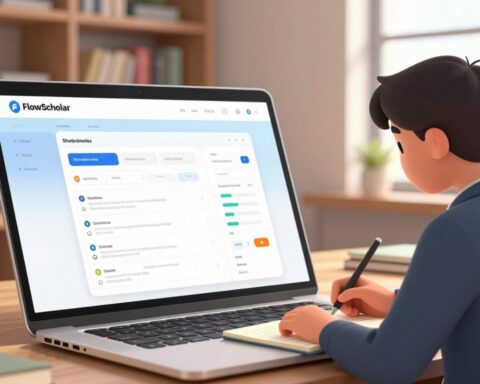
At the center is an intuitive visual dashboard. It reduces cognitive load for teachers, accelerating pattern recognition. This design supports reflective practice and informed decision-making.
An early warning system proactively alerts educators. It flags issues like rapid pacing or misaligned instruction. This enables a shift from reactive problem-solving to proactive educational design.
The platform also offers personalized professional development. It analyzes individual practice to suggest relevant strategies and resources. Collaborative tools help teachers teams share effective approaches.
Educators can explore these transformative features and see interactive demos. Visiting the official website provides a deeper understanding of how these tools empower students and enhance learning outcomes.
Data Collection and Analysis in Modern Classrooms
The modern classroom has transformed into a rich ecosystem of data-generating activities. Digital tools create unprecedented volumes of educational information through learning management systems, formative assessments, and engagement metrics.
Effective data collection balances comprehensiveness with educator workload. Automated methods capture teaching and learning activities without creating additional documentation burdens.
Best Practices for Integrating Educational Data
Multi-modal approaches combine quantitative metrics with qualitative insights. This creates nuanced pictures of instructional effectiveness.
Research identifies various tools for harvesting educational information. Interactive whiteboards track instructional flow, while response systems capture real-time student understanding.
Practical implementation faces cost constraints and privacy considerations. Solutions must scale across diverse educational contexts from well-resourced to under-funded institutions.
Platforms streamline data collection by integrating with existing technology systems. They extract relevant information from tools educators already use.
Ethical dimensions require transparent communication with stakeholders. Clear purposes, quality validation, and privacy protection form the foundation of responsible data practices.
Visual Analytics Tools for Teacher Reflection
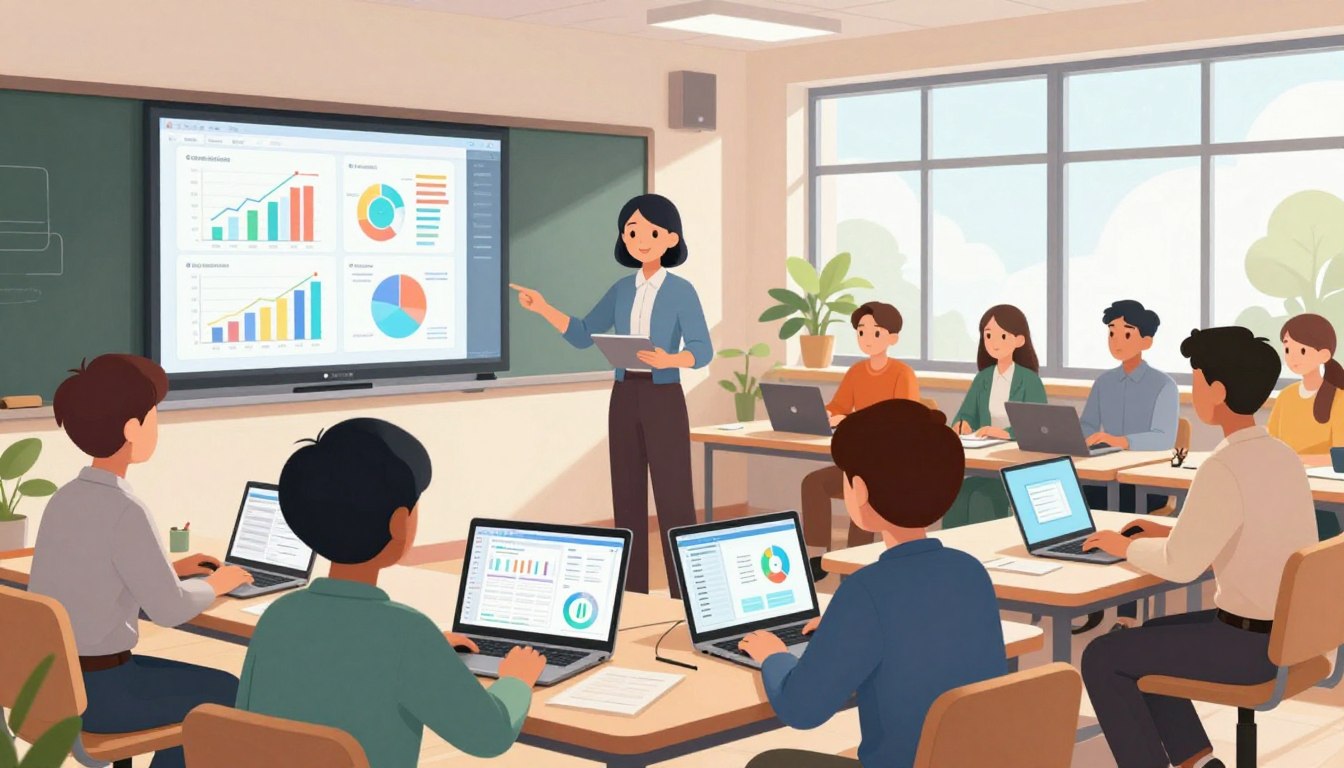
The power of visual analytics lies in its ability to make abstract teaching data immediately understandable and practically applicable. These tools transform complex information into intuitive graphical displays that reveal instructional patterns at a glance.
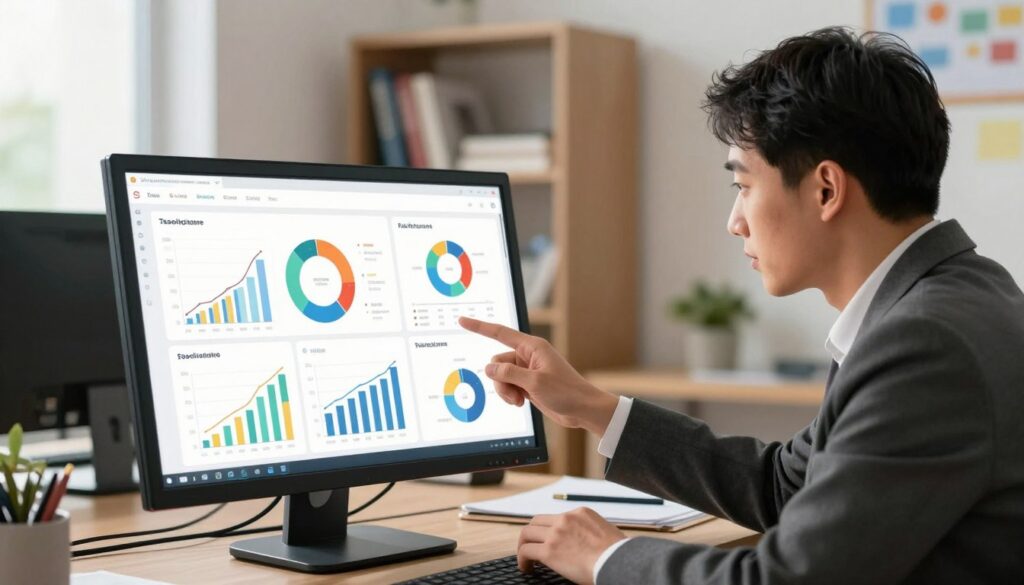
Well-designed dashboards prioritize actionable insights through clear information hierarchy. They allow educators to customize views based on specific reflection goals and drill down from overviews to detailed analysis.
Interactive Dashboards and Reporting
Research demonstrates that visual tools significantly accelerate the reflection process. They reduce the time from data access to instructional adjustment, supporting more frequent improvement cycles.
Effective dashboard architecture organizes teaching information across multiple dimensions. This includes curriculum coverage, assessment effectiveness, and student engagement patterns. Educators can examine their practice from varied analytical perspectives.
Contextualized data presentation compares individual metrics against relevant benchmarks. These include personal historical performance and grade-level team averages. This approach supports meaningful professional conversations.
Visual analytics democratize data access for educators with varying statistical literacy levels. Intuitive charts and graphs communicate insights without requiring advanced analytical training. The pathway from reflection to action becomes clear and actionable.
Integrating Technology and Pedagogy for Enhanced Insights
At the intersection of digital tools and instructional methods lies a transformative space where technology amplifies pedagogical expertise rather than replacing it. This synergy creates instructional approaches impossible through traditional means alone.
Utilizing Interactive Platforms
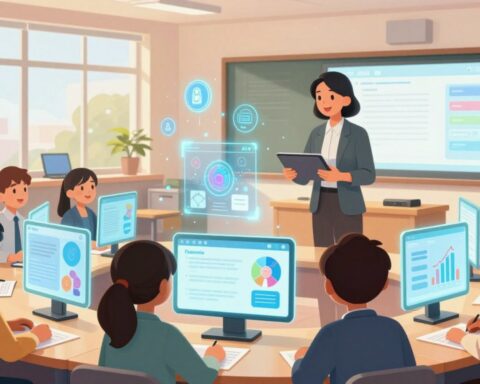
Interactive platforms enable pedagogical approaches previously impractical in classroom settings. They facilitate real-time formative assessment across entire classes and immediate identification of misconception patterns.
The TPACK framework provides essential structure for understanding this integration. Effective implementation requires educators to possess integrated knowledge spanning technology, pedagogy, and content-specific teaching strategies.
Real-Time Feedback on Teaching Strategies
Modern systems deliver immediate feedback on instructional decisions as they unfold. This allows for mid-lesson adjustments rather than post-unit reflections when intervention opportunities have passed.
Examples include alerts when questioning patterns favor particular student groups. Notifications also flag pacing that diverges from optimal learning progression or widespread misunderstanding requiring instructional pivots.
This approach represents technology infusion rather than simple addition. When woven throughout instructional practice, these tools develop teacher self-efficacy with analytics technology, creating increasingly personalized insights over time.
Case Studies and Research in Teacher Analytics
Systematic analysis of educational research publications from the past decade uncovers compelling patterns in instructional improvement strategies. A comprehensive review examined 58 initial study candidates, ultimately identifying 31 relevant peer-reviewed papers.
This body of evidence demonstrates that providing educators with access to practice analytics consistently improves teaching quality. The research reveals measurable enhancements in instructional alignment and student engagement.
Multiple case study examples from diverse educational settings show how schools successfully implemented these systems. They documented challenges encountered and solutions developed across various contexts.
A critical finding across all research involves teacher data literacy. Many educators initially lack confidence interpreting analytics but develop competence through supported practice.
Controlled studies comparing analytics-supported versus traditional professional development contexts show accelerated pedagogical improvement. These investigations highlight enhanced student achievement in analytics-enabled environments.
Longitudinal research tracks how educator engagement with data evolves over multi-year implementations. The pathway leads from initial resistance to sophisticated analytical practice informing daily decisions.
While the field shows promising results, the literature remains theoretically underdeveloped. Future investigations should address optimal dashboard design and equity implications of teaching analytics systems.
Bridging Teacher Data Literacy Gaps
As schools embrace data-driven decision making, a fundamental skills gap emerges that impacts instructional quality across diverse learning environments. Many accomplished educators lack formal training in interpreting the complex metrics now available to them.
Teacher data literacy represents a multifaceted competency. It encompasses statistical understanding, analytical thinking, and the ability to translate insights into sound instructional decisions. This goes beyond simple number comprehension to include critical evaluation of data sources and interpretation of visual representations.
The risks associated with data literacy gaps are significant. Misinterpretation can lead to inappropriate instructional adjustments or over-reliance on incomplete metrics. Research indicates these gaps can inadvertently perpetuate educational inequities when educators make ill-informed decisions affecting vulnerable learners.
| Development Approach | Traditional Training | Collaborative Inquiry | Impact on Educator Growth |
|---|---|---|---|
| Learning Structure | Isolated sessions | Supported practice cycles | Sustained skill building |
| Educator Role | Data consumer | Active stakeholder | Ownership of insights |
| Skill Application | Theoretical scenarios | Real classroom data | Immediate relevance |
| Support System | External experts | Peer collaboration | Community learning |
Effective development emphasizes collaborative models where educators explore data together. This collective questioning builds shared understanding through repeated engagement. The approach positions instructors as stakeholders rather than mere data consumers.
Data literacy growth is developmental by nature. Competence builds gradually through supportive feedback and opportunities to see direct connections between interpretation and improved teaching outcomes. This progressive approach respects the artistry of education while providing data-driven clarity.
Benefits of AI-Powered Analytics for Teaching Strategies
Artificial intelligence is fundamentally reshaping how educators approach instructional refinement. This technology moves beyond simple automation to deliver unprecedented strategic advantages for classroom practice.
These systems transform hours of manual data review into instant, actionable insights. Educators gain precious time to focus on what matters most—meaningful student interaction and thoughtful instructional planning.
Improving Student Outcomes through Insightful Analysis
AI pattern recognition identifies specific skill gaps with remarkable precision. It detects misconception clusters and learning progression obstacles that traditional methods often miss.
This granular analysis enables highly targeted intervention strategies. Educators can address individual student needs with unprecedented accuracy.
The predictive capabilities distinguish these systems from conventional data review. They forecast which students face elevated struggle risks and which instructional sequences typically create confusion.
| Teaching Aspect | Traditional Approach | AI-Enhanced Analytics | Impact on Learning |
|---|---|---|---|
| Intervention Timing | Reactive, after assessments | Proactive, real-time alerts | Prevents learning gaps |
| Differentiation Scale | Manual grouping | Automated recommendations | Personalized pathways |
| Strategy Refinement | Semester cycles | Continuous iteration | Rapid improvement |
| Outcome Connection | Indirect correlation | Direct linkage visibility | Evidence-based decisions |
Studies document measurable achievement gains when teachers receive regular, actionable practice insights. The iterative improvement cycle allows for multiple strategy refinements within single academic terms.
These systems create transparency in the teaching-learning connection. Educators see direct links between their pedagogical choices and student achievement patterns, fostering continuous improvement.
Insights from Educational Research and Journal Studies
The scholarly landscape surrounding educational technology reveals a growing body of evidence supporting data-informed teaching practices. Systematic reviews using the Tripartite model—descriptive, synthesis, and critique components—have mapped this evolving field.
Peer-reviewed studies demonstrate clear benefits when educators access practice analytics. Research from institutions like the University of Washington shows improved instructional alignment and student engagement. These findings appear across diverse educational settings.
The field’s focus has evolved from conceptual distinctions to implementation approaches. Recent work examines equity implications and bias considerations. However, gaps remain in longitudinal studies and diverse population contexts.
This research provides actionable guidance for educators and administrators. It translates academic findings into practical strategies that genuinely improve instructional quality and learning outcomes.
Implementing FlowScholar Teacher Analytics in US Schools
The journey from initial adoption to sustained success reveals powerful patterns in how schools integrate data-driven teaching practices. Educational institutions across the United States have documented remarkable transformations through strategic implementation.

Success Stories and Practical Applications
Urban schools in New York serving diverse student populations achieved significant improvements. They used the platform to identify learning gaps early and tailor instruction accordingly. This approach helped address achievement disparities effectively.
Suburban districts implemented the program through phased rollouts. Volunteer teacher cohorts led the way, demonstrating practical benefits to their colleagues. Professional learning communities supported collaborative data exploration.
Rural institutions overcame isolation challenges through data-driven collaboration. The technology enabled teachers to share effective strategies across geographic boundaries. This created a supportive network for continuous improvement.
Schools addressed common implementation hurdles with creative solutions. They provided targeted professional development and ensured technical infrastructure readiness. Concerns about data privacy were resolved through transparent policies.
The results speak for themselves. Participating teachers reported increased confidence in data-informed decision-making. Student engagement and achievement metrics showed measurable gains across diverse educational contexts.
Educators seeking comprehensive implementation resources can visit the official platform website. The site offers planning guides, professional development materials, and connections to educator communities sharing best practices.
Opportunities for Professional Development and Teacher Empowerment
Educators now have unprecedented opportunities to shape their professional journey using insights from their own classroom practice. This approach moves beyond generic workshops to create personalized growth pathways.
The shift transforms professional development from deficit-based models to asset-focused strategies. Instead of addressing perceived weaknesses, these methods build outward from demonstrated strengths.
Effective models integrate collaborative inquiry and job-embedded learning. Teams explore shared data patterns while coaching relationships focus improvement conversations.
This framework provides remarkable transparency into instructional effectiveness. Educators can identify opportunities, test new approaches, and monitor implementation results.
Concrete evidence of impact sustains engagement with continuous improvement. Research shows that visible student growth motivates educators more effectively than abstract learning objectives.
Peer learning becomes more powerful when facilitated by practice insights. Educators share effective strategies revealed through data and develop collective expertise.
This approach supports leadership development by enabling accomplished educators to mentor colleagues with evidence-based insights. It positions instructors as knowledgeable professionals who make informed decisions.
The ultimate result is genuine empowerment—elevating the teaching profession through data-informed agency and self-directed growth.
Call-to-Action: Explore FlowScholar Teacher Analytics
Imagine translating every concept discussed throughout this article into daily classroom reality. The tools exist to make this transformation possible right now.
Educators, instructional coaches, and administrators can experience firsthand how abstract ideas become concrete teaching tools. The platform turns complex data into clear, actionable information.
Discover More at FlowScholar
Visit the official website to access interactive demonstrations and detailed feature explanations. You’ll find implementation case studies and research foundations that support the platform’s effectiveness.
Immediate next steps include scheduling personalized walkthroughs and exploring free trial opportunities. Download implementation planning resources and connect with current users sharing their experiences.
This exploration represents a natural extension of your commitment to teaching excellence. The intuitive design addresses common concerns about time investment and technology learning curves.
Consider the opportunity cost of delayed adoption. Each instructional cycle without these insights represents missed potential for student growth. Early engagement positions forward-thinking educators as leaders in educational innovation.
The core value proposition remains clear: identify learning challenges proactively and refine practice through evidence-based decisions. Begin your transformative journey today by visiting the platform’s website.
Conclusion
A new era in education empowers instructors with unprecedented visibility into their instructional effectiveness. This transformation blends pedagogical expertise with advanced technology, creating teaching approaches that were once unimaginable.
While adopting these analytics requires developing data literacy, the rewards are substantial. Teachers gain evidence-based insights to refine their practice continuously. This leads to improved learning outcomes for all students.
The future of teaching lies in this data-informed approach. Platforms like FlowScholar make academic research practical for daily classroom use. Educators committed to excellence will find these tools essential for professional growth.
Explore how FlowScholar can transform your instructional approach. Visit the platform to discover resources that support smarter, more effective teaching.
FAQ
What is the primary goal of the FlowScholar Teacher Analytics platform?
The primary goal is to empower educators by providing actionable, data-driven insights. It helps teachers identify learning gaps in student understanding early, enabling them to adjust their instruction and pedagogical practices for more effective outcomes.
How does the system collect and analyze classroom data?
The platform integrates with existing educational technology systems to gather information on student progress, engagement, and assessment results. It then uses sophisticated analysis and interactive dashboards to present this information clearly, supporting teacher reflection and professional development.
Can this tool be used for professional development in teacher education programs?
Absolutely. The analytics serve as a powerful framework for both pre-service and in-service teacher education. By reviewing data and case studies, educators can deepen their understanding of instructional methods and refine their teaching strategies in a real-world classroom environment.
What kind of reporting and visual tools does the platform offer?
FlowScholar provides interactive dashboards and visual analytics tools that transform complex data into easy-to-understand reports. These visuals help teachers quickly grasp student progress and the implications of their teaching methods, saving valuable time.
Is the platform based on established educational research?
Yes, its design is grounded in contemporary educational research and journal studies. The development process incorporated findings from the field of education research to ensure the models and methods align with best practices for improving student learning.
How does this technology support student outcomes in higher education institutions?
In higher education, the platform aids instructors in tailoring their instruction to diverse student needs. By offering real-time feedback on teaching strategies, it helps improve knowledge retention and academic performance, directly impacting positive student outcomes.