“In times of stress, the best thing we can do for each other is to listen with our ears and our hearts and to be assured that our questions are just as important as our answers.” – Fred Rogers
This wisdom resonates deeply in today’s educational landscape. Educators carry an immense responsibility, not just for curriculum delivery but for fostering strong connections with families. The daily demands can feel overwhelming, leaving little room for crafting consistent, effective messages home.
Structured outreach tools transform this potential chaos into a streamlined process. They serve as a foundation for building trust and transparency. By providing a reliable framework, these resources reduce anxiety for all parties involved.
This approach creates predictable, professional touchpoints. It shifts interactions from reactive to proactive, ensuring families feel informed and supported. The result is a more collaborative environment focused squarely on student success.
This resource hub explores how to select, customize, and implement these powerful tools. We will examine practical strategies for diverse educational contexts. Tools like FlowScholar’s Education AI Tool offer educators a comprehensive solution to enhance this critical dialogue.
Key Takeaways
- Structured messaging builds essential trust between educators and families.
- Pre-designed formats significantly reduce administrative burdens on instructors.
- Consistent, predictable updates help lower anxiety for everyone involved.
- Effective family engagement is a strategic component of student achievement.
- A “clear and calm” methodology fosters transparency and mutual understanding.
- Numerous template designs are available to suit various communication needs.
Overview of Teacher-Parent Communication
Strategic outreach between school professionals and family members creates powerful educational partnerships. This dynamic exchange serves as the cornerstone of academic achievement. When educators and guardians establish reliable connection channels, everyone benefits.
The Importance of Clear and Consistent Messaging
Unambiguous dialogue eliminates confusion before it begins. Families develop trust through predictable updates about classroom activities. Regular rhythms—whether weekly summaries or progress reports—build confidence in the educational process.
Research demonstrates that structured outreach correlates directly with improved academic performance. Informed guardians become active participants in learning journeys. Students experience greater success when home and school environments align.
Enhancing Classroom Engagement and Efficiency
Standardized approaches free instructors from repetitive administrative tasks. Educators reclaim valuable instructional time while maintaining quality family connections. This efficiency allows focus on what matters most: student growth.
Streamlined systems prevent missed updates and inconsistent information flow. The result is a cohesive learning environment where all stakeholders work toward shared goals. Effective partnership building becomes a sustainable practice rather than an occasional effort.
Understanding the Role of Communication Templates
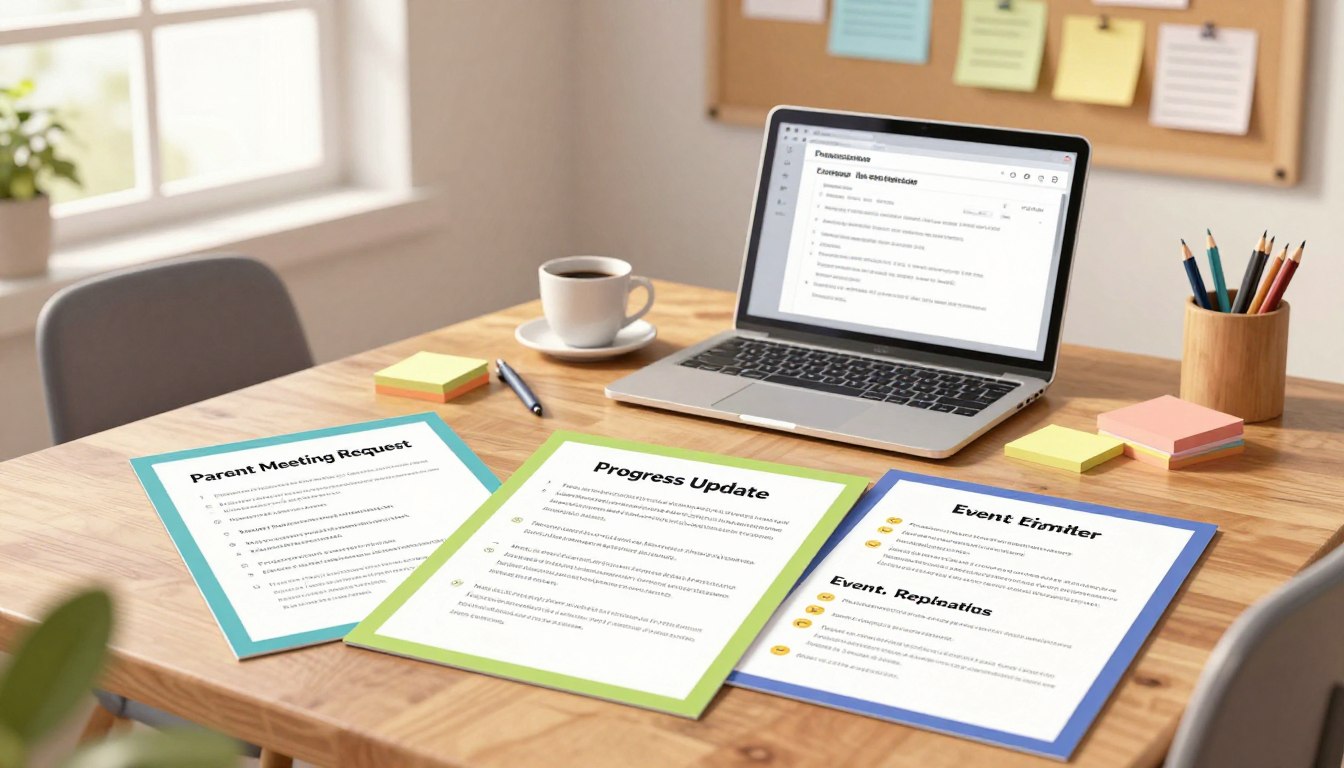
Well-crafted message blueprints empower instructors to maintain consistent, professional family interactions. These pre-structured frameworks provide reliable formats while allowing personal customization. They serve as the foundation for repeatable outreach without sacrificing authenticity.
These tools function as dual-purpose assets: saving valuable time while ensuring quality control. Essential information never gets overlooked when using standardized forms. Professional standards remain consistent across all exchanges.
Different template categories serve distinct purposes in the educational ecosystem. Each type addresses specific situational needs effectively.
| Template Type | Primary Purpose | Optimal Frequency | Key Elements |
|---|---|---|---|
| Newsletters | Classroom updates | Weekly | Events, achievements, reminders |
| Behavior Logs | Progress tracking | As needed | Observations, goals, strategies |
| Progress Reports | Academic updates | Monthly | Strengths, areas for growth |
| Event Announcements | Community building | Seasonal | Dates, participation details |
Psychological benefits extend to both creators and recipients. Educators gain confidence knowing they cover necessary ground. Families appreciate familiar structures that make information easy to digest.
Some assume these frameworks create robotic exchanges. In reality, well-designed templates provide scaffolding for meaningful dialogue. They support authentic connections between school and home environments.
Parent Communication Templates for Teachers (Clear + Calm) Features
The true power of these outreach tools lies in their adaptable design and seamless integration into existing workflows. They offer educators a high degree of personalization while maintaining a professional standard.
Customizable Elements and Email Integration
High-quality resources provide editable headers and flexible text boxes. This allows instructors to highlight specific learning objectives or special events.
Seamless compatibility with platforms like Google Slides and PowerPoint is a key advantage. Educators can work within familiar software without a steep learning curve.
Direct email integration streamlines the entire distribution process. It reduces the steps between creating content and reaching families, ensuring timely updates. This is a cornerstone of effective outreach strategies.
PDF and Digital Format Options
Versatility in output formats accommodates diverse needs. A PDF version is ideal for formal documentation and archiving. Digital files allow for quick dissemination via email or learning management systems.
Accessibility is a built-in priority. Black-and-white printing options support schools with limited resources. Design elements ensure readability for all families.
| Format Type | Best Use Case | Key Benefit |
|---|---|---|
| PDF File | Official records, printed handouts | Universal compatibility, professional formatting |
| Editable Digital (e.g., Google Slides) | Quick updates, interactive content | Easy customization, real-time collaboration |
| Image File (PNG/JPG) | Social media, visual announcements | High visual impact, easy to share |
With access to over 75 distinct layouts, educators can prevent visual fatigue. They can match the design aesthetic to the message’s tone and purpose, keeping each update fresh and engaging.
Benefits of Using Parent Communication Templates in the Classroom
When messaging frameworks are properly integrated, they create ripple effects of efficiency and collaboration. These structured approaches deliver tangible advantages that extend beyond simple convenience.
Time-Saving Strategies for Busy Teachers
Educators reclaim valuable hours each week through systematic messaging. Instead of drafting individual updates, they customize pre-designed formats. This approach reduces cognitive load during demanding academic periods.
Realistic scenarios show instructors saving 3-5 hours weekly. They avoid recreating formats from scratch for routine updates. This efficiency allows focus on instructional quality rather than administrative tasks.
Boosting Family Engagement and Transparency
Regular, structured updates provide clear windows into daily activities. Guardians receive reliable information about learning objectives and student progress. This transparency builds confidence in the educational process.
Well-informed families become active partners in supporting learning. They understand classroom dynamics without extensive explanations. This engagement amplifies when information flows consistently throughout the year.
| Benefit Area | Impact on Educators | Impact on Families | Measurable Outcome |
|---|---|---|---|
| Time Management | 3-5 hours saved weekly | Quick information access | Reduced administrative workload |
| Engagement Quality | Sustained outreach during busy periods | Increased event participation | Stronger home-school connections |
| Transparency Level | Standardized information sharing | Clear understanding of progress | Enhanced trust building |
| Advocacy Development | Collaborative problem-solving | Confident support at home | Improved student outcomes |
How to Integrate Communication Tools Smoothly
The transition to organized messaging frameworks demands careful consideration of existing workflows. Educators should begin by assessing current outreach patterns and identifying specific pain points. This diagnostic phase reveals where structured formats can provide the most immediate value.
A phased implementation approach prevents overwhelm. Starting with a single weekly newsletter allows both educators and families to adapt gradually. This measured strategy builds confidence while demonstrating tangible benefits.
| Implementation Phase | Key Activities | Timeline | Success Indicators |
|---|---|---|---|
| Assessment | Audit current methods, identify gaps | 1-2 weeks | Clear pain points documented |
| Pilot Program | Test one template type with small group | 2-3 weeks | Positive feedback received |
| Full Integration | Expand to all template types | 4-6 weeks | Routine established, time saved |
| Optimization | Refine based on usage data | Ongoing | Continuous improvement observed |
Synchronization with existing school management systems creates seamless information flow. Aligning template updates with grading periods and calendar events eliminates duplicate effort. This integration maximizes efficiency while maintaining consistency.
Establishing sustainable routines transforms outreach from reactive scrambling to proactive practice. Designating specific times for template updates ensures reliability. This systematic approach, supported by strategic scheduling tools, creates lasting positive change in educational partnerships.
Overview of the Education AI Tool from FlowScholar
Innovative educational technology platforms are revolutionizing how educators connect with families. FlowScholar’s intelligent system represents a significant advancement in this space.
This comprehensive platform combines proven template methodologies with cutting-edge artificial intelligence. It addresses the core challenges instructors face when maintaining consistent outreach.
Streamlining Communication with Smart Solutions
The platform transforms fragmented processes into a cohesive workflow. From selection to distribution, every step receives intelligent support.
Advanced features include content suggestions based on context and audience analytics. Multilingual support ensures inclusive engagement across diverse family backgrounds.
| Feature | Traditional Approach | AI-Enhanced Solution |
|---|---|---|
| Content Creation | Manual drafting | Smart suggestions |
| Personalization | Time-consuming edits | Automated adaptation |
| Distribution | Multiple platforms | Integrated system |
| Analytics | Limited feedback | Engagement insights |
Onboarding Tips for Effective Use
Educators can begin with basic functions before exploring advanced capabilities. The initial setup process focuses on classroom-specific parameters.
We recommend starting with familiar template types while gradually incorporating AI features. This measured approach builds confidence while demonstrating immediate value.
The platform’s design philosophy emphasizes adding capability without complexity. It integrates seamlessly with existing systems, minimizing disruption to established routines.
Creating Effective Communication Logs
Effective record-keeping transforms fleeting observations into actionable insights for student development. A well-maintained communication log serves as an ongoing documentation tool that captures daily interactions and progress.
These systematic notes provide real-time updates while building longitudinal records. They support educational planning through consistent tracking of academic and social growth.
Best Practices for Daily Updates
Structured logs incorporate practical elements for efficiency. Checkbox systems enable quick status updates, while designated spaces allow for qualitative details.
Maintaining daily documentation requires strategic approaches. Educators can focus on notable events rather than routine activities. Batching documentation during natural transitions prevents schedule overload.
| Log Component | Primary Function | Implementation Tip | Benefit |
|---|---|---|---|
| Checkbox System | Quick status indicators | Use for routine items | Saves time on repetitive entries |
| Observation Space | Qualitative details | Limit to 2-3 sentences | Captures meaningful context |
| Date/Time Stamps | Chronological tracking | Automate when possible | Creates accurate timeline |
| Dual Input Fields | Collaborative documentation | Designate clear sections | Encourages partnership |
A balanced approach ensures logs present holistic student pictures. They should capture both challenges and successes equally. This comprehensive perspective supports effective advocacy during meetings.
Organizational strategies include digital filing systems with consistent naming conventions. Regular backups and privacy-conscious archival practices maintain accessibility while protecting sensitive information.
Implementing Newsletter Templates for Daily and Weekly Updates
Systematic newsletter distribution transforms routine announcements into strategic engagement opportunities. These structured formats provide reliable frameworks for sharing classroom developments throughout the academic year.
Educators should select frequency based on classroom needs and information volume. Daily formats work well for younger students requiring consistent updates. Weekly versions suit older classes with more complex scheduling.
Effective newsletter structure organizes content into clear sections. Upcoming events, learning highlights, and celebration spotlights create logical flow. Visual hierarchy guides readers through essential information efficiently.
| Format Type | Best For Grade Levels | Content Focus | Distribution Method |
|---|---|---|---|
| Daily Newsletter | K-2, Special Needs | Immediate updates, routines | Email, printed copies |
| Weekly Newsletter | 3-12, Advanced | Comprehensive overviews | Digital platforms, LMS |
Establishing consistent publishing rhythms prevents last-minute scrambling. Designate specific days for content creation and distribution. This routine ensures reliability across the entire school year.
Customization allows reflection of classroom personality while maintaining format consistency. Seasonal themes and curricular focuses keep content fresh. Balance comprehensive information with readable brevity for maximum impact.
Interactive elements transform one-way broadcasts into engaging dialogues. Include response prompts and family contribution opportunities. Digital resource links extend conversations beyond the basic update format.
Customizing Templates for Diverse Classroom Needs
One-size-fits-all approaches rarely succeed in education, making adaptable tools essential for diverse learning communities. The true power of structured messaging systems emerges when they can be tailored to specific educational contexts and audience requirements.

With over 75 design variations available, educators can select formats that align perfectly with their instructional environment. Editable headers and flexible content areas allow for meaningful personalization that reflects each school’s unique culture.
Adapting Designs for Different Grade Levels
Effective customization requires thoughtful adjustments across developmental stages. Early childhood settings benefit from high-visual designs with minimal text, while secondary levels can incorporate more complex information structures.
Vocabulary complexity and content focus should evolve with student maturity. Younger audiences need simple, direct messaging, whereas older students’ families appreciate detailed academic updates and college preparation information.
| Grade Level | Visual Design | Content Focus | Key Adaptations |
|---|---|---|---|
| Early Childhood | High imagery, minimal text | Routines, social development | Picture-based, simple language |
| Elementary | Balanced visuals and text | Academic foundations, events | Thematic elements, basic updates |
| Middle School | Structured layouts | Subject transitions, organization | Departmental sections, planners |
| High School | Information-dense | College prep, specialized courses | Detailed academic tracking |
Fostering an Inclusive Communication Environment
Cultural responsiveness transforms standard formats into welcoming tools for all families. Multilingual options and plain language alternatives ensure accessibility across diverse linguistic backgrounds.
In special education contexts, additional flexibility supports individualized plans. Behavior tracking elements and therapy progress sections provide comprehensive documentation that serves unique student needs effectively.
The balance between standardization and customization creates efficient yet personalized systems. Educators maintain consistency while addressing specific classroom community requirements through strategic template adjustments.
Streamlining Teacher Workflows with Template Automation
Workflow automation represents the next evolution in educational efficiency, moving beyond basic templates. Intelligent systems now handle repetitive tasks through auto-population and scheduled distribution. This reduces manual intervention while maintaining professional standards.
The time-compounding benefits become apparent across the academic year. Initial setup investments yield exponential savings as routine updates flow automatically. Educators reclaim hours previously spent on administrative duties.
Integration with existing technology ecosystems eliminates redundant data entry. Learning management systems and student information platforms share information seamlessly. This creates a cohesive digital environment that supports streamlined operations throughout the institution.
Quality consistency remains high even during demanding periods. Automated systems ensure communication standards don’t suffer when manual attention might falter. Families receive reliable updates regardless of classroom pressures.
Practical strategies accommodate varying technical expertise levels. Simple scheduled sends work for beginners, while conditional messaging adapts based on performance indicators. AI-powered educational tools make sophisticated automation accessible to all educators.
Maintaining human connection within automated systems requires intentional design. Personalization options and authentic voice preservation ensure efficiency gains don’t sacrifice relationship-building. The result is sustainable engagement that supports student success.
Leveraging Technology for Personalized Communication
The intersection of structured systems and adaptive technology creates unprecedented opportunities for tailored family engagement. Well-designed frameworks paradoxically enable rather than constrain individualization through strategic customization points.
Modern platforms offer sophisticated personalization features that transform generic messages into meaningful connections. Mail merge capabilities, conditional content blocks, and individualized student highlight sections allow educators to maintain efficiency while addressing specific needs. These tools ensure each family receives relevant information without overwhelming manual effort.
Data integration automatically incorporates personalized elements like progress metrics and behavioral observations. AI-powered solutions like FlowScholar’s Education AI Tool advance these possibilities further. They provide intelligent content suggestions based on student profiles and adaptive messaging that responds to engagement patterns.
Educators can balance efficiency with meaningful personalization by identifying which elements benefit most from individual attention. Families respond more positively to messages acknowledging unique student contexts. This approach strengthens relationships while maintaining scalable outreach systems.
Reviews and Success Stories from U.S. Educators
American instructors consistently share compelling evidence of how systematic approaches revolutionize family-school partnerships. Their experiences reveal tangible benefits that extend across diverse educational contexts.
Quantitative data supports these testimonials. Structured messaging systems consistently receive ratings exceeding 4.80 from educators nationwide. This high satisfaction reflects their practical value in daily practice.
Elementary school teachers report remarkable transformations. One third-grade educator reclaimed five hours weekly while boosting family participation. Middle school instructors note improved conference attendance and volunteer rates.
Measurable outcomes demonstrate the systemic impact of these tools:
| Success Metric | Before Implementation | After Implementation | Improvement |
|---|---|---|---|
| Response Rates | 45% | 78% | +33% |
| Conference Attendance | 62% | 89% | +27% |
| Volunteer Participation | 28% | 51% | +23% |
| Family Satisfaction | 3.2/5 | 4.6/5 | +1.4 points |
Initial skepticism often gives way to breakthrough moments. Educators discover that consistency builds stronger relationships over the academic year. The cumulative benefits become increasingly apparent with each passing term.
Special education settings show particularly dramatic results. These frameworks help engage historically disconnected families effectively. Large class sizes become more manageable through organized outreach systems.
Common themes emerge across testimonials. Instructors report reduced anxiety and renewed professional confidence. They appreciate the relationship-building that flows from quality, consistent engagement with families.
Strategies for Maintaining Consistent Communication Channels
Building enduring educational partnerships necessitates consistent outreach methods that adapt to shifting circumstances. Reliable patterns establish educators as organized professionals committed to collaboration.
Calendar-based planning ensures rhythms continue throughout the academic year. Content batching during preparation periods prevents last-minute scrambling. Backup systems maintain connections during demanding weeks.
Multi-channel approaches reach guardians through preferred methods. Information flows consistently across email, printed updates, and digital platforms. Message consistency remains crucial regardless of delivery method.
| Channel Type | Best Use Case | Implementation Strategy | Expected Outcome |
|---|---|---|---|
| Email Updates | Weekly summaries, urgent notices | Scheduled sends, clear subject lines | Timely information access |
| Printed Newsletters | Monthly overviews, event calendars | Color coding, visual hierarchy | Tangible reference materials |
| Digital Platforms | Daily reminders, quick updates | Push notifications, mobile optimization | Immediate engagement |
| Two-Way Systems | Feedback collection, questions | Designated response times, clear expectations | Collaborative dialogue |
Sustaining momentum during challenging periods requires specific tactics. Testing seasons and holidays demand simplified but reliable contact. Reasonable response expectations prevent educator burnout.
Evaluation mechanisms track effectiveness across the school year. Simple feedback forms and engagement metrics guide adjustments. This ensures channels remain relevant for evolving family needs.
Additional Resources to Enhance Parent-Teacher Communication
A comprehensive collection of materials provides educators with versatile tools for maintaining productive dialogue. These assets transform scattered outreach efforts into organized, systematic engagement systems.
The availability of diverse file formats ensures instructors can adapt their strategies to various scenarios. Purpose-designed materials address the full spectrum of interaction needs effectively.
Downloadable PDFs and Editable Files
FlowScholar’s resource hub serves as a centralized location for curated, professionally designed tools. Educators access materials spanning from initial introductions to ongoing academic updates.
Daily and weekly log templates provide structured frameworks for consistent updates. Progress reports and newsletter designs cater to both general and specialized education requirements.
Multiple format options accommodate different use cases seamlessly. PDF versions work well for electronic distribution or printing during “meet teacher” events. Editable digital files allow customization while maintaining professional standards.
Accessibility features include color and black-and-white printing options. Supplementary materials like “All About Me” worksheets enhance family engagement. These resources create comprehensive ecosystems supporting student success.
Educators can build personal libraries combining downloaded templates with original content. This approach maintains quality while reflecting individual teaching styles effectively.
Call to Action and Resource Hub Overview
Educators seeking immediate workflow improvements will find comprehensive support through dedicated platforms. This final step transforms strategic insights into practical classroom applications.
Visit FlowScholar for Access to Education AI Tools
FlowScholar represents the complete solution for transforming outreach practices. The platform combines intelligent design with powerful automation capabilities.
Educators gain access to extensive libraries, customization features, and ongoing updates. These resources stay current with evolving educational requirements.

Sign Up for Updates and Free Templates
Beginning the transformation journey requires minimal commitment. Educators can explore offerings through free template access and implementation guides.
The support ecosystem includes responsive assistance teams and peer networks. This ensures no one feels isolated when implementing new approaches.
Immediate benefits include reclaimed time and stronger relationships. These advantages become apparent within weeks of implementation.
Conclusion
Educators who embrace organized communication systems discover that what begins as time-saving convenience evolves into transformative relationship-building. These structured approaches represent strategic investments in teaching effectiveness, not merely administrative tools.
The dual benefits become apparent quickly. Immediate workflow improvements combine with long-term partnership dividends that compound throughout the academic year. While initial setup requires effort, the returns multiply through sustained efficiency and enhanced family connections.
FlowScholar makes this transformation accessible by combining traditional template advantages with innovative AI capabilities. Their platform adapts to individual teaching contexts while continuously improving engagement strategies.
Effective outreach is a learnable skill supported by the right resources. Every educator can master this crucial competency with systematic approaches available at https://www.flowscholar.com.
FAQ
What are the primary benefits of using these customizable templates?
These resources save educators significant time while boosting family engagement. They provide a structured, consistent framework for updates, which enhances transparency and builds stronger home-school connections.
How can these tools be adapted for different grade levels or student needs?
The designs are fully editable, allowing instructors to modify language, tone, and content complexity. This flexibility ensures messages are age-appropriate and accessible for all families, fostering an inclusive environment.
Are the templates available in formats other than PDF?
Yes. In addition to PDFs, these resources are offered in digital formats like Google Slides for easy integration into existing classroom management systems and email platforms.
Can these logs help with documenting student progress or behavior?
Absolutely. The communication logs include sections for detailed notes on academic progress and behavioral observations, creating a reliable record for meetings and fostering collaborative problem-solving.
What kind of support is available for implementing these tools effectively?
A> FlowScholar provides onboarding tips and strategies for smooth integration. Their education AI tool further streamlines the process, offering smart solutions to personalize and automate updates.
Where can educators find additional resources or success stories?
A> A resource hub is available at FlowScholar, featuring downloadable files, editable templates, and reviews from U.S. educators who have successfully enhanced their classroom engagement using these methods.