“We are what we repeatedly do. Excellence, then, is not an act, but a habit.” – Aristotle. This wisdom applies powerfully to the teaching environment. A well-organized classroom is not a single event; it is the result of consistent, effective habits.
Imagine walking into your school each morning knowing every supply has its place. Students find what they need without interruption. This level of organization transforms the teaching experience from chaotic to controlled. Educators can then focus their energy on instruction and student interaction.
Effective systems must be built for reality. They account for diverse learning styles and the fact that items will end up on the floor. The goal is to create a framework that students can maintain independently. This empowers them and makes the space intuitive for everyone, including substitute teachers.
This approach goes beyond mere tidiness. Proper materials management directly saves instructional time and fosters student independence. It builds a classroom culture where learning thrives. This guide offers actionable steps, drawing from proven strategies like this effective classroom supplies system, to move from overwhelm to sustainable order.
Key Takeaways
- A well-organized classroom transforms daily teaching by reducing chaos and saving time.
- Effective systems are designed for real-world classroom challenges and diverse student needs.
- The best organization strategies empower students to manage materials independently.
- Proper materials management directly improves instructional time and student outcomes.
- Practical, evidence-based steps can create a sustainable and orderly learning environment.
Understanding the Challenges of Classroom Organization
Every educator encounters a fundamental truth: classroom materials management is inherently complicated by the nature of learning environments. Diverse learning styles and varying maturity levels create natural tendencies toward disorder. No amount of teacher effort alone can completely eliminate this complexity.
The physical constraints of the learning space present another significant hurdle. Many educators work in older buildings with limited storage options. Yet the volume of required materials—textbooks, manipulatives, art supplies—continues to expand throughout the school year.
Financial realities add another layer of difficulty. Teachers invest significant personal funds into classroom supplies. Poor organizational choices become doubly costly—wasting money on duplicate purchases and valuable instructional time.
We also face the accessibility paradox. Supplies must be readily available for smooth lesson flow, yet this very accessibility often leads to disorder. Understanding these challenges helps us design solutions that work with student behavior patterns rather than requiring unrealistic perfection.
| Organizational Challenge | Classroom Impact | Teacher Consequence |
|---|---|---|
| Limited storage space | Cluttered learning environment | Increased setup time |
| Diverse student needs | Varied organizational capacities | Differentiated management required |
| Material accumulation | Overwhelmed storage systems | Constant reorganization needed |
A Simple System for Managing Classroom Materials: An Overview
The most sustainable organizational frameworks shift daily management from the teacher to the learners. This approach transforms the classroom dynamic. Educators move from being constant supply monitors to strategic guides.

Identifying Misplaced Supplies and Common Pitfalls
A major pitfall is teacher-dependent organization. Every lost pencil becomes an interruption. These micro-distractions fragment instructional focus throughout the day.
A powerful alternative is a student-run process. Establish one clearly marked place for found items. This includes pencils, markers, scissors, and crayons.
When students find something, they place it in the correct container. If they need a supply, they check there first. This simple way of working builds autonomy.
Empowering Students to Take Responsibility
This system empowers learners with genuine responsibility. They develop organizational skills and care for shared materials. It fosters a culture of shared ownership in the classroom.
Initial implementation requires explicit teaching and modeling. Praise students for using the process correctly. This upfront investment creates a self-sustaining system.
The result is a learning environment where students take responsibility. Teachers can focus energy on instruction, not on managing supplies.
| Inefficient Approach | Effective Strategy | Primary Benefit |
|---|---|---|
| Teacher resolves every lost item | Students use a designated “lost and found” station | Reduces interruptions, saves time |
| Supplies stored in unclear locations | Clear, labeled containers for each type of material | Promotes independence and order |
| Ad-hoc responses to disorganization | Taught and practiced routine for material management | Builds student responsibility and habit |
Setting Up Your System: Essential Tools and Strategies
Before implementing any organizational system, educators must carefully evaluate their storage needs and available space. This strategic assessment ensures that chosen solutions align with actual teaching practices rather than idealized aesthetics.
Selecting the Right Containers and Storage Bins
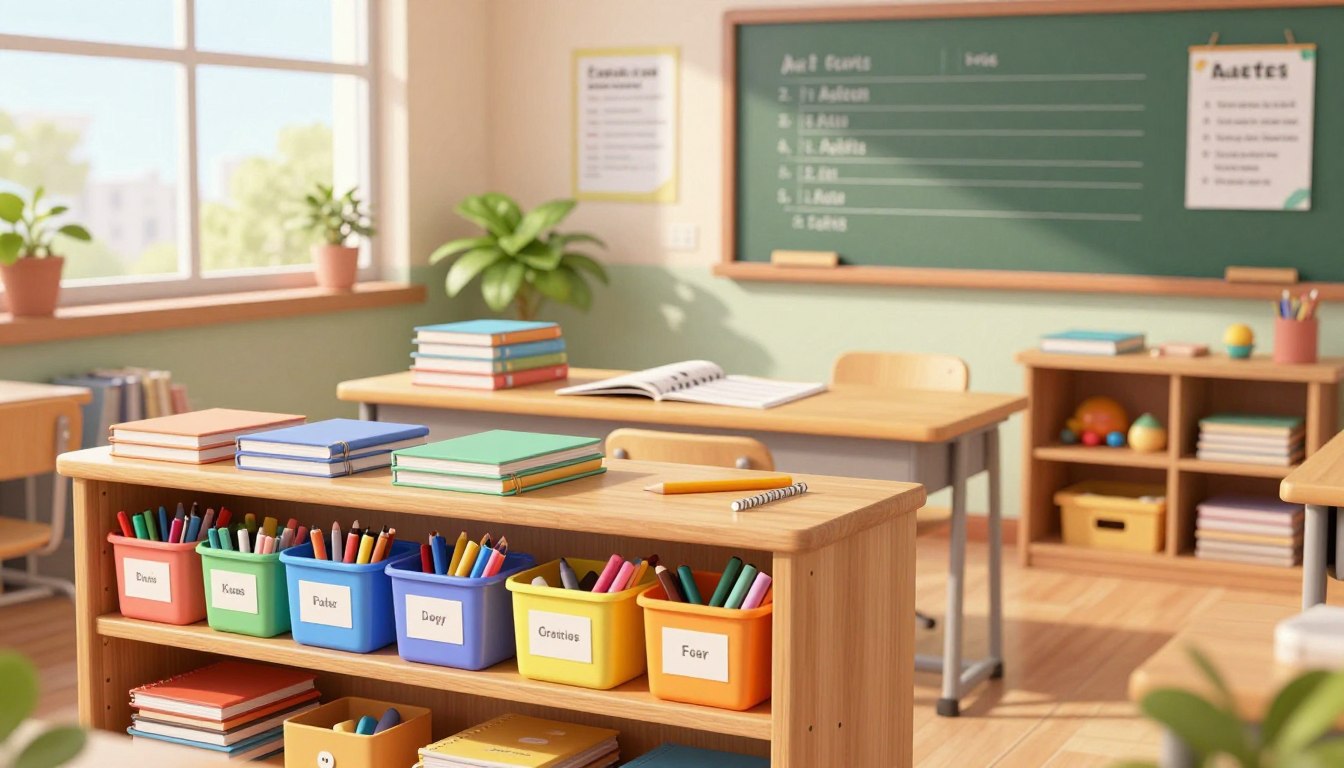
Effective classroom organization begins with choosing appropriate containers. Look for solutions that balance affordability with durability. Dollar store buckets can work well when they meet specific dimensional requirements.
Functional features matter significantly. Built-in handles facilitate student transport. Divided compartments keep supplies organized. Stackable designs maximize limited space efficiently.
Transparent or clearly labeled containers eliminate guessing games about contents. The right storage solutions make materials intuitively accessible to everyone in the learning environment.
Utilizing FlowScholar’s Education AI Tool
Digital planning tools like FlowScholar’s Education AI Tool bring data-driven precision to classroom organization. This resource helps educators map layouts and inventory existing supplies.
The platform identifies organizational gaps before physical purchases. Teachers can visualize different storage configurations. This strategic approach optimizes supply accessibility based on actual usage patterns.
| Traditional Approach | Strategic Method | Key Advantage |
|---|---|---|
| Random container selection | Criteria-based container choice | Functional alignment with needs |
| Trial-and-error setup | AI-assisted planning | Reduced wasted resources |
| Static storage solutions | Flexible, adaptable systems | Long-term sustainability |
Step-by-Step Implementation Guide
Strategic implementation transforms organizational theory into daily classroom reality. This process begins with physical space design that supports independent student use.
Establishing a Designated Supplies Area
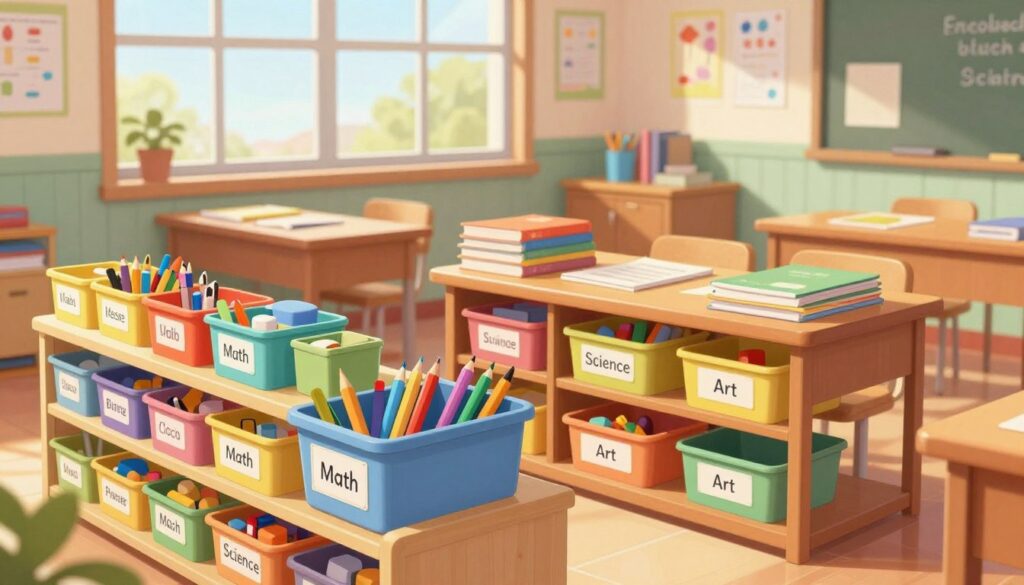
Identify a central location for your command station. This dedicated space becomes the home for all shared materials. Position it for easy student access while maintaining teacher visibility.
Organize the area with logical groupings. Place frequently used items at student height. Store less common supplies on higher shelves. This spatial arrangement creates intuitive access patterns.
Create supplementary stations near instructional areas. A math manipulatives basket near small group teaching space keeps specialized items in context. This approach minimizes cross-room traffic and maintains tidiness.
Creating Visual Labels and Clear Signage
Effective labeling is crucial for student independence. Use both words and pictures for younger learners. This dual approach builds reading skills while ensuring accessibility.
Implement a clear labeling system with “lost” and “extra” designations. Lost containers collect misplaced items. Extra containers hold fresh supplies. This distinction eliminates confusion about container purposes.
Adjust label sizes to match your containers. Laminate for durability and use consistent color coding. Position labels at student eye level rather than adult sightlines. These practical details ensure long-term usability.
Teaching the system requires explicit modeling and guided practice. Positive reinforcement builds habitual behaviors until routines become automatic. This thoughtful approach to classroom organization creates sustainable results that benefit everyone in the learning environment.
Exploring Effective Storage Solutions and Organization Systems
Seasoned teachers recognize that durable storage solutions must serve multiple purposes throughout the academic year. The most innovative classroom organization ideas combine functionality with adaptability.
Monthly rotation systems using 15-quart Sterilite bins prevent visual clutter. These containers store seasonal read-alouds and craft examples, with only current month resources accessible. This approach ensures timely material availability while reducing cognitive overload.
Innovative Ideas from Expert Classrooms
Three-tier mobile carts create portable command centers. Daily essentials occupy the top tier for instant access. Reference materials fill the middle section, while textbooks rest below.
Rolling caddies serve dual purposes as student stations and mobile learning centers. Drawers organize writing surfaces, markers, and reference materials. This configuration eliminates unnecessary movement during lessons.
Milk crates offer remarkable versatility in classroom organization. They function as modular bookshelves, file holders, and even creative seating. Their stackable design accommodates changing needs throughout the year.
Themed storage represents a game-changing philosophy. Assign specific categories to every container—math manipulatives, art supplies, assessment tools. This prevents “miscellaneous” from becoming the default classification.
Sterilite Latch Bins provide excellent long-term unit storage. Complete instructional packages remain together in stackable containers. This ensures nothing gets separated between teaching cycles.
Strategic book organization separates teacher read-alouds from student library collections. Categorize by instructional purpose rather than traditional systems. This alignment with teaching workflows enhances efficiency.
Maintaining an Organized Classroom Throughout the School Year
True organizational success in education is measured not by August’s pristine setup but by May’s sustained order. The accumulation of materials across instructional units demands systems that adapt rather than collapse.
Daily and Weekly Routines to Stay on Track
Effective maintenance begins with predictable rhythms. A five-minute end-of-day cleanup empowers students to reset their learning space. Visual checklists guide helpers through specific tasks.
Weekly rituals create stability. Friday afternoons become reset times for supply restocking and material rotation. This prevents small issues from becoming overwhelming projects.
Strategies for Consistent Organization
Classroom jobs distribute maintenance workload while building executive function skills. Roles like supply monitor and shelf straightener create shared ownership. This approach transforms organization from teacher enforcement to collective value.
Periodic evaluation ensures systems remain effective as curriculum evolves. Flexibility to adjust approaches mid-year demonstrates adaptive management. These classroom organization ideas create sustainable results.
| Reactive Approach | Proactive Strategy | Long-Term Benefit |
|---|---|---|
| Major reorganization projects | Daily 5-minute maintenance routines | Prevents accumulation chaos |
| Teacher-only responsibility | Student job assignments | Builds ownership and skills |
| Static systems | Regular evaluation and adjustment | Adapts to changing needs |
Fifteen minutes of daily attention saves hours of reorganization time. This investment maintains confidence and control from the first day to the last.
Integrating Budget-Friendly, Durable Materials into Your Plan
Budget-conscious purchasing requires strategic thinking beyond initial price tags. Most teachers invest substantial personal funds—averaging $895 annually—into classroom supplies. This financial reality demands solutions that balance affordability with long-term functionality.
Effective cost-benefit analysis considers durability projections and versatility. Moderately priced quality products often deliver superior value over repeated cheap replacements. Dollar store containers work well for lightweight items, while discount retailers offer durable baskets. Warehouse stores provide bulk purchases for frequently used materials like paper.
Strategic purchasing prioritizes investment in high-touch organizational infrastructure. Daily-use containers and frequently accessed storage deserve quality investment. For low-frequency needs, economical solutions suffice. This approach makes a significant difference in stretching limited budgets.
Education-focused retailers like Discount School Supply provide specialized knowledge of classroom-tested solutions. They understand which products withstand daily student use and which organizational approaches align with teaching styles.
Creative repurposing transforms free materials into functional storage. Cardboard boxes become attractive bins, plastic containers organize small manipulatives, and milk crates serve multiple functions. Professional-grade storage withstands years of use, justifying higher initial investment through extended replacement cycles.
Leveraging Digital Resources and Free Downloads for Enhanced Management
Free downloadable resources complement hands-on storage systems, reducing teacher workload significantly. These digital tools create a comprehensive ecosystem that supports classroom organization without straining budgets.
Educators can access professional-looking labels for pencils, erasers, crayons, and math manipulatives. Customizable sizing options ensure perfect fits for various containers. The dual “lost” and “extra” designations streamline daily material management.
Accessing Free Classroom Labels and Downloads
Printable label templates eliminate expensive label-maker purchases. Teachers can download specialized sets for different supply categories. Bonus half-sheet labels work perfectly for initial classroom setup.
Color-coded math group bins keep small group materials organized. Free folder labels help students identify their learning stations quickly. This visual system reduces transition time between activities.
Maximizing Efficiency with Online Tools
Digital rotation slides manage student movement through learning centers. Students check projected graphics to see which math tub they’ll use each day. This approach minimizes verbal directions and confusion.
Online planning resources include blog posts and video tutorials. These guides offer expert strategies for material management. Teachers gain access to peer-tested solutions without workshop costs.
| Traditional Approach | Digital Enhancement | Time Savings |
|---|---|---|
| Hand-written labels | Professional printable templates | 15+ minutes per labeling session |
| Verbal center directions | Digital rotation slides | 5+ minutes daily |
| Physical filing only | Cloud storage integration | 30+ minutes weekly |
| Trial-and-error organization | Downloadable expert guides | Hours of planning time |
Strategic integration of digital tools transforms material management. Teachers reclaim valuable instructional time while students develop independent organizational skills.
Conclusion
Mastering classroom organization unlocks more than just tidiness; it unlocks potential. This approach represents a strategic foundation that directly influences instructional quality and student independence throughout the school year.
We recognize the initial investment of time yields exponential returns. When educators know exactly where materials are, and students navigate supplies independently, lessons flow smoothly. This creates a palpable sense of control and focus.
Effective management empowers students with real responsibility, transforming routine tasks into learning opportunities. This way of working fosters a collaborative culture, which is a cornerstone of effective classroom management strategies.
The journey is ongoing. Refining your organizational system ensures it adapts to evolving needs. For personalized planning and AI-powered optimization, explore the tools at FlowScholar. This can make a significant difference, allowing you to dedicate more energy to what matters most: teaching.
FAQ
What are the biggest challenges teachers face with classroom organization?
Teachers often struggle with misplaced supplies, lost instructional time, and managing student responsibility. A lack of a clear system can lead to clutter, making it difficult to find essential items like markers, math manipulatives, or paper during a lesson. This disorganization can hinder the learning process for students at all grade levels.
How can a simple system empower students to take ownership of classroom materials?
A well-structured system gives students clear expectations. When supplies have a designated place with visual labels, students know exactly where items belong. This fosters a sense of responsibility, reduces dependency on the teacher, and builds crucial executive functioning skills that support their overall learning foundation.
What are the best types of containers and storage bins for a classroom?
Durable, clear bins are highly effective. Transparency allows everyone to see contents instantly. Stackable containers save valuable space, and uniform sizes create a neat, organized appearance. Look for sturdy options that can withstand daily use throughout the school year, making your investment last.
How can digital tools like FlowScholar’s Education AI assist with material management?
FlowScholar’s AI tool can streamline planning and inventory tracking. It can help generate supply lists, suggest organization systems based on your room’s layout, and even create custom labels for bins and books. This saves teachers significant time, allowing them to focus more on teaching and less on management.
What is a key first step in implementing this organization system?
The first step is establishing a designated supplies area. Choose a specific, accessible spot in your room for all shared resources. This creates a predictable “home” for everything, which is the cornerstone of an effective classroom management plan and makes daily routines run smoothly.
Where can I find free, printable labels and other organization resources?
Many educational blogs and teaching resource websites offer free downloads for classroom labels and planning templates. These resources provide a fantastic, budget-friendly starting point. Utilizing these free materials can make setting up your system quick and easy, without compromising on quality or clarity.
How do I maintain an organized classroom all year long?
Consistency is key. Implement short daily and weekly routines, like a “5-minute tidy-up” before dismissal. Teach students the system explicitly at the start of the year and reinforce it regularly. These small, consistent efforts prevent clutter from accumulating and make organization a natural part of your classroom culture.