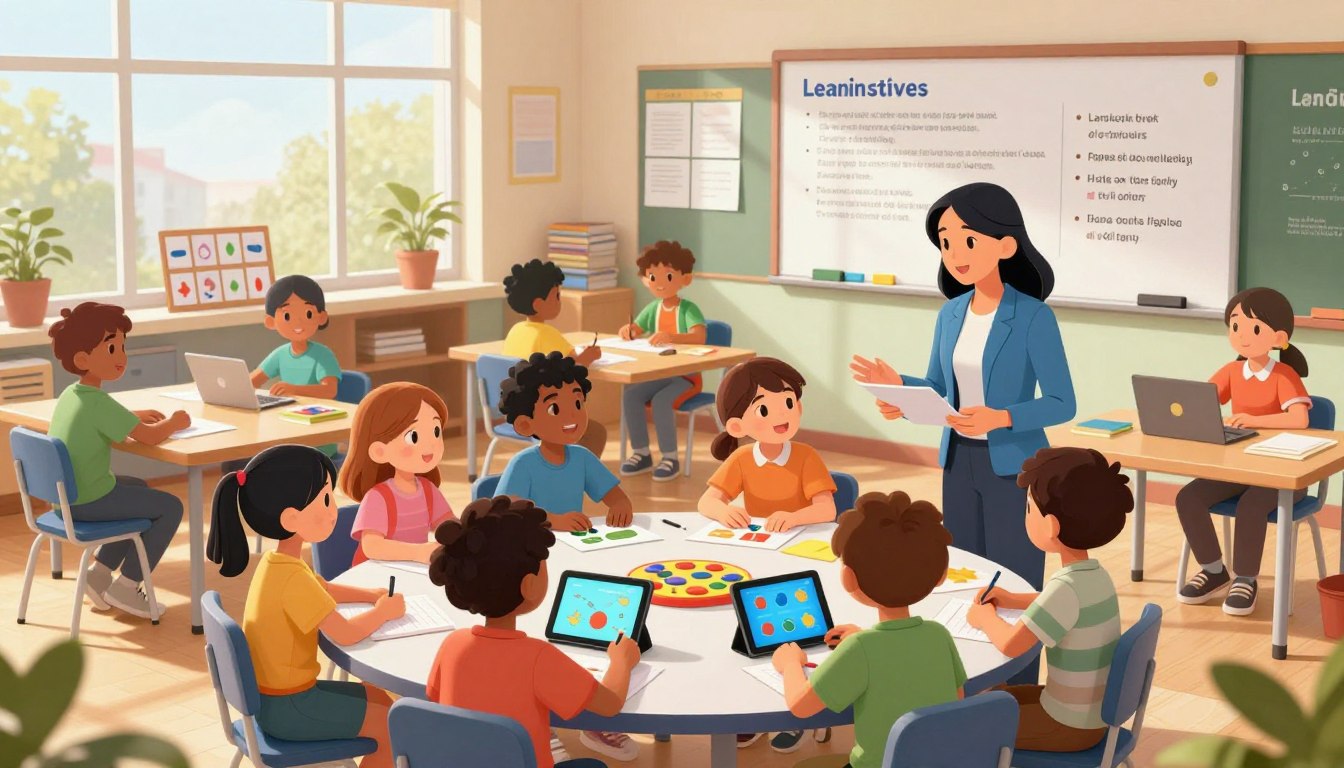
“Every student can learn, just not on the same day, or in the same way.” — George Evans
This reality defines today’s educational landscape. The traditional classroom model no longer exists—if it ever truly did. Modern classrooms contain remarkable diversity, with second-grade classes spanning K-3rd grade reading levels and sixth-grade classrooms ranging from 2nd-8th grade abilities.
As Principal Gerry Brooks highlights in his viral “Paradigm of Education” video, many students face economic challenges, perform below grade level, and navigate mental health difficulties. This isn’t an exception—it’s the norm. Meeting diverse learning needs isn’t optional; it’s essential for reaching every student.
The challenge becomes clear: educators must provide tailored instruction without creating unsustainable workloads. Strategic approaches and intelligent tools like FlowScholar make this possible. This AI-powered platform streamlines the differentiation process, helping teachers address individual student requirements efficiently.
Differentiation transforms from an overwhelming burden into a manageable skill set. With the right frameworks, educators can create inclusive learning environments that serve all students effectively. The goal isn’t perfection—it’s progress toward meeting each learner where they are.
Key Takeaways
- Today’s classrooms contain students with vastly different academic levels and backgrounds
- Differentiation is no longer optional but essential for effective instruction
- Strategic approaches can address diverse learning needs without excessive teacher workload
- Technology tools like FlowScholar can streamline the differentiation process
- The focus should be on progress rather than perfection in meeting student needs
- Real-world data shows significant reading level variance across grade levels
- Economic and mental health factors contribute to classroom diversity challenges
Introduction to Differentiated Instruction in Modern Classrooms
Educational equity demands that we move beyond standardized instruction to meet the unique needs of every learner. Traditional approaches that target the “average” student rarely serve the full spectrum of abilities present in today’s learning environments.
Differentiated instruction represents a responsive teaching methodology. It adapts content, process, and product based on individual student requirements rather than applying uniform methods.
Understanding the Need for Differentiation
Developmental timelines become increasingly varied as children mature. While infant milestones follow predictable patterns, ten-year-olds in the same classroom may demonstrate vastly different cognitive and academic readiness.
Post-pandemic learning gaps have accelerated this need. Students return with diverse experiences and preparation levels, making personalized approaches essential for meaningful progress.
The Evolving Classroom Demographics
Today’s classrooms reflect significant societal progress toward educational inclusion. They bring together students with diverse linguistic backgrounds, economic circumstances, and prior educational experiences.
This demographic evolution creates legitimate instructional challenges. Effective solutions require systematic approaches rather than simply increasing teacher workload. Educators can leverage established classroom differentiation frameworks to navigate this complexity.
Differentiation directly impacts student motivation and achievement. Learners who receive appropriately challenging work remain engaged and develop positive academic self-concepts.
| Classroom Diversity Factor | Description | Impact Level | Differentiation Strategy |
|---|---|---|---|
| Academic Readiness | Varying skill levels and prior knowledge | High | Tiered assignments and flexible grouping |
| Linguistic Background | Multiple language proficiencies and exposures | Medium-High | Scaffolded language support and visual aids |
| Learning Preferences | Different modalities and engagement styles | Medium | Choice boards and multi-sensory activities |
| Socioeconomic Factors | Varied resources and home support systems | High | Resource flexibility and community building |
This approach serves all learners by creating multiple pathways to the same learning objectives. Each student can access grade-level content through their appropriate developmental zone.
Challenges in Differentiating Lessons Without Increasing Workload
Educators face a complex balancing act between individual student needs and systemic constraints. The reality of modern classrooms demands personalized approaches, yet practical barriers often hinder implementation.
Time Management Concerns
Teachers already operate with limited planning periods and packed schedules. The perception that differentiation requires creating entirely separate lesson plans for different student groups makes the approach feel overwhelming.
Many educators describe their classes as containing students at vastly different developmental stages. This diversity creates legitimate time management challenges that can deter even the most dedicated teachers from consistent differentiation.
Addressing Varied Student Needs
The achievement gap paradox presents additional pressure—gaps often widen over time despite intervention efforts. Teachers feel responsible for accelerating growth while managing day-to-day classroom realities.
Equity concerns surface when contemplating different experiences for different students. The contradiction between personalized instruction and standardized testing requirements creates frustration among educators who want the best for all learners.
Strategic approaches that leverage existing resources efficiently offer a sustainable way forward. The goal isn’t creating new materials from scratch but adapting current frameworks to meet diverse needs.
Harnessing Education AI Tools for Smarter Lesson Planning
Modern educators now have access to intelligent tools that transform lesson preparation from a burden into a strategic advantage. These platforms handle mechanical tasks while preserving teacher expertise.
Overview of FlowScholar’s Capabilities
FlowScholar represents a breakthrough in educational technology. The platform rapidly generates leveled reading materials and varied assessment formats.
Teachers can input standard content and receive multiple versions tailored to different readiness levels. This approach maintains learning objectives while accommodating diverse needs.
Integrating AI with Traditional Strategies
Effective implementation combines artificial intelligence with professional judgment. Educators delegate time-intensive tasks like vocabulary simplification to the platform.
This integration frees teachers to focus on relationship building and personalized feedback. The technology serves as a force multiplier rather than a replacement for human expertise.
Strategic use of these tools creates sustainable differentiation practices. Teachers can meet diverse student needs without sacrificing work-life balance.
How to Differentiate Lessons Without Doubling Your Work
Effective classroom adaptation operates on three key dimensions that maintain instructional integrity. These principles transform personalized learning from an overwhelming task into a manageable practice.
Key Principles Behind Effective Differentiation
The foundation of sustainable differentiation lies in maintaining consistent learning objectives. All learners should reach the same destination through routes matched to their readiness levels.
Strategic thinking identifies where variability matters most. Sometimes adjusting reading levels makes the crucial difference. Other times, varying support during practice or final product formats better serves learning goals.
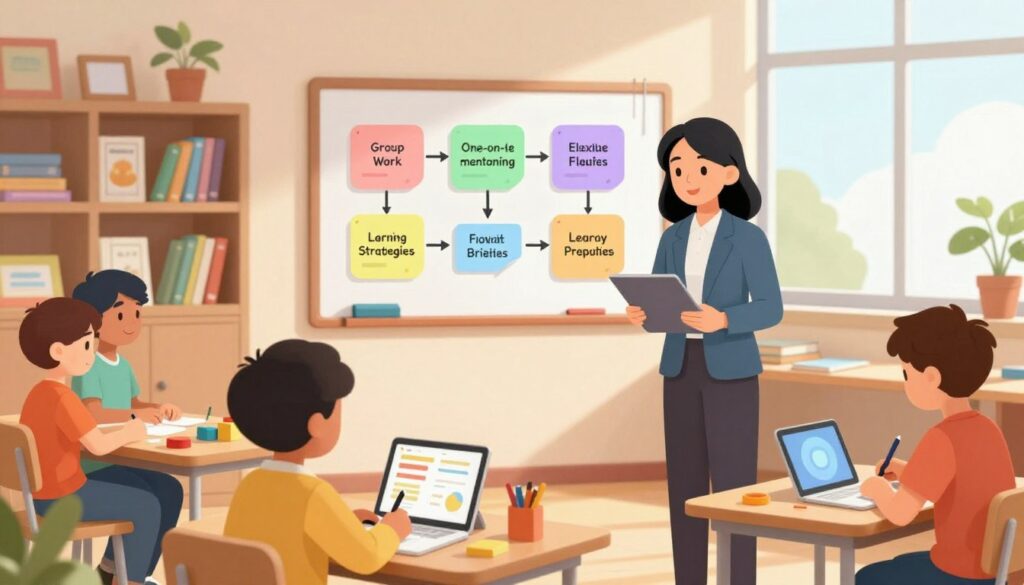
This approach prevents creating a two-tier system. Instead, all students access grade-level content with appropriate scaffolding or extension based on individual needs.
| Differentiation Dimension | Core Concept | Practical Example |
|---|---|---|
| Content | Adjusting what students learn or complexity level | Same topic with varied reading materials |
| Process | Modifying how students engage with material | Choice boards with different activity options |
| Product | Varying how students demonstrate mastery | Alternative assessment formats for same standard |
Flexible elements like tiered activities allow educators to meet diverse needs within a single framework. The focus remains on modifications that genuinely impact student learning rather than differentiating every lesson element.
These principles guide teachers toward efficient practices. They can address individual requirements without unsustainable workload increases.
Strategies for Differentiating Assessments and Content Delivery
Strategic assessment design allows every student to demonstrate what they truly know. When evaluations match readiness levels, teachers gain accurate insights into learning progress.
This approach separates content mastery from reading ability and test-taking skills. It represents one of the most efficient differentiation methods available.
Adapting Assessments for Diverse Learners
Simple modifications can transform assessment accessibility. Reading tests aloud removes reading comprehension barriers for entire classes or small groups.
Students can request vocabulary help during the process. This accommodation requires minimal effort but delivers significant impact.
Language simplification involves replacing complex words with common synonyms. Shortening sentences and adding space between questions improves accessibility.
Visual cues anchor students to content knowledge. Including cloud images on weather tests, for example, lets learners focus on meteorological concepts rather than struggling with terms like “cirrus.”
Incorporating Simplified Language and Visual Cues
Alternative response formats reveal true understanding. Accepting verbal answers or dictation to a scribe helps students with writing challenges.
Drawing with labels can replace paragraph responses for some learners. This approach assesses the same knowledge through different channels.
Students who succeed on modified tests develop positive academic identities. They understand that format challenges—not ability—sometimes cause difficulty.
| Modification Type | Implementation | Student Impact |
|---|---|---|
| Read-Aloud Accommodation | Teacher reads test to groups or class | Removes reading barrier for content demonstration |
| Language Simplification | Basic vocabulary, shorter sentences | Improves accessibility for diverse learners |
| Visual Support | Images and spacing between questions | Provides context clues and reduces anxiety |
| Response Flexibility | Verbal answers, drawing, dictation options | Reveals knowledge through multiple channels |
These strategies create empowered learners who understand their capabilities. Many students voluntarily challenge themselves with both standard and modified versions when given the choice.
Differentiation Techniques for Small Group Instruction
The strategic clustering of students into targeted learning groups transforms classroom efficiency. This approach allows educators to address specific needs while maintaining manageable workloads.
Effective Grouping Based on Data
Successful small groups begin with assessment data rather than assumptions. Teachers analyze quiz results organized by standard or reading diagnostic scores.
This data-driven approach ensures groups address actual skill gaps. Students with similar needs receive targeted instruction together.
Content differentiation becomes natural within these small groups. One group might review missed concepts while another extends their understanding.
Flexible Grouping and Peer Collaboration
Groups should remain dynamic, shifting as student progress evolves. A student might need advanced math support but reading reinforcement.
Flexible grouping prevents the tracking problems of static ability groups. Peer collaboration enhances learning through shared understanding.
Level differentiation maintains consistent objectives across groups. All students work toward the same goals with appropriate complexity adjustments.
| Grouping Strategy | Data Source | Differentiation Focus | Time Efficiency |
|---|---|---|---|
| Skill-Based Groups | Quiz results by standard | Content reteaching or extension | High – targets specific gaps |
| Readiness Levels | Reading assessments | Text complexity and support | Medium – requires leveled materials |
| Pace Groups | Observation and practice work | Processing time and problem quantity | High – responsive to immediate needs |
| Interest Groups | Student choice and surveys | Engagement and motivation | Medium – requires topic options |
Small group structures prove more time-efficient than whole-class instruction for many concepts. Teachers catch misconceptions immediately rather than reteaching entire classes later.
Differentiation Strategies for Engaging Whole-Class Lessons
Choice boards transform traditional lessons into dynamic learning experiences that serve diverse student populations. This approach maintains classroom community while providing individual pathways to mastery.
Whole-class differentiation strategies allow educators to address varied needs within unified learning activities. These methods preserve the benefits of shared instruction while embedding flexibility for different readiness levels.
Using Choice Boards and Alternative Tasks
Choice boards represent a powerful tool that gives students agency over their learning journey. Students might select between writing a summary, creating a visual representation, or recording an oral explanation—all addressing the same standard.
This strategic approach often leads to more accurate self-differentiation than teacher assignment. When presented with options ranging from basic to complex, learners frequently choose appropriately challenging tasks.
“When students have meaningful choices, engagement and ownership of learning naturally increase.”
Strategic partnerships and visual supports further enhance whole-class differentiation. Pairing English learners with strong verbal models provides language support, while anchor charts with sentence frames benefit all class members.
| Differentiation Approach | Implementation | Student Benefit | Teacher Efficiency |
|---|---|---|---|
| Choice Boards | Multiple activity options for same standard | Increased engagement and autonomy | High – single preparation, multiple pathways |
| Flexible Partnerships | Strategic pairing based on language or skill needs | Peer modeling and collaborative learning | Medium – requires thoughtful grouping |
| Visual Scaffolding | Anchor charts, diagrams, vocabulary displays | Accessible reference points for all learners | High – reusable resources |
| Multiple Mentor Texts | Same concept taught through varied complexity levels | Appropriate challenge for different readers | Medium – requires leveled materials |
These whole-class strategies create inclusive learning environments where every student can succeed. The classroom becomes a space where diversity is not a challenge to overcome but a resource to leverage.
Leveraging Technology to Enhance Differentiated Instruction
Interactive educational tools create unprecedented opportunities for customized learning experiences. These digital platforms transform differentiation from labor-intensive to strategically efficient.
Utilizing Interactive Tools and Digital Assessments
Digital platforms provide immediate insight into student progress through varied assessment formats. Polls, quizzes, and open-ended questions offer real-time data on understanding.
Teachers can address misconceptions immediately without waiting for graded papers. This responsive approach allows for targeted support during the learning process.
Flipping the Classroom with AI Resources from FlowScholar
FlowScholar’s AI capabilities revolutionize the flipped classroom model. The platform generates differentiated content for home learning—readings and videos customized to individual needs.
Students arrive in class ready for high-value application activities. Classroom time focuses on collaboration and targeted support rather than routine content delivery.
This approach maximizes instructional efficiency while meeting diverse student requirements. Technology becomes a powerful ally in creating inclusive learning environments.
Planning and Implementing Differentiated Lessons
Effective educators build flexibility directly into their lesson architecture, creating multiple pathways within a single framework. This proactive approach ensures readiness for diverse student needs without last-minute scrambling.
Strategic planning involves designing core activities with natural variation points. Teachers prepare extension tasks and remediation materials in advance. This system provides options that respect different pacing and readiness levels.
Structuring Lessons with Varied Pacing
Student-paced modes empower learners to progress independently or in small groups. This frees the teacher to provide targeted support.
Building in natural breakpoints is key. Some students complete practice quickly and move to enrichment. Others take more time with the same core content, receiving guidance as needed.
Organizing materials in folders by skill or topic saves valuable time. Teachers can quickly pull appropriate resources based on real-time assessment data.
Incorporating Student Interests and Choice
Choice boards are a powerful tool for blending differentiation with student agency. They offer various paths to master the same objective.
“When students select their learning journey, engagement and ownership skyrocket.”
Leveraging student interests keeps content constant while context changes. A persuasive writing assignment can focus on sports, gaming, or social justice. All students learn rhetorical techniques through personally relevant topics.
This approach, detailed in resources on differentiated instruction strategies, makes teaching more responsive. Clear routines help students access materials and work independently.
| Planning Strategy | Focus Area | Impact on Efficiency |
|---|---|---|
| Flexible Framework | Lesson Structure | High – single plan, multiple outcomes |
| Paced Breakpoints | Time Management | High – responsive to immediate needs |
| Interest-Based Context | Student Engagement | Medium – requires topic research |
| Resource Libraries | Long-Term Preparation | High – reusable across years |
Over time, building a library of differentiated resources makes the process increasingly efficient. The initial investment pays ongoing dividends for every grade level.
Assessing the Impact of Differentiated Instruction on Learning
The real success of tailored educational strategies emerges through comprehensive assessment methods that track individual progress. Effective evaluation moves beyond standardized scores to capture meaningful growth across multiple dimensions.
Gathering Real-Time Feedback
Modern classrooms benefit from immediate response systems that provide instant insight into student understanding. Digital platforms and observational techniques allow teachers to adjust instruction dynamically.
These real-time mechanisms help educators gauge whether differentiated approaches truly meet varied needs. Teachers can address misconceptions immediately rather than waiting for formal assessments.

Measuring Student Growth and Engagement
Individual progress tracking reveals differentiation’s true impact. A student advancing from second to fourth-grade reading level demonstrates exceptional growth, even if below grade standards.
Engagement indicators—time on task, question quality, persistence—provide qualitative data about challenge appropriateness. Student self-assessment transforms differentiation into a collaborative process where learners take ownership of their development.
| Assessment Indicator | Data Source | Impact Measure | Differentiation Adjustment |
|---|---|---|---|
| Academic Growth | Pre/post assessments | Individual progress relative to starting point | Content complexity adjustments |
| Engagement Levels | Observation and participation | Time on task and question quality | Activity format and choice options |
| Confidence Building | Student self-reports | Willingness to attempt challenging work | Scaffolding and support levels |
| Metacognitive Awareness | Goal-setting conferences | Understanding of personal learning needs | Student-led differentiation choices |
This comprehensive approach, supported by research on educational assessment methods, ensures differentiation closes opportunity gaps. When combined with adaptive learning platforms, it creates a continuous improvement cycle that benefits every learner.
Conclusion
The journey toward effective classroom instruction culminates in approaches that honor student diversity while respecting teacher capacity. Differentiation emerges as both essential and achievable when educators employ strategic methods.
Effective strategies focus on high-impact modifications rather than complete curriculum overhauls. Teachers can adapt assessments, vary text complexity, and implement flexible grouping to meet diverse learning needs.
Technology tools like FlowScholar transform these concepts into sustainable practice. The platform automates time-intensive tasks, allowing educators to focus on meaningful student interactions.
Educators can begin implementing these approaches gradually. Start with one strategy—perhaps differentiated assessments or small group instruction—and build from there.
Ready to make differentiation manageable? Visit FlowScholar today to discover AI-powered tools that help you meet every student’s needs efficiently. Transform your teaching practice while maintaining work-life balance.
FAQ
What is differentiated instruction?
Differentiated instruction is a teaching approach where educators proactively modify content, learning processes, and assessments to meet the diverse needs of students within a single classroom. The goal is to ensure all learners can access the core concepts and skills, regardless of their readiness levels, interests, or learning profiles.
How can teachers differentiate without significantly increasing their workload?
By leveraging strategic frameworks and modern tools, educators can streamline differentiation. Key methods include using flexible small groups, incorporating student choice in activities, and utilizing AI-powered platforms like FlowScholar to generate leveled texts and varied assessments quickly, thus saving valuable planning time.
What role does technology play in differentiated learning?
Technology, especially education AI, is a powerful ally. Interactive tools and digital assessments allow for personalized learning paths and instant feedback. Platforms such as FlowScholar can help teachers flip their classroom, providing students with tailored resources that enable more targeted support during class time.
How do you effectively group students for small group instruction?
Effective grouping is dynamic and data-informed. Teachers should form groups based on ongoing assessment data, specific skill needs, or student interests. Using flexible grouping strategies—where students move between groups for different subjects or projects—ensures that support is targeted and that peer collaboration is meaningful.
Can differentiation be applied to whole-class lessons?
Absolutely. Whole-class differentiation often involves providing choices in how students engage with the material. Teachers can use choice boards, offer alternative tasks for demonstrating understanding, or present information through multiple modalities (like text, video, and hands-on activities) to cater to various learning styles simultaneously.
How should assessments be adapted for a differentiated classroom?
Assessments should measure the same core standards but can be adapted in format, complexity, or pacing. Options include offering simplified language, incorporating visual cues, allowing oral responses, or providing extended time. The focus is on accurately gauging each student’s grasp of the essential concepts.