“In preparing for battle I have always found that plans are useless, but planning is indispensable,” Dwight D. Eisenhower once remarked. This wisdom resonates deeply with educators facing today’s classroom challenges.
Many teachers struggle with limited planning time, changing standards, and multiple course preparations. These pressures can make creating cohesive instruction feel overwhelming. A robust framework transforms teaching from reactive to proactive.
This strategic approach groups lessons around common themes and skills. It provides a clear roadmap, saving valuable time while enhancing instructional coherence. Educators gain the “forest view” needed to guide student learning effectively.
We explore practical strategies drawn from real classroom experiences. Modern tools, including AI-powered solutions, can accelerate this process without sacrificing quality. The goal is sustainable teaching that maximizes impact.
Key Takeaways
- Strategic planning transforms teaching from reactive scrambling to proactive instruction.
- A well-constructed framework groups lessons thematically, saving time and improving coherence.
- Modern educators face challenges like evolving standards and limited planning periods.
- Technology tools can streamline the creation process while maintaining personalization.
- This approach helps maintain focus on overarching goals rather than daily details.
- Sustainable teaching practices prevent burnout while maximizing student engagement.
Introduction to Unit Planning in Education
The difference between chaotic classrooms and engaging learning environments often comes down to one critical factor: comprehensive unit planning. This foundational approach transforms teaching from daily improvisation to strategic, cohesive instruction.
The Importance of Preparation and Organization
Organized educators understand that upfront investment in unit planning creates systems that compound efficiency throughout the school year. Like a chef’s mise en place—having ingredients prepped and measured—teachers with solid unit plans execute lessons smoothly without overlooking critical content.
District support varies dramatically. Some educators receive detailed frameworks while others start from scratch with minimal guidance. Regardless of institutional backing, strong unit planning prevents the end-of-year scramble where teachers realize vital standards remain untaught.
Overview of Key Unit Plan Components
Every robust unit plan contains essential elements: standards alignment, teaching strategies, and comprehensive assessments. These non-negotiables form the foundation for effective curriculum delivery.
Exceptional plans include bonus components that elevate learning. Vocabulary lists, essential questions, and pacing calendars maintain realistic timelines while addressing common misconceptions proactively.
This strategic approach enables thoughtful content spiraling across the academic year. It creates opportunities for varied instructional methods that sustain student engagement while ensuring all standards receive adequate attention.
Understanding Curriculum Standards and Learning Objectives
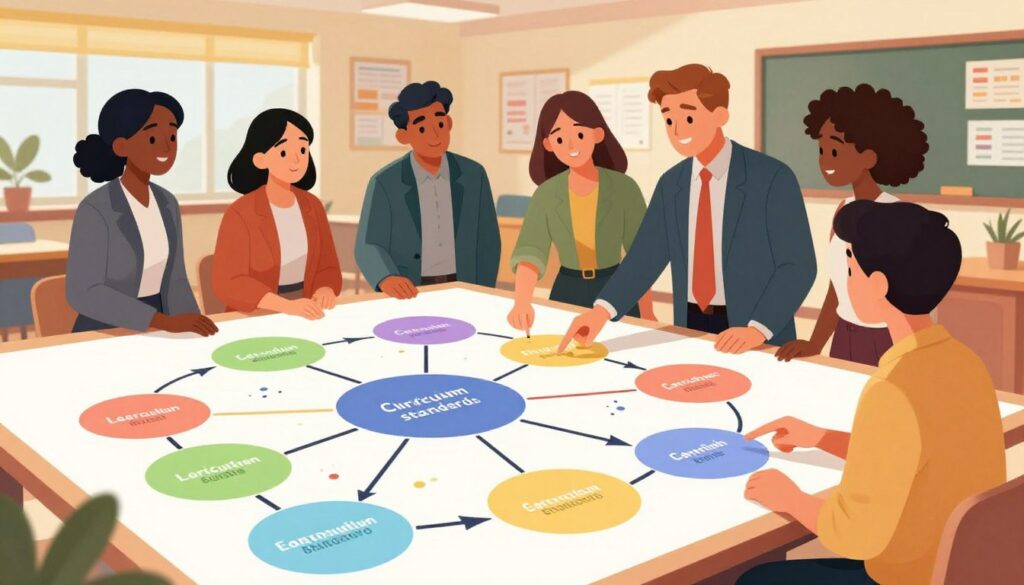
The transformation from abstract curriculum documents to tangible classroom learning begins with strategic standards interpretation. These educational benchmarks serve as the essential framework connecting district requirements with measurable student outcomes.
Mapping Standards to Clear Learning Goals
Curriculum standards function like GPS coordinates for the entire unit. They define what students must know and demonstrate by the unit’s conclusion. Effective planning recognizes that one standard rarely equals one daily objective.
Consider this mathematics example: standard 7.G.5 covers multiple angle relationships requiring sequential instruction. This broad standard appropriately breaks into four distinct daily targets for student mastery.
| Standard Component | Daily Objective | Assessment Focus |
|---|---|---|
| Identify angle types | Students classify angles in diagrams | Formative observation |
| Apply complementary angles | Solve equations using angle pairs | Practice problems |
| Work with supplementary angles | Create and solve multi-step problems | Exit ticket assessment |
| Integrate multiple concepts | Apply all angle relationships | Summative project |
Formulating objectives as “I Can” statements keeps students oriented to learning purposes. This approach builds metacognitive awareness of developing competencies throughout the course.
Examining summative assessments early ensures instruction prepares students for high-stakes demonstrations. Review previously assessed state exams to understand how abstract standards translate into actual performance expectations.
Essential questions guide standards analysis: Which standards cluster together? What big ideas should students retain? How do these connect to the broader learning trajectory across the school year?
Integrating an Education AI Tool into Your Planning Process
Artificial intelligence has entered the educational landscape not as a replacement for teacher judgment, but as an amplifier of professional capacity. Modern educators face unprecedented demands on their time, making traditional approaches to creating every component from scratch unsustainable.
Technology now offers intelligent solutions that respect teacher expertise while dramatically accelerating preparation. These tools handle repetitive technical tasks, freeing educators to focus on creative instructional decisions.
Enhancing Efficiency with flowscholar.com
flowscholar.com represents a cutting-edge approach to educational planning. This specialized AI tool generates standards-aligned templates, scope and sequence outlines, and differentiated materials in minutes rather than hours.
The platform transforms how teachers approach unit development. Instead of starting with blank documents, educators begin with robust frameworks they can customize according to their specific classroom needs.
This strategic partnership enables sustainable teaching practices. As noted in planning with purpose and precision, intelligent tools allow educators to allocate limited time toward high-impact activities like relationship-building and responsive instruction.
flowscholar.com serves teachers across content areas and grade levels. It maintains alignment to relevant standards while producing assessments, vocabulary lists, and pacing guides tailored to individual teaching contexts.
How to Build a Unit Plan That Doesn’t Fall Apart
Educators reach a pivotal moment when conceptual understanding transforms into actionable methodology for curriculum development. This transition marks the shift from knowing why robust frameworks matter to mastering how to build them effectively.
Creating a strong unit plan follows a systematic formula anyone can learn. It’s not an innate talent but a strategic process that becomes intuitive with practice. Proper guidance accelerates this learning curve significantly.
The methodology represents distilled wisdom from seasoned educators. Years of classroom implementation, trial and error, and continuous refinement inform this approach. We can benefit from their accumulated experience.
Regardless of subject or grade level, resilient instructional frameworks share core structural elements. These components create the foundation for successful implementation:
| Essential Component | Primary Function | Implementation Tip |
|---|---|---|
| Standards Alignment | Ensures curriculum compliance | Map standards to daily objectives |
| Logical Sequencing | Builds knowledge progressively | Scaffold from simple to complex |
| Varied Assessments | Measures diverse competencies | Mix formative and summative tools |
| Built-in Flexibility | Accommodates adjustments | Plan buffer days for review |
| Realistic Timelines | Maintains achievable pacing | Account for interruptions |
The following sections provide concrete guidance on each critical element. From breaking down units into manageable sections to establishing practical pacing guides, we’ll explore actionable strategies. These approaches draw from successful unit planning writing workshop methodologies.
Remember that perfection isn’t required on the first attempt. The goal is creating solid frameworks with flexibility for inevitable classroom adjustments. This approach ensures your instructional design remains effective throughout implementation.
Step-by-Step Guide to Crafting Cohesive Lessons
Translating a comprehensive unit framework into daily student learning requires a systematic, step-by-step approach. This process ensures each lesson builds logically toward the final learning goals.
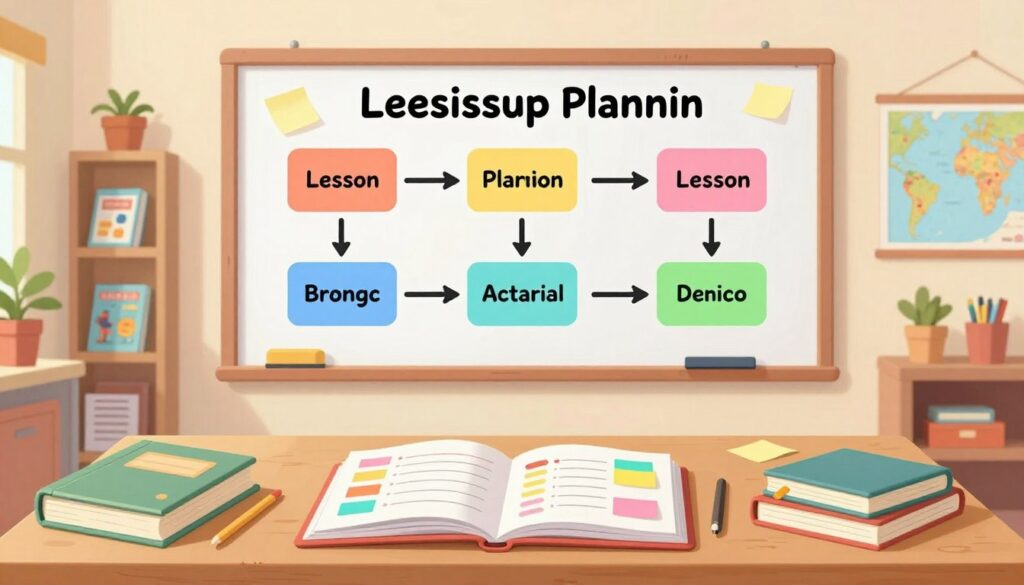
Educators begin with backward design, identifying the summative assessment first. This crucial step establishes the destination before mapping the journey.
Breaking Down the Unit into Manageable Sections
Complex standards rarely fit into single lessons. Effective planning involves breaking broad objectives into specific daily targets. Each lesson should have clear, observable student outcomes.
Consider a mathematics standard covering multiple angle relationships. This requires four distinct lessons with progressive objectives. The sequence moves from identification to application.
Establishing Pacing Guides and Assessments
Realistic pacing begins with a calendar and pencil. Map skills strategically across available instructional days. Account for prior knowledge gaps and difficult concepts.
Build buffer days for review and adjustments. Varied assessments should measure progress throughout the unit. Formative checks inform instructional decisions.
Implementing Practical Examples in the Classroom
Cohesive lessons incorporate nine essential elements distributed across the unit:
- Introductory activities that hook student interest
- Guided learning experiences with new content
- Skills practice with feedback opportunities
- Collaborative structures and writing components
- Scaffolded support toward the final assessment
These elements often overlap within single lessons. A group project might combine collaboration, skills practice, and writing. The goal is creating connected learning experiences where students see how daily activities build toward mastery.
Document pacing decisions and instructional sequences in writing. Future implementations benefit from notes about time allocations and student response patterns.
Infusing Creativity and Engagement into Your Unit Plan
Engagement serves as the critical bridge between curriculum delivery and actual student learning. Without cognitive investment, even the most rigorous content fails to achieve meaningful impact.
Strategic variation prevents the monotony that breeds disengagement. Effective instruction integrates reading, writing, speaking, and creative thinking across the unit timeline.
Diverse Strategies for Stimulating Student Interest
Educators can transform traditional assignments with simple creative twists. A character analysis becomes a social media profile, achieving the same analytical objective while increasing student investment.
Balance high-energy collaborative activities with reflective independent work. Students need both social interaction and quiet processing time for optimal learning.
| Engagement Strategy | Student Benefit | Implementation Example |
|---|---|---|
| Collaborative Annotation | Builds collective understanding | Group text analysis with color-coded notes |
| Quick Writes | Lowers participation barrier | Three-minute reflection journals |
| Project-Based Checkpoints | Visualizes learning progress | One-pager synthesis assignments |
| Game-Based Review | Activates competitive energy | Quiz-style team challenges |
Essential questions provide intellectual through-lines that help students connect daily lessons to larger themes. This approach makes content feel relevant beyond test performance.
We encourage exploring creative lesson plans that incorporate student voice and choice. The most memorable units often feature opportunities for personalized expression.
Creative engagement doesn’t require reinventing every component. Sometimes one innovative idea transforms student perception of entire learning sequences.
Creating a Realistic and Flexible Unit Calendar
Calendar construction bridges the gap between ambitious learning goals and the practical constraints of classroom reality. This visual roadmap prevents instructional drift while maintaining focus on essential objectives.
Educators must account for actual instructional days rather than theoretical time. Holidays, testing windows, and assemblies significantly reduce available teaching moments.
Techniques for Effective Time Management
A documented pacing guide serves as an essential navigation tool. Without clear timelines, even well-designed units can lose direction and momentum.
Realistic calendaring requires honest assessment of available teaching time. Visual templates help identify pacing issues before implementation begins.
Strategic educators build buffer days into their unit plans. These flexible periods accommodate student needs and unexpected learning opportunities.
Keep calendars visible throughout instruction for regular review. Brief notes documenting adjustments create valuable reference points for future implementations.
Flexibility complements rather than contradicts effective planning. Responsive teaching requires space for student-led discussions and deeper exploration.
The wisest time management protects space for meaningful learning. This approach transforms content coverage into genuine student understanding.
Using Curation and Customization to Enhance Teaching Materials
Many educators face the exhausting expectation of crafting every single teaching material from a blank slate. This unsustainable approach is a primary driver of burnout. Strategic curation, however, is a professional skill that enables career longevity.
It’s crucial to distinguish personal preference from practical necessity. Some teachers love creating resources from scratch and should protect time for that creative work. For most, curation preserves finite energy for high-impact teaching activities.
Balancing Pre-Made Resources with Your Unique Style
A practical framework guides effective curation. Search for resources with most desired components. Perfect alignment is rare; adaptation is the norm. Always preview materials to ensure they fit your student needs and teaching style.
Prioritize curation for elements you find least enjoyable. If designing assessments feels tedious, curate them. Invest your creative energy where it sparks joy. This strategic approach saves significant time.
Platforms like flowscholar.com exemplify this balance. They provide high-quality, standards-aligned materials as a starting point. Educators then customize these resources, respecting their unique context without building every unit component from scratch.
Selecting and adapting resources requires sophisticated professional judgment. It matches materials to specific learning objectives. Using curated resources doesn’t diminish professionalism; it demonstrates strategic, sustainable practice.
Building a personal toolkit of trusted sources streamlines future planning. Document customizations to build institutional knowledge. This compounds efficiency over time, making each unit plan stronger.
Using curated materials makes you strategic, not less dedicated. It focuses your unique expertise on aspects of teaching that truly require your personal touch.
Conclusion
Effective teaching frameworks transform from static documents into dynamic tools through intentional iteration. The journey doesn’t end with implementation but continues through systematic reflection.
Educators should view each unit as a living document that evolves with classroom experience. Post-implementation review creates institutional knowledge that refines future iterations.
A resilient unit plan balances structure with flexibility. It serves as a strategic foundation while accommodating real-time adjustments based on student needs.
Sustainable planning practices prevent burnout while maximizing instructional impact. We encourage exploring flowscholar.com to discover how AI tools can streamline this process.
Mastering curriculum design is a developing skill that improves with each implementation. The goal is continuous refinement toward more effective student learning experiences.
FAQ
What is the most common mistake teachers make when starting unit planning?
A frequent error is beginning with activities instead of standards. Effective planning starts by identifying the core learning objectives and curriculum standards first. This ensures all subsequent lessons and assessments directly support the primary educational goals for students.
How can a pacing guide prevent a unit plan from falling apart?
A pacing guide acts as a strategic roadmap, allocating realistic time frames for each segment of the unit. It helps teachers manage classroom time effectively, ensuring that all essential material is covered without rushing, which maintains the unit’s structural integrity from start to finish.
Why is a summative assessment crucial in the unit planning process?
The summative assessment defines the destination for student learning. By designing this final evaluation early, educators can “backward plan,” creating lessons and formative checks that systematically build the knowledge and skills students need to succeed, ensuring coherence throughout the school year.
How can tools like FlowScholar.com enhance the unit planning process?
FlowScholar.com leverages education AI to streamline planning. It can help teachers quickly align activities with standards, suggest diverse instructional strategies, and assist in creating a balanced pacing guide. This saves valuable time, allowing educators to focus more on customization and student engagement.
What role does flexibility play in a successful unit plan?
Flexibility is vital. Even the most detailed plan must adapt to student needs. Building in buffer days and having alternative activities ready allows teachers to respond to learning pace variations or unexpected interruptions, keeping the unit on track without sacrificing depth or quality.
How can I make sure my unit plan remains engaging for students throughout the year?
Infuse creativity by varying teaching methods—mix group work, hands-on projects, and technology. Start with an essential question that sparks curiosity. Regularly incorporate student choice and real-world connections to maintain interest and make the learning experience relevant and dynamic.