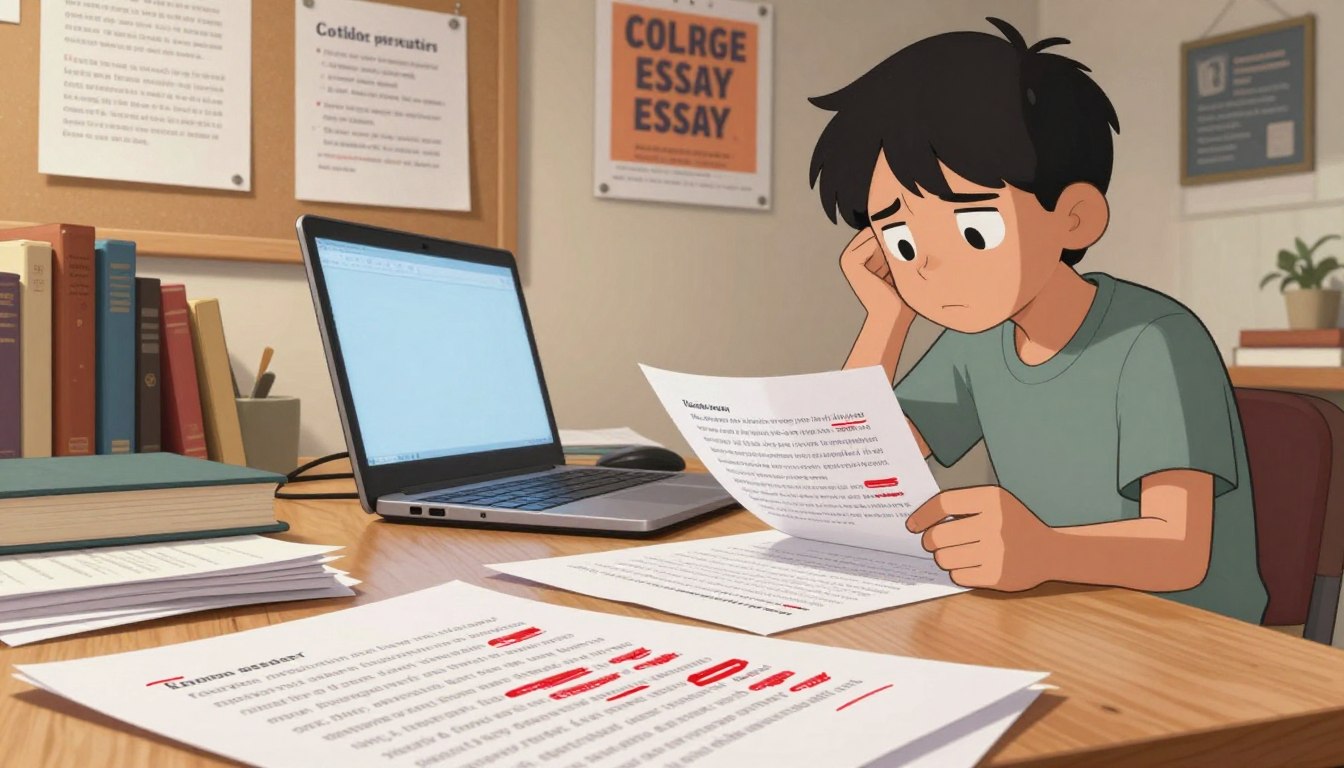
“The scariest moment is always just before you start.” Stephen King’s words resonate deeply with any student facing a blank page. The personal statement is more than just a writing assignment; it is a pivotal moment of self-presentation.
This document holds immense power in the admissions process. While transcripts and test scores offer quantitative data, the essay provides the qualitative narrative. It is the applicant’s unique voice. Education consultant Randi Heathman notes that weak submissions get skimmed, while truly poor ones go unread entirely.
A poorly crafted piece can signal a lack of interest or academic readiness. This creates a significant hurdle. Admissions officers look for compelling stories that reveal character and perspective. They seek evidence of college-level critical thinking.
Understanding this dynamic is the first step toward success. A single significant error can overshadow many positive elements due to a natural negativity bias in reading. Therefore, avoiding critical missteps is as crucial as showcasing strengths. This guide empowers students to transform their essays from a potential liability into a definitive asset.
Key Takeaways
- The personal essay is a critical component that adds a human voice to your application.
- Admissions officers use essays to assess readiness for college-level work and genuine interest.
- A single major error can negatively impact the entire perception of an application.
- A strategic approach focuses on both highlighting strengths and eliminating common errors.
- Awareness and careful revision are key to creating an essay that resonates with its readers.
Introduction to College Essay Pitfalls
In an increasingly competitive admissions environment, the essay represents a student’s opportunity to differentiate themselves from thousands of applicants. Seasoned reviewers develop sharp instincts for identifying submissions that lack strategic thinking or genuine effort.
This guide provides a comprehensive framework for navigating these challenges successfully. It addresses both the conceptual and technical aspects of essay writing.
Purpose & Scope
Our objective is to equip applicants with practical knowledge for identifying critical flaws before submission. The scope encompasses both topic selection and writing execution.
We focus specifically on errors that trigger immediate concern from admissions committees. This approach ensures submissions avoid automatic disqualification while showcasing authentic strengths.
What to Expect in This Guide
Readers will discover actionable strategies for transforming problematic drafts into polished submissions. The content addresses the dual nature of writing challenges.
The following table illustrates the comprehensive approach this guide takes toward essay improvement:
| Content Selection Challenges | Execution Problems | Strategic Solutions |
|---|---|---|
| Inappropriate topic choices | Poor structural organization | Topic evaluation framework |
| Overly personal revelations | Syntax and vocabulary issues | Voice authenticity techniques |
| Cliché subject matter | Tone consistency problems | Revision checkpoints |
This structured approach ensures every aspect of the personal statement receives thorough attention. The guidance focuses on practical implementation rather than theoretical concepts.
Understanding the Admissions Essay Landscape
Beyond the numbers on a transcript lies the true heart of an application: the personal statement. This document transforms a collection of data points into a compelling human story.
It provides the narrative that resonates with admissions officers on a personal level.
The Role of Essays in College Admissions
While grades and test scores may set initial benchmarks, the final decision often hinges on the essay.
Numbers tell only part of the story in college applications. Admissions departments make final decisions based on personal statements.
This component offers a comprehensive view of a student’s background, goals, and ability to follow instructions directly.
The personal statement serves as a critical litmus test. It reveals qualities like maturity, resilience, and self-awareness. Officers look for evidence of independent thinking and effective communication.
They assess whether an applicant will thrive in a collaborative academic environment. Understanding this multifaceted role is key. It helps students see the essay not as a mere exercise, but as a strategic opportunity.
A well-crafted narrative demonstrates alignment with a college‘s values. For a structured approach to this process, consult our comprehensive college essay checklist.
Common College Essay Mistakes (And How to Fix Them)
Effective essay revision requires diagnosing problems through a dual-lens framework that separates content from execution. This systematic approach helps applicants identify whether their writing struggles stem from poor topic selection or weak presentation skills.
The first category involves topic-related errors. These occur when students choose inappropriate subject matter or rely on clichéd themes. Even compelling personal experiences can fail if presented through an unoriginal lens.
Execution problems form the second major category. These include structural weaknesses, tone inconsistencies, and technical writing flaws. A mundane topic can become memorable through skillful writing, while a great story can be undermined by poor execution.
This framework reflects how admissions officers evaluate submissions. They assess both what applicants write about and how they express their ideas. Understanding this dual evaluation process is crucial for targeted improvement.
The categorization system enables students to pinpoint specific weaknesses. Instead of attempting generic fixes, they can apply solutions that address their particular type of mistake. This strategic approach transforms revision from guesswork into a precise science.
Mistakes Related to Essay Topics
Topic selection represents one of the most critical decisions in the entire writing process. The right subject matter can showcase an applicant’s unique perspective, while poor choices may undermine even the strongest academic record.
Inappropriate and Cliché Topics
Many students fall into the trap of choosing overly familiar subjects. Sports victories, community service trips, and resume summaries often appear in applications. These topics fail to distinguish candidates from thousands of others.
Admissions officers read numerous essays about similar experiences. A clichéd approach makes it difficult for any single story to stand out. The table below illustrates common problematic content choices.
Too Personal or Revealing Content
Some applicants share information that crosses professional boundaries. Detailed accounts of romantic relationships, illegal activities, or graphic medical details raise concerns. These overly personal revelations suggest poor judgment about appropriate sharing.
Experts recommend the “stranger on a plane” test. If the information would make a casual acquaintance uncomfortable, it likely belongs outside the application. This discernment reflects readiness for college life.
| Mistake Category | Common Examples | Admissions Impact |
|---|---|---|
| Clichéd Topics | Sports achievements, service trip revelations | Fails to differentiate applicant |
| Overly Personal | Relationship drama, illegal activities | Raises judgment concerns |
| Resume Repetition | Listing accomplishments without insight | Misses storytelling opportunity |
| Boundary Crossings | Graphic medical or sexual details | Questions social readiness |
Mistakes in Essay Execution
Even the most compelling personal narrative can falter if its presentation lacks technical precision. This section moves beyond topic selection to examine how structural and stylistic flaws can undermine an otherwise strong essay.
Many submissions fail not because of weak content, but due to problematic execution. These errors signal a lack of college-ready writing skills or insufficient care in the revision process.
Poor Structural Choices
Admissions officers expect a clear, prose-based narrative. Unconventional formats like poetry or bullet points often backfire. They can appear as gimmicks rather than creative risks.
Sticking to a traditional structure demonstrates an ability to follow academic conventions. It shows respect for the reader‘s expectations and the application process itself.
Syntax Errors and Overuse of Fancy Words
Clunky syntax and grammatical mistakes raise immediate red flags. They suggest the applicant may struggle with college-level coursework. Polished mechanics are non-negotiable.
Another critical error is thesaurus-stuffing. Overusing complex words creates an artificial voice. It distances the reader from the genuine personality behind the writing.
Admissions committees want to hear an authentic student voice, not a strained imitation. As explored in the case of authentic student voice, authenticity is paramount. The best essays sound like an enhanced version of the student, not someone else.
Ignoring the prompt is perhaps the most direct way to fail. Whether from rebellion or carelessness, it shows an inability to follow directions. This trait concerns admissions officers looking for students receptive to instruction.
| Execution Error | Common Manifestation | Impact on Reader |
|---|---|---|
| Structural Flaws | Gimmicky formats, poor organization | Suggests disregard for conventions |
| Technical Mistakes | Poor grammar, punctuation errors | Questions academic readiness |
| Artificial Voice | Overly complex vocabulary, unnatural tone | Obscures authentic personality |
A successful college application essay balances mature writing mechanics with a genuine, compelling voice. Careful revision is the way to achieve this crucial balance.
Overcoming Tone-Deafness and Lack of Personality
Admissions officers frequently encounter technically sound essays that nevertheless fail to create meaningful connections due to tonal missteps. These submissions may check all the boxes for grammar and topic appropriateness but leave readers cold or uncomfortable.

The most effective personal statements reveal character through authentic emotional responses. They demonstrate how applicants navigate challenges with agency rather than passive victimhood.
Maintaining Your Authentic Voice
Tone-deafness manifests in several problematic ways. Excessive complaining or cynical perspectives suggest an applicant might struggle with campus collaboration. Attempted humor often falls flat without shared context.
Admissions committees seek evidence of resilience and optimism. They want to understand the unique person behind the application. Generic statements that could apply to anyone fail this fundamental test.
A genuine voice shares specific observations and emotional honesty. It avoids both robotic detachment and exaggerated self-promotion. This balance creates connection with the reader.
| Tone Mistake | Impact on Reader | Better Approach |
|---|---|---|
| Victimhood narrative | Questions problem-solving ability | Focus on actions taken |
| Forced humor | Creates awkwardness | Use subtle self-deprecation |
| Condescending tone | Suggests lack of humility | Show openness to learning |
| Generic language | Fails to differentiate applicant | Include specific details |
Successful essays reveal perspective through concrete life experiences. They demonstrate how the applicant’s unique voice will contribute to campus life. For examples of authentic storytelling, explore successful supplemental essays that balance personality with purpose.
Editing Pitfalls: Avoiding Grammar and Proofreading Errors
Mechanical errors can undermine months of thoughtful content creation in a single reading. The final editing phase transforms good drafts into competitive submissions that reflect genuine commitment to excellence.
The Importance of Revision
Most applicants struggle to effectively check their own work. This universal limitation makes external proofreading essential for catching subtle mistakes.
Typos and grammatical errors signal either insufficient knowledge or inadequate care. Both interpretations create negative impressions with admissions committees evaluating college readiness.
Exceeding word limits demonstrates an inability to work within constraints. This problematic trait concerns reviewers since academic success requires following institutional guidelines.
| Editing Challenge | Potential Impact | Effective Solution |
|---|---|---|
| Repetitive word choice | Creates monotonous reading experience | Use synonym variety strategically |
| Grammar and punctuation errors | Questions academic preparedness | Multiple proofreading passes |
| Exceeding word limits | Suggests poor self-control | Ruthless content prioritization |
| Formatting inconsistencies | Indicates lack of attention to detail | Standardized style checklist |
Successful applicants begin editing at least two weeks before deadlines. This timeframe allows for self-review, peer feedback, and professional input.
Reading the essay aloud reveals awkward phrasing and rhythm issues. This technique helps make sure the writing flows naturally for the reader.
The final application should demonstrate polished mechanics alongside authentic voice. Careful revision achieves this crucial balance.
How to Impress Admissions Officers without Overselling Yourself
Navigating the fine line between self-promotion and humility represents one of the essay‘s greatest challenges. Many applicants undermine their submissions by trying too hard to impress admissions officers.
This effort often results in artificial voice and strained narratives. The most effective approach balances genuine accomplishment with realistic perspective.
Balancing Confidence with Humility
Overconfident positioning can alienate admissions officers seeking collaborative learners. Essays presenting applicants as flawless heroes demonstrate poor self-awareness.
Instead, frame achievements within larger contexts that acknowledge support systems. Recognize teachers, mentors, and others who contributed to growth.
Learning happens through collaboration and openness to expertise.
This demonstrates emotional intelligence and readiness for college environments. It shows the student understands meaningful accomplishment is rarely solitary.
| Problematic Approach | Effective Strategy | Impact on Reader |
|---|---|---|
| Relentless self-promotion | Owning accomplishments while acknowledging support | Shows collaborative mindset |
| Exaggerated achievement significance | Realistic assessment within broader context | Demonstrates maturity and perspective |
| Unbroken success narratives | Including setbacks and lessons learned | Creates authentic, credible story |
The strongest submissions reveal capacity for growth through humble positioning. They balance confidence with appreciation for others‘ perspectives.
Leveraging the Education AI Tool for Essay Success
Strategic use of AI can provide the expert-level guidance needed for a competitive application. This technology addresses the complex challenges outlined in this guide.
Starting the revision process with ample time is crucial. It allows for thorough analysis and improvement.
Features of the FlowScholar AI Tool
FlowScholar acts as an intelligent mentor. It analyzes drafts for both content and execution problems simultaneously.
The tool provides real-time feedback on structure, tone, and authenticity. It helps students avoid clichés and inappropriate topics.
This goes beyond basic grammar checking. It offers strategic tips for strengthening narratives and showcasing unique perspectives.
Understanding the ethical use of AI ensures tools enhance rather than replace a student’s authentic voice.
The platform democratizes access to high-level editing support. It functions as a 24/7 writing coach.
| Traditional Support | AI-Powered Guidance | Student Benefit |
|---|---|---|
| Basic grammar correction | Holistic analysis of content and voice | Deeper, more meaningful revisions |
| Limited by reviewer availability | Instant, on-demand feedback | Efficient use of preparation time |
| Subjective opinions | Data-driven insights based on admissions trends | Confidence in strategic choices |
Call to Action: Visit FlowScholar
Transform your personal statement with intelligent support. Visit FlowScholar to explore how this tool elevates writing from standard to exceptional.
It provides the competitive edge necessary in today’s admissions landscape. Empower your essay with insights that make a lasting impression.
Valuable Essay Writing Tips from Experts
Learning from those who have successfully navigated the admissions landscape provides invaluable insights. Expert guidance transforms the writing process from daunting to achievable.

Professional editors and successful applicants offer practical wisdom that elevates personal statements. Their collective experience reveals what resonates with admissions committees.
Peer Feedback and Professional Editing
Peer review offers fresh perspective on content flow and clarity. However, professional editing services provide deeper expertise. Many top services require editors to hold advanced degrees.
Wordvice, rated among top editing services by Wired.com, exemplifies this standard. Their editors possess graduate or postgraduate qualifications. This ensures sophisticated feedback beyond basic grammar checks.
Learning from Successful Essays
Studying compelling examples helps students understand what effective narratives look like. These models demonstrate proper structure, voice, and reflection techniques.
Admissions officers looking for authentic stories appreciate well-crafted submissions. Analyzing successful pieces reveals patterns that resonate with readers. This approach moves beyond abstract advice to concrete implementation.
Strategic revision combines multiple approaches for optimal results. Starting weeks before deadlines allows thorough refinement. Reading drafts aloud catches awkward phrasing. Seeking diverse feedback creates comprehensive improvement.
Conclusion
Successful applicants recognize that their written submission serves as the final, crucial piece of their academic profile. This comprehensive process demands attention to both content selection and execution quality.
Avoiding critical problems positions students to showcase authentic personality and college readiness. The essay humanizes application numbers, demonstrating qualities transcripts cannot measure. Even ordinary things become memorable through skillful writing.
The systematic approach outlined here—from topic evaluation to final revision—creates a framework for admissions success. Each point in this guide serves as a valuable test for draft improvement.
By implementing these strategies, applicants transform their college essay from potential liability to distinctive asset. This thoughtful preparation makes a lasting impression during admissions deliberations.
FAQ
What is the most common mistake students make in their college essays?
The most frequent error is choosing an overly generic or cliché topic. Many applicants write about predictable experiences, like winning a big game, which fails to differentiate them. Instead, students should focus on a specific, personal moment that reveals their unique perspective and character to admissions officers.
How can I ensure my essay has a strong, authentic voice?
Maintaining an authentic voice involves writing as you speak, avoiding an overly formal or academic tone. Read your draft aloud to check for natural flow. The goal is to let your personality shine through, making the reader feel like they are getting to know the real person behind the application.
Is it a mistake to write about a personal challenge or failure?
Not at all. Writing about a challenge can be very powerful, but the mistake lies in the execution. The essay should not just describe the problem; it must focus on your response, what you learned, and how you grew from the experience. This demonstrates resilience and self-awareness to the admissions committee.
How important is the editing and proofreading process?
It is critical. Even a compelling story can be undermined by grammar mistakes, typos, and awkward phrasing. Thorough revision is non-negotiable. Beyond fixing errors, editing helps refine your narrative’s structure and clarity. Always have others, like teachers or peers, review your work for fresh perspectives.
Can using a sophisticated vocabulary improve my essay?
This is a common misconception. Overusing complex words often makes writing sound forced and unnatural. Admissions officers value clarity and genuine expression over a thesaurus-heavy approach. Use precise language that you are comfortable with to communicate your ideas effectively.
What role do college essays play in the admissions decision?
Essays provide context for your grades and test scores. They are a key tool for admissions officers to assess your personality, values, writing ability, and how you might contribute to their campus community. A standout essay can positively influence the final decision, especially for selective schools.