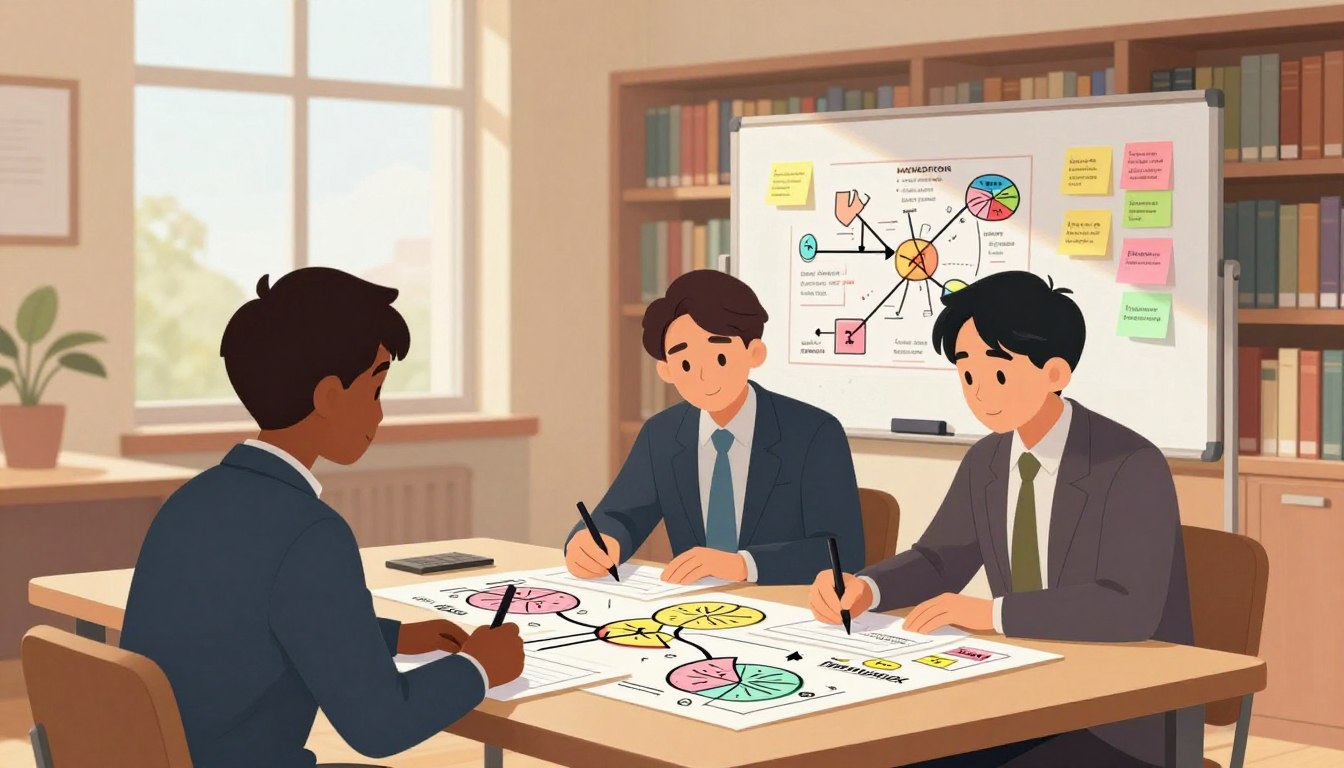
Most people struggle with memorization, not because they have poor memory capacity, but because they’ve never learned how to use their memory effectively. As Flowscholar aptly puts it, “Your Memory is Like Owning a Ferrari You Don’t Know How to Drive.” This analogy resonates deeply, as it highlights the potential that lies within our brains, waiting to be tapped.
Traditional methods like flashcard overload often lead to frustration and minimal retention. However, the science of memory reveals that our brains are capable of extraordinary feats of recall when properly trained. By understanding the principles that govern memory formation and implementing strategic memorization techniques, individuals can transform how they learn and retain information.
Key Takeaways
- Discover why conventional flashcard methods fall short in effective memorization.
- Explore the science behind memory and how to leverage it for better retention.
- Learn actionable strategies to enhance your learning and retention capabilities.
- Understand how to study more efficiently without flashcard overwhelm.
- Unlock the potential of your brain by applying the right memorization techniques.
## The Memory Myth
Many people struggle to memorize effectively, not because they lack the ability, but because they don’t understand how to harness their brain’s potential. The truth is, memorization isn’t about brute force; it’s about using the right techniques. Just as learning to ski requires mastering the right techniques and practicing them, unleashing your memory’s full potential is no different. You need to learn the right strategies and apply them consistently.
### The Ferrari You Don’t Know How to Drive
Think of your memory as a high-performance Ferrari. Most people treat it like a clunker, not realizing its true capabilities. The key to unlocking your memory’s potential lies in understanding how to drive it effectively. This means learning the best techniques and practicing them until they become second nature. With the right approach, you can achieve remarkable results.
### ### The #1 Mistake of Memorization
Many individuals make the mistake of relying on passive review, simply re-reading or flipping through flashcards without actively engaging with the material. This approach leads to diminishing returns and eventual burnout. To memorize effectively, you must engage your brain actively, using techniques that work with how your brain processes information.
The #1 Mistake of Memorization
The number one mistake in memorization is passive review—simply re-reading or flipping through flashcards without actively engaging with the material or implementing proven memory techniques. Many students and professionals rely on brute-force repetition rather than strategic memory methods, leading to diminishing returns on their study time and eventual burnout. Treating memorization as a test of willpower rather than a skill to be developed systematically prevents many from achieving the remarkable memory capabilities they naturally possess.
Understanding the Science of Memory
Delving into the science of memory uncovers the mechanisms behind memorization and how we can improve our ability to remember. At its core, memory is about building connections between pieces of information in our minds.
The Limits of Working Memory
Our working memory, the cognitive system responsible for temporarily holding information, has a limited capacity. Research has shown that most people can remember about seven random words or numbers. This limitation is due to the constraints of our working memory, which can only handle a certain amount of information at a time. To overcome this limitation, it’s essential to understand how to effectively encode and retain information.
The 3 R’s of Remembering: Record, Retain, Retrieve
The process of memorization is often described by the 3 R’s: Record, Retain, and Retrieve. Recording involves encoding new information into our memory. Retention is about storing this information over time. Retrieval is the process of accessing stored information when needed. While this framework is helpful, it’s not just about following these steps; it’s about creating meaningful connections between pieces of information. Techniques such as visualization and association can significantly enhance our ability to remember.
Effective memorization is not just about recording information but also about retaining it and retrieving it when necessary. By understanding the 3 R’s and implementing strategies to build connections between pieces of information, we can improve our memory beyond its typical limitations.
| Stage | Description | Techniques |
|---|---|---|
| Record | Encoding new information | Visualization, Association |
| Retain | Storing information over time | Repetition, Spaced Repetition |
| Retrieve | Accessing stored information | Practice Recall, Mnemonics |
Why Traditional Flashcard Methods Fall Short
Flashcards have long been used as a tool for memorization, yet their traditional use is fraught with limitations. The simplicity of flashcards belies the complexity of the memory process, leading to ineffective learning strategies.
The Problem with Passive Review
One of the primary issues with traditional flashcard methods is that they often involve passive review. Learners repeatedly go through their cards without actively engaging with the material. This approach treats memory as a mechanical process rather than a meaning-making activity, resulting in fragile knowledge that quickly deteriorates over time.
- Many students fall into the trap of repetition without understanding, reviewing flashcards repeatedly without comprehending the underlying concepts.
- This method measures progress by the number of reviews rather than the ability to apply the information in various contexts.
Repetition Without Understanding
The reliance on repetition as a primary strategy for memorization is another significant flaw. While repetition can be valuable, it becomes ineffective when not accompanied by understanding. Research shows that grasping the “why” behind information dramatically improves retention compared to memorizing isolated facts.
“Understanding the ‘why’ behind information is crucial for retention.”
Traditional flashcard methods rarely incorporate explanatory elements, making them less effective. The time investment required for repetition-based learning is substantial, yet the returns diminish rapidly, creating an inefficient learning process.
The Forgetting Curve and How to Beat It
The forgetting curve illustrates how our memory fades over time if not reinforced. This concept, first discovered by Hermann Ebbinghaus, is crucial in understanding how we can improve our learning and retention.
Ebbinghaus’s Discovery
Ebbinghaus’s work on the forgetting curve showed that memory retention decreases over time without effort to retain it. His research laid the foundation for spaced repetition, a technique that involves reviewing material at increasingly longer intervals to help solidify it in long-term memory. By understanding how our brains naturally forget, we can develop strategies to counteract this process.
For instance, Ebbinghaus’s experiments demonstrated that without review, retention drops significantly within the first few days. This finding has been pivotal in shaping modern learning techniques. As noted on The Decision Lab, Ebbinghaus’s discovery has had a lasting impact on psychology and education.
Strategic Timing vs. Cramming
Unlike cramming, which temporarily loads information into short-term memory, spaced repetition works by scheduling reviews at optimal times to maximize long-term retention. This approach not only improves learning outcomes but also reduces the total time needed to master material. Research has shown that spaced learning can improve retention by 200-700% compared to massed practice.
- Strategic timing based on the forgetting curve produces better results than cramming.
- Spaced repetition transforms learning into a manageable, long-term process.
- This method creates stronger neural pathways, enhancing memory.
The 5 Principles of Effective Memorization
Effective memorization is rooted in five fundamental principles that enhance our ability to remember and recall information. Understanding and applying these principles can significantly improve learning outcomes and memory retention.
Meaningfulness
The first principle, meaningfulness, emphasizes the importance of connecting new information to something already known or understood. When information is meaningful, it’s easier to remember because it relates to our existing knowledge or experiences.
Organization
Organization is the second principle, which involves structuring information in a way that makes it more memorable. This can be achieved through categorization, creating mental models, or using other organizational techniques.
Association
The third principle, association, involves linking new information to something familiar, such as a memory, a word, or an image. This helps in encoding information in a more memorable way.
Visualization
Visualization is the fourth principle, which leverages the brain’s ability to remember images more effectively than text or abstract concepts. By creating vivid mental images, we can enhance memory retention.
Attention
The final principle is attention. Clearly, you can’t remember something if you don’t learn it in the first place. Lack of attention is a significant barrier to memory formation. Cognitive science research shows that divided attention during learning can reduce memory performance by up to 30%. Techniques like the Pomodoro method help by creating conditions for sustained attention, thereby improving information encoding.
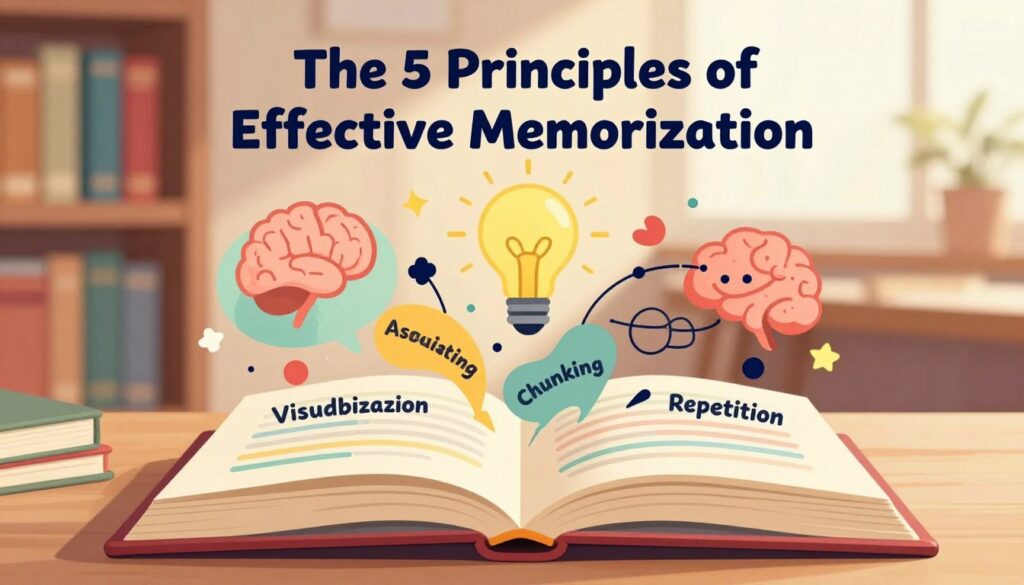
By focusing on these five principles—meaningfulness, organization, association, visualization, and attention—we can develop more effective strategies for memorization and improve our ability to retain and recall information.
How to Memorize Faster Without Flashcard Overload
Effective memorization isn’t about creating more flashcards; it’s about making meaningful connections. The traditional method of using flashcards has been a staple in many learners’ toolkits, but it has its limitations. To truly memorize information quickly and efficiently, one must adopt a more strategic approach.
Building Connections Instead of Cards
Rather than creating hundreds of basic flashcards, it’s more effective to develop fewer, higher-quality learning materials that encourage deep processing, active recall, and meaningful connections between concepts. Research shows that elaborative encoding—thinking deeply about information and connecting it to existing knowledge—produces stronger memories than simple repetition, regardless of the quantity of review.
For instance, when learning new vocabulary, instead of making a flashcard for every word, focus on understanding the roots, prefixes, and suffixes that can help you decipher unfamiliar terms. This approach not only enhances memory but also improves your ability to learn new information.
Quality Over Quantity: The Focused Approach
To memorize faster, it’s crucial to focus your efforts on core concepts and principles that provide a framework for understanding related details. This creates a knowledge structure that makes learning additional information easier. When studying complex subjects, identify the 20% of concepts that explain 80% of the material—the Pareto principle applied to learning—and master these thoroughly before expanding to more specialized details.
| Traditional Flashcard Method | Focused Approach |
|---|---|
| Creates many basic flashcards | Develops fewer, higher-quality materials |
| Relies on simple repetition | Encourages deep processing and active recall |
| Can lead to flashcard overload | Reduces study time by focusing on key concepts |
By adopting this quality-focused approach, not only will you improve retention, but you’ll also dramatically reduce study time by eliminating the maintenance burden of managing hundreds or thousands of flashcards. Regular practice with this method will lead to more effective learning and better retention of information.
“The art of memory is the art of attention.” — Samuel Johnson
Visual Imagery Mnemonics: The Memory Athlete’s Secret
Memory athletes rely on mental imagery to achieve remarkable feats. By leveraging visual imagery mnemonics, individuals can significantly enhance their ability to remember complex information. This section explores the techniques used by memory champions to encode and recall vast amounts of data.
The Link and Story Method
The Link and Story Method involves creating a narrative that links the information to be remembered. By associating new data with a story, it becomes easier to recall. For instance, when trying to remember a list, one can create a story that incorporates each item. This method is particularly effective because it taps into the brain’s ability to remember narratives more easily than isolated facts.
The Memory Palace Technique
The Memory Palace Technique, also known as the Method of Loci, involves visualizing a familiar place and associating the information to be remembered with specific locations within that space. By mentally walking through the space, one can recall the information associated with each location. This technique is highly effective for memorizing speeches, lists, and other structured information.
The Substitution Method
The Substitution Method is particularly useful for abstract concepts or non-visual information. It involves substituting the abstract information with a concrete image that is easier to remember. For example, the concept of “inflation” can be visualized as a balloon expanding. This method allows individuals to transform complex data into memorable visual representations.
By combining these visual imagery mnemonics, individuals can develop a robust strategy for memorization. Whether it’s through creating stories, using memory palaces, or substituting abstract concepts with concrete images, these techniques offer powerful tools for enhancing memory.
For more tips on improving memory, check out tips that can help you memorize in a better.
Transforming Abstract Concepts into Memorable Images
When it comes to memorizing abstract concepts, the key lies in transforming them into vivid mental images. This process involves using various techniques to make intangible ideas more concrete and, therefore, easier to remember. By doing so, individuals can significantly improve their ability to recall complex information.
The challenge often lies in dealing with abstract words or concepts that aren’t easily visualized. However, techniques such as substitution can be highly effective. Substitution involves transforming a word or concept into a picture that represents its meaning or sound.
Techniques for Numbers and Formulas
Numbers and formulas can be particularly difficult to memorize due to their abstract nature. One effective technique is to associate numbers with memorable events, people, or images. For instance, a significant date or a historical event can be linked to a number, making it easier to recall. Formulas can be visualized by creating a story or a mental image that represents the formula’s components and their relationships.
For example, the formula for the area of a circle (A = πr^2) can be remembered by visualizing a pizza (representing the area) with a specific radius, linked to the mathematical constant π. Such visualizations make complex formulas more manageable and memorable.
Memorizing Complex Terminology
Complex terminology, especially in fields like medicine, law, or science, can be daunting. Breaking down terms into their etymological roots can simplify the memorization process. Many technical terms are derived from Greek or Latin roots, which can be visualized as distinct images.
For instance, the medical term “hypertension” can be broken down into “hyper” (meaning above or beyond) and “tension” (relating to blood pressure). Visualizing a person with high blood pressure (tension) above a normal level can aid in remembering the term. Creating personified characters or visual metaphors that embody the concept’s key attributes can also transform abstract ideas into memorable entities.
Spaced Repetition Done Right
To optimize learning outcomes, it’s essential to implement spaced repetition correctly. This technique leverages the psychological spacing effect, which shows that information learned in multiple, spaced sessions is retained more effectively than information learned in a single session. By applying spaced repetition, learners can significantly improve their retention rates.

The Science Behind Optimal Intervals
The effectiveness of spaced repetition hinges on the optimal timing of review intervals. Research by Ebbinghaus on the forgetting curve has shown that the ideal interval for reviewing material is just before the information is likely to be forgotten. Modern digital tools automate this process, using algorithms to predict the optimal review time based on the learner’s performance.
This learning process is highly personalized, adapting to the individual’s forgetting curve and ensuring that information is retained over time. By prioritizing material that is challenging, these tools maximize study efficiency.
Digital Tools That Enhance Retention
Several flashcards and digital tools incorporate spaced repetition to enhance retention. Popular options include Anki, known for its flexibility, SuperMemo, a pioneer in the field, and Quizlet, a user-friendly platform popular among students. RemNote integrates spaced repetition with note-taking, while Memrise specializes in language learning through gamification.
These tools not only save time by automating the review process but also provide valuable insights into learning patterns, helping learners identify areas that require additional attention. By leveraging these digital tools, individuals can create a highly effective learning strategy that incorporates flashcards and other retention techniques.
Tailoring Memory Techniques to Different Subjects
## Tailoring Memory Techniques to Different Subjects
Effective learning and memory retention require adapting techniques to the specific subject matter. Different disciplines demand unique approaches to encoding, storing, and retrieving information. By understanding the distinct characteristics of various subjects, individuals can tailor their memory techniques to optimize learning and retention.
### Strategies for Language Learning
Language acquisition benefits from techniques that emphasize auditory and visual encoding.Repetitionandspaced repetitionare particularly effective for memorizing vocabulary. Creatingmnemonicsandassociationsbetween new words and memories or familiar words can also enhance retention. For example, associating a new word with a personal experience or a similar-sounding word in the native language can facilitate recall.
- Use flashcards with words on one side and their meanings or translations on the other.
- Practice active recall by trying to remember the word without looking at the answer.
- Engage in conversations or listen to podcasts in the target language to improve listening and speaking skills.
### Approaches for STEM Subjects
STEM subjects, including mathematics, physics, and chemistry, require a deep understanding of complex concepts and formulas.Visualizing abstract conceptsand creatingmental modelscan aid comprehension and retention. Breaking down complex problems into simpler components and usinganalogiesto relate new information to familiar concepts can also be effective.
- Create concept maps or diagrams to visualize relationships between different concepts.
- Use real-world examples or analogies to illustrate complex principles.
- Practice problem-solving regularly to reinforce understanding and build confidence.
### Techniques for Humanities and Social Sciences
Humanities and social sciences involve complex narratives, theoretical frameworks, and interconnected ideas.Creating timelinesandchronological mapscan help organize historical events and cultural movements. Associating key figures and concepts with memorable images or events can also enhance recall. For literature and philosophy,character-based mnemonicscan help remember complex ideas by linking them to fictional characters or historical figures.

- Use narrative techniques to create stories around historical events or literary works.
- Associate complex theories with memorable images or analogies.
- Engage in discussions or debates to reinforce understanding and retention.
By tailoring memory techniques to the specific demands of different subjects, learners can optimize their study habits and improve retention. Whether through visualization, association, or repetition, adapting techniques to the subject matter can make learning more efficient and effective.
Common Pitfalls to Avoid in Your Memory Practice
Effective memory practice requires more than just repetition; it demands a strategic approach that avoids common mistakes. To enhance memory, it’s essential to identify and steer clear of practices that can hinder progress. By understanding these pitfalls, learners can adopt a more effective and sustainable approach to memory improvement.
Rote Memorization Without Understanding
Rote memorization without understanding is a significant pitfall. Memorizing information without grasping its meaning can lead to superficial knowledge that is easily forgotten. To avoid this, focus on understanding the underlying concepts and context of the information you’re trying to memorize.
Unrealistic Scheduling Expectations
Setting unrealistic scheduling expectations can also hinder memory practice. Creating a study schedule that’s too aggressive can lead to burnout and decreased motivation. Instead, set realistic goals and pace your study sessions to maintain a consistent and sustainable practice.
Isolated Learning Without Context
Isolated learning without context is another common pitfall. Learning facts without understanding their broader context creates fragmented knowledge, hard to apply in real-world situations. As the data suggests, “Context-Stripped Learning: Creating Knowledge That Doesn’t Transfer.” To avoid this, connect new information to existing knowledge and relate new concepts to real-world examples or practical applications.
Some key points to keep in mind when avoiding isolated learning include:
- Isolated learning without context creates knowledge that remains trapped in the specific situation where it was learned.
- The brain naturally organizes information in contextual networks, making it essential to create connections between new and existing knowledge.
- Research in cognitive science shows that information learned in multiple contexts is more likely to be retrieved and applied appropriately in novel situations.
By being aware of these common pitfalls and adopting a strategic approach to memory practice, learners can improve their memory and achieve their learning goals more effectively.
Accelerate Your Learning with FlowScholar
FlowScholar is an innovative AI learning tool designed to revolutionize the way you study and retain information. By seamlessly integrating advanced memory methods into your existing study routine, FlowScholar eliminates the steep learning curve typically associated with implementing these techniques.
How FlowScholar Enhances Memory Techniques
FlowScholar guides you through creating effective memory palaces, visual associations, and meaningful connections between concepts, transforming abstract academic content into memorable experiences. The platform’s analytics provide valuable insights into your learning patterns, identifying knowledge gaps and suggesting targeted practice for concepts you find challenging.
Integrating Advanced Memory Methods into Your Study Routine
By combining traditional study approaches with FlowScholar’s proven memory techniques, you can create a synergistic learning environment that dramatically improves both understanding and retention. FlowScholar’s approach doesn’t just help you pass exams; it builds lasting knowledge structures that remain accessible long after your formal education ends, creating a foundation for lifelong learning.
Conclusion: Building a Sustainable Memory Practice
A well-crafted memory practice is about more than just memorization; it’s about cultivating a lifelong love of learning. By understanding and avoiding common pitfalls, you can make spaced repetition learning a powerful tool for long-term knowledge acquisition. Focus on understanding, start small, and connect information to its context.
Consistency is more important than intensity; small, regular efforts yield better results than sporadic bursts of intense study. For continued support on your learning journey, explore the resources available at FlowScholar, where cutting-edge memory science meets practical application.
FAQ
What is the most effective way to memorize information without relying on flashcards?
By using a combination of techniques such as spaced repetition, visualization, and association, individuals can effectively memorize information without relying on traditional flashcards.
How can I overcome the limitations of working memory to retain more information?
To overcome the limitations of working memory, it’s essential to break down complex information into smaller chunks, organize it in a meaningful way, and review it at optimal intervals to prevent forgetting.
What is the science behind the forgetting curve, and how can I beat it?
The forgetting curve is a phenomenon where the brain forgets information over time if it’s not reviewed or practiced. To beat it, individuals can use spaced repetition, review material at increasingly longer intervals, and make connections between new and existing knowledge.
How can I make abstract concepts more memorable?
To make abstract concepts more memorable, individuals can use visualization techniques, create associations between new information and existing knowledge, and organize complex information into a coherent structure.
What are some effective strategies for memorizing complex terminology and formulas?
Effective strategies for memorizing complex terminology and formulas include using mnemonics, breaking down complex information into smaller chunks, and creating visual associations between new concepts and existing knowledge.
How can I stay motivated and avoid burnout while practicing memory techniques?
To stay motivated and avoid burnout, individuals can set realistic goals, practice memory techniques in a varied and engaging way, and review material at optimal intervals to prevent forgetting and maintain momentum.