“The farther backward you can look, the farther forward you are likely to see.” – Winston Churchill. This timeless wisdom underscores the importance of understanding historical events and their interconnectedness.
Studying history can be daunting, with vast amounts of information, dates, and complex relationships to memorize. However, the Timeline + Recall Method offers a powerful solution. By combining these two techniques, learners can significantly enhance their retention and comprehension of historical knowledge.
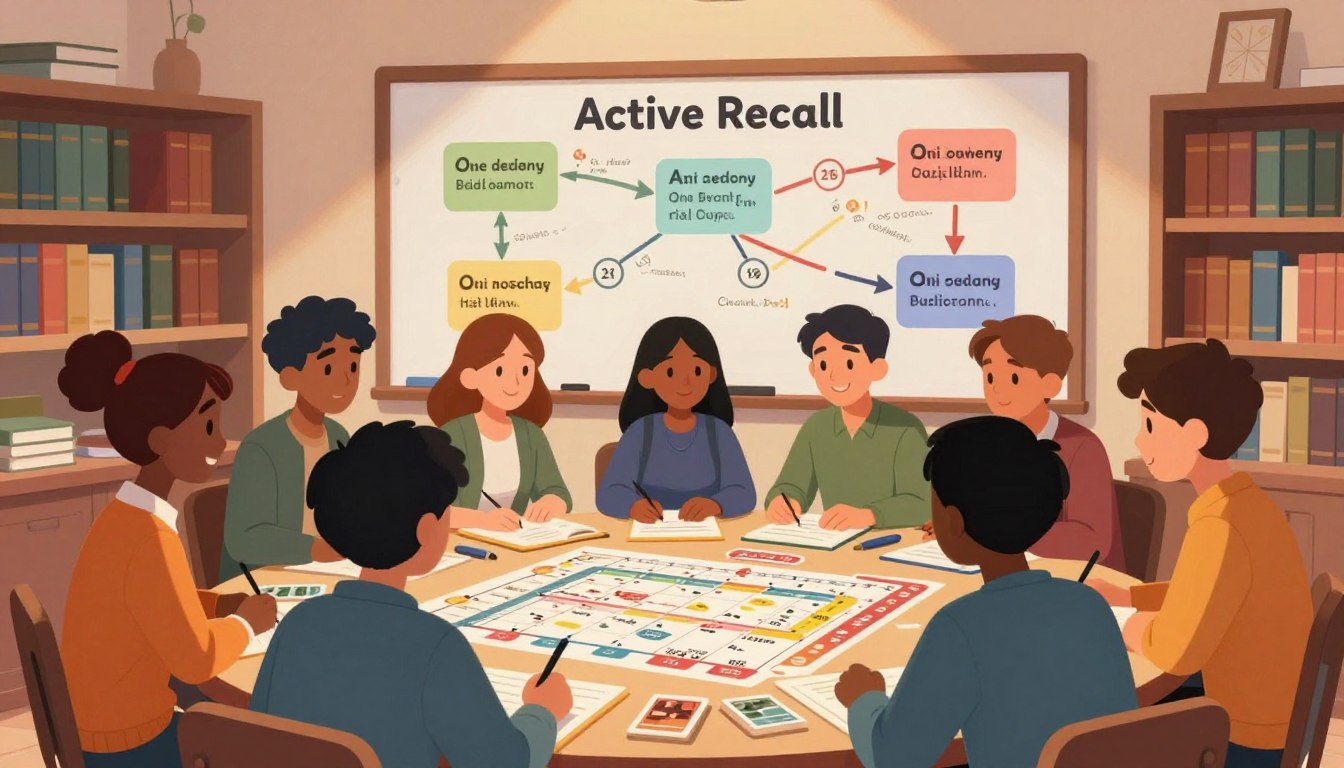
Active recall strengthens memory by actively pulling information out of your brain, rather than passively reading. This effective learning strategy is backed by cognitive science and can be further enhanced with tools like FlowScholar’s AI-powered study tools.
Key Takeaways
- Understand the Timeline + Recall Method for effective history study.
- Learn how active recall strengthens memory and improves retention.
- Discover how to create effective timelines for historical events.
- Explore the benefits of using AI-powered study tools.
- Improve your history exam scores with proven study methods.
Why Traditional History Study Methods Often Fail
The ineffectiveness of traditional history study methods stems from their inability to promote active recall. Many students rely on passive techniques such as re-reading textbooks and highlighting notes, which creates an illusion of learning without strengthening memory pathways.
The Problem with Passive Reading and Highlighting
When students merely read historical information, their brains recognize the content rather than actively retrieving it. This fails to build the neural connections necessary for exam recall. Research consistently shows that passive methods like highlighting and re-reading notes are among the least effective ways to retain historical facts and concepts.
The Science Behind Effective Learning
The science of learning demonstrates that our brains require active engagement with material to form strong memory connections, particularly for complex subjects like history. Effective history learning requires methods that challenge the brain to retrieve information, making connections between events, and processing material deeply rather than superficially. Studies in cognitive psychology reveal that the effort required during active recall strengthens neural pathways, making historical information more accessible during exams and for long-term memory.
To improve retention, students should adopt active study techniques that promote engagement and recall. By doing so, they can significantly enhance their ability to remember historical events and concepts.
Setting Up Your History Study Environment
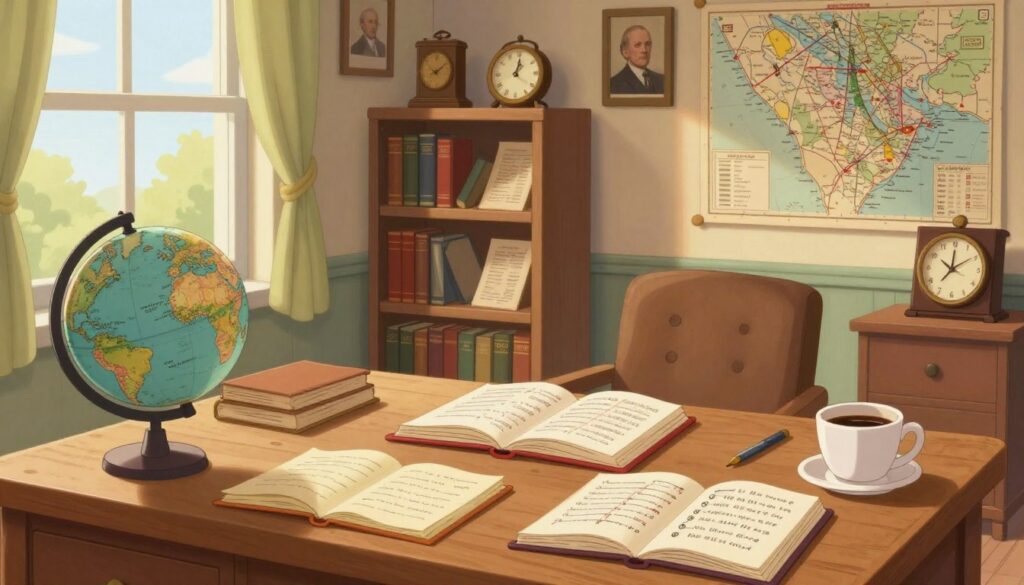
A well-organized study space is the foundation upon which successful history revision is built. Setting up the right environment marks the beginning of effective learning. Studies have shown that a dedicated, clutter-free study area can significantly improve focus and retention.
Creating an Organized Study Space
To create an optimal study environment, start by selecting a quiet location away from your bedroom to minimize distractions. Ensure your study area has a desk or table at a comfortable height, allowing you to work without straining your back. Adequate lighting, preferably natural light, is also crucial for maintaining focus.
Keep your study space clutter-free to reduce stress and save time that would be spent searching for materials. Research indicates that students who study in a well-organized space retain up to 30% more information than those who study in chaotic environments.
Gathering Essential Materials for History Study
To effectively study history, you’ll need to gather the right materials. These include color-coded notebooks for different time periods, highlighters for creating timelines, index cards for flashcards, and a dedicated calendar to track your study schedule.
- Organize your history materials chronologically or thematically to make it easier to access specific information when implementing the Timeline + Recall Method.
- Consider using vertical space with wall charts or pinboards to display timelines and key historical relationships, allowing you to visualize connections between events.
For more tips on effective studying techniques, you can refer to this resource on memory, studying, and test-taking strategies.
The Timeline Method: Organizing Historical Events
The Timeline Method is a powerful tool for transforming complex historical information into a clear, visual framework. By organizing historical events chronologically, students can better understand the sequence of events and their interconnections. This method is particularly effective because it leverages the brain’s natural tendency to organize information in a linear fashion.
Breaking History into Manageable Chunks
One of the key benefits of the Timeline Method is its ability to break down large historical periods into smaller, more manageable chunks. By dividing history into distinct eras or themes, students can focus on one segment at a time, reducing the feeling of being overwhelmed by a vast amount of information. For instance, historians often categorize history into three main periods: medieval (500-1500), early modern (1500-1800), and modern (1800-present). This segmentation makes it easier to study and recall historical events.
Creating Visual Connections Between Events
Visual timelines serve as powerful tools for connecting historical events. By laying out events in chronological order, students can visually identify patterns and relationships between different periods. This visual connection helps in understanding cause and effect relationships, which is crucial for deeper historical analysis and essay writing. The act of creating a timeline engages multiple senses, reinforcing memory formation and making historical knowledge more accessible during recall.
Using Color-Coding for Better Retention
To further enhance the effectiveness of the Timeline Method, color-coding can be employed to differentiate between various types of historical events, such as political, social, economic, or cultural events. This technique activates multiple neural pathways, making the information easier to recall during exams. Studies have shown that students who use visual organization techniques like timelines and color-coding score significantly higher on tests requiring analytical thinking and connections between events.
In conclusion, the Timeline Method offers a structured and visual approach to studying history, making complex information more manageable and enhancing retention. By breaking history into chunks, creating visual connections, and using color-coding, students can significantly improve their understanding and recall of historical events.
How to Study for History: The Timeline + Recall Method
The key to success in history studies lies in effectively combining visual organization with active retrieval practice. This approach, known as the Timeline + Recall Method, has been proven to enhance learning outcomes significantly.
Combining Timelines with Active Recall
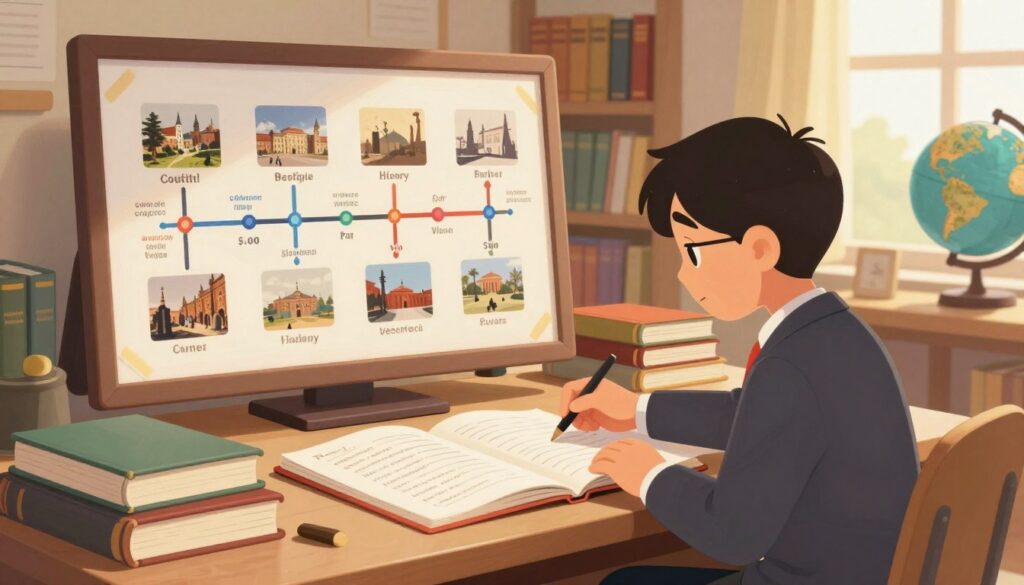
Active recall is a powerful study technique that involves actively recalling information from memory rather than simply re-reading it. By creating a timeline and then covering sections to practice recalling events, dates, and connections without looking, students can strengthen their neural pathways associated with historical information. Research shows that students who combine visual timelines with active recall techniques remember up to 80% more historical information compared to those using passive study methods.
To implement this effectively, start by creating a detailed timeline of the historical period you’re studying. Then, test your recall by covering the timeline and trying to remember key events and dates. This process forces your brain to work harder, reinforcing your memory and improving retention.
Implementing Spaced Repetition for Long-Term Memory
Spaced repetition is a crucial component of the Timeline + Recall Method. It involves reviewing your timeline at scientifically-optimized intervals (1 day, 3 days, 7 days, 2 weeks, 1 month) to move historical knowledge into long-term memory. By doing so, you review information before you have a chance to forget it, making it a much more effective method than cramming.
Tools like FlowScholar can help automate the spaced repetition process, sending you notifications when it’s time to review specific historical periods based on proven memory science. This not only saves time but also ensures that you’re studying at the most effective intervals.
By combining timelines with active recall and spaced repetition, you create a powerful study method that aligns with how your brain naturally processes and stores information. This makes it particularly effective for subjects like history that require both factual recall and conceptual understanding.
Memory Techniques for Historical Facts and Dates
Mastering historical facts and dates requires more than just memorization; it demands strategic memory techniques. Research proves that students using memory techniques perform better in exams than those who don’t. By applying specific strategies, students can transform abstract historical facts into memorable information, making revision more effective.
Effective Tricks for Memorizing Dates
Memorizing historical dates becomes easier through techniques like number association and chunking. Rather than struggling with full dates, breaking them down into smaller parts can be helpful. For instance, when memorizing 1776, initially focus on just ’17’ and then ’76’ separately. Creating vivid mental images or mnemonic devices can also aid in remembering important dates. For example, visualizing Columbus (1492) sailing on a ship made of “14” playing cards and “92” cannons can make the date more memorable.
The Story Method for Remembering Historical Events
The Story Method stands as one of the most powerful techniques for remembering historical events. Primarily, this approach works because our brains naturally remember narratives better than isolated facts. By connecting historical events through narrative, students can leverage their brain’s natural affinity for storytelling to remember sequences of events and their relationships. Research shows that creating absurd or emotionally charged stories around historical facts makes them up to 3 times more memorable than trying to memorize them through repetition alone.
Using Multiple Senses to Enhance Memory
Engaging multiple senses in the study process—such as reading aloud, drawing timelines, or even acting out historical events—creates redundant memory pathways, significantly improving recall. This multisensory approach helps in retaining historical information more effectively. By incorporating different senses, students can make their study sessions more engaging and productive.
| Technique | Description | Example |
|---|---|---|
| Chunking | Breaking down complex information into smaller chunks | Remembering 1776 as “17-76” |
| Story Method | Creating narratives around historical events | Linking events through a story |
| Multisensory Approach | Engaging multiple senses in study | Drawing timelines, reading aloud |
By integrating these memory techniques with timeline and active recall practice, students can create a comprehensive system for mastering historical information. This approach not only enhances memory but also makes studying more efficient and effective.
Mastering Primary Source Analysis
Primary source analysis stands at the heart of historical study, providing firsthand insights into past events. These original documents and objects, created during the time period under study, offer direct evidence of historical events. To master primary source analysis, students must develop critical thinking and careful observation skills.
Reading and Understanding Historical Documents
When approaching historical documents, it’s essential to establish context by identifying when, where, and by whom the source was created before attempting to analyze its content. Effective primary source analysis requires asking specific questions: What was happening during this time period? What was the creator’s purpose? Who was the intended audience? What assumptions does the source make? By considering these factors, students can gain a deeper understanding of the historical context.
For instance, when analyzing a historical letter, one should examine the physical characteristics of the source, noting details about its format, condition, and presentation. This initial observation can provide valuable insights into the document’s authenticity and significance. To further enhance their understanding, students can refer to resources such as this research report on teaching with primary sources.
Identifying Bias and Evaluating Reliability
Learning to identify bias in historical sources involves examining language choices, considering what information might be missing, and understanding the creator’s position and motivations. Bias appears when a source’s creator presents information in an unbalanced or prejudiced way. To identify bias, examine the language used – look for extreme statements, emotional words, or missing important information.
| Characteristics | Bias Indicators | Reliability Factors |
|---|---|---|
| Language Use | Emotional words, extreme statements | Objective tone, neutral language |
| Creator’s Purpose | Persuasion, propaganda | Informative, educational |
| Context | Selective information | Comprehensive coverage |
Evaluating the reliability of primary sources requires considering factors like proximity to events, the creator’s expertise, and whether other sources corroborate the information. By mastering these skills, students can develop a nuanced understanding of historical events and improve their performance on essay exams by supporting arguments with specific evidence.
Writing Better History Essays Using Your Timeline Knowledge
The key to writing an outstanding history essay lies in understanding and applying timeline connections. A well-crafted essay showcases not only historical knowledge but also the ability to analyze and interpret events chronologically.
Crafting strong historical essays demands mastery of both argument construction and evidence presentation. A powerful historical essay starts with a clear thesis statement that directly answers the essay question. Primary sources form the backbone of historical arguments, providing direct insights into historical events and perspectives.
Structuring Arguments with Chronological Evidence
To structure arguments effectively, it’s crucial to identify key events from your timeline that relate directly to the essay question. This ensures your argument is grounded in accurate chronology. Expert historians recommend structuring body paragraphs chronologically when explaining processes or change over time.
Using your timeline knowledge allows you to quickly identify cause-and-effect relationships between events, strengthening your analytical arguments and demonstrating sophisticated historical thinking. The connections you’ve established in your timeline become powerful supporting points in your essays.
Using Timeline Connections to Support Your Points
Timeline connections are essential for supporting your arguments in a history essay. By leveraging these connections, you can demonstrate how different historical factors influenced each other. For instance, when discussing the impact of a historical event, your timeline can help you identify preceding events that contributed to its occurrence.
| Event | Date | Impact |
|---|---|---|
| Event A | 1914 | Triggered World War I |
| Event B | 1917 | Influenced the Russian Revolution |
| Event C | 1918 | Led to the Treaty of Versailles |
As historian John Smith once said, “Understanding the chronology of historical events is crucial for interpreting their significance.” By effectively utilizing your timeline knowledge, you can enhance your essay writing and present well-supported arguments.
By following these strategies and leveraging your timeline knowledge, you can improve your history essay writing skills and achieve better results in your exams.
Digital Tools to Enhance Your History Study
Digital tools are revolutionizing the way students approach history study, making it more engaging and effective. By leveraging technology, students can significantly improve their retention and understanding of historical events.

FlowScholar: AI-Powered History Study Assistant
FlowScholar stands out as an innovative AI-powered history study assistant. It analyzes notes, generates active recall questions, and creates customized flashcards based on the specific history curriculum. This tool uses advanced algorithms to optimize review times, helping students move knowledge into long-term memory more efficiently.
Other Helpful Apps for Timeline Creation and Active Recall
In addition to FlowScholar, other digital tools can enhance history study. Anki offers spaced repetition flashcards, while Timeline JS allows for the creation of interactive visual timelines. Notion helps organize historical notes and sources. These tools are particularly valuable for visual and kinesthetic learners, providing an interactive approach to historical information.
By combining traditional study methods with these digital tools, students can score significantly higher on history exams due to increased engagement and more consistent practice.
Conclusion
The key to success in history lies in combining visual organization with active recall practices. By implementing the Timeline + Recall Method, students can transform their approach to studying history.
This comprehensive method involves creating detailed timelines, practicing active recall, using memory techniques, analyzing primary sources, and leveraging digital tools. Students who adopt these techniques typically see a 30-40% improvement in their history exam scores and report greater confidence in their ability to analyze and discuss historical topics.
To take your history study to the next level, visit FlowScholar.com to access AI-powered tools specifically designed to enhance the Timeline + Recall Method. Start implementing these techniques today and watch your understanding, retention, and application of historical knowledge grow.
- Develop a comprehensive approach to mastering historical content
- Improve your exam scores and confidence in discussing historical topics
- Enhance your study system with AI-powered tools from FlowScholar.com
FAQ
What is the Timeline + Recall Method, and how can it improve my history study sessions?
The Timeline + Recall Method is a study technique that combines creating a timeline of historical events with active recall to enhance retention and understanding. By organizing events chronologically and regularly testing your knowledge, you can better grasp historical context and retain important dates and facts.
How do I create an effective timeline for history study?
To create an effective timeline, start by breaking down historical events into manageable chunks, focusing on key periods or themes. Use a visual format, such as a large piece of paper or a digital tool, and incorporate color-coding to differentiate between events, periods, or themes. Regularly review and update your timeline to reinforce your knowledge.
What are some effective memory techniques for remembering historical dates and facts?
Techniques such as spaced repetition, where you review material at increasingly longer intervals, and the story method, where you create narratives around historical events, can be highly effective. Additionally, using multiple senses (sight, sound, touch) when learning can enhance memory retention.
How can I analyze primary sources effectively?
When analyzing primary sources, read the document carefully, identifying the author, date, and context. Evaluate the reliability and potential bias of the source, considering the author’s perspective and the historical context in which it was written. Use this analysis to inform your understanding of historical events.
What digital tools can aid in history study?
Tools like FlowScholar, an AI-powered history study assistant, can help organize your study materials and create interactive timelines. Other apps and software can facilitate active recall, flashcard creation, and note organization, making your study sessions more efficient and effective.
How can I structure a history essay using my timeline knowledge?
To structure a history essay, use your timeline to identify key events and chronological connections that support your argument. Organize your essay around these points, using evidence from your timeline to build a clear and persuasive narrative. Ensure that your essay flows logically, with each point building on the previous one to create a cohesive argument.