
AsRené Descartesonce said, “Divide each difficulty into as many parts as is feasible and necessary to resolve it.” This profound statement encapsulatesthe essence of tackling complex tasks, such as homework assignments, by breaking them down into manageable components. The “StartSmall, FinishStrong” Method embodies this principle, offeringstudentsa strategic pathway to completing their homework effectively. By focusing on incremental progress and leveragingtime management strategies, this approach helpsstudentsbuild confidence and maintain momentum throughout their learning journey.
By adopting this method, students can transform their approach to homework, making it a more manageable and less daunting task. The key lies in understanding how to allocate appropriate time to various topics and maintain focus, thereby preventing burnout and enhancing overall productivity.
Key Takeaways
- The “Start Small, Finish Strong” Method breaks down overwhelming homework assignments into manageable parts.
- This approach helps students build confidence through incremental progress.
- Effective time management is crucial for maintaining focus and preventing burnout.
- The method is applicable across diverse subjects and assignment types.
- By leveraging small wins, students can fuel their motivation and achieve academic success.
Understanding the “Start Small, Finish Strong” Method
The “Start Small, Finish Strong” method offers a practical solution to homework struggles by understanding the psychological underpinnings of procrastination. This approach is particularly beneficial for students who often feel overwhelmed by the volume or complexity of their assignments.
The Psychology Behind Procrastination and Homework Struggles
Procrastination often stems from feeling overwhelmed, creating a psychological barrier that delays engagement with academic content. Research in cognitive psychology shows that breaking tasks into smaller components reduces anxiety and increases task initiation. This principle is fundamental to the “Start Small, Finish Strong” method, helping students to overcome their initial resistance to homework.
Core Principles of the Method
The core principles include task segmentation, progressive difficulty scaling, momentum building, and strategic completion sequencing. These principles work together to optimize both productivity and learning outcomes, enabling students to produce higher quality writing and develop stronger arguments in their essays.
| Principle | Description | Benefit |
|---|---|---|
| Task Segmentation | Breaking down large tasks into smaller ones | Reduces overwhelm and increases task initiation |
| Progressive Difficulty Scaling | Gradually increasing the difficulty of tasks | Builds confidence and enhances skill development |
| Momentum Building | Completing tasks to create a sense of progress | Motivates students to continue working |
Benefits for Student Performance and Mental Well-being
By adopting the “Start Small, Finish Strong” method, students can experience improved performance metrics, including more thorough responses to complex questions. This approach also significantly reduces homework-related stress and anxiety, creating a more sustainable approach to course requirements. For instance, a study on AP U.S. History demonstrates how breaking down complex topics into manageable segments can enhance understanding and retention.
As noted by educational researchers, “Breaking down complex tasks into simpler components is a key strategy for improving academic performance and reducing stress.” This method not only enhances academic outcomes but also fosters a positive learning environment, empowering students to tackle challenging course material with confidence.
“The key to success is to start with small, manageable tasks and build momentum.”
Implementing the “Start Small, Finish Strong” Method for Homework
Students who struggle with homework can benefit from the “Start Small, Finish Strong” method, which provides a structured approach to task management. This method is particularly useful for complex assignments that can be overwhelming.
Breaking Down Assignments into Micro-Tasks
The first step involves teaching students to analyze assignments and identify natural breaking points. For instance, a research paper can be divided into research, outlining, drafting, and revising phases. Effective micro-task creation involves aiming for components that can be completed in 15-30 minute sessions, making homework more manageable.
Creating a Progressive Workflow
Creating a progressive workflow involves sequencing tasks strategically, beginning with familiar or straightforward elements to build confidence before tackling more challenging components. This approach helps students contextualize each micro-task within the larger assignment, maintaining awareness of how individual efforts contribute to the final product.
Building Momentum Through Small Wins
Building momentum through small wins leverages the dopamine response that occurs with task completion, creating a positive feedback loop that motivates continued progress. Students can enhance this method by implementing visual tracking systems that document completed micro-tasks, providing tangible evidence of progress.
| Assignment Type | Micro-Tasks | Benefits |
|---|---|---|
| Research Paper | Research, Outlining, Drafting, Revising | Breaks down complex tasks into manageable parts |
| Exam Preparation | Categorizing content by topic, difficulty level, and question type | Enhances study efficiency and effectiveness |
| Group Projects | Dividing tasks among group members | Promotes collaboration and shared responsibility |
For more information on applying this method to exam preparation, visit Perfection Learning.

Applying the Method to Different Subject Areas
The “Start Small, Finish Strong” method is not limited to a single subject; it’s a flexible approach that can be applied to various academic areas, enhancing students’ ability to tackle complex assignments across the curriculum.
History and Social Studies Assignments
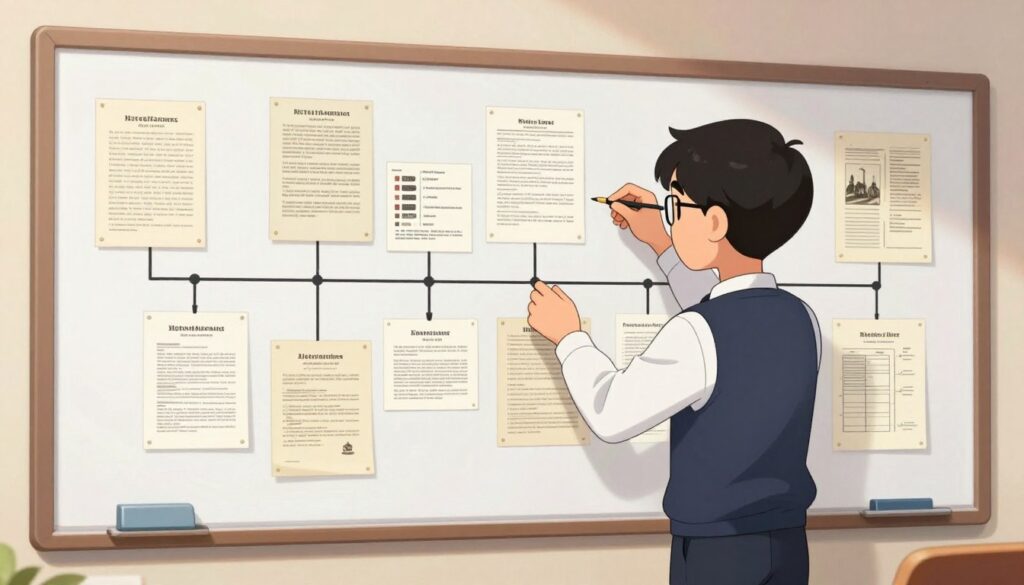
For history and social studies assignments, the method transforms potentially overwhelming topics by segmenting chronological events into manageable periods. This allows students to master specific historical contexts before synthesizing broader patterns. When approaching U.S. history assignments, students can break down complex historical periods into smaller thematic units, focusing on social, political, and economic developments separately before integrating them.
Essay Writing and Language Arts
For essay writing and language arts, the approach begins with brainstorming and outlining as micro-tasks, creating a foundation that makes the drafting process less intimidating and more structured. Language acquisition assignments benefit from breaking vocabulary and grammar into thematic clusters, allowing students to master fundamental elements before attempting more sophisticated expression.
Exam Preparation and Study Sessions
Exam preparation becomes more effective when divided into topic-specific review sessions, question type practice, and timed simulations—creating a progressive prep strategy that builds confidence approaching test day. For more information on preparing for exams like the AP Government exam, visit this resource.
Using FlowScholar to Enhance Your Method
FlowScholar enhances this method by providing AI-powered tools that help identify logical breaking points in assignments and suggest optimal sequencing of micro-tasks based on learning science. By integrating FlowScholar into their homework routine, students can transform their approach to challenging subjects like history.

Conclusion: Making the Method a Habit for Academic Success
In summary, the ‘Start Small, Finish Strong’ method provides a structured yet flexible framework for tackling complex assignments. By adopting this approach, students can transform their academic experience, making it more manageable and less daunting.
Transforming the ‘Start Small, Finish Strong’ method from an occasional strategy into a consistent habit requires practice and dedication. Students who successfully adopt this method report significant improvements in their ability to manage complex projects, answer challenging questions, and engage more deeply with course content across diverse topics.
The habit-forming process typically takes 3-4 weeks of consistent application. During this time, parents and educators play a crucial role in supporting students by encouraging reflection on the process and identifying which micro-tasks created momentum. As students internalize this method, they often begin applying it beyond homework to other contexts, demonstrating its versatility as a life skill.
For a comprehensive support system that reinforces this method, visit FlowScholar.com to access specialized tools designed to optimize the ‘Start Small, Finish Strong’ approach across all academic disciplines. By making this method a cornerstone of their academic routine, students position themselves for sustained success not just in current courses but throughout their educational journey and into professional contexts where complex project management is essential.
We invite you to share your experiences with this method on our blog, as student testimonials provide valuable insights and help refine these strategies for the broader learning community.
FAQ
How can the "Start Small, Finish Strong" method improve my homework performance in subjects like U.S. History or Government?
By breaking down large assignments into smaller, manageable tasks, you can better understand complex topics and events, leading to improved performance and reduced stress.
What are some effective strategies for applying this method to language arts or essay writing?
To apply this method, divide the writing process into smaller tasks such as researching, outlining, drafting, and editing; this helps build momentum and produces well-structured essays.
How can I use this method to prepare for exams or study sessions more efficiently?
Create a study plan with micro-tasks, such as reviewing notes, practicing questions, and summarizing key concepts, to help you stay focused and retain information better.
Can this method be used for group projects or collaborative assignments?
Yes, by assigning smaller tasks to group members and creating a progressive workflow, you can ensure everyone is working together effectively towards a common goal.
How do I stay motivated and maintain momentum while using this method?
Celebrate your small wins along the way, and remind yourself of your goals and the benefits of using this method to stay motivated and engaged.