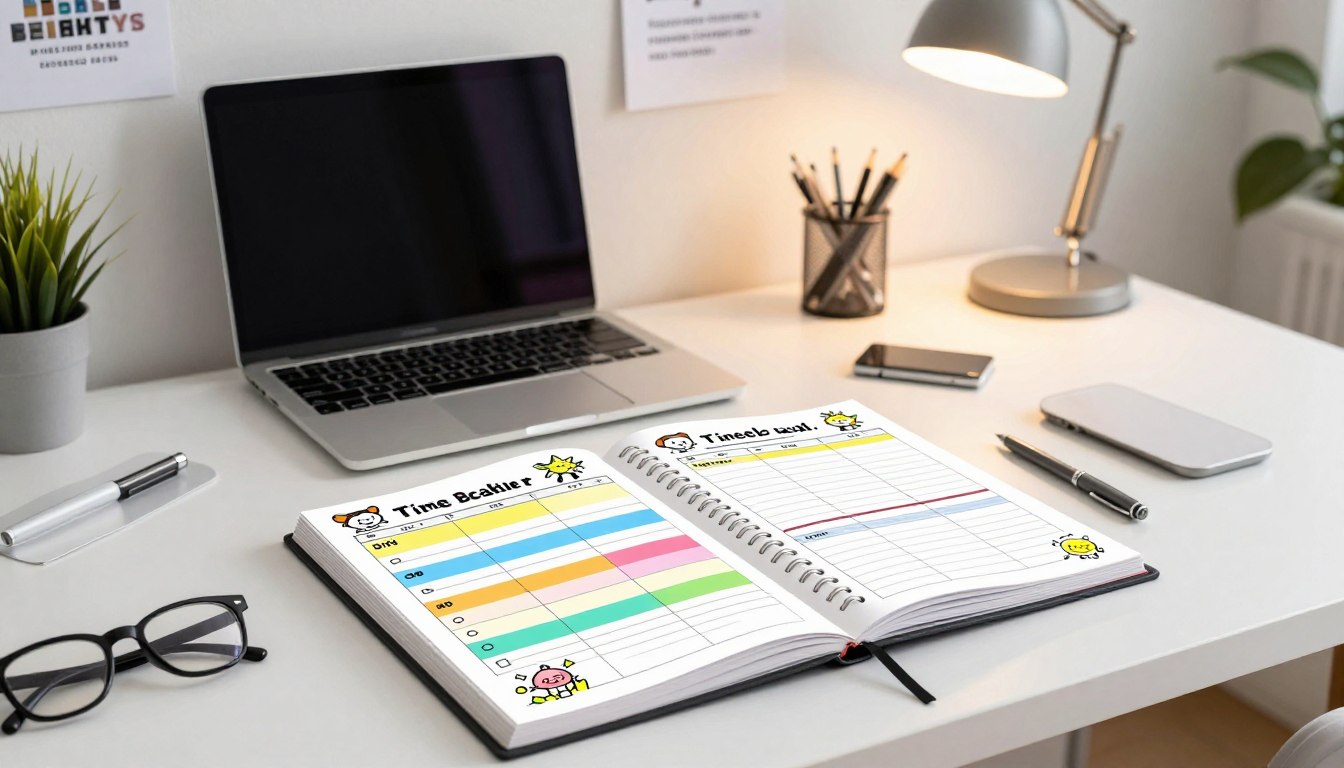
“You don’t have to be great to start, but you have to start to be great.” – Zig Ziglar. This motivational quote resonates deeply with students and professionals who struggle to stay focused and productive while studying, especially when fatigue sets in.
Traditional time-based scheduling often falls short in addressing our natural energy fluctuations, leading to frustration and diminished learning outcomes. However, energy-based scheduling offers a paradigm shift by aligning demanding cognitive tasks with our body’s natural energy peaks.
By understanding the relationship between unique energy patterns and study performance, individuals can revolutionize their academic or professional development journey. This comprehensive guide will explore the science behind energy fluctuations and provide actionable tips to transform study sessions.
Key Takeaways
- Understand how natural energy fluctuations impact study sessions.
- Learn to align demanding tasks with energy peaks.
- Discover tools like FlowScholar to complement energy-based scheduling.
- Implement strategies to maximize productivity despite fatigue.
- Transform study sessions through energy-based scheduling.
Understanding the Biology Behind Fatigue and Study Performance
Circadian rhythms and energy fluctuations significantly affect cognitive function and study performance, making it essential to understand their impact. Our bodies operate on a complex biological system known as the circadian rhythm, which governs our natural energy fluctuations throughout the day and significantly impacts our cognitive performance.
The Science of Energy Fluctuations Throughout the Day
The suprachiasmatic nucleus (SCN) in our body acts as our master timekeeper, orchestrating predictable peaks and valleys in alertness. Most people experience a natural energy dip approximately 6-8 hours after waking. As stated by a study, “Roughly six to eight hours after waking up, the SCN naturally sends a signal that it’s time to wind down a bit.” This natural fluctuation affects our ability to focus and study effectively during certain times of the day.
Why Afternoon Slumps Happen (and Why It’s Not Your Fault)
Contrary to popular belief, afternoon fatigue isn’t a sign of laziness or poor discipline—it’s a hardwired biological response that affects nearly everyone. During these natural energy dips, body temperature slightly decreases, stress hormone levels drop, and brain activity in reward-processing regions reaches its lowest point. As a result, understanding these biological mechanisms helps remove self-blame and provides the foundation for working with—rather than against—your body’s natural rhythms when planning study sessions.
The afternoon slump typically occurs between 1:30-3:30 pm for most people and lasts approximately 30 minutes, though the exact timing varies based on individual chronotypes and sleep patterns. Research shows that fighting against these natural energy fluctuations often leads to diminished cognitive performance, increased errors, and inefficient learning outcomes during a specific period.
What is Energy-Based Scheduling?
Energy-based scheduling presents a strategic method for optimizing your study sessions by leveraging your body’s natural energy fluctuations. This approach recognizes that individuals have varying levels of energy throughout the day, which can significantly impact their ability to focus and be productive.
As Dr. Laura Markham, a clinical psychologist, notes, “Understanding your energy patterns can help you plan your day more effectively, leading to greater productivity and less stress.” By aligning your most demanding tasks with your energy peaks, you can achieve better results in less time.
Core Concept Explained
The core principle of energy-based scheduling involves mapping your personal energy patterns throughout the day and strategically assigning different types of tasks to the appropriate energy windows. High-energy periods are ideal for deep focus work, such as complex problem-solving or memorization, while low-energy periods are better suited for simpler, administrative tasks like reviewing familiar material or organizing notes.

Benefits Over Traditional Time-Based Scheduling
Unlike traditional time-based scheduling, which often distributes tasks evenly throughout the day without considering your biological rhythms, energy-based scheduling works in harmony with your body’s natural fluctuations. This approach offers several benefits, including improved performance, enhanced productivity, and reduced frustration. By working with your natural energy levels rather than against them, you can create a more sustainable study routine that prevents burnout and maximizes cognitive resources.
- Aligns demanding tasks with natural energy peaks for better productivity.
- Recognizes the varying cognitive demands of different study tasks.
- Offers greater flexibility than traditional time-based scheduling.
By adopting energy-based scheduling, you can optimize your study time and achieve your goals more efficiently. This method allows for adaptation to daily energy fluctuations while maintaining structure and accountability, making it a more effective way to manage your study sessions.
How to Study When You’re Tired: The Energy-Based Scheduling Trick
Studying when you’re tired can be challenging, but there’s a solution that can help you stay focused and productive. The key is to understand your energy levels and schedule your study sessions accordingly. By doing so, you can maximize your productivity and achieve your academic goals.
Step 1: Tracking Your Natural Energy Patterns
To optimize your study schedule, you need to track your natural energy patterns. Create a simple energy journal where you rate your mental alertness, focus, and physical energy on a scale of 1-10 at different times throughout the day for at least one week. This will help you identify your unique peaks and valleys throughout a typical day.
- Pay special attention to when you naturally feel most alert and creative versus when you experience mental fog or physical fatigue.
- Use this information to establish reliable patterns and create a study schedule that works with your energy levels.
Step 2: Matching Tasks to Energy Levels
Once you’ve identified your energy patterns, the next crucial step involves categorizing your study tasks according to their cognitive demands and strategically matching them to the appropriate energy windows. For instance, high-energy tasks like learning new concepts, solving complex problems, and writing essays should be scheduled during your peak energy periods.
- Medium-energy tasks such as reviewing familiar material, organizing notes, or participating in study groups can be effectively accomplished during your moderate energy periods.
- Low-energy tasks like organizing study materials, creating flashcards, or passive reading can be reserved for your natural energy dips, allowing you to remain productive without fighting against your biology.
By aligning your study tasks with your energy levels, you can create a powerful synergy between your biological rhythms and your workload, maximizing productivity while minimizing the frustration of trying to force concentration during low-energy periods. This approach enables you to make the most of your study time and achieve your academic goals more efficiently.
Creating Your Personal Energy Map
By tracking your energy patterns, you can identify the most productive times for studying and retain information more effectively. This process begins with objective self-observation, monitoring your natural alertness, focus, and productivity levels at different times throughout the day for at least one full week.
Identifying Peak Performance Hours
Most people fall into distinct chronotypes—morning larks, night owls, or afternoon types—that influence when their peak performance hours naturally occur. For instance, morning people typically experience their highest energy levels between 8am-12pm, while evening-oriented individuals often hit their stride between 4pm-10pm. Understanding your personal pattern is crucial for effective scheduling. You can explore more on this topic on platforms like Lemon8.
- Beyond just noting when you feel most alert, pay attention to specific cognitive abilities that peak at different times.
- Some people may find their analytical skills sharpen in the morning, while creative thinking flows better in the evening.
Recognizing Low-Energy Periods
Low-energy periods are equally important to identify, as these represent opportunities to schedule less demanding tasks or strategic breaks rather than fighting against your natural biology. Most people experience a natural afternoon energy dip between 1-3pm, regardless of chronotype, though the severity and exact timing vary based on individual factors and sleep patterns.
Your personal energy map should account for external factors that influence your energy cycles, such as meal timing, exercise routines, and environmental conditions like light exposure. Once completed, your energy map becomes a powerful decision-making tool that allows you to strategically align your most challenging study tasks with your biological prime times for maximum efficiency.
Optimizing Your Study Environment for Energy Management
Optimizing your study environment is key to sustaining energy and improving study outcomes. The physical space where you study can either support or undermine your natural energy levels, significantly impacting your productivity and focus.
Light, Temperature, and Noise Considerations
Several environmental factors can influence your energy during study sessions. Light exposure is crucial; natural daylight or blue-enriched light can reduce melatonin production and increase cortisol levels, helping you stay alert. Temperature is another often-overlooked factor; the optimal range for cognitive performance is between 68-72°F (20-22°C). Noise management should be personalized; while some prefer complete silence, others benefit from consistent background sounds or music without lyrics to mask distractions.
| Environmental Factor | Optimal Condition | Impact on Energy |
|---|---|---|
| Light | Natural daylight or blue-enriched light | Increases alertness, reduces melatonin |
| Temperature | 68-72°F (20-22°C) | Enhances cognitive performance |
| Noise | Personalized: silence or background sounds | Improves focus, reduces distractions |
Setting Up an Energizing Study Space
To create an energizing study space, it’s essential to separate your study area from your sleep area to avoid drowsiness and improve sleep quality. An ergonomic setup with proper seating and desk height can prevent physical fatigue. Adding energizing elements like plants, essential oils with stimulating scents, and adequate hydration stations can naturally support sustained energy. Decluttering your study space removes visual distractions, allowing you to direct more energy toward your learning objectives.

By optimizing your study environment, you can significantly enhance your energy management during study sessions, leading to improved productivity and focus.
Mental Techniques to Maintain Focus When Tired
The final output is enclosed in the “ tag and is in American English.
Implementing Your Energy-Based Study Schedule
Implementing Your Energy-Based Study Schedule
=====================================================
To effectively implement your energy-based study schedule, start by creating aflexible weekly templatethat maps your recurring commitments against your established energy patterns. This template will serve as the foundation for allocating your most demanding study tasks to your peak energy windows.
### Creating a Flexible Weekly Template
Rather than scheduling specific subjects for rigid time blocks, consider categorizing study sessions byenergy requirements(high, medium, low) and matching the appropriate type of work to your energy state on any given day. This approach allows for greater flexibility and adaptability in your study routine.
* Allocate your most demanding tasks to your peak energy windows.
* Use buffer time to account for natural fluctuations in energy levels.
* Be willing to pivot your planned activities based on your current energy state.
### Adapting to Energy Fluctuations in Real-Time
Adapting to energy fluctuations in real-time is crucial for successful energy-based scheduling. Learn to recognize your current energy state and adjust your planned activities accordingly. This might involve switching to a lower-energy task during unexpected energy dips or capitalizing on high-energy periods for more demanding work.
* Develop awareness of your energy patterns and fluctuations.
* Adjust your study schedule as needed to align with your energy state.
* Use tools like FlowScholar to track your productivity and optimize your study sessions.
### Using FlowScholar to Optimize Your Study Sessions
FlowScholar offers powerful tools that complement energy-based scheduling by helping you track productivity patterns, optimize study sessions, and adapt your approach based on performance data. The platform’s analytics can provide valuable insights into your learning efficiency and help you refine your energy map over time.
* Use FlowScholar to track your study sessions and productivity.
* Analyze your performance data to identify areas for improvement.
* Adjust your energy-based schedule based on insights from FlowScholar.
Conclusion
As we’ve explored throughout this article, energy-based scheduling provides a strategic framework for optimizing study sessions. By understanding the science behind your energy fluctuations and implementing the strategies outlined in this guide, you can transform frustrating, low-productivity study sessions into optimized learning experiences that maximize your cognitive resources.
Tools like FlowScholar can significantly enhance your energy-based scheduling approach by providing data-driven insights into your productivity patterns. To further support your study efforts, you may also find additional tips on staying awake while studying helpful.
Implementing an energy-based schedule requires initial effort, but the long-term benefits—improved learning outcomes and reduced frustration—make it well worth the investment. Focus on progress rather than perfection, and allow yourself to refine your approach based on what works best for your unique biology and circumstances.
FAQ
What is energy-based scheduling, and how does it differ from traditional scheduling methods?
Energy-based scheduling is a technique that involves planning tasks according to an individual’s natural energy levels, rather than just allocating specific times. This approach recognizes that energy levels fluctuate throughout the day and helps individuals make the most of their peak performance hours.
How can I identify my peak performance hours?
To identify peak performance hours, track your energy levels at different times of the day over a period of a week or two. Note when you feel most alert, focused, and productive. This will help you understand when you’re naturally more energized and capable of tackling challenging tasks.
What are some strategies for boosting energy while studying?
Some effective strategies include incorporating movement and exercise, maintaining proper nutrition and hydration, and taking strategic power naps. Additionally, creating an energizing study environment by adjusting light, temperature, and noise levels can also help.
How can I adapt my study schedule to fluctuations in energy levels?
To adapt to energy fluctuations, create a flexible weekly template that allows for adjustments. Be prepared to switch tasks or reschedule activities based on how you’re feeling. Using tools like FlowScholar can also help optimize study sessions according to energy levels.
Are there any mental techniques that can help maintain focus when feeling tired?
Yes, techniques such as active learning methods, the Pomodoro Technique, and breathing exercises or mindfulness practices can help maintain focus. These strategies can enhance productivity and help individuals stay on track even when energy levels are low.
Can energy-based scheduling be applied to other areas of life beyond studying?
Absolutely, energy-based scheduling can be applied to various aspects of life, including work, exercise, and personal activities. By understanding and working with natural energy patterns, individuals can optimize their daily routines for better overall performance and well-being.