
As the renowned productivity expert, Laura Vanderkam, once said, “Time is a currency we all have, and we all spend; the question is, are we spending it wisely?” Many students struggle with managing their time effectively, often finding themselves overwhelmed with tasks and falling behind on their academic responsibilities.
Despite having good intentions and using various productivity tools, students often fail to achieve their goals. The problem lies not in their work ethic but in their approach to time management. Traditional to-do lists focus on what needs to be done without addressing when these tasks will be accomplished, leading to poor time allocation.
This is where time blocking comes in – a strategic approach to scheduling that can help students better manage their day and achieve a better work-life balance. By adopting time blocking, students can transform their productivity and reduce stress. Tools like FlowScholar can aid in this transition, providing a structured approach to implementing time blocking.
Key Takeaways
- Understand the limitations of traditional to-do lists in managing academic tasks.
- Learn how time blocking can improve time management and productivity.
- Discover the benefits of using digital tools like FlowScholar for implementing time blocking.
- Gain insights into transforming your daily schedule for better work-life balance.
- Explore a practical approach to adopting time blocking and reducing stress.
Why Traditional To-Do Lists Fail Students
Despite their popularity, traditional to-do lists consistently fail to meet the complex demands of student life and academic responsibilities. The typical student’s approach to time management revolves around reactive to-do lists and vague intentions to “study later.” This method fails for several fundamental reasons: It doesn’t account for time as a finite resource: To-do lists focus on tasks without acknowledging the limited hours available to complete them. It ignores the reality of context switching: Moving between different subjects or projects creates significant cognitive overhead, reducing overall productivity.
The Limitations of List-Based Productivity
List-based productivity creates an illusion of organization while actually contributing to procrastination by not accounting for when tasks will be completed. Traditional to-do lists fail to differentiate between deep work requiring focused attention and shallow tasks that can be completed with minimal cognitive resources. This approach leads to decision fatigue as students repeatedly review their lists and decide what to do next.
The Hidden Costs of Context Switching
Context switching, or the act of switching between different academic subjects or tasks, creates significant cognitive overhead. Research shows that frequent switching can reduce productivity by up to 40%, making traditional to-do lists particularly inefficient. The hidden costs of context switching include increased mental energy expenditure and decreased focus, ultimately leading to burnout.
Understanding Time Blocking: A Student’s Perspective
## Understanding Time Blocking: A Student’s Perspective
Time blocking is a revolutionary time management method that’s transforming the way students approach their academic workloads. By proactively scheduling fixed, uninterrupted blocks of time for specific tasks or subjects, students can create a realistic and achievable plan that aligns with their actual available time. This structured approach has been shown to reduce academic stress while improving performance, according to research from the American Psychological Association.
### What Is Time Blocking?
Time blocking involves dividing your day into defined periods dedicated to specific tasks or activities. It’s about transforming your calendar into a schedule that not only lists your tasks but also allocates specific times for each task, making it a concrete plan for achieving your academic goals.
### The Science Behind Time Blocking’s Effectiveness
The effectiveness of time blocking lies in its ability to reduce decision fatigue by eliminating the constant need to choose what to do next. By scheduling tasks in advance, students can focus on the task at hand without the mental overhead of deciding what to work on. This approach also helps in creating realistic expectations by forcing students to confront the finite nature of their time, thus allocating their hours more efficiently.
### Time Blocking vs. To-Do Lists: Key Differences
Unlike traditional to-do lists that merely list tasks without allocating specific times for them, time blocking schedules tasks into fixed time slots. This key difference makes time blocking a more proactive and realistic approach to time management. While to-do lists can be endless and often lead to procrastination, time blocking provides a clear plan of action by specifying when and for how long a task will be worked on.
By understanding and implementing time blocking, students can transform their approach to managing academic workloads, leading to improved productivity and reduced stress. This method not only helps in managing time more effectively but also in achieving a better balance between academic responsibilities and other aspects of life.
As we explore further into the concept of time blocking, it’s essential to recognize its potential in enhancing productivity and reducing academic stress. The subsequent sections will delve into the practical aspects of implementing time blocking, providing a comprehensive guide for students to adopt this effective time management strategy.
From To-Do Lists to Time Blocks: A Student-Friendly Upgrade
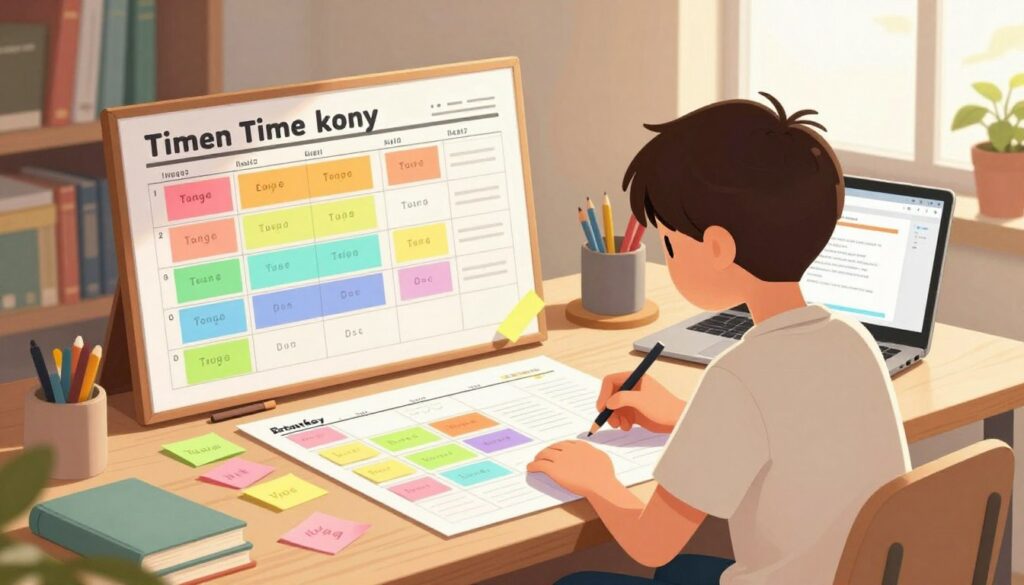
By adopting time blocking, students can transform their study habits and achieve a more balanced academic life. This approach isn’t just about getting more done—it fundamentally enhances how you learn. Time blocking creates the conditions for deeper learning and retention, not just task completion.
Academic Benefits of Time Blocking
Time blocking offers several academic benefits, including enhanced learning through spaced repetition. By scheduling regular review sessions across weeks, students can leverage the science of memory consolidation. Dedicated time blocks also facilitate deliberate practice—the focused, intentional work that builds true mastery of academic subjects rather than superficial understanding.
Moreover, time blocking improves metacognition by encouraging regular reflection on time usage, helping students build greater awareness of their learning processes and efficiency. This structured approach to studying transforms study time from a checkbox activity into a strategic learning process.
Mental Health Advantages for Students
In addition to its academic benefits, time blocking has significant mental health advantages for students. By providing certainty about when important tasks will be completed, time blocking reduces academic anxiety. This eliminates the constant worry about forgotten assignments, creating a less stressful academic environment.
Furthermore, time blocking helps students achieve deep work states by eliminating the constant interruptions and context switching that characterize list-based approaches. For more insights on effective time management strategies, you can explore resources like Motion’s guide on the best time-blocking, which offers practical tools to enhance productivity.
By focusing on sustainable work patterns rather than endless task completion, time blocking creates a healthier relationship with productivity. This approach allows students to maintain their energy levels and stay focused on their academic goals.
Getting Started: Your First Time Blocking System
Creating an effective time blocking system requires a thoughtful and structured approach. To help students implement this productivity technique, we’ve outlined a step-by-step guide.
Step 1: Conduct a Time Audit
Before designing your ideal schedule, it’s essential to understand how you’re currently spending your time. Track all activities for one typical week, including classes, studying, socializing, sleeping, and downtime. Note your energy levels throughout the day to identify your most productive periods. This audit often reveals surprising patterns and helps identify time sinks you weren’t aware of.
Step 2: Map Out Fixed Commitments
Start building your time blocking schedule with non-negotiable commitments: class times, work shifts (if applicable), essential appointments, commuting time, and basic self-care (meals, sleep, hygiene). These form the framework around which you’ll build your flexible blocks.
Step 3: Calculate Study Time Requirements
Calculate the study time needed for each course. The standard recommendation is 2-3 hours of study time per credit hour. Adjust based on course difficulty and your familiarity with the subject. For example, a 15-credit semester might require 30-45 hours of study time weekly, distributed across your courses according to their difficulty and your proficiency.
Step 4: Design Your Weekly Template
Design a weekly template that includes different types of blocks:
- Focus blocks: 1-2 hour periods dedicated to deep work on specific subjects.
- Buffer blocks: 30-minute periods between activities to account for transitions.
- Break blocks: Dedicated time for rest, meals, and recreation.
- Admin blocks: Time for emails, planning, and organizational tasks.
- Flex blocks: Unscheduled time that can absorb unexpected demands.
The template should reflect your natural energy patterns—schedule your most challenging subjects during your peak cognitive hours.
To illustrate, consider a student with a heavy course load. Their weekly template might include multiple focus blocks for each subject, buffer blocks to transition between tasks, and break blocks to recharge. By aligning their schedule with their energy levels, they can maximize productivity and reduce stress.
By following these steps, students can create a tailored time blocking system that enhances their productivity and academic performance. Regularly reviewing and adjusting the system will ensure it remains effective and aligned with their evolving needs.
Advanced Time Blocking Techniques for Students
As students master the basics of time blocking, they can further enhance their productivity by implementing advanced techniques. These strategies are designed to help students maximize their academic performance and manage complex coursework more effectively.
Subject-Focused Days
Dedicate entire days to specific subjects or types of tasks. For example, Mondays can be for science courses, Tuesdays for humanities, and Wednesdays for language studies. This approach minimizes context switching and creates deeper focus.
Energy-Based Scheduling
Schedule tasks according to your natural energy patterns. Creative work should be done during the most inspired hours, analytical tasks during the most logical periods, and rote memorization when energy is lower but focus is still possible.
The Pomodoro-Time Block Hybrid Method
Within larger time blocks, use the Pomodoro Technique to maintain focus. Work intensely for 25 minutes, take a 5-minute break, and after four cycles, take a longer 15-30 minute break. This creates sustainable intensity within scheduled blocks.
Buffer Blocks for Academic Flexibility
Buffer blocks are essential for handling unexpected tasks or unexpected increases in task duration. By building in buffer blocks, students can adapt to changes without feeling overwhelmed.
Digital Tools to Enhance Your Time Blocking Practice
The key to successful time blocking lies in utilizing digital tools that complement and enhance this productivity technique. By leveraging the right tools, students can maximize their focus, efficiency, and overall academic performance.
Effective Calendar Apps for Time Blocking
Calendar apps are fundamental to implementing time blocking effectively. Google Calendar stands out as a versatile option, allowing users to color-code different types of blocks for visual clarity, set up recurring events, and utilize reminders. Other notable calendar apps include Apple Calendar and Microsoft Outlook, each offering unique features that can be tailored to individual needs.

FlowScholar: Revolutionizing Study Assistance with AI
FlowScholar is an innovative AI-powered education tool designed to complement time blocking by providing intelligent study assistance. It maximizes the effectiveness of dedicated study blocks by offering adaptive learning with conversational AI tutors. This integration creates a powerful productivity system that enhances students’ learning experiences.

Focus-Enhancing Apps for Productive Blocks
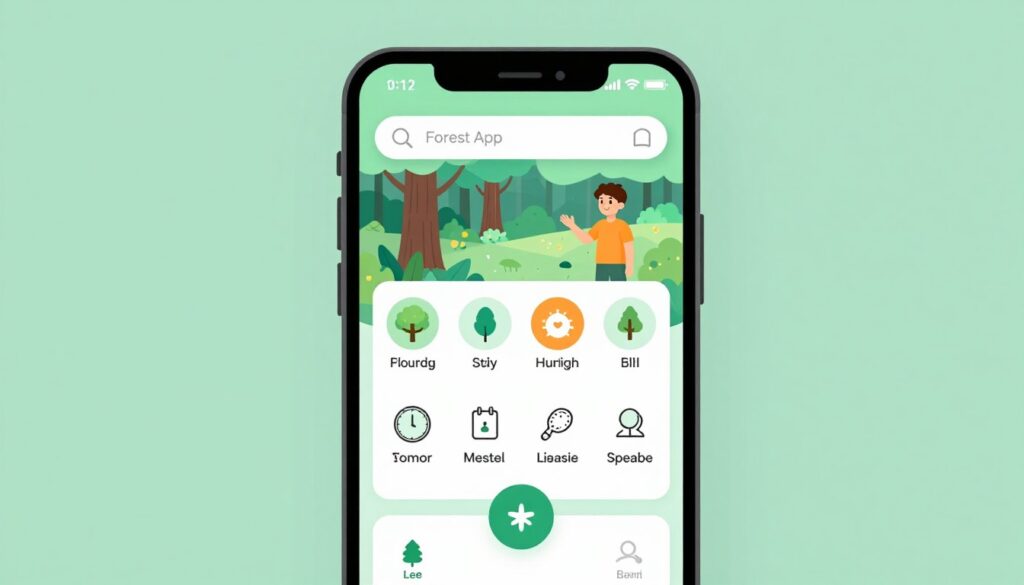
To maintain focus during time blocks, students can benefit from focus-enhancing apps like Forest App. This app gamifies productivity by allowing users to grow virtual trees that die if they check their phone during a focused block, providing a fun and motivating way to stay on track.
While digital tools offer numerous benefits, some students may prefer or also benefit from using a paper planner. The choice between digital and analog tools depends on individual preferences and learning styles. A hybrid approach, combining the strengths of both digital and analog methods, can also be effective.
For more insights on implementing time blocking strategies, visit our article on SAT Time Blocking Strategy for Busy.
Overcoming Common Time Blocking Challenges
Implementing time blocking can be a game-changer for students, but it’s not without its challenges. While this productivity technique offers numerous benefits, students often encounter common pitfalls that can hinder its effectiveness. To get the most out of time blocking, it’s essential to be aware of these challenges and know how to overcome them.
When Plans Go Awry: Adapting Your Blocks
Even with the best-laid plans, unexpected events can occur, throwing off your entire schedule. To adapt to such situations, it’s crucial to build in flexibility. This can be achieved by leaving at least 20% of your time uncommitted and scheduling adequate breaks between blocks. By doing so, you can ensure that you’re not overscheduling yourself and have the buffer needed to accommodate unexpected tasks or events.
Avoiding Overscheduling Burnout
Overscheduling is a common challenge many students face when implementing time blocking. To avoid burnout, it’s vital to recognize that not every minute needs to be scheduled. By incorporating flexible time into your schedule, you can reduce the risk of burnout and maintain a healthy work-life balance. This involves being realistic about what you can accomplish in a given timeframe and leaving some buffer time for unexpected tasks or relaxation.
Managing Social Life Within Your Blocks
Balancing academic commitments with social life and extracurricular activities is another challenge students often encounter. To manage this effectively, it’s essential to integrate your social and academic activities into your time blocking schedule. This might involve scheduling social events or study group meetings into your calendar, ensuring that you have time for both academic and social pursuits. By doing so, you can maintain a healthy balance between your academic responsibilities and your social life.

To further enhance your time blocking practice, consider the following strategies:
- Conduct mid-week reviews to adjust your blocks based on emerging priorities and changing circumstances.
- Include 10-15 minute buffer blocks between different activities or subjects to account for the mental transition time needed.
- View your time blocks as experiments rather than rigid commandments, allowing you to adjust your schedule as needed.
By implementing these strategies and being mindful of the common challenges associated with time blocking, you can maximize the benefits of this productivity technique and achieve a better balance between your academic and personal life.
Conclusion: Transform Your Academic Life with Strategic Time Blocking
As we conclude our exploration of time blocking, it’s clear that this method offers a transformative approach to managing academic life. By transforming vague intentions into concrete plans anchored in the reality of limited time, students can achieve a more balanced and productive academic experience.
Time blocking isn’t just about getting more done—it’s about creating the conditions for deeper learning, reduced stress, and a more balanced student experience. This technique allows students to stay focused on their tasks and manage their time more effectively.
To enhance your time blocking practice, consider exploring FlowScholar, an AI-powered study assistance tool that can help you optimize your study schedule. For more insights on effective time management, visit https://myhours.com/articles/the-importance-of-time-management.
Start by implementing time blocking for just one day to experience its benefits firsthand. As you become more comfortable with the technique, you can expand it to a full system, transforming your academic life with strategic time blocking.
FAQ
What is time blocking, and how does it differ from traditional to-do lists?
Time blocking is a scheduling technique where you allocate fixed, uninterrupted blocks of time for tasks. Unlike to-do lists, which can be vague and open-ended, time blocking assigns specific timeslots for tasks, enhancing focus and productivity.
How do I get started with implementing time blocking in my daily routine?
Begin by conducting a time audit to understand how you currently spend your time. Then, map out your fixed commitments, such as classes or work hours, and allocate time blocks for study sessions, breaks, and other activities.
What are some digital tools that can help me with time blocking?
Popular calendar apps like Google Calendar can be used for time blocking. Additionally, specialized tools like FlowScholar offer AI-powered study assistance, while focus-enhancing apps like Freedom or SelfControl can help you stay on track during your scheduled blocks.
How can I avoid overscheduling and burnout when using time blocking?
To avoid burnout, make sure to include buffer blocks in your schedule for flexibility and unexpected tasks. Also, prioritize self-care and leave some space for relaxation and social activities within your time blocks.
Can time blocking help with managing my energy levels throughout the day?
Yes, time blocking can be adapted to energy-based scheduling, where you schedule tasks according to your energy levels. For example, you can allocate your most demanding tasks to your peak energy periods.
How do I handle unexpected tasks or interruptions while using time blocking?
When unexpected tasks arise, assess their urgency and importance. If necessary, adjust your existing time blocks to accommodate the new task, or schedule it for a later time slot.
Is time blocking suitable for students with varying course loads or project-based work?
Time blocking is highly adaptable and can be tailored to suit different course loads or project-based work. By allocating specific time blocks for each task or subject, you can better manage your workload and stay focused.