There are moments when a clear path forward changes everything. An educator who built a small cohort program told us how verifiable microcredentials turned classroom projects into career-ready proof. That shift felt personal—sudden clarity about how training, practice, and assessment can create real opportunity.
The platform described here helps institutions and creators design, issue, and monetize verifiable course recognition. It pairs artificial intelligence features with measurable outcomes so teaching teams can deliver practical learning and trusted certification.
Creators package content and credential workflows into market-ready offerings, shortening time-to-launch while keeping rigor. Educators value portfolio-based recognition; our approach mirrors respected models that mix knowledge transfer, hands-on practice, and assessment tied to career impact.
Key Takeaways
- Expert-led, cohort-based models drive demand for verifiable microcredentials.
- One platform supports course design, content alignment, and monetization.
- Portfolio and project-based assessment make credentials defensible and career-focused.
- Built-in governance covers ethics and accessibility from the start.
- Flexible delivery—cohort, instructor-led, or self-paced—meets educator needs.
- Creators gain faster go-to-market, professional content, and credible certification workflows.
Transform your programs with digital credentials built for educators
Educators gain a system that ties learning outcomes and project work to transparent, verifiable recognition.
Issue verifiable certificates, badges, and microcredentials at scale
Automated issuance triggers when assignments, rubric scores, or assessment milestones are met. Institutions can set rules that release a certificate or badge after a portfolio review or a graded project. This removes manual steps and keeps recognition consistent across cohorts.
Align certificates to learning outcomes, projects, and assessment
Programs map credentials to concrete classroom outputs: action plans, e-portfolios, and artifact evidence. A curriculum-first model links each award to stated outcome language and rubric criteria. That clarity helps educators and students understand what success looks like.
“When recognition references real work, engagement rises and skills become visible.”
- Stackable achievements show progress across a course sequence.
- Templates speed setup and keep rigor intact.
- Transcript-like records simplify audits and institutional reporting.
| Use Case | Trigger | Evidence |
|---|---|---|
| K-12 classroom | Rubric pass on project | Student portfolio artifact |
| Higher education | Capstone assessment | Action plan + graded deliverable |
| Professional development | Workshop completion + peer review | Badge + transcript entry |
AI certificate creator: features that power modern teaching and learning
This platform centralizes templates, verification, and workflow automation so programs launch faster and remain rigorous.
Ready-made templates for courses, workshops, and cohort-based learning
Professionally designed templates let educators spin up courses and cohorts without sacrificing pedagogy. Templates mirror best practices from Miro AI, Canva, and 360Learning to speed development and ensure consistency.
Automated issuance via completion rules, grades, and rubric outcomes
Set rules that release a certificate when assignments, grade thresholds, or rubric outcomes are met. Automation ties awards directly to assessed work and keeps issuing consistent across cohorts.
Secure verification links, QR codes, and shareable wallet credentials
Verification options include unique links, QR codes, and wallet-ready passes. These methods make validation simple for institutions and employers while protecting record integrity.
Accessibility-first design and multilingual support for inclusive learning
Built-in caption guidance, color-contrast checks, alt-text prompts, and translation options support diverse communities. Deep integration with GradeScope, Classtime, Quizalize, Insight 7, and VideoAsk connects evidence and approvals to each award.
| Feature | Benefit | Example tools |
|---|---|---|
| Templates | Faster program launch | Miro AI, Canva |
| Automated issuance | Consistent, rule-based awards | 360Learning, GradeScope |
| Verification | Easy share & validation | QR, wallet links |
| Accessibility & translation | Inclusive experiences | VideoAsk, Quizalize |
Built-in GPT for teachers to design, assess, and personalize credentials
This platform embeds a generative assistant so educators spend less time on paperwork and more time shaping learning.
Generate evidence criteria, assignment rubrics, and skill tags with AI
Use the built-in assistant (compatible with chatgpt) to draft evidence criteria, produce lesson-aligned rubrics, and map skills to award outcomes in minutes.
Auto-suggested descriptors speed setup while allowing local edits to preserve rigor and tone. The tool also proposes skill tags aligned to familiar frameworks, making outcomes meaningful to employers and districts.
Create personalized learning experiences and certificate narratives
Personalization adapts the narrative to each student’s demonstrated mastery, turning teaching signals into clear recognition and next-step guidance.
The system recommends strategies to scaffold lessons, differentiate support, and document progress. Educators get guardrails: ethical prompts, bias checks, and clarity tips for feedback language.
- Auto-suggest performance levels and student-facing summaries that reinforce knowledge and reflection.
- Compare rubric versions, measure experience across sections, and export artifacts to program repositories.
- Facilitate quick lesson variations while preserving core outcomes and institutional consistency.
Seamless integrations across your AI teaching stack and LMS
A smooth web of integrations helps programs move content, submissions, and outcomes without manual handoffs.
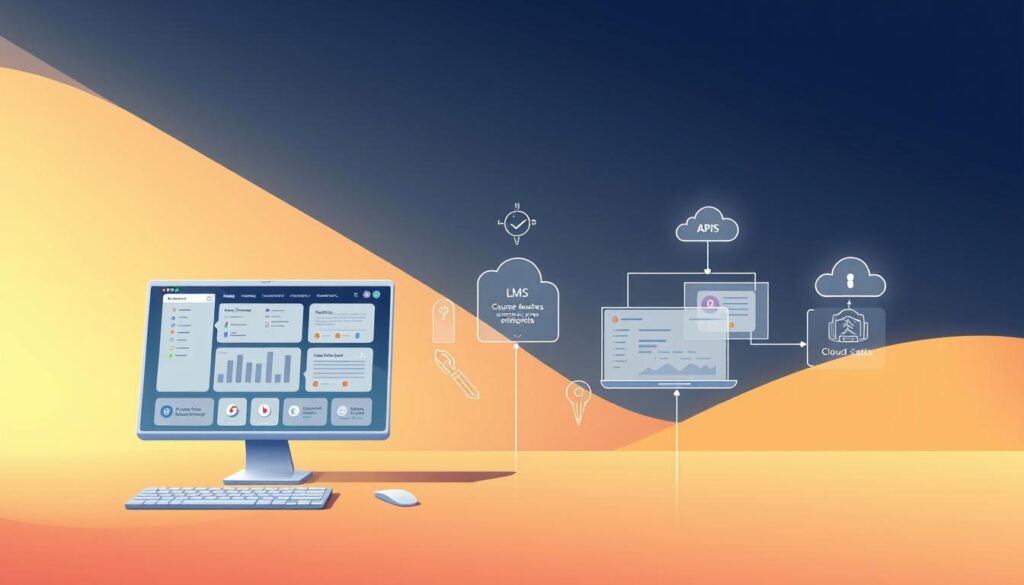
Connect content and collaboration tools such as ChatGPT, Canva, Google Workspace, and Miro AI so lesson materials and project artifacts stay in sync. This keeps templates, rubrics, and media tied to each course and project across delivery channels.
Link to LMS and assessment applications
Integrations with 360Learning, GradeScope, and Classtime pull verified grades, rubric results, and classroom artifacts directly into credential workflows. Sync rosters, sections, and completions automatically so issuance remains accurate across terms.
Data pipelines and analytics
Build pipelines to Quizalize, Insight7, and VideoAsk to capture engagement signals and outcome trends. The platform supports exports, educator dashboards, and anonymized reports for program analysis and continuous improvement.
- Pass back status to the LMS gradebook to make recognition visible where progress is tracked.
- Link project submissions and instructor approvals to triggers—no manual re-entry.
- Simple setup with API keys and OAuth; detailed guides reduce IT friction.
| Integration Type | Primary Tools | Key Benefit |
|---|---|---|
| Content & Authoring | ChatGPT, Canva, Google Workspace, Miro AI | Templates and content stay synchronized across courses |
| LMS & Assessment | 360Learning, GradeScope, Classtime | Pull verified grades and rubric outcomes into workflows |
| Analytics & Evidence | Quizalize, Insight7, VideoAsk | Capture engagement data and outcome trends for analysis |
| System Access | API keys, OAuth | Secure, scalable setup with institutional compatibility |
Use cases: K-12, Higher Ed, and professional development programs
Programs that map assessed work to formal recognition make learning visible and useful. These models help districts, campuses, and PD teams record applied work and track impact.
K-12 and district-wide initiatives
Issue certification for classroom projects and enhanced assignments to show student progress on district initiatives. The approach supports portfolio review, rubric scoring, and district reporting.
Higher education
Offer micro- and credit-bearing modules and lab pathways that document applied work. Programs can map outcomes to courses and departmental records, helping students and departments demonstrate readiness.
Workforce and PD
Provide certification pathways with instructor-led intensives or self-paced training. Models range from one-day workshops with badges to five-week live cohorts with masterclasses and e-portfolio work.
Cohort-based learning
Align live sessions, peer review, and portfolio milestones so recognition reflects real project outcomes. The Digital Learning Institute and upEducators show cohort delivery, mentor clinics, and project-driven assessment scale well.
| Use Case | Format | Key Benefit |
|---|---|---|
| K-12 districts | Classroom projects, rubric triggers | Visible student progress and district reporting |
| Higher education | Credit modules, labs | Departmental documentation of applied work |
| Workforce / PD | Instructor-led or self-paced | Flexible development and recognized certification |
| Cohort programs | Live sessions, portfolios | Stronger teaching experience and career signals |
Outcomes that matter: engagement, skills signaling, and career growth
When learning maps to tangible milestones, motivation and career mobility increase. Programs that link assessed work to visible recognition make progress easier to track. The Digital Learning Institute shows how recognized designations and revisitable materials keep learners engaged over time.
https://www.youtube.com/watch?v=pW9nkqavvto
Boost learner motivation with stackable badges and microcredentials
Stackable badges increase engagement by marking meaningful progress. Learners see small wins that add up to a larger skill set. This structure raises aspiration and keeps students returning to content and practice.
Showcase real work: projects, action plans, and applied practice
Signal skills with evidence-linked awards: each badge ties to a project or action plan that validates competence. Portfolios collect artifacts, feedback, and performance descriptors so reviewers can confirm applied practice and real work.
Maintain recognition with revisitable materials and ongoing updates
Provide revisitable content and records so learners revisit resources and reinforce understanding. Analytics highlight where students excel and where targeted support improves outcomes. We recommend aligning language to rubric expectations so progression is clear and defensible.
- Increase engagement with visible milestones that show steady progress.
- Signal skills through project-linked evidence and prominent portfolio items.
- Encourage continued practice by keeping materials accessible after award.
Implementation, compliance, and support for United States educators
Implementation prioritizes fast onboarding, secure data handling, and role clarity so schools can scale recognition with confidence.
Fast onboarding, role-based permissions, and secure data practices
Rapid setup assigns clear roles—administrators, educators, and reviewers—so issuing and auditing follow defined workflows. Role-based permissions reduce errors and speed approvals.
Programs apply secure data practices and transparent retention policies aligned with U.S. education privacy expectations. Audit logs and assessment moderation create verifiable trails that support accreditation and internal review.
Ethical use, bias awareness, and accessibility in credential design
Offer ethical guidance and bias checks for rubric language, assessment narratives, and automated suggestions. Training helps professionals interpret analysis outputs and maintain academic integrity.
Accessibility measures—captioning, alt text, color contrast, and plain‑language summaries—ensure recognition remains inclusive. Teams deliver U.S.-centric templates, curriculum mapping aids, and hands-on clinics to bridge training gaps.
- Live and asynchronous support channels for timely troubleshooting.
- Exam integrity options, including online proctoring and security features.
- Documentation and training that address practical challenges in deployment.
| Area | What it provides | Impact |
|---|---|---|
| Onboarding & Roles | Role templates, permission sets | Faster launch; fewer errors |
| Data & Compliance | Retention policies, audit logs | Privacy alignment with U.S. rules |
| Ethics & Access | Bias checks, accessibility tools | Fair, inclusive assessment |
| Support & Training | Clinics, docs, help channels | Sustained educator confidence |
Conclusion
, A unified platform turns assessed course work into verifiable recognition that employers and institutions can trust.
Strategic advantage: the system unites artificial intelligence, pedagogy, and verification to raise course credibility and program outcomes. Educators gain trustworthy recognition tied to rubric-aligned work and classroom artifacts.
Broad integrations—ChatGPT, GradeScope, Classtime, Quizalize, Insight7, VideoAsk, Canva, Google Workspace, Miro AI—let teams keep preferred tools while adding automated certification workflows and data analysis dashboards.
Ready for K-12, higher ed, and professional development, the approach scales personalization, maps assignments to outcomes, and supports ongoing program improvement. Build, integrate, and launch courses into certification-bearing offerings that strengthen skills signaling and career potential.
FAQ
What is the program "Make Money with AI #139 – Build AI Course Certificates and Sell to Educators" about?
The program teaches professionals how to design, package, and market course certificates and microcredentials that educators can adopt. It covers product strategy, certificate alignment to learning outcomes and projects, and steps to sell to schools, higher education, and training teams.
How do digital credentials transform programs for educators?
Digital credentials make learning visible and actionable. They enable verifiable badges, shareable wallet credentials, and QR-linked certificates that align to assessments and real work. This helps educators track outcomes, boost engagement, and provide learners with portable proof of skills.
What features power modern teaching and learning in this solution?
The platform includes ready-made templates for courses and cohort-based learning, automated issuance via completion rules and rubric outcomes, secure verification links, and accessibility-first, multilingual design to support inclusive instruction.
How does the built-in GPT for teachers help credential design and assessment?
The integrated language model accelerates design tasks: it generates evidence criteria, assignment rubrics, skill tags, and certificate narratives. It also helps personalize learning experiences and suggests formative assessments tied to competency frameworks.
Which integrations are supported for content and learning management?
The system connects with popular tools such as ChatGPT, Canva, Google Workspace, Miro, and LMS platforms like 360Learning, GradeScope, and Classtime. It also links to analytics pipelines with Quizalize, Insight7, and VideoAsk for data-driven insights.
What are common use cases across K-12, higher education, and workforce training?
Use cases include district-wide classroom projects, credit-bearing modules and lab certificates in higher education, instructor-led or self-paced workforce microcredentials, and cohort-based programs that produce portfolio-ready outputs.
How do these credentials improve learner outcomes and career growth?
Stackable badges and microcredentials increase motivation and help learners showcase applied practice—projects, action plans, and measurable skills. That visibility supports skills signaling and can aid hiring, promotion, and lifelong learning pathways.
What implementation and compliance supports are available for United States educators?
The offering includes fast onboarding, role-based permissions, secure data practices, and guidance on ethical use, bias mitigation, and accessibility. It aligns with U.S. privacy expectations and supports administrators with policy and workflow templates.
How are certificates verified and shared securely?
Certificates use secure verification links, QR codes, and shareable wallet-compatible credentials. These methods provide tamper-evident records and simple ways for employers or institutions to confirm authenticity.
Can the platform handle large-scale issuance for districts or universities?
Yes. Automated issuance driven by completion rules, grades, and rubric outcomes enables scalable distribution. Role-based administration and analytics help manage cohorts, track progress, and maintain quality at scale.
Are templates and rubrics customizable for different curricula and standards?
Templates and rubrics are fully customizable. Educators can align certificates to local standards, learning objectives, projects, and assessment items to ensure relevance and rigor.
How does the platform support inclusive learning and accessibility?
Accessibility-first design ensures content meets standards for diverse learners, and multilingual support helps reach broader audiences. The system also recommends alternative evidence types and accommodations in credential criteria.
What analytics and reporting options are available for instructors and program leads?
Data pipelines integrate with analytics tools to surface completion rates, skill attainment, and engagement signals. Leaders can export reports, visualize cohort performance, and use insights to refine curriculum and credential criteria.
How can educators monetize certificates or integrate them into professional development?
Educators can package certificates as paid courses, stackable PD pathways, or institutional offerings. The program provides go-to-market advice, pricing strategies, and templates for marketing to school districts and corporate trainers.
What support is available for assessment design and academic integrity?
The platform offers rubric builders, evidence guidelines, and integrity features such as proctored workflows and plagiarism checks. It also provides training materials on fair assessment practices and bias-aware evaluation.