
There is a quiet ache many personal trainers know well: long days traded for one-on-one hours, ideas to help more people, and little room to grow a business.
The guide meets that feeling with a practical plan. It shows personal trainers how to free time by automating repeatable tasks and turning expertise into scalable offers that help more clients get real results.
Readers learn simple levers—one at a time—that create passive income while keeping coaching judgment central. This approach preserves human care and lifts retention by adding accountability, clarity, and faster progress in health and performance.
Throughout the short journey, the emphasis is on straightforward workflows, real tools, and a clear path to make money without losing the personal touch that makes a trainer valuable.
Key Takeaways
- Personal trainers can reclaim time by automating repeat tasks.
- Packaging expertise creates new revenue alongside coaching.
- Focus on outcomes—clarity, accountability, and faster results.
- Start small: apply one lever, build momentum, then scale.
- Maintain human judgment to keep clients healthy and engaged.
Why AI Content Bundles Are the Smartest Play for Fitness Creators Right Now
Turning one-on-one hours into repeatable products is the clearest way a trainer scales income and impact. Personal trainers who embrace productized offers stop trading time for money and gain predictable capacity to help more people.
Present-day tools make that shift practical in the United States. Platforms such as Virtuagym AI Coach, Trainerize, and Freeletics can generate and adapt workout plans in seconds to match client goals and level. Kaia Health and Kemtai add motion analysis to protect form while scaling reach.
On the content side, ChatGPT and Jasper speed drafts; Descript shortens edits; Canva designs shareable assets. Together these tools cut the time it takes to produce and personalize programs.
What this means for training businesses
- More capacity: Automations in onboarding, DMs, and follow-ups free coaching time and keep clients engaged.
- Stronger revenue: Productized offers create predictable income and open group, hybrid, or subscription models that earn more money per unit of effort.
- Better reach: With social media distribution and email nurture, trainers convert audience interest into sales—see how to sell fitness programs online.
What Goes Inside a High-Converting AI Fitness Content Bundle
Effective bundles focus on outcomes: clearer choices, measurable progress, and fewer decisions for clients. The right set of assets gives personal trainers tools to scale their expertise while keeping coaching judgment central.
Training assets: Progressive programs and adaptable workout plans that adjust by goal and level—delivered as PDFs, spreadsheets, or app modules. Include strength pathways (5×5), hypertrophy splits, and muscle-specific blocks to break plateaus.
Nutrition and recipes: Meal plans and recipe packs that trainers refine to match macros, substitutions, and cultural preferences. These packs make eating simpler and drive better results.
Accountability tools: Automated check-ins, reminder scripts, and milestone prompts. Add an FAQ and troubleshooting modules that address soreness, travel, and week-4 motivation dips.
Social media and engagement kit
Provide caption banks, post topics, and swipe files that answer common objections and boost engagement. Trainers can use these assets to create steady lead flow and keep their audience connected.
| Asset | Format | Primary Benefit |
|---|---|---|
| Progressive programs | PDF / App module | Clear progression, fewer decisions |
| Workout templates | Spreadsheet / PDF | Adaptable to goal and level |
| Meal plan & recipes | Pack / Branded PDF | Practical nutrition guidance |
| Check-in scripts & FAQs | Text / Automation | Consistent accountability |
| Social media kit | Caption bank / Swipe files | Improved engagement and lead flow |
Want a practical how-to on packaging these offerings and turning them into downloadable programs? See this guide on how to sell workout programs online.
Set Up Your AI Tool Stack Without Losing the Human Touch
Anchor your stack around a programming tool that adapts workouts while you guide progress. Personal trainers should choose a reliable core so routine programming, check-ins, and FAQs run automatically while expert judgment stays central.
Programming and scalable coaching
Start with a programming core: Virtuagym AI Coach, Trainerize, or Freeletics power adaptive plans, subscription access, and automated check-ins. These platforms free time and keep the trainer in charge of progression and individual guidance.
Form, motion, and safety
Layer in motion analysis from Kaia Health or Kemtai to capture form cues with computer-vision tools. Use the data to reduce injury risk and to decide when a human should intervene.
Fast creation and repurposing
Use ChatGPT or Jasper to draft copy, Descript to edit audio and video, and Canva AI to produce on-brand assets. Tight creation loops protect time while preserving expertise.
Social posts that speak like a coach
For social media, GalilAI produces PT-specific post ideas, captions, and visuals faster than generic tools. Standardize onboarding in your business systems, mark which questions require human answers, and set escalation rules so you get pinged when adherence or RPE spike.
- Decide which questions always need a human reply—nutrition trade-offs, injury modifications.
- Quarterly review your tool mix; prune overlaps and invest where outcomes improve.
Want more tactical steps on turning these systems into revenue? See this practical guide on making money with AI-generated content.
Build the Bundle: A Step-by-Step How-To Workflow
Turn intake into a repeatable system that delivers results. Start by collecting clear answers about goals, experience, equipment, time, and injuries. Structured forms in Trainerize or Virtuagym speed analysis and keep onboarding consistent.
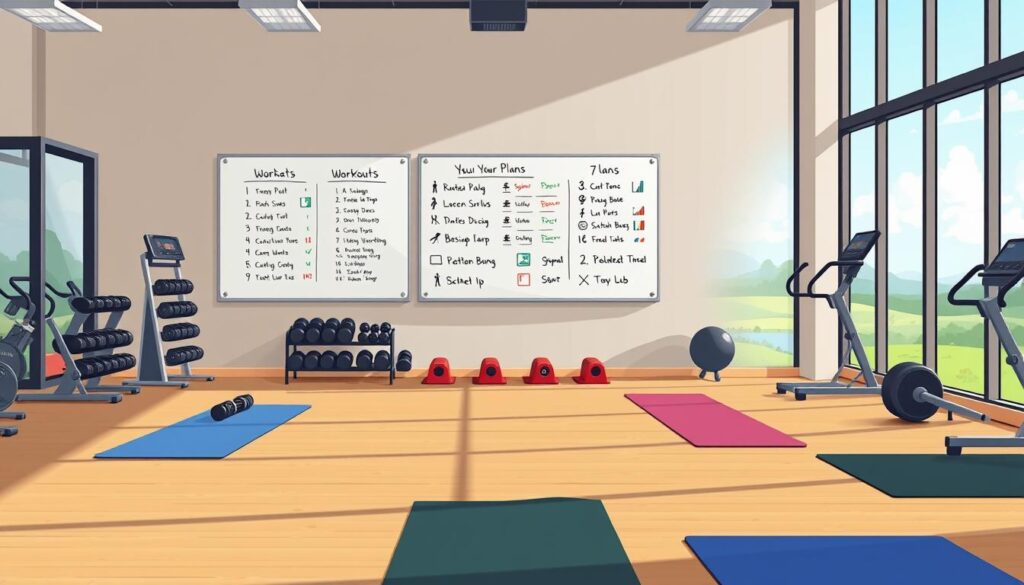
Collect audience inputs
Capture what matters: goals, training level, past experience, and available time. These fields let a plan match reality and reduce early drop-off.
Generate frameworks, then personalize
Use tools to draft workout and meal templates in seconds, then adjust loading, exercises, and progressions to each client. Automate check-ins and flag adherence gaps so trainers intervene where it counts.
Package and brand
Export workout plans as branded PDFs, app modules, and spreadsheets. Add swipe files for FAQs and onboarding emails. Lock brand colors and voice so every asset looks and reads like your business.
Test, iterate, launch
Run a QA with 5–15 clients, compare adherence and outcomes, then refine substitutions, session length, and nutrition templates. Automate reminders and delivery so clients move from purchase to training with minimal friction—and you make money efficiently.
sell, ai, content, bundles, for, fitness, creators
Map keywords to buyer intent so each page answers a real question and nudges a visitor toward the right product page.
Mapping keywords to buyer intent and on-page SEO structure
Start with informational guides that show outcomes—faster progress and better adherence—rather than technical features.
Build a simple content ladder: guide → case study → product page → checkout. Use lead magnets like a “Free 7-day program” to capture emails and begin automated nurture.
Internal linking strategy across your fitness site
- Top-of-funnel blogs link to case studies that link to program pages and onboarding.
- Create category pages by goal, level, and equipment so personal trainers help clients find fits quickly.
- Repurpose high-performing social media posts into long-form posts to compound discovery.
“When pages match intent, conversion lifts; when they don’t, traffic leaks.”
| Page Type | Primary Goal | Key Metric |
|---|---|---|
| Informational guide | Acquire emails | Lead magnet signups |
| Case study | Build trust | Product clicks |
| Program page | Close purchase | Checkout conversion |
Keep schema, meta, and headings aligned to intent. Track which posts drive product clicks, then expand related clusters. This strategy gives the business a measurable path from discovery to paying clients while saving trainers time.
Pricing and Packaging Strategies That Maximize Revenue
Pricing shapes perception: a clear price ladder makes choices easier and increases conversions. Personal trainers who design offers around outcomes earn more money and reduce buyer hesitation.
One-time, subscription, and hybrid models each serve a clear market. One-time plans ($30–$100) suit price-sensitive clients who want a focused workout or program. Subscriptions ($20–$50/month) deliver evolving access, updates, and community. Hybrid tiers ($99–$299) pair personalized training with monthly coach check-ins.
- Tier by need: beginner / intermediate / athlete and home vs. gym gear to match goals.
- Value stack: add check-ins, community, and form reviews to justify higher prices.
- Use anchoring: show hybrid first, then subscription, then one-time to guide choices.
| Offer Type | Price Range | Core Deliverable | Primary Upsell |
|---|---|---|---|
| One-time | $30–$100 | Fixed workout plan / program | Form review add-on |
| Subscription | $20–$50 / month | Ongoing access + updates | Community + monthly office hours |
| Hybrid | $99–$299 | Personalized training + coach check-ins | Specialty blocks (strength, muscle) |
| Corporate pilot | Custom pricing | Team access and reporting | Annual renewal discounts |
Test price points quarterly and track conversion, refunds, and lifetime value. Offer annual plans with a bonus module to improve cash flow. These steps help personal trainers turn interest into predictable revenue while serving more clients well.
Marketing the Benefits, Not the Tech
Focus marketing on results—clear progress, less guesswork, and personalization that feels like one-on-one coaching. Positioning should answer a simple question: how will this change a client’s journey and body, quickly and reliably?
Positioning: faster results, less guesswork, real personalization
Lead with outcomes: clarity, measurable progress, and personalization that saves people time. Personal trainers who highlight these gains make their offer relatable and urgent.
Show, don’t tell: before/after, behind-the-scenes, progress dashboards
Proof beats promises in social media feeds. Share short posts with before/after snapshots, clips of weekly dashboards, and behind-the-scenes edits that show how decisions get made.
Use one clear metric per post—weight, reps, or adherence—and explain the tweak that moved the needle.
Turn clients into advocates: UGC, referrals, and social proof loops
Create repeatable loops: invite clients to post check-ins, reward referrals with small perks, and feature user-generated reels that feel like real life.
- Celebrate milestones publicly to boost engagement and trust.
- Repurpose top posts into emails and landing pages to widen reach—see how to grow an audience on Instagram here.
- Keep language simple—explain what trainers do, not the tech that makes it possible.
“When outcomes lead, attention follows; when tech leads, people tune out.”
Distribution: Where and How to Sell Your AI Fitness Bundles
Effective distribution pairs a clear funnel with steady social activity and strategic partnerships. The right mix speeds discovery, lowers acquisition cost, and gives personal trainers reliable access to clients.
Your website and email: funnels, lead magnets, automated nurture
Start with a focused landing page that pairs a clear offer with a lead magnet—an ebook or a 7-day plan—to capture emails. Use tools like Mailchimp AI or HubSpot AI to automate nurture sequences that guide prospects from interest to checkout.
Social distribution: Reels, TikTok, Shorts and caption acceleration
Prioritize short-form video. Reels, TikTok, and Shorts drive reach and engagement faster than static posts.
Use GalilAI to craft PT-specific posts and AI captioning to speed production. Trend analysis keeps topics timely and lets teams repurpose high-performing clips into newsletter snippets.
Marketplaces and partnerships: Gumroad, apps, and corporate pilots
List offers on Gumroad and test app ecosystem integrations to widen discovery and simplify delivery. Explore corporate wellness pilots to unlock bulk access—one contract can open dozens of client seats.
- Website funnels: pair bundle pages with lead magnets; automate emails to convert interest into purchases.
- Social media: prioritize short video, steady post cadence, and AI-assisted captions to save time.
- Marketplaces: list on Gumroad; test app integrations for wider access and simpler delivery.
- Partnerships: pursue corporate wellness and app partnerships to scale client reach quickly.
- Chatbots: ManyChat can qualify leads, answer FAQs, and route buyers to checkout while deferring complex cases to humans.
| Channel | Primary Role | Best Metric |
|---|---|---|
| Website + Email | Close intent; capture leads | Lead-to-purchase conversion |
| Social media (Reels/TikTok/Shorts) | Drive discovery and engagement | View-to-lead rate |
| Marketplaces & Apps | Passive discovery and easy delivery | Sales per listing |
| Partnerships (Corporate) | High-volume client access | Contract value / retention |
Measure acquisition cost by channel and double down on the mix that balances reach, conversion, and margin. Maintain a feedback loop from customer service and social comments to refine offers and reduce support time. This distribution plan lets personal trainers scale programs and make money while keeping coaching quality intact.
Quality, Compliance, and Ethics When Using AI
Trainers who define boundaries and document decisions reduce risk and build client trust.
Clear scope and safety guardrails are non-negotiable. Personal trainers should state what they offer and what they do not: general health and exercise guidance, not diagnoses or medical nutrition therapy unless licensed.
Scope, disclaimers, and safety
Define scope: offer general fitness and nutrition guidance, and include a simple disclaimer that limits practice to non‑medical recommendations.
Screen clients for contraindications and match exercises to current capacity. Treat generated recommendations as drafts; the trainer validates, edits, and documents every change.
Privacy, consent, and data handling
Obtain informed consent that explains what data is collected, where it’s stored, who can access it, and how clients can opt out.
Use motion tools like Kaia Health and Kemtai to reduce injury risk, but escalate pain or red flags to clinicians.
“Transparency and documented consent protect clients and the trainer—clarity reduces risk and builds trust.”
- Keep records of program changes and rationales.
- Invite questions and make escalation paths obvious.
- Review policies quarterly and align with industry standards.
| Area | Minimum Requirement | Action |
|---|---|---|
| Scope | Written disclaimer | Limit to general guidance; refer when needed |
| Safety | Pre-screen | Match exercise selection to capacity |
| Data | Informed consent | Document storage and opt-outs |
| Escalation | Clear referrals | Escalate to RD/PT/clinician on red flags |
Optimize and Scale With AI Insights
Use analytics to spot where clients lose momentum and act before habits break. Instrumentation turns vague trends into clear signals. Trainers gain time and clarity when they know which week, session, or meal plan causes dropout.
Track adherence, week-four drop-offs, and nutrition consistency
Instrument your training: log adherence, session RPE, and completion rates. Flag week-four drop-offs and trigger an intervention workflow.
Small nudges work: a reminder, a simplified session, or a weekend meal plan can stop churn and keep clients on track toward their goals.
Iterate your programs: add modules where clients struggle most
Use cohort data to identify friction points—nutrition consistency or recovery adherence. Then add short modules that address those areas.
Examples: a three-day travel plan, a weekend prep checklist, or a recovery micro-module that reduces perceived barriers.
Move up the value ladder: hybrid coaching, group programs, branded apps
Scale with hybrid models and cohort coaching that preserve human judgment while expanding reach. Pre-built plans personalized by analytics let personal trainers serve more clients without stretching time.
Retention automations: reminders, progress updates, timely adjustments
Automate reminders, progress updates, and personalized adjustments to maintain momentum and increase referrals.
- Turn insights into recommendations and document what works.
- Track cohort results and iterate quarterly.
- Consolidate tools that drive the best results and reduce complexity in the business.
“Measure, intervene, and iterate—those steps turn small improvements into scalable results.”
Conclusion
This guide maps a practical path so personal trainers and personal trainers can scale without losing the human core.
A practical closing thought: start with one replicable product, learn fast, then expand what works. Use automation to handle routine training tasks while the trainer stays focused on judgement and motivation. This is a clear way to make money and grow a client base.
strong, market outcomes not tools: highlight body changes, muscle progress, and the client journey. Price simply, deliver clean workout plans, protect privacy, and keep referrals and case studies doing marketing work.
The industry is shifting. Trainers who iterate quickly, protect quality, and double down on what improves client results will build lasting strength.
FAQ
What exactly is an AI-powered bundle for personal trainers and how does it change the business model?
An AI-powered bundle packages reusable digital assets—workout plans, meal guides, social media kits, progress trackers—so trainers trade fewer hours for scalable products. It shifts revenue from one-to-one sessions to repeatable purchases and subscriptions, increasing reach and allowing trainers to serve more clients without proportional time increases.
Which specific assets should a high-converting bundle include?
Top bundles combine adaptive workout programs, nutrition templates, social post kits, client check-in scripts, and accountability automations. Include multiple formats—PDFs, spreadsheets, app-ready files, and swipe files—so trainers can brand and distribute across web, email, and social channels.
What tools are recommended to build and deliver these bundles without losing the human touch?
Use trainer-focused platforms like Trainerize or Virtuagym for program delivery, Kaia Health or Kemtai for form and motion feedback, and Descript or Canva for content repurposing. Combine these with conversational models for personalization and human review to keep coaching credible and safe.
How do you collect client inputs to create personalized plans quickly?
Start with a short intake: goals, training age, equipment, time availability, injuries. Feed that into templated frameworks to generate workouts and meal plans in seconds, then layer manual tweaks—exercise selection, progression schemes, and coaching notes—for higher adherence and results.
What pricing and packaging models work best in the U.S. market?
Effective options include one-time downloads (–0), monthly subscriptions (–), and hybrid higher-ticket bundles (–9) with added check-ins or community access. Tier offers—beginner to athlete, home vs. gym—help match price to perceived value.
How should trainers position these bundles to attract clients who aren’t excited by "technology"?
Market benefits—not features. Emphasize faster results, less guesswork, clear progression, and accountability. Use before/after stories, progress dashboards, and client testimonials to show impact rather than explaining algorithms or tooling.
Where are the best places to sell and distribute these products?
Sell on your own website with email funnels and lead magnets for higher margins. Use Gumroad or marketplaces for quick launches. Promote via Reels/TikTok/YouTube Shorts and leverage partnerships with gyms or corporate wellness programs to expand reach.
How do trainers ensure safety, legal compliance, and ethical use when deploying automated programs?
Add clear scope-of-practice disclaimers, require informed consent, and outline personalization limits. Keep human oversight for clients with medical issues and maintain secure data-handling practices aligned with privacy laws and platform terms.
What metrics should trainers track to improve and scale bundles?
Monitor adherence, week-four drop-offs, client-reported difficulty, and nutrition consistency. Use those insights to add targeted modules, adjust progressions, and introduce upsells like group coaching or branded apps to climb the value ladder.
How can trainers turn existing clients into advocates to boost sales?
Encourage user-generated content, run referral incentives, and share case studies. Create simple workflows for clients to post progress and offer templates that make sharing easy—this converts satisfied clients into repeatable marketing channels.
What internal linking and on-page strategy helps bundles rank and convert?
Map keywords to buyer intent: informational pages attract organic leads, product pages convert, and blog content nurtures. Use clear internal links between lead magnets, program pages, and checkout flows to reduce friction and improve SEO performance.
Can trainers maintain brand voice and quality while scaling with automated tools?
Yes—by templating core messaging, brand colors, and coaching cues across all assets, then applying human edits to maintain tone. Templates ensure consistency; trainer review preserves quality and the coach-client relationship.