There is a quiet moment when a founder says the right word aloud and it changes everything.
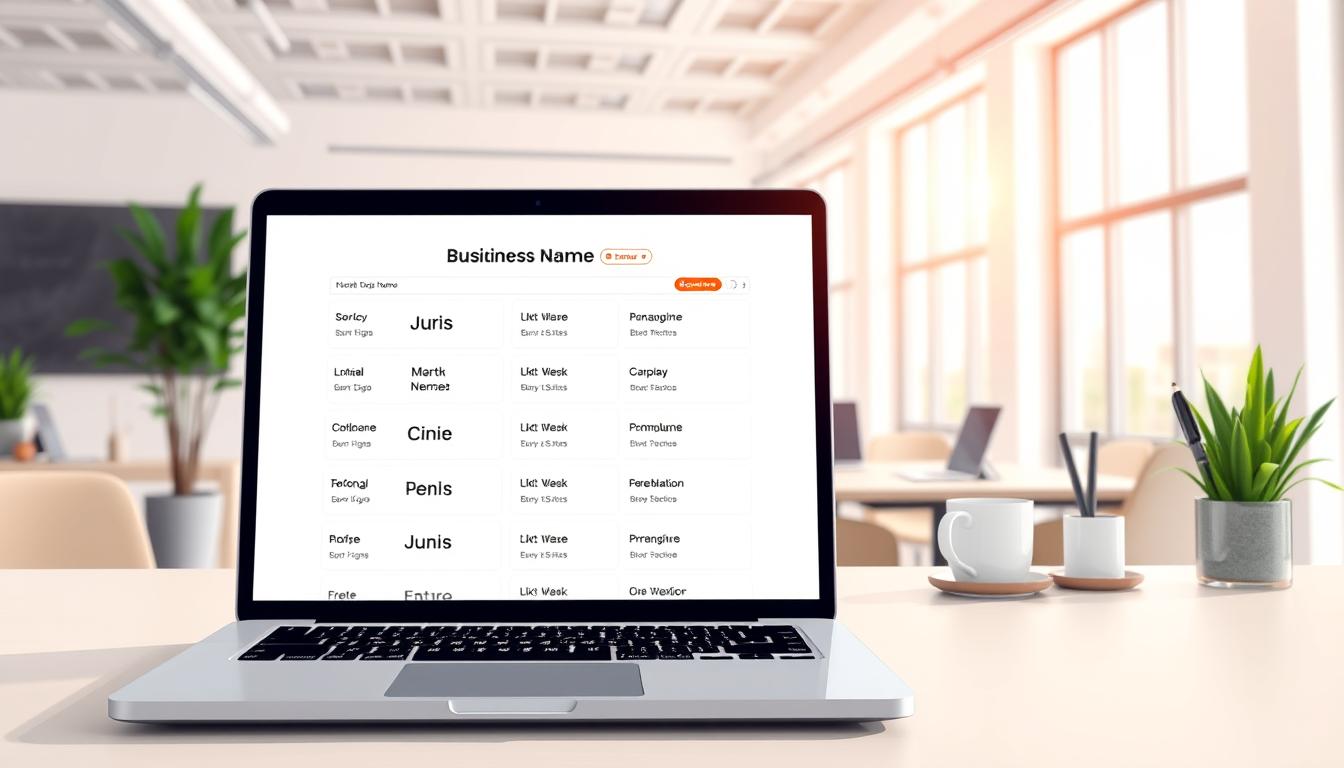
The guide begins with that human instant: the thrill of a clear, memorable brand. It explains how a modern business name generator acts like a smart assistant—prompt-driven, fast, and tuned to tone and industry. Users describe a company, choose a mood, and get crisp name suggestions in minutes.
Readers will learn why concise names win: one to three words, easy to spell, and built to scale. The section highlights practical safeguards—domain checks and USPTO-aware guidance—so results feel usable, not risky.
For agencies and entrepreneurs, this is more than a tool: it is a repeatable service that turns a prompt into client-ready brand options, paired with validation steps that reduce costly pivots.
Key Takeaways
- AI-driven name tools speed naming cycles from weeks to minutes.
- Good names are short, clear, and future-ready—test them aloud and with audiences.
- Integrated domain and basic trademark checks boost confidence in results.
- The approach fits many industries and supports tailored tone and audience fit.
- Packaged offerings (names plus logo/handles) create clear revenue paths.
Turn AI into Revenue: Package and Sell a GPT-Powered Business Name Generator
A simple prompt-and-response tool becomes valuable when it’s framed as a strategic service. Positioning moves the offering from an isolated utility into a full branding solution that clients can use immediately.
Positioning matters: present the product as a branded, done-for-you system. Pair curated lists with strategy, vetting, and assets so outcomes are actionable—short, pronounceable names that scale across cards and social media.
Who buys this work?
Ideal buyers include agencies, creators, SaaS founders, and local consultants who need repeatable naming services. The packaged value lies in defining a target audience, selecting tone, and mapping competitors so the outputs stand out.
What to include
- Strategy: audience definition, tone selection, and keyword guidance.
- Deliverables: curated name lists, domain-ready options, and social handle checks.
- Recurring value: ongoing naming for product lines and sub-brands to create retained revenue.
Frame the workflow—prompt → batch → refine → shortlist → domain and handle checks—as a repeatable service. That clarity turns a generator into a growth tool and a credible brand partner.
How Your GPT Business Name Generator Works (From Input to Sale)
Good outputs start with precise inputs: that is the engine of an effective naming process. Begin with language, industry, tone, and a short description of the company and its target audience. Tap generate to produce a batch of options—ten is a useful default for quick curation.
Smart inputs
Define industry, essential keywords, and audience so the tool contextualizes meaning rather than stitching random words. Capture constraints like word count, geography, or product type up front.
Style control
Use toggles for professional, playful, premium, or abstract directions. Compare outputs to see how tone signals positioning and price point.
Checks that matter
Integrate domain and availability checks early. Advise clients to run a USPTO search and scan state registries for legal clearance before finalizing.
Iterate fast
Generate in batches, shortlist clear, differentiated names, then validate with mock logos and user feedback. Formalize the process: input template → batch generation → refinement → domain & trademark screening → audience validation → final selection.
Features That Close Deals: What Buyers Actually Care About
Clients choose names that work across search, speech, and social fast. Practical features move proposals from concept to contract: clarity, availability, and audience fit matter more than novelty alone.
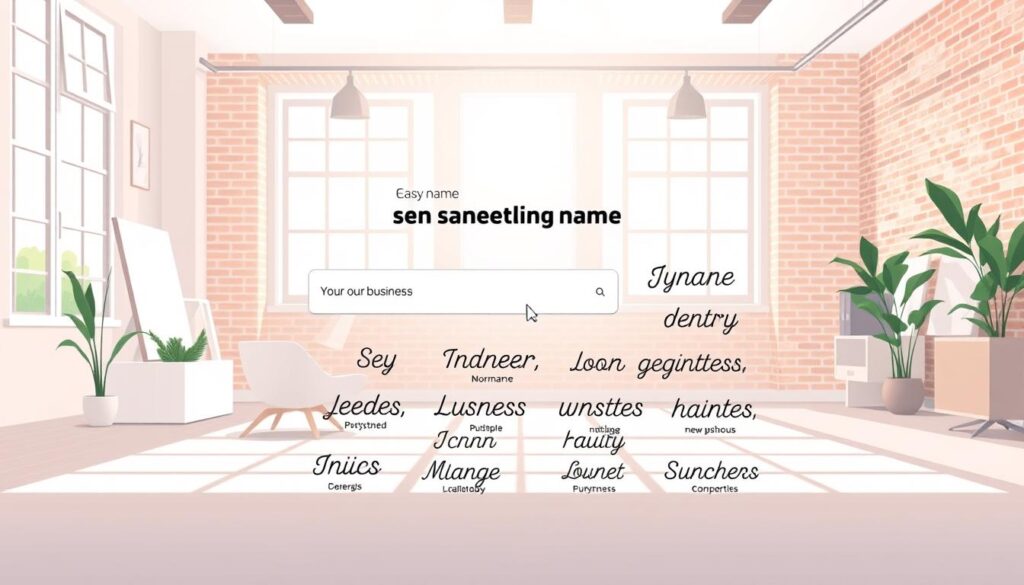
Industry-specific fit: Tailor outputs to the sector. Tech benefits from modern neologisms; restaurants lean into sensory cues; services need clarity and trust signals. Each industry follows naming conventions that signal value and category.
SEO-aware and readable: Include relevant keywords sparingly to aid discovery without harming uniqueness. Short, clear words improve search performance and user recall.
Audience and global readiness
Audience alignment: Anchor suggestions to demographics, intent, and purchasing triggers so the recommended names attract the right customers.
Global-ready: Prioritize easy pronunciation, cultural neutrality, and non-localized options unless a regional focus is intended.
Memorability and practical checks
- Memorability mechanics: Favor 1–3 words, clean phonetics, and rhythmic patterns or alliteration when useful.
- Cross-platform fit: Ensure names work on headers, packaging, and social bios.
- Availability pass: Provide a quick domain and handle likelihood note alongside creative rationale.
Rationale matters: For each suggestion, explain which keyword or concept it leans on, how it stands out in search, and how it supports future product lines. That transparency speeds decisions and builds trust.
sell, business, name, generators, powered, by, gpt
Revenue grows fastest when naming outputs are paired with ready-to-use brand assets. Offer three core pricing paths: subscription plans for ongoing naming sprints, one-time packages for single launches, and white-label licensing for agencies that want to resell under their own brand.
Bundle beyond the list: include logo concept boards, social handle checks, and starter brand kits so customers can present a cohesive identity on day one. Fast turnarounds—instant batches and guided revisions—keep momentum and reduce decision time from weeks to minutes.
Value-add bundles
- Starter kit: curated list, domain likelihood notes, and a two-concept logo board.
- Launch assets: business cards, email signatures, social templates, headers, and favicons.
- Compliance note: light availability review with clear next steps toward formal trademark searches.
Upsells and recurring revenue
Drive higher lifetime value with product and store naming, content packages (taglines and bios), and quarterly name sprints for campaigns or sub-brands. Provide prioritized lists with availability notes and action steps so customers move from shortlist to registration without delay.
Go-to-Market in the United States: Traffic, Trust, and Conversion
A U.S.-focused launch balances targeted traffic, visible trust signals, and conversion design.
Keyword strategy: Build content around high-intent queries such as business name generator and related search phrases. Pair educational pages with clear CTAs to drive trials and lead capture.
Conversion UX
Chatbot-like flow: Offer instant batches, an easy redo prompt, and persistent shortlist state so customers stay engaged. Microcopy should explain why each suggestion works; that reduces drop-off.
Social media playbook
Use short niche videos to demo iterations and reasoning. Show before/after examples to increase shares and signal value to a targeted audience.
Compliance and credibility
Publish clear steps: USPTO search, state registry checks, social handle checks, and audience testing before final selection.
| Focus | Action | Expected Result |
|---|---|---|
| SEO / Traffic | Target intent keywords, educational CTAs | Higher trial volume |
| Conversion | Chatflow + redo prompts | Faster shortlists |
| Trust | USPTO + domain availability cues | Lower buyer hesitation |
“Demonstrations and transparent checks speed decisions and build confidence.”
Deliverables, Use Cases, and Proof of Value
Clear deliverables remove guesswork and make approvals faster for teams and founders.
What customers receive
The core package delivers a curated list prioritized by clarity, differentiation, and growth potential. Each option includes notes on domain availability and next steps to secure assets.
Testing steps are practical: say shortlisted titles aloud, build quick mock logos, gather audience feedback, and scan for hidden meanings.
Use cases
- New company launches needing cohesive identity and business name ideas.
- Product rollouts that require aligned names and brand architecture.
- Multi-location expansions that demand consistent naming across markets.
Proof of value
Deliverables include annotated rationale so stakeholders see why each suggestion fits the audience and category. Optional add-ons—tagline refinement and starter style tiles—translate names into visual direction.
| Deliverable | Included detail | Outcome |
|---|---|---|
| Curated list | Prioritized options with rationale | Faster shortlist decisions |
| Availability notes | Domain checks & handle guidance | Reduced registration delays |
| Testing protocol | Mock logos, audience feedback steps | Higher audience resonance |
“Shortlists with clear validation cut approval cycles and lower the risk of late-stage rebrands.”
Conclusion
A confident final pick comes from quick iteration, real-world checks, and clear alignment with audience needs.
Make the decision only after testing options, confirming availability, and running trademark due diligence. These steps prevent late pivots and protect long-term growth.
After selection, convert the name into presence: build a logo, social templates, business cards, and website assets so the launch is consistent and fast.
Summarize learnings for stakeholders—what resonated, why the chosen option wins, and how it performs in search and user tests. Then reuse the same disciplined process for future lines.
Ready to iterate? Try a focused brand name generator, shortlist the best ideas, and move decisively toward launch with confidence.
FAQ
What is a GPT-powered business name generator and how does it create names?
A GPT-powered generator uses advanced language models to combine inputs—industry, brand tone, keywords, and target audience—into creative name options. It applies style control (professional, playful, premium, or abstract), then refines suggestions through iterations until they match the desired positioning and memorability factors like rhythm and clarity.
Who should offer a naming tool as a paid product or service?
Agencies, marketing consultants, SaaS founders, and creators benefit most. These professionals package the tool as a full branding solution—adding logo concepts, social handle checks, and brand kits—to move beyond a free utility and deliver measurable value to clients launching new companies, products, or locations.
What inputs produce the best name suggestions?
The strongest results come from clear industry context, preferred brand tone, relevant keywords, and a defined target audience. Including criteria like desired word count, pronunciation preferences, and whether the name must be global-ready helps the generator produce focused, test-ready lists.
How can sellers ensure suggested names are available and safe to use?
Integrate domain checks and trademark screening early. Use WHOIS and domain APIs for availability and run preliminary USPTO or national trademark searches. Present availability notes and recommend full legal vetting before final adoption to protect customers and establish trust.
Which monetization models work best for this product?
Subscription tiers for ongoing access, one-time bundles for single projects, and white-label licensing for agencies are proven approaches. Combining models—subscription for frequent users and one-time premium packages with added services—maximizes reach and revenue.
What features increase conversion and client satisfaction?
High-converting features include industry-specific name sets, SEO-aware options that avoid keyword stuffing, social handle checks, batch generation with quick redo prompts, and bundled deliverables like logo concepts and testing steps. A chatbot-like flow with instant results also improves UX.
How should sellers position this tool to stand out in the U.S. market?
Position it as a complete branding solution rather than a standalone utility. Emphasize domain availability, trademark due diligence, audience alignment, and proof of value—such as case studies or curated lists that show real outcomes. Produce short social videos demonstrating niche-specific name iterations to build trust.
Can the tool generate names for global markets and multiple languages?
Yes—if it includes cultural-fit checks, pronunciation evaluation, and non-localized options. Offer guidance on regional nuances and add validation steps for translation or phonetic conflicts. This makes names suitable for multi-location expansions and international launches.
What add-on services increase price perception and close higher-value sales?
Value-add bundles—logo concepts, social handle hunting, one-sheet brand kits, product naming, and content packages—elevate perceived value. Offer testing steps and curated lists with availability notes to demonstrate immediate ROI and reduce buyer friction.
How do sellers validate name ideas with real audiences quickly?
Use rapid A/B testing with small audience panels, social polls, and landing page validation that tracks click-through and signup intent. Present clients with curated lists and recommended test scripts to measure resonance before committing to full brand rollouts.