Starting something new can feel heavy — and hopeful. Many founders recall the first product draft, the sleepless tests, and the small win that proved the idea had life. This guide speaks to that pulse.
The role of digital advisors in beauty commerce is real today. AI agents answer complex skin and shade questions in real time and recommend personalized product bundles. They turn curiosity into purchase and learning into lasting growth.
Readers will find a practical playbook that blends product strategy, storefront design, and conversational experiences. It maps how to collect zero-party data through Smart FAQs and shoppable clips, then use that feedback to sharpen recommendations.
The roadmap positions intelligent assistants as mentors—supporting formulation choices, messaging, and discovery—while keeping human judgment central for trust in this fast-moving world.
Key Takeaways
- AI advisors convert in-store knowledge into consultative online experiences.
- Smart FAQs and short-form content capture data that improves personalization.
- Start with a lean product mix and an AI consultation layer on PDPs.
- Measure outcomes across conversion, session value, and long-term growth.
- Each interaction compounds value—sharpening recommendations and lowering spend.
Why build a DTC skincare brand guided by AI suggestions today
Real-time conversational tools turn static catalogs into guided shopping journeys. AI agents answer specific queries—like the best serum for oily skin—and then recommend bundles or tutorials.
The advantage is clear: selling direct gives control over margin, messaging, and first‑party data. Every interaction becomes a learning signal that sharpens recommendations and trims acquisition waste.
Consumers expect instant, expert guidance. Intelligent advisors replicate in‑store confidence online, lifting conversion where static pages fall short.
- Launch today to ride video-first discovery and conversational shopping trends.
- Use short-form content plus agents to turn videos into shoppable moments and capture zero-party inputs.
- Scale faster: AI shortens time-to-insight on ingredient demand and seasonal white space.
For practical examples on video-driven growth, see the piece on AI-powered video. Over time, data and tailored experiences create defensibility that supports long-term growth and value.
Use data to define your audience, skin needs, and market white space
Data-driven signals turn casual visitors into high-intent shoppers by revealing clear needs and moments of curiosity. Zero-party inputs and reading behavior together create a practical map of demand that teams can act on.
Turn zero-party data into insight: quizzes, Smart FAQs, and conversational inputs
Volunteered preferences—quiz answers, FAQ selections, and chat replies—are the purest signals of intent. Capture skin type, sensitivities, routine gaps, and format these into segments that power personalization.
Reading behavior signals: heatmaps, dwell points, and video engagement
Behavioral analytics expose where shoppers pause, rewind, or drop off. Track scroll depth, video dwell points, and click paths to find friction and high-interest moments.
- Instrument heatmaps on short-form content to locate dwell points for hooks and shoppable overlays.
- Cluster conversational inputs into topic sets—ingredients, routine steps, seasonality—to uncover niche opportunities.
Forecast demand and trends before they break
Predictive models scan social chatter and review language to flag rising trends months early. Use these signals to align R&D, supplier talks, and inventory planning before demand peaks.
- Write recommendations back to profiles—every answered FAQ tightens personalization.
- Validate signals with small A/B tests on PDPs and content to confirm lift in add-to-cart and session time.
Shape products and routines with AI skin diagnostics and real customer feedback
Image-driven diagnostics translate subtle facial cues into clear product and routine choices.
L’Oréal’s Skin Genius and Olay’s Skin Advisor show how mapping facial points can inform regimens. These systems analyze pore visibility, hydration, and texture to suggest targeted steps. That data helps teams design modular products that stack logically.
From selfie to regimen: leveraging Skin Genius-style analysis and Skin Advisor approaches
Integrate diagnostics that turn a selfie into measurable outputs—hydration scores, pore size, and texture points. Link those outputs to clear product sequencing on PDPs so customers see why each item fits their routine.
Closing the loop: mining reviews and support conversations for formulation cues
Use feedback-mining tools to extract sentiment and intent from reviews and chats. Flag repeated terms—texture feel, pilling, fragrance notes—to prioritize quick formulation fixes and roadmap changes.
- Offer dynamic bundles that address secondary concerns like redness without bloating routines.
- Validate new product formulations with small cohorts that match diagnostic profiles.
- Translate high-signal feedback into specific claims and education content to improve adherence.
| Source | Data Points Mapped | Outcome |
|---|---|---|
| Skin Genius (L’Oréal) | 10,000+ facial points, pore size, hydration | Personalized regimen suggestions |
| Skin Advisor (Olay) | AI image analysis, millions of profiles | Product matches and routine guidance |
| Feedback Mining Tools | Reviews, support chats, sentiment trends | Formulation cues and iterative fixes |
Craft a brand voice and value proposition with AI, then humanize it
When language reflects real customer questions, content converts curiosity into confidence. Start by letting feedback shape the voice and tone so messages land naturally. AI tools can scan reviews and conversations to surface recurring words, phrasing, and sentiment that reveal loyalty and pain points—Hark is one such example.
Training your tone on customer language and sentiment
Train the voice on real inputs: mine chats, reviews, and support logs to capture cadence and common concerns. Use that language to write PDP copy, help text, and short video scripts so content feels native.
Building trust through inclusive representation and clear ingredient education
Humanize messaging with diverse faces, accents, and routines. Explain actives plainly—who benefits, how ingredients interact, and realistic outcomes. Avoid absolutes; favor evidence-backed statements and measured claims.
Compliance and claims: keeping guidance accurate and responsible
Establish a claims playbook with guardrails for efficacy language. Keep AI-generated guidance reviewed by experts to ensure accuracy and regulatory compliance.
- Calibrate tone across site copy, PDPs, and video so guidance stays consistent and empathetic.
- Use sentiment loops: when feedback flags confusion, update FAQs and microcopy quickly.
- Audit inclusivity quarterly and measure how voice shifts affect conversion and return visits.
For practical identity frameworks and messaging workflows, consult this ecommerce brand identity strategies guide to align voice, tone, and value across channels.
Design your AI-powered storefront: from conversational advisors to Smart FAQs
An intelligent storefront blends conversational help, shoppable clips, and context-aware answers to shorten the path from curiosity to checkout.
Turn PDPs into guided consultations by embedding an intent-aware advisor that reads session signals and past purchases. The agent answers complex questions, recommends bundles, and links to shoppable video directly on the page.
Reduce last-mile friction with Smart FAQs paired to short, chaptered clips. When a shopper asks about sensitive skin or routine order, instant, contextual content appears—lifting confidence and conversion.
- Dynamic bundle logic prompts compatible items—serum then moisturizer or SPF—without overwhelming the shopper.
- Use platform data—search, cart, session—to pre-empt needs and surface precise reassurance at drop-off points.
- Optimize performance: lazy-load interactive modules and compress video so tools do not slow critical interactions.
| Feature | How it works | Impact |
|---|---|---|
| Intent-aware advisor | Reads behavior, past orders, and queries | Faster decisions; higher PDP conversion |
| Smart FAQs + video | Chaptered clips matched to questions | Reduced bounce; clearer product fit |
| Dynamic bundles | Suggests compatible items in-cart | Higher AOV; fewer returns |
Short-form video and shoppable experiences that convert
Short-form clips turn education into immediate commerce when viewers can tap to buy during a tutorial. Shoppable video lets viewers tap products mid-demo, see prices and reviews, and complete a purchase without leaving the player.
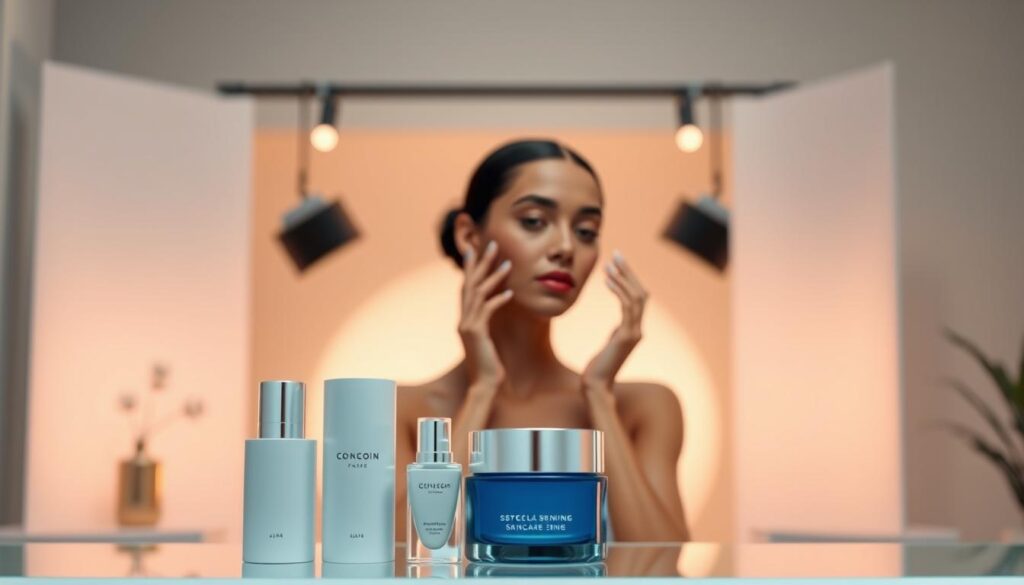
Live shopping amplifies urgency: real-time Q&A, limited-time bundles, and expert hosts drive higher engagement and lift AOV—reports show increases up to 45% when viewers interact directly.
- Build an engine of AI-personalized tutorials and UGC-style explainers so shoppers learn use cases and buy instantly.
- Place shoppable overlays at natural pauses—final reveal or shade choice—to compress discovery and checkout.
- Host live sessions with creators; tie real-time answers to limited offers to boost conversion and cart value.
- Measure engagement depth—rewinds, pauses, chapter taps—to refine creative elements that drive add-to-cart.
- Syndicate top-performing content across product pages and platforms to scale without new shoots and keep PDPs fresh.
Operational tip: standardize metadata—titles, ingredient tags, outcome keywords—so on-site search and related clips surface the right video at the right time.
Personalization that mirrors in-store advisors
Context-aware recommendations narrow choice friction by matching shoppers to relevant products fast.
Build layered profiles that include skin type, tone, climate, and lifestyle signals. These pre-filter options so visitors see fewer, better-fit choices and arrive at purchase-ready pages.
Virtual try-on uses facial mapping with 70+ landmarks to apply realistic shades and routine effects in real time. The overlay stays aligned as users move, reducing shade mismatch and returns.
Shoppable overlays let users add items from the overlay or tutorial without leaving the player. That frictionless path increases confidence and shortens decision time.
- Serve adaptive recommendations: hydrating formulas for dry climates; mattifying textures for humid days.
- Personalize tutorial content and content sequencing to the shopper’s routine and environment.
- Use tone and copy that match user preference—concise prompts for experts, step-by-step guides for newcomers.
| Signal | Use Case | Benefit |
|---|---|---|
| Profile (skin, tone, climate) | Pre-filter product lists | Faster discovery; fewer options to compare |
| Virtual try-on (70+ facial points) | Shade and finish preview | Better match accuracy; reduced returns |
| Session context (weather, past views) | Adaptive recommendations | Higher add-to-cart; improved experience |
Measure outcomes—track add-to-cart lift and return reduction—and call out why each suggestion fits the profile to build trust in the advisory layer.
Social commerce and influencer strategies amplified by AI
Social channels now act as conversion engines when creator content aligns with shopper intent. Brands that pair data-driven creator selection with shoppable video shorten the path from discovery to purchase.
Use signal-led matching: AI evaluates follower demographics, sentiment, and historic reach to predict ROI and cut setup time. Micro-influencers (10k–100k followers) often deliver about 20% higher engagement and better conversion for many brands.
Creator matching with audience fit, sentiment, and ROI signals
Prioritize creators whose audience overlaps your target and shows positive sentiment. During interactive video shopping, real-time sentiment can trigger tailored product links for instant purchase.
When to deploy micro and virtual influencers for DTC impact
Micro talent wins on authenticity and performance; reserve marquee partners for broad moments. Virtual influencers offer consistent voice, multilingual reach, and 24/7 scheduling—ideal for always-on programming.
- Integrate creator content into shoppable experiences on platforms and PDPs.
- Standardize briefs and metrics—clear hooks, outcomes, and compliance notes.
- Track quality signals: comment depth, saves, and watch-through, not just views.
- Align incentives to results: tiered payouts for add-to-cart or purchases.
- Repurpose top-performing clips for ads, PDP chapters, and retail partners.
| Creator Type | Key Signal | Benefit |
|---|---|---|
| Micro-influencer (10k–100k) | Audience overlap, sentiment | ~20% higher engagement; better conversion |
| Marquee talent | Reach, awareness | Broad visibility for product launches |
| Virtual influencer | Controlled voice, multilingual | Consistent messaging; always-on scheduling |
Operational backbone: AI for support, inventory, and merchandising
Operational discipline—support, search, and planning—turns insights into repeatable results. This section covers how automation frees staff, improves discovery, and prevents costly stock gaps.
Deploy intelligent agents to handle routine tickets—order tracking, returns, and policy checks—so human teams focus on complex cases. Vuori automated about 40% of chats with Kustomer, freeing agents for higher‑value work.
Upgrade search with neural models: Everlane used Algolia NeuralSearch to cut “no results” by 45%, guiding customers to the right product and lifting conversions.
“Predictive planning reduces wasted budget and uncovers demand before it peaks.”
- Centralize customer context on a single platform to speed accurate responses.
- Use predictive demand planning to lower out-of-stocks—Nielsen estimated 7.4% sales lost to missing inventory.
- Automate merchandising triggers: low-stock alerts, dynamic ranking, and intelligent cross-sells.
Measure automation rates, first-response time, and CSAT so teams can reassign effort where it matters. Caraway’s planning tools helped increase revenue up to 40% through better forecasts; BCG found predictive models cut planning time by 66% and lifted brand awareness.
| Function | Example | Impact |
|---|---|---|
| Support automation | Vuori + Kustomer | 40% chats automated; agents freed for complex issues |
| Search relevance | Everlane + NeuralSearch | 45% fewer zero-result queries; improved conversions |
| Demand planning | Caraway predictive tools | Up to 40% higher revenue from optimized inventory |
Measurement plan and KPIs for AI-driven skincare growth
Measurement turns experimentation into predictable growth—start with a compact set of commerce metrics and watch patterns emerge.
Begin by anchoring the program to clear KPIs: PDP conversion lift, average order value (AOV), session duration, and return visit rate. These metrics quantify whether new recommendations and experiences move revenue and retention.
PDP conversion, AOV, session duration, return visits
Track conversion changes at the product page level to isolate advisor impact.
Pair that with AOV and session duration to see if interactions increase basket size and time-on-site.
Return visit rate signals longer-term growth and loyalty after personalization touches.
Attribution in video commerce
Use video analytics to map which chapters and clips correlate with add-to-cart events.
Heatmaps and most-viewed segments reveal which moments drive intent; feed that signal back into creative planning.
Iterate fast with predictive creative testing
Apply predictive models to serve the video or content variant forecast to perform best for each profile.
Run small A/B tests and monitor behavior shifts—fewer exits, faster bundle completion, and higher Smart FAQ engagement mean better results.
- Measure recommendation quality: post-purchase surveys and return reasons by segment.
- Segment reports: conversational PDPs, live shopping, and try-on experiences to see which moves which metric.
- Operational KPIs: automation rate and time-to-resolution tied to CSAT ensure efficiency and trust.
- Guardrails: A/B test model updates and watch downstream revenue before full rollouts.
| Core KPI | Why it matters | Target |
|---|---|---|
| PDP conversion lift | Shows advisor and content impact | +10% baseline |
| Average order value | Measures bundle effectiveness | +8% baseline |
| Session duration | Signals engagement with product content | +15% baseline |
| Return visit rate | Tracks retention and growth | +5% baseline |
Close the loop: prioritize roadmap items that show clear short-term conversion wins and steady long-term growth for customers and product outcomes.
How to make, a, dtc, skincare, brand, guided, by, ai, suggestions step by step
Start with a clear data foundation: collect consented inputs so every recommendation maps to measurable outcomes. Quizzes often convert near 20% while capturing preferences for personalization.
Set up your data layer and privacy-safe collection
Define schemas for skin type, tone, concerns, and sensitivities. Log quiz answers, Smart FAQ selections, and chat signals to a CDP. Ensure consent and simple opt-out controls; that protects shoppers and preserves trust.
Launch MVP: core regimen, conversational agent, and 10-20 shoppable videos
Release a tight product set—cleanser, treatment, moisturizer, SPF—and map each product to clear outcomes and bundles. Deploy an intent-aware advisor on PDPs and preload responses to last‑mile questions.
- Choose platforms and integrations: conversational AI, shoppable video, analytics and your ecommerce stack.
- Produce 10–20 shoppable clips—tutorials, routine builders, and UGC-style explainers with instant add-to-cart and reviews overlay.
- Use tools like Meta Advantage+ and email/SMS segments from quiz data to reach high-propensity cohorts.
- Mine early reviews and chat logs for friction—texture, fragrance, application—and patch copy or product quickly.
- Automate support, improve search relevance, and set inventory alerts before scaling.
Iterate weekly with creative tests; expand shades or actives only after validated demand. For deeper workflow guidance, consult AI-powered guided selling.
Conclusion
Today’s leaders stitch platforms, content, and data so each session teaches the system and improves outcomes.
AI agents, video commerce, and zero‑party data loops have replicated in‑store consultations online while lifting cart value and conversion. Intelligent content, predictive analytics, and operational automation compound improvements across merchandising, support, and marketing.
The result: discovery becomes conversation—try-ons, advisors, and shoppable video reduce uncertainty and speed decisions. Teams that center voice, clear education, and inclusive representation earn deeper loyalty and long-term value.
Organize around fast learning loops: measure, iterate, and redeploy winners so momentum grows. The future favors builders who test quickly, align product timing with predictive insight, and design experiences that keep customers returning.
FAQ
What advantages does building a direct-to-consumer skincare line with AI provide today?
Integrating intelligent systems accelerates product-market fit. Teams can use customer inputs, behavior signals, and trend forecasts to design regimens that meet real needs — reducing guesswork, lowering inventory risk, and boosting conversion through personalization and tailored content.
How can first-party and zero-party data shape audience and product decisions?
Quizzes, Smart FAQs, and conversational inputs capture explicit preferences and skin concerns. Coupled with analytics like heatmaps and dwell time, these datasets reveal intent, uncover white space, and guide formulation and positioning.
What behavior signals should brands track to improve shopping experience?
Track page heatmaps, video engagement, scroll depth, and repeat visit paths. These signals show friction points, high-interest content, and which creative formats move shoppers closer to purchase — enabling targeted improvements.
How does AI help forecast demand and emerging trends?
Predictive models ingest search queries, social chatter, sales velocity, and seasonal patterns to surface rising ingredients, routine formats, and unmet needs — allowing brands to prototype faster and capture early market share.
Can skin diagnostics from selfies be reliable for routine recommendations?
When combined with contextual inputs — lifestyle, sensitivities, and past reactions — image analysis becomes a strong personalization signal. Responsible implementations pair diagnostics with human review and transparent confidence levels.
How do teams mine reviews and support conversations for formulation insights?
Natural language processing clusters complaints, requests, and praise to highlight ingredient pain points or efficacy wins. These insights inform iterative tweaks, packaging copy, and FAQ updates to close the feedback loop.
What role does AI play in shaping brand voice and trust?
AI surfaces authentic customer language and sentiment to train tone-of-voice models. Human editors then refine outputs for inclusivity, ingredient clarity, and transparent claims — building credibility and connection.
How do brands keep AI-driven guidance compliant and responsible?
Implement guardrails: evidence-based claim libraries, flagged medical claims, and audit trails. Regular legal and clinical reviews ensure recommendations meet regulatory standards and ethical guidelines.
What features should an AI-powered storefront include?
Intent-aware conversational advisors, Smart FAQs, guided PDPs that act like consultations, and contextual upsell logic. These reduce last-mile questions and speed decision-making at point of purchase.
How can short-form video be optimized to convert viewers into buyers?
Personalize tutorials, use UGC-style explainers, and layer instant purchase overlays. Test formats and call-to-action placement with AI to identify the segments that drive the highest conversion and average order value.
What live shopping tactics increase average order value and urgency?
Combine real-time Q&A with limited-time bundles, influencer walkthroughs, and shoppable overlays. AI can surface product-pairing suggestions and dynamically create urgency triggers tied to inventory signals.
How closely can online personalization mimic an in-store advisor?
By matching skin type, tone, lifestyle, and local weather, platforms can recommend routines with similar nuance to in-person consultations. Virtual try-on and regimen previews improve confidence and lower return rates.
How should brands select influencers using AI?
Use creator-matching tools that evaluate audience fit, sentiment, engagement quality, and historical ROI. AI shortlists micro and virtual influencers who align with brand goals and conversion benchmarks.
Which operational areas benefit most from AI automation?
Customer support, inventory forecasting, merchandising, and search. AI agents handle routine tickets, suggest replenishment levels to prevent stockouts, and optimize product discovery to increase revenue per visit.
What KPIs matter for AI-driven skincare growth?
Track PDP conversion lift, average order value, session duration, return visit rate, and customer lifetime value. For video commerce, monitor heatmaps, most-viewed segments, and conversion attribution to creative.
How fast should teams iterate creative and product changes?
Iterate quickly with controlled tests: small creative variations, sample launches, and A/B tests informed by AI insights. Short cycles reveal what resonates and scale winners while minimizing resource spend.
What are the first technical steps to launch an AI-assisted skincare MVP?
Set up a privacy-safe data layer, collect explicit consent, and standardize schema for customer inputs. Launch an MVP with a core regimen, a conversational agent for guidance, and 10–20 shoppable short videos to validate demand.
How do brands ensure customer privacy while using personalization?
Adopt privacy-by-design: anonymize datasets, offer opt-outs, limit retention, and be transparent about data use. Compliance with CCPA and other regional rules is essential for trust and long-term growth.
What examples show measurable growth from AI-led personalization?
Brands that used personalized quizzes, guided PDPs, and shoppable video often see higher conversion rates and AOV. Case studies in beauty and wellness repeatedly show improved retention when recommendations are accurate and well communicated.
How can smaller teams scale personalization without large budgets?
Prioritize impact: start with a high-value quiz, Smart FAQ, and a limited set of video assets. Use off-the-shelf models and analytics to iterate, then reinvest gains into bespoke automation and creator partnerships.
Which analytics tools best attribute video commerce performance?
Use a mix of session replay, engagement heatmaps, and tagged event tracking for video. Combine these with sales attribution models to identify which moments and segments drive purchases.
How should brands measure long-term value of AI investments?
Evaluate improvements in conversion lift, churn reduction, CLTV, and cost-to-serve. Monitor qualitative signals — customer satisfaction and review sentiment — to capture impact beyond immediate sales.