Some ideas hit at the right moment: fitness demand is rising, and technology now lets teams craft coaches that feel human. This guide opens with a simple promise: practical steps to turn AI into a revenue-generating fitness coach.
Readers will learn how to gather user data, create tailored plans, and keep momentum through feedback and progress tracking. The approach pairs rapid prototyping in Streamlit with production patterns—wearable data ingestion, retrieval grounding, and observability—so demos scale into durable products.
We frame clear goals and metrics—adherence, heart-rate zones, sleep, and weekly volume—so founders can test what matters. LangGraph orchestration keeps agents modular: input, routine generation, monitoring, feedback, and motivation, producing a cohesive coaching experience that users trust.
Key Takeaways
- Practical how-to steps to create a GPT-4o-powered fitness coach that collects user info and crafts plans.
- LangGraph enables modular agents for faster development and cohesive experience.
- Prototype in Streamlit, then adopt production-ready ingestion and observability patterns.
- Track clear success metrics: adherence, heart-rate zones, sleep, and weekly volume.
- Prioritize data minimization and privacy to scale securely and ethically.
Why a GPT fitness coach now: market demand and user expectations in the U.S.
Market signals in the U.S. show clear appetite for fitness solutions that learn and evolve with users.
The personal training market in the U.S. is roughly $10B, and the global fitness applications market is set to jump from $3.3B (2019) to $15.6B by 2028. That growth highlights a gap: many offerings still deliver one-size-fits-all programs.
Modern consumers expect personalization, real-time adaptation, and measurable health outcomes. Wearable access and mature APIs—services like Tryvital and Terra—make continuous data ingestion feasible today.
Time-pressed users want short, effective sessions and smart recovery cues. A coach that ties sleep, HR, and adherence into planning meets users where they are and increases retention.
“Users increasingly share data when the value is clear—transparent use and evidence grounding build trust and willingness to pay.”
| Metric | Why it matters | Signal source | Impact on plans |
|---|---|---|---|
| Adherence | Shows real behavior | In-app logs | Adjust volume and intensity |
| Heart rate | Measures effort | Wearables (HR API) | Zone-based guidance |
| Sleep | Reflects recovery | Wearables / smartphones | Modify recovery and load |
| Goals | Aligns priorities | User input | Personalize program focus |
- Differentiation: Real-time adaptation beats static routines.
- Trust: Evidence grounding reduces misinformation risk.
- Access: API maturity makes integrations practical and scalable.
build, a, gpt-based, personal, trainer, app
Successful AI coaches start with clear user intent and measurable checkpoints that guide development and validation.
User intent defines the core flow: intake, plan generation, feedback collection, and progress tracking. Each step maps to a LangGraph agent state—input, routine generation, feedback analysis, progress tracking, and motivation—to keep logic modular and auditable.
User intent and success criteria for a How-To Guide
The intent of this guide is practical: move a builder from zero to a working fitness coach with clear milestones and validation steps.
Success means personalized plans that reflect goals, preferences, available equipment, and constraints. Plans must evolve as new user data arrives.
Core outcomes: personalized plans, feedback loops, and measurable progress
Define concrete metrics up front: adherence rate, target HR zone minutes, sleep trends, and weekly training volume. These metrics let teams validate performance and tune routines.
- Feedback loops adapt sessions, intensity, and rest based on reported effort and wearable trends.
- Document journeys—first plan, first update, first plateau—and align coaching responses to each stage.
- Build trust with transparent reasoning and evidence-based references; log decisions for auditability.
For an applied example and revenue lessons, see the AI coach case study.
Define success early: goals, users, and data you need to personalize workouts
Set outcome targets first — they determine which information to collect and how plans adapt over time. Clear goals translate into actionable rules for volume, intensity, and frequency.
Mapping fitness goals to user data
Start by recording core user information: age, weight, height, activity level, training days, equipment, health conditions, and dietary preferences. Structure this as JSON so downstream agents read a consistent schema.
Fitness goals (weight loss, muscle gain, endurance, general health) become plan variables. Convert goals into volume, intensity, and frequency fields so the plan engine can reason programmatically.
Establishing progress metrics
Choose a small set of metrics that reflect outcomes and safety: adherence %, HR zone minutes, sleep duration/quality, and weekly training volume. Track objective signals (RHR, HRV) and subjective input (soreness, mood).
- Create eligibility checks for health conditions and flag exercises to avoid; suggest safe substitutions.
- Use baseline tests (RPE sets or walk tests) to calibrate initial intensity.
- Align review cadence with plan cycles: weekly summaries and monthly deep dives to adjust goals and preferences.
Prototype fast with GPT-4o, Streamlit, and LangGraph
A pragmatic prototype pairs a high-quality model with orchestration so agents can own clear responsibilities. This approach speeds development and clarifies how decisions form.
Agent roles in LangGraph
Assign focused agents: input, routine generation, feedback collection, progress monitoring, and motivation. Each agent runs a job-specific prompt and returns parsed, machine-usable outputs for traceability.
Streamlit UI essentials
Design intake fields for age, weight, height, goals, days available, activity level, conditions, and diet. Offer two tabs: Create Fitness Plan and Update Fitness Plan.
Display the weekly plan in a clear layout and add Generate and Update actions that trigger agent chains.
State design and messages
Use a State class that stores user_data, fitness_plan, feedback, progress, and messages. Log agent exchanges to a console panel for debugging and early validation.
Local vs hosted models
Start with GPT-4o for quality. Prototype alternate paths with local models like Ollama for cost-sensitive or offline testing.
“Iterate fast, log decisions, and validate with real users before expanding features.”
Prompt engineering and model strategy for reliable coaching
Prompt design defines how reliably a model turns user signals into actionable training recommendations.
System prompts must be role-specific. Create one for weekly plan creation, another to analyze feedback, and a third for motivational messaging. Each prompt should include objectives, forbidden topics, and a safety escalation clause.
Controlling variability and structure
Keep temperature low for plan generation to stabilize outputs. Allow slightly higher temperature for motivational responses so the coach sounds natural but controlled.
Enforce JSON schemas and output parsers. Use delimiters and step-by-step instructions to reduce hallucinations. Implement function-like action objects for UI automation.
Retrieval and observability
Augment prompts with retrieval to cite indexed sources for recovery and training guidance. Version prompt templates like code and test them on historical chats.
| Role | Temp | Output Shape | Observability Hook |
|---|---|---|---|
| Weekly plan | 0.0–0.2 | JSON{days, sessions, intensity} | PlanChecksum, latency |
| Feedback analysis | 0.0–0.3 | JSON{issues, adjustments} | ErrorRate, drift |
| Motivation | 0.3–0.6 | JSON{message, actions} | EngagementScore |
| Retrieval | 0.0 | References{source, score} | CitationAudit |
Final note: lock units (RPE, %HRmax, %1RM), add safety statements, and instrument prompts to surface quality metrics. This guide keeps models predictable, parsable, and safe while preserving natural coaching tone and useful feedback.
Go production-grade: wearables, real-time data, and retrieval grounding
Production-ready ingestion moves wearable signals from sporadic webhooks to reliable, auditable records that teams can trust.
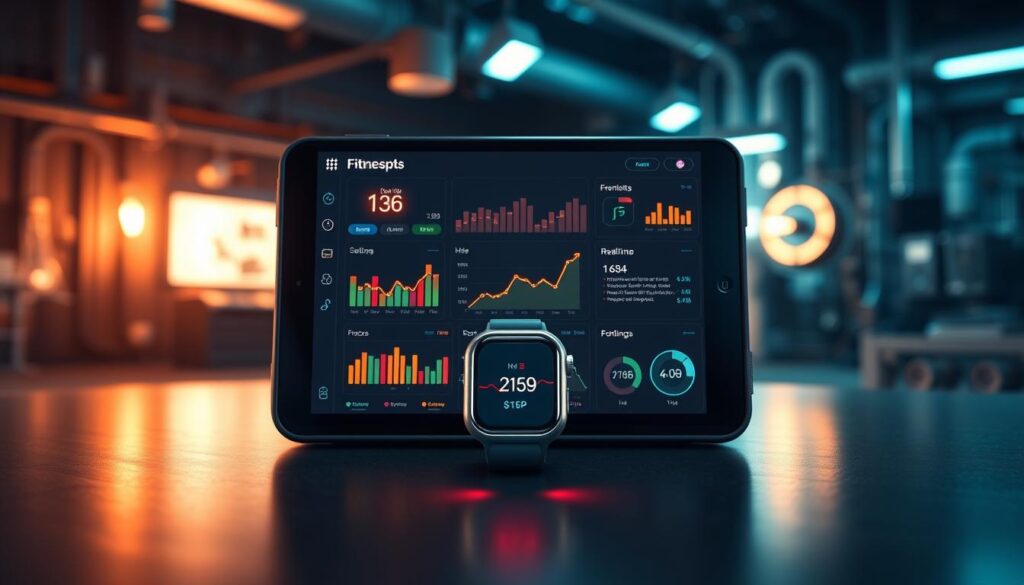
The first step is integrating Fitbit and Apple Watch through Tryvital or Terra to capture steps, heart rate, sleep, and energy burn in near real time.
Raw payloads flow into an ActivityTransformer that normalizes timestamps, reconciles duplicates, and handles time zones.
Orchestration and storage
AWS Step Functions coordinate ingestion, transformation, and downstream analysis so processing is resilient and observable.
Transformed records land in Amazon S3 with partitioned, versioned folders to preserve lineage and enable rollbacks.
Grounding guidance with retrieval
AWS Kendra indexes trusted fitness and health sources so guidance is evidence-based rather than model memory alone.
When the assistant cites research, retrieval returns the source and score for auditability.
Operational controls and observability
- Reconcile cross-device streams per user to keep longitudinal trends accurate.
- Feature flags pick lightweight models for classification and stronger models for plan synthesis.
- Use CloudWatch for infra metrics and LangSmith for LLM traces, token usage, and output reviews.
- EventBridge + FCM deliver behaviorally timed nudges to improve adherence without spamming users.
Finally, preserve a complete lineage of inputs, prompts, and outputs to support audits, A/B testing, and safe feature launches. This foundation delivers scalable performance, protects health data, and speeds further development of fitness features.
Design the plan engine: adaptive routines that evolve with users
An adaptive plan engine turns sleep, adherence, and heart-rate signals into weekly routines that progress safely. The engine encodes splits, intensity rules, macro guidance, and substitution logic so users receive clear, actionable workout plans.
Workout splits, intensity, rest, and macro targets aligned to goals
Encode common splits—PPL, Upper/Lower, and full-body—then match them to available days. Each weekly schedule lists sessions, sets, reps, and target intensity.
Intensity uses RPE, %1RM, or HR zones. Rest intervals balance stimulus and recovery for the user’s stated goals. Nutrition guidance ties macros to outcomes: protein per kg for muscle gain and modest deficits for weight loss.
Dynamic recalibration based on adherence, fatigue, and sleep quality
Recalculate plans weekly based on adherence and completed workouts. If sleep or readiness scores drop, the engine reduces volume or swaps to lower-impact sessions.
Guardrails prevent abrupt workload jumps; progressive overload is staged across microcycles with scheduled deloads for sustainability.
- Provide safe substitute exercises for equipment limits or injuries.
- Show a clear workout plan view: session name, exercises, sets, reps, and intensity notes.
- Log reasons for each adjustment to reinforce trust and transparency.
| Element | Rule | Signal | Result |
|---|---|---|---|
| Split mapping | Map PPL/Upper/Full to days | Available days | Weekly cadence |
| Intensity | Use RPE/%1RM/HR zones | Baseline tests, wearables | Target load & rest |
| Nutrition | Macro targets by goal | Goal: muscle/weight | Protein, calorie targets |
| Recalibration | Adjust volume ±10–15% | Adherence, sleep, fatigue | Volume up/down or swap session |
For an applied implementation and demo patterns, see the prototype walkthrough. This ties plan logic to product flows and faster testing in the U.S. market.
Conversational coaching and motivation that keeps users engaged
Context-aware dialogue makes each interaction feel like a short coaching session—specific, timely, and actionable.
Memory-driven assistance stores workout history, mood logs, sleep, and constraints to tailor replies. The assistant references prior wins to boost motivation and avoids repeating intake questions.
The system detects cues like “I’m tired today” and adjusts plans: lower intensity, shorter workouts, or guided recovery work. Language stays encouraging and precise—celebrate adherence and state the next step.
Timed nudges and rapid feedback loops
Use EventBridge + FCM to schedule nudges when users engage most—morning reminders for early trainers, evening summaries for night reviewers. Send brief post-session prompts for RPE, pain flags, and enjoyment to refine future guidance.
“Motivation that arrives at the right time is often the difference between an abandoned plan and a new habit.”
- Offer short form cues and safe alternatives for exercises when discomfort appears.
- Present micro progress snapshots: streaks, volume trends, and HR zone minutes.
- Blend reflective prompts and collaborative goal-setting to foster autonomy.
| Feature | Signal | Response |
|---|---|---|
| Fatigue report | User message, low sleep | Swap to recovery or reduce intensity |
| Missed session | No check-in | Adjust weekly volume; send motivational nudge |
| Positive streak | Consecutive adherence | Congratulate; offer incremental challenge |
Quality, safety, and compliance: monitoring, validation, and boundaries
Monitoring and validation form the defensive backbone that keeps guidance safe and auditable. This section outlines how to instrument performance, enforce structure, and protect sensitive information during development and production.
Track model and infra performance with LangSmith and CloudWatch. LangSmith captures prompt inputs, token usage, latency, and output quality so teams can spot drift and regressions. CloudWatch monitors memory, throughput, and availability to keep infrastructure resilient under load.
Validate outputs before they touch user records. Use Pydantic schemas to enforce structure on every response. Scoped prompts limit the model to wellness guidance and include escalation rules for red-flag signals to avoid medical diagnosis.
Privacy-first controls mask PII before any external call; store re-identification tokens under strict RBAC. Encrypt data at rest and in transit, enforce MFA for admin consoles, and retain audit logs for every sensitive action—practices that support HIPAA-ready operations.
- Instrument LLM chains to catch failures, track token burn, and monitor output consistency.
- Validate model responses with schemas and version prompts like production code.
- Ground high-stakes guidance with retrieval to reduce hallucinations and increase factual reliability.
- Expose clear boundaries in-app and add a user feedback channel to flag questionable suggestions.
“Observable systems and strict validation transform experimental models into dependable fitness guidance.”
Monetize and scale in the U.S. market
Monetization succeeds when pricing reflects clear value and measurable results for users. Start with an accessible free tier to validate demand and collect signals on engagement and retention.
Offer clear upgrade paths: premium coaching tiers with human review, in-app plans sold as 8–12 week cycles, and targeted workout plans for single goals. Gate advanced features—wearable insights, readiness scoring, and microcycle tuning—behind paid tiers to encourage upgrades.
B2B white-label packages reach studios, clinics, and creators. These deals often accelerate revenue and broaden distribution faster than consumer channels alone.
Increase LTV with personalized upsells
Upsells should match user goals: nutrition plans, wearable bundles, and curated supplements tied to program outcomes.
Offer team access for corporate wellness with multi-user pricing and employer-paid incentives. Use lifecycle messaging to surface offers at high-conversion moments—after strength blocks or during deloads.
- Start freemium to prove demand, then add premium tiers.
- Sell focused in-app plans and cycles to convert intent into purchases.
- Use white-label to expand into B2B distribution and partnerships.
| Channel | Offer | Key metric | Typical ARPU lever |
|---|---|---|---|
| Freemium → Premium | Free access + paid tiers | Conversion rate | Tier features & human review |
| In-app plans | 8–12 week programs | Purchase frequency | Goal-specific plans |
| B2B white-label | Studio/clinic integrations | Contract value | Custom branding & support SLA |
| Upsells | Nutrition, wearables, supplements | LTV / retention | Personalized recommendations |
Track conversion by cohort and refine pricing experimentally. Tie every paid program to measurable outcomes and clear expectations so users and partners see the impact.
Launch checklist: from prototype to production
Shipping requires both technical hardening and a repeatable go-to-market step that wins early retention. This checklist ties engineering readiness to product launch choreography so teams can scale without surprises.
Technical readiness
Test, fail safely, and recover quickly. Define a pre-launch process: security review, model evaluations on real transcripts, and load testing for peak windows.
Implement graceful fallbacks — lighter models or cached logic — to keep services useful during outages. Cache the last plan and recent stats locally; sync deltas when connectivity returns.
Build a testing loop: prompt regression suites, schema validation with Pydantic, and user acceptance sessions. Instrument performance dashboards: latency, token cost, and output validity via LangSmith and CloudWatch.
Go-to-market and retention
Position the product as an adaptive, evidence-grounded fitness coach. Streamline onboarding to capture goals, preferences, and constraints in minutes and deliver the first win in session one.
Deploy retention playbooks—streaks, milestone badges, and timed nudges via EventBridge/FCM—while avoiding notification fatigue. Prepare lifecycle comms for day 1, week 1, and week 4.
“Treat fallbacks and offline cache as first-class features; they protect user trust when systems falter.”
| Step | Action | Owner | Metric |
|---|---|---|---|
| Pre-launch | Security review, model evals | Security / ML | Pass rate, issues found |
| Resilience | Fallbacks & offline cache | Engineering | Uptime, degraded success |
| Testing | Prompt regression, UAT | QA / Product | Regression pass %, user acceptance |
| Go-to-market | Onboarding & retention flows | Growth | Day1, Week1, Month1 retention |
Conclusion
Delivering useful workout plans depends less on flashy features and more on reliable data pipelines, prompt discipline, and measurable feedback loops.
Start with clean data, strict JSON validation, and low-variance prompts so the model returns dependable training guidance. Integrate wearables and user feedback to adjust intensity, volume, and recovery; tie each change to a clear rationale the user can trust.
From prototype to scale, pair LangGraph agents, a Streamlit UI, and GPT-4o or local models with retrieval (AWS Kendra) and observability (LangSmith, CloudWatch). For an applied demo and technical notes, see the GPT-4o demo and walkthrough.
Keep the experience human: context-aware nudges, clear explanations of adjustments, and privacy-first controls. Validate often, measure progress, and iterate on routines—this process turns innovation into sustained fitness progress and reliable coaching.
FAQ
What is the fastest way to validate a GPT fitness coach idea in the U.S. market?
Run a lean prototype: build a minimum viable coaching flow that captures user goals, basic health data (age, weight, injuries), and delivers one-week personalized plans. Use Streamlit or a simple web UI to collect feedback and track adherence. Pair GPT-4o for plan generation with analytics to measure engagement and retention; iterate on prompts, plan templates, and notification timing to prove product-market fit quickly.
Which user data are essential to personalize workouts and ensure safety?
Key inputs include age, weight, activity level, medical conditions or injuries, exercise preferences, equipment access, and available training time. Add sleep, heart rate zones, and recent workout history for dynamic adjustments. Store and normalize this data securely—use encryption and role-based access—to enable reliable plan generation and risk screening before prescribing intense routines.
How should the plan engine adapt when a user misses workouts or reports fatigue?
Implement recalibration rules: reduce volume or intensity for missed sessions, adjust weekly load based on adherence, and factor sleep or reported soreness into short-term recovery phases. Use automated feedback loops: have the assistant ask targeted questions, log responses, and trigger plan updates. Maintain versioned records so coaches and users can review progress and roll back if needed.
What model strategy and prompt practices reduce unsafe or inconsistent guidance?
Use clear system prompts that define scope, tone, and output format—prefer JSON-structured responses for parsable plans. Control variability with low temperature, strict output parsers, and validation layers like Pydantic. Add retrieval augmentation grounded in vetted sources (exercise science, ACSM guidance) to support evidence-based recommendations and reduce hallucinations.
How can wearables and real-time data improve coaching outcomes?
Integrating devices like Apple Watch and Fitbit provides heart rate zones, step counts, and activity duration for accurate load tracking. Stream data through platforms like Tryvital or Terra, normalize it in S3 pipelines, and use AWS Step Functions to orchestrate processing. Real-time inputs allow context-aware nudges, auto-adjusted zones, and better attribution of progress.
Which tools are recommended for prototyping and orchestration?
Combine Streamlit for UI, LangGraph for agent workflows, and GPT-4o for core generation. Use LangSmith or similar tracing tools to monitor LLM performance and CloudWatch for infrastructure health. For RAG, integrate AWS Kendra or OpenSearch to ground guidance in curated content. This stack accelerates iteration while preserving observability.
What privacy and compliance practices should be implemented from day one?
Adopt privacy-first architecture: PII masking at ingestion, encryption at rest and in transit, RBAC, and audit logging. Prepare HIPAA-ready data handling if targeting clinical or reimbursable services. Keep minimal necessary data, version consent records, and document retention policies to support audits and user trust.
How do you measure success for users and the product itself?
For users: track adherence, changes in fitness metrics (weekly volume, HR recovery, strength gains), sleep quality, and self-reported outcomes. For the product: monitor DAU/MAU, retention cohorts, conversion from freemium to paid tiers, LTV, and NPS. Tie these metrics to specific model and UX changes to validate impact.
What monetization models work best for coaching platforms in the U.S.?
Use a hybrid approach: freemium access with basic plans, subscription tiers for premium coaching and nutrition guidance, in-app purchases for specialized programs, and B2B white-label partnerships for gyms or employers. Upsell wearables and supplement bundles that align with user goals to increase lifetime value.
How should notifications and conversational nudges be timed to maximize adherence?
Apply behaviorally informed timing: morning reminders for planning, midday nudges for workouts, and evening reflections for recovery tracking. Use EventBridge and FCM for scheduled and event-driven messages. Personalize cadence based on user responsiveness to avoid notification fatigue.
What are best practices for validation and safety testing of generated plans?
Validate outputs with rule-based checks (intensity limits by age and experience), Pydantic schemas, and human review for edge cases. Run A/B tests on plan variations and monitor injury reports or dropout signals. Keep a fallback content library for when the model is uncertain, and flag high-risk recommendations for coach review.
Should models be hosted locally or via cloud APIs for production?
Both approaches work: cloud APIs like OpenAI offer immediate scale and updates, while local hosting with tools like Ollama can reduce latency and increase data control. Choose based on cost, latency, compliance needs, and the ability to fine-tune. Hybrid setups let critical inference run locally while using cloud services for heavy retraining and analytics.
How can retrieval-augmented generation (RAG) improve credibility of guidance?
RAG links responses to vetted, time-stamped sources—peer-reviewed studies, guidelines, and internal playbooks—so the assistant cites evidence for programming choices. Implement AWS Kendra or a document index to surface relevant references during plan creation, improving trust and reducing hallucinations.
What role do nutrition and supplements play in the coaching product roadmap?
Nutrition is a high-impact upsell: integrate basic macro targets into training plans, offer premium meal plans, and add registered dietitian consultations for advanced tiers. Consider partnerships with supplement brands for curated recommendations, keeping claims evidence-based and compliant with regulations.
How should onboarding capture intent and set realistic expectations?
Use concise intake forms to map goals (weight loss, strength, endurance), constraints, and preferences. Present a clear success model with timelines, expected milestones, and required commitments. Early wins—short, achievable plans—build confidence and increase long-term engagement.