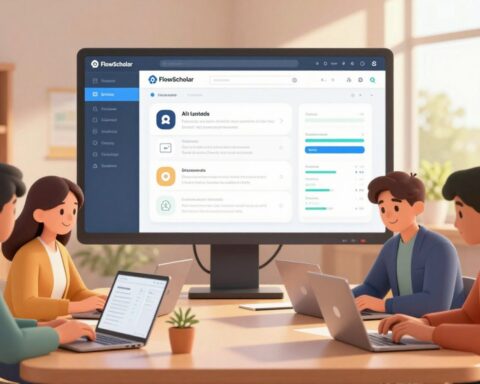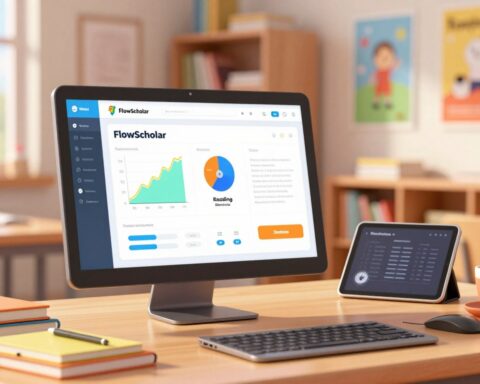
There are moments when a single idea can shift an entire school day. A product that saves ten minutes per lesson can return hours each week. That change turns frustration into focus and gives teachers back what matters most: time with students.
This section maps a practical path—how to design offerings that districts will buy and educators will actually adopt in the classroom. It centers on real workflows: lesson creation, quick quizzes, targeted feedback, and differentiation that fits current systems without adding platforms.
Readers will see why solutions like Brisk, which embed into browsers and respect privacy standards, win adoption. The guide names clear product categories and shows where education GPT and AI tools for teachers can remove friction while keeping district compliance and admin visibility top of mind.
Key Takeaways
- Focus on time savings as the primary product value.
- Prioritize classroom-first features: planning, quizzes, feedback, differentiation.
- Design with student-safe privacy and admin visibility.
- Start with simple content types: notes, quizzes, exemplars.
- Validate quickly in real classrooms and iterate from use data.
Why AI tools for teachers matter now: classroom outcomes, time savings, and teacher productivity
Procurement decisions hinge on clear returns: less teacher time spent on admin and better student progress.
Districts buy products that show measurable classroom outcomes with minimal disruption. Solutions that plug into existing workflows—no extra logins, no platform migrations—shorten time-to-value and reduce training friction.
Teachers name planning and feedback as top drains on time. When a product converts text or video into a standards-aligned quiz, or generates exemplar responses and guided notes, lesson prep drops from hours to minutes.
High-impact tasks where adoption follows results
- Daily lesson materials and sub plans that require little editing.
- Formative quizzes made from articles and video with answer rationales.
- Differentiated activities that meet student needs without multiple tracks.
| Use Case | Teacher Benefit | District Priority |
|---|---|---|
| Lesson drafts | Save time on planning; faster lesson cycles | Integrates with Docs/Slides; low training |
| Formative quizzes | Rapid checks, actionable feedback | Usage data and privacy compliance |
| Differentiation | Targeted practice by reading level | Equity and measurable student gains |
Commercial intent rises when a product transforms existing resources into classroom-ready materials with one click and provides admin insights that ease procurement. Early wins in lesson creation and feedback scale across teams and grades.
How we chose the best class planning AI and education GPT tools
We prioritized solutions that turn district standards into ready-to-teach materials with minimal editing. Selection began with curriculum alignment: the product had to generate lesson artifacts teachers can map directly to state frameworks.
Differentiation and accessibility were next. Candidates needed adjustable reading levels, multi-language support across 50+ language options, and scaffolds so mixed-ability learners access the same core content.
Privacy and safety came third. We required COPPA, FERPA, and GDPR compliance, data minimization (no PII), and transparent data-processing statements. One solution earned a 93% Common Sense Privacy Rating and integrates as a Chrome/Edge extension—no new platform to learn.
Ease of use and workflow integration
Admin visibility and real-time usage data were vital to district approval. Extensions that embed where educators already work reduce overhead and speed adoption.
- Standards to materials: lesson plans, rubrics, question sets on standard.
- Integration: works with Docs, Slides, LMS, and Forms.
- Teacher experience: intuitive UI and clear prompts for immediate use.
Our methodology favors end-to-end support: from standards alignment to assessment without friction, so schools can adopt with confidence and measure impact quickly.
Spotlight: Brisk—student‑safe AI that works inside tools teachers already use
Brisk focuses on one premise: bring planning, grading, and differentiation into the browser so staff can produce ready materials without a new platform.
Planning and grading at speed: lesson plans, unit plans, rubrics, and essay feedback
Click the “B” on any page to generate a lesson plan, unit plan, rubric, or targeted comments on writing in seconds. Educators turn articles and videos into Google Form quizzes and grade long responses quickly.
Differentiation with Brisk Boost across 50+ languages and subjects
Brisk Boost adjusts reading levels and offers translation across 50+ languages so every student accesses the same core task. That built‑in support reduces prep time and makes materials more equitable.
One‑click workflows: quiz maker, guided notes, standards unpacker, SAT/ACT practice
One click produces Quiz Maker items, Guided Notes, Standards Unpacker outputs, SAT/ACT practice tests, sub plans, and more. These features cut routine work and free time for instruction and feedback.
District‑grade privacy: COPPA, FERPA, GDPR compliance and 93% Common Sense score
Privacy and procurement ease matter. Brisk holds a 93% Common Sense Privacy Rating, meets COPPA, FERPA, and GDPR, and minimizes student PII—so leaders gain confidence while non‑tech staff adopt quickly.
saving teachers time is often the top district metric when approving new classroom resources.
Rapid roundup: the top AI lesson planning tools teachers are trying
A rapid roundup helps districts and classroom leads compare the popular lesson planning options teachers are testing today.
ChatGPT (free; premium $10/mo) supports rapid ideation: rubrics, discussion prompts, quizzes, and quick feedback on plan outlines. The paid tier adds speed and reliability on busy planning days.
Kangaroos Advanced AI Lesson Planner (free) creates structured lesson plans and includes an essay grader with bulk upload — valuable when a teacher must grade many student essays quickly.
Canva (free; $9.95/mo premium) isn’t a planner but excels at visuals: presentations, worksheets, and assets that lift materials and boost student engagement in the classroom.
- AI Lesson Plan ($20/mo) auto-generates personalized lesson plans; fast drafts with limited deep customization.
- Education Copilot ($15/mo) aligns materials to standards, suggests schedules, and adds accessibility features; procurement teams may flag budget or privacy questions.
- Curibot (custom) tailors plans to student needs; success often depends on district infrastructure and support.
- School AI (custom) offers end-to-end insights for data-focused teams willing to invest.
- Teacher Bot ($14.99/mo) acts like a virtual assistant for planning and feedback, speeding routine work.
- Magic School (free; $12.99/mo premium) is intuitive and flexible — a low-friction entry point for many teachers.
“Collectively, these products cover idea generation, plan structure, visual materials, quizzes from text or video, and targeted feedback — letting schools mix and match by need.”

| Product | Price | Primary strength |
|---|---|---|
| ChatGPT | Free / $10/mo | Ideation, rubrics, quick feedback |
| Kangaroos | Free | Structured plans + bulk essay grading |
| Canva | Free / $9.95/mo | Visuals, worksheets, presentations |
| AI Lesson Plan | $20/mo | Personalized plan drafts |
| Education Copilot | $15/mo | Standards alignment & scheduling |
Takeaway: no single option covers every need. Districts assemble a small set of services to handle ideation, assessment, visuals, and scheduling. That mix creates a predictable experience for teachers and clearer returns for students.
AI tools for teachers: aligning features to real classroom workflows
Practical classroom workflows demand features that align directly with teachers’ day-to-day outputs.
Anchor planning around the outputs teachers already need: standards-aligned unit and lesson plans, sub plans, and ready-to-use materials. That focus reduces editing and speeds uptake.
For formative checks, convert articles and YouTube videos into quizzes and Google Forms in one click. Auto-formatted quizzes include item rationales and question banks to support quick remediation.
Feedback must scale: targeted comments on student writing, rubric-aligned exemplars, and feedback students can apply immediately. Offer printable versions, LMS exports, and editable materials so teachers stay in control.
Key classroom features
- Standards unpacking to produce unit and lesson plans quickly.
- One-click quizzes from text and videos with Google Form export.
- Differentiation via automatic language leveling and Brisk Boost translations across 50+ languages.
| Feature | Classroom output | Benefit |
|---|---|---|
| Standards unpacking | Unit plans, lesson plans | Fewer edits; faster prep |
| Text & video conversion | Quizzes, guided notes | Immediate checks; Google Forms ready |
| Feedback engine | Targeted comments on writing | Improves draft quality; faster grading |
| Differentiation features | Leveled materials, translations | Access for diverse learners |
Pedagogy first: using education GPT with the seven roles from research
Anchor every deployment in teaching aims so that support features reinforce, not replace, teacher judgment. Start by mapping each role to specific learning targets and assessment tasks. That planning keeps student outcomes central and reduces guesswork.
AI‑tutor, coach, mentor: guiding learning with a human in the loop
AI‑tutor offers just‑in‑time explanations and guided questions. Teachers review logs and prompts to correct misconceptions and align responses to standards.
AI‑coach supports goal setting and assignment planning; teachers monitor outputs for rigor and appropriateness so students reflect on progress.
AI‑mentor gives formative feedback on writing and projects. Students compare comments to teacher criteria to build evaluative judgment.
AI‑teammate, tool, simulator, student: scaffolding projects and practice
AI‑teammate aids brainstorming; require students to justify accepted ideas to nurture critical thinking.
AI‑tool drafts outlines, generates questions, and refines language—teachers ask for source notes or reasoning steps to prevent blind reliance.
AI‑simulator role‑plays interviews or labs with structured debriefs that turn practice into deeper learning.
AI‑student models novice errors; critique of these models surfaces misconceptions and deepens classroom discussion.
| Role | Typical classroom activity | Teacher action |
|---|---|---|
| AI‑tutor | Guided questioning, just‑in‑time help | Review logs; correct misconceptions |
| AI‑coach | Assignment planning, goal setting | Monitor progress; ensure rigor |
| AI‑mentor | Formative comments on writing | Compare feedback; teach evaluation |
| AI‑simulator | Role play interviews/labs | Lead debriefs; link to standards |
Practice guidance: require students to annotate and rewrite generated output in their own words. Embed norms on question quality, privacy, and prompt design. Align roles to assessments and assignments so practice reinforces standards.
seven practical roles offer a roadmap to deploy these approaches responsibly and with measurable classroom impact.
Privacy, safety, and policy: what U.S. districts must see before adoption
District leaders now demand clear, verifiable privacy proofs before any classroom system reaches teachers’ screens. Procurement teams expect compliance, transparent data flows, and simple documentation that maps to state law.
Verifying COPPA, FERPA, GDPR alignment and state laws
Start with documents that stand up in a security review. Districts require COPPA, FERPA, and GDPR attestations, signed data‑processing agreements, and evidence of alignment with state privacy statutes.
Minimizing PII, admin visibility, and real‑time usage insights
Minimize personally identifiable information: systems should work without student PII and offer school‑managed controls for access and retention.
- Privacy by default: local processing where possible and limited data retention.
- Admin dashboards: real‑time usage insights let leaders monitor adoption and policy compliance.
- Audit trails & permissions: role‑based access and logs support oversight and interventions.
Provide clear security reviews, third‑party evaluations like a Common Sense Privacy Rating (Brisk scores 93%), and teacher-facing resources on acceptable use. That mix balances innovation with safety and speeds approvals while protecting student learning and district reputation.
Implementation playbook: from pilot to school‑wide rollout
Start small: prove value with one repeatable task that saves teacher time every day.
Select narrow use cases first. Focus on grading essays, math spiral reviews, and inquiry worksheets. These repeat weekly, produce clear metrics, and let leaders see early wins.
Build a short pilot plan: pick two classes, record baseline minutes spent, and define materials (notes, quizzes, guided worksheets) to collect consistent data.
Selecting use cases
Choose tasks that compress prep and recur often. Essay feedback, spiral review sets, and inquiry worksheets map directly to daily routines and student practice.
- Use the Quiz Maker and Spiral Review generator to produce quick formative checks from text or video.
- Run essay grading pilots with batch scoring and targeted comments to compare time and quality.
- Deliver inquiry worksheets that require minimal editing so teachers can adopt immediately.
Change management: quick wins for non‑tech‑savvy staff
Prioritize browser extensions and one‑click generators to lower setup friction. Provide exemplar prompts and templates so a teacher can copy and use without building from scratch.
Offer micro‑PD, office hours, and a prompt library. Celebrate early adopters and use admin insights to target follow‑up support.
Measuring impact
Instrument the pilot to track time saved per lesson and per week, feedback quality, and student outcomes like quiz scores and writing growth.
Simple metrics to gather:
| Metric | How to measure | Target after 6 weeks |
|---|---|---|
| Teacher time per lesson | Self‑reported minutes; tool logs | 30% reduction |
| Quality of feedback | Rubric sampling of comments | Improved clarity & actionable steps |
| Student outcomes | Quiz accuracy and writing rubric scores | 5–10% gain |
After the pilot, expand plans to new grades and subjects. Standardize templates, share resources that worked, and update policies on when generated suggestions versus original teacher commentary are required.
Pricing, plans, and procurement: choosing the right tool mix
A pragmatic pricing strategy pairs free entry points with premium features that deliver measurable classroom returns. Start by mapping needs: ideation, materials, quizzes, and scalable feedback.
Match plans to context. Combine free options (ChatGPT, Canva, Kangaroos) for idea generation and visuals, and select paid tiers where time savings matter most: AI Lesson Plan ($20/mo), Education Copilot ($15/mo), Teacher Bot ($14.99/mo), Magic School ($12.99/mo). Brisk offers free sign‑up and district-ready compliance that shortens procurement.
Consider total cost of ownership. Training, support, and integration effort often outweigh subscription price. Use pilot data — measured time saved and outcome gains — to justify premium tiers and negotiate district contracts.
Buying checklist
- Evaluate features against teacher workflows: exports, auto-formatting, and click reduction.
- Prioritize policy alignment and clear data assurances to speed procurement.
- Start with a compact list of resources: planning, materials, quizzes, feedback; add niche services only when gaps persist.
| Category | Typical price | Best use | Procurement note |
|---|---|---|---|
| Free entry | Free | Ideation, visuals, quick drafts | Low barrier; requires educator training |
| Mid-tier | $10–$20/mo | Standards mapping, batch feedback | Worth piloting with time-saved metrics |
| Enterprise / custom | Custom | Admin dashboards, data integrations | Requires policy review and DPA |
Final advice: keep plans flexible. Renew, consolidate, or expand based on real usage and teacher feedback. Ensure educators retain edit control so tools amplify judgment, not replace it.
Conclusion
Practical systems that amplify teacher expertise—while reducing repetitive work—drive real classroom change.
Focus on time and teaching quality: pick solutions that turn existing content into lesson plans, notes, quizzes, questions from text or videos with one click. That approach saves time and keeps the teacher in control of edits and pedagogy.
District-ready privacy and admin visibility speed adoption. Brisk’s browser-first model, one-click generators, and a 93% Common Sense Privacy Rating—with COPPA, FERPA, and GDPR compliance—illustrate how policy alignment and usable features move pilots to scale.
Next steps: shortlist a small tool set, run a focused pilot on one lesson, capture time saved and student learning data, then expand based on insights and teacher experience.
FAQ
What makes GPT-powered educational tools worth building now?
These platforms improve classroom outcomes by cutting planning time, boosting teacher productivity, and offering personalized learning paths for students. Schools are buying solutions that deliver measurable time savings, better formative assessment, and tools that scale differentiation across levels and subjects.
What do schools and educators actually purchase when they buy these solutions?
Districts prioritize privacy-compliant products with clear procurement models, plus features that map to daily workflows: lesson and unit plans, quizzes, rubrics, feedback, and integration with existing learning management systems. Commercial intent centers on ease of use, measurable impact, and vendor reliability.
How do these systems map to high-impact teaching tasks?
Top features align to planning, formative checks, feedback at scale, and differentiation. That means standards-aligned lesson plans, automated quiz creation, targeted writing comments, and language-level adaptations that let teachers focus on instruction rather than paperwork.
What criteria were used to choose the best planning and instructional platforms?
Selection hinged on curriculum alignment, differentiation capabilities, accessibility for diverse learners, district-level privacy and compliance, and workflow integration. Usability and admin tools—roster sync, single sign-on, and reporting—were equally decisive.
How is curriculum alignment evaluated?
Evaluators check standards tagging, backwards design support, and the ability to generate unit and lesson plans that map objectives to assessments and materials. They also test differentiation features and multilingual content generation to serve varied learner needs.
What privacy and safety standards matter for district adoption?
Schools require clear adherence to COPPA, FERPA, and GDPR where applicable, plus rigorous data minimization, secure storage, and transparent vendor contracts. Audit logs, admin visibility, and role-based access are essential for district procurement teams.
Which platforms are teachers actually using for planning and materials?
Educators commonly rely on a mix: ChatGPT for ideation and prompts, Canva for visual assets, and specialized lesson planning products that offer rubrics, essay feedback, and scheduling. End-to-end platforms provide virtual assistant features and admin controls for scale.
How do solutions support rapid planning and grading?
Leading products automate lesson outlines, generate rubrics, produce formative checks from articles or videos, and draft feedback comments. One-click workflows—quiz makers, guided notes, and standards unpackers—speed routine tasks while preserving teacher oversight.
Can these platforms support differentiation and multilingual needs?
Yes. Many tools include leveled content, accommodation settings, and multilingual outputs across 50+ languages. That helps teachers tailor instruction, practice, and assessments to diverse classrooms and English learners.
What does district-grade privacy look like in practice?
It includes contractual commitments to COPPA and FERPA, GDPR adherence where relevant, data residency options, limited PII collection, and independent reviews such as Common Sense evaluations. These safeguards build trust for broad deployment.
Which workflows are most valuable in classrooms?
High-value workflows are lesson planning with standards alignment, formative assessments turned into quizzes or Google Forms, scalable feedback for student writing, and differentiation routines that adjust language levels and accommodations.
How should schools pilot and roll out new platforms?
Start with focused use cases—essay grading, math spiral reviews, or inquiry worksheets—then run short pilots with clear success metrics: time saved, feedback quality, and student outcomes. Train a cohort of early adopters to create quick wins and build momentum.
What change-management tactics help non‑tech‑savvy staff adopt these systems?
Prioritize simple workflows, ready-made templates, short training modules, and peer coaching. Provide admin dashboards that clearly show time savings and impact; this evidence reduces resistance and encourages broader uptake.
How should districts measure impact after adoption?
Track quantitative metrics—teacher hours saved, grading turnaround, and student performance—and qualitative feedback from educators and learners. Combine usage analytics with outcome measures to assess return on investment and guide scale decisions.
How do pricing and procurement choices differ across products?
Options range from free basic tiers to premium enterprise plans with district licenses, compliance features, and dedicated support. Match features—standards alignment, rostering, reporting—to budget and scale; factor in long-term costs like training and integrations.
When is a free plan sufficient versus when is premium necessary?
Free plans work for small-scale pilots and individual teachers who need ideation or asset creation. Premium tiers are justified when districts require rostering, single sign-on, data protections, multi-user admin controls, and measurable impact reporting.
How do these platforms preserve pedagogical quality?
The best products embed pedagogy first: they act as tutors, coaches, and teammates that scaffold learning while keeping the teacher in the loop. Research-based roles—mentor, simulator, and formative assistant—ensure instructional decisions remain human-led.