
There is a quiet moment when a product finally meets the way people actually work. For many teams, that moment feels like relief—an alignment of intent, flow, and outcome.
Andrej Karpathy captured this shift: people now “see stuff, say stuff, run stuff.” That change reshapes how platforms must price and package access.
Major platforms—Bolt, Lovable, Replit, and v0—plus tools like Cursor, report more than $100 million in recurring revenue across the category. Yet pricing clarity lags: credits, plan tiers, and value metrics are often opaque.
This article offers a clear, comparative lens on subscription choices. It frames pricing not as a list of fees but as a map of outcomes: measurability, accessibility, transparency, and long-term defensibility.
We draw on Ibbaka’s assessment and real platform scores to help product teams and companies pick plans that match how users work and avoid wasted credits. For readers who want deeper context, see a practical case study on building micro-SaaS with this approach at building micro-SaaS with vibe coding.
Key Takeaways
- Price for outcomes: Align packages to user tasks, not lines of usage.
- Demand transparency on credits: what they buy and how prices scale.
- Measure accessibility and measurability—these drive adoption.
- Compare platforms (Bolt, Lovable, Replit, v0) on defensibility and governance.
- Use an evidence-backed framework to avoid credit waste and predict total cost.
What “vibe coding” means for UX and development workflows
Modern platforms let teams state intent and accept broad changes across a project in a single request. This approach turns traditional development into a dialog: prompts drive edits, and the environment applies diffs that span files and modules.
From Karpathy’s idea to present tools
See, say, run captures the shift from manual edits to conversational guidance. Platforms such as Lovable, Bolt, Replit, v0 and Cursor show rapid adoption—collective ARR north of $100M—because teams trade keystrokes for outcomes.
Why UX changes when prompts replace code edits
Prompts shorten time to first output but change expectations for review and reliability. A single request can pivot multiple files, so teams need clearer diffs, audit trails, and rules for when a human must step in.
The new flow eases repetitive tasks and speeds prototyping. At the same time, it creates issues: lost context across sessions, masked root causes, and harder mental models for reviews.
- Practical rule: map prompt use to prototype tasks; require explicit edits for critical components.
- Guardrail: use diff previews, tests, and conventions to keep projects cohesive.
vibe coding subscription models: how plans, credits, and API usage actually work
Pricing architecture shapes how teams trade predictability for efficiency when prompts drive work.
Fixed tiers sell predictability: a set number of prompts or feature access for a flat monthly fee. This is simple to budget for, but it can hide real compute cost when platforms count a “message” rather than tokens.
Credit or token bundles map closer to compute. That alignment helps teams model actual cost, but month-to-month variability rises with output length and verbosity.
API pass-through and token math
API pass-through translates directly into token math: input tokens and output tokens carry different rates. GPT‑4.1, Claude Opus, and Gemini 2.5 Pro show wide variance in per‑token pricing, which can flip total cost based on prompt length.
- Rule of thumb: model choice and output size explain most cost variance.
- Hybrid plans (fixed prompts + overage) require tracking both request counts and token thresholds.
- Rollover windows and expirations change effective unit cost—short expiry raises marginal spend.
| Platform | Typical cost per prompt | Token billing example | Transparency note |
|---|---|---|---|
| Lovable | $0.10 | Credits per prompt (length-agnostic) | Credit definition varies by plan |
| Cursor | $0.03 | API pass-through after allotment; token-based | Clear token math for pro users |
| Bolt / v0 / Replit | $0.01–$1.00 | Mixed: bundles, pass-through, expirations | Rollover and expiry rules differ |
| Windsurf / Claude Desktop | $0.0075–$0.02 | Credits or MCPs with token-equivalents | Often opaque without vendor data |
Buyers should demand credit-to-token equivalencies and sample task cost data. With that data, teams can match a plan to predicted prompt volume, expected output size, and their tolerance for monthly variability.
Platform head-to-head: Lovable vs. Bolt vs. Replit vs. v0 (and where Cursor and Windsurf fit)
Comparing these platforms reveals where one-shot outputs meet real engineering needs. Teams should expect varied scope per prompt: some apps arrive nearly ready, others need a hands-on loop. Choosing the right tool reduces iteration and cost.
Scope per prompt and real project outcomes
Lovable and Bolt often produce usable pages or simple full-stack app starts. Those results speed prototyping but usually require manual polish as projects grow.
Replit excels at scaffolding and components; expect a steady debugging cycle and variable cost depending on usage. v0 accelerates multi-page UIs but larger model calls can raise cost for complex requests.
Strengths, limitations, and where manual debugging appears
Cursor is ideal for surgical edits and style tweaks that fix common errors. Windsurf gives fuller first passes, yet complex features—state, auth, cross-file refactors—still need human debugging.
Agentic modes, rollover credits, and evolving features
Agent workflows add orchestration but increase credit use; rollover credits can soften month-to-month swings. Teams should mix coding tools to balance speed, cost, and reliable results.
- Practical tip: draft UI in Lovable, refine with Cursor, scaffold extras in Replit to limit repeated debugging and control cost.
Pricing comparison through a UX lens: cost per prompt, speed to output, and error recovery
A platform’s price influences not just cost per call but the rhythm of iteration. Teams should measure pricing against the real work loop: prompt, review, fix, and accept.
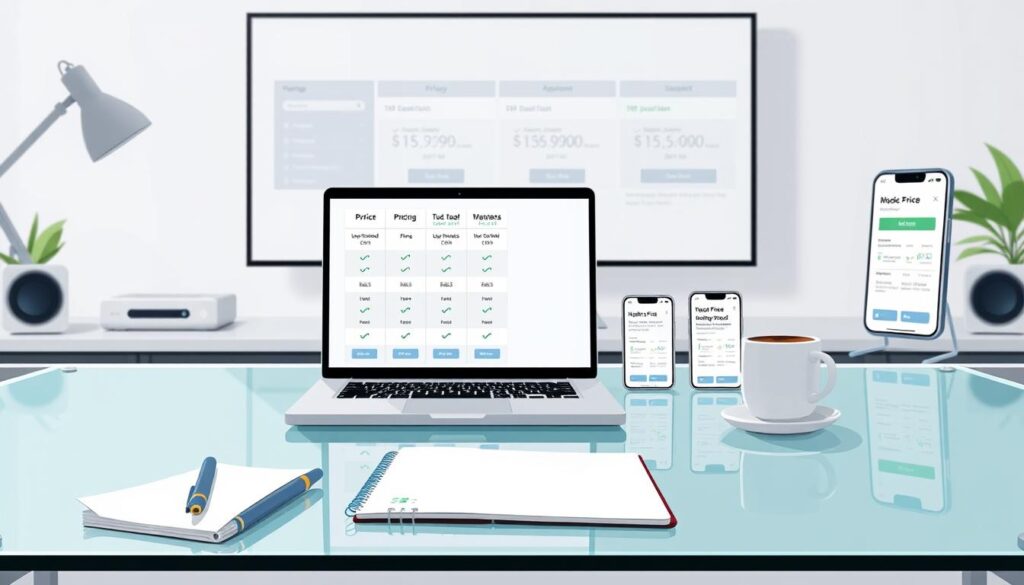
Estimated per‑prompt ranges help set expectations. Lovable sits near $0.10 per prompt; Cursor is around $0.03. Replit and v0 vary widely ($0.06–$1.00 and $0.02–$1.00). Bolt spans $0.01–$0.50+, Claude Desktop and MCPs cluster near $0.02, and Windsurf aims very low at ~$0.0075.
When lower unit price raises total costs
Cheap prompts invite exploration. More trials can mean more error recovery and higher cumulative costs. Conversely, a modestly higher price that yields usable output on the first pass may cut total spend.
- Token math: GPT‑4.1, Claude Opus, and Gemini show big per‑token spreads; output tokens often cost more than input tokens.
- Credit rules: rollover reduces effective price; expirations (Bolt: two months) raise it.
- Practical mix: use low‑cost tools for experiments and mid‑price tools for structured builds to balance value and speed.
| Tool | Est. cost per prompt | Best use | Pricing caveat |
|---|---|---|---|
| Windsurf | $0.0075 | Early exploration | Lowest sticker price, more retries likely |
| Cursor | $0.03 | Precision edits | Clear token math after allotment |
| Lovable | $0.10 | Predictable prototyping | Length-agnostic credits on some plans |
| Replit / v0 / Bolt | $0.01–$1.00 | Mixed: scaffolding to full pages | High variability; token choice and output size drive costs |
We recommend tracking prompts, error recovery attempts, and output size to calculate an effective cost per usable output. That metric—grounded in data—aligns pricing choices with UX and long‑term value for vibe coding teams.
Value alignment: mapping pricing models to use cases, from prototyping to enterprise apps
Not every plan fits every project; teams win by matching price structure to dev tasks. Value comes from outcomes—speed, precision, or predictable cost—and the chosen plan should mirror that priority.
Prototyping, debugging, scaling, and pair programming use cases
Prototyping favors low per-prompt price and generous free tiers. That reduces friction for early experiments and fast iteration.
Debugging needs precision. Choose a tool or plan that enables targeted edits without burning credits on broad outputs.
Scaling requires predictability. Select plans that absorb bursts near releases and avoid punitive overage.
Pair programming (Copilot‑style) is a daily cost driver; align plan allowances to routine developer workflows.
Hybrid pricing for mixed revenue/cost value drivers
Ibbaka’s Lovable value model shows revenue-oriented outcomes tolerate low value capture (<5%), while cost-saving features can sustain higher capture (~10%).
- Base subscription for steady access and governance.
- Credits for burst build phases and heavy experimentation.
- API pass-through for precision tasks and measurable token math.
- Rollover and easy upgrades when project scope is uncertain.
For enterprise apps, prioritize clarity, security, and governance as much as the price. Teams should reassess their plan quarterly and remap tools as use cases shift—from prototyping to production-ready software.
User journey design: reducing prompt waste and improving time-to-usable output
Designing the user flow around fewer, clearer prompts cuts wasted cycles and lowers cost. Teams should treat prompts as precise requests, not broad instructions that invite extra work.
Front-load context by maintaining memory documents that include tech stack, schema, API endpoints, and conventions. These docs shrink prompt length and preserve context window headroom.
Offload planning tasks—wireframes, PRDs, and draft prompts—to lower-cost chatbots. Reserve premium tool credits for implementation and live edits.
Break failure loops with structured resets
When a thread accumulates noise, restart in a fresh session. Attach key snippets, list constraints, and specify language and libraries to constrain the solution space.
Use the “three experts” prompt pattern: request three distinct approaches, compare trade-offs, then pick the majority-backed path. This breaks repetitive errors and speeds convergence on usable results.
Targeted edits and measurable workflows
Favor tools or MCP-style capabilities that modify functions or blocks rather than rewriting files. Small diffs reduce unintended side effects and ease code review.
- Ask for minimal diffs and explicit before/after summaries to speed review and shorten time to usable output.
- Calibrate prompt specificity to the task: focused instructions produce more dependable results and lower token spend.
- Track prompt attempts per task and errors resolved to see where coaching the tool pays off versus manual edits.
Establish a team lexicon for recurring tasks so prompts travel cleanly across the tool stack. Each improvement in prompt design cuts spend and shortens the path to working software.
Operational strategies to optimize total cost of ownership
Operational discipline can halve your effective spend without changing a single plan. Small changes in where work runs—and which credits are used—create outsized savings.
Split tasks by intent: run research and planning on lower-cost assistants (ChatGPT, Gemini, Claude) and reserve premium credits for implementation and live edits.
Maintain a compact environment playbook so every team member knows which tool to use for which work. Centralize accounts to avoid duplicate plans and to negotiate better pricing when demand consolidates.
Practical checklist
- Right-size the plan to cadence and prefer rollover when available to absorb volatility.
- Schedule build sprints during promotional windows (free weekends, hackathon credits).
- Track credits and costs by task type; re-route high-burn tasks to cheaper tools or API pass-throughs.
- Watch expirations (Bolt tokens: two-month expiry) and align renewals to project timelines.
“Measure savings not only in unit price but in avoided rework—fewer retries compound into real cost reductions.”
| Strategy | Benefit | Immediate action |
|---|---|---|
| Split workloads across tools | Protect premium credits for high-leverage work | Define task-to-tool mapping in playbook |
| Use rollovers & promotions | Lower effective price and absorb spikes | Plan sprints around promo windows |
| Centralize accounts | Reduce duplicates; improve negotiation | Consolidate billing and track by project |
Enterprise considerations: governance, security, and defensibility of pricing
Large organizations should insist on measurable pricing and clear telemetry before expanding AI-driven development across teams. Procurement needs platforms that disclose credit definitions and offer usage reports to support chargebacks and forecasts.
Measurability and accessibility are immediate wins: token or credit approaches give teams clearer unit costs and easier reporting. That said, long-term defensibility remains immature—vendors must tie pricing to business outcomes to earn enterprise trust.
Security posture and MCP integrations
Enterprises must map data flows and agent capabilities. MCP-enabled environments can limit agent actions to approved tasks and protect repository permissions.
AI-native controls are essential: discovery of tool usage, AI-aware SAST, and safe environment defaults reduce risk while preserving developer autonomy.
“Data residency, logging, and auditability are table stakes; vendors that expose granular logs and role-based controls will see faster enterprise adoption.”
- Contract terms: require transparency on credit changes and overage notifications.
- Support: evaluate SLAs, onboarding, and security review commitments alongside headline pricing.
- Operational step: standardize a short list of vetted platforms and enforce policies to control drift.
Decision framework: selecting the right model for your product and team
A practical decision framework starts with what the product must achieve and how the team works. Define outcomes first, then treat platforms and pricing as hypotheses to validate.
Checklist: features, integrations, languages, and support
Start with a concise checklist: must-have features, integration points, supported language stacks, and the level of support required for team maturity.
- Confirm language breadth and real-world handling of edge cases.
- Require transparency on pricing and rollover credits to estimate effective cost.
- Verify environment controls or MCP-like integrations to limit changes to files or functions.
- Match support expectations—SLA response times, documentation, and onboarding—to team needs.
Run comparable prompts across platforms and compare UX outcomes
Use standardized test prompts to measure outputs, retries, and developer satisfaction. Simulate a week of work and record credits consumed to compute effective cost per usable output.
Balance rapid prototyping on generators with precision work on a coding tool editor and reserve agentic environments for orchestration when stable.
“Run tests, gather data, then pick the smallest set of vibe coding tools that cover your use cases.”
Conclusion
Transparent credit definitions turn vendor promises into predictable engineering budgets. The market momentum—rising enterprise adoption and a growing share of AI‑authored code—means companies must demand clarity from platforms and pricing models.
Teams should measure outcomes by the number of prompts that deliver usable apps and code, not by headline costs alone. A multi‑platform strategy that maps each tool to specific tasks reduces waste and improves value.
Enterprises must formalize governance, security, and support. As agentic features arrive, reassess plans so new capabilities don’t erode budget discipline or UX.
Iterate: test, measure, and refine quarterly. Buyers who tie spend to clear outcomes will win—platforms that show how costs translate to work and value will earn users’ trust.
FAQ
What does "vibe coding" mean for user experience and developer workflows?
“Vibe coding” describes a shift from line-by-line edits toward prompt-driven interactions with tools that generate, modify, and explain code. In practice, it emphasizes conversational intent, fast prototypes, and iterative refinement. For UX, this means interfaces prioritize context, prompt history, and explainable outputs so developers can trust and tune results quickly. For teams, workflows change: more design-once prompts, shared memory artifacts, and a need for clearer versioning.
How do fixed tiers compare with credit or token bundles?
Fixed tiers offer predictable monthly costs and bundled features—good for teams with steady usage. Credit or token bundles provide flexibility: you buy what you expect to spend and scale consumption without jumping tiers. The trade-off is forecasting: tiers simplify budgeting; credits require monitoring usage patterns and token math to avoid unexpected bills.
What is API pass-through pricing and how does token math affect costs?
API pass-through pricing charges based on the actual compute or tokens consumed by requests. Token math translates prompt length, model choice, and returned tokens into cost. Short, focused prompts with efficient models reduce spend; long context windows and high-output agents increase it. Teams should profile common prompts to estimate per-request cost accurately.
Why do transparency gaps around "credits" matter?
Not all credits equal the same work: one vendor’s credit could represent a few short completions while another’s covers long agent runs. Lack of clarity makes ROI planning hard and obscures true costs for prototyping versus production runs. Clear mappings of credits-to-tokens, expected outputs, and typical runtimes are essential for procurement and engineering alignment.
How do different platforms compare on scope per prompt and project outcomes?
Platforms vary by model selection, prompt engineering UX, and orchestration features. Some excel at single-shot completions; others support chained agents and stateful memory. Outcome quality depends on prompt context, debugging tools, and how the platform surfaces errors. Running identical prompts across providers reveals where each tool hits limits or shines.
Where do manual debugging and human intervention still appear?
Automated outputs often need human oversight for edge cases, performance regressions, or security fixes. Manual debugging remains necessary when models hallucinate, produce nondeterministic results, or interact with complex state. Effective tools minimize these loops by surfacing provenance, diffs, and test harnesses to isolate failures faster.
What are agentic modes, rollover credits, and evolving feature trade-offs?
Agentic modes run multi-step processes that can increase productivity but consume more compute and credits. Rollover credits soften month-to-month variability by carrying unused allocation forward. Emerging features—like integrated debuggers or autoscaling—improve UX but can complicate cost models. Teams must weigh productivity gains against higher or less-predictable spend.
How should teams estimate cost per prompt across popular tools?
Start by cataloging typical prompts: length, model family, and expected output size. Measure token usage or provider metrics on trial runs. Then calculate per-prompt cost and project monthly volumes. Compare raw cost with time-to-output and error rates; a cheaper prompt that requires many iterations can be more expensive overall.
When do lower per-prompt prices increase iteration cycles and total cost?
Lower per-prompt costs tempt teams to iterate more, which can extend debug cycles and amplify integration work. If models produce noisier outputs, teams spend more time validating and fixing, offsetting per-call savings. Balance price against stability and quality to minimize iteration-driven overhead.
How should pricing models map to use cases from prototyping to enterprise apps?
Match model to stage: prototypes benefit from flexible credits and generous free tiers; production apps prefer committed tiers with SLA, security, and audit capabilities. Enterprise use cases need predictable billing, governance controls, and integrations with CI/CD and identity providers. Choose hybrid plans when revenue models mix with variable compute demands.
What hybrid pricing approaches suit mixed revenue and cost drivers?
Hybrid approaches combine base subscriptions for predictable capacity and overage credits for bursts. They pair well with per-seat developer access plus consumption pools for CI runs or heavy agent workloads. This alignment lets teams optimize for both steady development and occasional high-cost tasks without surprise charges.
How can designers reduce prompt waste and improve time-to-usable output?
Front-load context with memory docs, templates, and well-scoped instructions to make prompts leaner. Reuse tested prompt patterns across projects, and implement validation hooks to catch regressions early. Tracking prompt performance and versioning successful prompts reduces repeated trial-and-error.
What is the "three experts" prompt reset and when should it be used?
The “three experts” pattern divides responsibilities—specification, implementation, and review—across separate prompts or agents. When outputs degrade or hit ambiguous failures, resetting into these focused roles clarifies intent and produces higher-fidelity results, reducing wasted cycles on broad, unfocused prompts.
What operational strategies lower total cost of ownership?
Distribute workloads: reserve premium models for critical paths and use cheaper options for bulk tasks. Leverage free tiers, promotional credits, and rollovers to buffer spikes. Automate usage monitoring and set alerts for high-cost patterns. Finally, run periodic audits of prompt efficiency to reclaim wasted spend.
How can teams split work across tools to avoid burning premium credits?
Use purpose-fit tools: lightweight completions and formatting on lower-cost providers; heavy reasoning or long-context agents on premium platforms. Pipe outputs through transformation layers to maintain compatibility. This orchestration preserves premium capacity for tasks that truly require it.
What enterprise governance and security considerations should guide pricing decisions?
Enterprises require measurability, access controls, data residency, and audit trails. Pricing plans should align with these needs—offering dedicated instances, encryption, and compliance certifications. Ensure procurement understands how features like MCP integrations and IDE plugins affect both cost and security posture.
What checklist should product teams use to select the right platform?
Evaluate features, model families, language and runtime support, integration points (CI/CD, IDEs), SLA, and support. Test comparable prompts across platforms for speed, cost, and error rates. Confirm governance, security, and exportable analytics to measure developer productivity and ROI.
How should teams run comparable prompts to compare UX outcomes?
Define a representative workload, including prompts, test data, and success criteria. Execute runs across vendors, record token consumption, latency, and failure modes. Compare output quality, debugging tools, and how each platform surfaces provenance. Use these insights to balance cost, speed, and reliability.