There are moments in event planning when a single insight changes everything. A planner who reads the room and nudges the right person to the right session can turn awkward silences into lively conversations and no-shows into standing-room audiences.
This introduction frames attendee-interest prediction as a practical tool that connects data signals to clear decisions. Half of meeting planners now adopt these methods: many use matchmaking, content tools, and engagement tracking to sharpen personalization and cut waste.
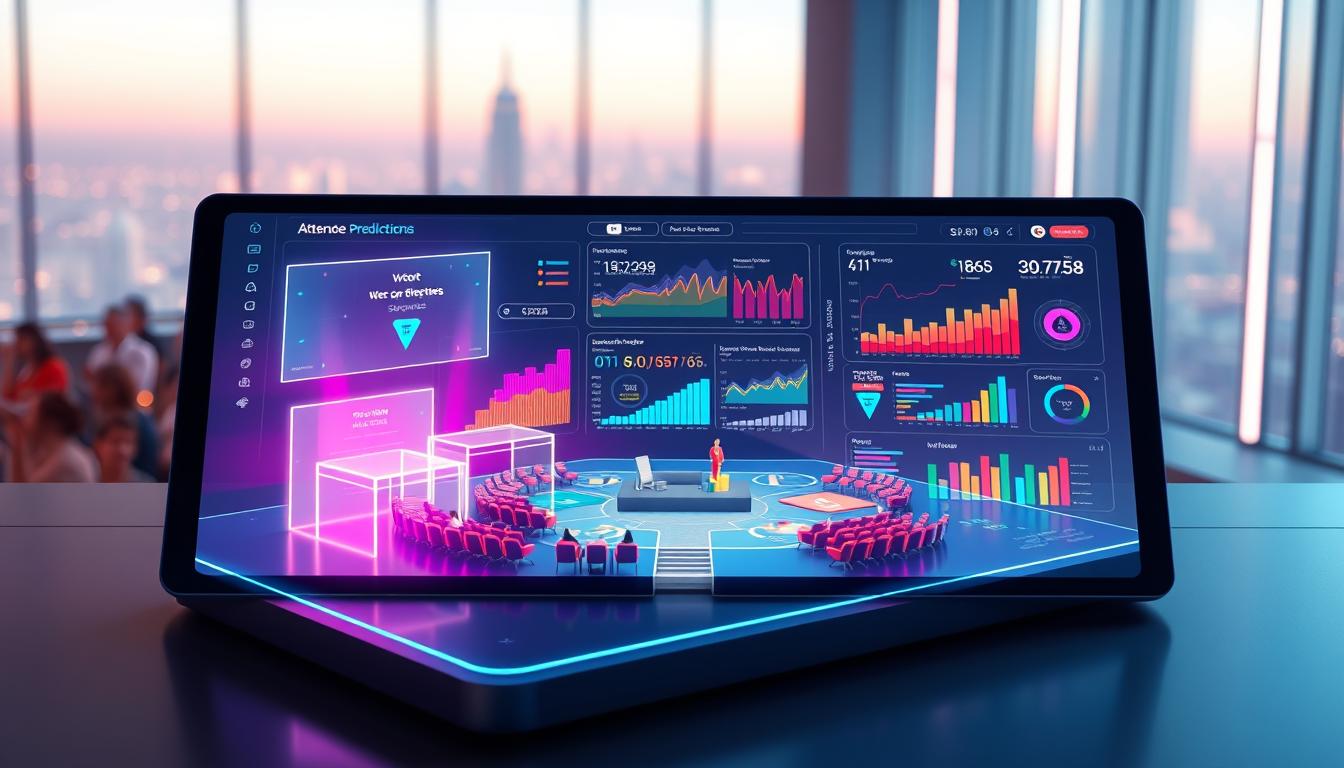
Predictions guide choices across event management and event planning—helping with room sizing, staff allocation, and agenda curation. They also create smoother experiences for attendees and better ROI for sponsors.
Ethics matter: trust, consent, and bias checks must be built in. For a deeper, practical walkthrough on building and scaling this capability, see this guide on attendee-interest prediction.
Key Takeaways
- Attendee-interest prediction ties simple data to smarter event decisions.
- Many planners already apply matchmaking, content, and engagement tools.
- Predictions reduce waste: better room use, staffing, and sponsor ROI.
- Responsible deployment needs consent, privacy, and bias checks.
- Measure success by comparing predicted vs. actual engagement and NPS.
Why Attendee-Interest Prediction Matters Now in Event Management
A surge in behavioral signals makes it possible to plan with far less guesswork. Organizers face new expectations: tailored experiences, instant communication, and smoother logistics. These shifts change how teams budget time and resources.
Shifting expectations: personalization, real-time support, and automation
Half of meeting planners now report using AI, and nearly half plan or use it for matchmaking (42%), content (41%), and tracking engagement (39%).
Attendees expect relevant recommendations, live chat and faster answers. That raises the bar for marketing and communication during registration and on the show floor.
Current adoption signals: matchmaking, engagement tracking, and content
Rising adoption of these tools creates the data feed that powers interest scoring. Sponsors meet better prospects; organizers gain predictability in staffing and space.
“Predictive signals turn registration and behavior into timely program adjustments.”
- Chatbots cut routine inquiries and boost staff efficiency.
- Predictive insights reduce waste: smarter catering, energy, and staffing.
- Inaction leaves planners guessing—higher risk of crowding and missed connections.
How Attendee-Interest Prediction Works: From Data to Decisions
Data streams—from sign-ups to session check-ins—become a live map of attendee intent. This process turns raw inputs into timely insights that teams can act on during planning and on-site operations.
Core inputs include registration fields, declared interests, job roles, company size, and historical attendance. On-site behavior adds depth: app clicks, dwell time, and session check-ins. Content metadata and session tags give thematic structure that links people to topics.
Modeling and outputs
Analysis blends supervised models with collaborative filtering to score an attendee-topic pair. Scores convert into ranked recommendations, session demand curves by time slot, and networking matches based on complementary goals.
Operationalizing insights
- Marketing uses scores to target campaigns and personalize outreach.
- Programming relies on demand forecasts to right-size rooms and prioritize sessions.
- Logistics applies traffic predictions to staff floors and place signage.
“Live feedback — check-ins and no-shows — recalibrate models mid-event to refine suggestions and alerts.”
| Layer | Input examples | Model output | Activation |
|---|---|---|---|
| Registration | Form fields, interests, role, company | Initial interest scores, segments | Targeted email and schedule drafts |
| Behavior | App clicks, check-ins, dwell time | Real-time engagement curves | Push alerts, room adjustments |
| Content | Session tags, descriptions, speaker profiles | Topic affinity and match scores | Personalized agendas, matchmaking |
| Governance | Taxonomy, deduped records, consent logs | Cleaner analytics and higher precision | Role-based sharing, privacy controls |
Toolchains link analytics platforms with registration, CRM, and event apps to automate recommendations and measure outcomes. Minimal data collection, clear consent, and strict access controls keep the process ethical and secure.
AI Use Case – Attendee-Interest Prediction for Events
Successful planning links desired outcomes to specific data points and processes that teams can act on. This section defines measurable goals, shows where prediction plugs into the lifecycle, and lists the operational guardrails that keep the program reliable.
Defining goals and measurable outcomes
Start with clear targets: increase session relevance, lift attendee engagement, and match high-intent buyers with the right exhibitors. Tie each target to KPIs such as NPS, support resolution time, and repeat attendance.
Where prediction plugs into the lifecycle
- Pre-event: marketing, registration, and segmentation feed models that shape outreach and agendas.
- During event: live curation, matchmaking, and traffic forecasts drive room allocations and staff deployment.
- Post-event: analytics validate outcomes and inform the next planning cycle.
“Interest scores should convert into actionable recommendations—personalized agendas, demand forecasts, and scheduled meetings.”
Operational notes: train models weekly before the event and refresh hourly on site. Assign data stewards, include consent language at registration, and require opt-outs to preserve trust. Specify tools: event app delivery, CRM segmentation, and analytics dashboards for ongoing monitoring.
Set Up Your Data Foundation and Taxonomy
Start by grounding planning in consistent tags and attributes. A unified taxonomy makes session labels meaningful and powers reliable recommendations. Good structure turns scattered inputs into clear signals that teams can act on.
Designing interest tags and session attributes
Create clear interest tags and session attributes: level, track, format, and speaker metadata. Standardize naming conventions and version control so systems read the same meaning across apps and venue systems.
- Define a unified taxonomy: tag topics, speaker roles, and formats to standardize inputs.
- Governance and processes: assign stewards, enforce naming rules, and keep tag versions under control.
- Tie tags to outcomes: better tags produce sharper recommendations and cleaner analytics on what resonates.
Ethical data practices: consent, privacy, and bias checks
Design consent and privacy communication into registration and the app. Limit collection to necessary fields and audit permissions regularly.
- Offer granular opt-ins and attendee controls via identity tools such as Microsoft Entra.
- Automate GDPR compliance and enforce access controls and retention rules.
- Mitigate bias: test models by role, company size, and demographics; retrain with balanced samples.
“A tidy taxonomy and clear consent are the simplest levers to better planning, fairer analysis, and reduced waste.”
Select the Right Tools: Event Apps, Matchmaking, and Analytics
A well-chosen set of tools turns raw signals into clear actions across the event lifecycle. Start with platforms that prioritize agenda curation, smart matchmaking, and dashboards that show session demand.
Capabilities to prioritize
Focus on features that drive outcomes. Prioritize personalized agenda builders, smart matchmaking engines, and predictive dashboards that visualize traffic and session popularity.
- Agenda curation: personalized schedules and last-minute nudges.
- Chatbots: natural language Q&A, context memory, and push alerts for schedule changes.
- Analytics: segment by role, industry, and interests; compare predicted vs. actual engagement.
Integration tips
Connect tools to CRM, registration, check-in, and venue systems so data flows without gaps. Live signals—from check-in systems or facial recognition—feed dashboards and matchmaking in real time.
Evaluate vendor SLAs, security posture (SSO, role-based access, encryption), and organizer-friendly configuration. Test facial recognition only with explicit consent and a fallback check-in option.
“Shortlists should include proven matchmaking and analytics platforms to accelerate adoption.”
- Shortlist examples: Eventify and Grip for matchmaking; Tableau and Julius AI for deeper analysis.
- Plan integrations: map registration fields to CRM segments and send live check-in events to dashboards.
- Assess usability: attendee-friendly interfaces and clear communication reduce friction.
For a practical guide to building real-time assistants and app-driven support, see how to create an AI chatbot. Align vendors with timelines and support needs to ensure smooth management across venues and registration processes.
Step-by-Step: Build, Pilot, and Scale Your Prediction Program
Break the program into 90-day sprints to prove value, train staff, and expand responsibly. This staged approach reduces risk and makes progress visible to planners and stakeholders.
Day 1–30: audit existing tools and processes. Map data sources, workflows, and integration points. List five to six pain points and set success metrics—NPS, support resolution time, registration completion rates, and session fill accuracy. Align budget and milestones.
Day 31–60: train teams, nominate leaders, and run a narrow pilot such as registration-to-CRM sync or agenda recommendations for a subset of attendees. Hold weekly feedback loops to capture issues and wins. A Harvard Business School study notes teams using generative solutions deliver 40% higher quality outcomes; apply that discipline to training and adoption.
Day 61–90: plan full implementation across the event lifecycle and build a long-term roadmap. Expand integrations from marketing through on-site management and post-event analysis. Retrain models as new data accrues and document playbooks for repeatability.
- Start with an audit: identify quick wins and constraints in data flows.
- Define metrics up front: tie KPIs to decisions and ROI timelines.
- Pilot narrowly: limit scope, measure, then iterate.
- Train staff: create prompt libraries, usage guidelines, and oversight roles.
- Capture feedback: weekly check-ins to speed improvements.
- Scale responsibly: institutionalize playbooks, templates, and KPIs.
“Small pilots and tight feedback loops turn theory into reliable operational process.”

Apply Predictions Pre-Event: Marketing, Registration, and Content Strategy
Smart segmentation turns ordinary sign-ups into prioritized groups that respond to tailored content and timing. Early signals from registration and behavior let planners shape marketing and content with clarity. These steps raise engagement and make scheduling decisions more reliable.
Personalized outreach: segment-based campaigns and content recommendations
Segment-specific campaigns boost open rates and session conversions. Use interest scores to build dynamic lists for email, paid media, and app notifications. Automate draft copy with writing assistants, then review to keep brand voice and compliance intact.
Session planning: forecast popularity to right-size rooms and staffing
Analyze registration trends and prior behavior to forecast session demand. Forecasts guide room assignments, repeat schedules, and staffing plans. Share insights with speakers and the venue so abstracts and logistics align with audience intent.
- Use interest scores to create dynamic segments for email and paid media.
- Automate campaign content while enforcing brand and compliance reviews.
- Forecast demand to right-size rooms, schedule repeats, and secure overflow.
- Improve registration completion with personalized prompts and autofill.
| Area | Input | Action |
|---|---|---|
| Marketing | Interest tags, registration trends | Segmented campaigns and tailored content |
| Registration | Form completion, stalled sign-ups | Personal prompts; autofill and reminders |
| Program | Historical turnout, early sign-ups | Room sizing, repeats, speaker briefs |
Use Predictions During the Event: Real-Time Engagement and Operations
Real-time insight during an event turns passive schedules into active experiences. Organizers can adapt agenda items, direct traffic, and surface relevant connections as attendees move through the day.
Live agenda curation and smart matchmaking to boost networking
Personalized agendas update in the app as check-ins, session interest, and browsing behavior arrive. This raises engagement and guides attendees toward sessions that match their goals.
Matchmaking engines schedule brief meetings based on compatibility scores and shared interests, strengthening networking and reducing aimless downtime.
Chatbots and alerts: instant answers and dynamic schedule nudges
Chatbots deliver instant information—maps, start times, and last-minute changes—cutting support queues and freeing staff for higher-value tasks.
Push nudges remind attendees about sessions, suggest alternatives when rooms fill, and reduce missed opportunities.
Flow management: anticipate bottlenecks and reallocate resources
Predictive signals flag congestion so organizers can reassign staff, open overflow rooms, or update signage in real time.
Accessibility features such as live captioning and translation improve inclusivity and satisfaction across activities.
“Eventify AI Copilot integration achieved a 40% reduction in support queries across 300+ events, enabling staff to focus on high-touch interactions.”
- Power live curation: adapt recommendations as attendees check in and browse.
- Accelerate connections: matchmaking schedules relevant meetings automatically.
- Deploy chatbots for instant answers and fewer support tickets.
- Manage flow: reassign staff and open overflow to prevent bottlenecks.
Post-Event Analytics: Proving ROI and Improving the Next Event
After the final session ends, the real work begins: assembling evidence to prove value and guide the next program. A concise post-event review aggregates pre-, during-, and post-event data so planners can compare predicted interest with actual behavior.
Engagement summaries: what attendees consumed vs. expectations
Close the loop: compare predicted session interest to attendance, dwell time, and content downloads. Build per-attendee summaries and segment rollups to inform programming and sponsor follow-ups.
Success metrics to track: NPS, response time, and repeat attendance
Track clear metrics: NPS, support resolution time, registration completion rates, and repeat attendance. Quantify sponsor value with qualified interactions and pipeline impact tied to matchmaking and targeted recommendations.
- Identify gaps and biases where analysis underperformed; examine data quality and feature design.
- Report with clarity: dashboards aligned to ROI, growth, and attendee satisfaction trends.
- Feed insights back into taxonomy, tagging, and model features to improve accuracy next cycle.
- Share findings across marketing, programming, and logistics to drive coordinated improvements.
“Aggregate cost, revenue, attendance, and feedback to convert metrics into actionable ROI.”
Conclusion
Small, staged pilots unlock big returns by linking data to concrete event outcomes. Start with a narrow pilot, set clear metrics, and expand as results show value.
Practical adoption aligns personalization with operational excellence: better planning, smarter management, and improved marketing that lift attendee experiences and sponsor ROI. Prioritize consent, privacy, and bias checks to preserve trust while you scale.
Teams gain efficiency, cut routine tasks, and free staff to focus on high-impact work. Define your use case, set a tidy taxonomy, pick interoperable tools, and test predictions before your next event.
Looking ahead: organizations that master these trends will shape the industry standard and raise brand success at every stage.
FAQ
What is attendee-interest prediction and how does it fit into event management?
Attendee-interest prediction analyzes registration details, behavior signals, content metadata, and session tags to forecast which sessions, topics, and networking opportunities will attract each participant. Event teams use these insights to prioritize marketing, size rooms correctly, recommend content, and facilitate meaningful connections across marketing, programming, and logistics.
Which data inputs matter most when building interest models?
Core inputs include registration fields (role, industry, stated interests), web and app behavior (page views, clicks, time spent), historical attendance, session metadata (track, speaker, format), and engagement signals like messaging or survey responses. High-quality taxonomy and consistent session tags improve recommendation accuracy.
What outputs should organizers expect from predictive models?
Typical outputs are per-attendee interest scores, predicted session demand, personalized session and exhibitor recommendations, and suggested networking matches. These outputs inform agenda curation, staffing, room assignments, and targeted outreach campaigns.
How can prediction insights be operationalized across teams?
Share dashboards and segmented lists with marketing for personalized campaigns, with programming for session planning and room sizing, and with operations for staffing and flow management. Embed recommendations into the event app and check-in systems to surface timely nudges and matchmaking suggestions.
What tools and capabilities should event teams prioritize?
Prioritize event apps with recommendation engines, matchmaking platforms, predictive dashboards, and integrations with CRM, registration, and check-in systems. Capabilities like agenda curation, chatbot Q&A, real-time alerts, and analytics export are especially valuable for executing insights.
How do organizers pilot and scale a prediction program?
Start with an audit of data sources and workflows, define clear metrics (conversion rates, NPS, session fill accuracy), and run a limited pilot with a subset of attendees or sessions. Collect rapid feedback, refine taxonomy and models, then scale by integrating across the event lifecycle and automating data flows.
What privacy and ethical considerations should be addressed?
Implement consent-driven data collection, minimize personally identifiable information where possible, and perform regular bias checks on models. Maintain clear privacy notices, allow opt-outs, and document how predictions are used to ensure transparency and regulatory compliance.
How can predictions improve marketing and registration before an event?
Use interest scores to create segment-based campaigns, surface personalized content recommendations, and promote sessions most likely to convert prospects. Forecasted session demand helps set ticket tiers, early-bird offers, and targeted upsells for workshops or networking events.
What real-time uses are practical during an event?
Deploy live agenda curation, smart matchmaking to boost networking, chatbots for instant answers, and alerts that nudge attendees toward relevant sessions. Use predictions to anticipate bottlenecks and redirect staff or attendees to balance flows and enhance experience.
Which post-event metrics show the value of prediction programs?
Track predicted vs. actual session attendance, engagement summaries (content consumed), NPS, support resolution time, conversion on follow-up offers, and repeat attendance rates. These metrics demonstrate ROI and guide model tuning for future events.
How should teams design the taxonomy for better recommendations?
Create clear interest tags and session attributes aligned with business goals—topic, skill level, format, and intended outcome. Keep tags concise, limit overlap, and enforce consistent tagging at the point of content creation to ensure reliable matches and analytics.
What integration tips help make predictions actionable?
Connect predictions to CRM, registration, on-site check-in, and venue systems via APIs or middleware. Ensure real-time or near-real-time data flows for live nudges, and standardize identifiers across systems to maintain attendee continuity and measurement fidelity.