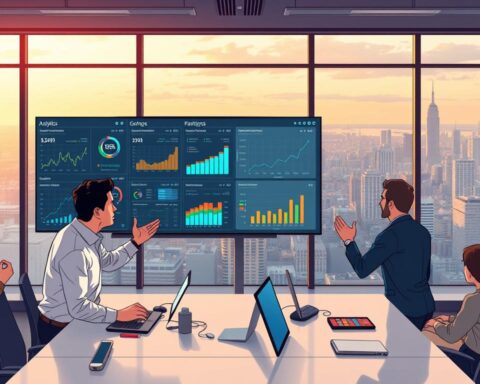
There are moments when a single line from a customer cuts through the noise—a surprise that sparks change. Hospitality leaders know this feeling: pride when praise arrives, alarm when patterns repeat. Turning many scattered comments into clear priorities feels urgent and possible.
This section introduces sentiment analysis as a strategic lever for leaders who want to turn unstructured feedback into decisions that improve operations and brand perception. Thousands of touchpoints generate signals each day; manual reading cannot scale to meet that pace. Tools that process high-volume data reveal patterns, outliers, and emerging needs.
Real deployments prove the point: Widewail studied 1.5 million Google reviews across 16,000+ dealerships to find trends. Marriott processes input from 7,000+ properties to track themes like cleanliness and staff friendliness in near real time. These examples show how timely insights translate to faster fixes and stronger long-term positioning.
Readers will learn what this approach does, why it matters, and how it links feedback to measurable outcomes. For a deeper look at automating customer feedback, see this practical guide.
Key Takeaways
- Sentiment analysis turns scattered reviews and feedback into actionable insights.
- Scale matters: automated analysis finds patterns humans miss at volume.
- Real-world examples — Marriott and Widewail — show measurable business benefits.
- Actionable results include faster fixes, better guest experience, and stronger brand health.
- Adopting structured workflows links data to strategy and operational change.
Why Sentiment Analysis on Guest Reviews Matters Right Now
When thousands of posts arrive each day, companies must convert noise into clear action.
Rapid sentiment analysis turns high-volume feedback into timely alerts. Tools scan thousands of reviews at once, spot recurring themes, and surface negative signals in near real time.
That speed protects brand reputation. McDonald’s monitors sentiment across 38,000+ locations and pivots training or supply chain when trends point to problems. Amazon aggregates product sentiment to fix listings when phrases like “difficult assembly” repeat.
This matters because reviews and social media shift daily. Timely analysis helps companies catch negative clusters before they damage satisfaction or bookings.
- Systematic analysis converts fragmented feedback into location-level trends.
- Operational signals in customer notes drive product and service fixes.
- Faster response reduces churn and improves overall experience.
Leaders who set a steady cadence for dashboards move from reactive service to proactive design. In short, data-driven monitoring converts scattered voice into measurable gains.
What AI-Powered Sentiment Analysis Is and How It Works
Modern systems turn open-ended customer comments into clear, trackable metrics.
Sentiment analysis classifies customer text across channels, translating words into quantified attitudes teams can track. Models mark entries as positive, negative, neutral, or mixed so leaders can compare performance by location or service.
Natural Language Processing and Machine Learning Fundamentals
Natural language processing parses grammar, context, and named entities in short passages. Machine learning then assigns labels and improves with more labeled data, helping systems handle slang and domain terms.
Rule-Based vs. Machine Learning Approaches
Rule-based systems rely on lexicons and patterns for fast, explainable tags. Machine learning models learn from examples and adapt to new vocabulary; deep networks handle nuance but need more data and tuning.
Aspect-Based, Fine-Grained, and Emotion Detection Explained
Aspect-based methods isolate features like room cleanliness or staff speed within a single review. Fine-grained scales spot mild issues versus severe complaints. Emotion detection surfaces feelings—frustration, delight—that guide coaching and response priorities.
From Intent Analysis to Topic Modeling for deeper insights
Intent analysis flags requests, churn risk, or booking intent. Topic modeling groups related phrases to surface new themes without prebuilt labels. Practitioners must account for sarcasm, jargon, and multilingual variation; iterative learning reduces these challenges over time.
Top Strategies List: Turning Guest Reviews into Actionable Insights
A clear playbook helps teams translate thousands of comments into measurable fixes and better guest outcomes. This section lists practical strategies that link data to decisions and move teams from reaction to design.
Real-time monitoring to protect brand reputation
Always-on dashboards surface spikes across reviews and social media and route urgent items to managers. Marriott’s model shows how near-real-time flags for cleanliness and staff friendliness enable swift property-level action.
Aspect-based detection to isolate issues
Pinpoint room, check-in, Wi‑Fi, and amenity problems so service teams target fixes rather than guessing. Widewail’s findings—communication and maintenance as drivers of sentiment—illustrate the impact of focused insight.
Emotion detection to improve responses
Identify frustration or delight and feed examples into chatbot scripts and frontline coaching. Training with real excerpts creates more empathetic replies and faster recovery.
Trend discovery to guide product and pricing
NLP-driven trend spotting finds rising requests—contactless options or late checkout—and informs offers, pricing, and amenity updates. Combine trend velocity with revenue impact to set priorities.
Close the loop with surveys and workflows
Attach surveys to stay stages and route severe complaints to owners within minutes. Standardize tools that enrich tickets with review excerpts so teams act with context and measure the effect on subsequent reviews.
- Prioritize decisions by volume, intensity, and revenue impact.
- Institutionalize weekly cross-functional reviews to reduce silos and accelerate improvements.
- Track interventions to verify reductions in negative mentions of core issues.
Business Benefits You Can Expect from AI-Powered Sentiment Analysis
Leaders who measure feedback at scale see clearer priorities and faster returns. Automated tools simplify review processing, turning thousands of comments into themes human teams would miss. Continuous monitoring supports prompt issue resolution and protects brand reputation.

Efficiency and accuracy at scale
Automated pipelines compress work from days to minutes while preserving context. Consistent scoring reduces human variability and refines future classifications as models learn from results.
Faster recovery and stronger reputation
Early detection of negative clusters enables quicker service recovery. That lift in public ratings lowers revenue risk and improves long-term business health.
Performance, resources, and continuous improvement
Leaders compare locations, spot outliers, and target resources where they matter most. Tracking changes in sentiment over time lets teams measure the impact of fixes.
| Benefit | Business Impact | Key Metric |
|---|---|---|
| Efficiency | Faster triage and response | Processing time (days → minutes) |
| Accuracy | Lower bias, consistent scores | Agreement rate vs. human read |
| Reputation | Quicker recovery, higher ratings | Public rating and complaint volume |
| Resource focus | Targeted investment in services | Issue-driven spend vs. satisfaction lift |
AI Use Case – Sentiment Analysis on Guest Reviews: A Practical Implementation Plan
A solid implementation plan stitches together ingestion, cleaning, classification, and visualization into a single workflow.
Data pipeline: ingest, clean, classify, and visualize
Start with disciplined data capture. Ingest reviews, surveys, call transcripts, chat logs, and social posts into a centralized store with governance and access controls.
Clean and normalize text—remove duplicates, fix encoding, and enrich records with property, date, channel, and stay metadata for granular insight.
Classify text with models for polarity, aspect topics, and emotion; calibrate escalation thresholds so severe cases auto-create service tickets tied to owners and SLAs.
KPIs to track: CSAT, NPS, response time, and sentiment trends
- Operational metrics: response time to negative feedback, percent resolved within SLA, and rework rate.
- Experience metrics: CSAT and NPS trends, and shifts in sentiment by aspect (cleanliness, staff, baggage).
- Impact metrics: portfolio benchmarks, per-property backlogs, and pre/post change after interventions.
Integrate tools with service desks and CRM so feedback links to tasks, owners, and verification steps. Monitor performance with A/B tests and a model improvement loop to keep accuracy high and guide better decisions.
Real-World Inspiration, Tools, and Common Challenges
Cross-industry proof shows how review-driven insight moves the needle for brands and operators.
Hospitality spotlight: Marriott analyzes input from 7,000+ properties to spot themes like cleanliness and staff friendliness. That centralized view lets managers act quickly and headquarters benchmark progress.
Cross-industry proof points: Amazon refines product listings from product feedback. McDonald’s monitors 38,000+ locations via social media and reviews to trigger operational fixes. Delta, Cleveland Clinic, Coursera, Netflix, and EA all apply feedback loops to guide investments and product choices.
Starter toolbox: Podium, Brandwatch, Talkwalker Quick Search, Mentionlytics, and Lexalytics help teams gather, monitor, and extract themes from customer reviews and social posts.
Challenges and solutions: Context and sarcasm need domain-tuned models; bias requires diverse training data and governance; privacy demands strict access controls and data minimization.
| Area | Example | Quick Benefit |
|---|---|---|
| Hospitality | Marriott (7,000+ properties) | Faster property-level fixes |
| Retail & Products | Amazon | Better product pages & development |
| Media & Gaming | Netflix / EA | Portfolio and feature tuning |
How to Align Insights with Customer Experience and Marketing
Insights from review pipelines help leaders shape messaging, product fixes, and service priorities with direct customer language.
Real-time systems deliver continuous data across reviews, surveys, and social. That steady feed lets teams match offers and content to current customer perceptions and adjust tactics quickly.
From insights to decisions: prioritizing fixes and innovations
Translate themes into ranked decisions by scoring impact, effort, and sentiment severity. Fix high-friction points first to lift satisfaction fast.
Feed prioritized topics into service design. If guests ask for quieter rooms or faster check-in, channel investment toward those services before launching new products.
Data-driven messaging and personalized content that resonates
Use outputs to craft creative briefs and content calendars that echo language customers already use. Emphasize differentiators that receive praise to strengthen brand position.
Personalize offers with segments built from review-derived interests and needs; for example, highlight family amenities to guests who praised kid-friendly services.
- Coordinate media strategy with trending topics—spot spikes and push relevant messages in owned and paid channels.
- Align scripts with the natural language customers use; mirror phrasing from positive feedback to improve clarity.
- Close the loop publicly: acknowledge feedback and show improvements in updates and emails to reinforce trust.
- Equip CX and marketing with shared dashboards so decisions stay consistent across touchpoints.
Measure and iterate:
Track lift in engagement and conversions when content addresses identified customer needs, then refine based on performance signals.
| Action | Source | Expected Outcome |
|---|---|---|
| Prioritize fixes by impact and severity | Real-time review streams | Faster satisfaction gains; lower complaint volume |
| Create content from praised features | Review language and trends | Higher engagement and clearer positioning |
| Personalize offers by segment | Review-derived interests | Improved conversions and loyalty |
| Share dashboards across teams | Integrated feedback platform | Consistent decisions and fewer mixed messages |
For a practical guide to integrating real-time sentiment systems with customer service workflows, see real-time sentiment systems for customer service.
Conclusion
, ai-powered sentiment turns unstructured text and feedback into a steady signal leaders can act on. Operationalizing this stream shortens the time from detection to correction and makes daily decisions measurable.
Real deployments at Marriott, Amazon, McDonald’s, Delta, Cleveland Clinic, Coursera, Netflix, EA — and Bank of America’s Erica — show faster recovery, clearer prioritization, and continuous learning. When sentiment analysis links to workflows, teams route issues, verify fixes, and tell customers what changed.
Start focused: pick a toolset, set governance, and add human-in-the-loop learning. Measure performance, expand what works, and make sentiment analysis a core operating capability for smarter products, services, and brand protection.
FAQ
What is the core value of applying sentiment analysis to guest feedback?
It uncovers actionable customer insights from reviews and social posts, helping teams prioritize service fixes, improve amenities, and protect brand reputation in real time.
How does natural language processing power this kind of analysis?
NLP parses text to detect opinion, intent, and emotion; combined with machine learning, it classifies comments by topic, sentiment, and urgency for efficient routing and reporting.
What’s the difference between rule-based and machine learning approaches?
Rule-based systems use predefined patterns and lexicons, offering predictability but limited scale. Machine learning models learn from examples, handling nuance and new expressions more effectively.
What are aspect-based and fine-grained approaches, and why do they matter?
Aspect-based methods break feedback into specific items—room, staff, check-in—so teams address root causes. Fine-grained and emotion detection reveal subtle feelings like frustration or delight.
Can sentiment systems detect intent or broader themes?
Yes. Advanced pipelines combine intent analysis and topic modeling to surface recurring issues, feature requests, and patterns that inform product, pricing, and service strategy.
How quickly can businesses act on insights from reviews?
With real-time monitoring and automated alerts, organizations can detect and respond to critical issues within minutes to hours, reducing resolution time and reputational impact.
Which KPIs should teams track when deploying sentiment tools?
Track customer satisfaction (CSAT), Net Promoter Score (NPS), response time, volume of negative feedback, and sentiment trend lines to measure impact and guide priorities.
What common challenges affect accuracy, and how are they solved?
Challenges include sarcasm, context, and bias. Solutions combine richer training data, human-in-the-loop review, bias audits, and contextual models tuned to industry language.
How do multilingual and cross-market reviews get handled?
Use multilingual models or translation pipelines with localized lexicons. Validate outputs with native speakers and region-specific training data to preserve nuance.
Which tools and platforms are proven for quick deployments?
Market-ready solutions such as Podium, Brandwatch, Talkwalker, Mentionlytics, and Lexalytics accelerate ingestion, classification, and visualization for hospitality teams.
How do companies like Marriott and Delta apply these insights?
They combine automated monitoring with operational workflows—routing issues to teams, training staff on common complaints, and using trends to design service upgrades.
What privacy and compliance considerations should be addressed?
Ensure data anonymization, consent management, secure storage, and compliance with laws like GDPR and CCPA. Maintain transparency in how customer text is used and retained.
How can insights be integrated with marketing and CX programs?
Feed topic and sentiment outputs into product roadmaps, personalized messaging, and campaign targeting. Use insights to craft data-driven content that resonates with customer needs.
Is manual review still necessary after automation?
Yes. Human oversight refines model outputs, resolves edge cases, and provides training labels that improve accuracy over time while ensuring empathetic responses.
What measurable benefits should leaders expect after implementation?
Expect higher efficiency handling large volumes, faster issue resolution, improved reputation metrics, and clearer prioritization of product or service investments.