
Every hotel manager has felt the tug between instinct and the ledger: the late-night worry over a missed booking, the quiet satisfaction when a rate fills a room without giving away margin.
The industry stands at a tipping point. Modern pricing tools adjust rates many times a day, reacting to demand, occupancy, competitor moves, and booking pace to protect revenue and win market share.
Independent properties gain time and steadier returns when pricing engines synthesize data faster than any manual process. Studies show measurable uplifts—higher RevPAR and average rates—when these systems are applied correctly.
This guide lays out a clear path: data foundations, forecasting and elasticity, segmentation, parity, overbooking tactics, tool selection, implementation, and KPIs. It balances strategy with practical steps and real-world wins such as Lighthouse’s Autopilot and notable property outcomes.
Readers will find evidence-based insights and a roadmap to make pricing a strategic lever—not a mystery. For related forecasting and monetization tactics, see predictive analytics in marketing and monetization.
Key Takeaways
- Modern pricing adjusts rates frequently to mirror real-time market signals.
- Well-implemented systems drive measurable revenue uplift and save staff time.
- Success depends on solid data, forecasting, and clear guardrails for overrides.
- Independent hotels can stay competitive without losing control of strategy.
- Expect outcomes such as higher RevPAR, smarter distribution, and fewer manual tasks.
Why Dynamic Hotel Pricing Matters Now for U.S. Hoteliers
U.S. hoteliers now face faster market swings than any generation before them. Shorter booking windows, localized events, and shifting traveler patterns make slow rate updates costly. Properties that stick to static calendars risk missing peak demand or leaving revenue on the table.
Shifting market conditions and traveler behavior
Demand in the U.S. is volatile: weekend events, last-minute business trips, and macro shifts change the outlook in hours. Real-time signals—search volume, pickup, and competitor moves—give early warning of surges or softening.
From gut feel to data-driven pricing strategy
Moving from intuition to transparent data reduces bias and makes decisions repeatable. Pricing systems process booking patterns, competitor rates, weather, and forecasts to tune rates multiple times per day.
Results are measurable: hotels that adopt pricing automation report 5–15% revenue lifts without extra marketing spend. Automation also preserves vigilance during off hours, protecting performance on nights and weekends.
- Adapts price to live market signals to capture surges and cushion dips.
- Helps managers explain rate moves with clear triggers and goals.
- Builds resilience across cycles, stabilizing RevPAR and ADR.
| Challenge | Static Pricing | Data-Driven Pricing |
|---|---|---|
| Booking volatility | Slow adjustments, missed peaks | Multiple recalibrations per day |
| Staff availability | Manual checks limited to business hours | Automation maintains 24/7 vigilance |
| Revenue impact | Rigid ADR and occupancy swings | 5–15% revenue increase reported |
Dynamic Pricing Explained: How It Differs from Static Hotel Rates
When demand shifts by the hour, prices tied to calendars fall behind. Static grids keep the same rate across weekdays, weekends, and seasons. That predictability helps planning but often misses short-term opportunity.
Static vs. dynamic pricing strategies: flexibility, risk, and reward
Static pricing favors simplicity: few changes, clear rules, and easy forecasting. It can underprice peak days and depress conversions in slow periods.
By contrast, dynamic pricing updates rates based on demand, competitor moves, events, and booking patterns. Hotels that adopt this approach report about a 15% lift in occupancy and roughly 20% growth in total revenue. Special events sometimes produce 30% spikes.
- Dynamic systems spread small adjustments across time to avoid overreaction.
- Guardrails—minimums, maximums, and cadence controls—preserve rate integrity.
- The core trade-off: extra data discipline in exchange for stronger yield and more captured value.
Data Foundations: The Inputs That Power Pricing Algorithms
Pricing precision starts with the data foundation beneath every rate change. High-quality inputs let systems move from reactive guesses to repeatable, measurable actions.
Internal sources that provide ground truth
Property management, the booking engine, and CRM records reveal arrivals, departures, lead time, and segment behavior. These internal fields produce length-of-stay and pickup patterns that inform rate moves.
External signals that add market context
GDS and OTA search volume, competitor availability and prices, local events, and weather provide demand context. Together they flag short-lived spikes and softer conditions so pricing reacts to real trends.
The five attributes of usable data
- Breadth: multiple sources and channels.
- Depth: granular timestamps and segment labels.
- Accuracy: verified fields and adjusted competitor comparisons.
- Timeliness: fresh signals tied to booking pace.
- Impartiality: controls to remove bias and anomalies.
| Input | Primary Benefit | Key Derivative Points |
|---|---|---|
| PMS / Booking engine | Ground truth for reservations | Length of stay, lead time, cancellations |
| CRM / Segments | Value by guest type | Repeat rates, channel preference |
| OTA/GDS & Competitor feeds | Market visibility | Search volume, relative prices |
| Events & Weather | Short-term demand signals | Spike detection, risk adjustments |
Unified systems that merge internal and external sources create a single source of truth. For practical guidance on integrating these inputs, see pricing integration best practices.
AI and Machine Learning in Hotel Pricing
Models that digest past bookings and live signals turn messy data into clear pricing moves.
Machine learning techniques—regression, decision trees, neural networks, and reinforcement learning—analyze historical and live data to propose rates that match demand and market context.
Models in practice
Regression quantifies how rate changes affect booking volume. Decision trees split scenarios so the system knows when a specific tactic wins.
Neural networks surface non-linear patterns that traditional methods miss. Reinforcement learning then tests policies and rewards strategies that lift revenue while protecting ADR and conversion.
Learning from outcomes
Closed feedback loops evaluate acceptance rates and refine which signals matter. When early premium bookings align with a competitor’s length-of-stay rule, the system flags higher sell-out risk.
Real-time monitoring and adjustments
Continuous monitoring lets systems push updates across channels while honoring parity. Human-in-the-loop controls permit overrides, caps, and approvals so revenue teams keep final say.
| Technique | Primary Benefit | How it Learns |
|---|---|---|
| Regression | Rate-volume sensitivity | Historical rate vs. bookings |
| Decision trees | Scenario segmentation | Branching on signals like channel and LOS |
| Neural networks | Non-linear pattern detection | Feature interaction across room mix and events |
| Reinforcement learning | Policy optimization | Rewarded by revenue and conversion outcomes |
Governance and transparent logging keep these systems aligned with commercial goals. For a deeper technical primer on pricing algorithms, see pricing algorithms.
Demand Forecasting, Seasonality, and Price Elasticity
Forecasts that separate routine cycles from one-off spikes let revenue teams act ahead of the curve. Short, accurate forecasts clarify when to hold rate, nudge it, or create targeted offers. Systems that break demand into parts deliver clearer recommendations and faster decisions.
Pattern detection: day-of-week, seasonality, and event-driven spikes
Forecasting decomposes demand into long-term seasonality, day-of-week effects, and event-driven spikes. Early booking pace and search surges flag deviations from normal trends.
Event overlays prevent cannibalization: hold back length-of-stay rules until demand justifies them. That protects weekday rooms while capturing peak nights.
Elasticity modeling: balancing occupancy, ADR, and total revenue
Elasticity models quantify how bookings respond to price. They find the rate that maximizes revenue — not just ADR — by weighing occupancy trade-offs.
- Models update as fresh data arrives, refining recommendations in real time.
- During high demand, elasticity tempers price moves to avoid lost bookings.
- In soft windows, it suggests value-led price shifts to stimulate pickup.
Result: hotels gain steadier occupancy and stronger shoulder performance. Forecasting plus elasticity commonly delivers 3–7% revenue gains versus demand-only pricing. For practical pricing recommendations, see pricing recommendations.
Segmentation, Personalization, and Value-Based Pricing
Guest groups differ in patience, spend, and sensitivity — and rates should reflect that.
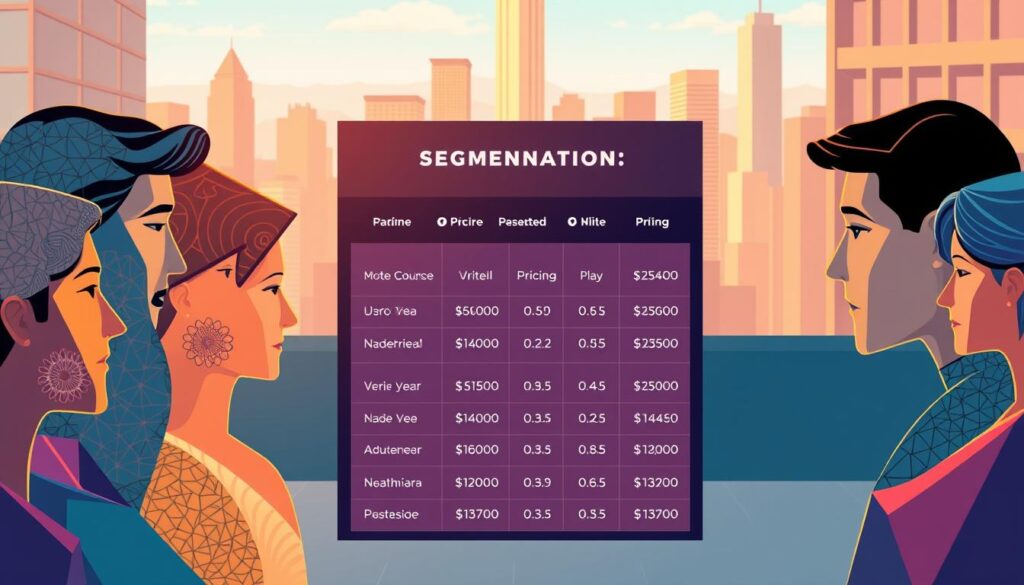
Advanced systems build profiles from lead time, channel, loyalty tier, geography, and past spend. That data drives differentiated pricing and tailored offers that match each group’s willingness to pay.
Customer segments by lead time, channel, loyalty, and geography
Segmentation separates last-minute business travelers, early planners, and members. Each segment gets targeted offers and timing that fit their booking patterns.
Personalized offers and packaging without breaking parity
Parity-aware personalization uses bundles and member benefits to add perceived value without showing different public rates. Upsell engines then present relevant ancillaries—parking, F&B, spa—boosting conversion by 30–40%.
“Value-led offers convert better than blunt discounts; guests buy benefits they understand.”
| Segment | Typical Trigger | Recommended Offer |
|---|---|---|
| Last-minute business | Short lead time | Flexible check-out + rate fence |
| Early leisure | Long lead time | Advance-booking package |
| Loyal members | Repeat stay | Member inclusions, F&B credit |
Teams should test micro-segments and iterate. Transparent logic—member-only perks and clear value—builds trust and drives direct booking. For real-world proof and outcomes, review a set of case studies on revenue management here.
Competitor Intelligence, Market Positioning, and Channel Parity
Smart rate positioning starts with translating competitor listings into comparable guest experiences. That means comparing amenities, location, and reputation — not just headline prices — to price to value.
Rate shopping, amenities-adjusted comparisons, and relative value
Rate shopping must adjust for room type, breakfast, parking, and reviews. Systems that normalize those differences show true relative worth.
Real-time competitor tracking reveals when a rival underprices or when the market softens. Those signals help teams protect ADR without needlessly matching every change.
Distribution strategy: OTA visibility, direct booking incentives, and parity
Maintain parity where required, but favor direct channels with member perks or bundled inclusions. Visibility tactics on OTAs — like participating in promotional boosts — should align with direct incentives.
- Monitor competitor moves and inventory shifts; alert teams to significant changes.
- Weight competitor signals against pace, forecast, and conditions — avoid reflexive price cuts.
- Use relative value maps to decide when to hold a rate premium or tactically match the market.
The goal: consistent, defensible pricing across channels that reflects true guest value and preserves long-term profitability.
Length-of-Stay Controls, Overbooking Logic, and Cancellation Prediction
Smart stay controls and careful overbooking turn irregular reservations into predictable occupancy gains.
Minimum and maximum stay rules protect premium dates and shoulder nights. Systems set minimums to avoid one-night gaps during events and lift rules when pace softens to unlock demand. These adjustments balance total-stay value against short-term conversion.
Predicting no-shows and safe overbooking
Cancellation prediction flags bookings likely to churn so managers can act—request deposits, send reminders, or offer flexible alternatives. Overbooking logic then uses seasonal cancellation patterns by channel and segment to set safe buffers.
- LoS controls encourage longer stays during peaks and deter low-yield gaps.
- Overbooking models quantify displacement risk and aim to boost occupancy with minimal walk events.
- Real-time monitoring updates these settings when pace or demand changes.
- Managers keep override rights for VIPs, groups, and brand policies.
| Control | Primary Benefit | When to Apply |
|---|---|---|
| Minimum stay | Protects high-value nights | During events and peak weekends |
| Maximum stay | Prevents inventory hoarding | When long-term blocks reduce revenue |
| Overbooking buffer | Raises occupancy, lowers empty rooms | Calibrated by cancellation history |
| Cancellation score | Enables targeted retention | High-risk reservations flagged for outreach |
Result: coordinated LoS and overbooking systems lift revenue while protecting guest experience. Clear confirmations and proactive outreach keep guests informed, reducing friction when operational changes occur.
AI Use Case – Dynamic Hotel-Pricing Algorithms
From data aggregation to recommendation and implementation engines
When systems unite PMS, competitor feeds, and event calendars, properties gain minute-by-minute clarity. The modern stack begins with aggregation: ingesting internal and external feeds to create a live, unified pricing dataset that reflects bookings, searches, and market context.
How the stack processes signals into action
Processing engines clean and normalize data, then engineer features like lead time bands and pace deltas. Analysis engines simulate scenarios, weighing revenue impact, risk, and constraints such as parity and LoS rules.
Recommendation engines surface options with projections, confidence scores, and clear rationale. Implementation engines then push new pricing across CRS and channel managers in seconds to keep markets synchronized.
Trigger-based price updates and governance
Trigger frameworks watch for pace anomalies, competitor moves, or search surges and execute measured adjustments. Governance adds thresholds, cooldowns, and caps to prevent overreactions.
- Audit logs record what changed, why, and when.
- Properties tune trigger sensitivity over time to local demand idiosyncrasies.
- Automation handles vigilance and speed; teams handle exceptions and brand nuance.
“Automation complements expertise — machines monitor continuously; humans guide strategy.”
Result: a cohesive pipeline that turns raw data into timely recommendations and safe, fast pricing adjustments that protect revenue and brand integrity.
Tools and Platforms: Choosing the Right Pricing System
Selecting the right pricing system starts with a clear map of a property’s needs. Match simplicity and automation for small teams, and forecasting depth for multi-property groups.
RMS options for different property sizes
RoomPriceGenie fits limited-resource teams: real-time competitor monitoring, customizable rules, manual/auto modes, and surge alerts. Pricing starts at ~€112/month.
Duetto serves resorts and large groups with ML forecasting up to five years, group optimization, and 100+ integrations—enterprise pricing applies.
RMS Cloud offers Multi-BAR, multichannel engines, flexible allocation, and deep reporting for varied accommodation types.
Why independents lean on automation
Lighthouse Pricing Manager shows measurable ROI: >19% RevPAR uplift, Autopilot-driven ADR gains, and client wins such as Tempe Hotel (Sydney) with doubled revenue and ~+50pp occupancy.
Integration and governance considerations
Evaluate data quality, native rate shopping, and parity monitoring to reduce fragmentation.
Require stable APIs, webhook support, role-based permissions, override policies, and audit trails so managers keep control as automation scales.
| Platform | Core Strength | Scale | Notable Outcome |
|---|---|---|---|
| RoomPriceGenie | Agile competitor monitoring & surge alerts | Small–medium properties | Quick wins, low friction (€112+/mo) |
| Duetto | Long-range forecasting & group optimization | Large resorts / groups | Enterprise integrations, deep forecasting |
| RMS Cloud | Multi-BAR & multichannel allocation | All property types | Comprehensive reporting & flexible rates |
| Lighthouse Pricing Manager | Autopilot automation & revenue uplift | Independent hotels to groups | >19% RevPAR, major ADR improvement |
Practical tip: pilot a system with a subset of dates or segments to validate impact, then expand. Prioritize tools that explain recommendations—clear rationale speeds adoption and drives sustainable increase.
Implementation, Change Management, and Performance Measurement
Rolling out new pricing systems succeeds when teams move in clear, measured phases rather than all at once. A phased approach builds trust and protects brand equity.
Phased rollout: begin with human-approved recommendations, then shift to semi-automation for routine decisions. When confidence and results grow, enable Autopilot for low-risk dates while keeping manual control for exceptions.
KPIs that matter
Track RevPAR, ADR, and GOPPAR as primary indicators of revenue and profit impact.
- Complement those with channel contribution and attribution to isolate pricing impact from marketing or market changes.
- Use a revenue opportunity index to measure distance from theoretical optimum and guide continuous improvement.
Risk management and governance
Define override policies, escalation paths, and brand thresholds so rate moves align with guest expectations and positioning. Run simulations for high-visibility dates to stress-test conditions.
“Start with transparency: show the why behind recommendations and celebrate early wins.”
Establish a cadence—daily exception lists, weekly trend reviews, monthly retrospectives. Invest in training (top implementations devote ~30% to adoption), capture lessons learned, and align incentives so managers reward disciplined execution and sustained revenue results.
Conclusion
Smart pricing turns countless signals into clear commercial choices for every property.
Studies show measurable gains: projects report 5–15% revenue uplift, and vendors cite >19% RevPAR improvement with automation. Independents also gain time and better decisions beyond pure ROI.
Adopt a practical approach: build clean data, forecast demand and elasticity, add governance, and pilot triggers and LoS controls. Master competitor intelligence and channel parity to defend rate integrity and guest trust.
Next steps: assess data readiness, shortlist systems that match your hotel, run a short pilot, and scale what works. Thoughtful adoption can increase revenue, save time, and create a more resilient commercial engine.
FAQ
What is the core benefit of dynamic hotel pricing for U.S. hoteliers?
Dynamic pricing lets hotels adjust rates in response to real-time demand, competitor moves, and market signals. That flexibility increases occupancy when demand is weak and lifts average daily rate (ADR) during peak periods, improving RevPAR and overall profitability.
How does dynamic pricing differ from static rate strategies?
Static pricing holds fixed rates for long periods and relies on manual decisions. Dynamic strategies use continuous data inputs and algorithmic recommendations to change prices frequently—reducing guesswork, managing risk, and capturing more revenue from shifting demand patterns.
What internal data sources are essential for effective pricing models?
Key internal inputs include the property management system (PMS), booking engine data, CRM records, historical occupancy and rate history, and distribution channel performance. Those datasets provide the foundation for accurate forecasting and segmentation.
Which external signals should hotels monitor to inform pricing?
Hotels should track OTA and GDS search volume, competitor rates, local events and conventions, weather forecasts, and broader market indicators like corporate bookings or travel restrictions. These signals help predict spikes and troughs in demand.
What five data attributes determine pricing model quality?
Models perform best when data offers breadth (many sources), depth (granular records), accuracy (clean inputs), timeliness (near-real-time), and impartiality (free from bias). All five improve forecast reliability and decision-making.
Which machine learning models are commonly used in pricing systems?
Common approaches include regression for baseline forecasting, decision trees for interpretability, neural networks for complex patterns, and reinforcement learning for long-horizon optimization. Many systems combine models in ensembles for robustness.
How do pricing systems learn from outcomes to improve over time?
Systems ingest acceptance rates, conversion metrics, and booking lead times to refine forecasts. Continuous feedback loops—testing price changes and measuring response—allow models to adjust for seasonality, events, and shifting customer behavior.
Can hotels run real-time price updates across multiple channels safely?
Yes—when the pricing platform integrates with PMS, channel managers, and rate shops. Automated rules and throttles prevent excessive changes, and override controls maintain brand standards and channel parity.
How is demand forecasting handled for seasonality and events?
Forecasting models detect day-of-week patterns, seasonal cycles, and event-driven spikes using historical and external event calendars. These models segment demand by source and adjust pricing to capture value without sacrificing occupancy.
What is price elasticity and how is it used in revenue strategy?
Price elasticity measures how sensitive bookings are to rate changes. By modeling elasticity, hotels balance occupancy and ADR to maximize total revenue—raising rates where demand is inelastic and discounting where it drives incremental bookings.
How do hotels segment customers for personalized pricing?
Segmentation uses lead time, booking channel, loyalty status, geography, and past behavior to tailor offers. Personalized rates and packages increase conversion while preserving rate integrity across channels.
How can personalized offers avoid breaking rate parity with OTAs?
Hotels use value-added packaging (breakfast, transfers, credits) and targeted promotions tied to loyalty or direct channels. These maintain public parity while offering differentiated value to select guests.
What role does competitor intelligence play in rate setting?
Competitor rate shopping and amenities-adjusted comparisons establish relative value and market positioning. This intelligence guides tactical moves—matching, beating, or differentiating rates depending on strategic goals.
How should a hotel approach distribution and direct booking incentives?
A balanced distribution strategy maintains OTA visibility while promoting direct channels through targeted incentives, loyalty benefits, and best-rate guarantees. Monitoring channel ROI ensures efficient spend across partners.
When are length-of-stay rules useful?
Minimum or maximum stay controls protect peak dates and event periods, preventing short bookings that reduce revenue potential. These rules help shape demand and preserve high-value inventory for longer stays.
How do hotels safely implement overbooking strategies?
Predictive models estimate no-show and cancellation rates by segment. Controlled overbooking uses those forecasts with buffers and contingency plans—upgrades, partner hotels, or compensation—to minimize guest impact and revenue loss.
What is a typical workflow from data aggregation to price implementation?
The workflow aggregates PMS and external signals, runs forecasting and optimization models, generates recommended rates, and pushes approved changes to distribution channels. Trigger-based rules handle urgent adjustments for search surges or competitor moves.
How fast should price updates be triggered?
Update cadence depends on market volatility: hourly during rapid shifts, daily in stable periods. Platforms allow pace controls to avoid rate churn while staying responsive to competitor and demand signals.
Which revenue management systems fit different property sizes?
Smaller properties often choose lightweight solutions like RoomPriceGenie for simplicity. Mid-size to large groups may use Duetto or RMS Cloud for advanced forecasting and integrations. Choice depends on property complexity and budget.
What integration points matter when choosing a pricing platform?
Essential integrations include PMS, channel manager, CRS/booking engine, and market-intelligence tools. Smooth data flow ensures accurate forecasts, timely updates, and consolidated reporting.
How should hotels phase in automated pricing to manage change?
Start with human-approved recommendations, run A/B tests, and expand automation gradually. A phased rollout builds trust, reveals edge cases, and lets teams refine override policies before full Autopilot mode.
Which KPIs should hotels track to measure pricing performance?
Focus on RevPAR, ADR, occupancy, GOPPAR, conversion rates, and attribution metrics. Opportunity indices and price acceptance rates reveal where models succeed or need tuning.
What risk controls protect brand perception during algorithmic pricing?
Implement transparency rules, rate floors/ceilings, and manual overrides. Clear guest communications and consistent value propositions prevent perceptions of unfair pricing.
How do hotels evaluate ROI after implementing a pricing system?
Compare pre- and post-implementation KPIs—RevPAR, ADR, and GOPPAR—while controlling for seasonality. Attribution models and test/control groups isolate the system’s impact on revenue.
Which skills does a revenue team need to support these systems?
Teams need data literacy, understanding of forecasting and elasticity, and familiarity with PMS/channel operations. Strategic thinking and change management skills help translate model outputs into policy and pricing tactics.
What are common pitfalls when deploying pricing automation?
Pitfalls include poor data quality, weak integrations, overreliance on a single model, and insufficient override policies. Addressing these early reduces errors and preserves guest trust.
How can independent hotels compete with larger groups using pricing platforms?
Independent properties can leverage automation to act faster, use local market intelligence for niche positioning, and bundle unique amenities to offer differentiated value without matching chain scale.
Where can hoteliers find reputable vendors and market insight?
Research established RMS providers like Duetto and RMS Cloud, review case studies, consult industry reports from STR and Phocuswright, and pilot platforms with clear KPIs before committing.