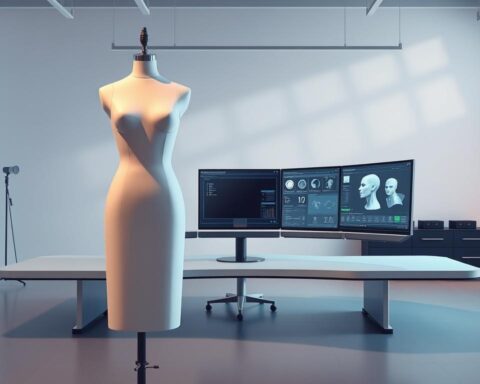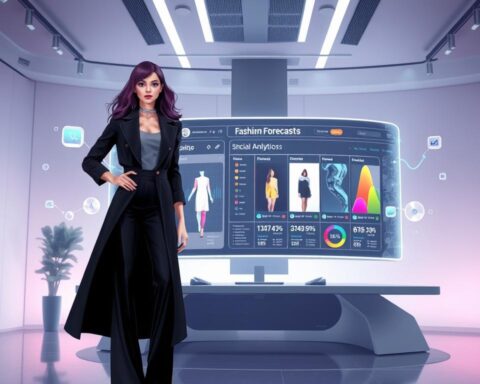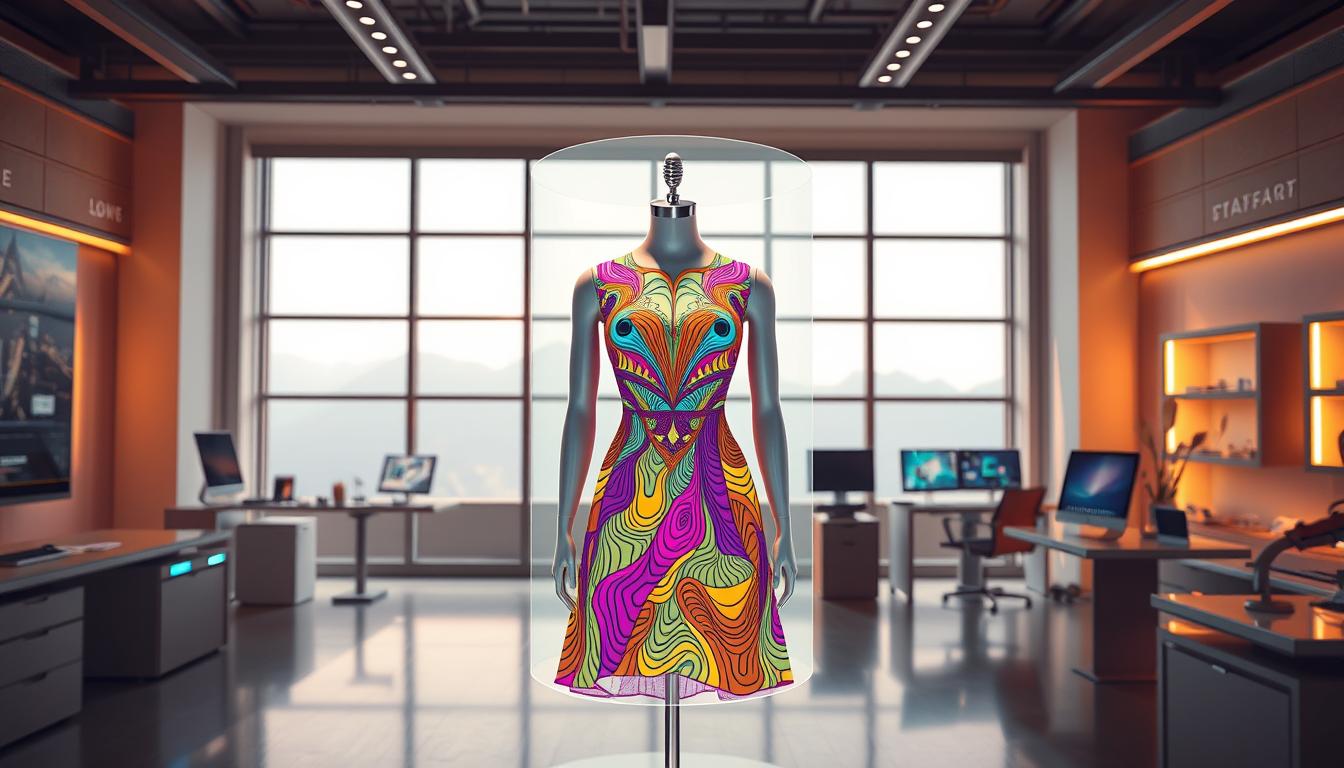
When a designer first sees a flat pattern come alive, the room seems to breathe. That moment matters to brands and customers alike: it marks the move from idea to touchable reality. Six Atomic has shaped this journey by turning DXF files into polished garment visualizations inside VStitcher and CLO.
The platform layers, folds, and sews patterns automatically—cutting repetitive setup and saving significant time. Enterprise teams gain consistent quality and faster decisions, while 3D artists shift toward creative problem solving.
Supported DXF formats and rigorous client workshops ensure the system meets top-brand standards. If a design needs edits, an intuitive CAD view keeps work fluid; for new looks, the platform still completes nearly half of the simulation effort.
Six Atomic’s partnership with CLO—bringing Synthesis and Catalyst into the workflow—illustrates how deep tech and practical solutions merge to shorten cycles and reduce risk.
Key Takeaways
- Significant speed gains: up to 90% faster visualization from DXF to 3D.
- Interoperable workflow: works with CLO and VStitcher and common DXF standards.
- Enterprise-ready quality: client workshops and QA deliver production-grade results.
- Human-in-the-loop: intuitive CAD edits handle edge cases and new designs.
- Proven partnership: Synthesis and Catalyst embed automation within industry software.
- Further reading: explore fashion technology trends at research on AI in fashion.
Why 3D Garment-Design Automation Matters Right Now
Rising consumer expectations and fragile supply chains are forcing fashion teams to rethink how they move from sketch to sample. Creative bottlenecks and long lead times now harm margins and slow product launches.
McKinsey estimates generative tools could add up to $275B to operating profits in fashion, apparel, and luxury by 2028. That forecast shows clear impact—brands see measurable upside when they compress cycles and reduce waste.
Automation enhances the creative pipeline: teams iterate faster while keeping control of taste and fashion design direction. Faster visualization means stakeholders align early, cutting rounds of ambiguous feedback and trimming costly physical samples.
For fashion brands, the benefit is practical. Higher-fidelity previews improve the customer experience and speed approvals. In a trend-driven industry, shaving days off development can mean earlier drops, better sell-through, and fewer markdowns.
- Strategic lever: addresses supply volatility and consumer demand.
- Force multiplier: concept-to-prototype time falls from days to minutes.
- Creator-friendly: removes friction so designers focus on craft.
From DXF to Drape: Automated 2D-to-3D Sewing, Layering, and Simulation
A reliable pipeline turns flat DXF pattern files into ready-to-review drape with minimal human setup. The system auto-sews, folds, and layers incoming .dxf patterns so users avoid the need manual placement of pieces or sewing lines.
Format coverage: it supports AAMA, ASTM, TIIP, and Standard DXF variants—whether files include seam allowances, notches, or grainlines. This guarantees consistent results across supplier and vendor files.
Recognition and training: models learn to identify tees, tailored jackets, and complex occasionwear. When the model is trained on a category, it can handle over 90% of patterns simulations. For brand-new clothing designs, the pipeline still delivers 40–50% of the garment simulation, speeding early review.
“Human oversight remains central: an intuitive CAD view lets teams correct stitching or layer order quickly.”
- Auto-sewing, folding, and layering shorten setup inside CLO and VStitcher.
- Human-in-the-loop edits preserve quality when recognition is partial.
- Governance rules lock in best-practice sewing behavior for future files.
As libraries and labeled patterns grow, the workflow compounds: faster iterations, higher quality checks, and a repeatable process that turns garment simulation into a daily design tool. Learn more about six atomic 2D-to-3D visualization at six atomic 2D-to-3D visualization.
Visualize Designs up to 90% Faster and Cut Technical Costs
Compressing visualization time unlocks earlier testing and clearer stakeholder alignment.
Teams can visualize designs up to 90% faster by automating arrangement, sewing, and layering. That speed turns days of setup into minutes and gives design, brand, and manufacturing teams a shared view earlier in the process.
Reducing the need for manual simulation lowers technical overhead and shrinks cost per product. Fewer specialists are tied to repetitive steps; budgets shift toward creative work and quality improvements.
Free up 3D artists to focus on creativity instead of manual simulations
With routine tasks handled, artists concentrate on materials, silhouette, and finish. That change elevates product quality and speeds iteration on promising concepts.
Faster approvals and fewer iterations across design, brand, and manufacturing teams
Consistent outputs reduce back-and-forth. Realistic previews let brands validate fit and trims early, lowering rework and routing errors downstream.
- Quantified lift: up to 90% faster visualization compresses timelines from days to minutes.
- Lower technical cost: fewer manual steps reduce per-style spend while preserving quality.
- Better collaboration: shared 3D outputs shorten feedback loops and increase confidence.
- Platform impact: standard rules and templates enable reliable replication across seasons.
“Faster, richer visuals support more compelling assortments and a stronger customer experience.”
Practical change management—training and clear documentation—helps teams adapt. Over time, the process yields measurable impact on time, cost, and the quality of finished products, making six atomic a strategic platform for the fashion industry.
AI Use Case – 3D Garment-Design Automation in Leading 3D Platforms
Six Atomic’s tools sit directly inside leading platforms so teams keep the same workflow while gaining instant setup and simulation.
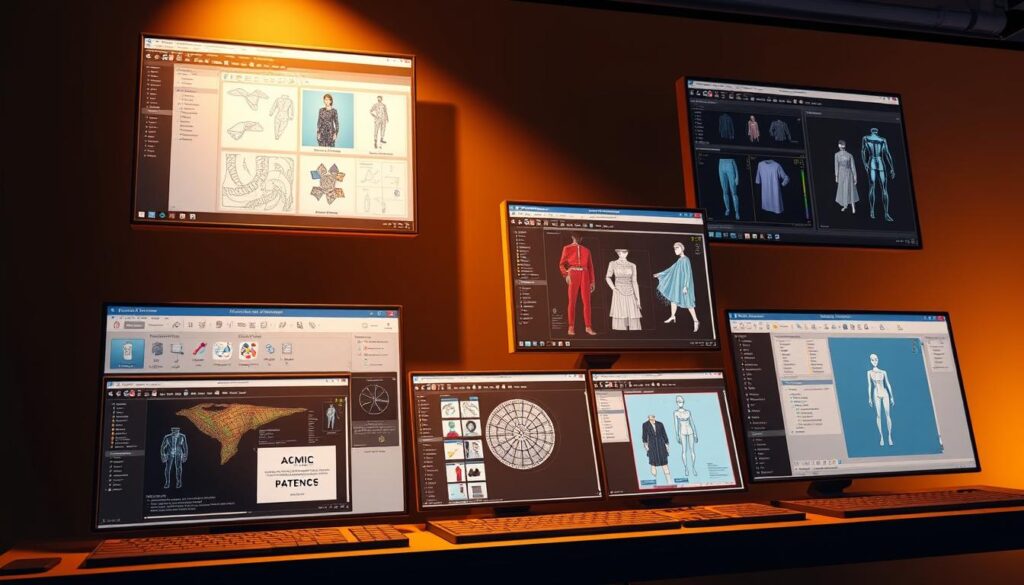
Seamless integration with CLO and VStitcher for production-grade garment simulation
Integration lives inside CLO and VStitcher, letting designers and patternmakers stay in familiar software while Synthesis and Catalyst handle scene setup. This minimizes context switching and shortens the product development process.
Synthesis analyzes dxf pattern files, auto-creates sewing relationships, sets layering order, and positions avatars to deliver ready-to-run scenes in minutes. Catalyst AI Designer converts text or reference images into dxf pattern files and immediate CLO simulations, accelerating ideation to prototype.
Users generate, edit, and validate within one workspace. Outputs follow production rigor for grading, material trials, and manufacturability checks—so handoffs stay clean and measurable.
“Embedding pattern conversion inside leading fashion software radically reduces per-style cycle time.”
- Compatibility with VStitcher gives teams ecosystem flexibility.
- Enterprises can codify workflows and scale across categories.
- Practical value: fewer rebuilt sewing lines, fewer errors, faster approvals.
Real-World Wins: Fashion Brands Accelerating SKUs and Reducing Errors
Real-world pilots show measurable lifts in SKU velocity and fewer reworks across product lines.
Perry Ellis sped up seasonal launches by adopting modular design libraries and automated grading. Teams reused validated templates, which cut manual grading time and lowered error rates. The result: faster SKU velocity and steadier quality across collections.
An Asian manufacturing group combined an extensive pattern database with system rules to bring manufacturing-ready patterns to market 20x faster. That scale-up proved the approach in high-volume contexts and reduced lead-time risk for retail customers.
Switlik used configurable workflows to deliver customizable drysuits with fewer mistakes. By turning body measurements and feature choices into production-ready patterns, the company raised confidence in complex, mission-critical products.
“Standardized libraries and templates translate directly into speed, fewer touchpoints, and higher product quality.”
- Faster SKU launches and fewer errors through modular libraries and automated grading.
- 20x acceleration to market demonstrates scale potential for manufacturing partners.
- Custom products benefit from automated measurements and configurable pattern logic.
- Cross-functional teams align around a single source of truth in 3D, shortening approvals.
These examples show how leading fashion companies achieve measurable gains without compromising standards. To explore implementation patterns and a replicable playbook, read the full study on how six atomic supports enterprise adoption.
Beyond Visualization: Personalization, Virtual Fittings, and Enterprise Workflows
Digital simulations now move beyond prototype review to power real-time shopping and tailored fittings. This shift lets fashion teams turn design intent into interactive touchpoints that engage customers and speed decisions.
Photorealistic materials, physics, and trims—buttons, zippers, and lining—bring garment previews to life. Automated assignment of textures and cloth behavior helps users trust what they see. The result: richer product pages and reliable virtual fittings that boost conversion.
Integrations link PLM, web apps, and configurators so data flows from pattern to storefront. CLO and VStitcher remain the engines for final drape and fidelity, ensuring visual standards match production reality.
Rules-based personalization enables mass customization without operational overload. Shared 3D assets align design, merchandising, and marketing, while governance and versioning keep approved files active across channels.
- Expand channels: interactive pages, configurators, and try-ons for better customer experiences.
- Keep consistency: one source of truth that updates across web and retail platforms.
- Close the loop: user interactions feed product decisions, helping brands create relevant apparel at scale.
“Photoreal content and connected systems turn visual fidelity into measurable business value.”
Partnerships, Formats, and Quality: What Enterprises Need to Know
Enterprises need clear partnerships and standards to turn rapid simulation into reliable production outcomes.
Six Atomic and CLO embed tools where teams already work. Synthesis auto-creates sewing relationships, layering, and avatar placement inside CLO. Catalyst converts text or images into .dxf patterns and ready simulations, shortening concept-to-review cycles.
Format breadth and governance
Supported formats include AAMA, ASTM, TIIP, and Standard DXF—whether files carry manufacturing data or not. This breadth prevents supplier diversity from stalling workflows.
Enterprise precision and QA
Quality is codified through client workshops and co-development with experienced 3D artists. Rules for folding, layering, and cutting become platform logic. Ongoing QA and security practices keep outputs production-grade for large brands.
“Close collaboration between platform providers raises the ceiling for fidelity and speed.”
- Outcome: better product stories and more persuasive virtual fittings for customers.
- Scalability: shared standards let enterprises expand without linear headcount growth.
- Next steps: scope pilots around formats, workflows, and quality bars to de-risk adoption; read the partnership program for details.
Implementation Playbook: How Fashion Brands Deploy Automation Today
A clear rollout plan turns experimental tools into repeatable manufacturing gains. The playbook focuses on low-risk pilots, measured outcomes, and steady expansion.
Onboarding new product categories: sourcing patterns and training the model
Start by selecting representative patterns that match spec sheets and grading rules. Define labeling standards and teach the system key construction logic so patterns simulations improve fast.
Human-in-the-loop CAD edits when recognition is partial
CAD edits close gaps quickly. When a design is partially recognized, patternmakers adjust sewing and layer order in minutes. Even untrained silhouettes return about 40–50% of the simulation, saving substantial time versus starting from scratch.
- Standardize sewing relationships and layering so output stays consistent across styles.
- Integrate with PLM or web software to keep spec data and visualization in sync.
- Set governance: review checkpoints, version control, and acceptance criteria for production-ready assets.
“Measure cycle time, iteration counts, and error rates to prove ROI and guide expansion.”
Begin with one category, then expand as libraries and trust grow. This process helps fashion teams align design, manufacturing, and customer experience while preserving control and speed with six atomic.
Conclusion
Six Atomic helps teams turn pattern libraries into production-ready previews that speed decisions across design and supply.
The strategic advantage is simple: faster visualization compresses cycles and frees creative talent without lowering quality.
Proof sits in the results: up to 90% faster previews and examples of 20x acceleration to market. Integrations with CLO and VStitcher—plus Synthesis and Catalyst—embed these solutions where teams already work.
Wide DXF support, category training, and human-in-the-loop edits handle real-world variability. That mix improves approvals, customer experience, and product alignment.
Enterprises should scope a pilot, set KPIs, and map integrations with PLM or web systems. With governance, workshops, and ongoing QA, the company can move from experimentation to production—turning possible fashion into daily practice.
FAQ
What is 3D garment-design automation and who benefits from it?
3D garment-design automation streamlines converting 2D patterns into production-ready 3D garments using advanced software and pattern‑recognition workflows. Brands, design studios, manufacturers, and 3D artists benefit—brands speed time-to-market, manufacturers reduce errors, and designers spend more time on creativity instead of manual simulation and sewing-line setup.
How does the 2D-to-3D process handle DXF pattern files and variants?
Modern platforms accept common DXF variants—including AAMA, ASTM, and Standard—whether they include manufacturing metadata or not. The system parses vectors, recognizes panels, and maps notches and grainlines so patterns become drape-ready meshes without manual tracing or redundant CAD edits.
Can the automation replace manual sewing line and layering work?
Automation can auto-sew, fold, and layer pieces so teams no longer add sewing lines by hand. While routine seams and common constructions are handled reliably, human-in-the-loop CAD edits remain for novel couture or bespoke tailoring to ensure perfect fit and finish.
What platforms does this integrate with for production‑grade simulation?
Leading solutions integrate with CLO and VStitcher to export production‑grade garments and simulation data. That interoperability lets brands move from concept to virtual fitting to tech pack export without rebuilding assets in multiple tools.
How much time and cost savings can brands expect?
Typical outcomes include visualization times up to 90% faster and dramatic reductions in technical labor. Savings come from fewer iterations, faster approvals across design and manufacturing, and lower simulation engineering costs—freeing 3D artists to work on look development and creativity.
How does the system handle diverse product categories, from tees to wedding dresses?
Models train on diverse pattern types and learn to recognize category‑specific pieces and construction rules. For complex garments—structured suits, dresses, technical wear—the platform combines pattern recognition with rule‑based engineering to suggest accurate seams, reinforcements, and grading templates.
What real-world results have brands achieved using these workflows?
Brands and manufacturers report measurable wins: modular pattern libraries and automated grading for rapid SKU launches, manufacturing-ready patterns produced many times faster, and bespoke product lines converted to production specifications with fewer errors and shorter lead times.
Can personalized virtual fittings and consumer-facing configurators use these outputs?
Yes. The workflow supports applying material textures, physics, and trims so virtual fittings and configurators reflect realistic drape and feel. Outputs can feed web apps, PLM links, and configurators to provide shoppers and enterprise teams with accurate previews and specs.
What quality and enterprise controls are included for top brands?
Enterprise-grade deployments include client workshops, ongoing QA, accuracy benchmarks, and versioned pattern libraries. Partners often offer precision checks, calibration for factory tolerances, and governance to meet established brand and manufacturing standards.
How do companies onboard new product categories and ensure accuracy?
Onboarding involves sourcing representative patterns, annotating construction rules, and training recognition models. Early stages use human-in-the-loop CAD edits to correct partial recognitions; over time the model learns and reduces manual intervention for similar categories.
What file formats and integrations should companies expect beyond DXF?
In addition to DXF, platforms commonly support OBJ, FBX, and native CLO/VStitcher formats for simulation and rendering. Integrations with PLM systems, pattern libraries, and manufacturing ERPs help create an end-to-end workflow from design to production.
How does this technology affect the role of 3D artists and technical designers?
It shifts their work from repetitive simulation and sewing-line tasks toward higher-value activities: creative direction, material development, fit refinement, and complex problem solving. Teams stay leaner while delivering more SKUs with consistent quality.
Are there manufacturing-ready guarantees from these platforms?
Many vendors deliver patterns validated to manufacturing tolerances and provide grading and marker outputs compatible with production. Enterprises typically validate outcomes through pilot runs and factory feedback to lock in final specs.
What should companies consider when selecting a solution partner?
Evaluate accuracy on your product mix, integration with existing tools (CLO, VStitcher, PLM), support for industry DXF variants, onboarding services, and ongoing QA. Favor partners with proven enterprise deployments and a roadmap for continuous improvement.