There are moments when a leader reads a comment and feels the pulse of the workplace. That instant—when a short line of text reveals worry, pride, or fatigue—can change how a team is supported.
The modern toolkit lets organizations convert scattered notes and chats into clear signals. Natural language processing reads emotional tone across surveys, transcripts, and tickets, producing scores and dashboards that leaders can act on.
When handled with care, this approach spots issues early, guides better decisions, and improves employee experience without adding friction. It also guards trust by pairing clear policies with transparent reporting.
Leaders curious about practical steps can explore examples that compare customer-focused methods with internal listening. For more on large-scale listening, see this practical guide at listening at scale, and for context on automated review systems, consult automating customer feedback.
Key Takeaways
- Natural language processing uncovers emotional tone across many feedback channels.
- Scoring and dashboards help leaders track changes and compare departments.
- Early signals enable faster action on burnout, engagement, and retention risks.
- Responsible rollout requires clear communication and privacy safeguards.
- Tools should complement human judgment and close the loop with real changes.
Why employee sentiment matters now: context, goals, and business impact
Measuring how people feel at work shapes concrete goals for retention and productivity.
Annual surveys provide useful snapshots, but they miss time-sensitive trends and subtle issues. Modern continuous monitoring captures mood across chats, meetings, and tickets so leaders spot problems earlier.
Organizations gain clearer patterns by function, location, and tenure. That visibility helps compare departments, refine questions, and include quieter voices—not only the vocal few.
Quantified measures create baselines to benchmark progress. Over time, tracked metrics show whether interventions move the needle on retention, engagement, and business outcomes.
When executives tie engagement goals to measurable metrics, decisions focus on initiatives with the biggest expected return. Data-driven steps—manager coaching, workload shifts, targeted benefits—translate into measurable improvements and sustain experience at work.
| Approach | What it captures | Primary benefit |
|---|---|---|
| Annual surveys | Themes at a point in time | Broad benchmarking |
| Continuous monitoring | Trends across channels and time | Early warning on issues |
| Scaled listening | Department-level patterns and quieter voices | Targeted, fairer decisions |
“A continuous loop of listening and action builds trust and shows that feedback leads to meaningful change.”
Foundations of sentiment analysis for employee experience
At the core of reliable workforce listening is a process that maps language to measurable scores. This foundation blends natural language processing with machine learning to detect and score emotion across surveys, reviews, tickets, and transcripts.
How it extracts tone
How natural language processing and machine learning extract emotional tone
Language processing converts unstructured text into tokens, phrases, and entities. Models then learn associations between words — for example, “frustrated” versus “valued” — and produce a polarity score, often on a -1 to +1 scale.
Types of methods
Types: fine-grained, aspect-based, intent, and emotion detection
- Fine-grained approaches record degrees beyond simple positive negative labels.
- Aspect-based methods tie sentiment to topics like manager support or workload.
- Intent detection separates questions, requests, and escalations from opinions.
- Emotion detection classifies feelings such as joy, anger, or fear for richer insights.
Rule-based, ML, and hybrid approaches for workplace data
Rule-based solutions offer transparency and speed. Machine learning adapts over time but needs labeled data and tuning. Hybrid models combine rules and models to balance accuracy and explainability across organizational channels.
“Clear labels, domain-specific validation, and dashboards that compare teams turn raw text into practical insights.”
Benefits for organizations: from engagement insights to retention gains
Linking ongoing reactions with performance data unmasks drivers of satisfaction and risk. That view helps an organization move from occasional snapshots to continuous understanding.
Seeing beyond surveys lets leaders capture trends across the workforce and across the employee journey. Continuous monitoring surfaces comments and moods that a single survey can miss. This fuller picture supports targeted interventions that boost engagement and productivity.
Early warning for burnout and turnover shows up as declining scores or repeated negative phrases before problems escalate. Managers can act sooner—adjust workloads, offer coaching, or reassign resources—to protect team performance and morale.
- Quantify the impact of policy changes by tracking trends over time.
- Pinpoint which teams need help and where small changes improve productivity.
- Design retention plans that address root causes of turnover, not symptoms.
“Data-driven insights let leaders prioritize actions that deliver clear business ROI and a more resilient workplace.”
How to analyze employee sentiment using AI: a step-by-step guide
Clarify objectives first—effective programs answer specific problems, not every curiosity at once.
Define scope and goals. Identify lifecycle stages to include (onboarding, tenure, exit) and pick measurable outcomes: retention, performance, or experience.
Collect diverse data ethically
Aggregate surveys, chats, meeting transcripts, tickets, and reviews for a 360-degree view. Communicate purpose, limits, and safeguards so employees consent and privacy is protected.
Train or configure models
Label examples that reflect company language and edge cases. Configure models for polarity, aspects, and intent so the scoring aligns with management questions.
Score, validate, and visualize
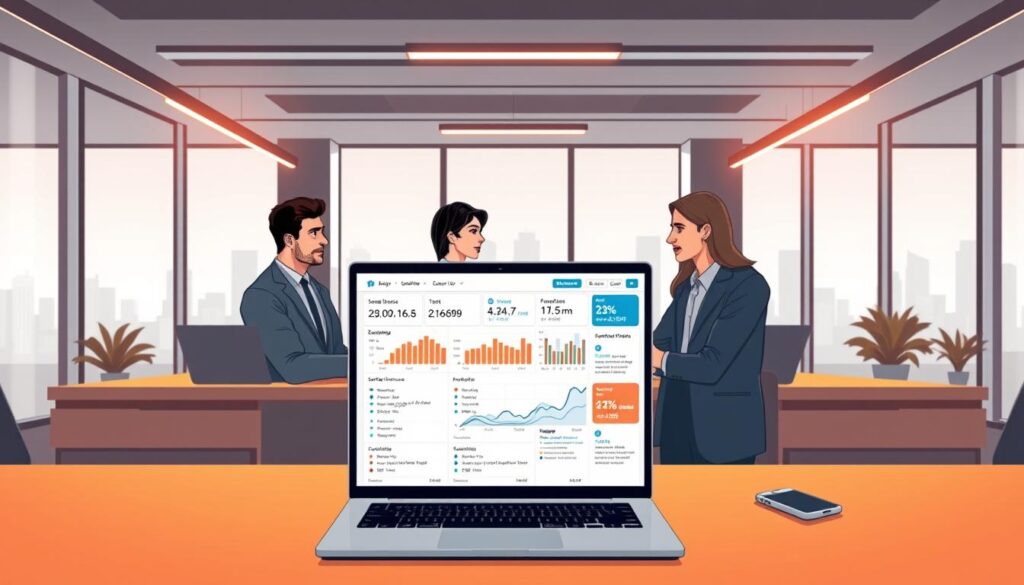
Score text on a -1 to +1 polarity scale. Validate with holdout sets and human reviewers. Visualize trends by team, location, and time to reveal patterns and emerging issues.
Close the loop
Turn insights into actions: manager coaching, workload shifts, and benefits tweaks. Track linked KPIs and iterate questions, models, and training to improve learning and development outcomes.
“Translate clear signals into measurable decisions, then show results so trust grows and participation rises.”
| Step | Focus | Outcome |
|---|---|---|
| Define objectives | Scope, KPIs | Targeted strategies and better decisions |
| Gather data | Surveys, chats, transcripts | Broad coverage and fewer blind spots |
| Train & validate | Polarity, aspects, intent | Reliable scores across teams |
| Visualize & alert | Dashboards by team/time | Early detection of issues |
| Act & measure | Interventions and KPIs | Improved retention and performance |
Tools, data, and integrations for workforce sentiment analysis
A practical implementation starts by mapping which platforms hold the richest signals for your organization. Centralizing sources gives leaders a clear view of trends and themes across teams.
Multi-touchpoint data
Collect data from Slack, email, Zoom transcripts, HRIS records, support tickets, and surveys to build a 360-degree view.
Advanced tools handle emotion, sarcasm, and slang so classifications fit workplace language.
Selecting solutions
Evaluate solutions for accuracy on your own language, transparency of methods, and explainability.
Prioritize privacy-by-design: data minimization, access controls, encryption, and clear retention rules.
Dashboards and workflows
Choose platforms that surface role-based dashboards for HR, managers, and leaders with drill-downs from enterprise trends to team themes.
- Integrate collaboration systems and HR systems to centralize data and governance.
- Standardize scoring (for example, −1 to +1) to compare departments over time.
- Include QA and human review for sensitive classifications and high-impact decisions.
“Consolidated tools and clear governance turn raw text into actionable strategies that respect privacy and scale with growth.”
Advanced techniques to deepen insights
Specialized techniques map phrases to themes, making it clear what actually affects performance. Aspect-based approaches tie opinions to topics—manager support, workload, benefits—so leaders pinpoint where to act.
Aspect-based analysis to pinpoint themes and performance
Aspect-based methods tag text by topic and tone. That lets teams compare trends across departments and roles.
Calibrating positive/negative thresholds by team avoids false flags where baseline language differs. Combining tags with development and performance metrics shows which themes predict turnover or growth.
Emotion detection, ambiguity handling, and sarcasm understanding
Advanced systems classify joy, fear, anger, and surprise to refine experience signals. Distinguishing frustration from disappointment changes the recommended action.
Handling sarcasm and slang improves reliability on informal channels. Continual learning updates models for new acronyms and language so patterns remain meaningful.
| Technique | Benefit | Outcome |
|---|---|---|
| Aspect tagging | Pinpoints themes | Targeted interventions |
| Emotion detection | Richer tone | Better manager coaching |
| Outlier analysis | Rapid alerts | Faster remediation |
“Tooling that supports explainability clarifies why a classification was made, aiding stakeholder trust and faster iteration.”
For examples of practical deployment and lessons learned, see gaining deep insights.
AI Use Case – Sentiment Analysis in Employee Feedback: governance and ethics
Strong governance frames how signals are collected, protected, and acted upon across the workplace.
Transparency, consent, and privacy-by-design
Ground programs in clear communication. Explain what data is collected, why it matters, and how it will inform decisions that benefit employees.
Adopt privacy-by-design: minimize data, restrict access, set retention limits, and document processing aligned with U.S. regulations.
Include choices for consent and opt-outs where appropriate. This reduces concerns and builds trust.
Mitigating bias and balancing automated signals with human judgment
Establish governance for model risk: bias testing, accuracy checks, and drift detection. Review results with cross-functional stakeholders.
Clarify that automated scoring is an aid, not a replacement for human dialogue. Train leaders and managers to combine results with surveys and conversations.
“Analyses should improve work, not surveil—set the tone for constructive, trusted use.”
| Control | Benefit | Owner |
|---|---|---|
| Data minimization | Fewer privacy issues | Privacy officer |
| Access controls | Reduced misuse | IT & HR |
| Bias testing | Fairer outcomes | Governance board |
| Escalation paths | Fast remediation | People leaders |
Include employee representatives when defining rules to ease concerns and improve adoption. For practical tools and examples of responsible employee sentiment solutions, see employee sentiment solutions.
Conclusion
Turning everyday messages into measurable signals gives management a practical view of trends. When analysis is paired with governance and training, organizations gain clear insights that reveal patterns across teams and time.
Robust pipelines, thoughtful models, and transparent policies help translate feedback into actions that lift engagement, retention, and performance. Leaders who close the loop—act on findings and share results—build trust and lasting momentum.
Advanced techniques and continual learning refine accuracy and adapt to company language. For a practical primer on putting these ideas to work, see the employee sentiment analysis guide.
FAQ
What is the goal of sentiment analysis for employee feedback?
The primary goal is to surface emotional tone and patterns across workforce communications so leaders can improve engagement, identify concerns like burnout or turnover risk, and make targeted changes that boost performance and retention.
How do natural language processing and machine learning extract emotional tone?
Models parse text to identify polarity (positive, negative, neutral), emotions, and intent. They use tokenization, embeddings, and classifiers trained on workplace examples to map language to sentiment and themes, then aggregate results for team- and company-level insight.
What types of sentiment approaches are available for workplace data?
Common approaches include fine-grained polarity scoring, aspect-based analysis that links feelings to topics (management, workload), intent detection for actionable requests, and emotion detection for nuanced states like frustration or pride.
Should organizations choose rule-based, machine learning, or hybrid methods?
Hybrid methods often work best: rules handle clear patterns and compliance needs, while machine learning captures nuance and scales. The right mix depends on data volume, required explainability, and sensitivity of topics.
Which data sources should be included to get a full picture?
Combine surveys, performance reviews, HRIS records, helpdesk tickets, meeting and chat transcripts (Slack, Microsoft Teams), and exit interviews. Diverse sources reduce bias and reveal trends across roles, locations, and time.
How do teams ensure privacy and consent when analyzing workplace text?
Implement privacy-by-design: anonymize data, secure storage, role-based access, and clear consent policies. Communicate purpose and opt-out options to comply with U.S. regulations and build trust.
How can analysis detect early warning signs like burnout or attrition risk?
Track changes in sentiment trends, rising negative language around workload or manager interactions, and signals from HR metrics. Correlating text indicators with absence, performance dips, and engagement scores yields actionable alerts.
What validation steps ensure the analysis is accurate and fair?
Validate models with human reviews, continuous sampling, and performance metrics like precision and recall. Test for demographic bias, retrain on representative corpora, and maintain transparency about model limits.
How should organizations act on the insights generated?
Close the loop by sharing aggregated insights with leaders, implementing targeted interventions (manager coaching, workload reassignment), and measuring impact over time through repeat surveys and operational metrics.
What role do dashboards and integrations play?
Dashboards visualize trends by team, location, and timeframe, while integrations feed signals into HR systems, ticketing tools, and manager workflows—enabling timely, context-aware responses.
How do advanced techniques like aspect-based analysis and emotion detection help?
They pinpoint specific themes (career growth, recognition) and capture subtle emotions such as anxiety or pride, enabling more precise interventions than broad polarity scores alone.
What governance and ethical practices are essential?
Adopt transparent policies, obtain consent, enforce strict access controls, and involve cross-functional oversight. Regular audits and stakeholder communication help mitigate bias and preserve employee trust.
How do organizations choose the right vendor or tool?
Evaluate accuracy on workplace language, explainability, scalability, data handling practices, and integration capabilities. Prioritize vendors with strong privacy controls and client references in HR analytics.
How frequently should models and dashboards be updated?
Update models periodically to reflect changing language and business context; refresh dashboards in near real-time for operational signals and weekly for strategic review. Reassess models after major organizational changes.
Can sentiment methods handle sarcasm, ambiguity, and multiple languages?
Handling sarcasm and ambiguity is challenging but improving with contextual models and hybrid rules; supporting multiple languages requires localized training data and cultural calibration to avoid misclassification.