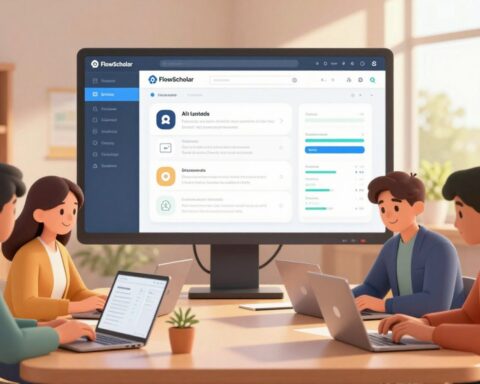
There are moments in education that feel urgent: a student who falls behind, an instructor who wonders if classroom goals match real work, a leader who needs clearer direction.
The traditional post-semester review is slow and imprecise. It can hide the true gaps between teaching intent and actual student performance.
Modern tools such as OfficeIQ and Atomic Jolt bring scale and clarity. They process lesson plans, assessments, and outcomes to map curriculum to competencies and benchmark to accreditation and job trends.
The result is faster insight: clear recommendations that save educator time and highlight equity issues. This approach reframes curriculum review as a repeatable process—one that turns data into action and improves learning outcomes for students.
Key Takeaways
- Automated evaluation speeds reviews and improves accuracy for educators.
- Mapping content to competencies uncovers practical gaps in student performance.
- Tools tie curriculum to accreditation and job market standards.
- Clear insights reduce burden and focus decision-making on outcomes.
- The process creates scalable, future-facing improvements in education.
Transform Curriculum Alignment Today with AI-Driven Insights
Institutions can close alignment gaps faster when real-time signals link course content to outcomes. OfficeIQ and Atomic Jolt scan LMS content and student records to surface clear priorities. Stakeholders see what matters now and can act within the term.
The dashboards are conversational and visual. Educators get concise reports that save time and guide support for faculty. Students benefit from coordinated pathways that boost engagement and increase the chance of success.
Practical changes become simple to stage: update topics, reinforce weak areas, and add resources where signals show opportunities. The result is measurable gains in engagement and outcomes, validated by data and the right tools.
| Before | After | Benefit |
|---|---|---|
| Fragmented course goals | Mapped competencies | Clear student outcomes |
| Slow reviews | Real-time reports | Faster decisions |
| Ad hoc support | Dashboard-driven support | Better faculty time use |
- Prioritize high-impact fixes this term.
- Share dashboards with faculty for quick alignment.
- Track signals and stage improvements monthly.
Why Traditional Curriculum Analysis Falls Short—and How AI Fixes It
Manual curriculum checks often stall under heavy workloads and fragmented records. Catalogs age, mapping is inconsistent, and reviewing hundreds of courses takes weeks.
Manual reviews vs. automated processing: manual checks miss scale and speed. Systems scan vast amounts of data — syllabi, assessments, and outcomes — to find patterns people overlook. That reduces error and raises accuracy for educators and teachers.

Uncovering hidden misalignments: automated mapping highlights where learning objectives do not match student work. It surfaces a clear gap and points to specific areas instructors can fix immediately.
Equity and inclusion: tools flag population-level disparities so teams can target support where students fall behind. Faculty save time while retaining control—systems flag issues; humans decide the intervention.
| Challenge | Traditional Result | New Approach |
|---|---|---|
| Fragmented sources | Inconsistent maps | Consolidated evidence across courses |
| Outdated catalogs | Missed priorities | Continuous benchmarking to ABET/AACSB |
| Limited scale | Slow, error-prone review | Fast scans of syllabi and outcomes |
- Focus fixes that matter this term.
- Direct resources to students and areas with gaps.
- Turn insights into measurable outcomes for educators.
AI Use Case – Curriculum-Gap Analysis via Machine Learning
Timely curriculum tuning starts with clear signals from course materials and student outcomes. Systems ingest lesson plans, assessments, and performance records to turn raw data into actionable insight. The result is a focused map of what students see, when they see it, and where gaps appear.
Data inputs that matter
Lesson content, instructor plans, graded assessments, and student performance each add a distinct signal. Together they reveal coverage, depth, and sequencing for every objective.
Algorithms that map and detect
Algorithms scan LMS content to map competencies, spot overlaps, and flag missing areas. These models create a clean picture of redundancy and gaps so teams can act.
Benchmarking and recommendations
Platforms benchmark to standards and job trends, aligning curriculum to accreditation and employer needs. The service then prioritizes recommendations: add topics, resequence modules, and attach targeted resources.
Continuous monitoring
Real-time updates run as content or standards change. Alerts surface fresh analysis so educators keep courses current without rewriting from scratch.
| Input | Process | Output |
|---|---|---|
| Lesson plans & assessments | Algorithms map to objectives | Coverage score; overlap flagged |
| Student performance | Compare to benchmarks | Prioritized gap list |
| Industry standards | Align competencies to jobs | Resequencing & resource plan |
Educators who want a practical demo can learn more about course design at how to create an AI-powered online. The net effect: targeted curriculum updates that raise performance and keep students on track.
Key Capabilities: From Personalized Learning Paths to Fair, Faster Assessments
Modern platforms turn diverse classroom signals into tailored pathways that meet each student where they are. This section outlines how adaptive features, rapid assessment, and clear dashboards come together to improve engagement and outcomes.
Personalized pathways that boost engagement
Personalized learning shapes content and pacing for individuals, raising engagement and helping students reach goals faster.
Adaptive drafting tools create next-step recommendations—what to study, when to revisit, and where to practice—so students move through learning paths with purpose.
Assessment optimization and fair grading
Assessments get faster feedback through automated grading for select tasks and predictive analytics that flag at-risk learners.
Instant responses keep student performance visible and actionable, while predictive signals guide timely instructional support.
Actionable dashboards and educator support
Dashboards condense complex analytics into clear insights so educators know where to act and how to prioritize time.
OfficeIQ’s conversational interfaces and Atomic Jolt’s mapping connect with existing software and tools, giving educators suggested prompts, recommended resources, and smart alerts.
- Personalized learning improves engagement and progress.
- Automated grading and predictive analytics speed interventions.
- Integrated tools and dashboards keep educators focused on impact.
For deeper methodology and research on curriculum mapping, see research on curriculum mapping.
Outcomes That Matter: Improved Student Performance and Educator Efficiency
Institutions that tighten curriculum-to-skill connections report faster progress and higher confidence among learners.
Clear alignment leads to tangible outcomes: students practice skills that map to real tasks, and educators spend less time hunting for gaps.
Bridging theory and practice: better real-world skill application
Programs show stronger skill transfer when assessments and objectives align with workplace demands. Students demonstrate competence in projects, internships, and capstone tasks.
Measurable gains: time savings, higher student motivation, and effective learning experiences
Platforms that automate mapping free up faculty time. That reclaimed time goes to coaching, curriculum design, and mentoring.
Institutions report improved student preparedness and higher motivation when pathways feel coherent and relevant.
- Outcomes: clearer evidence of improved student performance when curricula match real tasks.
- Benefits: faster review cycles, higher course completion, and improved placement metrics.
- Future education: a continuous improvement loop that scales practices across departments.
| Metric | Before alignment | After alignment |
|---|---|---|
| Course completion rate | 72% | 85% |
| Faculty hours on reviews per term | 120 hrs | 30 hrs |
| Student confidence in skills | Moderate | High |
| Placement / readiness for work | Measured informally | Tracked and improved |
Educators and leaders who want a practical roadmap can explore guided planning at teacher planning and impact. The net effect: effective learning that translates to real-world experiences and sustained institutional gains.
Implementing AI-Powered Gap Analysis in Your Institution
Begin with a clear plan: define objectives and desired outcomes, centralize lesson plans and assessment records, and agree on scope with program leads. A focused pilot reduces risk and surfaces early wins.
Where to start: aligning learning objectives, data readiness, and stakeholder buy-in
Clarify learning objectives and list the exact data sources you will centralize: LMS exports, assessment scores, and course artifacts.
Secure buy-in from teachers and program leads. Train a small team to pilot three to five courses and validate insights before scaling.
Compliance and standards: ABET, AACSB, and national education frameworks
Embed compliance from day one. Benchmark outcomes to ABET, AACSB, and national standards to simplify audits and ensure alignment.
“Compliance becomes an advantage when it guides development and streamlines reviews.”
See it in action: schedule a demo to explore workflows and integrations
Tools like OfficeIQ and Atomic Jolt integrate with LMS software to provide conversational mapping and live monitoring. Teachers receive templates, training, and ongoing support to act on recommendations.
- Pilot focused courses.
- Validate insights and capture quick wins.
- Expand coverage and track updates and trends automatically.
To view a practical implementation and workflows, schedule a demo or read a practitioner perspective on continuous assessment and gap tools.
Conclusion
Ultimately, the best solutions make sense of fragmented data and point teams to the highest-impact curriculum updates.
They help educators and teachers turn vast amounts of course content, assessments, and outcomes into clear insights. Platforms personalize learning paths, optimize grading workflows, and surface targeted support for students.
Leaders gain confidence that programs keep pace with trends and future education needs while staff save time on manual reviews. Institutions can tap algorithms to find recurring gaps and accelerate updates with reliable software.
For practical examples and next steps, explore adaptive platforms and implementation guides at education use cases or read about adaptive learning platforms for students at adaptive learning platforms.
Next step: connect with the team to discuss integration with your LMS and see how these tools can deliver better student experiences, faster.
FAQ
What problems does curriculum-gap analysis using advanced models solve?
It identifies misalignments between stated learning objectives and actual outcomes by scanning lesson plans, assessments, and student performance data. This reduces redundant content, surfaces missing competencies, and helps educators prioritize topics that improve engagement and mastery.
What data sources are required for effective curriculum alignment?
The most valuable inputs are syllabi, lesson plans, assessment items, LMS content, grading records, and industry or accreditation benchmarks. Combining these sources enables richer mapping of competencies and clearer recommendations for sequence and scope.
How does the system support personalized learning paths?
By linking student performance patterns to curriculum maps, models generate adaptive pathways that recommend targeted lessons, practice exercises, and pacing. This drives higher engagement and helps students progress at an appropriate level.
Can this approach detect equity and inclusion gaps across student groups?
Yes. Analytical models can compare outcomes by demographic, prior achievement, and learning modality to reveal subtle disparities. Those insights guide curriculum changes, targeted interventions, and resource allocation to promote fairness.
How are assessments optimized with automated tools?
Tools can auto-score objective items, flag rubric-based inconsistencies, and provide instant feedback. Predictive analytics also estimate mastery likelihood and suggest formative checks to close gaps before summative evaluations.
What role do benchmarks play in the process?
Benchmarks—such as accreditation standards and labor-market competencies—serve as reference points. Systems compare curriculum coverage to these standards to highlight missing skills and recommend additions that align programs with external expectations.
How does the platform present findings to educators?
Insights appear in concise dashboards with visual maps of competency coverage, detected redundancies, and prioritized actions. Many solutions include conversational support to help teachers interpret results and create lesson adjustments.
Is continuous monitoring possible as curricula evolve?
Continuous monitoring tracks updates to course materials, assessment changes, and shifting student outcomes. That real-time view enables iterative improvements and timely alerts when alignment drifts.
What are the first steps for institutions wanting to adopt this capability?
Start by clarifying learning objectives, auditing available data sources, and securing stakeholder buy-in. Pilot a focused program—one department or course—to validate workflows, measure gains, and refine integrations with the LMS.
How does the solution help meet compliance and accreditation requirements?
It automates evidence capture and maps curriculum elements to standards like ABET or AACSB. This streamlines reporting, demonstrates coverage, and makes gap remediation traceable for accreditors.
What measurable outcomes should institutions expect?
Typical results include reduced redundancy, time savings for faculty, higher student motivation, and improved assessment pass rates. Over time, programs see better alignment with job-market needs and clearer pathways to employable skills.
What implementation challenges should institutions anticipate?
Common hurdles are data quality, change management, and integration with existing systems. Addressing these requires clear governance, phased rollouts, and training for educators to trust and act on system insights.
Can vendors demonstrate real-world impact before purchase?
Reputable providers offer demos, pilot projects, and case studies that show workflow integrations and outcome metrics. Request longitudinal evidence and references from similar institutions to assess fit and ROI.
How does the approach protect student privacy and data security?
Best practices include anonymizing records, applying role-based access controls, and complying with FERPA and other regulations. Vendors should provide transparent data governance policies and secure hosting options.