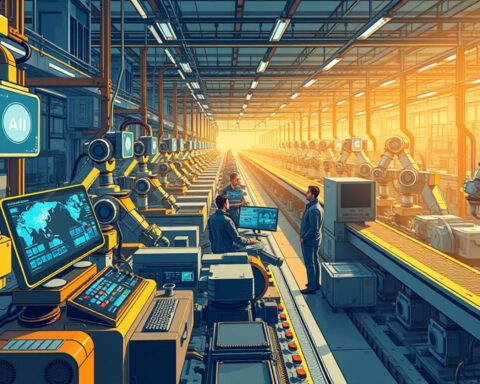
Walking on the shop floor feels like being in a living thing. Machines hum and schedules get tight. Energy costs shape every choice.
For leaders in 2025, energy is key. Prices are up, and being green is a must.
AI Use Case – Energy-Consumption Optimization in Manufacturing turns this into a chance. It uses AI to watch and control things in real time. This cuts waste and makes things better.
Old AI cuts energy use by 20%. New, smart AI can do 25–45%. One steel place saved 27% and $2.8M a year.
AI helps by using data. It predicts problems, adjusts temperature, and lights. This is real, not just talk.
Sensors help machines last longer and cost less to fix. They also save on energy bills. This makes things run smoother and saves money.
Managers will find this useful. It saves money, meets rules, and helps the planet. For more info, check out this article on AI and energy.
Key Takeaways
- Energy is now a strategic cost driver for manufacturers in 2025.
- AI Use Case – Energy-Consumption Optimization in Manufacturing delivers measurable reductions—often 20%+, with agentic AI reaching 25–45% in some deployments.
- AI solutions for energy efficiency combine predictive maintenance, real-time control, and process automation to lower costs and improve uptime.
- Smart manufacturing energy management with AI supports regulatory compliance and sustainability goals while enhances competitiveness.
- Sensor data and connected systems enable demand optimization and greater operational resilience.
Introduction to AI in Manufacturing
Manufacturing is changing fast because of data and smart systems. AI is now used everywhere to make things better. It helps with efficiency, uptime, and saving money.
Overview of AI Technologies
Predictive analytics and machine learning are key. Neural networks help find patterns in data. Digital twins let engineers test ideas without real-world risks.
Computer vision checks product quality. Edge computing helps control machines quickly. Agentic AI plans and acts on its own.
Platforms that work well have strong MLOps and integration. They also need scalable infrastructure and secure storage. This helps AI work at a big scale.
AI can predict when machines need fixing. It can also control processes and schedule work better. This reduces downtime and smooths out energy use.
Importance of Energy Optimization in Manufacturing
Energy costs are going up. This makes it hard for companies to make money. Saving energy is now a must to stay competitive.
Companies can save energy by watching it closely. They can control things like air conditioning and lights. Predictive scheduling and using waste heat also help.
Using AI for energy can really help. Companies see big savings, often 5–27%. AI can also help with smart energy use and make money from it.
AI works best when there’s good planning and teamwork. It needs platforms that can turn ideas into action.
The Need for Energy-Consumption Optimization
Manufacturers face high energy bills and strict rules. They also have to meet corporate goals. Using AI for energy management is now key.
Rising Energy Costs
Energy costs can be 20–40% of a company’s expenses. In 2025, prices will be even more volatile. Managers need smart ways to save.
AI helps predict energy needs and adjust processes. This reduces costs and makes equipment last longer.
Environmental Impact
Energy use leads to carbon emissions in factories. AI helps use less energy and use more renewables. This makes factories greener.
AI finds ways to use resources better, like capturing waste heat. This cuts emissions and saves resources.
Industry Regulations and Compliance
Rules require accurate energy and emissions reports. AI helps make these reports reliable and accurate.
AI needs clear rules and human checks. This keeps factories in line with rules and saves energy.
| Challenge | AI Capability | Practical Result |
|---|---|---|
| Price volatility | Predictive load scheduling | Lower utility bills; smoother demand peaks |
| High emissions | Consumption optimization; waste-heat recovery | Reduced carbon footprint; better sustainability metrics |
| Regulatory reporting | Auditable energy forecasts and logs | Improved compliance; streamlined ESG disclosures |
| Asset wear from inefficiency | Continuous performance tuning | Extended equipment life; fewer unplanned stops |
Investing in AI for energy saves money and cuts emissions. It also helps factories follow rules better. AI used right helps factories save energy and stay competitive.
How AI Can Transform Energy Management
AI changes how we manage energy in factories. It moves from fixing problems to planning ahead. Now, factories can see how much energy they use and make smart choices.
Predictive Analytics for Energy Consumption
Predictive models use data from sensors and past energy use. They predict when energy demand will be high. This helps teams plan and save on energy costs.
These models also find unusual patterns and suggest the best times to run processes. They help avoid waste and keep factories running smoothly. Some factories see a 30–50% drop in downtime thanks to AI.
Predictive alerts can also help with buying and fixing things. If a model sees a problem, it can suggest when to check or replace parts. This keeps factories reliable and meets energy goals.
Real-Time Monitoring and Control Systems
Real-time systems use sensors and AI to watch over factories. They check things like vibration and temperature. They can change things like air conditioning and lights to save energy.
AI can even fix problems on its own. It can plan maintenance, order parts, and change production plans. This means factories can run smoothly all the time.
Dashboards and AI help teams make quick decisions. They show what to do and warn of problems. This makes factories run better and faster.
Together, predictive analytics and real-time control make factories more efficient. They save energy, keep production going, and make AI a key part of their success.
Data Sources for Energy Optimization
Manufacturers want to use energy smarter. They use many data sources. This helps AI make better decisions.
IoT sensors collect data often. They watch for things like vibration and heat. They also check fluids and power use.
Edge processing helps by acting fast. It makes decisions quicker. This is good for using energy wisely.
Keeping data clean is key. It must be accurate and secure. This makes AI work better.
Energy Management Systems control many things. They manage HVAC, lights, and more. They help AI make smart choices.
EMS data helps predict energy needs. It can even sell extra energy. Keeping data safe is important.
Putting it all together works well. It helps save energy and makes AI more useful. This is good for factories.
Machine Learning Algorithms in Energy Optimization
Choosing the right algorithms makes saving energy easier and measurable. This section talks about main methods, their roles, and how they predict energy use. It helps understand when to use labeled data, find patterns, and how neural networks improve accuracy for complex tasks.
Supervised vs. Unsupervised Approaches
Supervised learning uses labeled data to train models. It includes regressions and tree-based models that predict energy use. These models are great for planning and managing costs.
Unsupervised learning finds patterns in data without labels. It uses clustering and density-based methods to spot unusual energy use. This helps maintenance teams find and fix inefficiencies.
Good systems use both methods. Supervised models for accurate forecasts and unsupervised for alerts. This mix makes systems more reliable and less prone to false alarms.
Neural Networks and Time-Series Forecasting
Neural networks are good at handling complex data. They use LSTM and convolutional hybrids to understand patterns over time.
Digital twins and physics-informed neural networks combine data with knowledge. They help predict energy use and make better decisions for managers and engineers.
Neural networks also help with balancing goals like quality and energy use. They can reduce waste and improve efficiency, which is what companies aim for.
Operationalizing Models
Keeping models accurate needs MLOps. This includes retraining, monitoring, validation, and governance. Siemens and General Electric use structured pipelines to keep models up-to-date.
Model monitoring helps make alerts useful. This turns insights into real gains in energy savings.
| Algorithm Class | Primary Use | Typical Output | Operational Needs |
|---|---|---|---|
| Supervised (Regression, Trees) | Load forecasting, cost prediction | Point forecasts, confidence intervals | Labeled history, feature engineering, retraining cadence |
| Unsupervised (Clustering, Anomaly Detection) | Fault detection, operating mode discovery | Cluster labels, anomaly scores | High-frequency sensor data, threshold tuning, root-cause workflows |
| Neural Networks (LSTM, CNN, Hybrids) | Complex time-series forecasting, scenario simulation | Multi-step forecasts, probabilistic outputs | Large datasets, compute resources, MLOps and model governance |
| Physics-Informed Models & Digital Twins | Scenario planning, robust simulation | What-if scenarios, constrained forecasts | Domain models, sensor integration, iterative validation |
Using these tools leads to real energy savings. Companies that use machine learning and AI for energy efficiency see better spending and resilience.
Case Studies of AI-Driven Energy Optimization
Real-world examples show how AI helps save energy. This section talks about car and consumer goods projects. They use sensors, predictive models, and automation to save energy and improve performance.

An automotive parts plant used AI to predict when machines would fail. They looked at vibration, temperature, and sound data. This reduced downtime and kept machines running efficiently.
Another manufacturer used AI to adjust processes and schedules. They cut energy use by a lot. They also improved equipment effectiveness by 31% and recovered faster from problems.
A global car maker increased machine uptime by 20% in 17 plants. They saved a lot of money each month. AI helped reduce waste by 23% and made production more stable.
Energy Solutions in Consumer Goods Production
Consumer goods lines often face energy peaks. A food processor used AI to schedule production. This lowered energy costs and reduced inventory costs by 34%.
Pharmaceutical and food plants used digital twins for testing. This led to 12% efficiency gains and shorter runs. These examples show how AI can reduce energy use and waste.
AI also builds trust among technicians. When they understand why changes are needed, they act faster. This leads to better energy optimization and savings.
For more on predictive maintenance, see this resource: predictive maintenance use cases. These examples show AI’s benefits go beyond saving money to making systems more resilient.
| Industry | Primary AI Use | Key Outcome |
|---|---|---|
| Automotive parts | Predictive maintenance + motor control | 20% uptime gain; double-digit energy reduction |
| Automotive assembly | Autonomous process adjustment | 31% OEE improvement; lower raw material waste |
| Food processing | Digital twin for thermal cycles | 12% efficiency gain; shorter runtimes |
| Consumer goods | Energy-aware scheduling | 34% lower inventory costs; reduced energy peaks |
These case studies show a pattern. AI uses sensors, analytics, and control to save energy. By explaining AI to technicians, companies can achieve better results and scale them across sites.
Benefits of Energy-Consumption Optimization
Energy-saving in factories brings big wins for business and keeps things running smoothly. Using AI to save energy can lower bills, reduce repair costs, and help the planet.
Executives care about saving money. Factories have saved millions by using less energy. They also spend less on parts, have fewer breakdowns, and make fewer mistakes. This all means more money in their pockets.
Cost Savings and Increased Profitability
AI helps factories save money by using energy wisely. Companies see their costs drop by 20–40%. This is because they use less energy and make things more efficiently.
They also make less waste and control their processes better. For example, food factories waste less, and drug makers make more without breaking rules. This means more money and faster returns on investments.
Enhancing Production Efficiency
AI makes factories work better by automating tasks and controlling things in real-time. This means they make more of what they need and keep quality high, even when things change.
AI lets factories make different products easily. This means they use resources better and are more flexible. It’s a big win for saving energy and making things more efficiently.
AI also helps factories be more green. It supports big goals like saving energy and cutting emissions. For more on AI in energy, check out this IEA report: AI for energy optimisation and innovation.
Challenges in Implementing AI Solutions
Using AI in making things brings big benefits. But, putting it into action in real life is hard. Companies want to use AI to save energy. They face technical and work issues before they see the good results.
The first problem is data. AI needs good, timely, and the same data to work well. But, if data is bad or missing, AI won’t be accurate or trusted.
To get ready, make a checklist. Check if you have all the sensors, logs, and records needed. Start with things you already know well.
Fixing these issues takes steps. Start by getting data together and managing AI models. Make sure data is safe and followed rules. This makes AI work better and more often.
The second big issue is people. Workers might worry about losing their jobs or not understanding new ways. This makes it hard to start using AI.
To help, talk to workers about AI’s role. Let them help design and test AI. Give them training that they can use right away.
Having clear rules helps too. Make sure AI knows its limits and people are involved in important decisions. This makes workers feel safe and more likely to use AI.
Fixing these problems needs a smart plan. First, get the data right. Then, grow with good rules and training for workers. This way, AI can really help save energy in factories.
Future Trends in AI and Energy Management
AI is moving from pilot projects to real systems. These systems manage energy, production, and markets. Manufacturers will use AI to match factory loads with renewable energy, cut peak demand, and find new ways to make money from energy markets.
Integration with Renewable Energy Sources
Factories will run big tasks when solar and wind are strong. AI systems will predict when to do this. This helps meet renewable goals and makes demand flexible.
Autonomous agents will talk to production plans and grid offers. They decide when to buy power, use on-site renewables, or export extra. This makes factories more resilient and saves money by timing things right.
AI-driven energy optimization in factories will also use hybrid setups. These setups mix grid, on-site renewables, and energy storage. This reduces dependence on grid peaks and makes operations smoother.
Advancements in Energy Storage Solutions
AI will make battery use better in manufacturing. It will learn from past use, weather, and prices. This maximizes battery life and value.
AI can manage thermal storage, flywheels, and chemical batteries for production needs. This makes renewables more reliable and provides backup during outages.
AI can also control storage for smart arbitrage. Charge when prices are low, discharge when it’s profitable. This boosts energy efficiency and makes operations more reliable.
Practical Impact and Roadmap
Manufacturers wanting to save energy should start with data integration. They should try smart scheduling and use AI to improve control loops. Early successes often come from predictable tasks like HVAC or baking ovens.
To grow these successes, manufacturers need to use data standards and work with cloud and chip vendors. New processors from companies like IBM aim to make AI more energy-efficient. This makes AI strategies cheaper to run.
| Trend | AI Role | Near-Term Benefit |
|---|---|---|
| Renewable alignment | Forecasting and automated scheduling | Lower peak charges; higher renewable utilization |
| Energy storage optimization | Charge/discharge sequencing with price signals | Improved asset life; revenue from arbitrage |
| Market participation | Autonomous bidding and exports | New income streams; demand response payments |
| Compute efficiency | Carbon-aware hardware matching and power-capping | Reduced AI energy footprint; faster ROI |
Adopting these trends needs teams with both domain knowledge and data science skills. When done right, AI can save money, make operations more agile, and lower emissions.
ROI of AI in Energy Optimization
Investing in AI for energy savings makes sense when you see clear results. Leaders in the manufacturing world see real savings when they track their progress. They use special tools to watch their energy use, costs, and emissions closely.
Measuring Financial Impact
Look at key numbers like energy savings, equipment efficiency, and less downtime. These numbers show how smart operations can save money and reduce waste.
For example, car and food plants see big drops in unplanned stops. AI helps cut costs by 20-40% and energy use by 25-45% in some cases.
Use important metrics and test scenarios to check results before you go big. Special dashboards show real-time data from energy systems and IoT. This helps finance and operations see how fast they’ll get their money back. For more context, check out market trends for Renewable Energy AI and Green.
Long-Term Benefits vs. Short-Term Investments
Short-term costs include buying sensors, setting up data systems, and training workers. It takes a few months to start and a few more to make sure it works. Plan for these costs to lower risks.
Long-term, you save money on energy, have fewer breakdowns, and your equipment lasts longer. Most companies get their money back in 1-3 years. AI also helps you keep getting better and innovate faster.
| Item | Short-Term Impact | Expected Long-Term Outcome |
|---|---|---|
| Sensor retrofits and IoT | Capex and installation time | Improved visibility; lower energy waste |
| Pilot projects & MLOps | Proof-of-concept costs; validation period | Scalable models that reduce operating expense |
| Predictive maintenance | Integration of condition data | 30–50% downtime reduction; lower repair costs |
| Operational analytics | Dashboard development and KPI alignment | Faster decisions; measurable energy cost reduction |
| Workforce upskilling | Training expense and time | Higher adoption; sustained efficiency gains |
When deciding on AI for energy savings, think about how it affects your operations, finances, and the planet. With careful planning, AI can bring big benefits and a strategic edge. Choosing the right AI for energy efficiency turns short-term projects into lasting advantages.
Regulatory Framework and Standards
Rules guide how companies use AI for energy. This brief summary explains how laws, rules, and rewards match up with smart tech use in making things. It’s meant to guide teams and leaders in making legal steps real.
Compliance with Environmental Laws
AI logs energy use and emissions. This helps companies follow the Clean Air Act and state rules. These logs help with audits and filings with the EPA and California Air Resources Board.
It’s important to know who made decisions with AI. Rules need clear who’s in charge and when humans must agree. This keeps AI actions legal and traceable.
Keeping data safe and systems working is key. Strong security, backup systems, and safety nets prevent AI mistakes. This stops legal and safety problems.
Incentives for Energy Efficiency Programs
Government and utility offers help pay for AI upgrades. The Department of Energy and utilities offer rebates and grants for new systems.
Joining demand-response programs can make money. Companies can earn by using AI to adjust energy use. This is through ISO New England, PJM, or CAISO.
Planning ahead is smart. Including incentives in cost-benefit models makes AI projects more appealing. Pilots should aim for rebates and meet program rules.
| Area | Regulatory/Program Example | How AI Helps |
|---|---|---|
| Emissions Reporting | EPA Greenhouse Gas Reporting Program | Generates accurate consumption logs and predictive emission forecasts for compliant submissions |
| Grid Programs | PJM Demand Response, CAISO Ancillary Services | Delivers reliable load adjustments through AI-driven energy optimization in factories to earn payments |
| Incentives & Grants | DOE Industrial Efficiency Grants; Local utility rebates | Offsets capital costs for AI solutions for energy efficiency and enables broader deployment |
| Operational Safety | OSHA standards and state safety codes | Integrates failsafe controls and human oversight into Smart manufacturing energy management with AI |
Conclusion
AI helps factories use less energy when companies use it wisely. Start with small tests to see if it works. These tests should have clear goals and check the data carefully.
Then, slowly add more areas to use AI. This way, you can see how it helps and feel safe adding more. It’s like building a bridge, step by step.
Make sure you have good data to work with. Use lots of sensors and keep the data safe. This helps AI make quick and smart choices.
It’s also important to set rules for AI. Make sure humans are in charge and know what AI suggests. This way, everyone trusts AI’s ideas.
AI does more than just save money. It makes factories better and greener. It can even make decisions on its own to save energy and cut down on pollution.
Companies that get ready for AI, start small, and follow rules will win. They’ll save money and be seen as green leaders. Being green is now expected, not just nice.
FAQ
What is "AI-driven energy-consumption optimization" in manufacturing?
AI-driven energy optimization uses smart tech to watch and control energy use. It looks at sensor data and EMS logs. It then makes smart changes to save energy.
This leads to lower bills, fewer outages, and better sustainability.
Which AI technologies are most relevant for reducing energy use on the factory floor?
Important tech includes machine learning and predictive analytics. Digital twins and computer vision are also key. Agentic AI helps make smart decisions.
Robust MLOps and secure storage are also needed.
How much energy savings can manufacturers realistically expect from AI?
Savings vary by sector and how advanced the AI is. Traditional AI can save up to 20% energy. Agentic AI can save 25–45%.
For example, a steel complex saved 27% energy and .8M annually with agentic AI.
What distinguishes agentic AI from standard analytics in energy optimization?
Agentic AI acts on its own. It plans and executes tasks without human help. This makes it faster and more efficient.
What are the primary data sources for energy-optimization models?
Main data sources include IoT sensors and EMS logs. Also, production schedules and utility tariffs are important. High-quality data is key for good models.
How does real-time monitoring enable energy savings?
Real-time monitoring catches inefficiencies fast. It can adjust settings to save energy. This prevents waste and helps with demand-response programs.
Can AI help manufacturers respond to rising energy prices and tariffs?
Yes. AI predicts demand peaks and price windows. It schedules tasks when energy is cheaper. This saves money and reduces emissions.
What role does predictive maintenance play in energy optimization?
Predictive maintenance uses sensors to predict failures. This keeps equipment running well and saves energy. It can reduce downtime by 30–50%.
How should manufacturers prioritize AI projects for energy savings?
Start with simple, high-impact projects. Focus on processes with good data. Validate results first, then scale up.
Choose processes where scheduling and control make a big difference.
What distinguishes agentic AI from standard analytics in energy optimization?
Agentic AI acts on its own. It plans and executes tasks without human help. This makes it faster and more efficient.
What are the primary data sources for energy-optimization models?
Main data sources include IoT sensors and EMS logs. Also, production schedules and utility tariffs are important. High-quality data is key for good models.
How does real-time monitoring enable energy savings?
Real-time monitoring catches inefficiencies fast. It can adjust settings to save energy. This prevents waste and helps with demand-response programs.
Can AI help manufacturers respond to rising energy prices and tariffs?
Yes. AI predicts demand peaks and price windows. It schedules tasks when energy is cheaper. This saves money and reduces emissions.
What role does predictive maintenance play in energy optimization?
Predictive maintenance uses sensors to predict failures. This keeps equipment running well and saves energy. It can reduce downtime by 30–50%.
How should manufacturers prioritize AI projects for energy savings?
Start with simple, high-impact projects. Focus on processes with good data. Validate results first, then scale up.
Choose processes where scheduling and control make a big difference.
What distinguishes agentic AI from standard analytics in energy optimization?
Agentic AI acts on its own. It plans and executes tasks without human help. This makes it faster and more efficient.
What are the primary data sources for energy-optimization models?
Main data sources include IoT sensors and EMS logs. Also, production schedules and utility tariffs are important. High-quality data is key for good models.
How does real-time monitoring enable energy savings?
Real-time monitoring catches inefficiencies fast. It can adjust settings to save energy. This prevents waste and helps with demand-response programs.
Can AI help manufacturers respond to rising energy prices and tariffs?
Yes. AI predicts demand peaks and price windows. It schedules tasks when energy is cheaper. This saves money and reduces emissions.
What role does predictive maintenance play in energy optimization?
Predictive maintenance uses sensors to predict failures. This keeps equipment running well and saves energy. It can reduce downtime by 30–50%.
How should manufacturers prioritize AI projects for energy savings?
Start with simple, high-impact projects. Focus on processes with good data. Validate results first, then scale up.
Choose processes where scheduling and control make a big difference.
What distinguishes agentic AI from standard analytics in energy optimization?
Agentic AI acts on its own. It plans and executes tasks without human help. This makes it faster and more efficient.
What are the primary data sources for energy-optimization models?
Main data sources include IoT sensors and EMS logs. Also, production schedules and utility tariffs are important. High-quality data is key for good models.
How does real-time monitoring enable energy savings?
Real-time monitoring catches inefficiencies fast. It can adjust settings to save energy. This prevents waste and helps with demand-response programs.
Can AI help manufacturers respond to rising energy prices and tariffs?
Yes. AI predicts demand peaks and price windows. It schedules tasks when energy is cheaper. This saves money and reduces emissions.
What role does predictive maintenance play in energy optimization?
Predictive maintenance uses sensors to predict failures. This keeps equipment running well and saves energy. It can reduce downtime by 30–50%.
How should manufacturers prioritize AI projects for energy savings?
Start with simple, high-impact projects. Focus on processes with good data. Validate results first, then scale up.
Choose processes where scheduling and control make a big difference.
What distinguishes agentic AI from standard analytics in energy optimization?
Agentic AI acts on its own. It plans and executes tasks without human help. This makes it faster and more efficient.
What are the primary data sources for energy-optimization models?
Main data sources include IoT sensors and EMS logs. Also, production schedules and utility tariffs are important. High-quality data is key for good models.
How does real-time monitoring enable energy savings?
Real-time monitoring catches inefficiencies fast. It can adjust settings to save energy. This prevents waste and helps with demand-response programs.
Can AI help manufacturers respond to rising energy prices and tariffs?
Yes. AI predicts demand peaks and price windows. It schedules tasks when energy is cheaper. This saves money and reduces emissions.
What role does predictive maintenance play in energy optimization?
Predictive maintenance uses sensors to predict failures. This keeps equipment running well and saves energy. It can reduce downtime by 30–50%.
How should manufacturers prioritize AI projects for energy savings?
Start with simple, high-impact projects. Focus on processes with good data. Validate results first, then scale up.
Choose processes where scheduling and control make a big difference.
What distinguishes agentic AI from standard analytics in energy optimization?
Agentic AI acts on its own. It plans and executes tasks without human help. This makes it faster and more efficient.
What are the primary data sources for energy-optimization models?
Main data sources include IoT sensors and EMS logs. Also, production schedules and utility tariffs are important. High-quality data is key for good models.
How does real-time monitoring enable energy savings?
Real-time monitoring catches inefficiencies fast. It can adjust settings to save energy. This prevents waste and helps with demand-response programs.
Can AI help manufacturers respond to rising energy prices and tariffs?
Yes. AI predicts demand peaks and price windows. It schedules tasks when energy is cheaper. This saves money and reduces emissions.
What role does predictive maintenance play in energy optimization?
Predictive maintenance uses sensors to predict failures. This keeps equipment running well and saves energy. It can reduce downtime by 30–50%.
How should manufacturers prioritize AI projects for energy savings?
Start with simple, high-impact projects. Focus on processes with good data. Validate results first, then scale up.
Choose processes where scheduling and control make a big difference.
What distinguishes agentic AI from standard analytics in energy optimization?
Agentic AI acts on its own. It plans and executes tasks without human help. This makes it faster and more efficient.
What are the primary data sources for energy-optimization models?
Main data sources include IoT sensors and EMS logs. Also, production schedules and utility tariffs are important. High-quality data is key for good models.
How does real-time monitoring enable energy savings?
Real-time monitoring catches inefficiencies fast. It can adjust settings to save energy. This prevents waste and helps with demand-response programs.
Can AI help manufacturers respond to rising energy prices and tariffs?
Yes. AI predicts demand peaks and price windows. It schedules tasks when energy is cheaper. This saves money and reduces emissions.
What role does predictive maintenance play in energy optimization?
Predictive maintenance uses sensors to predict failures. This keeps equipment running well and saves energy. It can reduce downtime by 30–50%.
How should manufacturers prioritize AI projects for energy savings?
Start with simple, high-impact projects. Focus on processes with good data. Validate results first, then scale up.
Choose processes where scheduling and control make a big difference.
What distinguishes agentic AI from standard analytics in energy optimization?
Agentic AI acts on its own. It plans and executes tasks without human help. This makes it faster and more efficient.
What are the primary data sources for energy-optimization models?
Main data sources include IoT sensors and EMS logs. Also, production schedules and utility tariffs are important. High-quality data is key for good models.
How does real-time monitoring enable energy savings?
Real-time monitoring catches inefficiencies fast. It can adjust settings to save energy. This prevents waste and helps with demand-response programs.
Can AI help manufacturers respond to rising energy prices and tariffs?
Yes. AI predicts demand peaks and price windows. It schedules tasks when energy is cheaper. This saves money and reduces emissions.
What role does predictive maintenance play in energy optimization?
Predictive maintenance uses sensors to predict failures. This keeps equipment running well and saves energy. It can reduce downtime by 30–50%.
How should manufacturers prioritize AI projects for energy savings?
Start with simple, high-impact projects. Focus on processes with good data. Validate results first, then scale up.
Choose processes where scheduling and control make a big difference.
What distinguishes agentic AI from standard analytics in energy optimization?
Agentic AI acts on its own. It plans and executes tasks without human help. This makes it faster and more efficient.
What are the primary data sources for energy-optimization models?
Main data sources include IoT sensors and EMS logs. Also, production schedules and utility tariffs are important. High-quality data is key for good models.
How does real-time monitoring enable energy savings?
Real-time monitoring catches inefficiencies fast. It can adjust settings to save energy. This prevents waste and helps with demand-response programs.
Can AI help manufacturers respond to rising energy prices and tariffs?
Yes. AI predicts demand peaks and price windows. It schedules tasks when energy is cheaper. This saves money and reduces emissions.
What role does predictive maintenance play in energy optimization?
Predictive maintenance uses sensors to predict failures. This keeps equipment running well and saves energy. It can reduce downtime by 30–50%.
How should manufacturers prioritize AI projects for energy savings?
Start with simple, high-impact projects. Focus on processes with good data. Validate results first, then scale up.
Choose processes where scheduling and control make a big difference.
What distinguishes agentic AI from standard analytics in energy optimization?
Agentic AI acts on its own. It plans and executes tasks without human help. This makes it faster and more efficient.
What are the primary data sources for energy-optimization models?
Main data sources include IoT sensors and EMS logs. Also, production schedules and utility tariffs are important. High-quality data is key for good models.
How does real-time monitoring enable energy savings?
Real-time monitoring catches inefficiencies fast. It can adjust settings to save energy. This prevents waste and helps with demand-response programs.
Can AI help manufacturers respond to rising energy prices and tariffs?
Yes. AI predicts demand peaks and price windows. It schedules tasks when energy is cheaper. This saves money and reduces emissions.
What role does predictive maintenance play in energy optimization?
Predictive maintenance uses sensors to predict failures. This keeps equipment running well and saves energy. It can reduce downtime by 30–50%.
How should manufacturers prioritize AI projects for energy savings?
Start with simple, high-impact projects. Focus on processes with good data. Validate results first, then scale up.
Choose processes where scheduling and control make a big difference.
What distinguishes agentic AI from standard analytics in energy optimization?
Agentic AI acts on its own. It plans and executes tasks without human help. This makes it faster and more efficient.
What are the primary data sources for energy-optimization models?
Main data sources include IoT sensors and EMS logs. Also, production schedules and utility tariffs are important. High-quality data is key for good models.
How does real-time monitoring enable energy savings?
Real-time monitoring catches inefficiencies fast. It can adjust settings to save energy. This prevents waste and helps with demand-response programs.
Can AI help manufacturers respond to rising energy prices and tariffs?
Yes. AI predicts demand peaks and price windows. It schedules tasks when energy is cheaper. This saves money and reduces emissions.
What role does predictive maintenance play in energy optimization?
Predictive maintenance uses sensors to predict failures. This keeps equipment running well and saves energy. It can reduce downtime by 30–50%.
How should manufacturers prioritize AI projects for energy savings?
Start with simple, high-impact projects. Focus on processes with good data. Validate results first, then scale up.
Choose processes where scheduling and control make a big difference.
What distinguishes agentic AI from standard analytics in energy optimization?
Agentic AI acts on its own. It plans and executes tasks without human help. This makes it faster and more efficient.
What are the primary data sources for energy-optimization models?
Main data sources include IoT sensors and EMS logs. Also, production schedules and utility tariffs are important. High-quality data is key for good models.
How does real-time monitoring enable energy savings?
Real-time monitoring catches inefficiencies fast. It can adjust settings to save energy. This prevents waste and helps with demand-response programs.
Can AI help manufacturers respond to rising energy prices and tariffs?
Yes. AI predicts demand peaks and price windows. It schedules tasks when energy is cheaper. This saves money and reduces emissions.
What role does predictive maintenance play in energy optimization?
Predictive maintenance uses sensors to predict failures. This keeps equipment running well and saves energy. It can reduce downtime by 30–50%.
How should manufacturers prioritize AI projects for energy savings?
Start with simple, high-impact projects. Focus on processes with good data. Validate results first, then scale up.
Choose processes where scheduling and control make a big difference.
What distinguishes agentic AI from standard analytics in energy optimization?
Agentic AI acts on its own. It plans and executes tasks without human help. This makes it faster and more efficient.
What are the primary data sources for energy-optimization models?
Main data sources include IoT sensors and EMS logs. Also, production schedules and utility tariffs are important. High-quality data is key for good models.
How does real-time monitoring enable energy savings?
Real-time monitoring catches inefficiencies fast. It can adjust settings to save energy. This prevents waste and helps with demand-response programs.
Can AI help manufacturers respond to rising energy prices and tariffs?
Yes. AI predicts demand peaks and price windows. It schedules tasks when energy is cheaper. This saves money and reduces emissions.
What role does predictive maintenance play in energy optimization?
Predictive maintenance uses sensors to predict failures. This keeps equipment running well and saves energy. It can reduce downtime by 30–50%.
How should manufacturers prioritize AI projects for energy savings?
Start with simple, high-impact projects. Focus on processes with good data. Validate results first, then scale up.
Choose processes where scheduling and control make a big difference.
What distinguishes agentic AI from standard analytics in energy optimization?
Agentic AI acts on its own. It plans and executes tasks without human help. This makes it faster and more efficient.
What are the primary data sources for energy-optimization models?
Main data sources include IoT sensors and EMS logs. Also, production schedules and utility tariffs are important. High-quality data is key for good models.
How does real-time monitoring enable energy savings?
Real-time monitoring catches inefficiencies fast. It can adjust settings to save energy. This prevents waste and helps with demand-response programs.
Can AI help manufacturers respond to rising energy prices and tariffs?
Yes. AI predicts demand peaks and price windows. It schedules tasks when energy is cheaper. This saves money and reduces emissions.
What role does predictive maintenance play in energy optimization?
Predictive maintenance uses sensors to predict failures. This keeps equipment running well and saves energy. It can reduce downtime by 30–50%.
How should manufacturers prioritize AI projects for energy savings?
Start with simple, high-impact projects. Focus on processes with good data. Validate results first, then scale up.
Choose processes where scheduling and control make a big difference.
What distinguishes agentic AI from standard analytics in energy optimization?
Agentic AI acts on its own. It plans and executes tasks without human help. This makes it faster and more efficient.
What are the primary data sources for energy-optimization models?
Main data sources include IoT sensors and EMS logs. Also, production schedules and utility tariffs are important. High-quality data is key for good models.
How does real-time monitoring enable energy savings?
Real-time monitoring catches inefficiencies fast. It can adjust settings to save energy. This prevents waste and helps with demand-response programs.
Can AI help manufacturers respond to rising energy prices and tariffs?
Yes. AI predicts demand peaks and price windows. It schedules tasks when energy is cheaper. This saves money and reduces emissions.
What role does predictive maintenance play in energy optimization?
Predictive maintenance uses sensors to predict failures. This keeps equipment running well and saves energy. It can reduce downtime by 30–50%.
How should manufacturers prioritize AI projects for energy savings?
Start with simple, high-impact projects. Focus on processes with good data. Validate results first, then scale up.
Choose processes where scheduling and control make a big difference.
What distinguishes agentic AI from standard analytics in energy optimization?
Agentic AI acts on its own. It plans and executes tasks without human help. This makes it faster and more efficient.
What are the primary data sources for energy-optimization models?
Main data sources include IoT sensors and EMS logs. Also, production schedules and utility tariffs are important. High-quality data is key for good models.
How does real-time monitoring enable energy savings?
Real-time monitoring catches inefficiencies fast. It can adjust settings to save energy. This prevents waste and helps with demand-response programs.
Can AI help manufacturers respond to rising energy prices and tariffs?
Yes. AI predicts demand peaks and price windows. It schedules tasks when energy is cheaper. This saves money and reduces emissions.
What role does predictive maintenance play in energy optimization?
Predictive maintenance uses sensors to predict failures. This keeps equipment running well and saves energy. It can reduce downtime by 30–50%.
How should manufacturers prioritize AI projects for energy savings?
Start with simple, high-impact projects. Focus on processes with good data. Validate results first, then scale up.
Choose processes where scheduling and control make a big difference.
What distinguishes agentic AI from standard analytics in energy optimization?
Agentic AI acts on its own. It plans and executes tasks without human help. This makes it faster and more efficient.
What are the primary data sources for energy-optimization models?
Main data sources include IoT sensors and EMS logs. Also, production schedules and utility tariffs are important. High-quality data is key for good models.
How does real-time monitoring enable energy savings?
Real-time monitoring catches inefficiencies fast. It can adjust settings to save energy. This prevents waste and helps with demand-response programs.
Can AI help manufacturers respond to rising energy prices and tariffs?
Yes. AI predicts demand peaks and price windows. It schedules tasks when energy is cheaper. This saves money and reduces emissions.
What role does predictive maintenance play in energy optimization?
Predictive maintenance uses sensors to predict failures. This keeps equipment running well and saves energy. It can reduce downtime by 30–50%.
How should manufacturers prioritize AI projects for energy savings?
Start with simple, high-impact projects. Focus on processes with good data. Validate results first, then scale up.
Choose processes where scheduling and control make a big difference.
What distinguishes agentic AI from standard analytics in energy optimization?
Agentic AI acts on its own. It plans and executes tasks without human help. This makes it faster and more efficient.
What are the primary data sources for energy-optimization models?
Main data sources include IoT sensors and EMS logs. Also, production schedules and utility tariffs are important. High-quality data is key for good models.
How does real-time monitoring enable energy savings?
Real-time monitoring catches inefficiencies fast. It can adjust settings to save energy. This prevents waste and helps with demand-response programs.
Can AI help manufacturers respond to rising energy prices and tariffs?
Yes. AI predicts demand peaks and price windows. It schedules tasks when energy is cheaper. This saves money and reduces emissions.
What role does predictive maintenance play in energy optimization?
Predictive maintenance uses sensors to predict failures. This keeps equipment running well and saves energy. It can reduce downtime by 30–50%.
How should manufacturers prioritize AI projects for energy savings?
Start with simple, high-impact projects. Focus on processes with good data. Validate results first, then scale up.
Choose processes where scheduling and control make a big difference.
What distinguishes agentic AI from standard analytics in energy optimization?
Agentic AI acts on its own. It plans and executes tasks without human help. This makes it faster and more efficient.
What are the primary data sources for energy-optimization models?
Main data sources include IoT sensors and EMS logs. Also, production schedules and utility tariffs are important. High-quality data is key for good models.
How does real-time monitoring enable energy savings?
Real-time monitoring catches inefficiencies fast. It can adjust settings to save energy. This prevents waste and helps with demand-response programs.
Can AI help manufacturers respond to rising energy prices and tariffs?
Yes. AI predicts demand peaks and price windows. It schedules tasks when energy is cheaper. This saves money and reduces emissions.
What role does predictive maintenance play in energy optimization?
Predictive maintenance uses sensors to predict failures. This keeps equipment running well and saves energy. It can reduce downtime by 30–50%.
How should manufacturers prioritize AI projects for energy savings?
Start with simple, high-impact projects. Focus on processes with good data. Validate results first, then scale up.
Choose processes where scheduling and control make a big difference.
What distinguishes agentic AI from standard analytics in energy optimization?
Agentic AI acts on its own. It plans and executes tasks without human help. This makes it faster and more efficient.
What are the primary data sources for energy-optimization models?
Main data sources include IoT sensors and EMS logs. Also, production schedules and utility tariffs are important. High-quality data is key for good models.
How does real-time monitoring enable energy savings?
Real-time monitoring catches inefficiencies fast. It can adjust settings to save energy. This prevents waste and helps with demand-response programs.
Can AI help manufacturers respond to rising energy prices and tariffs?
Yes. AI predicts demand peaks and price windows. It schedules tasks when energy is cheaper. This saves money and reduces emissions.
What role does predictive maintenance play in energy optimization?
Predictive maintenance uses sensors to predict failures. This keeps equipment running well and saves energy. It can reduce downtime by 30–50%.
How should manufacturers prioritize AI projects for energy savings?
Start with simple, high-impact projects. Focus on processes with good data. Validate results first, then scale up.
Choose processes where scheduling and control make a big difference.
What distinguishes agentic AI from standard analytics in energy optimization?
Agentic AI acts on its own. It plans and executes tasks without human help. This makes it faster and more efficient.
What are the primary data sources for energy-optimization models?
Main data sources include IoT sensors and EMS logs. Also, production