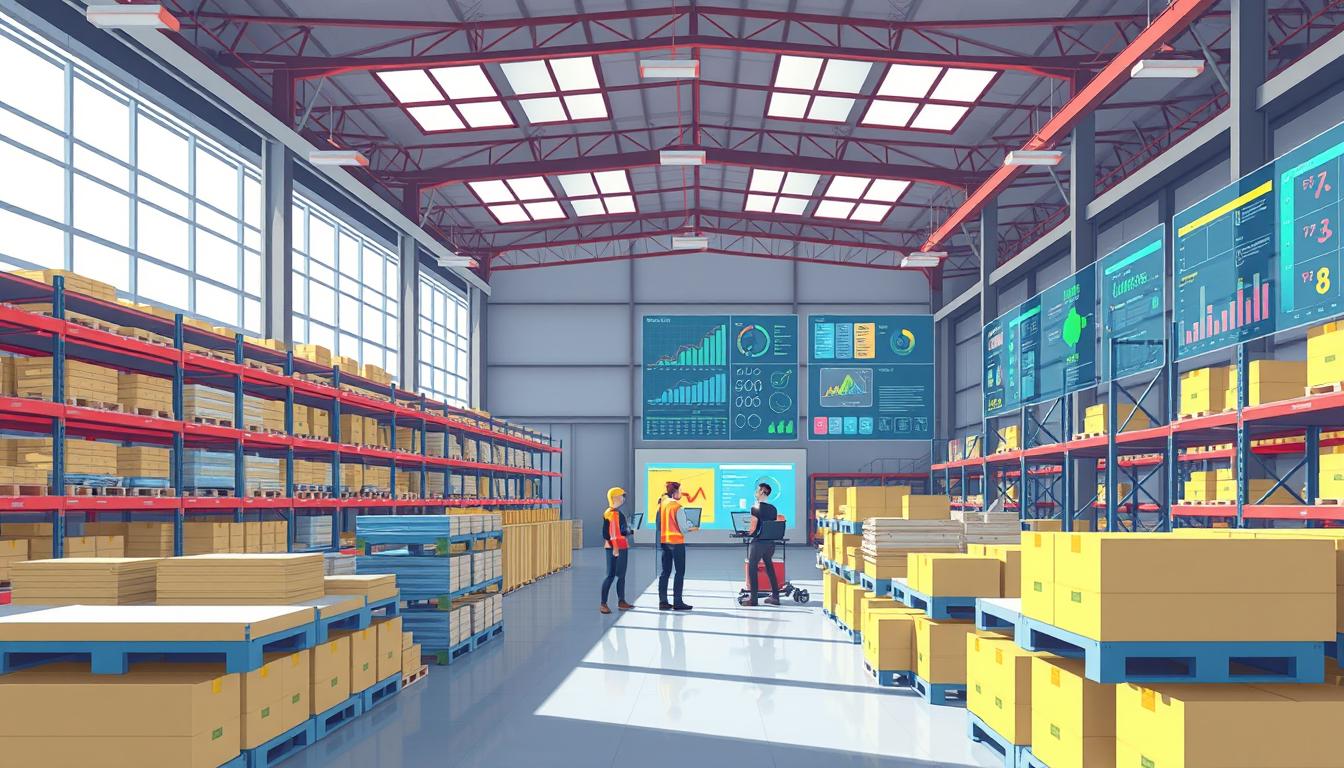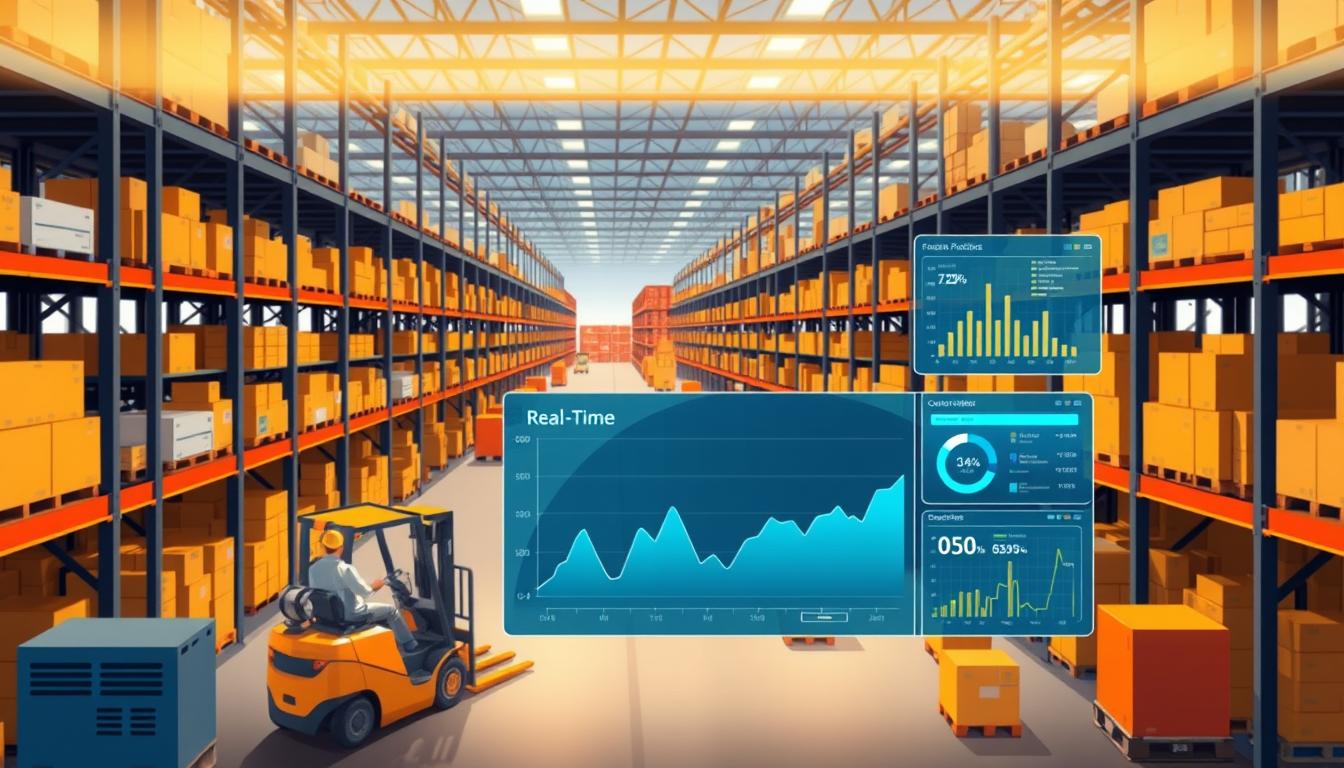
In a warehouse, things move fast. Pickers hurry, conveyors buzz, and managers watch costs. This article talks about using AI to make things better.
AI helps pickers move faster and saves money. It makes things run smoother. This is good for everyone.
AI looks at many options to find the best spots for things. It makes big changes. For example, it can cut pick travel time by up to 40%.
Companies like Blue Yonder are leaders in this field. They help warehouses work better. This shows AI is key for modern warehouses.
This article is for those in the US who want to improve their warehouses. It explains how AI can help. It gives steps to try it out and see results.
Key Takeaways
- AI Use Case – Warehouse Slotting Optimization targets reduced travel time and higher throughput.
- warehouse optimization AI can evaluate billions of combinations to find better slot layouts.
- AI-driven warehouse slotting has achieved measurable reductions in pick travel and costs in vendor reports.
- Automated slotting solutions are increasingly integrated into leading WMS platforms like Blue Yonder.
- This article is a practical case study for U.S. logistics leaders considering pilots and scale-up.
Understanding Warehouse Slotting Optimization
Warehouse slotting optimization is about putting items in the right spots. This makes picking easier, balances work, and speeds up how things move. It helps make order times shorter, workers more productive, and costs lower.
By using smart ways, messy aisles become smooth paths. These paths help with everyday tasks and big busy times.
Definition and Importance
Slotting means putting items in spots based on how fast they sell, size, and when they need to be restocked. It makes picking faster and uses less labor. Companies like Manhattan Associates and Blue Yonder use AI to find the best spots.
Good slotting considers how fast items sell, when they sell more, size, and how they pack. This helps managers plan better and use both people and machines well. It also changes spots as needed to meet demand.
How Slotting Affects Warehouse Efficiency
Bad slotting makes pickers walk more and causes jams near busy areas. This wears out machines, increases mistakes, and slows things down. It also costs more for energy and fixing things.
Good slotting makes picking faster, replenishment smoother, and things move better. AI helps teams try different setups and make changes without much trouble. This leads to more picks per hour and lower costs per order.
Here’s a look at how traditional and AI-driven slotting compare:
| Aspect | Rules-Based Slotting | AI Use Case – Warehouse Slotting Optimization |
|---|---|---|
| Decision Basis | Static heuristics and manager experience | Data-driven models that evaluate billions of combinations |
| Adaptability | Low; periodic manual reviews | High; continuous re-evaluation based on order patterns |
| Response to Seasonality | Reactive and slow | Proactive forecasting and preemptive re-slotting |
| Impact on Travel Time | Moderate improvement with effort | Significant reduction through optimized placements |
| Integration with Automation | Often manual tuning required | Seamless alignment with conveyors, AMRs, and WMS |
| Typical ROI | Incremental gains over long periods | Faster, measurable improvements in picks per hour and cost per order |
The Role of AI in Warehouse Management
AI is changing how warehouses work. It helps move from just doing tasks to planning ahead. This makes things run smoother and helps meet goals for managing stock and filling orders.
AI Technologies in Logistics
Machine learning predicts demand and helps restock. Computer vision checks items and makes sure picks are right. Route-optimization helps robots and transport move faster.
Natural language tools and generative assistants help with planning and solving problems. They can even handle shipping documents like bills of lading. This saves time and reduces mistakes.
Benefits of AI Integration
Using AI in warehouses brings big benefits. It makes things more efficient, reduces mistakes, and lowers returns. AI helps avoid running out of stock and cuts down on extra items.
AI does things like optimize pick lists and order priorities. It also helps robots find the best routes. These actions make things faster and more consistent.
When AI is used with big systems like SAP EWM, it keeps data safe and makes upkeep easier. Using AI in a smart way, like with SAP for logistics, really improves how things work.
To see how AI can help with slotting, check out Oracle’s supply chain resources at AI warehouse management.
Using AI as a key part of your business leads to better and faster results. Companies that see AI as essential do better than those who just add it on.
Key Algorithms Used in Slotting Optimization
The heart of modern slotting uses predictive models and search-based optimization. It turns order histories and real-time data into scores. These scores tell us where items should be placed.
Machine Learning Techniques
Supervised learning predicts demand and pick frequency from past orders. Time-series models handle short-term changes. This ensures replenishment matches demand peaks.
Clustering groups similar items by co-picks and handling needs. These groups help reduce congestion and travel distance.
Reinforcement learning tests decision policies in simulated environments. It learns to improve throughput and reduce hands-on time. This makes warehouse AI adapt to changes.
Heuristic and Metaheuristic Approaches
Rule-based heuristics offer quick, easy gains. They use ABC classification and size/weight zoning for fast layouts. These methods are good for quick wins and explaining layouts.
Metaheuristics explore large spaces where exact solutions are hard. They use simulated annealing and genetic algorithms to find good arrangements. These searches are key when dealing with complex constraints.
Hybrid strategies combine predictions with search. The ML layer scores hotspots, and the search layer tests arrangements. This mix creates practical, impactful plans that fit into existing workflows.
For more on how to implement these methods, check out this guide: AI warehouse slotting optimization.
Data Sources for Slotting Optimization
Good data leads to smart slotting choices. Warehouse teams use many data sources. They make models that put fast items where they’re easy to get and keep hard items separate.
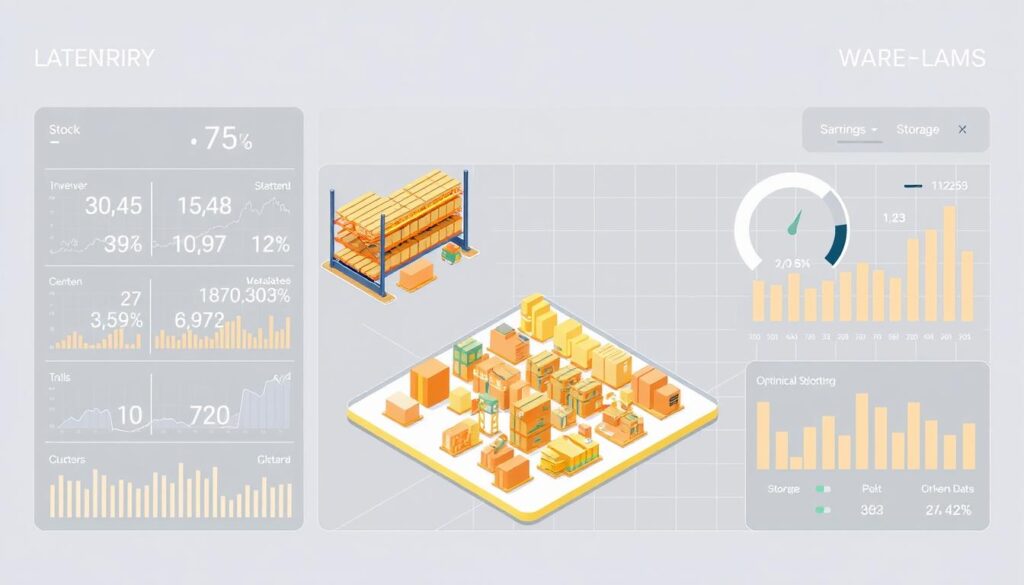
Inventory master files have info on item sizes, weights, and storage needs. They also show how much is in stock and how fast it’s sold. This data helps make sure items are placed correctly and safely.
Order history tells us how items are picked. It shows which items are picked often and when. This helps predict future picking patterns.
Outside data helps too. Things like sales trends and weather can affect picking. This data helps predict when items might be picked more.
Watching how things work helps find problems. Tools like AMR and conveyor systems show where things slow down. This info helps make picking routes better.
Keeping data clean is key. Solutions like SAP Business AI help manage data well. Good data is essential for smart slotting and understanding order history.
Teams should focus on keeping data clean and up-to-date. A good data flow leads to better results. AI works best with accurate and current data.
Steps to Implement AI-Powered Slotting
Starting AI for warehouse slotting needs a clear plan. The goal is to cut down travel time and boost picking speed. This guide helps teams from start to finish, focusing on measurable tests and picking the right vendor.
Assess Current Warehouse Layout
First, map out storage areas, pick spots, and travel paths. Also, note any fixed things like rack heights and door spots.
Find out where things get slow and busy. Check if AMRs or fixed conveyors can work there. Record how long it takes to pick items, how many items are picked per hour, and how many mistakes are made. This helps see how pilots will affect things.
Data Collection and Analysis
Do a deep dive into SKU records, order history, and inventory accuracy. Also, look at AMR data and demand signals. Put all this info into one place.
Clean up the data and figure out how fast items move and how demand changes. Use this info to test different slotting setups. This helps make AI models more realistic.
Choosing the Right AI Tool
Look at vendors based on how well they fit your needs. Compare AI tools that work with SAP for easy integration with cloud services from AWS, Azure, or Google. These might offer special features.
Focus on tools that support smart slotting, multi-order matching, and robot picking. Make sure they have proven success in logistics and have references from other warehouses.
Pilot Design and Rollout
Plan a small pilot in one warehouse or with a specific product. Make a clear plan with goals, metrics, timeline, and roles. Include training for staff and plans for changing how things work.
Make sure the pilot can turn off AI for safety checks. Collect enough data to show the benefits.
Integration and Scaling
Once the pilot works, apply the new slotting to more areas. Connect it with restocking, WMS/EWM, and AMR systems to make things run smoother.
Keep updating the AI model and watch how things change. This keeps improvements going over time.
| Step | Key Actions | Success Metrics |
|---|---|---|
| Assess Layout | Map zones, identify bottlenecks, check AMR compatibility | Baseline pick travel time, picks/hour, error rate |
| Data Audit | Consolidate SKU, orders, telemetry; compute velocity and seasonality | Data completeness %, simulation accuracy |
| Tool Selection | Compare SAP-integrated vs cloud vendors; prioritize intralogistics features | Implementation feasibility score, TCO estimate |
| Pilot | Run contained test, train staff, enable emergency rollback | MAPE, % travel time reduction, ROI timeline |
| Scale | Integrate with WMS/EWM and AMRs, set retrain cadence | Network-wide pick rate improvement, sustained accuracy |
Case Studies of Successful Implementation
AI changes how we sort things in real life. It shows how to make things better and faster. It works for both small stores and big warehouses.
Retail Sector Applications
Big stores use AI to put fast-selling items in easy spots. This makes picking faster during busy times. It also helps with online orders.
Stores like Walmart and Target use AI to guess what people want. They have fewer empty shelves during sales. This makes more things available and boosts sales.
These stores see better picking speeds and fewer returns. They also make more money by using less stock. This way, they don’t lose sales because of empty shelves.
Distribution Centers Success Stories
Big warehouses use AI to move things faster and more efficiently. They use special engines to find the best paths. This makes picking and packing better.
AI looks at many options to find the best way to move things. This makes picking faster. It also works well with robots and other machines.
Stores that use SAP with AI have better control over their data. They can see how well things are working. This helps them make things better and save money.
Comparative Outcomes
| Use Case | Primary Benefit | Typical KPI Improvement | Operational Impact |
|---|---|---|---|
| Store-level slotting for omnichannel | Reduced stockouts, faster fulfillment | Picks-per-hour +15–25% | Higher conversion during peak events |
| DC smart slotting with AMRs | Shorter travel paths, smoother traffic | Picker travel distance −20–40% | Lower labor cost and higher throughput |
| SAP-integrated slotting | Data governance and retrofittable features | Error rates −10–30% | Faster rollout and measurable KPIs |
Integration with Automation
AI works with robots and self-moving carts to pick items faster. It updates paths in real time. This helps avoid traffic jams.
This combo makes things move faster and saves money. It also makes planning easier. This is important for any AI project.
Key Metrics to Track
- Picks-per-hour and picks-per-shift
- Average picker travel distance
- Stockout frequency and lost-sales rate
- Error and return rates tied to slot changes
- Inventory carrying cost released after optimization
These examples show how AI helps stores and warehouses. They show how to make things better and faster. Teams can use these ideas to improve their work.
Challenges in AI Slotting Optimization
AI slotting aims to make things more efficient and save time. But, it faces real-world problems. These need careful planning and hands-on effort to solve.
Data Quality Issues
AI needs good data to work well. But, bad data can mess things up. This includes missing or wrong information.
Teams often struggle with data spread across different systems. Cleaning up this data is key before using AI. A good plan and tools can help connect AI services smoothly.
Start small to test AI. Check data first, then run tests. This way, you avoid big problems. For tips, check out warehouse slotting best practices.
Resistance to Change in Workforce
People can be slow to accept new tech. Workers might doubt AI or worry about losing their jobs. If they don’t see the benefits, they resist.
Start training early. Show how AI helps, not replaces. Make sure everyone knows how their work changes. This builds trust and confidence.
| Challenge | Typical Cause | Practical Mitigation |
|---|---|---|
| Data fragmentation | Siloed systems and inconsistent SKU records | Master data cleanup, ETL pipelines, regular audits |
| Model drift | Shifting demand, seasonal peaks, promo effects | Retraining cadence, monitoring dashboards, A/B testing |
| Integration complexity | Multiple cloud services and legacy WMS | API standardization, phased integration, vendor-aligned architectures |
| Operational limits | Safety rules, cold chain, physical layout | Constraints-aware optimization, retrofittable automation |
| Workforce resistance to AI | Fear of displacement and opaque recommendations | Pilots, role redesign, transparent KPIs, targeted training |
Measuring the Success of Slotting Strategies
To check if slotting work is working, we need clear numbers and feedback. Start with data from the first check, then watch how things change with new AI or rules. This shows how changes affect results clearly.
Key Performance Indicators (KPIs)
Choose a few important KPIs that match our goals. Focus on picks per hour, travel distance, and perfect orders. Also, look at pick errors, inventory turns, and warehouse costs.
- Picks per hour — shows how better layouts help.
- Travel distance per order — saves labor and cuts walking.
- Perfect order rate and pick error rate — shows quality and customer happiness.
- Inventory turns and days of inventory — checks space and money use.
- Total warehouse operating cost — shows how changes affect money.
Use financial numbers to see if we’re saving money. The ROI formula helps. Remember to include costs like software and upkeep.
For clear AI metrics, use a framework that covers tech, business, and user experience. Learn more at choosing the right metrics for AI.
Continuous Improvement Practices
Slotting gains don’t stop after one change. Make sure to keep checking and updating. Try small tests to see if changes work before making big changes.
- Update models often with new data and signals.
- Use tools for “what-if” tests before big changes.
- Listen to feedback and fix rules based on it.
- Keep a book of lessons from tests for faster future changes.
Use dashboards to show how changes affect business. Report weekly during tests, then monthly as things settle. Keep the first data as a baseline for measuring progress.
| Metric | What it Shows | Target |
|---|---|---|
| Picks per hour | Labor productivity after slot changes | Increase by 15–40% |
| Travel distance per order | Picker walking reduction and time saved | Reduce by 30–50% |
| Perfect order rate | Order accuracy and customer impact | 95%+ |
| MAPE (forecast accuracy) | Upstream demand precision affecting replenishment | Lower is better; aim for |
| Total warehouse operating cost | Net financial effect of slotting and AI | Measured against baseline using ROI |
Guides on slotting strategies help teams set up KPIs and guess labor savings. Find more at warehouse slotting strategies.
By using clear KPIs, monitoring, and learning, teams make steady progress. They get faster and cheaper over time.
Future Trends in Warehouse Slotting
The future of slotting will mix forecasting, robotics, and smart warehouse systems. Planners will use data to move items before they are needed. This will cut down on travel time and increase how much is moved.
Predictive Analytics and Slotting
Advanced demand sensing will help teams move items before they are needed. This uses data to guide when to restock and how much to keep in stock. Tools like SAP’s conversational assistants will help planners plan and solve problems with words.
Companies using AI to forecast can reduce extra stock and improve how often they meet demand. Studies show AI can lower forecasting mistakes and boost turnover. For more info, check out Miloriano.
The Impact of Robotics and Automation
Robots change how we design slotting. They help decide where robots can reach and how to pack items. Even small changes can add up over time.
Using AMRs and robotic pickers needs good planning between tech and slot rules. Companies like Blue Yonder and SAP are making it easier to integrate these systems. This makes things run smoother and easier to maintain.
Autonomous warehouses will use simulations to make decisions. Slotting will keep changing to meet demand in real time. This makes warehouses more efficient and flexible.
- Energy and sustainability: Smarter slotting cuts down on travel and energy use by finding the best routes.
- Operational resilience: Dynamic slotting helps warehouses respond quickly to changes in demand or supply.
- Vendor convergence: Working closer with WMS, AI, and robotics makes it easier to set up and get results faster.
Conclusion: The Future of AI in Warehousing
AI in warehouses has grown from small tests to big wins. It makes picking items faster, cuts costs, and reduces mistakes. This leads to more money for inventory, better service, and smarter storage.
For AI to work well, start with a clear goal. Make sure your data is ready. Choose AI solutions that work together well, like SAP Business AI.
Adding AI to your warehouse needs a solid plan. Check your data, pick a key area to improve, and set goals. Also, get your team ready for change.
Start small and show how AI helps. Then, grow your use of AI quickly. This way, you can make your warehouse better and save money.
FAQ
What is warehouse slotting and why does it matter?
Slotting is about placing items in a warehouse to make picking easier. It helps balance workloads and improve how fast items move. Good slotting makes picking faster, cuts costs, and lowers mistakes.
Poor slotting makes picking harder, slows things down, and hurts automated systems.
How does AI improve traditional slotting approaches?
AI uses data to suggest the best places for items. It looks at current orders and predicts demand. This helps find the best spots for items.
AI also uses special algorithms to find good layouts. It combines predictions with optimization to make slotting better.
Which AI technologies are commonly used in slotting optimization?
AI uses many tools like supervised learning and time-series models. It also uses reinforcement learning and clustering. Computer vision and NLP help too.
These tools are often found in WMS/EWM solutions or cloud services.
What measurable benefits can companies expect from AI-driven slotting?
AI-driven slotting cuts down on picking time and costs. It makes picking faster and reduces mistakes. This leads to more sales and lower costs.
Are there industry-recognized vendors that incorporate advanced slotting features?
Yes, many WMS/EWM vendors use AI for slotting. Blue Yonder is a leader in Gartner’s Magic Quadrant for Warehouse Management Systems. They are also in the Nucleus Research WMS Technology Value Matrix.
What data is required for effective AI slotting?
Good slotting needs accurate data on items and storage. It also needs current counts and replenishment times. Order history and other data help too.
How should a warehouse assess readiness before implementing AI slotting?
Start by mapping the warehouse and checking KPIs. Look at data quality and clean it up. This makes AI work better.
What are typical algorithmic strategies when the combinatorial space is huge?
When there are too many options, AI uses special algorithms. These algorithms search for good layouts. They use machine learning to guide the search.
Should companies choose integrated AI inside their WMS/EWM or external cloud services?
It depends on what you need. Integrated AI is good for data control and easy integration. Cloud services offer advanced tools but need more work.
How do organizations pilot AI-powered slotting effectively?
Start with a small pilot in one place. Define what you want to achieve and track it. Make sure to include training and let planners adjust AI plans.
How often should slotting be updated?
Slotting should change often. Use AI to keep it up to date. Update more often for fast-moving items.
What operational constraints can limit slotting changes?
Physical and safety rules can limit changes. Make sure changes are small and don’t disrupt operations. Work with robots to make changes easier.
How does slotting interact with robotics and AMRs?
Robotics make slotting more important. They need good layouts to work well. Use AI to plan routes for robots to improve efficiency.
What KPIs should be used to measure slotting success?
Use KPIs like pick time, picks per hour, and error rates. Also, track inventory and cost. This shows how well slotting is working.
How do companies maintain long-term performance of slotting models?
Keep an eye on performance and update models. Use feedback from staff to improve. Keep a record of lessons learned to help future projects.
What are common data quality pitfalls and how are they addressed?
Poor data is a big problem. Clean up data and check it regularly. Make sure all data is in one place for AI to work well.
What cost and ROI considerations should leaders evaluate?
Look at how much money you save and make. Compare costs and benefits to decide if it’s worth it. Show the savings to support the investment.
How does AI slotting support sustainability goals?
AI slotting saves energy by making picking more efficient. It also helps robots use less power. This reduces carbon emissions and supports green goals.
How should organizations manage workforce resistance to AI recommendations?
Start small and train staff. Show how AI helps them do their job better. Focus on how AI supports their work, not replaces it.
What future trends will shape slotting optimization?
Expect more advanced AI for slotting. Warehouses will become more automated and efficient. Better integration of AI and logistics will help achieve goals faster.
What is the recommended first step for companies considering AI-driven slotting?
Check your data and see where you can improve. Start with a small pilot and choose the right AI approach. Pair slotting with automation for better results.