One customer comment can change everything. A bad review on Amazon or a tough support chat can show big trends. This part talks about how to use these moments to make things better.
AI Use Case – AI-Powered Customer Sentiment Analysis makes voices and texts into useful info. It figures out if something is good, bad, or in between. It also shows how sure it is, from 0 to 1.
It looks at many places: social media, reviews, surveys, chats, and calls. This helps find trends that were hard to see before. It works with CRM and analytics to help make things better.
More and more people want these tools. Some think the demand will grow by over 3,000%. This means teams need to start looking at these tools fast. When used right, they turn feedback into data that helps with customer happiness, training, and making products better.
Key Takeaways
- AI Use Case – AI-Powered Customer Sentiment Analysis converts voice and text into actionable metrics.
- Models detect positive, negative, neutral, and mixed sentiment with confidence scores for clarity.
- Sentiment analysis using artificial intelligence works across social, review, survey, chat, and voice channels.
- Integration with existing tech stacks makes insights operational and actionable.
- Rapid market interest showcases the strategic benefit of early adoption.
Understanding Customer Sentiment in Business
Customer sentiment is the feeling in messages, reviews, and talks. It can be joy, satisfaction, frustration, or anger. AI gives scores to show how sure it is about these feelings.
Definition of Customer Sentiment
Sentiment is the emotion in text or speech. Today’s systems understand language to judge each sentence. They give labels and scores to show how sure they are.
These scores are close to one for strong certainty. They also show what people are unhappy about, like product quality or service speed.
Importance of Analyzing Sentiment
Reading scores is good, but emotion shows what people really mean. Sentiment analysis goes beyond numbers to understand why people feel certain ways. It helps catch problems early and keeps customers happy.
It uses data from surveys, reviews, and social media. AI makes it fast to find patterns in lots of text. But, it’s important to check these findings with people to avoid mistakes.
For more details, check out this guide on sentiment analysis at customer sentiment analysis. It talks about how to use AI for analyzing customer feelings.
| Aspect | What AI Delivers | Business Impact |
|---|---|---|
| Labeling | Positive, negative, neutral, mixed with confidence scores | Prioritizes responses and flags high-risk interactions |
| Granularity | Sentence-level and aspect-based breakdowns | Targets product fixes and coaching with precision |
| Volume | Automated, real-time processing of large datasets | Scales insights across channels and locations |
| Nuance | Emotion detection and context-aware models | Reduces false positives from sarcasm and slang |
| Actionability | Dashboards, alerts, and recommended next steps | Speeds decisions and improves customer experience |
Understanding these points shows how AI helps with customer sentiment. Companies that use AI wisely can turn feedback into real benefits.
The Role of AI in Sentiment Analysis
Businesses need tools that can handle more than humans can. Artificial intelligence makes customer feedback fast and deep. It turns random comments into clear signs for action.
How AI Enhances Traditional Methods
AI algorithms for sentiment analysis work on lots of text and voice quickly. This is faster than manual tagging. It gives teams insights in near real-time.
Teams can then sort feedback, find urgent issues, and see how feelings change over time.
Natural Language Processing (NLP) Explained
NLP starts with text prep: breaking it down into words, making words simple, and removing common words. This gets the text ready for deeper analysis.
Then, it uses special methods to find important words and patterns. It also looks at things like word length and punctuation.
Advanced models like BERT and RoBERTa understand tone and sarcasm better. They can learn from specific data to be more accurate. Older methods are good for quick, easy checks.
Today’s systems use text, voice, and past interactions to guess how someone feels. This helps make customer service more personal and quick.
Benefits of AI-Powered Sentiment Analysis
AI helps companies understand what customers really think. It finds unhappy customers fast and helps human agents quickly. It also asks for reviews when customers are happy.
Good customer relationships need quick, caring responses. AI helps agents know how to talk to customers. This makes service better and keeps agents happy.
Improved Customer Relationships
AI finds unhappy customers across different ways like calls and chats. This lets teams fix problems fast. Companies like Microsoft and Salesforce make it easy to start and grow.
AI understands many languages, helping teams worldwide. This keeps important information clear. It makes sure everyone in the company knows what customers really want.
Data-Driven Decision Making
Sentiment analysis turns opinions into numbers. Product teams see how customers feel about different things. Leaders make better choices with clear trends.
Managers see how agents do over time. Marketing changes plans based on what people feel. It also helps keep an eye on what competitors are doing.
The article from Podium shows how to use AI for customer feedback: customer sentiment analysis with AI.
- Scalability and speed: process thousands of interactions in minutes.
- Real-time alerts: detect widespread complaints before escalation.
- Data-driven marketing insights: refine messaging and targeting.
- Relatable advertising content: extract signals that shape creative direction.
Using AI brings real benefits. Customers are happier, problems are solved faster, and companies stay ahead. This shows how AI and good use can make a big difference.
Applications Across Industries
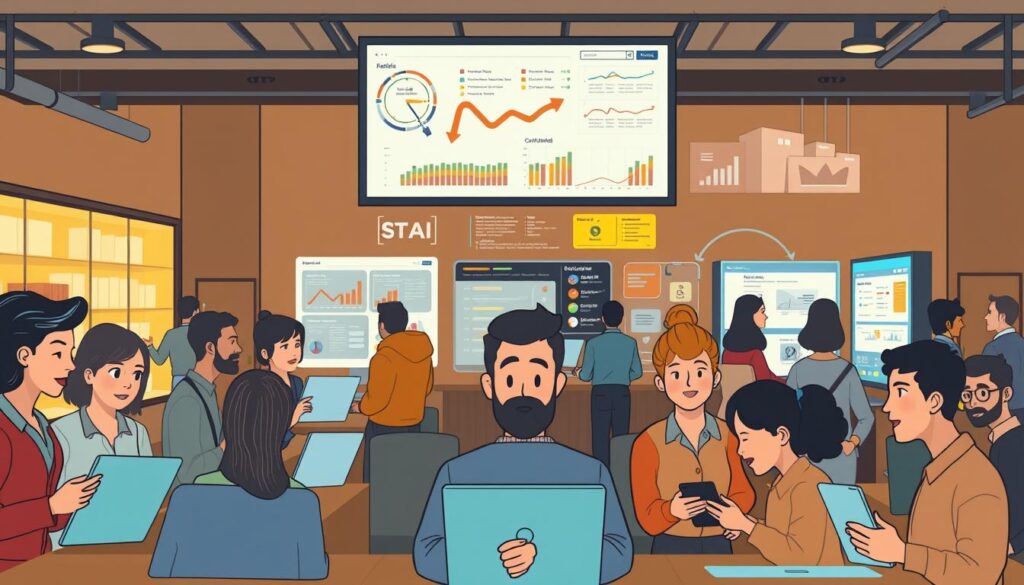
AI-Powered Customer Sentiment Analysis is used in many fields. This includes retail, hospitality, travel, social media, and finance. Companies use it to make sense of lots of feedback.
They aim to respond quickly, make smart choices, and improve customer experiences. They do this by using insights to target their actions.
Retail and E-Commerce
Retailers use AI to check how customers feel about products and services. They look at reviews and comments to find problems. This helps them fix things and improve delivery times.
AI also helps with upselling. It tells when customers are most likely to buy more. This keeps customers coming back and increases their value.
Hospitality and Travel
Hotels and airlines use AI to find out when customers are unhappy. They look at booking messages, reviews, and calls. This helps staff fix problems before they get worse.
AI makes fixing problems faster. It suggests offers or actions when customers are upset. This keeps customers happy and stops bad reviews.
Social Media and Marketing
Brands listen to social media to see what people are saying. They compare their feelings to others to change their ads. This helps them stay ahead.
Marketing teams at big companies like Nike and Coca-Cola use AI. They see how people feel about their ads. This helps them handle crises and change their messages fast.
Cross-Industry Integrations
Finance and trading use AI to understand market feelings. They mix news and social media to get a big picture. This helps them make quick decisions.
AI helps in many ways. It helps teams from product to trading desks. It gives them insights to make better choices and serve customers better.
Key Technologies Behind AI Sentiment Analysis
Knowing the tech behind sentiment analysis helps teams choose wisely. This section talks about main machine learning methods, training ways, and tools used in AI. It shows the trade-offs in how well they work, how big they can handle, and how easy they are to keep up.
Machine Learning Foundations
Simple classifiers are great for many tasks. Naive Bayes, logistic regression, and support vector machines are fast and easy to understand. They are often used as a starting point when picking a model.
Deep learning has changed the game for sentiment tasks. New models like BERT, RoBERTa, and DistilBERT have improved how well we understand text. They help spot sarcasm and complex phrases better.
Training Strategies and Lifecycle
Most teams use labeled data for training. They label examples, train models, and check how well they do. Unsupervised methods can group open-ended answers to find new themes.
Keeping models up-to-date is key. Training on new data helps them catch up with slang and new sayings. It’s also important to have humans check the work to fix mistakes and reduce bias.
Sentiment Analysis Tools and Software
Ready-made platforms make it easier to start. Microsoft AI Builder in Power Apps and Power Automate can label text with confidence scores. It supports many languages, including Spanish, Chinese, and French.
Commercial tools offer more features. Invoca and LiveHelpNow add voice analytics and CRM integration. Pick tools that fit your data needs and how fast you need results.
Integration Constraints and Best Practices
Some models have size limits, like 5,120 characters. API limits, like 400 calls per 60 seconds, also exist. Make sure to check these limits when choosing tools.
It’s smart to have humans review automated results. This catches tricky cases. Keep an eye on how well the models are doing and update them as needed.
| Technology | Strength | Consideration |
|---|---|---|
| Naive Bayes / Logistic Regression / SVM | Fast, interpretable, good for short text | Limited context handling |
| Transformers (BERT, RoBERTa, DistilBERT) | Strong contextual understanding; handles sarcasm | Higher compute and cost |
| Prebuilt Platforms (Microsoft AI Builder) | Quick setup; multi-language support; confidence scores | API limits; document size caps |
| Specialized Vendors (Invoca, LiveHelpNow) | Voice analytics; CRM integration; real-time suggestions | Vendor lock-in risk; integration effort |
Challenges in Implementing AI Sentiment Analysis
Using AI for sentiment analysis has its ups and downs. Teams face challenges like following rules, fitting the system, and trusting the model. A smart start helps avoid problems and keeps everyone’s trust.
Data Privacy Concerns
Handling customer talks, social media, and feedback needs strict rules. Laws like CCPA and HIPAA are very important. Companies must keep data safe with secure systems and follow rules.
They should plan how to use less data and keep it for the right amount of time. It’s also key to have good audit logs. Choosing the right vendors helps follow these rules better. For more tips, check out automating customer feedback analysis with AI.
Accuracy and Bias in Analysis
Language can be tricky, with slang and sarcasm confusing AI. Models might miss certain groups or situations. This can lead to bad decisions and hurt customer trust.
Teams need to use diverse data and check how sure the model is. Regular checks and updates help make the model fairer and more accurate.
Operational and Technical Friction
Getting sentiment data into systems like CRMs can be hard. Systems with easy APIs and connectors help. It’s important to test how well they work.
Plan for big data by having flexible systems. This way, you can handle lots of data without problems.
Practical Risk Management
Use AI with human checks to avoid mistakes. Start small, test, and improve before using it everywhere. This way, you get better results and keep risks low.
Key considerations: Data privacy in AI sentiment analysis, Implementing AI for sentiment analysis, and Accuracy and bias in sentiment analysis
Case Studies: Successful Implementations
Two companies, one in retail and one in banking, show how AI changes customer feedback into action. They use prebuilt APIs and custom models. They also put insights into CRM systems and use AI for customer sentiment analysis.
Example from a Leading Retail Brand
A big retailer looked at product reviews and customer service chats. They found complaints about fit, packaging, and shipping. They used cloud APIs and custom models to spot these issues.
They used these insights to fix problems quickly. This made customers happier and boosted sales. This example shows how AI can improve both satisfaction and profits.
Insights from a Financial Institution
A big bank listened to social media and call-center chats. They found issues with service and suspected fraud. They used special models and put the results in dispute queues.
This led to quicker fixes, fewer problems, and happier customers. They made sure to follow rules and keep data safe. This shows how AI can help in strict fields.
Both companies watched how fast problems were solved, how happy customers were, and how often they left. They kept their models up to date and checked them with people. They also made sure AI worked well with their teams and CRM systems.
Best Practices for Effective Sentiment Analysis
Good sentiment analysis needs the right tech, data plan, human check, and clear steps. Teams that follow these steps do better. They make smart choices about AI tools, train models well, and follow best practices.
Choosing the Right Tools
First, look at what vendors offer. Check if they support text and voice, cover many languages, and if their models fit your needs. Also, see if they have limits on API calls and data size.
Make sure the tools work with your CRM and BI systems. They should also give real-time insights. This makes it easier to use their data.
Pick tools that are safe and follow rules. Look for encryption, who can access data, and where data is stored. Test the tools with real data to see how well they work.
Training Models with Quality Data
Make datasets that show who you talk to. Include different types of data like chat logs and social media posts. This helps models understand different ways of speaking.
Update the data often to keep up with new words and ideas. Use human checks for unsure cases. This helps improve the models over time.
- Use balanced data to avoid wrong guesses.
- Keep labels the same by following clear rules.
- Test models with unseen data to see how well they generalize.
Operationalize and Maintain
Use sentiment data to make decisions. Set up rules for when to escalate issues. Make sure metrics match your business goals.
Keep an eye on how accurate the models are. Update them often and follow rules for ethical use. This keeps the system working well.
Measure and Iterate
Always check how well things are working. Use tests to see if changes are good. Talk to different teams to make sure everyone is using the data right.
By following these steps, teams can make smart choices. They train models well and use best practices. This leads to better results.
Future Trends in AI Sentiment Analysis
The field is moving from batch reports to constant insights. Teams will mix language, voice tone, and clicks to understand customer intent. This change shows the Future of sentiment analysis as a live guide for business decisions.
Integration of AI with Other Technologies
AI will blend with CRM and analytics for real-time actions. Multimodal models will add tone and behavior to CRM records. This helps companies quickly route cases and offer personalized services.
Transformer models will get better at understanding industry language and sarcasm. Salesforce and Microsoft are working on tools that link sentiment to customer profiles. This makes it easier to act on insights.
Evolving Consumer Expectations
People want faster, more caring responses from AI. They want replies that feel human and respect their privacy. Brands must balance personalization with being open to keep trust.
Real-time actions will set a new standard for quick responses. Sentiment-aware automation will help with urgent cases and suggest personalized offers. Companies that meet these expectations will build stronger loyalty and better results.
Measuring the Effectiveness of Sentiment Analysis
Companies need clear goals for sentiment analysis. They must define success. This helps link model performance to business results.
Key performance indicators to monitor
Start with technical KPIs: model accuracy, precision, recall, and confidence. Also, track false positives and negatives. Use A/B tests to check if model actions improve things.
Link technical KPIs to business metrics: CSAT, NPS, and more. Show how sentiment changes with product updates or marketing. This proves the impact of sentiment analysis.
| Metric Type | Example Metrics | Why It Matters |
|---|---|---|
| Technical | Accuracy; Precision; Recall; Confidence Scores | Shows model reliability for automated decisions |
| Operational | Average Handle Time; First-Contact Resolution | Connects sentiment to contact center efficiency |
| Customer | CSAT; NPS; Churn Rate | Demonstrates business impact of sentiment signals |
Continuous improvement strategies
Use feedback loops to improve models. Review low-confidence cases. Retrain models after product updates or language changes.
Set rules for model performance. Use thresholds and alerts. This keeps systems trustworthy and compliant.
Make dashboards and alerts for actions. Link these to KPIs. This shows the impact of sentiment analysis.
See how big brands use topic and sentiment analysis. Check out examples from Marriott, Amazon, and more at real-world examples of AI topic and sentiment. These examples show how tracking KPIs helps business decisions.
Conclusion: The Future of Customer Engagement
AI is changing how companies understand and use feedback. It turns complex feelings into clear signs. This helps businesses make customers happier, keep them coming back, and make smart choices in many areas.
Embracing AI for Business Success
Business leaders should start using AI for feedback. Begin with tools that analyze text and voice, work with CRM systems, and have human checks for better results. For examples and more info, check out this guide on using sentiment tools in real-world scenarios.
The Importance of Adaptability in AI Solutions
Using AI for feedback needs constant updates and checks to avoid mistakes. Teams that keep data clean, protect privacy, and use AI in many ways will do best. They will make customers happier and grow more.
FAQ
What is AI-powered customer sentiment analysis?
AI-powered customer sentiment analysis uses special tech to understand what people say and feel. It turns words and sounds into feelings like happy or sad. This helps businesses know what customers really think.
How is customer sentiment defined for business use?
Customer sentiment is how people feel in what they say or write. It can be happy, sad, or just okay. AI helps find these feelings to help businesses understand their customers better.
Why does sentiment analysis matter more than traditional metrics?
Sentiment analysis shows how people really feel, not just what they say. It helps find unhappy customers early and figure out why. This helps businesses make things better for their customers.
How does AI improve traditional sentiment methods?
AI can look at lots of text and sound fast, like social media and calls. It’s way better than people at finding feelings in words. It also gets better over time with new data.
What are the NLP fundamentals used in sentiment systems?
NLP is like breaking down words into parts to understand them. It includes steps like making words simple and removing common ones. This helps machines understand what’s being said.
Which machine learning models are commonly used?
There are many models, but some are better at understanding feelings. BERT and RoBERTa are good at catching sarcasm. They get even better with more data.
Can sentiment analysis combine text and voice?
Yes. Modern systems can mix what people say and how they say it. This makes understanding feelings even better.
Which channels can AI sentiment tools analyze at scale?
AI can look at lots of places, like social media and reviews. It finds trends that were hard to see before. It also works with CRM systems for better insights.
What business outcomes can organizations expect?
Businesses can see happier customers and solve problems faster. They can also train agents better and make products that people want. This makes customers happier and keeps them coming back.
Are there real tools that support voice and text sentiment analysis?
Yes. Tools like Microsoft AI Builder help understand feelings in words and sounds. Companies like Invoca and LiveHelpNow use these tools to help agents talk to customers better.
What are typical measurement outputs from sentiment models?
Models give scores and labels for feelings. These scores show how sure the model is. Some tools even break down feelings sentence by sentence.
How accurate are sentiment models when handling sarcasm or slang?
Advanced models are getting better at understanding sarcasm and slang. But, they can make mistakes. It’s important to keep checking and updating them.
What learning paradigms do organizations use?
Companies often use labeled data to train models. But, they also use data without labels to find new patterns. This helps models get better over time.
What are the main implementation constraints to watch for?
There are limits to how much data models can handle. Also, they need to work fast to keep up with lots of data. Make sure your system can handle this.
How should companies choose sentiment tools?
Look for tools that work with text and sound, support many languages, and can be customized. Check if they fit with your CRM and can handle lots of data. Also, make sure they follow privacy rules.
What data strategy yields the best model performance?
Use a mix of labeled and unlabeled data to train models. Keep updating the data to keep models sharp. Also, make sure to correct mistakes to avoid bias.
How do organizations mitigate privacy and compliance risks?
Use encryption and access controls to protect data. Follow rules like CCPA and HIPAA when dealing with sensitive info. Keep records for audits.
How is human-in-the-loop used in sentiment workflows?
Humans check and correct models when they’re not sure. This keeps models accurate and fair. It’s important to keep models updated and unbiased.
What KPIs should teams track to measure success?
Watch how accurate models are and how well they help the business. Look at things like customer happiness and how quickly problems are solved. See how changes in products or services affect these numbers.
Can sentiment analysis be used for targeted agent coaching?
Yes. Sentiment analysis helps find areas where agents need to improve. This helps them talk to customers better and keeps customers happy.
How do businesses operationalize sentiment outputs?
Use sentiment to guide actions, like sending messages or fixing problems. Make sure teams can act on this info quickly and consistently.
What are common sources of bias in sentiment models and how are they addressed?
Bias can come from data that doesn’t show all sides or from language issues. Use diverse data, check for mistakes, and keep models updated. This helps make sure models are fair.
What are examples of successful real-world implementations?
A big retailer used sentiment to find and fix problems with their products. A bank used it to talk to customers better and keep them happy. These examples show how sentiment can make a big difference.
Which industries benefit most from sentiment analysis?
Many industries can use sentiment analysis, like retail, hospitality, and finance. It helps find problems, understand customers, and make better decisions.
What operational limits should architects design around?
Plan for limits on data and how fast models can work. Make sure systems can handle lots of data and keep working well under pressure.
How do organizations maintain continuous improvement?
Keep updating models with new data and check how well they’re working. Use feedback to make models better and track how changes affect the business.
What future trends should teams prepare for?
Expect more use of sound and behavior in analysis. Models will get better at understanding different situations. Businesses will need to be more open and caring in their use of AI.
What governance practices ensure responsible deployment?
Set clear goals for accuracy and watch for problems. Keep records and follow privacy rules. Make sure humans check models and check for bias regularly.
How should companies start a sentiment analysis pilot?
Start with a small test, like analyzing chat or reviews. Choose tools that are easy to use and work well with your systems. Start small and see how it helps before doing more.
How does Miloriano.com recommend organizations approach sentiment analysis?
Start with tools that understand words and sounds and work with your CRM. Make sure to keep data safe and update models often. Use sentiment to make things better for customers.