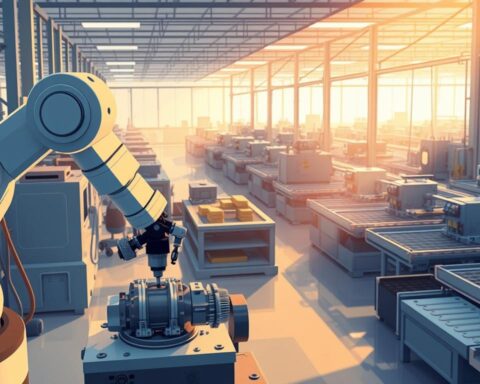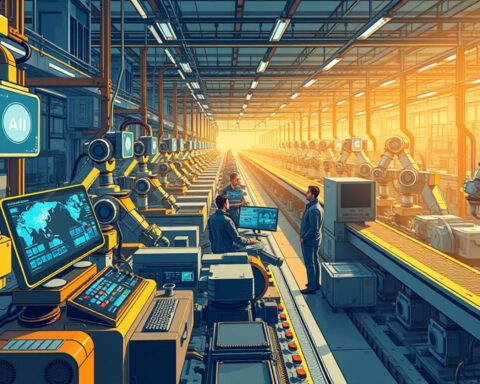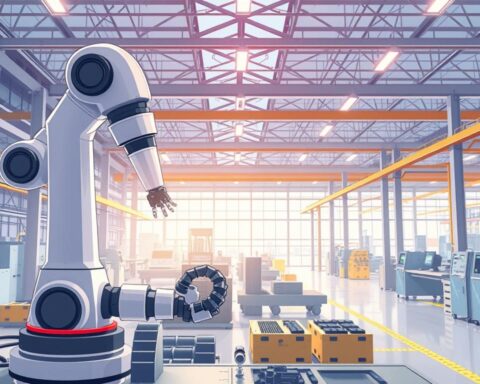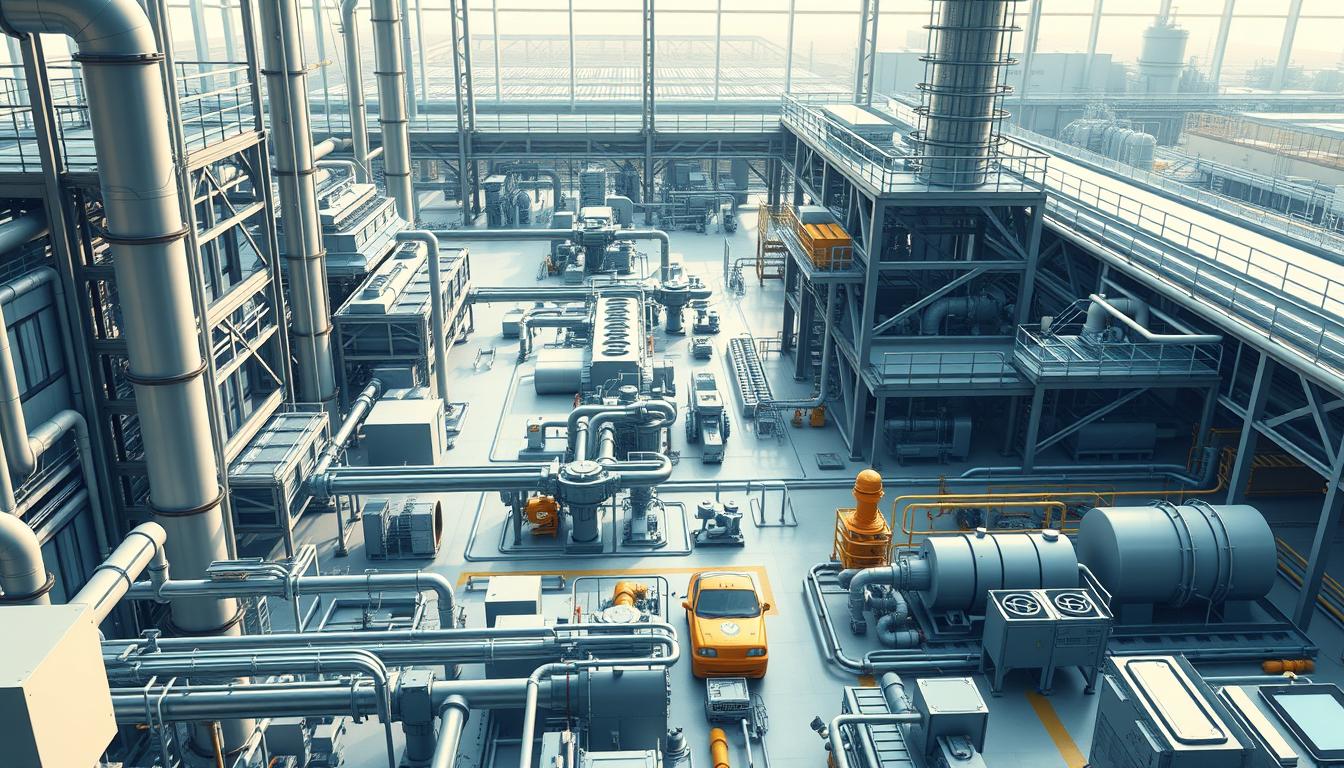
In the control room, there’s a mix of urgency and hope when planning a new production line. Engineers juggle schedules, budgets, and safety. Leaders want things faster. This is a chance to change the way we plan, using tools that show us what’s coming.
This article talks about using AI for plant layout. It shows how digital twins change planning and operations. We’ll look at real examples, how it works, and how to use it in U.S. factories and warehouses.
There’s a big push in the industry. NVIDIA Omniverse and NVIDIA AI Enterprise, with partners like Microsoft and Rockwell Automation, are leading the way. They use high-performance GPUs to make big simulations and data. This helps make AI models better and keeps humans safe around robots.
We can expect faster planning, less time setting up, better maintenance, and safer designs. Miloriano.com shares this to help you get the most out of AI for plant layout. It’s all about saving money and getting ahead with AI.
Key Takeaways
- AI Use Case – Digital-Twin Simulation for Plant Layout turns planning into predictive, testable scenarios.
- Plant layout digital twin shortens commissioning time and improves safety for human-robot workflows.
- Digital twin technology for efficient plant design leverages NVIDIA Omniverse, Microsoft, and Rockwell ecosystems.
- High-performance GPUs like NVIDIA RTX PRO enable realistic simulation and synthetic data for AI models.
- Adoption delivers measurable ROI: lower costs, faster decisions, and better resource utilization.
Introduction to Digital Twin Technology
A digital twin changes how teams plan and run facilities. It uses live data and models to mirror a machine, line, or plant. This helps in picking the right digital twin software and defining what a plant layout digital twin should include.
What is a Digital Twin?
A digital twin is a virtual copy of a real asset, process, or facility. It gets data from smart sensors and IoT devices. This makes the twin act like the real thing in real time.
It’s more than a 3D model. It lets analytics guide actions and the real asset update the digital model. This idea started with NASA’s Apollo missions and grew with Dassault Systèmes’ work on the Boeing 777.
Now, it uses IoT, AI, and machine learning to handle lots of data. This shows how things perform. For more info, check out this guide on digital twins from AWS: what is a digital twin.
Importance of Digital Twins in Industry
Big names like Siemens, ABB, PTC, and Microsoft use digital twins. They make commissioning faster and reduce risks. These models help with virtual testing, monitoring, maintenance, and training.
Using digital twin software lets teams test layouts without stopping production. This means fewer surprises and better planning. It helps everyone work together better.
There are different types of twins, like part and asset twins. But for layout, plant and process twins are best. They help planners make quick changes and see the effects before anything is built.
Benefits of Using Digital Twins in Plant Layout
Using a digital twin changes how teams plan and build facilities. It makes things run better, look better, and helps the planet. Leaders from Siemens and Honeywell say projects go faster with simulation.
Enhanced Efficiency and Productivity
Simulation lets engineers test things before making changes. It helps avoid problems and balance workloads. A digital twin can also help with robots and fill gaps without trial-and-error.
Improved Decision-Making Processes
Visual scenarios help everyone agree during design and building. Real-time data makes it easy to find and fix problems. This makes things run smoother and faster.
Reduced Costs and Resource Waste
Virtual testing saves money by planning equipment better. Predictive maintenance cuts costs by reducing downtime. Many companies see big returns from using digital twins.
It also helps save energy and materials. This reduces waste and makes things better for the planet. It also saves money and opens up new ways to use data.
Companies wanting to use digital twins should mix AI with their knowledge. This makes it easier to improve plant layouts. It’s a smart way to make operations better and greener.
Components of Digital Twin Simulation
This section talks about the main parts of a digital twin for plant layout. It shows how data moves from the shop floor to virtual models. It also explains how simulation models help test and improve things.
Data Acquisition and Integration
Sensors and IIoT devices send real-time data to the digital twin. This data keeps the virtual model up to date. It includes things like machine states and material positions.
Standards like OPC UA and RESTful APIs help connect these devices. Tools from Microsoft and Rockwell Automation help put all this data together. This makes it easier to analyze everything in one place.
It’s important to make sure all data is in the same format. This helps the digital twin software work better. It ensures that all data is ready for simulation and making decisions.
Simulation Models and Algorithms
Physics models are used to create detailed simulations. They handle things like fluid flow and robot movements. Discrete-event models and agent-based approaches help with material flow and worker interactions.
Reduced-order models make it faster to try out different layouts. Machine learning adds more to the simulation. It predicts failures and helps with making decisions.
NVIDIA Omniverse and Omniverse Kit offer tools for running big 3D simulations. RTX hardware makes these simulations faster. These tools work with other systems to make sure virtual tests match real production.
Before using the digital twin in real life, it’s tested virtually. Teams can try out new ideas in the simulation. This reduces risks and makes starting up faster.
| Component | Purpose | Representative Tools |
|---|---|---|
| Sensors & IIoT | Capture live telemetry for state awareness | Siemens sensors, Honeywell transmitters, OPC UA gateways |
| Connectivity & Protocols | Standardize data flow and reduce silos | OPC UA, MQTT, REST APIs, Rockwell Automation integrations |
| Data Platforms | Store and process streams at edge or cloud | Microsoft Fabric, Azure IoT, AWS IoT |
| Simulation Engines | Run physics and discrete-event scenarios | NVIDIA Omniverse, AnyLogic, Siemens Simcenter |
| AI & Analytics | Predictive maintenance and optimization | PyTorch, TensorFlow, Azure ML, NVIDIA Rapids |
| Visualization & XR | Interactive review of layout and workflows | Unity, Unreal Engine, Omniverse Kit, HoloLens |
| Enterprise Integration | Close the loop with operations and planning | MES/ERP connectors, SCADA adapters, SAP, Rockwell |
When all these parts work together, digital twins become useful tools. They help teams make better decisions and improve the physical plant.
The Role of Artificial Intelligence in Digital Twins
Artificial intelligence changes how teams design and test plant layouts. It links live sensor feeds with simulated models. This lets teams try new ideas without stopping production.
AI analytics for digital twins spot problems and suggest fixes. They help with how to use resources better. They also watch how humans and robots work together.
Machine learning makes testing layouts faster. It helps with quality checks and robot work. This way, engineers can try many ideas quickly.
Generative AI helps teams plan together faster. It cuts down the time needed for planning. This makes it safer to try new things in virtual spaces.
AI does more than just suggest ideas. It tells teams what to do next. It can even try different things and pick the best one.
To use AI well, teams need to test it and see how it works. They must follow rules for data and make sure it’s right. This way, AI can make layouts better and safer over time.
Use Cases of Digital Twin in Plant Layout Design
Digital twins are very useful in real projects. They help in manufacturing, warehousing, and supply chains. Teams use virtual models to test changes without stopping production.
This method makes decisions faster, lowers risks, and shows design trade-offs early. It helps avoid physical work mistakes.
Manufacturing Facilities
Manufacturers use digital twins to improve line layouts and cut commissioning time. ABB’s PickMaster Twin is an example. It checks robot paths and cell arrangements before hardware arrives.
Schaeffler and Accenture worked together with Microsoft Fabric. They tested robot sequences and layout improvements. This helped protect workers and keep production high.
Warehousing Solutions
Digital twin platforms for warehousing let operators test flows and autonomous fleets. KION Group AG, Accenture, and NVIDIA worked on autonomous robots. They compared different setups to boost efficiency.
Simulations show where things get stuck, picker routes, and staging layouts. Planners try out changes virtually. This reduces disruptions and keeps services running well during busy times.
Supply Chain Optimization
Network twins map product flows, inventory, and logistics. They help improve resilience. Planners test scenarios for demand changes, port delays, and supplier issues.
The model suggests better inventory placement and routing. This lowers lead times. It also improves forecasting and aligns production with warehouse and transport capacity.
Across all digital twin projects, we see common themes. These include virtual testing, scenario planning, and simulating robot fleets. There’s also focus on workforce ergonomics and safety.
Results include faster adaptation to demand, less manual work, and more flexibility. Digital twins make a big difference in plant layout design.
Implementing Digital Twin Simulation
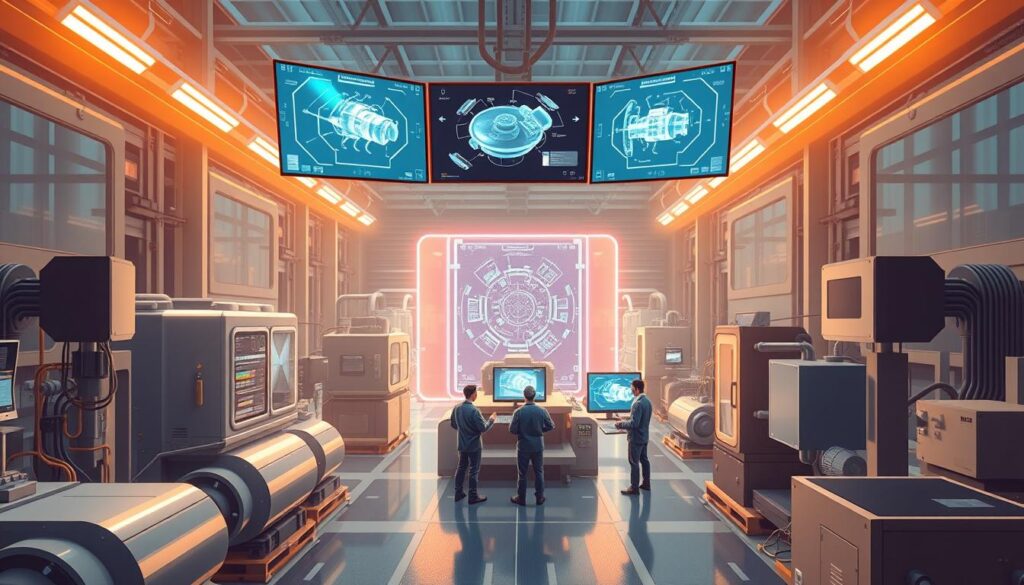
Creating a plan makes using digital twin simulation easier for plant teams. Start with clear goals, check your data, and choose a specific area to focus on. This way, you avoid big risks and get quick wins to keep everyone excited.
Steps for Successful Integration
- Define objectives and KPIs: set targets for throughput, OEE, commissioning time, and energy use.
- Audit assets and data sources: identify sensors, legacy equipment compatibility, and data gaps.
- Choose scope and twin types: begin with system or unit twins for quick wins; plan scale-up to a plant or facility twin.
- Build data pipeline and governance: unify data, remove silos, standardize formats, and secure access.
- Model and simulate: combine physics-based models with machine learning; validate with synthetic and real data.
- Pilot and iterate: run proofs of concept—such as robot fleet simulation—measure KPIs, then refine models.
- Scale and integrate: connect twins to MES, ERP, and SCADA; deploy agentic AI for operational tasks.
- Train workforce: invest in upskilling and change management to lower cultural resistance.
Tools and Software Platforms
Choosing the right digital twin software is key for fast and accurate setup. Top choices include Siemens, Rockwell Automation, AVEVA, PTC, Dassault Systèmes CATIA, Ansys, and Bosch solutions.
NVIDIA Omniverse and NVIDIA AI Enterprise boost visualization and model training with high-performance GPUs like NVIDIA RTX PRO. Microsoft Fabric and Accenture Neuron help with data orchestration and big data analysis.
For specific needs, like robotics, ABB PickMaster Twin or domain SDKs and APIs are great. A mix of big suites and specialized tools works best for plant layout simulation.
Plan your investment in phases and work with experienced integrators to lower risks. Address upfront costs, legacy integration, skills gaps, and security early to keep your project on track.
Case Study: Success Stories in Digital Twin Implementations
Real projects teach us the most. Many big companies teamed up with tech firms to try out digital twin software. They wanted to see how it could make their plants better.
The KION Group worked with Accenture and NVIDIA. They made a digital twin to improve warehouse work. They tested how robots could work together better and finish tasks faster.
Schaeffler teamed up with Accenture and Avanade for a special project. They used a digital twin to see how to make a plant layout better. They tested robot groups and data to find the best way to set things up.
Accenture made a platform called Neuron. It uses NVIDIA Omniverse and AI to simulate factories. This helped reduce costs and speed up planning.
The table below shows how these projects were different. It also shows what made them successful.
| Project | Primary Focus | Key Partners | Measured KPIs | Outcome |
|---|---|---|---|---|
| KION digital twin case study | Warehouse robot interactions and layout tuning | KION Group, Accenture, NVIDIA | Throughput, task completion time, congestion incidents | Improved throughput and optimized robot routing before deployment |
| Schaeffler digital twin case study | Plant layout optimization and commissioning speed | Schaeffler, Accenture, Avanade, Microsoft | Availability, utilization, commissioning time | Validated layout changes and reduced commissioning cycles |
| Accenture Neuron on Omniverse | Cloud-based factory simulation and collaborative engineering | Accenture, NVIDIA | Engineering lead time, capex risk exposure, cross-team alignment | Faster engineering cycles and lower risk in capital investment |
Teams learned a few key things. First, have a clear plan and goals. Start small to test ideas and avoid big risks.
Working together was key. Experts and tech teams needed to talk and share ideas. Using standards like OpenUSD helped share data smoothly.
Testing ideas in a virtual world saved money and time. It helped make sure things worked right before they were used for real.
Keeping data safe and organized was important. This built trust among everyone involved.
Teaching people new skills and changing how things work was important. Training workers and making clear rules helped make sure things kept working well.
Challenges of Digital Twin Technologies
Digital-twin projects can make plant layout better. But, they face many practical barriers. Leaders must deal with technical gaps, resistance, and lack of resources.
Data quality and integration are big challenges. Old equipment often needs new interfaces. This makes work for teams and integrators.
Siloed databases and models slow things down. Bad data makes insights less accurate. This makes keeping models up to date harder.
Security and privacy risks grow as things get connected. Keeping data safe is key. Companies must protect sensor data and cloud platforms.
Sharing data with suppliers and partners is tricky. Using strong controls helps. This includes encryption and regular checks.
Data Privacy and Security Concerns
Operational data can be very sensitive. Hackers target production networks. Teams need to decide who sees what data.
Regular tests and third-party checks are important. This helps keep data safe.
Rules from different countries add to the challenge. Companies must handle data carefully. Using secure networks and tokenized data helps.
High Initial Investment
Starting a digital twin project costs a lot. This includes buying sensors and software. For companies with small profits, this can be a big problem.
Starting small and using Opex models helps. Companies like Accenture offer ways to start small. This lets teams see results before spending a lot.
Finding skilled people is hard. There are not enough experts in IoT and AI. Working with universities and experienced partners helps.
Good planning is key. It involves fixing technical issues and changing how teams work. For more info, check out a technical overview of digital twins.
Future Trends in Digital Twin Simulations
The future of engineering and leadership is changing fast. New trends in digital twin simulations are coming. They will make things faster, smarter, and more valuable.
AI and machine learning are getting better for digital twins. They will create new scenarios and improve how things work. This will make designing and running facilities safer and faster.
Edge-cloud hybrid compute and better GPUs will help with fast simulations. Standards like OpenUSD will make it easier to work with 3D models. This will speed up making complex digital twins.
More industries will use digital twins soon. This includes energy, healthcare, aerospace, and smart cities. They will use twins for better performance and sustainability.
We can expect faster adoption and more smart facilities. AI will help with maintenance and scheduling. This will lead to more efficient and sustainable operations.
Leaders should start small and partner with tech companies. They should also work on data standards. This way, they can use AI safely and effectively.
Best Practices for Effective Digital Twin Utilization
Using a digital twin for plant layout needs good management. Think of it as a living thing. Update it regularly and keep a record of changes.
Continuous Monitoring and Updates
Use tools to check data and find problems. Update the model often to keep it right. This keeps the virtual and real plants in sync.
Test updates with fake data before using them. Tools like NVIDIA Omniverse help with this. They let teams check changes without stopping work.
Follow standards like OpenUSD and OPC UA. Use secure ways to share data. This keeps everything safe and working well together.
Collaborating with Stakeholders
Work together with different teams. This includes people from engineering, operations, IT, and business. Use pictures to help everyone understand and agree.
Work with trusted partners like Accenture and Microsoft. They bring knowledge and help with setup. Train your team and be open about changes to get everyone on board.
Make a simple plan for who does what. This plan covers data, updates, and who can access it. It makes sure everyone knows their role in using the digital twin.
| Practice | Action | Impact |
|---|---|---|
| Monitoring cadence | Automated validation and scheduled recalibration | Maintains model accuracy and reduces unplanned downtime |
| Testing pipeline | Synthetic data and virtual validation in staging | Prevents faulty deployments and preserves production stability |
| Standards & security | OpenUSD, OPC UA, RBAC, encrypted APIs | Ensures interoperability and protects sensitive plant data |
| Stakeholder enablement | Cross-functional teams, vendor partnerships, training | Accelerates adoption and improves decision-making |
For more on how to use digital twins, see Deloitte’s analysis. It talks about cloud and IoT use and real-world examples: digital twin strategy. This gives a big picture view of how to use digital twins well.
When teams keep up with digital twin updates and work together, it helps a lot. It makes things more efficient and safer.
Measuring Success of Digital Twin Initiatives
To track value from an AI Use Case – Digital-Twin Simulation for Plant Layout, teams must set clear targets and baseline metrics before pilots begin. A focused approach to measuring success digital twin initiatives keeps stakeholders aligned and makes scaling decisions evidence-based.
Key Performance Indicators (KPIs)
Define operational KPIs like throughput, cycle time, and overall equipment effectiveness (OEE). Also, mean time between failures (MTBF), mean time to repair (MTTR), availability, and utilization. These metrics show how the twin changes day-to-day operations.
Include financial KPIs: capex avoidance, reduced commissioning costs, and energy cost savings. Also, spare-parts inventory reduction and maintenance cost savings. These figures tie simulations to balance-sheet impact.
Track safety and quality KPIs: incident rate reduction, defect rate, and rework costs. Add sustainability KPIs like energy intensity, carbon emissions per unit, and waste reduction. This reflects long-term value.
Use a compact table to compare typical KPI categories and representative measures across pilot and scaled phases.
| KPI Category | Pilot Metrics | Scaled Deployment Metrics |
|---|---|---|
| Operational | Throughput change (%), MTTR reduction (hours) | Sustained OEE increase (%), Utilization rise (%) |
| Financial | Commissioning cost saved ($), Initial capex avoidance ($) | Annual maintenance savings ($), Inventory reduction ($) |
| Safety & Quality | Incident rate drop (%), Defect rate drop (%) | Rework cost reduction ($), Ergonomic score improvement |
| Sustainability | Energy intensity change, Waste reduced (kg) | CO2 per unit decline (%), Long-term energy savings ($) |
Analyzing ROI and Impact
Establish baselines and run controlled pilots to quantify gains. Use both direct savings, like reduced downtime and lower commissioning costs. Also, indirect benefits, such as faster time-to-market and improved collaboration.
Case studies from Accenture and Hexagon report many companies seeing more than 10% returns. Some sectors show higher median ROI. Present conservative and optimistic scenarios to set realistic expectations.
Deploy dashboards and unified data platforms—Microsoft Fabric, integrated MES/ERP systems—to monitor KPIs for digital twin continuously. Live dashboards make executive reporting factual and timely.
Create a continuous improvement loop: iterate on models and KPI sets. Capture lessons from proofs of concept, and expand twin scope to compound value. This methodical cycle improves confidence in ROI digital twin plant layout and supports sustained adoption.
Conclusion: The Future of Plant Layout with Digital Twins
KION, Schaeffler, and Accenture Neuron found big wins with digital twins. They saw better efficiency, design, and maintenance. This shows the power of digital twins in plant layout.
These companies got faster setup, more output, and better choices. Their success proves investing in digital twins is smart.
Embracing Innovation for Competitive Advantage
Those who jump in early win big. They use tools like NVIDIA Omniverse and Microsoft Fabric. This helps them be quick and agile.
Starting small and measuring results is key. It keeps things manageable and focused. This way, embracing digital twins is smart and effective.
The Path Forward in the Age of AI
The future of AI in plant layout is exciting. We’ll see more smart, green, and efficient plants. It’s all about combining AI with digital twins.
Experts should learn new skills and work together. Running pilots that match business goals is important. This way, we can lead the way in AI plant layout.
Miloriano.com offers a clear plan. It gives a simple strategy and steps to follow. By seeing digital twins as an AI tool, we can change and improve our operations.
FAQ
What is a digital twin and how does it differ from a 3D model?
A digital twin is a virtual copy of a real thing. It uses data from sensors to act like the real thing. Unlike a 3D model, it’s alive and changes with new data.
Why are digital twins important for plant layout and manufacturing facility design?
Digital twins help plan and test changes before they happen. They make sure everything works right and save time. They also help find problems and make things safer and more efficient.
What measurable benefits can manufacturers expect from plant layout digital twins?
Manufacturers can see better performance and faster setup times. They also save on maintenance and waste. Studies show big savings and improvements in how things work.
Which core components make up a digital twin simulation for plant layout?
A digital twin needs sensors and IIoT devices for data. It also needs secure connections and a place to store data. Plus, it needs tools for analysis and simulation, and ways to show what’s happening.
How does AI enhance digital‑twin simulations for plant layout?
AI looks at data to find problems and predict what will happen. It uses machine learning to make simulations faster. It also helps plan and design better.
What types of simulation models are used for layout optimization?
There are different models for different needs. Some focus on how things move, others on how materials flow. Hybrid models mix these to get the best results.
Can digital twins validate AI models before production deployment?
Yes, digital twins can test AI models safely. They mimic real-world conditions to check if AI works well. This makes sure AI is ready for use.
What software and platforms support industrial plant layout digital twins?
Many platforms help with digital twins. NVIDIA Omniverse and Microsoft Fabric are popular. They use high-performance GPUs to make simulations fast.
Are there real‑world success stories for plant layout digital twins?
Yes, many companies have seen great results. KION Group AG and Schaeffler improved their operations with digital twins. They saved time and money.
What strategic steps should a manufacturer follow to implement digital‑twin simulation?
First, decide what you want to achieve. Then, check your assets and data. Choose the right scope and build a data pipeline. Use physics and AI models, test, and then scale up.
What are the main risks and barriers to adoption?
Starting a digital twin project can be expensive. Integrating with old systems is hard. There are also data and security issues. But, with careful planning, these can be overcome.
How should organizations address data security and privacy for digital twins?
Use strong security measures like encryption and access controls. Make sure data is shared carefully. Use APIs and standards to protect sensitive information.
What KPIs are most relevant for measuring twin success in plant layout projects?
Look at how well things work, how fast, and how much they cost. Also, check for safety and how green they are. These show the twin’s value.
How can smaller manufacturers make digital twins accessible given high initial costs?
Start small with a pilot project. Use cloud services and partners for help. Use simpler models and data to save money. Grow as you see benefits.
What future trends will shape digital‑twin simulation for plant layout?
Expect more use of AI and new models. There will be better ways to share 3D models and faster simulations. This will lead to smarter, more efficient plants.
How should organizations govern and maintain digital twins over time?
Keep the twin up to date with regular checks and updates. Use a system to track changes and keep everyone informed. This keeps the twin useful and accurate.
What best practices improve stakeholder alignment during twin projects?
Work together from the start. Use clear goals and visual tools to share ideas. Run tests together and show progress. This builds trust and cooperation.