Imagine a moment when a founder worries about a lost dataset. This feeling is common among startup and big company leaders. It’s not just about following rules. It’s about trust, reputation, and the people behind each record.
This guide helps understand the complex data protection laws in the US. The California Consumer Privacy Act (CCPA) changed things in 2018–2019. Now, states are acting faster, and fines are getting higher.
For example, the California Attorney General fined Healthline Media LLC $1.55M. Federal rules are also getting stricter. These new rules will start in 2025.
The US doesn’t have one big privacy law. Instead, there are many specific laws and state laws. The IAPP tracks all these laws. This guide makes it easier to follow these rules and plan ahead.
Miloriano.com offers practical advice on data privacy. It covers consumer rights, business duties, and what’s coming next. It’s for those who want to protect personal data and follow the rules.
Key Takeaways
- State laws—led by the CCPA—drive much of the current regulatory activity on data protection laws.
- The US data privacy landscape is a patchwork; no single federal law yet unifies regulatory compliance.
- Enforcement actions and new federal rules demonstrate growing scrutiny on sensitive personal data.
- Practical steps—data inventories, privacy notices, and risk-based controls—are essential for compliance.
- This guide provides tactical advice for businesses and clarity for consumers on their rights and protections.
Understanding Data Privacy Regulations in the US
Knowing the rules helps leaders make smart choices. The US has federal and state rules for data privacy. Companies must follow these rules and use them to plan their products.
Overview of Data Privacy
In the US, “personal information” means things like names and health records. Laws like HIPAA protect certain areas. States also have their own rules.
California’s CCPA started a trend in 2018–2019. Now, many states have new privacy laws. The IAPP tracker helps understand these laws.
Importance of Data Privacy Regulations
Companies must protect personal data to avoid big fines. Fines and settlements can be very costly. This is why planning for audits is important.
People want to know how their data is used. Laws now focus on ads and health data. Meeting privacy rules is key for trust and partnerships.
Key Terminology Explained
Knowing what terms mean is important. “Sensitive personal data” gets extra protection. “Data controller” and “data processor” have different roles.
Laws give people rights like access and deletion. Terms like “targeted advertising” and “automated decisionmaking technology” are used in rules. The Department of Justice talks about “bulk sensitive data” in guidance.
Practical takeaway: rules change by law and rule. For example, the CCPA treats HR and B2B data differently. Companies must understand these rules to follow privacy laws.
Major US Data Privacy Laws
This section talks about the main US laws that guide how companies handle personal data. The rules mix federal laws and state laws. So, companies have to follow many rules.
California Consumer Privacy Act (CCPA)
The California Consumer Privacy Act started in 2018 and became law in 2020. The California Privacy Rights Act added more rights and duties. The CPRA and the California Privacy Protection Agency’s rules made enforcement stronger in 2024.
CCPA makes companies give consumers access and let them delete their data. It also requires companies to let people opt out of sale and targeted ads. Companies must also keep only the data they need.
Health Insurance Portability and Accountability Act (HIPAA)
HIPAA is the main federal law for health information. It covers health data for certain groups. It’s different from many state laws.
States like Washington and Nevada have their own laws for health data. These laws add to what HIPAA requires. Companies need to follow both to be in compliance.
Children’s Online Privacy Protection Act (COPPA)
COPPA deals with data from kids under 13 online. The FTC updated the rules in April 2025. These changes affect how companies handle kids’ data.
Companies need to check their age checks and how they ask for parental consent. They also need to update how they keep data. These changes affect their products and contracts with vendors.
When comparing US laws to international ones, GDPR is often used as a guide. But US laws are more specific to certain areas and states. Companies that share data internationally need to understand the differences.
| Law | Scope | Key Rights/Rules | Enforcement Examples |
|---|---|---|---|
| CCPA / CPRA | California consumers; broad personal data | Access, deletion, opt-out of sale/targeted ads, data minimization | Consumer class actions; CPPA enforcement advisories; settlements like DoorDash |
| HIPAA | Covered entities and business associates; health records | Privacy and security of protected health information; breach notification | OCR investigations; corrective actions and financial penalties |
| COPPA | Online services collecting data from children under 13 | Verifiable parental consent; limits on data collection and retention | FTC enforcement actions; expanded obligations after 2025 rule changes |
| GDPR (comparative) | EU-wide; broad data subject protections | Strict consent, data subject rights, cross-border transfer rules | Significant fines; impact on US–EU transfer strategies |
Regulators like the FTC and state attorneys general enforce these laws. Companies that focus on privacy can avoid problems. They can also make their customers trust them more. For more on privacy laws and AI, check out this resource on data privacy laws and.
Key Provisions of the CCPA
The California Consumer Privacy Act (CCPA) is a big deal for consumer rights. It sets rules for businesses based on their size and data handling. Keep an eye on updates from the California Attorney General and the California Privacy Protection Agency. You can find more info on the Cal. Department of Justice CCPA page.
Consumer Rights Under CCPA
Consumers get some cool rights. They can ask for their personal info and ask for it to be deleted. There are some exceptions, though.
People can also say no to their info being shared. This includes ads. There’s a push for an easy way to opt out. The law also protects sensitive info more now.
Business Responsibilities
Businesses need to be clear about how they use your info. They must tell you how they collect, use, and share it. They should only keep data for as long as they need to.
They must respect your opt-out choices. Companies need to keep your data safe and document how they do it. Some businesses might have to do extra checks on their data security.
Enforcement and Penalties
The California Attorney General and the California Privacy Protection Agency can enforce the law. They can fine businesses and make them change their ways. Big companies have already had to pay up and change their practices.
Other groups like the FTC can also take action. Some laws let consumers sue if their data is mishandled. To follow the law, businesses should map their data, update their privacy policies, and more.
Other State-Level Privacy Laws
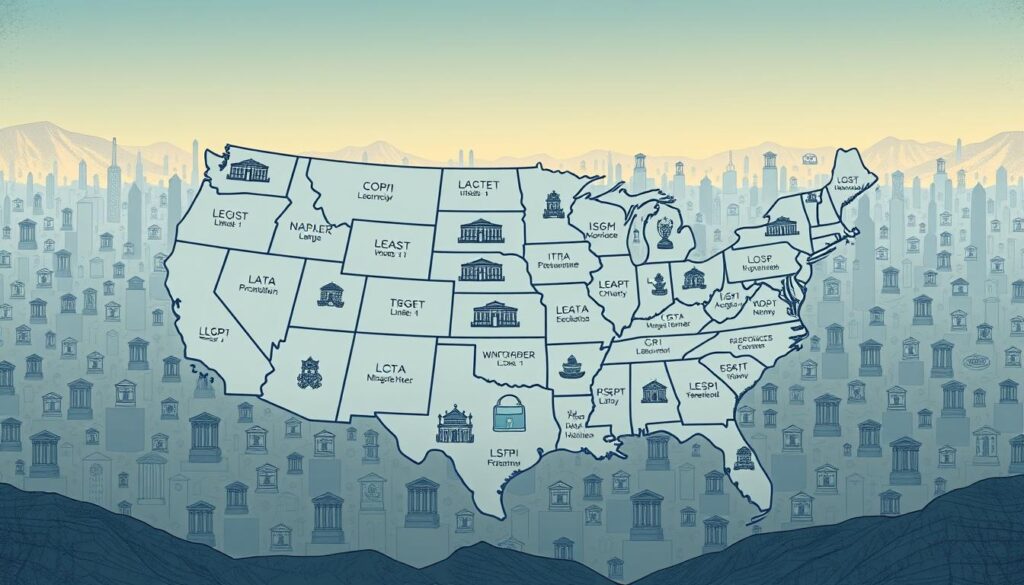
State privacy laws are changing fast. Companies and privacy teams need to keep up. They must watch for new rules and deadlines in different places. The IAPP tracker helps by listing when laws start and updates on new rules.
Virginia Consumer Data Protection Act (VCDPA)
The Virginia VCDPA was signed in March 2021. It started on January 1, 2023. It gives people rights like access and deletion of their data.
Virginia has clear rules for companies and their data handlers. It’s different from California’s rules. This makes it important to plan carefully for each state.
Colorado Privacy Act (CPA)
The Colorado Privacy Act started on July 1, 2023. It requires checks for risky data handling. Rules for ads and biometric data start in 2024 and 2025.
Colorado focuses on checking risks. Companies must keep records of these checks. This creates a plan for different teams in the company.
States have different rules and rules for handling data. For example, Connecticut cares about health and kids’ data. Oregon’s law starts in 2024. Maryland, Minnesota, and Rhode Island will start later.
To keep up, companies should map their data and check local rules. Legal teams use resources from White & Case and the IAPP tracker. These help them know about changes in laws.
| Jurisdiction | Effective Date | Key Obligations |
|---|---|---|
| Virginia (VCDPA) | Jan 1, 2023 | Consumer rights, controller/processor duties, narrower B2B/employee exemptions |
| Colorado (CPA) | Jul 1, 2023 | Data protection assessments, opt-out for targeted ads, phased biometric/minor rules |
| California (CCPA/CPRA) | Jan 1, 2020 (CCPA); CPRA amendments in effect | Expanded consumer rights, sensitive data rules, enforcement by Attorney General and CPRA board |
| Oregon (OCPA) | Jul 1, 2024 | Consumer rights and obligations similar to other laws, state-specific definitions |
| Connecticut | Jul 1, 2023 | Sensitivity focus on health and minors, consumer rights and enforcement |
| Maryland / Minnesota / Rhode Island | Later effective dates (2025–2026) | Phased compliance timelines, tailored exemptions and enforcement structures |
Federal Data Privacy Framework
The U.S. does not have one big privacy law. Instead, different areas have their own rules. Companies need to keep up with these changes to follow the law.
Current Federal Initiatives
Many bills have been proposed in Congress, but no big law has been passed yet. Different areas like finance and health have their own rules. The Federal Trade Commission also watches how companies act.
In 2025, the Department of Justice made new rules. These rules limit how sensitive U.S. data can be shared with some countries. This affects how companies work together across borders.
Proposed Regulations
Lawmakers keep working on a national privacy law. But, it’s hard because of political and technical issues. The FTC also updated some rules in April 2025.
Companies should watch for new rules and advice from agencies. This helps them plan their own privacy policies and how they work with others.
Impact of Federal Legislation
A big federal law would try to make things simpler. But, without one, companies have to follow many rules. This makes things more expensive and complicated.
There are different groups that enforce the law. This includes the FTC, DOJ, and state attorneys general. Companies in places like California and Texas have to be extra careful.
To stay ahead, companies should plan for different rules. They should also keep an eye on what the FTC and DOJ say. For more on how to handle privacy, check out this guide: responsible governance and privacy.
| Area | Current Status | Likely Change if Federal Law Enacted |
|---|---|---|
| Definitions | Varies by statute and state | Harmonized terms for personal data, sensitive data |
| Preemption | Patches of federal and state rules | Possible partial or full preemption depending on drafting |
| Enforcement | FTC, DOJ, state AGs active | Federal agency roles clarified; state AG authority may persist |
| Cross-border Transfers | Sectoral limits plus national-security rules | Standardized transfer mechanisms likely; security carve-outs possible |
| Compliance Burden | High due to overlap | Reduced for some; yet, tailored state-level actions needed |
Data Privacy Rights for Consumers
Now, people in the United States have clearer rights to their data. These rights tell companies how to handle our personal info. Big names like Google, Meta, and Amazon must listen to our requests.
Right to Access and Portability
The right to access lets you check if a company has your info. In places like California, companies must tell you what they have and why. They must explain in simple terms.
Portability means getting your data in a format you can use. Companies should make tools to send your data back to you. This makes things easier and builds trust.
Right to Deletion
The right to deletion lets you ask companies to erase your info. California is making data brokers delete your info by 2026. This rule applies to third-party collectors too.
Companies have to figure out how to delete your info without losing important records. They need good plans to protect your data while doing their job. It’s also important to tell users what they can and can’t delete.
Right to Opt-Out
The right to opt-out means you can say no to your data being sold or used for ads. Places like Colorado and Texas are making rules to respect your wishes. These rules will start in 2024 and 2025.
Companies should make it easy for you to opt-out. They should also check if they’re doing it right. This helps keep you safe and builds trust.
There are special rules for kids and teens. The Federal Trade Commission is making these rules stronger. States also have rules to protect young people from being tracked or shown certain content.
How laws are enforced can vary. Some laws let you sue companies, while others rely on government action. Companies can protect themselves by making it easy to handle your requests.
The table below shows what you need to know about your rights, what companies must do, and how they can do it.
| Consumer Right | Business Obligations | Technical Controls |
|---|---|---|
| Right to Access | Respond within statutory timeframes; disclose categories and purposes; provide portable copy | Data inventory, export APIs, request portal, authentication |
| Right to Deletion | Honor requests except where exemptions apply; document legal holds; notify third parties | Deletion workflows, soft/hard delete flags, data broker feeds, audit logs |
| Right to Opt-Out | Respect sale and targeted ads opt-outs; honor global opt-out signals; maintain preference records | Signal listeners, consent management platforms, preference databases |
| Minor Protections | Obtain verifiable parental consent where required; restrict profiling; offer unpublishing options | Age gating, consent capture, limited data retention, content removal tools |
| Enforcement & Remedies | Cooperate with regulators; maintain breach response plans; preserve evidence | Incident response, forensics, compliance dashboards, legal hold systems |
Responsibilities of Businesses
Businesses in the United States must follow the law. They need to make clear rules for handling data. This includes strong security and following data protection laws.
Data Collection Transparency
Companies must tell people what data they collect. They need to explain why they use it. This includes how long they keep it and if they share it with others.
California and other states have strict rules. They want clear notices and ways to opt out. This is important for kids’ data too.
Security Measures and Compliance
Businesses must protect data well. This means using encryption and logging. They also need to check their systems often.
Not following these rules can lead to trouble. The government might fine them for not being careful enough.
Training and Governance
Having a good team is key. Businesses need to train everyone and have clear rules. This helps them handle data right.
They also need to watch their vendors closely. This means checking their contracts and testing their plans. All states require them to tell people if there’s a data breach.
Doing things like privacy-by-design helps. It shows they are serious about protecting data. This makes it easier when the government checks on them.
Challenges in Compliance
Privacy teams face big challenges. They must keep up with new privacy risks from AI and biometrics. They also need to make sure they don’t block new ideas.
States are making new rules about using AI. These rules include giving people the right to opt out and being clear about how data is used. Companies must understand these rules for each state they operate in.
It’s hard to understand all the different rules. Laws vary a lot. Companies must figure out how to follow both federal and state laws.
Legal teams need to get clear guidance on these rules. They should also watch for changes in the law. They can use outside help for this.
Compliance costs a lot. It includes legal fees, changing technology, audits, hiring staff, and keeping an eye on things. Companies must spend money on things like universal signals and vendor controls.
There’s a big risk of lawsuits. Companies could face lawsuits over privacy and other issues. This adds to the cost of following the rules.
To manage this, companies should make a plan. Start by finding out what data they have and how it’s used. Then, they can figure out what to do next. They can use a data privacy compliance guide to help them stay on track.
Future of Data Privacy Regulations in the US
The future of data privacy will mix state innovation with federal action. We’ll see more state laws and rules from agencies like the Federal Trade Commission. Expect a focus on AI, automated decisions, and kids’ data protection.
Trends to Watch
Legislative momentum will keep moving forward. More states will pass laws, and agencies will make rules clearer. This means businesses need to keep up with changes to avoid trouble.
Predictions for the Coming Years
Until 2026 and beyond, laws will change slowly as they get refined. A single federal law might happen, but it’s not sure. Businesses should get ready for a mix of laws and follow international standards.
The Role of Public Policy
Public policy will aim to balance new tech with protecting people. State attorneys general, the FTC, and DOJ will enforce laws. Companies that focus on privacy will gain an edge.
FAQ
What is the current landscape of data privacy regulation in the United States?
The U.S. doesn’t have one big privacy law. Instead, we have many smaller laws for different areas. For example, HIPAA covers health info, and COPPA deals with kids’ online data. States like California, Virginia, and Colorado have their own privacy laws too.
Businesses have to follow both federal and state laws. This can be tricky because the rules are different in each place. The FTC and DOJ also play a big role in enforcing these laws.
How did the CCPA change the regulatory landscape and what is the role of the CPRA/CPPA?
The CCPA started a wave of new privacy laws in states. The CPRA made these laws stronger. It also created the California Privacy Protection Agency (CPPA).
CPRA/CPPA rules are getting stronger. They require things like deleting data and letting people opt out of ads. The CPPA is also making new rules, like about cybersecurity audits.
What are the primary consumer rights under modern state privacy laws like CCPA/CPRA?
Most state laws give people the right to see their data, ask for it to be deleted, and get it in a way they can use. They also have the right to correct mistakes and not be treated unfairly if they use these rights.
CPRA and some states also protect sensitive data. They let people opt out of certain technologies that make decisions for them. Each state has its own rules, so businesses need to know what each one says.
How do federal laws like HIPAA and COPPA interact with state privacy laws?
HIPAA is a big deal for health data. It’s the main law for that area. But, some states have their own laws for health data too.
COPPA is all about kids’ online data. It got a big update in April 2025. Businesses have to follow both federal and state laws, which can be hard.
What enforcement trends should businesses watch, and what are recent examples?
More states and the federal government are cracking down on privacy laws. For example, California’s AG got a big settlement with Healthline Media LLC. The FTC is also active, using its power to enforce privacy laws.
DOJ made new rules for data transfers in April 2025. State AGs in Texas, Arkansas, and others are also taking action. This can lead to fines, orders to fix problems, and more.
What definitions and key terms do privacy laws use that businesses must understand?
Important terms include “personal information,” “sensitive personal data,” and “targeted advertising.” Each state has its own way of defining these terms. Knowing these definitions is key to following the laws.
For example, CCPA has special rules for HR and B2B data. Businesses need to understand these differences to follow the laws.
What practical steps should organizations take to become compliant across multiple jurisdictions?
Start by mapping your data and identifying high-risk areas. Update your privacy notices and set up ways for people to opt out. Make sure you can handle requests for data.
Do data protection assessments when needed. Use security measures like encryption and keep good records for audits. Make sure you have a plan for handling data transfers.
What are data protection assessments and when are they required?
Data protection assessments check the privacy and security risks of certain data activities. Some states require these assessments for high-risk activities like targeted ads and profiling. CPPA is also working on rules for these assessments.
These assessments help guide how to protect data. They must be documented and used to improve data handling.
How do “universal opt-out signals” work and which laws require them?
Universal opt-out signals are special browser or device signals that let people choose not to be targeted with ads. States like Colorado and Connecticut are making businesses honor these signals. Businesses need to set up ways to detect and respect these signals.
What obligations do businesses have for breach response and notification?
All states have laws about telling people and regulators if there’s a data breach. Privacy laws might also require keeping records of breaches. Businesses need to have plans for handling breaches and follow state rules for how to do it.
How are automated decisionmaking technologies (ADMT) regulated in the U.S.?
ADMT is getting more attention from regulators. CPRA and some states require businesses to tell people when they use ADMT. They also need to assess the risks of using these technologies. Some states and the federal government might require more transparency and human oversight.
What are the biggest compliance challenges created by the fragmented state approach?
The different state laws make it hard for businesses to keep up. The rules can change often, and there are many to follow. It’s hard to know what to do in each state and how to handle federal laws too.
This complexity can make it expensive and uncertain for businesses to follow the laws.
How should companies prepare for federal initiatives and possible future federal privacy laws?
Businesses should be ready to adapt to new laws. Watch what the FTC, DOJ, and CPPA are doing. They might make new rules for things like AI and kids’ data.
Build systems that can change easily. This way, you can follow new federal rules without a lot of trouble.
What role do state attorneys general and federal agencies play in enforcement?
State AGs are the main ones enforcing state privacy laws. California’s AG and the CPPA are very active. The FTC and DOJ also play a big role, enforcing privacy laws in their own ways.
They often work together, which means businesses have to be careful to follow the rules in all areas.
Are there private rights of action under state privacy laws?
Some states let people sue for privacy law violations. For example, CCPA lets people get money damages for data breaches. But, most states let AGs handle enforcement first.
It’s important for businesses to know what they can be sued for and how to handle these situations.
How do costs of compliance typically break down and what drives them higher?
Compliance costs include legal advice, tools for privacy and security, and staff. You also need to map your data and set up ways for people to opt out. Audits and monitoring are also part of it.
Things like ADMT, AI, and dealing with breaches can make these costs go up. Phased-in rules mean you’ll have to keep spending money for a while.
How should businesses handle data transfers and cross-border compliance, given DOJ and national security rules?
Map where your data goes and who it goes to. DOJ has new rules for some data transfers starting in April 2025. You need to have plans for how to handle these transfers safely.
For data going to the EU, you need to think about GDPR rules. These rules can be different from what you’re used to.
What specific steps should startups and small businesses prioritize first?
Start by mapping your data and making clear privacy notices. Use basic security measures and make it easy for people to opt out. Focus on areas that are most at risk, like health data and kids’ info.
Use a simple approach to get started. This way, you can handle the basics without getting overwhelmed.
Which trackers and sources should practitioners use to monitor changing state laws and rulemaking?
The International Association of Privacy Professionals (IAPP) has great trackers and resources. Legal firms like White & Case and agency sites also post updates. Keep an eye on these to stay current with the laws.
What governance and training measures mitigate enforcement risk?
Have a clear plan for privacy, including a privacy officer and rules for handling data. Train your staff regularly and do audits when needed. This shows you’re serious about following the laws.
Good governance and documented steps to fix problems can help you avoid big fines.
How do laws treat employee and B2B data differently across states?
Laws vary on how they treat employee and B2B data. Some states have special rules for these areas. CCPA used to cover more, but now it’s more limited.
Businesses need to check each state’s rules to know what to do with employee and B2B data.
What are practical measures to prepare for ADMT and AI-related obligations?
Keep track of your models and document how they work. Do risk assessments and make sure there’s human oversight when needed. Tell people how you use ADMT in your privacy notices.
Have a plan for validating and monitoring your models. Keep up with state and federal rules on ADMT and AI.
How should organizations respond to a regulatory inquiry or enforcement action?
Act fast and be open. Put together a team to handle the inquiry. Keep all important records and do your own investigation.
Fix any problems you find and keep records of how you fixed them. This can help you get off easy with the regulators.
What trends will most affect privacy programs over the next two to three years?
Expect more state laws and federal rules on AI and kids’ data. ADMT and sensitive data will get more attention. Enforcement will get stronger too.
Businesses that can adapt and show they’re serious about privacy will do well. They’ll be ready for whatever comes next.